Hello and welcome,
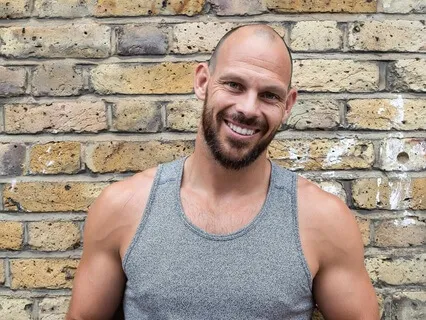
I'm The Downward Dog and today I've got a really great meditation for you.
To get started I want you just to get into a comfortable seat and close your eyes and begin to breathe in and out through your nostrils.
Take your time to get settled and as you do I'll explain a bit more about today's session.
Now I'll start by asking you a simple question,
A strange question if you will.
How nice are you to yourself objectively?
How often do you speak to yourself well?
How often do you treat yourself well?
And then how often do you put yourself under unnecessary stress and particularly unnecessary critiques?
Now we all have this inner critic,
It's within us and I guess we have it to varying degrees on different days but it's always there and that's what makes it so nefarious,
It is always acting on us,
Always commenting on how we're doing.
Now look,
This inner critic is actually designed to be adaptive which is a fancy way for saying useful in our lives to keep us alive but it can very much get out of control if we don't check it.
So today I wanted us to critique our inner critic using a technique that has been around for thousands of years,
First put forward by Socrates,
The goat when it comes to philosophy.
It's since been adopted and adapted by other philosophies and Buddhism in particular.
We're going to do a performance review on that judgmental voice you have in your head and these are the yardsticks in which we are going to judge the judger.
We want to ask with each of the comments that this inner critic puts forward,
Is it true?
Is it helpful?
And then is it kind?
As I said this was first used by the Greek philosopher Socrates who was big on questions,
So much so that we actually get the entire scientific method from him,
This idea of questioning things and looking for ways to prove things to be true.
Now exactly how he did that is a story for another time but in the spirit of inquisition that he put forward,
Let's get into today's meditation.
So as you sit there hopefully in a calm and relaxing way with your nose breathing,
I want you to ask your personal critic for one of its criticisms of you.
No rules on what it is,
It can be big,
It can be small,
Whatever comes to mind.
Often we have something that's bubbling right underneath ready to put up its hand and say me,
Me,
Me.
For me a lot of my critiques are about my looks,
So that's a real easy one for me to tap into.
Take your time and just let what comes up,
Come up.
You don't have to take it anywhere right now,
Just become aware of what the most pervasive critique you have is.
And if many come up just settle on one.
Okay,
I'm going to assume you have one but if you need more time just press pause.
The first thing I want you to do is notice how this personal critique makes you feel.
Does it make you feel good or does it make you feel shame or guilt or anger or frustration?
Maybe a little sprinkle of sadness,
Maybe it's a combination,
A negative emotion cocktail.
Without needing to change it,
I just want you to feel it and note it as best you can,
As if you're putting it into a category.
All right,
Nice,
So you have your critique and you have the way it makes you feel.
Now let's unpack it a little bit.
How does it make you feel this way or why does it make you feel this way?
Maybe a better question is what is the narrative that causes this negative emotion you spoke of?
In my example,
Which is about looks,
Going bald in my 20s was rough but going bald wasn't the issue,
You know,
Literally my hair falling out was not a problem.
The real issue was the story that came with it.
Because my hair was going,
I was sure it was going to make me unattractive,
Not just to some girls but to every girl possible.
I also thought it would lose me social status with my friends,
So I saw this future laying out before me that was falling at a rate that was quicker than my hair.
So I want you to find that story that goes with your feeling.
Again don't have to rationalize it,
Just what is the story that comes up when you think about this negative emotion and what it means to you,
Whatever the critique is.
If this starts to make you feel a little bit upregulated,
Use the breath to calm right down,
You're in charge.
Very great.
So at this stage we have our critique and the narrative that comes with it.
Here's the first question for our inner critic.
Is it true?
Does that narrative hold up to a little bit of cross-examination?
Again,
As a way of an example,
I am definitely bald but am I now destined for a life of loneliness and low social status?
Would there be a single girl that may find me attractive in my bald state?
And that is a rhetorical question,
No need for a DM by the way.
Are there celebrities that are revered who are bald?
By the way I call these people baldspirations.
You get the idea.
So take a few moments and run through your own truth test on your narrative.
Be like that bulldog lawyer that is cross-examining the critique.
Alright,
Now if at this point the entire critique falls apart,
That's great,
You can chill out safe in the knowledge that you've overcome the inner critic.
You can choose another critique if you want.
But assuming that that critique has an element of truth,
Which many do,
Our next test for the critique is,
Is it helpful?
Another way of saying this is,
Is it necessary?
Again,
An example from my life,
I know painfully from first-hand experience that baldness is actually a deal breaker for a lot of women.
So I ask myself next if the thoughts about my self-worth being related to my looks is helpful or necessary?
Is this critique one that is helping me be better?
Or is it just holding me back and actually pushing me down?
I can't help my baldness,
There is nothing I can do about that,
At least in the immediate future.
For instance,
If this was instead about my health,
Then there may be something I can do.
But that's up to you to decide.
Assuming that the critique has some truth in it,
How is it helpful?
And is it helpful at all?
Think through that for me.
All right,
And at this stage,
Maybe you've completely overcome this inner critic or maybe there's an element of the critique that is true and there's an element of the critique that's necessary.
For instance,
If I was overweight,
Then there's an element of the critique that is true,
There's an element of the critique that is necessary to help me live a healthier life.
But the last filter,
The last question for the critique is,
Is it kind?
You know from being a friend,
From being a human,
That how things are said is sometimes more important than what is being said.
So if I switch example for me,
Telling myself that I am in terrible shape may be partly true,
It may be necessary to help me change,
But it's certainly not kind.
And I could change the critique in a way into something positive,
Not you're in terrible shape and if you carry on like this,
No one will ever love you,
But rather,
I deserve to be healthy and happy and live longer.
The major difference here is that I'm focusing on what I can gain by changing,
Not in what ways I lack.
The last one for me,
Is this critique kind?
And if it's not,
How can you reframe it to be kind?
All right,
Well then,
Come back to being aware of your breath and slowly begin to open your eyes,
Come back in the room,
Hopefully a little bit lighter,
A little bit less weighed down by that inner critic.
Feel free to do this anytime that critic arises its head,
It doesn't have to be a formal practice like this,
Just tackle it.
Like if it is true,
If it's helpful,
And if it's kind.
Namaste.