Welcome to the Reality Check Podcast.
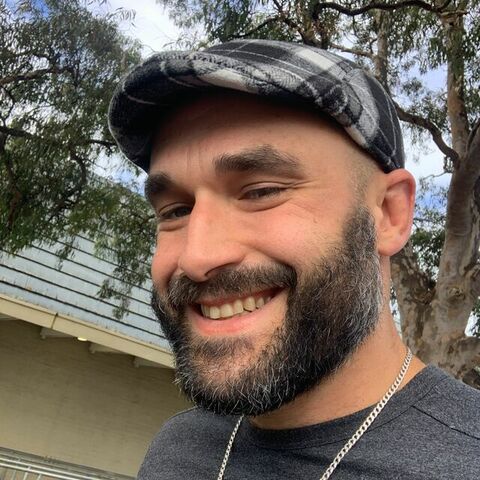
I'm Zachary Phillips.
So I wanted to talk about positive habit acquisition.
How do you get a positive habit instilled into your life,
One that sticks?
This is something I've been contemplating for quite a long time because I came from a place that was quite disorganised,
A place of survival.
I moved out of home at 16,
Escaping abuse and neglect and other home issues.
And I was in a place of survival.
I was just trying to get by day by day,
Earn enough money,
Living off the charity,
The whole thing.
So in terms of positive habits,
It was basically just keeping myself in a state that I could get to and from work and then to and from school.
But it was really a reactionary lifestyle.
I was scrambling to survive.
And that's not quite conducive to an abundant,
Thriving mental state,
As you would imagine.
And it's taken me almost another 16 years.
I'm 33 now,
So yeah,
Even more,
To be able to work out the best way to instil positive habits in my life that stick.
I'm talking long-term self-care stuff.
As an aside,
We talk about self-care and there's a couple of camps,
The self-care of like,
I'm going to have a cake because I need a cake,
And that's a bit of self-care.
And that's fine if you do it every here and now to stop yourself from doing something worse.
But the self-care that I talk about mainly is that long-term self-care.
It's the daily exercise,
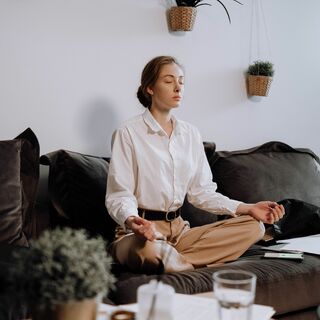
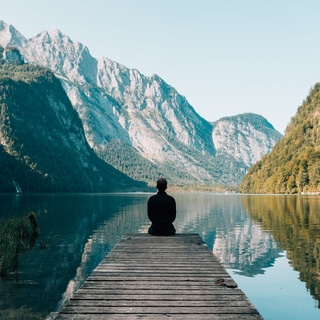
The daily meditation,
The journaling,
The seeing a therapist,
The taking the medications,
The making positive choices,
The balancing,
Getting after it with relaxation.
That's the sort of self-care that I'm talking about.
So then when I'm talking about that sort of self-care,
It's like,
Well,
How can we instil that into our lives?
What's the best way?
And for years,
I was sort of stopping and starting,
Trying to start a meditation practice,
Trying to start a exercise regime,
Trying to get myself sorted.
So what I want to share here is a couple of the tips and tricks and ideas that I use to get that working,
To get it into my life.
And the main.
.
.
Oh,
There's a few main things.
You've got to have the motivation,
Obviously.
If you don't have the motivation to do something initially,
It's going to fail.
I'm not talking about the motivation to go exercise.
You might have the motivation to go exercise once or twice,
But that motivation drops off.
I'm talking about the motivation to establish the habit,
To get started on the idea of like,
I'm going to exercise every day.
I'm going to meditate every day,
That sort of motivation.
So you have the motivation that you want to make a change,
And you see the benefits.
You know that exercise or meditation feels good,
Improves your mental state,
Leads to long-term positive growth,
And you're committed to making that change.
You have to start believing that you're worth making a change.
It's worth that self-improvement.
It's good to get better.
You deserve to feel good and feel happy.
You deserve to be in a place where your mind and your body are on point.
You have to feel that.
You have to start believing that.
And the good thing is,
Is the more you do for yourself,
The more you start believing it.
Because not only does it feel better,
But you'll start to see the results,
And you'll start making better choices.
So it starts compounding.
It's like everything.
You got to get the ball rolling.
You know that idea of building up the snowball as you're pushing it down the hill.
It's hard to build up the momentum,
But once it gets going,
It really gets going.
But then it's like,
Okay,
Well,
Where does this fit into my life?
So now you need to step back and look and go,
Well,
Where's this time going to come from?
Because you know,
Like you do the New Year's Eve resolutions.
It's New Year's,
And you're like,
I'm going to exercise every day.
I'm going to diet.
I'm going to meditate.
I'm going to do this amazing life transformation.
And then for a week or two,
You're pumped,
And you're exercising daily.
You're meditating daily.
But then life creeps back in.
You've realized you've put off stuff to add the exercise and meditation into your day.
That stuff that you've put off has to come back,
And it has to come back in,
And it will come back in with force.
Because you can't just add an hour or two to your day and hope that it'll be fine.
Some people can,
But the majority of us can't.
So very quickly,
Life pushes back,
And you realize that you don't have the time to meditate or exercise or whatever the new thing is.
And then you stop and just wait until the next year comes around to have an excuse to do a New Year's resolution to try all again.
Beyond that,
You will find that things you do push away have been acquired by habit.
If you try and cut TV time instantly,
Or cook at home more,
Or spend less time on social media,
Whatever it is that you're grabbing that time from,
You're actually trying to break a habit,
Which you should certainly attempt to do.
But the problem with that is not only are you trying to instill something new that you'll have a bit of resistance for,
You're also trying to break something,
And that's an extra level of resistance.
So the way around this is,
For me at least,
Is to consider it like a marathon,
Not a sprint.
Our goal is to start doing stuff every day.
It doesn't have to be an amazing amount,
Just something.
So if you use an exercise analogy,
Imagine if for the last year you'd been exercising doing one minute straight of push-ups or squats.
Just one minute a day.
Just one.
How fit and strong would you be now?
Just one minute per day.
Now imagine if instead of that one minute per day,
It was five or ten,
Right?
One minute is infinitely better than nothing.
If you have to choose between doing one minute and no minutes of exercise,
One minute is infinitely better.
And you can easily find one minute in your day.
No factor.
You can cut out the social for one minute.
You can cut out TV time for one minute.
You've got that one minute.
And the same thing,
You've probably got another minute to do a minute of silent meditation.
All I'm asking for here is two minutes a day.
That's it.
Once again,
One minute of mindfulness meditation is infinitely better than none.
Now,
The more you do,
The better the results will be,
Obviously.
And that's with any life change.
But doing something is infinitely better than nothing.
That's the key takeaway from this talk right now,
Is start with something.
And once you start doing that one minute of exercise or one minute of mindfulness meditation,
You will find that it will start to open up.
And you'll go,
Okay,
Well,
I'm already doing this one minute of exercise.
Why don't I add an extra minute?
And then you'll very quickly find that you've got five or ten minutes.
And eventually,
You will notice that life starts opening up.
You won't,
You just naturally won't watch as much TV.
You'll naturally not look at as much social media.
You'll find that you'll be able to sneak it in and life will slowly open up for you.
And it won't be such a massive shock.
And then very quickly,
You'll realize that you've been doing it every day consistently.
And that's the key.
So in terms of like increasing your time,
If you want to increase that time from one minute,
Go for it.
But I would strongly suggest that you don't just instantly jump in the deep end.
You can't just start exercising for hours and think your body or mind or life will be okay with it.
You might be able to do a couple of sessions,
But you'll quickly burn out.
You might get injured,
Right?
You won't have the time practically like we've said about it,
But your mind and your body will quickly break.
You just can't jump that quickly,
Most of us.
Some people can,
Most can't.
Same thing's true for meditation.
You could do a couple of sessions that are 60 minutes of silence.
But I doubt you'll be able to keep that up.
Now,
You might be able to.
You might be an exception.
By all means,
Try it if you like.
But I think the best way to do things consistently is to slowly build it up over time.
Start with that one minute or five minutes or 10 minutes.
And then add a minute every month.
Just one minute.
So you start on 10 minutes,
For example,
A day.
And then the next month,
You do 11.
Then the next month,
You do 12 and 13,
Et cetera,
Et cetera,
Right?
So that within a year,
You're now up to 24 minutes.
That could be exercise,
Meditation,
Whatever,
Practicing guitar.
But that change won't feel like a shock.
It won't feel like a shock to your system because you're changing slowly.
The other approach is to consider the amount of time that you could dedicate to whatever this change is,
The meditation,
The exercise,
The guitar practice,
The study,
Whatever it is.
Consider the amount of time that you can dedicate to that topic,
That hobby,
That activity in one year.
How much time do you think you'll be able to commit to this every day one year from now?
That might only be five minutes a day,
But that's okay.
What you're doing is you're tapering your short-term motivation against long-term realism,
Enabling you the best chance of success.
So if you look to the future and go,
Yeah,
I could see myself meditating 10 minutes every day,
That's the maximum amount that you're going to start with now.
Now,
You might be able to do more later on,
But for the moment,
Just leave it at that.
You don't want to blow yourself out and go,
Oh my God,
I just can't keep up this regime.
We put so much pressure on ourselves.
We set these goals,
These ideas,
I'm going to make this thing,
I'm going to do this thing,
I'm going to do this every day,
I'm going to change my life.
Then when you can't,
When you fail,
When you stuff up or stop,
You feel so much guilt,
But it's all self-imposed.
The better approach is to give yourself the best chance for success.
You don't have to do the most,
Just do something.
If you miss a day,
If you skip a day,
If life happens and for whatever reason you don't do the exercise session or the mindfulness or whatever it is,
Just say to yourself,
That's okay,
It's all right,
I'll get back on the wagon,
I'll do it tomorrow,
I'll start again.
But it's not really starting again.
If you plotted it on a graph or if you imagine like an analogy of going upstairs,
In every day that you exercise or meditate,
You're stepping up one step,
You're stepping up one step,
You're stepping up one step every day.
Then 20 days later,
You miss a day,
That's okay,
You haven't gone back down.
You're not back at the start of those steps.
You just didn't take another step up that day.
So rather than falling right off the bandwagon and just quitting until the next time random motivation comes along or it's a new year's resolution or whatever,
Just keep going the next day.
Take that next step.
Importantly,
Look back and just think to yourself,
Well,
Okay,
What happened that caused me to not be able to get my exercise session in today or not be able to meditate today and address those problems?
Was I trying to do it for too long?
Did I not account for life variances?
Was there some sort of thing that came out of the blue?
Was I lazy or undisciplined?
Did I have a mental health crisis?
Can I address or fix or solve or resolve or better manage those situations?
And then do so.
The analogy to diet is this or the diet or smoking.
People will start a diet and they're super strict.
I'm not going to eat sugar.
I'm not going to eat chocolate.
I'm not going to have another smoke.
I'm not going to drink.
And then in a time of weakness,
They break.
They eat the cake.
They smoke a cigarette.
They have a drink.
They do the bad thing that they were trying to stop.
And then they break.
Then that's the sign to them.
It's like,
Oh,
Well,
I'm off the wagon now.
I'm back to smoking,
Drinking,
And eating cake.
That's only true if in the next instant or the next day,
You do it again and again and again.
If you're quitting smoking and you used to smoke every day,
But you've quit,
And for a month you haven't touched a cigarette,
And then that one day you smoke a couple or even smoke a pack,
You break.
Okay.
What happens if the next day you're back to quitting?
And then you do it again.
Then you've gone a month again without smoking.
And then you break again.
So in this example,
You've gone 30 days in a row without smoking,
And then you smoke on one day.
And then you go another 30 days without smoking.
And then you smoke on one day.
Now by smoking here,
It could be drinking,
Alcohol,
Whatever.
That to me is quite successful if you think about it.
If you're trying to quit something that's addictive,
You've actually almost done it.
Yeah,
You've had a couple of breaks,
But you jumped right back on the wagon and you kept going.
And the majority of your time,
You weren't smoking.
Ideally,
Obviously,
You would quit completely.
But you're human.
We've got stress.
Life happens.
It's okay to break occasionally,
Provided you get back on afterwards,
Provided you learn that lesson.
And the same thing is true for positive habit acquisition.
If you say to yourself,
I'm going to exercise and meditate daily,
Which I think everyone should be,
But there's a couple of days in the month that you miss a session or two.
Okay,
That's fine.
If you end up exercising and meditating 20 or 25 days out of a 30-day month,
That's a massive success.
That's so much better than doing nothing.
And it's so much better than doing a massive session for a week and then not meditating for half a year or a year.
So I'm just trying to put this all into context.
And the reason I'm talking about all of this is I've recently instilled a new habit in my life.
I've started doing live mindfulness morning sessions every day.
I'm trying to do it every day.
Now,
Obviously,
According to what I've just said,
There'll be days that I miss a session.
That's fine.
But in general,
I'm trying to do these live guided meditation sessions every day.
If you're not already joining in or aware of it,
They're going to be every morning at 6.
40 a.
M.
Australian Eastern Standard Time on Instagram.
My handle is at Zach P.
Phillips.
And what we'll find is that it's basically a little introduction,
Then a 10-minute silent mindfulness session where we'll meditate together,
And then a short talk or a Q&A.
So the sessions go for about 15 to 20 minutes total with 10 minutes of meditation in there.
And the reason I'm doing this is I want to sort of do a couple of things.
I meditate daily anyway,
But I want to show you that it's possible to meditate daily.
I know when I started out,
Same thing with exercise,
It didn't seem like sitting in silence was easy or doable,
At least for me.
So then I pushed and grind,
Grinded and sort of tried and failed,
Tried and failed until I was able to establish a permanent practice.
But I want to try and sort of help you to skip beyond that.
I want to get you meditating.
And if this is the impetus to start you doing that,
By all means do it.
And you're welcome to join me every day if you like.
I'll be there.
The reason I push meditation so much is that it's probably the single best habit that you could do for your mental state.
Obviously do the exercise and the self-care and the doctor and all that sort of stuff,
But get that meditation down.
And at the very least,
It's 10 minutes of silence because most of us,
We're always talking to someone,
We're always on social media,
We've got podcasts in our ears and TV on and YouTube and life's hectic,
Life's chaotic,
Life's loud.
So for 10 minutes a day,
We'll sit in silence together and meditate together.
And then perhaps we can learn to make some better choices.
Perhaps we can learn to get some self-awareness and get some identification of the way our thoughts act,
Basically,
How we are.
And then if we know ourselves,
We can make better choices.
So if you're interested,
6.
40am Australian Eastern Standard Times on my Instagram at ZachPPhillips,
That's Z-A-C-P-P-H-I-L-L-I-P-S on Instagram.
And if you don't catch the live sessions,
I'm posting them as IGTV as well as on YouTube,
So you can go back and watch them.
So they'll be going up every day.
I strongly suggest you get on board and instill that positive habit in your life.
And if you do,
In a year's time,
My God,
The change will be exponential.
It will really put you.
.
.
Just a small commitment every day to meditation will help you go from a place of barely surviving to eventually to passionately thriving,
Because you're giving yourself a chance to heal,
To recover,
To learn about yourself.
So join me,
Join in.
And if you have other habits that you want to instill in your life,
Use these same techniques that we've talked here about to instill them.
Start slow,
Build it up over time,
And life will open up for you.
Have a great one.