Welcome to Yoga Nidra.
My name is Bobbi and I'm excited that you're here.
If you're new to Yoga Nidra,
I'm going to spend a few moments here at the very beginning of this track to explain a little bit more about what you'll experience and how maybe you can make the most of it.
If you are experienced with Yoga Nidra,
You can go ahead and skip through a few moments to the beginning of the actual practice.
Now for those of you who are new to Yoga Nidra,
Let's first start with a quick explanation of what is Yoga Nidra.
First and foremost,
Yoga Nidra is the Sanskrit for yogic sleep.
So in a way,
You can think about this practice as Shavasana on steroids.
I know it sounds funny,
But it's kind of what it is.
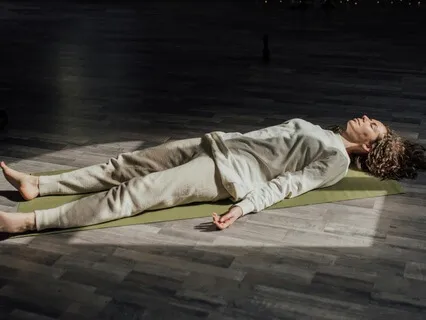
You're going to get into a very comfortable position and you're going to stay there for a little while as I guide you through a meditation.
At its core,
Yoga Nidra is a guided meditation.
I will be talking to you throughout the experience,
Guiding you as to what to think,
Where to focus your attention,
How to breathe,
And so on.
In essence,
I'm guiding you from the awareness state into that place where you're kind of between being awake and being asleep.
It's not unusual in Yoga Nidra for people to fall asleep,
And if that happens,
It's totally okay.
No worries.
It just means your body needed a little extra rest.
We want you to be as comfortable as possible.
So feel free,
Pause this track,
Set up your space,
Whatever blankets,
Bolsters,
Pillows,
Other props you might need to feel comfortable as you lie for the next 30 or so minutes.
Yoga Nidra works best when you are still for the entire practice.
It allows your body and your mind to completely relax.
So think about that as you get yourself set up.
You may even wish to have an eye mask or an eye pillow of some sort to help block out the light.
You want to find a place that's comfortable and quiet where you won't be disturbed for a little while.
So go ahead and find a space.
Feel free to turn this on pause until you get yourself all ready,
And then I'll meet you back here to start the practice.
All right.
So we are ready for our Yoga Nidra practice.
Before I start reading through the Yoga Nidra script with you,
Let's just take a moment to help our bodies to relax a little bit into the position that we've chosen.
Just start at the crown of the head and just take a moment to let that relax.
Feel the heaviness in the head and the floor that's supporting it.
Relax all the muscles in the face.
Loosen up that jaw and relax the throat.
Feel those shoulders rolling toward the ground,
Relaxing your upper chest and your belly.
You can allow the low back to kind of roll toward the floor,
Relaxing the low back,
The hips,
And the buttocks.
Arms and legs should be heavy wherever you have them,
Keeping those elbows and knees soft,
Relaxing the shoulders.
Relaxing fingers and toes.
It is time for Yoga Nidra.
You should be lying on your back with your body supported in a way that is comfortable.
You want to make sure that you're warm enough and that your position is one that will be comfortable for the duration of the practice.
It is best that you remain still during Yoga Nidra so that both your body and your mind have a chance to fully relax.
However,
If at any time you do become uncomfortable,
Please take a moment to change position.
Now,
If you haven't already done so,
Please go ahead and close your eyes and keep them closed until the practice has ended.
The practice of Yoga Nidra is a practice of yogic sleep.
We'll be guiding you to a state of consciousness that's somewhere between being fully awake and being asleep.
Try to remain awake by listening to the sound of my voice.
You're going to be asked to move your awareness to various bodily sensations,
Emotions,
And images.
Try not to concentrate too intensely,
As that can prevent you from relaxing.
Remember that during this meditation,
You're welcome to use and absorb whatever you need in each moment,
And then everything else you can just let go of.
If at any time during this practice your mind becomes overactive with thoughts or worries,
Just allow yourself to come back to the sound of my voice.
We're going to begin by becoming aware of any sounds that you can hear in this moment.
Nothing else,
But what you can hear without strain.
Allow yourself to focus on those distant sounds first,
Allowing your sense of hearing to radiate outward.
Move your attention from sound to sound without labeling the source.
Slowly bring in your awareness to sounds that are closer and closer to the body.
Eventually,
Bring in your awareness inside the body as you listen to the sound of your own breathing.
I want you to begin to visualize the four walls of the room you're in.
Visualize the ceiling,
The floor,
Your body lying on the floor.
Visualize your body lying on the floor,
The exact position of your body,
Your clothes,
Your hair,
Your face.
Become acutely aware of the existence of your physical body as it's lying on the floor in that room.
Now go ahead and become aware of your natural breath.
Become aware of your natural and spontaneous breath that moves in and out of the body without any effort.
The natural breath flows in through both nostrils.
Notice the feeling of the breath as it comes in and out of your nostrils.
There's a sense of coolness as you inhale the breath.
Follow that feeling into your nose,
Your sinuses,
The back of your throat,
And into your lungs.
There's a sense of warmth as you exhale the breath.
Feel that warmth just above the upper lip each time you breathe out.
The natural breath flows through both nostrils during the inhale and the exhale.
I want you to allow your breath now to start to become a little bit longer and a little bit slower.
Taking a long,
Slow inhalation followed by a longer,
Slower exhalation.
Make your exhale even slower.
Slow inhale.
Even slower exhale.
Long,
Slow inhale.
Longer,
Slower exhale.
Please continue breathing in this way for a few moments.
Now let's go back to the natural easy breath.
Releasing any control over the inhale or the exhale.
The practice of yoga nidra begins now.
At this moment,
We want to make our sankalpa,
Or our intention,
For the practice.
Sankalpas and intentions should be short,
Positive statements in simple language,
Often in I am statements.
See what comes up for you.
What do you feel you're called to have your sankalpa or intention be for this practice today?
There's no right or wrong.
When you have that sankalpa or intention,
Go ahead and silently say it to yourself three times in a row.
The sankalpa you make during yoga nidra plants a seed in the fertile soil of your mind to bring about transformation and healing.
Now let's also say silently to ourselves,
I am practicing yoga nidra.
I am awake and I am relaxed.
You will now begin a systematic journey of sensory awareness throughout the body.
You're going to move your awareness to the different parts of your body as soon as you hear me say them.
You want to silently say the name of the body part to yourself and allow yourself to feel that part of your body without actually moving it.
We're going to begin this practice on the right side.
Right hand thumb.
Second finger.
Third finger.
Fourth finger.
Fifth finger.
Palm of the hand.
Back of the hand.
Wrist.
Forearm.
Elbow.
Upper arm.
Shoulder.
Armpit.
Waist.
Ankle.
Heel.
Sole of the foot.
Top of the foot.
Right big toe.
Second toe.
Third toe.
Fourth toe.
Fifth toe.
Taking a moment now to feel the entire right side of the body all at once.
Then moving your awareness to the left side of the body.
Beginning with the left hand thumb.
Second finger.
Third finger.
Fourth finger.
Third finger.
Fifth finger.
Palm of the hand.
Back of the hand.
Wrist.
Forearm.
Elbow.
Upper arm.
Shoulder.
Waist.
Heel.
Sole of the foot.
Top of the foot.
Left big toe.
Second toe.
Third toe.
Fourth toe.
Fifth toe.
Taking a moment to feel the entire left side of the body all at once.
Now bringing your awareness to the base of the spine.
Your low back.
Middle back.
Upper back.
The entire spine.
Right shoulder blade.
Left shoulder blade.
Back of the deck.
Back of the head.
Top of the head.
Forehead.
Right temple.
Left temple.
Right ear.
Left ear.
Right eyebrow.
Left eyebrow.
Right eye.
Left eye.
Right nostril.
Left nostril.
Right cheek.
Left cheek.
Upper lip.
Lower lip.
Chin.
Jaw.
Throat.
Right collarbone.
Left collarbone.
Right side of the chest.
Left side of the chest.
Upper abdomen.
Navel.
Lower abdomen.
Right groin.
Left groin.
The pelvic floor.
The whole right leg.
The whole left leg.
Both legs at the same time.
The whole right arm.
The whole left arm.
Both arms at the same time.
The whole face.
The whole head.
The whole torso.
The whole body.
The whole body.
The whole body.
Now imagine the whole body becoming light.
As though your body could float away from the floor and toward the ceiling.
The head is light and weightless.
The limbs are light and weightless.
The torso,
Light and weightless.
The whole body,
Light and weightless.
So light and weightless,
It feels as if you're rising higher and higher away from the floor.
Now imagine the body becoming heavy.
Feel the heaviness in all parts of the body.
Each part is becoming heavier.
And heavier.
The head is heavy.
The limbs are heavy.
The torso is heavy.
The whole body is heavy.
So heavy,
It feels as if you're sinking down into the floor.
Now let's begin to concentrate on the space in the front of our closed eyelids.
Imagining before you a transparent screen through which you can see infinite space.
Allowing your focus and concentration to be here.
Noticing whatever appears.
Perhaps you see colors or patterns.
Maybe you see shapes or images.
Maybe you simply see light or darkness.
And maybe you don't notice anything at all.
Whatever you see is fine.
Just allow yourself to notice it without judgment.
Continuing your awareness of the space without becoming involved with any of it.
Practice detached awareness only for a few moments.
If any thoughts occur,
Just allow them to come and go.
Bring yourself back to that space behind the closed eyelids as you continue to watch that space.
With detached awareness for just a few more moments.
Slowly releasing your focus on that area behind the closed eyelids.
And as you release your focus there,
Let's come back to the breath.
Coming back to the sensation of the breath flowing in and out of the body.
And allowing yourself to recall your sankalpa,
Your intention from the very beginning of the practice.
And as you remember it now,
Go ahead and repeat it three more times silently to yourself.
Once you've said it for those three times,
Go ahead and release it,
Letting go of it.
And once again,
Come back to the feeling of the breath.
Following it in and out.
Feeling it right at the tip of the nostrils.
Maintaining your awareness of the breath while at the same time beginning to develop an awareness of your physical body.
Feeling that breath as it moves through the body.
And as you're feeling that breath moving through the body,
Your awareness of your physical body is increasing.
Begin to become aware of your body,
Relaxed and lying on the floor in that room.
Feel the container of your skin.
Feel your clothes and any props that might be touching you.
Notice the heaviness of the body as it rests on the floor.
Becoming more and more aware of all the points of the body that are in contact with the ground beneath you.
Your heels.
Calf muscles.
Shoulder blades.
Your arms.
Hands.
And head.
Allowing yourself to become acutely aware of your body lying on the floor in that room.
Allow yourself to begin to mentally visualize the room around you.
Trying to picture things in as much detail as you can.
Visualize yourself in the room.
And then all of the objects that are around you.
Coming more and more back into the body and into the present moment.
Beginning to slowly wiggle those fingers and toes.
Allowing some of that movement maybe to come up into the wrists and ankles.
Your arms.
And perhaps letting the head rock gently from side to side.
You might want to bend elbows or knees or maybe even reach the arms overhead for a big stretch as you come all the way back into the body.
Still keeping eyes closed.
Just becoming more aware of the body,
More awake.
With some gentle movement.
When you're sure that you're feeling fully awake.
You can go ahead and roll over onto one side.
Remembering that there's no rush.
Once you're over on one side,
Use your arm as a pillow.
And again,
Just resting there for a moment.
Coming back into the body.
Back into the present moment.
When you're ready.
On one of your next inhales.
Then go ahead and very slowly,
Very carefully.
Push yourself back up to some kind of comfortable seat.
Again,
There's no rush.
Take your time.
As you make your way back to your seat when you're ready.
Just try to connect with those sits bones.
Find that tall spine.
Rolling shoulders down,
Away from the ears.
Lengthening through the crown of the head.
Coming into that new position.
We're going to take a nice,
Big,
Deep breath in through the nose.
And then sigh it out completely.
With your next inhale,
We're going to bring the palms together in front of the heart.
Relaxing the shoulders as we settle in here.
Feeling a sense of gratitude toward ourselves for taking this time today.
This Yoga Nidra practice gives us a little extra rest.
And with that,
The practice of Yoga Nidra is now complete.
Thank you for joining me.
And please remember,
Anytime you practice Yoga Nidra,
Always take your time before getting back up and going back into whatever activity might be next on your to-do list.
Hopefully nothing too stressful.
But whatever it is,
Take your time.
Allow yourself to transition back.
Thank you again for joining me,
My friends.
Namaste.