Hello,
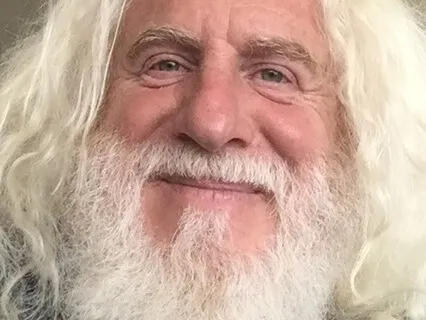
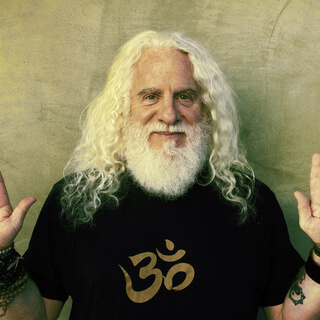
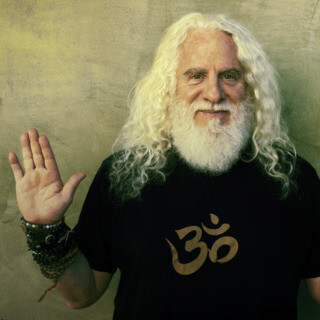
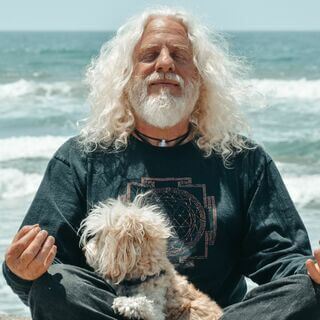
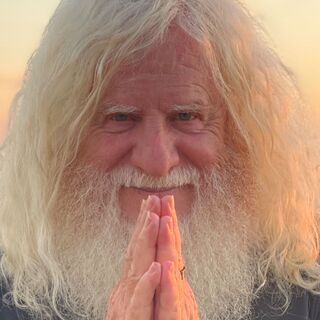
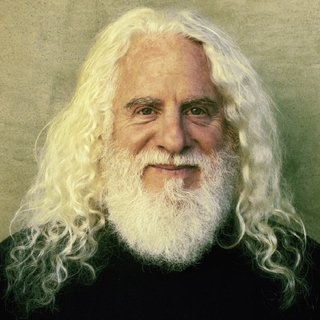
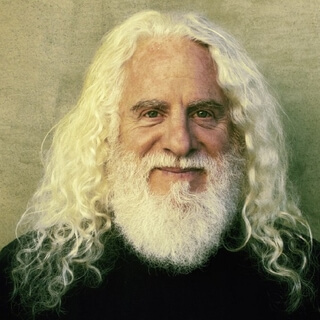
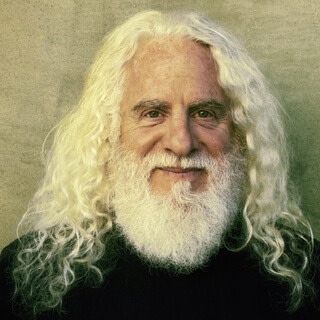
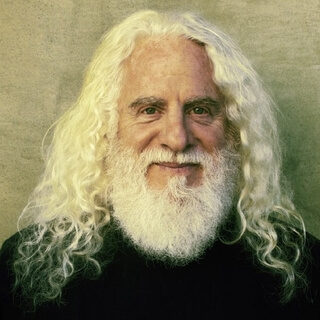
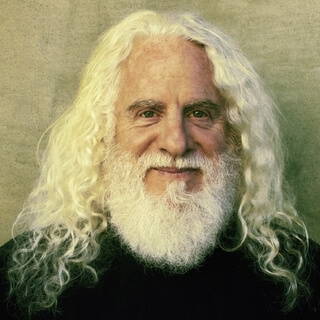
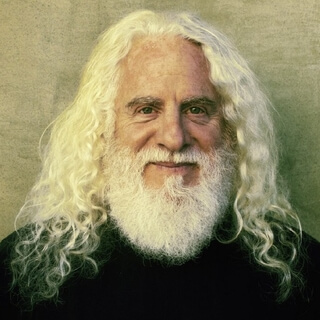
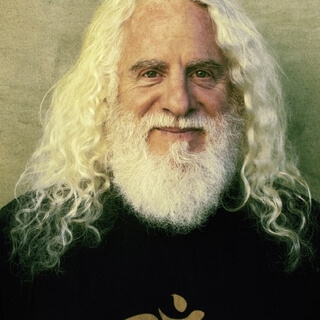
This is davidji and you probably know me best from the meditation tracks,
Courses and lives I do right here on Inside Timer,
But in addition to the meditations I create for you on this platform,
I'm the founder of the Davidji Meditation Academy and I launched a podcast this year,
Which drops episodes every Tuesday.
The show is called the Shadow and the Light Podcast and it's become a bit of a global sensation with listeners streaming episodes in over 3,
000 cities and 100 countries.
The podcast can be streamed wherever you listen to your favorite podcasts,
But I wanted to share a taste with my Inside Timer community so you too can feel the love.
I co-host the podcast with Elizabeth Winkler,
One of my certified meditation teachers,
And in addition to being a brilliant therapist and transformational healer,
She's also a teacher right here on Inside Timer.
Each episode is about 30 minutes,
So not too much of a commitment,
And we explore the deep topics of emotional healing,
Connecting to the present moment,
Self-love,
You know,
That's pretty important to me,
And overcoming challenges in your life.
And we kick off every episode with the amazing Jamar Rogers of American Idol fame,
And of course he was a finalist on The Voice,
And I had the honor of training and certifying him as a meditation teacher.
He wrote,
Produced,
And sings our signature song on the Shadow and the Light Podcast,
So sit back and enjoy the ride.
Welcome to the Shadow and the Light Podcast with internationally renowned meditation teacher,
Devaji,
And heart healer and psychotherapist,
Elizabeth Winkler,
As we guide you through our unique fusion of ancient wisdom and modern psychology.
Get ready to awaken your true essence,
Heal your wounds,
And transform your shadow into light.
The Shadow and the Light.
Hi Devaji.
Hi,
Welcome to the Shadow and the Light Podcast.
How are you doing?
I'm doing great.
So,
You know,
I've been having a lot of sessions recently.
There's something that comes up often about getting stuck in patterns in your relationship,
Getting stuck in your ego,
You know,
And maybe we need to talk a little bit about what that is,
But I have this acronym,
You know,
I love acronyms.
I don't actually know if I've shared this one with you.
This is not my own.
I heard it.
I don't know who created it.
So if you created it,
Let us know.
It's JED,
J-E-D.
If I'd created it,
I would have called it Jedi,
Since I'm such a Star Wars junkie,
We'll come up with the I.
So JED is justify,
Explain and defend.
When we justify,
We explain and defend,
We are empowering our egoic place and it keeps us very stuck.
And in relational conversation,
We are often challenged by this and we are justifying,
Or defending our position,
Which does not allow us to hear or open up to new pathways.
As Pema Chodron would say,
I'm channeling one of her quotes,
The truth you believe and cling to makes you unavailable to hear anything new.
So justify,
Explain,
Defend.
So I just thought it would be a nice thing to talk about with people,
Because we all do this.
Okay,
I've got one more.
I've got the I.
Insist.
Oh,
Yes.
I love it.
It's Jedi.
Beam in the Mandalorian right now.
How cool is that?
Jedi.
Justify,
Explain,
Defend,
Insist.
Yeah.
You thought it was JED.
It's freaking Jedi.
And it's ours now.
Yeah.
Yeah.
I love it.
Okay.
So,
But you never insist.
Nor do I.
Two Type A's letting go of our Type A-ness.
You must call it Jedi.
But anyway,
So,
You know,
This is something when I'm working with couples,
And I work with a lot of couples,
I help people uncouple,
I help people who are considering uncouple come back together as well.
And this is something we use as a stabilizer.
It's not like you can't do that,
But be aware when you're holding on to justifying,
Explaining and defending.
Well,
Why would we feel the need to?
What's going on internally when we feel that need to?
People feel unheard.
People feel unseen.
People feel misunderstood time and time again.
And so they have to re-explain,
They have to justify,
Explain,
Defend their position or what they see you as doing,
Which goes back to conversations you and I have had before about how I'm having a relationship with an idea more than a reality of allowing this person to be something fresh and new.
Could you just slow that down and say that again,
Because that's the mic drop line.
We are having relationships with an idea with people in our lives.
We are filling in the blanks.
We are not allowing people to be fresh and new because everything is that,
Including yourself.
It's like you can't step in the same river twice.
You yourself are a river.
Everything is a river.
We walk into relationships and we reference who we think that person is or who they have been and it doesn't allow anything to be fresh and new.
This is how the brain works.
This is not always easy.
This is why mindfulness is something we all can hopefully be working on.
Mindfulness and equanimity are the two pieces to allowing things to be fresh and new in our lives.
Mindfulness does not just apply to other people.
It's also to yourself.
How are you applying this to yourself?
How are you working with mindfulness?
How are you working with equanimity?
Meditation helps.
And this concept of equanimity,
It's not really well understood.
We can talk about it a little bit right here.
It's one of the most important aspects that we can live our lives,
Sort of like in our back pocket or just using it as an important tool.
Equanimity is something that we can aspire to.
We would call it having an evenness,
An even thread that just rolls through us a little bit because we're going to have all these highs and lows,
Emotional highs and lows and experiential highs and lows and moments that we have no control over,
Highs and lows coming into us.
And it's all about what are we doing with that rising and falling,
With the twists and turns,
All the stuff that's going on externally that we receive and then feel we have to do something with.
Equanimity allows us to receive the universe more easily and more gracefully.
And perhaps maybe there's a millisecond,
Just like this little hiccup of space where we can respond just a little more thoughtfully,
Perhaps just a little more mindfully.
And that will allow us to maybe,
Maybe make a better decision in that moment.
And that is the key.
And that is the challenge.
How many times have we said,
Oh,
I wish I had thought through that sentence before I blurted it out,
Or I wish I had just eased back a little bit and made a more conscious choice.
And we're not usually saying,
I wish I could make a more conscious choice.
We're just saying,
Ah,
I could have made a better decision,
Or oof,
I didn't think that one through,
Or I didn't think of the consequences of that particular action.
These could be huge decisions that we make.
This could be,
I'll go through the yellow light.
I'll have the affair.
No one will get hurt.
I'll not call that person back.
We can go down the list of in the hundreds of thousands of those moments where we're at a crossroads,
A mini crossroads or a giant crossroads.
And then suddenly we have to realize,
Oh,
If I had just been able to have a breath in there,
Might have made a better decision.
That's one of the most important and beautiful characteristics that we can cultivate.
And it doesn't mean you're beige.
It doesn't mean that you're just neutral on everything.
It means that you're measured.
Chapter 2,
Verse 48 of the Bhagavad Gita,
Which says,
Yogasthā kuru karmāṇi,
Establish yourself in the present moment and then perform action.
That's what we're doing.
We're giving ourselves the chance to just get into that yogasthā,
That peaceful place,
That more thoughtful place,
And then show up as our best version.
So I believe that equanimity is really the super ingredient that can make our lives so much happier and fulfilling.
Absolutely.
Meditation,
Obviously,
Working with the sensations of your feelings in your body,
Which is something I do a lot with clients,
Starting to get to know if anyone's feeling anything at this moment,
Bringing awareness.
What are you noticing?
Where do you notice that in your body?
If you're noticing the expansion and contraction of breath,
Just noticing that,
Not judging it,
Noticing.
That's equanimity of just noticing the weather in the sky.
I often talk about like the emotional nature of things is like weather.
If there's thunder or lightning or hurricane,
It doesn't hurt the sky.
The sky is equanimous.
It is untouched,
Is unbroken,
Just like the anahata is that.
But my favorite line,
I gave this book to you a long time ago,
The Third Zen Patriarch,
The opening line of the Third Zen Patriarch,
I think is talking all about equanimity,
Which just the first line,
The great way is not difficult for those not attached to preferences.
The great way is not difficult for those not attached to preferences.
It's people misunderstand.
They think,
Well,
I can't have a preference.
It's not about that.
It's about attachment.
It's all about attachment,
Which is what the Gita is talking about as well.
If you are attached to it,
How easily can you let go and flow with what is and when we are in justify,
Explain and defend,
We are very attached to the way we look at something and it needs to be that particular way and we are not open to joining,
Becoming in union with the present moment or what the other person has to offer.
Yeah,
Well,
Your Jedi methodology,
Which I'm a part of now,
Your Jedi methodology really speaks to the most ancient teachings that we are aware of,
Because originally equanimity was can you be so measured that you are immune to the eight worldly winds.
And so we know that the Buddha talked about this,
So we know that this teaching is at least 2,
600 years old.
Those eight worldly winds,
We all know them.
These are our triggers in life.
Gain and loss.
And what are we doing with that?
How are we showing up with that?
Pleasure and pain,
Praise and blame,
And fame and disrepute.
Those are those eight worldly winds that sweep into all of our lives.
These are universal.
Everyone is touched by them.
And if we can cultivate a little equanimity that when gain comes into us,
We will respond to it with grace.
When loss comes into us,
We will respond to it with strength.
When pleasure comes into us,
We will not get euphoric and insane over it,
But that will allow it to really wash into us and strengthen us for offering that pleasure to other people.
When pain comes into us,
We won't go down that rabbit hole of pain and suffering and oh-poor-me-isms.
When praise comes into us,
We take it with humility,
As opposed to,
Well,
Of course I'm entitled to that,
How come there's not more?
And when blame comes into us,
Again,
This goes back to the D and perhaps the I in Jedi,
That we won't be like,
No,
No,
No,
You don't get it,
I'm defending,
I'm insisting.
And when fame comes into us,
We use it to help others,
And when lack of fame or disrepute or infamy comes into us,
We use it as an opportunity,
As a teacher,
To make better choices and step into our power.
So equanimity is that path that allows us to spin these eight worldly winds without being buffeted about,
But instead to recognize them and use them and channel them to be better expressions of ourselves and support other people in the process.
I have a mantra for this,
A lemonade mantra,
Maybe,
Maybe not,
Because judgment is always what's standing in the way of us being in equanimity,
In my opinion.
There's many things,
But judgment is a big piece of it and our mind loves to judge,
It's just natural.
So maybe,
Maybe not.
There's that story about the monk,
Maybe,
Maybe,
Is that so,
That story?
Or there's also the other story of the monk with the sweaty palms,
Both of those stories,
A couple of monks' stories.
Tell me the sweaty palms monk.
The sweaty palms story,
Eckhart Tolle talked about it in A New Earth,
He was talking about this monk who had been meditating,
I forget how many years,
I'd have to pull it up,
But he knew he had not reached his samadhi or his level of enlightenment because his hands were still sweaty when he was doing some sort of,
And so he said,
I've got to go back into the forest.
That was his teacher in that moment was his sweating palms,
That he was nervous,
Fearful or whatever that was.
We don't really know,
There's,
Again,
Pretty sure I have no idea.
So to practice,
If anyone's feeling challenged by these Jedi patternings of judgment,
Being,
You know,
Judgmental,
Explaining,
Defending,
Insisting,
Practice,
Maybe,
Maybe not.
That has been a mantra that I have offered and I use all the time and it really keeps you open to new possibilities.
Love that.
Sweaty?
Maybe not.
Yes,
It's one of the most powerful things that we could say,
Because going back 2,
000 years to Patanjali,
When he talks about the second sutra explaining what yoga is,
Yoga Chittavrtti Nirodha,
Oneness is the progressive quieting of the fluctuations of the mind.
And the third sutra,
Tara Drashtu Svarupe Avasthanam,
Which means,
And then the seer abides in its true nature,
Which is pure unbounded consciousness.
And then the next sutra,
He says,
Other times there are modifications of the mind.
So he's saying,
Yeah,
Yeah,
Yeah,
Your true nature is pure unbounded consciousness.
But guess what?
Here you are in this tangible real world with bills to pay and traffic lights to stop at and relationships and all this other stuff.
And so he says the five modifications of the mind that prevent you from abiding in your true nature are correct cognition,
Which is,
I'm right,
Let me continue my diatribe on being right.
Incorrect cognition,
I think I'm right,
But I'm actually not.
The past,
Memory,
He calls it memory,
But we call it the past,
Imagination,
He calls it imagination,
We call it the future,
And sleep,
Which includes dreams.
But I love the fact that he's not saying,
Oh,
It's some delusional thing.
Even right cognition,
Even being insistent,
I'm so right that I need to justify,
Explain it,
Defend it.
And I insist that I'm right.
Righteousness.
That has moved you so far away from abiding in your true nature,
Which is pure unbounded consciousness.
So it's not just,
Oh,
You're going to be led from the path by wrong thinking.
It's also right thinking,
That you will be led from the path.
It's your insistence on any aspect of you being right.
Tadda drastu swaroopei avastadam.
Love that.
Wow.
I found the story if you want me to read it.
Yes,
Please.
Sweaty palms story?
Kassan,
A Zen teacher and monk,
Was to officiate at a funeral of a famous nobleman.
As he stood there waiting for the governor of the province and the other lords and ladies to arrive,
He noticed that the palms of his hands were sweaty.
The next day,
He called his disciples together and confessed he was not ready to be a true teacher.
He explained to them that he still lacked the sameness of bearing,
Which is equanimity,
Before all beings.
He lacked the sameness of bearing before all beings,
Whether beggar or king.
This is exactly it.
He was still unable to look through social roles and conceptual identities and see the sameness of being in every human.
He then left,
Became the pupil of another master,
Returned to his former disciples eight years later,
Enlightened.
And with drier palms.
That was his teacher.
People come to me.
I'm anxious.
I have panic.
Whatever it may be,
I want to help them create safety around that and then allow that shadow to be the doorway to their expansion of life.
Right.
So imagine this.
The eight worldly winds are not just,
Oh,
It's my fame and or my disrepute.
It's even the funeral that I'm overseeing.
Is this an invisible person or a person highly visible?
And so that's so great because those eight worldly winds aren't just touching you in your own ego in a minute.
They're touching that world that we're walking through in every moment.
We often think of this as the fear.
We're always talking about like fear,
Like what makes me anxious or worried or what am I ashamed of?
It's also,
As in this story with the monk,
It's that which I revere,
Like,
Oh,
If I were around this famous person or whatever,
That is just as much of a projection,
Something that we're not able to integrate our own within ourselves.
That's the light.
So some people's shadow is actually called a light shadow.
Some people identify more as a dark person,
To use the words like dark or light,
Like a shadow persona.
So their shadow within themself is a lighter one.
And so those,
They often find that in people that they revere.
So when you do a projection exercise,
Which I do with people often,
It's a writing exercise where you can look at not only people that piss you off or disgust you,
Which will show you a darker shadow,
But the light shadow are the people that you're like,
Oh my God,
They're so amazing.
I can never be like that.
You know,
Like,
Oh my God,
I would die if I met them.
You know,
Sort of thing.
The sweaty palms.
Well,
Think about this though.
How intense is this?
In this kind of environment,
This guy was having more reverence for a dead famous person than for an alive,
Less famous person.
If you think about perspectives of life or of existence,
To have such reverence for the dead queen,
Even overshadowing this live person who's distinctly not a queen or royalty next to you,
Where's our attention going?
What's our perspective?
And this comes back to Jedi philosophy.
Can we live in equanimity?
And really that just means,
Can we take a breath between each moment?
Can we cultivate the space between?
Can we allow whatever's coming into us just to rest in this beautiful space just for a beat before we then think,
Speak,
Or act?
Well,
A way to bring this into the real world,
You're in the Starbucks line or you're in some line,
Wherever you are,
Right?
Do you have the equanimity of mind to treat the person in front of you,
The person behind you,
The person that you're ordering from in the same equanimous manner that you would to the place that you're going to?
Or is this a waiting period of your life?
If you're in traffic,
How are you interacting with the cars around you or someone who's going too slow?
This is where we can start to see in the little places of our life where we're kind of feel like we're passing through.
How are we treating those areas?
It really kind of bubbles up a lot in those areas.
And those are wonderful moments of teaching to just note,
Not judging yourself,
But just noting these areas where we put people in roles to let go of that and to allow yourself to be more connected.
Yeah.
Well,
It certainly speaks to the titles and labels that we're all applying to ourselves and others.
And probably every one of us here has been in a room or hanging out with someone who we thought for some reason,
Maybe a good reason,
But we thought that these people were better than us.
And then we created a whole story of all of our interactions with this person on an elevated level and us on a lower level for that interaction.
And then it stuck.
Then we have that story embedded into us for the rest of our lives.
But when we look at someone,
You can't see it,
But my hands are ones higher than the other.
And then suddenly it's like,
Oh yeah,
That's who I am.
This person is distinctly above me.
It's not a namaste mindset,
But I'm living it.
Tatvam asi.
Right.
Tatvam asi.
It's one of the Mahavakyas.
Thou art that.
Whatever you're pointing at,
It actually is you.
As a practice for anyone who's challenged by that,
You could imagine,
Let's say you're in a room,
You're feeling that distinction,
That separation.
You're feeling that different level.
You're at a lower level or higher level.
That's something that you feel like you're stuck in.
And maybe some people listening to this feel like,
Well,
How do I get out of that?
We can use breath.
We can anchor back into the present moment in some form or fashion.
We can use mantra.
Maybe,
Maybe not.
I can handle this.
But also connecting to that child within yourself and the other person.
We all were once those innocent children.
And remembering that true nature,
That child presence,
I think is also a helpful practice to bring in.
So important.
So critical.
And the question is,
Is a lot of these teachings,
How do we keep them more organized?
How do I know?
This happens in my teacher training all the time.
Someone says,
Wait a second.
Is that the three agnis,
Or is that the four agreements,
Or is that the five remembrances,
Or is that the six paramitas,
Or is that the seven spiritual laws,
Or is that the eight noble path,
Or is that the eight limbs of yoga?
We can go on and on.
It can be overwhelming.
And I love one of the things about this podcast is we distill it all down.
We give you that tool to use in the moment.
So Elizabeth,
We're walking through the world.
These are all opportunities for us to step into our power and own our impact.
These are all opportunities for us to take a breath.
I love the various breathing techniques.
And I believe in this journey from moving from state,
Right?
State is the experience that we're having.
If you just closed your eyes right now and took a long,
Slow,
Deep breath in,
And let that go,
That's a state.
How do we move from state to trait?
Trait is that being embedded in us all the time.
I believe you and I,
And the hundreds of thousands of people that have shared meditation with,
That over the years,
Over the decades,
It's a trait of ours.
It's not a state.
When we're doing it,
It feels blissful,
Or it feels calming,
Or it feels tranquil.
And certainly we're approximating some type of state,
State of mind,
State of being.
But then suddenly,
If you do it enough,
Show up and live it,
It becomes an actual trait.
And so now it's not a title or a label.
It's actually who I am at my core.
I receive the world coming into me a little bit more in slow motion.
And I believe everyone here,
If you show up proactively and have some kind of present moment practice,
We can actually turn a state into a trait.
And we can embed that state so consistently in the law of spaced repetition until it becomes us.
I'm from New York,
Shot out of a cannon,
Type A,
Take no prisoners,
Sharp elbows.
And that was reinforced throughout my childhood.
So I think it's a nature-nurture combo.
Pure DNA mixed with reinforcement of that.
And I have been on a very,
Very clear and consistent journey over many,
Many years to unlearn a whole bunch of stuff that was conditioned into me,
Perhaps even in my DNA.
And again,
We'll talk about this in our Ancestral Healing episode on our podcast.
This has made the powerful shift because I'll find myself in some kind of mindset that's not really nourishing,
Not representative of who I want to be.
I don't want to be that.
I don't want to have these thoughts.
I don't want to be thinking about revenge and I don't want to be thinking like I'll show them and I don't want to be thinking they're wrong.
Let me show them that they're wrong.
I don't want to be that.
And that used to be the most important thing in virtually every interaction that I had through a process.
And it's a journey.
I don't think there's a finish line involved in this,
But at a certain point,
Those states of mind,
Those states of being actually become,
Have become a more accurate representation of who I am.
The states have become traits.
And I think everybody listening right now,
You can also,
If you want to go that route,
There's probably other aspects of you that you would,
I don't want to be that anymore,
Where that doesn't really serve me or that's not the best expression of me.
And if we can be aware what the opposite of that is and how we can cultivate that,
Whether that's being a liar or being impatient or being rude or seeking revenge or trying to be right.
All those things,
That's all just training.
All that stuff is just so,
So overrated.
And we can seize it and own it and really move into these other expressions,
These better expressions of ourselves.
Yeah,
Absolutely.
And the thing is,
You cannot shift anything that you're not aware of,
Right?
So you have to first bring your awareness to it.
So so many of our shadows are just that,
They're unconscious.
So whatever's disturbing you in your life,
Maybe it's not in you.
Maybe there's a lot of unconsciousness around what it is that you want to shift.
Well,
Look at what you don't like in others.
There's your doorway,
Because what you don't like in others is something that you've denied within yourself.
Right.
What's that journey look like to what you can't stand in others and then translate that into you and then making that shift?
I just don't want to be that anymore.
We all have the power.
So think about right now,
If you could change one thing about your personality or one thing about your tendencies or one aspect of yourself that other people may have commented,
And you finish the sentence,
Whatever that is,
Whatever it is,
You can powerfully shift it.
And it's bean by bean,
The bag gets full.
You can one day at a time,
One meditation at a time,
One breath at a time,
Shift your life from where you are to where you'd like to be.
And also shifting your judgment around it.
So often we're judging or shaming it.
And this is not about not having it.
It's about our equanimity with this aspect of our being,
Because we have the whole spectrum of humanity within ourselves,
Right?
It's when we judge it or shame it,
That we actually are prisoners to it.
So we do have jealousy.
We do have all of these aspects from love and to hate within us.
We are multidimensional beings,
But the more that we can bring awareness to them,
And by going there,
We have more compassion for ourselves and others.
It's when we deny it in ourselves that we actually become more of a problem or more of a continuing energy of it.
So if there's just one thing that someone could take away and perhaps take that very,
Very first step,
What is it?
I would say doubt.
But it's so interesting because doubt can be so debilitating.
And at the same time,
When I've really let myself go there,
It's been a true gift because it's the doorway to not knowing.
When I allow doubt to not just go be insidious in my mind,
Doubting this,
And I just say,
I'm pretty sure I have no idea,
I don't know.
And then I release it from my mind and get more present,
Then I can take that step,
That trust into that uncertain space.
So you're not talking about second guessing some big decision you've just made.
No,
But I have.
No,
It will start there.
It will start there.
It'll be doubt about anything.
And so.
.
.
Did I do the right thing?
Anything.
Anything.
Doubt about myself,
Doubt about how I'm working with something,
How I'm being in a relationship to others or myself,
Anything.
And so I can be very insidious or then I can,
Of course,
You need to inquire into this,
But it can become such a rabbit hole that you get lost in.
I think that when you can allow these things to really sit with them.
I think that we run from doubt.
We run from boredom.
And when we can give space to it and go beyond it,
There's often a lot of wisdom.
Well,
I think because societally,
Biblically,
These are loser traits.
The winner says,
I know,
Right?
That's the thing.
If you want to be the winner,
If you want to be the thriver,
You can't second guess.
You can't have a moment of like,
Uh,
I'm pretty sure I don't know.
You can have,
Maybe,
Maybe not.
Right.
But through experience.
.
.
Certainty.
Everybody knows someone who's been wrong,
But they say it with such certainty that we followed them off the cliff,
Right?
They were like,
No,
No,
Here's the answer,
Everyone.
They were so certain and it was so obviously wrong.
We listened to them.
We've done it socially.
We did a lot of it during the pandemic.
We did a lot of it politically.
We've done it a lot,
Probably in our family structure as well.
There was a friend I had,
He was always so sure of himself and wrong.
And we were like,
Okay,
Let's do it.
I got into so much trouble.
As a teenager,
Listening to this person because they were so sure of themselves.
But I think your lemonade card,
Maybe,
Maybe not,
Should be such a powerful and important tool in everyone's back pocket.
Because even if we are clear on here's the path,
The process of crystallizing that and the process of taking the next step,
First step,
Maybe you go,
I don't have a clue,
But I'm going to take this step.
And then we decide,
How does it feel?
How does that feel?
Does it feel good or not?
Yeah,
You got to,
You get to discover through your own experience because we're all exploring and we're all growing and evolving,
Hopefully,
Right?
Taking that step into uncertainty and it's a scary thing to do,
But through the experience of it,
We come to know something deeper within ourself and discover something beyond what we've known before.
Wow.
Wow.
So intense,
Elizabeth.
Thank you so much.
My name is David G.
I'm here with Elizabeth Winkler,
The alchemical transformational goddess of healing.
And this is the Shadow and the Light podcast.
Join us for our next episode,
Wherever you listen to your podcasts.
Share this with your friends and loved ones and share the love.
And allow Jamar Rogers,
The magnificent Jamar Rogers,
To guide us out.
The light has come to set us free.
The light has come to set us free.
The shadow come because it loves us.
The shadow come because it loves us.
The shadow come to set us free.
The light is here to remove all our fears and to bring new light.
The shadow and the light.