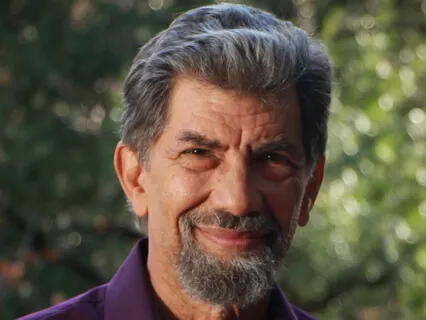
The show you're about to hear is a recording from Dr.
Miller's webinar series titled Life Meditations.
He began this series in response to the pandemic,
And his goal has been to provide wisdom,
Practical tools and comfort to people during these stressful times.
So me just start off by thanking you all for being here.
It's great to be here and to share with you.
Today we're going to be talking about habits,
About bad habits,
Habits that we want to get rid of.
There are good habits and there are bad habits.
Anything that you do regularly,
And as you may know,
If you want to develop a good habit,
You want to perform in this new way,
Usually for about three weeks,
And if you want to start exercising,
If you want to exercise four days a week,
Let's say four days a week,
Do it four days a week for three weeks.
Always wear the same shoes,
Always wear the same clothes.
You can wash them,
Of course,
But make it a regular kind of thing.
Hopefully do it at the same time each day,
And after three weeks,
You will have developed a habit.
You'll find it's the fourth week.
By the fourth week,
It'll be so much easier to get yourself out there and doing it than it was on that first week.
So you'll find that pretty soon it becomes so much a habit.
Not only is it easy to do,
But then if you don't do it,
You don't feel quite so comfortable.
What's the matter with me today?
Oh,
I know I didn't work out.
So it's by repeatedly doing something,
And as much as the same things if you want to,
You want to do a great job in studying,
You want to study at the same time every day.
You want to sit in the same chair and with light coming over the same shoulder and using the same pen,
Make everything as same as possible,
And then just do that on this everyday basis.
And it will be much easier to get yourself into studying once you've created that positive habit.
And what happens is when you do everything the same,
There's a programming effect that happens.
And what that means is that the act of studying,
Being at the desk and having your mind let go of all the other thoughts and shift into purely studying,
If that's what it is,
Those all become connected to each other.
Neurologically,
What we say is neurons that wire together,
That neurons that fire together,
That every time you make all of these associations,
Everything exactly the same again and again and again,
Then the cells of your nervous system actually connect in different ways.
New synapses form,
Dendrites move out and connect with other cells.
Back in the old days,
A lot of scientists believed that we couldn't change the wiring in the brain.
And I was one of those who didn't believe it,
Fortunately,
Back in the 70s,
Which kind of gave me a lot of the ideas that I have that you can really change things.
You can really rewire the brain and reprogram the mind.
So that's a good habit.
What about bad habits?
Well,
Let me,
And this is really important,
It's made a lot of difference to me in terms of my understanding,
How I could deal with habits in my life or anyone else's,
How I could deal with the people that I was seeing.
It goes back to old Ivan Pavlov and his dogs.
And of course,
What he did and the part of the experiment that most of us know,
Is he puts the dog in a room,
Familiar place,
And the dog's in the room,
Okay.
And then he rings a bell,
The dog hears the bell,
Huh,
I don't know what that is,
I'm a dog,
You know,
And he feeds the dog,
Huh,
I know what that is,
Dog just kind of chows away,
Good.
The next day,
He puts the dog in the room,
Rings the bell,
Gives the dog the food.
Now,
When he gives the dog the food,
When the dog sees the food,
Of course,
His eyes brighten up,
His pupils dilate,
His tail starts to wag,
He starts to drool,
Wraps his chops,
This shift in the blood flow away from his muscles and towards his stomach,
As his body is getting ready to process the food that he's about to eat.
Well,
After you've done this three,
Five,
Seven times,
Whatever it is,
Now you put the dog in the room and you simply ring the bell,
And the dog's tail wags,
His ears go up,
His pupils dilate,
He begins to salivate.
In other words,
And we call that a symptom complex,
Because each of these is medically,
It's not very sexy,
But they call them symptoms.
So that symptom complex develops.
And part of that whole complex is then the eating of the food.
And so now you say the dog has been trained to eat the food,
Trained to salivate at the ringing of the bell.
But a funny thing happens if every day you just ring the bell,
But you never feed the dog again at that time of the day,
You feed him in the evening,
You ring the bell in the morning,
Pretty soon it's extinguished.
It automatically extinguishes itself,
Because positive behaviors need to be reinforced on a regular basis.
And so the same way,
Once you're studying the way we described before,
Or doing your jogging every morning the way we described,
If you go for two or three weeks and you don't do it,
Guess what?
No,
You don't have to start all over from the beginning,
But you'll find it's difficult to get back into it.
You know,
After you've been sick,
You know,
It's kind of hard after you've been on vacation,
It's hard to get back into the groove of work.
It's just characteristic of how the brain works.
And of course,
A part of the brain that we're talking about is not a part of the brain we have any conscious control over,
Because you can't say to yourself,
Okay,
Desire to go exercise.
In the same way,
You can't just say desire to stop eating sweets or desire to stop smoking cigarettes.
You just can't do well.
If a person can do that,
It's an unusual person.
That person usually doesn't have any bad habits,
So I don't know.
Okay,
So that's positive conditioning.
And what Pavlov says is that when there's a set of phenomena or symptoms that happen together,
Neurons that fire together,
Wire together,
That reintroducing one or more of those of that symptom complex tends to evoke the entire conditioned response.
And how we see this is in the morning when you go to get the dog who's been trained in this way,
And you take the dog to the room,
Before you've rung the bell,
Dog salivating.
The dog is not thinking,
Hmm,
I'm in the room and this is where it always rings the bell and the bell is what I associate.
Doesn't happen that way.
It all happens in an unconscious place in what's called the paleomammalian cortex,
Which is the highest level of the dog's mind,
Which isn't terribly bright.
So then groups of things that happen together tend to cause the expectation the others will happen the same way.
Just like if you have a certain teacher that sometimes lectures to your class in school but it's a really foul teacher that no one likes.
When you see that person walking towards the door of your classroom,
You feel a sinking feeling inside.
That teacher hasn't done anything at all.
You're already feeling rotten.
Again,
That's this part of you.
It's not because you're like,
Oh,
There's a teacher.
I think I'll feel rotten.
Okay.
I think I've made that point that it's unconscious.
Now the second piece is the negative conditioning.
And in this situation Pavlov puts the dog in the room.
The room has been altered so that the floor is a network of wires.
And now you ring the bell,
A different dog.
Let's just say it's a different dog or the same dog that didn't get programmed before.
And now you ring a bell.
But when you ring the bell,
You run electricity through the wire.
So you give the dog a fairly painful shock.
Well,
The dog tucks his tail between its legs.
It starts to howl.
It starts to run around in circles.
It may defecate or urinate,
Depends on how strong the shock is.
And then if you have,
Let's say you have a little door.
Well,
We'll get to the door.
Okay.
So you do this two or three times and the dog pretty much knows,
Okay,
Here's that bell.
He starts running around and howling with his leg between his legs and his tail between his legs and so forth.
But now,
If you have a little door in the room and you keep the door locked,
You let the dog run around for about five minutes and then you open the door and the dog runs out the door.
Okay.
So now you have the dog.
The dog is in negatively conditioned.
Interesting thing is that once the dog's been conditioned in that way,
Of course,
When you ring the bell,
He'll act that way.
But if you do it day after day,
He will keep doing it the same way.
He will keep,
In other words,
It doesn't extinguish,
He will keep that negative conditioning.
And if you attach a strain gauge to the dog's collar and see how hard the dog is pulling to try to get to that door,
You'll find out that every day he pulls harder.
And then you let him go and he runs through the door.
Next day,
You ring your bell and he pulls even harder to go through the door.
Now mind you,
The dog isn't getting shocked anymore.
And yet he's pulling harder and harder to get out the door.
Why is that?
Can you guess?
Well,
What happens is running through the door is associated with an enormous relief.
And by the rules of positive conditioning,
Anything that is traditionally or continuously associated with a positive experience becomes positively programmed.
So there's more desire for the dog to run through the door every day.
That door is the dog's escape route.
What does that have to do with us?
Our bad habits are simply escape routes for the unconscious part of the mind.
There's some sort of pain,
Some sort of agony,
Some sort of sadness or fear or frustration or other uncomfortable feeling that we have felt in the past.
This unconscious part of our mind,
This the paleomammalian cortex,
Just like what the dog has,
Except it's not conscious to it.
That part of us has learned that doing this behavior brings a little relief.
And so the reason you're driven toward the habit is because this part of your mind is looking for some kind of relief.
And there's usually some trigger that sets you in motion,
Something that's triggering discomfort,
The thought of having to do your income tax or something like that.
I got to do my taxes.
I'll light a cigarette and smoke a cigarette.
Why do you smoke a cigarette?
I felt like I wanted a cigarette.
No,
The reason you're smoking a cigarette is because this unconscious part of your mind knows that when you do your taxes,
You feel miserable.
And it is turning to the cigarette because it has learned that by smoking a cigarette,
Then you have a moment of relief from that.
So I guess you're all really eager to discover what we're going to do with our poor puppy.
And here's what you do is you bring the dog in in the morning and you give him food,
Give him a really delicious meal.
Now you've recorded the sound of the bell on the tape recorder.
And as the dog is joyously eating the food,
You bring the bell but very softly,
Very softly.
The dog's ears kind of twitch a little bit like this,
But it doesn't stop eating.
Finished.
Next day,
Bring the dog in,
Feed him this delicious meal.
Mmm,
This is really good.
And you ring and you can turn the bell up a little louder.
And every day you bring the dog in,
You turn the bell up a little louder,
A little louder.
And at the end of 10 or 15 days,
You bring the dog in and you don't feed him.
You just ring the bell at full volume.
You ring the bell that used to cause the dog to run around screaming and yelling,
Defecate on the floor and generally freak out.
What happens now when you ring the bell at full volume?
Can you guess?
Salivates,
Wags his tail,
Eyes get bright.
Okay,
Where's the food?
Where's the food?
Because the bell was never what we call an unconditioned stimulus like a shock.
It's just a stimulus that has been conditioned to make the dog act as if the dog is getting a shock.
Isn't that interesting?
So the same thing.
I had a patient I think that was most dramatic for me was a woman who came to see me because her company,
It was in San Francisco,
But they were moving to a new office that was on the 17th floor of one of these gigantic high rise office buildings.
And well,
It turns out that she was afraid of heights and she couldn't look out the window of a second floor house even with the window closed.
She just never went up in anything.
She could not stand the thought of going and yet her office is moving and it was a really good job.
So she came to see me.
And I worked with her.
I used a reframing technique,
Really similar to the kind that we use in EMDR,
But we just kind of reframe the situation.
And I reframed the situation of her riding up on the elevator that as she rode up on the elevator and saw the other people on the elevator,
She would feel this tremendous urge to smile.
And as she smiled,
She would feel completely relaxed and when she got out on that floor,
She would be comfortable.
And sure enough,
She came to see me two weeks later and she says,
You won't believe it,
But it worked perfectly.
Thank you so much.
And I said,
You're welcome.
Bye.
And that was the end of it,
I thought.
About two or three years later,
I was Christmas shopping in San Francisco and who should I run into but the same woman?
And she said,
Dr.
Miller,
She says,
I've got another surprise for you.
And I said,
What's that?
She says,
Guess where I'm going this weekend?
I said,
I don't know.
She says,
I'm going to climb El Capitan.
Right?
And Yosemite.
It's like,
I don't go near that edge and here she's going to climb up and sleep in a little hammock on the side of the rock.
Are you kidding me?
Well,
What happened?
She was afraid to see heights.
So she had never experienced what the world looked like when you get up at a high place.
So once she had conquered the 17th floor of her office and looked out the window and saw how beautiful it was,
My God,
This is wonderful.
Then she started going to places and going up to the tops of towers and pretty soon she started rock climbing and the rest is history.
So exactly those things that trigger your bad habits can trigger good habits.
You simply have to re-associate them in order to get that to happen.
So we talked about the conscious mind.
And this is very critical,
I talk about it all the time because it's the key to everything.
It's the key to all of our problems individually and culturally,
Societally.
It's all the fact that we do not understand what Dr.
Freud tried to teach us about.
We didn't learn,
But other people did.
Those people who are busy programming our minds at the cultural level,
The people who are writing the propaganda that's changing our minds,
The attention engineers.
I mean,
There's tens of thousands of people that are called attention engineers.
They're PhDs and their specialty is learning how to manipulate your attention.
Because if they can get you to pay attention to that screen of your computer or the screen of your television for the next five or ten seconds,
They will inject an idea that will shift the way your subconscious mind sees the world.
You are being programmed the same way that Pavlov programmed his little puppies.
So my goal is to teach us all how to take over control of the subconscious mind,
To seize a revolution,
To foment a revolution and seize control of your life,
Basically.
So these two levels of the mind,
The conscious and the unconscious,
They treat the world differently.
The subconscious part of your mind,
The limbic system,
The paleomammalian cortex,
That which we share with all other mammals,
Thinks according to system one.
And there's our system one,
That's when I like to call our monkey mind.
And that monkey mind lives in our monkey brain,
Which is down in the deeper parts of the brain.
System two,
This lives up in our neocortex.
This is in the higher part of our brain.
Here's our system one,
And it's located in this part of the brain.
That's this down to the bottom is our reptilian brain that we share with the alligators and the lizards.
This is our paleomammalian cortex limbic system.
This is the emotional part of the brain.
And it's the part that is responsible for all the stress.
And what we're talking about has to do with the stress situation.
Believe me,
That dog that you shocked was feeling a lot of stress.
And this is the part of the brain that's responsible for that.
Your amygdala,
Your hippocampus,
Your cingulate gyrus,
All of those subconscious areas of the brain.
Well,
This is where your monkey brain lives.
This thinks in its way of thinking is called system one thinking.
And then system two thinking is happening up here in our neocortex,
The highest part of the brain that human beings have such a huge one of that gives us our ability to build spaceships and rockets.
Okay,
Now system one is unconscious.
It's automatic.
It does everyday decisions.
You don't really think you walk over and your hand knows what to pluck off the shelf.
When you get to a red light,
You don't have to think,
Oh,
I have to lift my foot from this pedal and gently push it on this one so that they don't stomp down too hard.
And I have to gauge it so that I come up to the right distance.
You just do it.
You don't even stop your conversation.
And this is very error prone because it's programmed by the environment.
The conscious mind,
It takes some effort.
You have to stop and think you have to take some time.
And this is responsible for complex decisions.
Can you afford a new car right now?
Or how many tickets to buy when you go to the Disneyland?
Or where are you going to travel when you go on your cruise,
Whatever that might be.
But this is a very reliable part of your mind because it's able to draw on your intelligence and draws on your wisdom.
And your intelligence and your wisdom would not have you smoking cigarettes or drinking all that alcohol or gambling until you ran out of money or any of the other bad habits that you may have.
So system one is fast thinking.
System two is your slow thinking.
And so it's our system one that has picked up the bad habit and now we want to teach it a different habit.
And you don't get rid of the bad habit.
You replace it with a good habit.
It's good to think about that.
Did you ever try to not think about an alligator?
Try it.
And when you're not thinking about an alligator,
Then just type in the chat window,
I'm not thinking about it now.
Oops,
You are thinking about it.
Because this is the part of your mind that gets stuck and gets thinking things and once you get things stuck,
You need to replace it with something else.
So as we said,
Neurons that fire together wire together.
And now we want to do for you and whatever your particular habit pattern is,
You need to bring your higher mind into it.
First of all,
These habits are always triggered by anxiety and fear,
Which is down in the unconscious part of your mind.
And that's why it's so crucially important that we all learn deep relaxation.
Meditation,
Mindfulness meditation,
Yogic meditation,
Deep prayer,
Self-hypnosis,
Whatever gives you the ability to come into the moment.
Relax your body and your mind,
Clear your mind of unnecessary thoughts.
And if another unnecessary thought comes along,
Just let it disappear.
Let it disappear.
Don't engage with it.
And that way you gradually take charge of your whole nervous system and your body and you bring yourself into this moment where you're safe,
Where you don't need to be struggling.
There's no shock that's going to come.
There's no saber-toothed tiger attacking you.
And once you're in that state,
Simply being in that state,
The more often you're in that state,
The more relaxed you are on an ongoing basis,
The less you're going to have trouble with that repeating habit that comes along.
In fact,
If you feel the urge,
Okay,
I'm going to go to the refrigerator and eat,
You know,
A quart of hagandhas.
That sounds good,
But no.
Relax.
Be in the moment.
Be at peace.
Then once you're at peace,
You can call on your higher mind.
This is the other thing,
I have to mention this again and again,
Is that when your subconscious mind is in the midst of having to carry out a habit,
It's running from some fear.
So it's really in a stress situation.
And when it's in that situation,
It shuts off your higher mind.
That's why you can't stop yourself,
Because your higher mind has been shut down by the,
Not completely,
But it limits this and it blocks your higher mind from being able to stop you from doing this habit,
Because it thinks it's saving your life.
And have you thinking airy fairy ideas about,
You know,
Where you want to live or how cool you want your body to look or,
You know,
How cleansed you want your lungs to be.
I mean,
Just in case you catch coronavirus,
You don't want to be smoking,
Because that creates inflammation in your lungs and that makes that whole disease so much worse.
Is that a motivation?
Could be.
Yeah.
So,
But you can't think that when this part is rushing to do things because it shuts off your brain.
But so the relaxation is part one.
But now to prepare to decondition yourself as we did with the dog,
You want to provide yourself a big bowl of dog food.
No,
Of course,
You don't want to do it by eating.
So you need something else.
In the state of relaxation,
You think back to experiences that are wonderful for you.
Think back to a time when you had an epiphany.
Think back to the moment you first looked into the eyes of your newborn baby,
Or when you met the person who was to become your life partner,
Or think about the excitement when your team won the pennant last year or a time when you witnessed,
You know,
For me.
I can remember I saw Tito Puente play,
I suppose it was a month or so before he died and he was spectacular.
And I can still remember that and I get a little rush when I think of that,
Right?
When you have trained yourself to relax,
And then you've trained yourself to use guided imagery,
We need this,
We need this.
So you should train yourself.
But once you've trained yourself,
Then you can go back and touch on something that makes you feel wonderful,
Put on some music that makes you feel,
Whoa,
Fantastic.
When you do that,
You're also affecting this unconscious part of your brain,
This unconscious part of your mind.
And you're filling your brain with positive chemicals,
Instead of fear chemicals.
And those are the chemicals that are going to enable you to decondition this response that you used to have,
Your old behavior that you want to get rid of.
It could be that when you start thinking about going to carry out this other behavior,
Maybe you could just close your eyes and think about that trip to Club Med,
You know,
Or to the beach or to Disneyland or whatever that moment was and feel terrific.
And then you may find your desire to carry out that behavior goes away,
But maybe not.
A little harder than that,
Okay,
What behavior are you going to substitute for this unwanted behavior?
Think back to some time when you did this behavior that you want to change.
First of all,
What behavior is it that you want to change?
When's the last time you can recall doing that behavior?
Can you recall what triggered that?
What happened just before you felt like doing it?
See if you can find the trigger.
When I work with people individually,
What I do is I usually induce a deep state of relaxation,
Hypnotic kind of state.
And I have the unconscious mind guide the person back several times in the past when they behave that way to find out what was the trigger.
And when it's a really difficult behavior,
I'll travel all the way back to an early part of their life.
I'll tell the unconscious mind,
When's a really early time in your life when you had that unpleasant feeling that usually triggers this behavior?
Now,
You may not have smoked when you were five years old,
But you sure felt the same kind of fear that now leads you to smoke.
And we go back that and maybe it's this kid that's picking on you at school.
And so what I do is I say,
Well,
If you are back there now and you knew that kid was going to come and pick on you,
What would be a wiser thing to do than to become afraid and run away?
And maybe it would be to kick his butt.
And if so,
I want you to relive that scene and visualize yourself doing it.
Maybe it's going to tell somebody and not let yourself be abused,
Whatever it is.
Just to go to the police and tell them whatever you feel is right.
But if you go back to just some recent time,
What would be a better behavior for you the next time that you have the feeling of wanting to carry out that behavior?
And maybe you know what the trigger is,
Maybe you don't.
Better if you do,
What's the new behavior?
Instead of smoking that cigarette,
I'm going to go to the window and open it because a lot of smoking is just we never take deep breaths in our lives.
But in fact,
When people who are on a ventilator,
We find every few minutes you have to program that in.
Otherwise they get pneumonia.
So your body needs that.
Sometimes you forget to do it.
A lot of people smoke just so they take a deep breath.
So I'll go to the window and take three deep breaths and think about how grateful I am to live the privileged existence that I live here in this wonderful place,
Surrounded by all this beauty,
And then go and take a five minute walk and come back and do whatever I was doing.
Okay,
So that's your new behavior.
So now we have the reward that we're going to give you.
You're going to go into the deep relaxation,
You're going to go to the positive experience,
Whatever makes you feel really good,
Really high,
Wonderful,
Powerful.
And then you'll think about one of those times in the past,
When you behaved in the way that you don't want to behave,
And you visualize yourself empowered by this joyful feeling.
You are not the helpless slave of any stupid behavior.
You are intelligent,
You are wise,
You are powerful beyond belief.
If you simply trust yourself and be in touch with yourself,
And that's who you are.
And so you relive that scene and you write a different script for yourself.
Just like that,
Just like in math class where you didn't do the problem right.
And so the teacher says,
No,
This is the way to do it right.
You go,
Oh,
You do wrong.
Yeah,
It works a lot better.
Yes,
That's how you train this unconscious part of your mind.
Finally,
You look forward into the future.
And you imagine yourself sometime tomorrow,
Or later today,
At that point when you would carry out this negative behavior,
But instead,
Visualize yourself carrying out the new behavior.
Now,
If it's a very difficult problem,
If we're dealing with something like panic or severe anxiety,
Because that's a behavior,
Not only smoking or drinking or gambling or flirting,
And not only things like addiction to alcohol or drugs,
Cocaine or whatever.
Panic disorder,
Or things where there's an enormous fear that comes up.
In a very difficult situation,
Then you want to say,
You want to sit down,
You want to think of as many things as you can,
That would be likely to trigger that behavior,
Whatever it is.
And then you write each one on a three by five card or do the similar thing on your computer if you do a spreadsheet,
And then you score each one of them.
How hard would it be to resist that urge?
And then you line them up where one,
It's not really hard,
I can resist that.
It's not really a big problem.
Two is a little harder.
Three,
Now that one,
And four,
I really feel all the way up to 10,
Where I'd go crazy if I couldn't.
And now what you do is you start to reprogram those number ones.
And you want to see yourself avoiding the easy temptations,
But you avoid it by feeling powerful.
And you,
Afterward you feel great about it.
I did it.
Now you've,
I mean,
You've only,
You've only solved this little tiny problem,
But you feel great about it.
And you have to give yourself a reward.
Sorry I always like to tell is when,
When Dr.
Amen went to the Marine world and watched them training the,
Training the penguins to climb up this little ladder,
Walk out to the end of the diving board and dive in.
And when they did,
He'd throw them a fish.
And one of the little penguins climbed up the ladder almost to the top,
And it turned around and came back down again.
And the trainer threw him a fish.
And Dr.
Amen said,
Wait a minute,
Why are you rewarding him?
He didn't do what you wanted him to do.
And the trainer looked at him and says,
Yes,
But he tried.
And you got to reward your trying.
You got to reward those little ones.
Make a big deal out of it.
Go buy yourself a new pair of shoes,
Go to the movies or whatever.
Reward yourself.
And then you can do the level two,
The level three,
The level four and the level five.
So this is the basic,
The basic system for changing the behaviors of your nervous system,
Which is the bottom line to whatever we want to accomplish individually and for what we want to accomplish on a worldwide basis now,
Because we're in the midst,
Everything's in flux now,
And we can change the world if we simply recognize that we have the power to do that.
You know,
Let's do a leadership.
In a couple of sessions,
I'll talk to you about leadership.
The leadership,
The world needs a new kind of leadership,
Leadership that comes from people who know how to take care of themselves in this way,
And then to use it in a group setting,
What we call collective consciousness,
Collective thinking,
Collective wisdom.
And that's what we need to be turning on.
But I did promise you an experience.
So I want you to find yourself a comfortable place to sit or lie down where you can relax.
Be aware of that behavior pattern that you would like to change.
Become aware of the behavior that you want to substitute for it.
Good.
Allow your eyelids to close if you want to let them stay open.
But for most people,
Closing your eyes is the best thing and letting your eyes roll upward behind your closed eyelids,
Picture the word relax,
As though it's written on the back of your forehead.
And as you're doing that,
You're really directing your awareness toward your prefrontal cortex,
Which is what you are calling into play,
System 2.
Become aware of the fact there's no other place you need to go,
Nothing else you need to do,
No problem you need to solve.
You can give yourself permission to relax,
Take a deep breath in.
As you let it out,
Let it be a feeling of letting go completely.
Take another deep breath in.
Imagine your body is filling with air from your toes up through your legs,
Your pelvis,
Your chest,
Your neck,
And your head,
All the way to the top of your head.
And as you let that breath out,
Imagine it's draining out of your head,
Draining out of your neck and your shoulders,
Your chest and your abdomen,
Your legs and your ankles and your feet.
Take another deep breath in.
The same way,
Fill yourself up to the top of your head.
And as you let it out,
Feel tension being released from your body,
Starting at the top of your head,
All the way down to the tips of your toes.
And then stop breathing and let the air do the breathing for you.
Let yourself sink down into that little pause after you've breathed out and before you breathe in again.
And feel at the end of that little pause after you've breathed out and before you breathe in again,
There's a little spark that starts the next breath in.
No matter how deeply you're relaxed into that pause,
That little spark of energy always comes along and starts the next breath in.
Good.
And any time any unnecessary thoughts come along,
Imagine with your next breath out,
You're breathing the thought out.
Imagine the thought is like a little puff of smoke in the middle of your head and as you breathe out,
Imagine you're just breathing it out through your nose and your next breath in breathes in fresh,
Cool air that swirls through your mind and carries relaxation throughout all the rest of your body.
And if that same unnecessary thought or any other unnecessary thought comes along,
Put it on that same screen in your mind.
Imagine it's like that little puff of smoke in the middle of your head and erase that screen.
Breathe out the smoke,
Emptying your mind.
Your thoughts become fewer and fewer and there's more and more spaces between your thoughts.
Let yourself sink deeply into the spaces between your thoughts.
And imagine you're floating on a magic carpet,
Floating through space and time and you're going to float back to a very beautiful experience,
A time when you felt happy,
Joyful,
A time when you felt loved,
When you felt successful,
Excited and epiphany in your life.
Sometime you can go back to,
And if we were talking,
You and I,
Just me and you,
And you told me about this time,
You would feel it.
You would get very excited and so would I.
Just listening to you tell me about it.
Go through it now,
Just as though you're telling the story to a very,
Very receptive audience.
And feel the feelings that go with this experience.
Visualize it in your mind's eyes,
Best you can.
Picture yourself there.
See the colors around you,
The shapes,
The movements,
Hear the sounds,
Feel the textures of whatever you're touching.
If it's a ride at Disneyland,
Feel the seat underneath your butt,
Feel the bar that you're holding on,
Hear the sounds of people screaming,
Whatever.
Or maybe you're floating on the deck of a boat on a very,
Very quiet lake on a very,
Very warm and peaceful day,
Listening to the sound of the birds,
Splashes of the fish around you.
Wherever you go,
Be there,
To that beach,
That mountain top.
And notice where in your body you feel the feeling most strongly,
And breathe into that part of your body.
And as you do,
Let that feeling grow stronger.
Give yourself permission to feel it.
Feel the joy and the happiness and the love,
The power,
The self-confidence that you are capable of.
What a joy!
And as you feel it,
Squeeze two fingers together to serve as an anchor.
Maybe on your right hand or your left hand,
Maybe your thumb and your forefinger,
Your middle finger,
Whatever,
Squeeze them.
Let that be an anchor to your sense of power and joy,
Competence and confidence.
Now keep that feeling with you and reflect upon one of those times in the past when you found yourself carrying out that unwanted behavior,
That bad habit,
Whatever it was.
But go back to the very beginning of it.
Can you see what triggered it?
Something someone said,
Something you saw,
Something you felt,
Something you thought.
And you know what the bad behavior is,
So you don't have to go through it again.
We're going to rewrite the script.
But now,
Feel the powerful you,
The one that's filled with love and contentment and happiness and presence,
Power and spirit and connection with that spirit that moves through all things.
And imagine yourself behaving in your new way.
Whatever that is,
Visualize yourself going through it successfully and feeling thrilled,
Thrilled.
Hey,
That was wonderful.
Wow.
Yeah,
Big smile on your face.
Take a deep breath in.
As you let it out,
Let that scene fade away and go back to that pleasant memory again and recharge yourself.
Understanding who you are,
What you're capable of,
Being in touch with your soul,
With the wisdom that's inside of you,
With that part of you that's determined to be in charge of your life,
To write your own life's script.
And let's go forward into the future.
And think of the next time that you're going to be tempted to carry out that old behavior.
But this time,
You're ahead of the game.
You know what to do.
Picture yourself in that scene tomorrow,
The next day,
Later today,
Whatever it might be.
And now imagine yourself squeezing those two fingers together,
Feeling the power and the joy and the love,
The wisdom,
The connectedness that is you,
The true you,
And make a different decision,
And behave according to that new decision.
Feel yourself going through it and feeling victorious.
You feel fantastic,
Wonderful.
And then let that image fade away.
And finally,
Let's go forward to that point in your life where it has become second nature to completely do something different,
Till that old bad habit,
Habitual behavior is gone from your life.
Imagine yourself looking and feeling great.
Your body is in terrific health.
You have a smile on your face,
A look of wisdom on your forehead,
Energy in your body,
Love in your heart,
The person you really want to be.
Be that person right now in your imagery.
Let yourself be in a beautiful place.
Love being there,
Happy,
And fully in charge of yourself.
Because each time you picture yourself the way you really want to be,
You become more and more this way.
Because this is the person you really are down deep inside.
This is the person you actually came here to be.
And it's time.
It's time.
Let yourself know that and breathe.
Breathe into that knowledge.
Breathe into your power.
Breathe yourself back on your magic carpet through space and time,
Back to the place where your body is resting comfortably.
Free awakening,
Feeling as though you've just had a wonderful dream and a nice,
Long,
Rejuvenating sleep,
Letting your eyelids open,
Wide awake.
And take a moment.
Notice how comfortable you feel.
Okay.
Well,
That was a high-speed run-through,
But I think maybe you got the idea of how it works.
Been great to be with you all.
See you next Friday,
12 Pacific time.
And until then,
Be well.