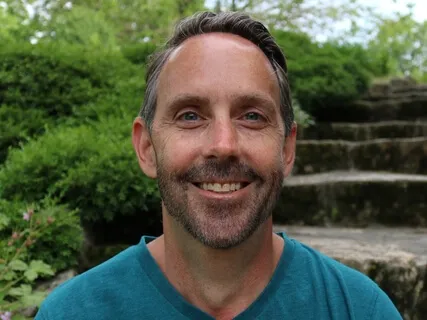
Welcome to Life,
Lessons,
And Laughter with your host Glenn Ambrose.
Hey everyone,
Welcome to part two of Healing Old Wounds.
I knew there was another word.
Healing wounds,
Healing old wounds.
So yeah,
We're talking about healing old wounds and we got pretty deep into it.
And there was no way it was going to get wrapped up in one session.
Yeah,
It was,
I had no idea.
You were diving deep into family of origin stuff and personal history and,
You know,
Feeling inadequate,
Not feeling good enough and having that reinforced.
And there was just no way to wrap it up in a tight little bow for 30 minutes.
No,
So we have to do,
And this is really a big,
Big subject.
So it's,
I'm glad,
I'm glad it,
It doesn't surprise me in hindsight that it turned into this.
No,
No,
Not at all.
But,
You know,
It is a shock because we started with four episode ideas to talk about today and we're only,
We're only covering one.
Yeah.
Which is great.
Yeah,
Now we got three more in the can.
So yeah,
So healing old wounds,
I talked about just to recap a little bit in case people are coming in.
I talked about how there's a mental,
Emotional and energetic parts to it and really when we're looking at old wounds,
We have to shift the way we're processing information around that subject to be able to let go of it.
A lot of times people try to let go of it.
They go,
You know,
I hate that that person did that to me.
They were wrong.
I'm just going to let it go though because I'm so spiritual.
And it's like,
No,
You,
That's not going to work.
Because if you think you're wronged,
You can't just let it go because everything,
Every time you think about that person,
You're going to think they wronged you every time you think about that type of situation,
You're going to think they wronged you or,
You know,
It's wrong.
It's going to trigger that.
And it's actually going to expand the amount of negative energy you have around that subject until it bubbles up to the surface again.
So a lot of times,
You know,
People will do that like,
Oh,
I just,
I just,
I did my best to let it go.
And like we can't,
Our mind is what triggers the emotion.
So as long as we think,
As long as we're making sense of it in a way that,
You know,
It's,
It's detrimental to us.
It's,
It's going to constantly generate negative emotion as long as we think of it that way.
So,
So we need to learn to look at things in healthier ways that serve us as opposed to ways that hold us back.
And that's really what we're doing.
It's,
It's not that your perspective is your reality.
So it's not,
You don't have to lie to yourself.
You don't,
You just have to find a way to look at it where it serves you instead of drags you down.
That's what you're trying to accomplish.
And it's,
You know,
There's usually resistance to that.
There's people like,
Well,
No,
It's,
It's just wrong and I'm never going to believe it any different.
It's like,
Okay,
That's fine.
You'll walk around angry forever.
If you get tired of walking around angry,
Then you can start looking at it a different way.
And it's not any less true.
You know,
You can,
You can have people like how it can manifest.
You can have two people that grow up in a very poor family and one person processes the information like you'll never become anything and life is a crap shoot and there are no opportunities.
And that person stays poor.
Then you can have a sibling that grew up in the same house,
Same situation that says,
I'm never going to be like this.
This isn't going to happen.
And they do whatever it takes to push themselves through and break out of that mold and never worry about money again.
Like it's all in how we process it and how it fuels us.
You know,
So it doesn't mean that one person looked at it realistically and one person looked at it unrealistically.
You know,
It just means they looked at it differently.
One's just as realistic as the other.
And just for the sake of argument,
If I have a choice between looking at things realistically and being miserable or unrealistically and being happy,
I will take the unrealistically and being happy every time.
You know,
I mean,
Because what is looking at things,
You know,
I don't believe that this is true,
But it's just hypothetical point.
Like what is looking at things realistically and being unhappy gets you.
Unhappiness.
So why is that better?
Because it's true.
Like,
Yeah,
And you know that and the token gets you on the bus.
It gets you nothing except unhappiness.
So why bother?
You know,
Again,
Not that that's actually the case,
But it's not more real.
It's not more true.
You know,
So so,
You know,
That's the aspect of we have to shift the way we look at things.
Sometimes it's through through acceptance.
Sometimes it's looking for the lesson in it,
Finding out how it can better us.
So once we do the mental work and finding a healthier way to look at the situation so it doesn't continue to process negative emotions,
Then we've got the negative emotion.
You know,
That needs to be released.
Now we're stepping into the energy aspect of it,
Which one of the coolest things that I learned over the years was a Kim Ang CD set,
Who Kim Ang and Eckhart Tolle are partners and they put out a lot of information together.
And she put out I think it's just like two CDs or something and it was all about processing energy and it was wonderful.
And in there and I've heard this many places since that really a general incident in life takes about 20,
It generates about 20 to 30 seconds worth of energy.
As far as emotion.
So,
You know,
Not the big things in life,
But just the everyday life situations like,
You know,
I don't know if I brought this up before.
Did I bring up that I stepped on my dog's tail?
No,
You have not brought.
No,
I was I used as an example,
I think talking to one of my clients,
But I,
I,
My dog,
We came in from outside and she was all exhausted playing and I came in and I was doing something.
And she laid down right behind me and I didn't know she was there and I turned well I half turned and I stepped backwards and I stepped on her tail and she let out this yelp and it scared me so bad.
I mean,
Of course,
It scared her and scared me and the fear just shot up because I didn't know what was happening.
Then I'm figuring out it's the dog and then it's like is the dog okay?
Am I okay?
What just it was just it was chaos for a moment,
You know.
And it really scared me.
And I was sitting there and I was like,
Okay,
You know,
What am I going to do with this?
You know,
Once I was like a couple seconds later,
I'm like,
Okay,
I stepped on the dog's tail.
She's okay.
I'm okay.
Everything's all right.
Then I was like,
Okay,
I just conjured up a large mass of energy of fear.
You know,
What am I going to do with this?
Am I going to stuff it and pretend I didn't feel it?
You know,
Let,
Let,
I want to open up and allow it to pass through me.
So I just opened up and allowed myself to experience the feeling of fear and just open my heart instead of closing off around it.
And I could feel it just pass right through me.
And then,
You know,
Probably 20 seconds later,
It was gone.
It was like,
Oh,
Okay.
So I didn't harbor that.
I didn't store that experience as pain because,
You know,
Oftentimes what we're doing,
Whenever we experience something negative,
What we try to what we do is we go,
I don't like this.
I don't want to experience it.
This I don't want to experience that again because it didn't feel good.
So I need to build a wall and make set circumstances control my circumstances.
So that doesn't happen again.
And that's why people lash out.
Like if I,
If I would have gone down that alley,
Like I looked at that alley and I was like,
What does that look like?
What does it look like if I tried to protect myself from experiencing this again?
And I immediately saw that I would want to scream at my dog.
Yeah,
You know,
Because that's,
That's the only thing like I can't,
I can't yell at me because I didn't know what's going to happen.
And generally,
I can't blame myself because then I'm not a victim of it.
So the only other thing that was involved was a dog.
So,
You know,
If I wanted to go down the road of protect myself from experiencing this again,
I would have to blame the dog,
Yell at it and scare the crap out of it.
So preferably it doesn't lay behind me anymore,
You know,
Which is of course impossible to control.
But you know,
How would a dog go like,
Oh,
Okay.
That,
You know,
My tail got hurt and he's screaming at me.
So I must have done something bad.
It's got to be the proximity in which I laid when I was really tired.
I have to remember not to do that again.
No,
I don't think the dog was going to process that.
So it's unrealistic,
But that's what that's where I would have gone.
So you take that and we put it into other situations,
You know,
Like,
Why do we yell at our kids?
Well,
It's because we're experiencing fear.
You know,
We see our kids doing something that we don't think is good for them,
And we try to tell them not to do it and they keep doing it anyway.
And then we're scared.
It's fear.
So then we go,
Okay,
Well,
I'm filled with fear and I don't like being feeling like I'm filled with fear.
So how can I stop this myself from experiencing this again?
I'll yell at them loud enough so they'll stop doing it.
So maybe I won't experience this fear.
So it's not really about dealing with the problem.
It's about trying to protect you,
Trying to control your outside circumstances so you don't feel the experience of fear.
So that's why we process it.
That's how we store all this stuff.
So it's really about getting rid of it.
And,
You know,
I touched on it a little bit already,
And that's you have to feel it.
Yeah.
You know,
You have to allow it to come up.
And with the small instances,
It's 20 or 30 seconds,
Bigger incidences and stored stuff.
Oftentimes it's larger.
So the best way and these CDs from Kim Eng did a nice job of walking you through this.
The best way to do that is to like I tell people,
If you're going to experiment with stuff like this,
Wait until you're home alone.
Because it can get ugly.
You can get snot bubble crying with freaking screaming into a pillow.
You can experience a lot of sadness and pain.
And it's OK.
But,
You know,
It's good to scream into a pillow so the cops don't get called by your neighbors.
You know,
Or people bursting in the door going,
What's the matter?
So,
You know,
When you when you bring up a situation that has a large amount of emotion,
You just you can tell yourself the story.
Oh,
You know,
The when I was sexually abused or when this person passed or when I went through this,
You can bring up the topic.
And as soon as you bring up the topic,
If you pay attention to how you're feeling,
You're going to feel the emotion right behind it.
You know,
Physically,
You'll feel some sort of sensation,
A tightness in your chest,
Tension in your temples,
A nauseous stomach pressure.
You know,
It can be a myriad of physical sensations,
But you'll feel a physical sensation.
And as soon as you notice a physical sensation and you should be looking for it,
So it should be quick,
You let go of the story.
Because that's not important anymore.
If you just replay the story over in your head,
Oh,
My God,
It hurts so much when that person left me and my heart was broken.
And I couldn't believe they left me and it was so bad.
And I never thought I could be able to live.
And I'm like,
If you're going through that,
You're just you're literally building up new emotion around that subject,
Because your body doesn't know whether you're reliving it in your mind or whether you're reliving it in your life.
It triggers the same response.
So you have to let go of the story and pay attention to the physical experience.
The tightness in your chest.
Oh,
My chest feels tight.
OK.
Well,
And there's a shortness of breath.
All right.
All right.
Now it's now it's moving up the back of my head.
And it's like pressure in the back of my head.
Like I can feel some of this stuff as I'm doing it,
Which is cool,
Because now I'm processing something that I don't even know what it is,
What it's about.
Now just moved to like a cloudiness to the front of my head.
And then now I can just feel it dissipating.
I can feel going out my fingertips.
And my shoulders are starting to relax.
My breath's starting to come back.
So,
You know,
That's an example of literally experiencing experiencing the emotion and allowing it.
Your emotion has one job.
And that job is to be felt.
You know,
Its job is to capture your attention by being felt.
So when you process something intellectually that you don't like,
It turns into an emotion to capture your attention and give you some sort of message that I don't like this or I like this.
So if you allow yourself to experience that,
That's like you getting the message.
And then what does energy do?
It just transmutes into a different form.
So once it's performed its job duty by being felt by delivering you the message that you didn't like this and you allowing yourself to experience that message,
It transmutes into something else,
Into a different form of energy.
So it just automatically releases.
So when I'm explaining this,
Oftentimes I'll tell people like,
Don't,
Don't,
Don't try to control it.
Don't be like,
Okay,
I'm going to feel this.
So therefore it will release because that's like you're trying to manipulate the system and make it work.
Just relax and allow it.
Sit back and allow it.
It'll go on its own.
You don't have to do it.
So it goes.
You just do it because you want to do it.
You want you want that that energy to be felt and by proxy,
It's just going to be released.
So yeah,
That was I know I've been going for a while.
So why don't we just kept rolling,
Man.
Oh,
I didn't want to interrupt you.
You were that was that was one of the best monologues in the history of the show.
The almost five year history of life lessons and laughter.
Well,
It was it was just rolling from one thing into another.
So I had the video for those of you who are able to watch this on video on Patreon.
This episode is worth signing up for in its own.
Just watching him physically go through that.
And,
You know,
He animated it a little bit more.
But no,
No,
No,
No,
It was great.
Yeah,
It wasn't a large form of energy.
So it didn't like overtake me.
But I've done that where,
Oh,
My God,
I was doubled over,
You know.
But it's OK.
It's not you.
You know,
That's the thing we have to understand is it's just energy.
Like we are not our emotions.
We are not our thoughts.
So like if to help you process stuff like this,
To understand that that like you are not sad,
You are not mad.
You are not angry.
You are not tilled with rage.
You have sadness attached to you.
You know,
That's what I like about Tole's definition of the pain body.
It's energy that's attached to you because of a situation.
It's not you are not that energy.
And just that little differential,
You know,
Differential separates you from it.
Because if I'm sitting here going,
Oh,
My God,
I'm so sad,
I'm so broken.
Like,
No,
You're not.
You're not broken.
You're not even sad.
You just have sadness attached to you.
So become the observer.
Look back and experience it.
Watch it.
I'm you know,
I'm feeling my body is experiencing an energy of sadness.
It's OK.
I'm just watching it happen.
You know,
And that separation can help.
And then help your process more and more.
Right.
Yeah.
I mean,
This has been the easiest episode I've ever been a part of because,
You know,
You've just talked for 20 minutes straight through.
So,
You know,
It's really allowing yourself to feel that energy,
Understanding that it's not going to hurt you,
That it can just dissipate out.
It can go.
You can allow it to go.
And,
You know,
That's it's it's it's allowing it.
It's not it takes more energy to hold it in than it takes.
You know,
We go,
OK,
Well,
You know,
Unconsciously,
We know where we're expending a lot of energy holding it in.
So we think that it takes this big effort to get rid of it.
And it doesn't.
It takes an opening and allowing.
And it just goes.
It doesn't want to be inside you anyway.
You know,
It's energy,
Man.
It wants to transmute into a different form of energy.
It wants to constantly keep moving.
It doesn't like being trapped in a vessel,
You know,
And stuck and not being able to transmute into something else.
So it when it's allowed,
It comes out,
You know.
And another thing I like telling when I'm explaining this is,
You know,
Especially in this podcast,
Because we're covering a wide range.
Sometimes it can be getting cut off in traffic.
Sometimes it can be life altering stuff that has dragged you down for 30 years.
So like that's a that's a wide range.
So there's obvious little differences in them.
And,
You know,
Sometimes this when you're when you go to do this,
Especially in the beginning,
It feels like you're standing at the edge of a cliff with your toes right at the edge.
And it's just all sheer blackness and misery and basically everything that you could think hell is below you.
And just and it's all the fear that,
Oh,
My God,
Do not open this door.
If you open this door and you take a step in,
You're screwed.
It's so black in there.
You're never coming out.
This is the abyss that you will never recover from.
And I've been standing there and I I was in so much pain that I decided that I would rather be.
I would rather implode and no longer exist than live one more moment in that amount of pain.
And that's what gave me the courage to step in and just lean forward and fall into that abyss of pain.
It was horrible.
And that was one of my snot bubbling moments and screaming into a pillow and just wailing and hyperventilating and almost passing out.
It was the first time I really experienced a large chunk like that.
And also,
I was about to pass out and I went,
I can't do this anymore.
I just can't do it anymore.
And also,
All the pain stopped.
And I was like,
Are you kidding me?
Like I could have done this like five minutes ago.
Once I was in it,
I didn't know that I could just stop it.
But then once I was just like,
No,
That's enough.
I have to stop.
It just stopped.
And this peace came over me and I experienced the benefit of releasing that much,
Which was wonderful.
And so I tell people that all the time when I'm talking about this,
If you have to fall into an abyss like that,
Know that you can stop because I've done it like probably two other times since then when I found a big pocket.
And it was much easier because I had the confidence,
I had the knowingness that I could just turn it off whenever it became too much.
And that makes it so much easier to do.
But we have free will.
So it has to.
It has to listen to us.
It has to turn off when we say I can't do this anymore because I mean,
If we we we have the ability to stop it whenever we want,
If we didn't have that ability,
We wouldn't have stuffed it in the first place.
We would have gone to stuff it and our body would have gone,
No,
You can't.
You have to feel this.
Well,
We don't.
We have the ability to stuff in the first place and we have not only the ability to stuff it,
But to hold it stuffed for decades.
So we have the ability to control whether it comes out or whether it doesn't.
And just by making the decision,
I need this to stop.
It just stops instantly,
Which is a nice bit of information I wish I had before that first time.
No.
All right.
So we've talked about a lot of stuff now for healing old wounds.
We talked about changing your perspective.
We talked about letting go of what no longer serves you.
We talked about spiritual encoding in the last episode.
We've talked about,
You know,
Making sure that we allow ourselves to feel our emotions so that we're able to release the energy associated with them.
And in the moment as like as it happens,
As well as after the fact,
You know,
Going back into a later date and feeling it.
Is there anything else?
You had hope.
Is there any other way?
We have a couple of minutes left.
Is there any is there another way to slay this dragon?
Well,
Really healing the old wounds is the basic aspects of it is really just,
You know,
Making sure you find that healthier way to look at it first and healthier way that you actually believe in,
Not some BS story that you're telling yourself.
You know,
Make sure it actually clicks inside of you is truth.
You can't lie to yourself and expect it.
You know,
It actually has to make sense.
Your new way of looking at it.
And you have to understand why you're looking at it that way.
So that's the first piece.
And then opening up and allowing yourself to experience the emotion,
You know,
Opening up and just paying attention to the physical sensation.
And then if you're really in the flow,
You can,
You know,
You can label that physical sensation.
Oh,
It feels like pressure on my chest.
It feels like tension in my head.
And then after a while,
You can just stop labeling it and just pay attention to it.
Don't give words to it.
Don't label it.
Yeah.
You know,
It's just just experience it.
So you can do that.
And allow it to go and know you can turn it off whenever you want.
That's really that's really the biggest parts of it.
I think the only the only thing it feels like it might be a little an optional cap at the end in some situations,
Maybe not all.
But,
You know,
After you're done,
It's you can reinforce,
Especially in different situations.
This is more important.
So you can reinforce who you've become,
You know,
Because there's that old record player that might,
Especially if it was a recurring situation that you were used to experiencing over and over.
Like,
Let's say you allowed people to walk on you and you released all that.
Now,
Your tendency is to allow people to walk on you because mentally that's generally how you react when you're exposed to that type of circumstance.
So it's good to reinforce mentally just,
Oh,
I'm not that person anymore.
I don't do that anymore.
You know,
I just I just stand up and go,
Wait a minute,
Please don't talk to me like that.
Or I get myself out of a situation or,
You know,
Whatever.
I deal with that differently.
Start.
So what it is in different ways,
What you want to do is start looking at yourself as the person that's not carrying that pain around with you anymore.
You know,
Be the if you want to let go of if you want to heal an old wound,
Then who do you want to be once that wound is healed?
You know,
Understand that.
Make sure you kind of anchor into that when you're done and maybe even spend some time thinking about that before.
Who do I want to be once this is healed?
How do I want to act?
How do I want to what types of things would I say in these situations if they were to come up again?
How would I,
You know,
How would I interact with these types of situations?
Who do I want to become as a result of doing this work?
And then once you do the work,
Remind yourself that you are that person because there's that old record player that just wants you to fall back into your old way of being.
So just,
You know,
Reinforce this is why I am now.
This is how I deal with these things.
This is who I am now that I'm healed.
Remind yourself that you're healed.
Really be that person.
So I have to say my favorite episodes are the ones where you're fired up like this.
And so this has been great.
I'm happy to have said about four words in the whole episode because I didn't need to,
You know,
I didn't need to prompt you.
Like I didn't need to ask more questions.
You really handled everything.
And this was a two parter,
Which is crazy.
So that's awesome.
Is there anything,
You know,
Before I move on to where people can find stuff,
Is there anything else you want to you want to know?
No,
I think it's it's feeling complete,
Feeling complete at this point.
Good thing.
The good thing this thing wasn't called for a part three.
I know.
I know you nailed it.
You nailed it.
So so this has been healing old wounds.
If you want to check out the video of this,
Check it out on Patreon.
Com slash Glenn Ambrose.
Follow us up there.
That's the best way to support the show.
There's an insight timer course coming out or,
You know,
A course that Glenn is doing.
You can get that on Insight Timer.
You can get the current episodes of Life Lessons and Laughter as well as the old ones on Insight Timer.
We're doing some new stuff with What's Right with the World over on that podcast.
You should check that out.
Yeah.
So I'm just really excited about everything.
Yeah,
This boy,
There's a lot.
There's a lot moving.
Yeah,
Which is,
You know,
Which is exciting and fun.
And boy,
It's a time.
It's a good time to anchor down.
And that's what I'm doing.
I'm like,
OK,
Anchor down,
Man.
Everything's going to unfold the way it's supposed to unfold.
And also,
This is the first time I'm going to mention this.
Glenn,
In like two months or so,
Three months from when this is airing,
We're going to have our five year anniversary show.
Oh,
Wow.
Yeah.
That's insane.
Five years.
Five years of looking at that face.
You guys have only had it for about two months.
But yeah,
I've been sitting across from this guy for five years.
And even longer than that.
Yeah.
Even before the podcast.
Yeah.
So yeah,
That's coming up soon.
So exciting stuff.
All right.
Thanks,
Man.
Feels like a big shifting point.
So it's not surprising that there's an anniversary coming up.
So good.
All right.
Well,
Everybody,
Thanks for listening.
And yeah,
Check out the video versions on Patreon.
Com.
And we're excited to be uploading the newer episodes on to Insight Timer as well.
So thanks for listening,
Everybody.
And we will talk to you soon.