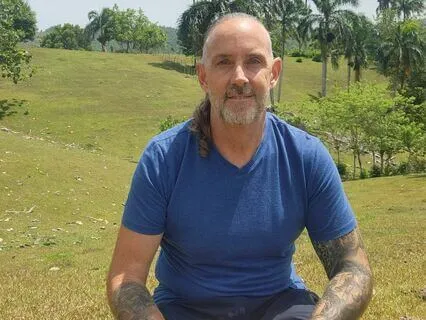
Welcome to Life,
Lessons & Laughter with your host,
Glenn Ambrose.
Hey everybody,
Welcome to the show.
I was just thinking about the last one.
This is the second one I recorded in my new office.
I think the second,
Maybe the third,
But the last one I got interrupted with an unexpected delivery.
So it ended rather abruptly.
Oh well,
It happens.
And no,
It's beautiful.
So check this out,
People.
So literally,
It was about a week ago that I was recording.
And I'm in my new office here.
And I got a delivery come up and I stopped abruptly.
And then today,
This is the next time I hopped on StreamYard to record.
And I open it up and it says,
New feature.
I'm like,
Oh,
I wonder what the new feature is.
It says,
You can pause recording now.
I'm like,
Oh my God,
This is beautiful.
I have a need and it's fulfilled.
I mean,
What are the chances?
I just ended the last recording because of somebody showing up in my yard unexpectedly.
And then now they come out with a pause thing.
And now if that ever happens again,
I just have to press pause.
And then I can go take care of the delivery,
Come back in and start recording again.
Beautiful.
You can't make this stuff up.
So let's get into the topic.
The topic is understanding anger.
And this is one that,
Honestly,
It's been a big one for me because anger was my go-to when I was younger.
And anger is basically the fight out of fight,
Flight,
Or freeze when it's a defense mechanism,
When it becomes a go-to for somebody.
And this is an understanding I came to not that long ago.
I don't remember how long ago,
But it was fairly recent,
Like the last maybe a year ago.
I don't know.
And it was really helpful because,
You know,
Over the years doing all this spiritual work,
Living spiritually for 20 years and all this stuff,
It's like when anger is your go-to,
Anger is,
You know,
Usually external.
I mean,
Of course you can get internally angry,
But a lot of it is external.
That's why it's so judged.
You know,
The other two,
Freeze or flee,
Are usually like,
You know,
They're not judged as much.
Because if somebody is feeling that they're being taken advantage of,
Let's say,
For example,
And their go-to is to freeze,
Then what they do is they just shut down and they freeze and they don't say anything.
So it's not external.
So therefore other people aren't affected.
And a lot of times other people don't even know,
Right?
So it's not judged so much.
And if people's go-to is to flee and they just say,
No,
I'm not putting up with this,
And they get themselves out of the situation,
Or they just get themselves out of the situation,
It doesn't exacerbate the circumstances like anger does,
Like fighting does.
So therefore that's not judged so much,
Right?
So when your go-to is fight,
That's judged a lot.
It's judged by society,
And it's also judged by the person themselves.
Like anger was my go-to.
Fighting was my go-to.
It wasn't because I wanted it to.
When I was a kid,
I literally remember trying the others.
I remember going out into,
Like to me,
I was very active,
And I wanted to be out in the neighborhood,
And I wanted to be out at the playgrounds playing and doing things with the other kids and playing sports and all this stuff.
And I was small,
And I got picked on a lot.
And it wasn't just because I was small.
It was just how it was.
It's how kids were.
I mean,
It's still like that to some degree,
Especially when they start getting older.
But I was actually very kindhearted,
And I didn't understand it.
I remember not understanding why kids were mean to other kids,
Including me,
All of a sudden.
Because when you're little,
Little,
You walk onto a playground,
And you're like,
Hey,
You want to be best friends?
Yeah,
Okay.
And you run off,
And you're best friends for a day.
I didn't understand why that was changing as I got older.
I thought that that's how it was supposed to be,
And I was right.
That is how it's supposed to be.
But then this judgment came in,
And this overpowering,
And this dominance came in,
And this fighting and looking tough in front of other boys and all this stuff came in,
And I didn't understand it.
And I tried talking like,
Hey,
We don't have to be like this,
And that didn't work.
And then I get punched in the mouth.
And then I tried running away,
And a lot of the kids were just a little bit older in my neighborhood so that I would get caught,
And then I'd get beat up.
I tried freezing,
And they didn't care.
It was just easier to beat me up.
And I mean,
When you're little,
I'm talking I was still fairly young,
So this type of stuff wasn't like violent to the extreme.
I wasn't getting beat up with broken bones,
And usually there really wasn't even any blood.
It was just somebody overpowering you,
Showing that they could overpower you,
Maybe punching you in the ribs and the stomach and getting on top of you and holding you down and making the other kids laugh or something.
But it was enough.
And I started experiencing this fear in me that this was going to happen.
And so I tried freezing and fleeing,
And then finally it got to the point where it was like – and I remember even asking adults,
Like,
What do you do?
I don't know what to do.
I don't know what to do,
And nobody had a good answer.
So I ended up going fighting,
And I started fighting back,
And it was fairly innocent.
I fought back,
And it worked,
So I did it more.
It probably became my go-to then,
But then I – so this was all pre-fifth grade,
I would say,
Because – or pre-sixth grade.
And then in sixth grade,
I think it was sixth grade,
I had a teacher that I really liked,
And she was like,
Glenn,
You really should stop fighting.
This isn't good.
You're a good kid.
You shouldn't fight all the time.
So I was like,
Oh,
Okay.
So I stopped fighting,
And then I got picked on hardcore,
Man,
When we went to junior high,
Seventh and eighth grade.
Freshman year was a nightmare.
I mean,
I had my friends,
And that stuff was fun,
But I got picked on a lot too,
And that was it,
Man.
Between freshman and sophomore year,
That summer,
I just went through a – I went through a lot of changes,
Actually.
I started going to the gym with my sister's boyfriend,
And I loved it.
I grew.
I hit a growth spurt,
So I probably grew five or six inches,
Which was helpful.
When working out,
I started actually getting a better physique and a little stronger.
And I would lay in bed really contemplating this fear and thinking ahead to the school year and just going,
I'm not going through that anymore.
I'm not going to school scared of walking down a particular hallway and looking over my shoulder all the time because there's three or four different groups of kids that will pick on me.
I'm like,
I'm just not doing it.
So I was trying to figure out what to do,
And it was just like,
Well,
What do you – I realized that I was filled with fear,
And I didn't like that feeling.
So I was like,
All right,
Well,
How do I get over this fear?
What are you scared of,
Glenn?
And I was scared of getting beat up,
Like physically getting punched and hurt scared me.
So I was like,
Okay,
Well,
You're just going to have to get beat up.
I'm not going to become an awesome fighter and never get beat up in a few months.
So the only thing I could think of was just to get into enough fights and get beat up enough times where getting beat up didn't scare me anymore.
I was like,
If I have fear,
I have to face it.
So I'm scared of getting beat up.
So I'll go get beat up.
I'll go get in fights,
And I assumed I would get beat up because I wasn't a good fighter,
And I will just get beat up enough times where I'm not scared of getting beat up anymore.
That was my 14-year-old thinking,
You know.
So I went to school,
And I wasn't – I wouldn't let the fear take me over.
So as soon as somebody started picking on me,
I went to fight.
Now,
I didn't know that me not backing down was going to have such a good result.
Like I thought they were tough,
And we were going to fight,
And I was going to get beat up.
But when I reacted back in anger,
They backed down.
I didn't have to fight 90% of the people,
At least,
Maybe more.
I didn't have to fight most people.
All I had to do was stand up to them.
To me,
I didn't – I wasn't really in control of what I was doing.
I was just reacting.
I would just unleash.
I would just go – somebody would pick on me,
And I'd be like,
No,
And I would just attack.
I would attack full force,
Like 100 miles an hour,
Like a maniac,
And it scared the living crap out of people.
So they weren't expecting it,
And they weren't used to it.
Then I got a reputation,
And most people didn't pick on me.
Every once in a while,
You come into new problems once you get a reputation.
Then people want a shot at the title.
They want to see how tough you actually are.
You get all that stuff to navigate.
But long story short,
It really – it did help.
It helped,
And it made my life manageable.
Now,
Like with any – that is not the best answer to the problem of getting picked on.
There are problems with attacking back 10 times harder,
Of using anger as your go-to.
But I didn't have any other way,
And it worked at that time.
So be it.
So it became my go-to.
Really then,
I think it became my go-to when I was younger.
But I refrained from the fighting,
Like the physical fighting aspect of the fight response.
It was more verbal,
And it was very anger-filled.
But I wasn't getting into fistfights.
This,
When I made that shift then,
Then it really became my go-to.
It solidified it.
Quite honestly,
I haven't been in a fight since I woke up spiritually.
So it's not that I get in fistfights anymore.
It's not that.
It's the same energy,
Though.
It's anger energy.
It's my go-to is anger.
My go-to is fight.
My go-to is to stand up and fight.
It's not to shut down,
And it's not to run away.
It's to stand there and go,
Okay,
You're coming at me.
I will come back at you,
Verbally,
Whatever.
It's confrontation,
Basically,
Is another way to say it.
I have a hard time walking away because that's flee.
That's not my go-to.
I have a hard time keeping my mouth shut when somebody is verbally attacking me because that's not my go-to.
I don't freeze.
I don't flee.
I'll argue right back with you.
Of course,
What we want to do is balance those three.
Sometimes it's appropriate to freeze.
Sometimes it's appropriate to walk away.
Sometimes it's appropriate to stand up for yourself.
That is really what fighting is.
It's standing up for yourself when it's used in a healthy manner.
This is part of the understanding that we have to come to.
We're so quick to judge and label and accuse and point the finger at.
Most people,
Their go-to is fight,
Which is stand up for yourself.
Most people that have that judge themselves extremely harshly,
Extremely harshly,
Me included,
Because society and everybody tells you you're a bad person when you get into arguments,
When you fight.
Nobody judges the others,
The freezing or the fleeing.
Of course,
If you freeze all the time too much,
People will come up to you and say,
Dude,
You've got to stand up for yourself.
If you run away all the time,
Hey,
You have to be able to handle situations that are uncomfortable for you sometimes.
People will talk to you about it here and there,
But when your go-to is to stand up and fight,
Do you get judged?
I mean,
To some degree,
Rightfully so.
Well,
The judgment isn't rightfully so,
But this is the point I want to be clear on.
I'm not condoning fighting or anger as something that when people lash out in anger,
I'm not saying that everybody should be like,
Oh,
It's okay,
It's their go-to.
They have a right to yell and swear at people,
Or they have a right to punch people in the head because their go-to is fight,
So let's just let them go.
That's not what I'm saying.
I'm saying that we have to understand that all it is is it's a healthy defense mechanism that is out of balance.
That's it.
It's not a character flaw,
And we don't have to put up with it.
We can still set boundaries.
See,
Whenever I try to explain something and say like,
Okay,
It's not as bad as you think,
Or we have to look at it this way,
People automatically go,
Oh,
So we're just supposed to let everybody do everything.
No,
That's consequences.
That's a different topic.
I can't cover every aspect of everything in one podcast,
So I'm not talking about consequences right now.
I will bring it into this conversation momentarily to make the point clear that if somebody is attacking you out of anger,
May it be verbally,
Physically,
Or whatever,
You have the right to stand up to them or walk away or freeze or get yourself out of the situation or set a boundary with them and say,
Listen,
It's not appropriate for you to act towards me like that.
This has to stop and whatever.
You don't have to allow it.
You can still set healthy boundaries and not allow it.
My point is,
Is that if we understand it better,
We can deal with it better.
Not only for those of you out there that are your go to is freeze or flee and you don't understand these fight people.
You probably have one in your life because there's plenty of us and you don't understand why they lash out the way they lash out.
If you understand that it's just a defense mechanism.
And when they were young,
That became their go to for some reason.
Who knows why?
Maybe they don't even know why,
You know,
But at some point it became their go to.
And when it became their go to,
That's all it is.
It's just a defense mechanism to try to handle situations that are difficult.
You know,
When they're pushed too far again,
You don't have to allow poor behavior from them.
But if you understand that that's what it is,
Maybe you can have a little bit of compassion and a little less judgment.
And maybe you can talk to them after they cool down.
And maybe,
You know,
Who knows,
The situation varies,
But maybe you could have a conversation.
Something like,
You know,
I understand that,
You know,
When we get into intense conversations,
It turns into a fight.
And,
You know,
Especially if it's one way,
If you fight too,
Like don't have this conversation,
You got to work on yourself first.
But if you're a freezer or something and your partner or somebody in your life is a fighter,
And they're the only ones losing their crap every time you try to have a conversation with them,
Maybe once things calm down,
We can be like,
Hey,
I understand it now.
Like I get it.
Like I shut down.
You know how I shut down?
Like you,
Your go-to is fight.
Like I understand it's just a different go-to that was embedded into our personality when we're kids for some reason.
So like,
You know,
You're not a bad person.
I'm not judging you for it.
Like,
But we got to find a way to communicate where you still feel safe,
Where you don't feel where it doesn't trigger that defensiveness.
So it goes into that level.
You know,
I want to be able to communicate with you without triggering that.
So how can we do that?
You know,
And you can also use yourself as the example like,
You know,
And this is to me is kind of helps put it into perspective.
So to me,
This is a big point.
I don't know if everybody will feel that way,
But to me,
This is a big point.
It helps my understanding and it helps remove the judgment.
Expecting somebody to never fight when their go-to is fight is like expecting somebody to never freeze or walk away from a situation when they feel uncomfortable.
Okay,
So I'm going to say that again.
Expecting somebody to never get triggered and their response to be to fight is like expecting somebody that gets triggered to never shut down or never to walk out of a situation ever again in their life.
Do you understand how that unreasonable that is?
How unreasonable it is to expect somebody to never their go-to is to freeze.
They've been freezing their entire lives and you walk up to them and you say,
Hey,
You really shouldn't freeze anymore.
You should stand up for yourself or you should just get yourself out of the situation.
Okay,
Let's talk about it.
Do you understand what I'm saying?
Do you understand why?
And they go,
Yes.
Okay.
And then from that day forward,
They are never allowed to freeze ever again.
And if they do,
You condemn them for it.
That's what it's like to have fight as your go-to.
Is everybody condemns you every time you go to your go-to.
That's hardwired and conditioned within you from childhood.
You get condemned if you do it once.
You get fired from your job if you do it once.
You get broken up with out of relationships if you do it once.
You get thrown out of a coffee shop if you do it once.
You get the police called at Walmart if you do it once.
These aren't necessarily situations that have happened to me,
By the way.
It almost sounds like that,
Right?
But my point is,
Is like we're so judgmental towards anger because it's external and it affects other people.
Which is why we need to set boundaries.
Which is why it's not acceptable just to allow people to do it.
I get that.
I'm not saying that we should allow people to do it.
What I'm saying is that we need to understand what it is so we can interact with it in a healthier way.
I've been coming at this mostly from an external perspective.
Mostly for people that have somebody that fight is their go-to in their life.
Now I want to touch on how important it is for people who are the fighters.
If that's your go-to,
Please cut yourself a break.
Understand that it's just a go-to.
This is why I think this point is so big.
It's not only so freeze and flee people will understand fight people better.
It's so fight people will understand themselves better.
It's just the defense mechanism.
It's no different.
It is.
Stop judging yourself.
Stop condemning yourself.
Stop thinking you're a bad person.
Because this one thing you can't quite do.
And the reason that I want you to stop judging yourself so much.
And the reason I want other people to understand it a little bit better.
Is because I'm telling you,
I worked on this my entire spiritual life.
And I made lots of ground.
And you know what I did?
I developed.
I strengthened my ability to keep my mouth shut,
Which is freezing.
I'm still not great at it.
But I strengthened my ability to freeze a little bit.
Because sometimes that's appropriate.
I strengthened my ability to get myself out of situations.
That was actually the first one I worked on.
Because I was like,
I don't know how to control my anger.
And I'm incapable of keeping my mouth shut.
So I need to just get myself out.
That was the first thing I worked on.
So I strengthened my ability to use the other two.
And that helped me dramatically.
But there were still times if I get triggered.
Like hardcore triggered.
Like I was leaving a job once.
While I was supposed to put my two week notice in.
Which was my intention.
But then my boss kind of started flipping out.
And started telling me to leave now.
Because he got all pissed off.
And then he kind of overpowered me.
I was squatting down trying to get some paperwork.
And he was big overpowering me.
And it reminded me of being little as a child.
And him physically dominating me.
And he started shutting a door on my hand.
And then that was a physical.
And I snapped,
Man.
I went to fight mode.
It just triggered me too much.
And I didn't physically fight him.
But I verbally unleashed.
I was in complete fight mode.
Like I said,
Even though I wasn't physically fighting.
I was.
I was in attack mode.
I went straight into fight.
So like.
And there were extreme situations over the years.
Where I did snap and go to that place.
And I used to judge myself so bad.
So harshly for it.
Glenn,
You're so spiritual.
You've done so much work on it.
Why do you still go there every once in a great while?
It bothered me,
You know.
And when I came to this new understanding.
Just like I said maybe a year ago.
And I was like,
Oh my God.
It's just a defense mechanism.
And it served you really well when you were younger.
It's okay.
You're not a bad person.
And I took that judgment off.
What happened is.
I got triggered less.
It was less of a go-to.
I was just more relaxed.
It was really amazing.
Just taking that self-judgment out.
By understanding myself better.
I haven't.
Like I don't think I've like lost it since.
And I noticed it in my personal life.
Even if I wouldn't lash out in anger in public.
Or in an external situation with other people.
Sometimes I live alone in the mountains.
And I spend a fair amount of time alone.
And sometimes things would get me frustrated.
And I'd get angry.
It wouldn't last long.
It was not that big of a deal.
But I would notice.
Holy cow.
I noticed that since I dropped that judgment.
That happens dramatically less.
I don't get as angry as I used to.
I don't have to go to that go-to.
I don't automatically go there.
Because I understand it better.
And I don't think I'm a bad person.
So one of the reasons I'm doing this podcast.
Is as I was looking into this.
I always look into this stuff.
When I start getting this information.
So I can understand it better.
And as I was looking into this.
I was like.
Once the self-judgment is suspended.
Then the healing can occur.
As long as I'm judging.
It's what a lot of people call shadow work.
A shadow work is not what a lot of people think.
It's a part of yourself that you don't accept.
So I didn't accept that.
That fighting was my go-to.
And that's why I did it sometimes.
I just thought that it was a symptom.
Of me not doing enough spiritual work.
That's what I thought of myself.
I hadn't done enough spiritual work.
Because if I had.
Then I wouldn't go to that place so often.
But once I understood that it was just my go-to.
That I was developed.
And it was the same as a go-to.
Like freezing or fleeing.
And to expect myself never to do it again.
Is like expecting somebody to never freeze or flee again.
I was just like.
Oh my God.
That took so much pressure off of me.
And I accepted that part of me.
And at the time I thought.
If I freak out every once in a while.
So be it.
I'm a good guy other than that.
But what happened was.
That acceptance allowed me to heal.
And I haven't felt the need to go there.
Because I was healing that.
It wasn't this shadow part of me that I wouldn't accept.
Now all of a sudden I brought in acceptance.
And it healed it.
So now I just don't want to go there.
I just don't need to go there.
This is acceptance.
So here's the law.
Here's the law.
And I might have to do a whole podcast on this.
The law is acceptance comes before transcendence.
You cannot transcend something until you accept it.
Until you make peace with it.
Until you accept the reality of it.
All suffering is resistance to what is.
It's resisting the reality of something.
So we cannot transcend a negative aspect of ourselves.
Not a deep-seated.
Of course we can control our behaviors to some degree.
Just by being conscious.
But we can't transcend these deep things within us.
Until we accept them.
Until we look at them and say,
Okay.
That's part of me.
And it's okay.
It's okay.
I'm okay.
I'm still a good person.
I don't have to judge myself for this.
Once we accept it.
Once we accept that shadow side of ourselves.
And we bring in love and acceptance.
Then we can transcend it.
We don't need it anymore.
Otherwise it's just this part of us that we try to not.
We try to pretend it's not there.
No,
That's not me.
No,
That's not me.
No,
That's not me.
And all it does is it just.
It's energy.
Everything is energy,
Right?
So if you trap energy,
What does it do?
It spins on itself.
And pushes outward on its container.
That's what energy does.
So when you don't accept a part of yourself.
And you try pushing it down.
And no,
That's not me.
No,
I'm not going to behave like that.
No,
That's not it.
What happens is we're trapping the energy.
We're not letting it up and out.
We're not letting it.
We're not letting it integrate with ourselves.
We're trying to deny it.
So what that does is it just pushes it down.
And the energy just spins on itself.
And pushes outward.
It expands in intensity.
And pushes outward on its container.
Until something happens and you flip.
You can never keep it.
If that is your go-to.
You can never keep it at bay until you accept it.
Once you accept that that's your go-to.
Once you accept that that's part of you.
And I mean,
You know,
Just be.
Like everybody has this part of them.
So just because your go-to is freeze or flee.
Doesn't mean that you don't have a fight response within you.
You know that anger that you're suppressing.
While you're sitting over there freezed.
That's feeding.
You're freezing.
So we have to accept that anger part of us.
Accept that that is part of us.
Bring that into who we are.
And integrate it as our being.
Into our full being.
You know,
This is real shadow work.
Integrating all the aspects of who we are into our being.
So that's it.
The dogs are starting to play.
And I think I'm done.
So I'm not going to pause.
I'm just going to wrap it up.
So,
Yeah.
So accept this part of us.
You know,
Really bring in.
Integrate this part of you.
Accept it.
Embrace it.
And then you'll find out that it's not pushing out.
Trying to find a place to lash out into your life.
It's not doing that anymore.
You can control it a lot better once you accept it and integrate it.
All right?
So hopefully that helps.
Thank you guys.
I will talk with you soon.
Peace.
Looking for more?
Check out over 200 episodes of Life Lessons and Laughter.
Or click the link in the description of this episode to connect with Glenn directly.
Sorry.
Peace.