Holiness and welcome.
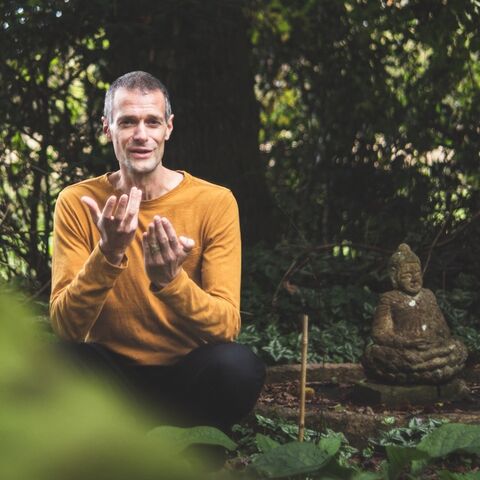
This is Josh,
Interskilled Integrating Residence.
And today is the thought process Thursday.
Before we start,
Just ring the bell here.
If you can,
If it's comfortable and you're available,
Just take three full,
Consciously present breaths.
And if you're in a space where you can close your eyes,
Please do so.
Otherwise keep them open,
Of course.
Every moment of the inhalation,
The pause,
The start,
And every moment of the exhalation,
The pause.
Welcome to Keep Breathing,
Consciously Meditating Like That.
While I jump in here to the thought process Thursday,
Which I generically title,
Let's Openly Explore Some Thought Processes in Order to Unwind and Aid Healing,
Allowing to Surface What Needs Bringing Up in the Moment to Work With on a both the short-term and more long-term basis.
So,
How's everybody doing?
I have a few things that came to me when reflecting on what I should talk about today.
I talked yesterday to a healer who had really been down in the dumps and had bankruptcy.
This is for a podcast I do.
And then his health suffered tremendously.
He was going from healer to healer to healer.
His arm even froze up after a surgery.
And finally,
He got to a certain healer who taught him a lot.
And you guys can maybe listen to that podcast.
And then the other guy I talked to is a vet,
A combat veteran,
And PTSD and trauma,
To be very careful what I do and say around this.
But one of the things that came up with him that kind of applies to all of us,
I think,
From time to time is loneliness.
And it's not a fun topic to talk about,
Right?
It's kind of,
At least for guys or at least for me,
I can't really speak for anybody else.
It makes one feel kind of weak,
You know,
This false notion of weakness.
It's not really.
But I just wanted to ask you guys,
How do you feel about this?
Because to me,
This is a notion of feeling,
You know,
Feel lonely.
Because like I've said before,
We can't really ever be alone.
Like I am out in a rural area in Illinois right now,
House sitting for some friends while they take their two small children on a trip.
And,
You know,
I would like to be more alone.
They've got dogs,
And I haven't had dogs since I was a kid.
They've got cats,
They've got chickens.
So I'm,
You know,
I'm forced,
Like,
Not forced,
But of course,
Voluntarily agreed to two times a day.
And they're just the most loving dog,
But I'm not used to this slobbering all over.
So,
And then even when we're in remote locations,
There's still animals.
And if you're into it,
Other beings around.
So it's not really the case that we're ever alone,
So to speak,
But this feeling of loneliness can crop up from time to time.
Just ended a really significant,
Like three year relationship.
And now I'm on my own again,
Learning to function.
Both of us are learning how to function without each other.
Not function,
That's not the right way to put it,
I guess.
In some senses,
Maybe.
But like finding out who we are again as individuals and how we do things.
And maybe where the other one was compensating,
Or where I was offloading things onto her and not dealing with myself.
And I don't know,
Maybe vice versa.
I can't really speak for her either.
And then kind of picking up where I left off in some degrees,
But I don't really feel lonely,
So to speak,
This time.
And I don't know what there is to say about this.
The other things are,
There's,
What's more important,
I feel,
Is this disconnect with belonging and purpose.
I think these are kind of even more important.
Now,
This is different than wanting and feeling,
I guess,
Needy or the willingness to be by oneself.
We talked a lot about the difference,
Or not a lot,
But isolation and how that is different from seclusion and retreating.
So there's a huge significant difference,
I feel.
So isolation means that,
I think,
Just kind of disconnected and not belonging,
Not having purpose.
And this is where it can kind of spiral down,
Where there can be trust issues,
Not trusting anyone,
And so isolating.
But for me,
Seclusion and retreating is the opposite.
Of course,
I'm sure probably everybody that's listening to this knows about that,
Right?
Where you can actually spend some quality internal time doing deeper and deeper practices and meditation.
And it's not selfish.
We talked about that too,
And how some people think this is selfish.
And,
But the thing is,
Everybody benefits when we're in a good spot.
So we take care of ourselves,
And we can do deep inner practice.
Everyone that we encounter after that will reap benefits when I'm stretched thin,
Don't have enough resources,
That I'm actually can be more of a burden on others.
So again,
Balancing act.
Trying to think of what else is going on,
If anybody else has any thought processes they've gone through recently,
How people get through feelings of loneliness.
I mean,
The feelings when they're there,
And of course they are valid.
And I don't think to shame or blame or deny them helps at all either.
I don't think also wallowing in them and having a pity party and saying low is me,
You know,
Either what's wrong with me or turn to times of being more desperate and whatnot.
So where is the right balance between using our mind and using wisdom in body-based wisdom too,
And intersecting with feelings and emotions?
I think we can get in balance to one way or the other overly emotional or underly emotional,
Cold and distant,
And thinking I got this,
I can do this,
I don't need anybody's help,
I don't need,
You know,
To even look at this or feel what I'm feeling,
I could just override it,
Bypass it.
And I think it's okay too to have other people expect for you to be lonely,
But you're not,
And you just feel okay,
And everything's all right.
And I think fluctuating between these even rapidly,
That's totally okay too.
I guess what is kind of loneliness teaching us?
I think there's an old saying,
When someone leaves us,
They're teaching us to stand on our own two feet.
I think that's one way to do it,
Self-reliability,
Self-responsibility,
Times of reflection,
You know,
Maybe we're getting too much feedback from someone,
Then we can take that to heart,
And if there's anything to it,
Then it's very valuable,
Then we know what we need to address and look at.
But if it's not,
If it's completely off base,
And it tells us something about the other person who gave us the feedback,
Then I guess another thing that's coming up is,
How do we hold space for something we're not really familiar with,
Or it's either kind of out of our league,
Or maybe we can mess things up more if we're not careful,
But we care and we want to help.
So like,
Being interested in hearing these survivor stories that I've been witnessing,
Kind of an advocate,
And a,
Oh,
There's another term,
If you're not a survivor,
But you're wanting to help out with survivors.
He told a story in the chat we had about some really out of touch psychologists he went to,
And how infuriated he got by the callousness of this psychologist,
And just kind of utter lack of disregard for his situation,
And just not being able to relate or connect at all,
Basically.
And how those of us who go through something and come out the other side successfully are then kind of heroes for those still going through it.
I wish there was a better word for that,
Because of the drama triangle of victim,
Victimizer,
And rescuer,
Or victim,
Bully,
Rescuer,
And how that all dynamic goes together.
So yeah,
How do we hold space for someone we want to help,
But we really can't even relate,
And make things worse,
Actually?
I don't really have any good answers.
I mean,
We,
Of course,
We're doing the best we could do better.
We would,
I mean,
There's some prerequisites,
I feel like,
To be in enough space for myself,
So where I don't take on too much.
And then not only do we have a survivor who's maybe being re-triggered,
Not that he was,
Or something not being able to heal,
But then now I am.
Now I've picked up something.
Now we have two people.
So compassion is always needed,
And that's a prerequisite.
Kindness,
Listening,
I guess,
Emphasizing positive things that are authentic when it's appropriate,
And not toxic positivity,
And a sense of equanimity that's needed for stability and grounding and balance.
I think a willingness on both sides,
If the other person's willing to have us there,
And support,
And an understanding that I may not be able to connect the way that I want to be able to connect,
Or help the way I want to be able to help,
But if the other person's okay,
I could do.
I think these are some ground-level things,
Perhaps.
I'd like to hear any of you guys's,
That's not correct English,
Thoughts on this.
And maybe if someone gets overwhelmed,
I don't know if anyone feels what they do with overwhelm,
And how to deal with that,
How to know to set boundaries maybe ahead of time,
Going in to help support either survivors or anyone else that's kind of out of our league that we want to help with,
But we don't really have the confidence or skill set to know how to do.
Of course,
Boundaries,
And keeping boundaries,
Too.
Maybe setting boundaries,
Maybe letting some boundaries down,
Or even temporarily,
And then re-establishing them when needed.
Paying attention to our own needs,
Too,
Why we're holding space and attending,
Kind of gauging intensity levels.
These are some things that are coming up around this.
Well,
I'm supposed to ask for donations on this,
So I appreciate you guys tuning in,
And considering donations.
We put a little box up for that here.
But anyway,
I think we're up almost at the 15-minute mark,
And I appreciate you guys joining,
Listening in,
And may you all come to know the best way,
The most optimal way,
The most helpful way to hold space for yourself and others,
And be of service,
And to,
I guess,
Master loneliness,
Seclusion,
And retreat,
And connection,
And belonging.
May all beings everywhere realize awakening and be free.