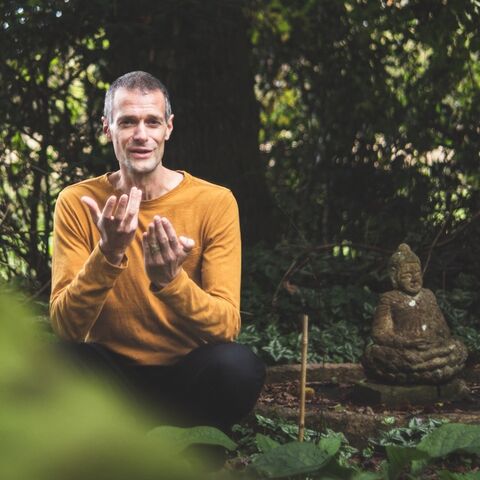
You're listening to another meditation Q&A with Wendy Nash and Josh DuPont on the Integrating Presence podcast.
Wendy,
How are you doing?
Yeah,
Pretty good.
Pretty good.
I think I've had fewer changes than you have in the last couple of months.
So this is fun.
I do like to say that I'm in Australia and I'm calling from Gubbi Gubbi country.
And you know,
The thing about being in a country which is colonized is to and to recognize that this is Aboriginal country is that there's a huge history of storytelling connection.
Everyone is related to every part,
Every place,
Every animal,
Every species.
And people don't suddenly pop up out of nowhere.
We come from,
We have a long ancestry and it's really,
It's really,
I think I found it such a beneficial thing for me to think about who are my ancestors.
And now that you're in a different country,
And a different Denmark,
And the history of the Vikings as well as,
You know,
People left Denmark,
Sweden,
Norway,
To go into Minnesota,
There's a huge Swedish population there.
And yeah,
So to kind of look at the history of our own countries and also our own personal history,
And those of our ancestors,
Your own history.
So it's an interesting journey to do.
So I would encourage you to do that.
So here we are,
You've come from somewhere,
Me too.
And here we are.
And let's see where we are in an hour.
Yes.
And so just some technical things here.
This is our roughly monthly meditation Q&A,
And this is the fifth one.
And last month,
Because of the big move that I've never done anything like that before,
But couldn't be more ready and just actually,
Actually went really smooth and really look forward to it.
We didn't have one.
So we're having two this month.
We'll have another one later.
That's the plan anyway,
Right?
And we thought since this is valentine,
Oh,
And then welcome to those on wisdom app,
And then insight timer.
So insight timer,
You guys only get to see me.
So if you want to see Wendy too,
You can catch the replay or you can hop over to YouTube,
My YouTube channel and see if you want to see video,
If you're into that kind of thing.
But since February is kind of known in some circles for Valentine's Day,
Right?
And I'm not really actually that familiar with St.
Valentine or the whole spiel and the story or whatever.
And I've been jaded in the past from,
I don't know,
Not having,
Being in a partnership and just thinking it's overly commercialized and stuff.
So my personal opinions and feelings aside on that,
I thought what we could all talk about that would be beneficial and helpful here is the Brahma,
The Haras and just love in general,
You know,
Love.
Before I say anything much about that,
You know,
Love,
You know,
I love that word obviously,
But it can also mean to say,
I love ice cream,
You know?
And that's not what we're talking about here,
Right?
We're not talking about amplifying our personal preferences so much,
But the Brahma,
The Haras,
Why don't I just throw it to Wendy and have her say,
Talk about the Brahma,
The Haras instead of me right away.
Yeah.
Oh,
Look,
Just before we go there,
I've just had a look on the YouTube and it says waiting for integrated presence.
So I'm not,
I'm not sure what's happening on YouTube.
Just putting it out there.
Yeah.
We are highly professional,
Smooth.
It says,
Oops,
Where it seems like one of the streams is having connection issues.
Stand by,
We're trying to restore the connection.
Isn't that interesting?
I wonder if there's actually a human being trying to do that.
I doubt it,
But we'll see.
Yeah.
Yeah.
I don't think it's a human.
I don't think there's anybody human in the whole of Google.
So you know,
That's an interesting thing about love and the Brahma,
The Haras.
So let's,
Let's talk about the Brahma,
The Haras,
Because there's four of them.
Love,
Compassion,
Joy and peace.
And I guess there are various translations of them.
And here we are,
Valentine's Day.
And that's,
That's a big one.
And many people,
Like you said,
It's quite difficult.
I,
You know,
Romance and,
You know,
Feeling like you're single,
You've been jilted,
You've had a shitty relationship.
And I think that when we have our family histories,
You know,
Attachment style,
That really touches into it.
People have more connection with a pet often than they do with other members of their family.
And I think that what I have learned with this journey is really love for yourself.
And I,
That sounds so like,
I don't know,
Cringey or something.
But I,
The way I see love is actually just kindness for yourself.
Because if you're not very kind to yourself,
You're really,
You're no good to anyone.
If you're just criticizing yourself,
All you do is criticize everybody else.
I knew a,
I knew a woman,
A friend and,
An acquaintance really.
And she said,
I've met this new fellow.
And I said,
Oh,
Great.
What's he like?
Ah,
I can't fault him.
I was like,
Wow,
Hard,
Hard did you try?
Please try harder to fault him more.
You know,
It's just such a,
We have this idea that somehow they've got to be perfect.
We've got to be perfect.
And all this is so,
Well,
Not only unrealistic,
But unhelpful to,
To being kind.
So that's,
That's the first one.
So compassion is one which we talk about,
Which is really,
I,
The way I like to think about it is slightly different.
I think the Dalai Lama has this,
That is more about,
We are in this together.
And I guess love is like that too.
We are in this together.
I'm not helping you,
You're not helping me.
We are just sort of,
I'm not happy because you're not happy.
But also,
I'm not able to feel.
Yeah,
So there's something about being really connected in that space.
And in a way,
That was one that I really struggled with.
I was like,
Wow,
I,
That took me a long time to get the hang of.
And I think with that one,
It's good to ask what stops you feeling joyful in daily life these days,
You know,
At the moment.
And I felt really guilty because I felt like there's all these,
You know,
Horrible things on the planet.
And all of that is true.
But being a wet blanket is no good to anybody either.
So finding that sweet spot between being a Pollyanna,
Cold-hearted,
Steely person and being a miserable git.
So that one there.
And I think equanimity,
I think peace,
Space,
Really the sense of being in a larger place.
You know,
I started off with my acknowledgement of country,
Which is saying,
I come from a larger place,
I come from a larger space.
And I think that's a really important thing to acknowledge.
So that's my take on the,
I call them the four immeasurables.
So when I teach people,
I use the four immeasurables because they're immeasurable in how many times,
How many ways you can practice and how far it spreads.
So I like the term immeasurables,
Which is out of the Tibetan,
Rather than divine abodes because it's like,
You know,
Weird and.
Yes,
It's a good point.
I like the sublime abidings.
That's one I like.
The immeasurables are great too.
I keep forgetting that because these are boundless states.
There's no limit,
Right?
You're not going to run out of kindness.
You don't have to worry about enough going around or stealing someone else's or I have to get more of this.
And there's only a limited supply.
Like we're led to believe in life,
Right?
There's all these limited resources and we have to be in competition to get them.
Well,
These are the exact opposite.
There is,
They are immeasurable.
It's like the vast ocean,
You know,
I guess maybe someone could catalog it.
But by the time you start cataloging it,
It's changed so much,
You know,
It's unfathomable.
It's really hard to measure.
And so there is no limit on these.
And so I'll just get my quick rundown and I'm folks have listened to me before.
They've probably heard a lot of this,
But these are such lovely flavors of love too.
You know,
If somebody,
This is what we can talk about.
You can be more specific and in some regards,
You know,
Talking about love does it a disservice in some senses.
But now this is actual tangible things we can put words to,
Which here I'll take another short tangent because traditional,
I think it's in the Greek.
Some of the ways of love are like a familial love between family.
You know,
The love between a child and their parents,
You know,
Then we have romantic love and then we have like a friend,
A friendly love or,
You know,
Friends.
And then there's one that's called like a gapay,
Which is like the ultimate or something like that.
And those are,
Those are,
I find those somewhat helpful,
But these are,
These actually,
It's not necessarily being to being,
Although we do practice towards being,
This is more centered on,
You know,
The,
The kind of the,
The situation and which one of these is most appropriate for just about every occurrence in life.
Right?
So we meet in general folks with loving kindness or this unstoppable friendliness.
I love that translation too.
It's well-wishing.
And even at the,
Even at the base level,
I think just an absence of ill will,
That's like the baseline of this,
You know,
It,
When ill will is absent,
Then,
Then we're,
That's loving kindness.
I mean,
At least in today's climate,
I feel too.
So it's not like it doesn't have to be this grandiose thing,
But authenticity is really important when doing formal practices,
But we'll,
We'll get to those in a little bit.
Compassion for me,
I like this one of,
This is acknowledging pain because no one gets through this human life without experiencing pain.
It's the it's also usually the psychological things we add on top that caused the suffering and the stress.
But when we acknowledge our pain and another's pain,
That's,
That's a huge step.
A lot of people are acting out just to have their pain acknowledged and they don't acknowledge it themselves.
And then there's also,
I'll do the self-kindness,
Self-compassion here,
But on compassion,
The formal phrases I use,
Acknowledging it and then showing care.
I care about it because I can acknowledge it just to kind of want to get it to go away.
But when I really bring whatever care is available,
I mean,
Maybe I'm too old fashioned here,
But a masculine care is,
Is quite different than a feminine care traditionally.
Right?
It doesn't mean we,
We care more or less.
They just oftentimes they,
They express in different ways and just whatever care I'm able to bring to it.
And then a sincere wish for that pain to end,
Right.
And for it to release and for the,
For who's going to be free because yes,
Why we're all in it together.
We need empathy to connect,
To even recognize and acknowledge that pain.
But at some point,
When do I get dragged under by the pain?
And now I mean suffering and now there's two people suffering instead of one.
Right.
So,
And then just as actionable compassion action.
I like,
I like just going up to someone every once in a while and say,
Hey,
Is everything okay?
Can I help in any way?
Is there anything I can do?
So that way it's not like me forcing some kind of high and mighty thing on someone else.
It's giving them first is,
You know,
Just checking in,
Seeing what's going on with them and then having them have the idea of how they might need help or something like that.
And then this,
The second one of mudita,
Right?
This this is a rejoicing.
And of course this is the most challenging one too.
Maybe you can go into more details about this,
But I want to,
I like the,
The translation rejoicing.
Some of the other translations for it are altruistic joy,
But that one,
Uh,
It's like,
How can joy not be altruistic?
What's the,
You know,
What is,
Um,
Where's,
Where's the greedy joy?
And I guess there is getting,
You know,
The schadenfreude where you can get joy at other people's expense.
That's not what we're talking about.
That's really distorted,
But like this vicarious joy living through,
You know,
The Dalai Lama said something like,
You know,
There,
How many billions of people are there?
So if I can be happy for their happiness,
It increases my chance of happiness by like a billion or however many billion folks are saying is on the earth now.
And then the equanimity,
This is a,
This is like the,
Um,
The crown jewel of the Brahma Baharas,
But it's also kind of like the underlying and overarching one that goes with,
You know,
Um,
With the other ones.
And I like this as a grandparently love.
So it's the ones that kind of seen it all done at all.
And they want to help,
Or we want to help out,
Um,
With the way we can.
But we also realize that we have to,
We can't live someone else's life for them.
Right.
Um,
I can't,
Um,
Am I going to be stepping on their path and stepping on their journey?
Sometimes I just have to say,
You know,
You have to make your own decisions here.
I'm here for you,
But I can't be involved in every moment of your life all the time.
Um,
You know,
And it's not indifference and it's,
Um,
That's the near enemy of it.
So these have near and far enemies.
We can,
We can talk about those as well,
But,
Uh,
Yeah,
It's like this even keel pieces of great translation.
I love that one for it too.
Yeah.
Um,
So that's,
That's enough to say for my part for now for these.
Yup.
I was,
I was thinking as you,
As you were describing those,
I was thinking about an insight I had this week,
This,
This,
This month I was,
Um,
I have a difficult relationship with my,
She's my mother.
She's,
She's,
Uh,
She says,
She's,
She says a lot of unkind things.
It's just,
You know,
Her habit,
Um,
Her upbringing and,
Uh,
Lack of awareness and lack of curiosity about how it arises.
And she knows it has an impact,
But she doesn't have the curiosity to go,
Maybe I could do something about it.
So it's quite painful because I'm the receiving end of that and I don't want to be,
And I want to be close to my mother,
But it's,
It's,
It's painful and it's painful for both of us.
The other,
The other day I was,
Uh,
Catching up with friends for coffee on a Sunday morning at the markets and there was a new lady and I was sitting next to her and she,
Maybe I'm stereotyping,
So please don't take it that way,
But she,
She's a white South African,
Raised on a farm,
Hard,
Really,
Really hard.
And she,
She had had cancer.
Her daughter had been killed.
I later found out that it was to do with the truck driver,
Um,
Crashed into her and she was on life support and the parents had to decide to,
Had to decide that no more.
So like they couldn't go ahead with it.
So it was completely awful.
And my,
My mother's done the same thing.
My younger sister was born with a terminal illness and 18 months later she died and,
And they,
They had to get to a decision,
And this is in the 60s,
You know,
To,
To let her go.
And it was very interesting talking with this lady where I just felt this hardness,
Real hardness in the body,
In the psyche,
In the mind,
The whole body felt incredibly hard.
And I just left a little bit like,
Ah,
Get me away from that woman,
You know,
I just,
What is that?
And then in the coming day I was like,
Oh my gosh,
She's completely traumatised,
Absolutely from her bones outwards,
From the marrow outwards,
Deeply traumatised.
Farming life is hard.
It's really,
Really hard.
And she says she had to leave South Africa because of her safety,
Because after the transition from apartheid a lot of South Africans,
White South Africans have,
Have landed up here in Australia.
And so she felt unsafe.
Her daughter had been killed.
She had been part of that process for her daughter to die.
And she had arrived here and her visa conditions don't allow her to have any social security.
So most Australians have social security,
But she doesn't have it and she's 70 and her husband is dementing and she is the carer and they have to live kind of week by week,
Really tough.
And then so I just,
The next day I could feel myself soften into that trauma.
And it was a very interesting experience because then I was like,
Oh my mother is actually just really traumatised.
And I've never thought,
You know,
I've done a lot of therapy.
I've done a lot of meditation practice,
Loving kindness for difficult people is huge,
Huge part of my practice.
And so it was very interesting to go,
I finally have compassion for my mother.
I'm 56,
But it's very hard because she says so many horrible things.
And I just thought,
Wow,
She wouldn't allow herself to have any softness because she doesn't have that.
She hasn't got that training.
But it was like sitting next to this woman whose body was so hard.
I knew I was familiar with that hardness.
Then I could open to the love that I have for my mother because I saw that actually I had an extra bit of information about the level of trauma that this woman had experienced and my mother too has experienced that.
I'm sure she had,
My mother has complex PTSD and I'm sure this woman did too.
So yeah,
It was a very interesting,
It was interesting to explore that in this.
And I hadn't thought to bring it until just now.
It was an interesting point of clarity.
We can think that we have to try to love,
But in some way I had to stop trying to love and just allow myself to receive this other woman first before I could kind of move,
Move over into that other space.
It was an interesting journey.
And that's a different form of love and a different form of compassion.
It really is.
And these teachings of these mirrors,
I've had this happen before.
Those of us who are fairly empathic and sensitive,
It's really challenging to be around this,
Because as we meditate more and more,
Our sensitivity level increases.
And so what once was no big deal to us,
Now it can really seep in deep.
You can feel the pain deeply of others.
And then sometimes there are certain things that we don't see in others too.
Sometimes the closer we are to people,
The harder it is to see.
So when we can kind of get some distance and then you actually,
I do this a lot of times,
I see different traits of other people,
Of someone and someone else.
And then these connections come like that.
It's really amazing.
And yeah,
A lot of times too,
What's helped me is knowing that however I want to relate or not,
The other person,
It's their journey,
Right?
It shows us where they're at on their journey.
And no matter how much I want to be able to relate or bring what I want to a relationship,
A lot of times,
It's just,
Yeah,
I don't know how to put that.
These practices help.
That's the main thing.
They're there for us individually the most.
And Wendy talked about at the very beginning how self-love and yeah,
At a certain time,
It does seem like cringing or even a consolation prize at best,
But we cannot really express love to another in the ways that we want unless we have it for ourselves,
Right?
What is this saying that others can only relate to us as deeply as they've met themselves?
So if someone hasn't met themselves deeply,
They're not going to be able to meet us on the same level that we've met ourselves at too.
Yeah,
That's a really good point.
That's a really good point.
We have some people listening in.
So a couple of things on the technical,
YouTube still isn't up.
So just giving you a heads up on that.
That might be because I changed my password.
So hopefully that's what's coming to mind.
And that's my bet on that.
So we'll see.
Okay.
So that's one.
And the other is we have some people listening.
I don't know how many people we've got.
24 meditators here.
So to you,
If you are listening,
Or you are listening,
We've certainly got the icon on.
Please ask us a question because it's really nice to have some engagement from people who are just hanging in there.
And no one will crowd your space because we hardly ever get questions.
So trust me,
It'll be fine.
Yes.
And if you just put a note in there,
If you don't want us to use your name or anything like that,
And maybe some ideas for some questions.
And actually,
I don't know about the YouTube thing.
That could be wrong too.
We'll figure it out there.
I'll figure it out later.
So the brother,
The Haras.
Yeah.
What do you guys,
Do you have any questions about love?
It seems kind of funny.
But I mean,
Maybe like how do people know they're being loved?
How do they know?
How does one know that they're showing themselves adequate love?
And this thing about we find we're blaming others,
Or we're blaming ourselves.
And then we find out we shouldn't blame ourselves.
So then we blame ourselves for blaming ourselves.
Right.
This is stack upon stack.
I want to go back to safety though,
After you say what you want to say,
Wendy,
Because that is not only for just about everybody,
Especially those on a spiritual path.
A lot of our practices and all that is for safety.
So and that comes into all the trauma and stuff as well.
But you were getting ready to say.
Yeah,
I was.
I think what I hadn't realized for a long time.
So I always thought that I had to love others.
So it was me to another.
And then I realized actually the best form of love is noticing what the acts of kindness and care that others have for me,
Whether it's opening a door,
Making a cup of tea,
Just even,
You know,
Your girlfriend buys food in the,
You're in Denmark now,
So she's doing a huge amount for you.
She can read the food labels in the supermarket.
And you can't do that yet.
So and some of the pronunciation in Danish is very sort of unfamiliar.
It's difficult to distinguish sometimes because it's such a gator language.
And I think one of the easiest ways to love someone is to receive their acts of kindness to acknowledge it.
So things like my part,
We have breakfast downstairs in the,
It's summer for us.
So downstairs in the garden,
And we take the tray down.
And I then start watering the garden and he goes upstairs and depending on how much time he's got,
He might only have time to do one dish or maybe not even do a dish before he has to rush out the door.
But the fact that he even took the tray upstairs is an act of love.
And it's something to appreciate because otherwise I've got to do it.
And I've come from this very critical family system.
And so to feel,
For me,
To look for kindness in others helps me feel,
It's like training my mind in love.
So we have a little tropical love land kind of thing.
And that ABBA song is one of my favorites.
I was eight in 1974.
So I just always loved that little song.
And 1974 was the heyday of ABBA.
And I think it really creates this amazing thing because when we say something,
When we point out the fault of another,
Actually it makes us unsafe.
So you wanted to talk about safety.
And I used to think that getting angry and speaking my mind was going to make me safe because that was an act of kind of self-preservation.
But what I did at one point is I actually noticed how seldom it made me safe and how frequently it made me unsafe.
So that's my little segue over to safety,
Josh.
Yes.
And the armoring you talked about,
The farmer gal put on before.
A lot of people think that armoring is,
And it does at some times,
But then nothing else can get through.
Love and kindness.
And one of these things I've noticed is it calms the nervous system.
It allows it to unwind and relax and feel how it feels in the body.
And these other two points,
I think if there were to be two more Brahma Viharas,
I would say yes,
This gratitude.
And that's what Wendy's talking about.
She's grateful for these acts of kindness.
And that's also,
The mindfulness comes hand in hand with that because sometimes we don't even notice,
With the mindfulness practice,
We can notice more and more.
And so instead of looking at the world from a default of,
Oh crap,
Not this again,
Or just defaulting to negativity all the time,
Which I'm not saying blow off negativity all the time.
They can do the opposite where we don't want to see anything negative whatsoever.
There's that type of person too.
But I know for me,
I was jaded and before I started these practices,
I mean,
I was shut down too.
And then I would lash out.
But it was just this default of,
And it's just amazing how much I've changed,
Is just these people are stupid.
This is my default outlook.
These people are stupid.
It doesn't matter that I live in the States either.
So that they're doing it wrong.
And why are they doing that?
And I'm just,
This sets the superiority I had sometimes.
Right?
I mean,
It seems so ridiculous now because it was to think of that,
But that actually came from a deep sense of pain.
Right?
That,
That projection of that out there.
So now it can change our view of the world into a more skillful and wise view.
Like we,
Yes,
We all are suffering,
Including me.
Well,
Suffering might be a strong word,
But we all experience stress and we all want to be happy.
So these other two,
So that's the one that really helped me though,
And it dragged me out of holes was forgiveness because you know,
We can't force forgiveness.
It will come when it,
When it comes,
You know,
But there,
There are formal practices for forgiveness too.
You know,
Three way,
Like asking another for forgiveness,
Whether they're there or not,
Asking them to forgive me and then forgiving myself,
You know,
Being raised in a Christian background,
It was always had to,
Forgiveness had to come from outside myself.
Well,
That's great too,
But there's also an option to forgive myself.
Let me balance that with,
With the resolve not to do it again,
The unwholesome,
Unskillful,
Unwise acts that I'm,
Um,
That harmed me and harmed others to yes,
Get forgiveness,
But then resolve that.
Okay.
I know where that leads.
It's not going to help me or anybody else.
Yes.
Okay.
Can I,
Can I put in something about forgiveness?
Because I think it's okay.
So the word I,
The Ken McCloud did a really fantastic.
You subscribe to try cycle.
No,
I may read articles here and there for them.
Sure.
Yeah.
Okay.
They have,
I really like it.
It gives you one free one movie a month and you get,
I think it's like,
I can't remember how much it is.
It's like $60 us a year.
And I get one free movie a month,
Which I really like.
Um,
And all sorts of different aspects of Buddhism.
So it's quite,
It's quite nice to read all that.
The articles sometimes are really amazing and you get a little date,
Daily snippet.
I'm probably shouldn't be promoting tricycle,
But I really like it.
It is a really good in their archives online are really good.
I mean,
Especially for people starting out very clear,
Very straightforward,
But not shallow either.
Yeah.
And they have amazing teachers.
So,
Um,
But Ken McCloud,
Who's a very senior Tibetan Buddhist,
Um,
Translator,
And he said forgiveness in the Buddhist sense is not the same as forgiveness in the Christian sense.
And forgiveness.
So if you know,
Like the word in English,
Danish,
German,
French.
So in French it's pardonner,
You know,
Pardonner.
So for give in Swedish it's tillive.
So it's to give.
So it's the same.
Yeah.
Um,
And I've checked with Danish and people,
It's exactly the same in Dutch and other places in German.
And it's actually to do with indebtedness.
So it's quite a different structure altogether.
So what forgiveness is about is saying,
You have wronged me and I have a right to claim punishment for that.
And forgiveness is saying I forego that right to punish you.
So that's what forgiveness means actually.
And when I,
When that happened,
It's like,
Okay.
And that's not the same as saying,
I resent that you hurt me,
Which is,
And I'm angry and I'm hurt,
You know,
Like that's a different thing.
And then you have to go into the resentment.
So it's quite a different thing.
I've had,
I've been working with forgiveness,
You know,
Because my mom's so difficult and other family members as well,
And lots of other difficult,
Painful situations in my life.
And the thing about forgiveness that I saw a movie and it was actually a Christian woman and it was actually about South Africa.
It was to do with post-apartheid South Africa.
And if you're aware of South African politics,
There's the Truth and Reconciliation Commission,
Which was put into place after Nelson Mandela stepped up and he wanted to create amnesty for a few people.
So after,
In post-apartheid South Africa,
There was a black man who blew up the pub where a white woman's daughter was drinking and the daughter was killed.
And she,
She was clearly very distressed and she said,
I want to know who this person was who created that.
Anyway,
So there was this whole legal thing.
And he said,
I,
I,
I will come forward and meet you as a person away from the media.
I'll come forward.
And actually,
She wanted to know his perspective.
And he said,
I did it because I felt that there hadn't been enough recognition of the harm and people were using amnesty to not take responsibility.
It was like a skirting out.
And the white generals,
The white police were,
Had been brutal and they didn't own up to that.
And he said,
I was just really angry that these generals got away with it.
And she said,
This is really important.
She said,
I had wondered about that.
So he had come forward.
She had,
She had said,
I want to meet him.
He had come forward.
She had gone,
Yeah,
That's right.
I had wondered about that.
And then he came,
Came forward and they met.
And then she said,
Do you have,
Are you Christian?
And he said,
I'm not Christian,
But I am spiritual.
And they met.
And now they work together on reconciliation and forgiveness around the world with Palestinian Israel,
All that sort of stuff.
But I don't believe that you can do forgiveness unless both parties are coming together.
And she,
She,
She forwent,
If that's a word,
The right for him to be punished.
So he didn't go into jail.
They instead worked together on forgiveness around the world.
So that's a kind of a roundabout kind of way.
But I think it's a really important thing to talk about with forgiveness because we can think that it's not about resentment.
And I've,
I see so much spiritual bypassing about forgiveness and people saying,
Oh,
You know,
I,
I came to terms with my father.
You know,
He behaved badly when I was a child.
And you,
It's,
It's like so thick with bypassing and denial.
You can really feel that rig.
And basically what she's saying is I'm still really pissed off and resentful of my dad died and I'm not going to give up my right to be resentful.
So sorry about that long description.
This is a really important topic,
I feel,
Because I've,
I've come into different aspects of this,
Including that as well.
And I thank you so much for the etymology of this word too,
Because,
Yeah,
I guess people don't and I didn't really even realize the underlying.
So if it's like that first,
If that word was created for that intent,
Then that's going to follow that word,
At least,
You know,
On car subconsciously,
Unconsciously throughout it.
And it just goes to show how much of a debt based society we are,
How many people are in debt,
But this is a different type of debt we're talking about.
And then when most people,
Maybe there's a cognitive dissonance here because most people don't think of it like that,
Obviously.
Right.
And so the resentment thing,
I think that's what we're focusing on here.
So maybe we need to come up with a better English word for what we're talking about here.
But yeah,
The resentment thing,
That's a key element of this as well.
And I just want to say that sometimes,
I mean,
You know,
When we talk about perpetrators too,
In this case,
There's not so much resentment as just,
Just kind of,
Well,
There's these two protectors here in Otapa,
Right?
The guardians of the world.
Well,
There's this deep sense of shame and regret for my,
One's actions that they've done sometimes.
So that's where you have to reach out to someone to ask them to forgive me because I've come to wake up or just I'm just using me,
Right?
Because it's not necessarily,
I've been the victim,
I've been the victimizer.
And then we get these cycles of victim victimizer,
Where one will get victimized and then turn on to be the victimizer and just goes on and on and on.
So this is what I'm trying to address here with this.
And it's kind of a beautiful,
Happy ending or consolation,
The story you mentioned.
I've heard similar stories where,
You know,
Someone shot their,
Their,
Their,
Their,
Their offspring,
Right?
And it's,
It's come into court and somebody might know the exact story I'm talking about,
But instead of wanting,
You know,
Full justice to,
To have them locked away,
Like people are really,
And they have every right to be right.
But this woman,
She,
She wanted to get to know the one that killed her son.
And I forget all the different kinds of stories that went on,
Like how she got to know him and stuff like that.
And the,
The,
The guy that killed her son or whoever it was,
Was really taken aback that she would want to do something like this.
And it was just really profound to hear this story.
A few other things here with this is,
Yes,
This is really important that this does not excuse their actions.
So if there's abuse,
Just because we forgive someone or ask for forgiveness,
That's the main takeaway here before.
And also,
I did a talk about this early,
Allowing yourself not to forgive.
So those on the spiritual journey beat themselves up.
Oh,
I should forgive this person,
You know,
But no,
You don't,
You don't have,
You don't have to,
You know,
It needs to be authentic and it'll come at the right time when it's ready.
So no need to beat yourself up if you can't forgive.
And it does not excuse the action because if it did,
Well then that's not going to stop these cycles of victim victimizer cycles that go on and on and on.
So I was thinking about something that Elizabeth Matus Namgyal,
Who's in Colorado,
And she was married to a Tibetan master,
Dzige Kongtro Rinpoche,
And she just says,
Sometimes my heart is like a dry seed,
And she says that,
You know,
And if you see the Dalai Lama,
When he's talking with the local Tibetans,
He's like,
Come on,
Don't be so stupid,
Get your act together.
And he's really like,
With the Westerners,
He's like,
Oh,
This lovely grandpa figure,
But with the locals,
He's like,
Completely,
Come on,
Hurry up.
So,
You know,
He's impatient,
Mean.
So I don't speak Tibetan,
I don't know what he's saying.
So yeah.
Well,
That's,
That's right.
It's just like some guys and their buddies,
Too,
Like they're close buddies,
They,
You know,
Don't give them a lot of slack,
But then they can be really kind to,
You know,
Newcomers or things like this,
Too.
So yeah,
It's really interesting.
But were you going somewhere with that?
I guess I'm missing the disconnect between how the Dalai Lama treats that treatment and then and then also the dry seed.
So I guess I'm missing something here with that.
So so you said,
You know,
Don't give yourself a hard time for the fact that you can't forgive.
Sometimes your heart is like a dry seed.
And that is just the reality.
I just had a client before here,
And he's about to go overseas.
And he's going,
I'm seeing all my friends and I'm catching up with everybody before I head over to Europe for a month or something.
And I'm just not really present.
And I was like,
Yeah,
Of course you're not present because you've got a million things on your mind and you're not.
Give yourself some slack.
And I think there is like I was we were so we've got here next to on the screen,
We've got the Kalyanamita Sutta,
Which is about,
You know,
That we were practicing before.
And I was looking at that and I felt really burdened by the intensity of it and how,
You know,
You're supposed to be like this and you're,
You know,
This is what should be done by a skilled who's skilled in goodness.
And I'm thinking,
Well,
Either I'm good or I'm horrible because like I don't fit all that all the time,
You know.
And so does that make me a really bad person or whatever?
So it's a good point,
Wendy.
I like to look at it as like an aspiration.
OK,
I'm nowhere near the Buddha,
But I can be inspired by this.
Right.
And then there's practices,
You know,
It's not like,
Well,
I don't I can never see myself getting anywhere close to this.
So I just need to throw it all away and just oh,
That's a nice poem or something like that,
Which it is.
It's such lovely language to me.
But knowing that,
Yeah,
When I'm comparing myself to the Buddha and,
You know,
I'm not going to be there right away.
This is going to take a time and practice and it can be I look at it as more like an inspiration.
But that's right.
I mean,
Yeah,
This stuff.
So we'll see how kind of beautiful and heart wrenching and intense,
But also at the same time,
Relaxing and relieving.
It's only two short paragraphs.
But would you like me to read the first one or would you like to say?
Yeah,
Let's do it.
We've talked about we've got 40.
We've got 40 people online now.
And please feel welcome to post a question.
I can't see anything.
I don't know,
Josh,
If you've got anything on your side,
But I can't see any questions.
I haven't seen any questions either.
And one of the things is I'm not present on the Insight Timer screen.
I'm looking at Wendy on another screen.
So I apologize if there's some kind of weird disconnect with me on Insight Timer and then people hearing Wendy's like disembodied voice on my rig microphone through my laptop speaker.
So it's not ideal,
But I'm glad you guys are here and listening.
So this is translated by the Amaravati Sangha.
And yeah,
Anyway,
So this is one of my favorite translations of this.
And I think Spirit Rock put this out on a mailer that they did.
I'm actually going to post it in the in the in the comments.
If anybody wants to read it,
You can either say it along as you want to go.
Yeah,
Good idea,
Wendy.
Oh,
Damn,
I can't.
I've got to log in.
So I can do it right now.
Okay.
I may as well log in.
Well,
I've got it there.
So that's the link.
If it shows up in the link sometimes.
Yeah,
Insight Timer blocks links.
So let me see if I can get around that really briefly here by doing a.
.
.
I've done it.
I've done it.
I've done it.
Okay.
So is it showing up?
Does anybody see the link in the chat?
I can see that it is in the chat.
Okay.
And by the way,
You're completely frozen on screen.
So no.
Okay.
All right.
YouTube up and running,
C says.
Well,
Good.
Okay.
And so the links in there,
You guys can follow along or you can just go to Insight Timer.
I'm sorry.
Access to insight.
Com and type in,
I think,
Metasuta or just search metasuta.
Yeah.
Okay.
So here we go.
C,
Do you.
.
.
Yeah.
So C,
If you have a question,
Post it and then we'll respond to that after we've read the verses.
Yes.
Anything.
It doesn't even have to be on topic.
It could be about your meditation practice,
Whatever you'd like.
Any kind of question.
Okay.
So this is the metasuta,
The Buddha's words on loving kindness.
And this is an English translation,
Obviously.
This is what should be done by one who is skilled in goodness and who knows the path of peace.
Let them be able and upright,
Straightforward and gentle in speech,
Humble and not conceited,
Contented and easily satisfied,
Unburdened with duties and frugal in their ways,
Peaceful and calm and wise and skillful,
Not proud or demanding in nature.
Let them not do the slightest thing that the wise would later reprove,
Wishing in gladness and in safety,
May all beings be at ease.
Whether living being,
Whatever living beings there may be,
Whether they are weak or strong,
Omitting none,
The great or the mighty,
Medium,
Short or small,
The seen and the unseen,
Those living near and far away,
Those born and to be born,
May all beings be at ease.
That's a bit of a tall order,
But I'll go on my bit.
So Maya's like,
Yeah,
So be comfortable with the fact that you are not able to do that.
There you go.
So here's the second verse.
Let none deceive another or despise any being in any state.
Let none through anger or ill will wish harm upon another,
Even as a child protects with her life her child,
Her only child.
So with a boundless heart should one cherish all living beings,
Radiating kindness all over the entire world,
Spreading upwards to the skies and downwards to the depths,
Outwards and unbounded,
Free from hatred and ill will,
Whether standing or walking,
Seated or lying down.
Free from drowsiness,
One should sustain this recollection.
This is said to be the sublime abiding by not holding to fixed views,
The pure hearted one,
Having clarity of vision,
Being freed from all sense desires,
Is not born again into this world.
It's so beautiful.
And to pick up where we were talking about safety.
And so this is a little background here.
There was one point in the suttas where the Buddha,
The historical Buddha,
There was these monks practicing or maybe even told them to go practice in this wilderness area,
But they were getting assailed with these,
You know,
These different spirits and tree spirits and all these different beings and stuff.
And so they couldn't stay on their meditation.
And the Buddha came along and said,
Well,
They feel threatened.
You're in their space.
You know,
You're invading their territory,
Basically,
And you're not really giving them they're,
They're kind of scared of you.
They're trying to chase you off.
And he supposedly gave them this.
So this predates the Buddha.
I guess he learned this some other time is what it's said,
Right?
And he told them to practice this.
And my phrases are,
Well,
If anyone doesn't know,
One of the traditional ways to do this is you bring a being to mind and then an image in one's mind and practice.
And then you kind of tap into the emotions or how you feel,
The felt sense of it,
And then repeat phrases.
So mine are,
May you be safe internally and externally.
So yes,
This wishing in gladness and in safety,
That line there,
Right?
And then this notion of may you be happy and joyful,
This well-wishing,
May you be healthy and strong.
So this,
You know,
This it's,
It's not kind of like a lip dishrag here.
You also want to be healthy and strong because you're,
You're wanting the best for your,
Your child,
Your only child.
I mean,
And then may you live with ease.
That's the big one,
Right?
It's repeated twice here that you don't have to,
You know,
Worry about this armoring that you can relax and be in your own skin and let your nervous system,
You know,
Unwind and the safety is too.
This is also known as a protective meditation because other beings can sense that we're not a threat to them.
They don't have to be on guard.
They can sense that we have their best interest in mind,
Right?
And we're not,
We're not doing this for selfish purposes ideally,
Right?
And then this notion of may you realize awakening and be free.
That's another one of my phrases.
And so that goes towards the end here.
Well,
This is not just,
You know,
Kind of a lovey dovey,
You know,
Feel good kind of Buddhist thing.
This is,
This supports full awakening and full release liberation,
You know,
Freedom from suffering,
Freedom from stress.
So yeah,
It's such a,
I look at more as an inspiration instead of I'm falling short of it,
Right?
Because yes,
Obviously we all,
We're all falling,
Falling short of it,
But yeah,
It's this lovely thing here.
Let's see,
That probably says something about the difference of it.
You kind of are going,
Well,
That'd be a nice idea.
That's the target.
That's the goal.
Whereas I go,
Well,
That just seems so impossible.
I'll just give up now.
And I guess,
You know,
I was sort of looking at it,
I was thinking,
Oh,
I feel so like where,
You know,
Why don't they say something like,
Yeah,
About speech that you see that life is funny and ludicrous,
That you have a lightness,
That you are joyful in your heart.
Like that's not there.
So I,
That's,
You know,
That's,
That's the only one.
That's a really good question.
Yeah.
Let's see.
Well,
Where,
How could I,
So,
Well,
If you,
If you cherish all living beings,
Kindness all over the world,
I think,
Yeah,
The lightheartedness would to be people,
To put them at ease.
I think that's where the lightheartedness comes.
So if that's the best way to put myself and others at ease,
I think that's great because we all know how humor and,
You know,
And laughter,
It just cuts through everything and it kind of breaks up this dense energy.
Right.
And at the same time,
Humor,
Often the good stuff points to something as true that nobody's really said before,
But it points out the truth in a way that's not really super intense.
It's something that everybody can relate to,
Right.
And on all different levels.
So I think humor is a great way to put people at ease,
You know,
And even small talk,
You know,
Sometimes I,
You know,
There's this frivolous talk,
But sometimes,
You know,
Small talks needed to kind of cut that tension in the air for a little bit,
Put people at ease.
And like I say,
This is a,
As far as being too daunting,
Too much to live up to just an absence of ill will.
I mean,
That's as long as we have an absence of ill will and not only,
You know,
This,
Even before that,
Probably I would be safe to guess that most everybody here hasn't killed another human being today,
But not everybody on earth can say that.
And how many times do we take that for granted?
Right.
You know,
Yeah.
And it's interesting,
You know,
Like about killing,
Killing people in love.
Have you seen the movie,
The Work,
Where there's,
There's these lay people,
Guys go into Folsom prison.
So there,
There are a whole lot of prisoners who are kind of in these,
I guess,
Self-help groups in,
In Folsom prison.
And there's the lay community who kind of come in and they do it,
I guess,
Every year or every second year.
Yes,
I work with a buddy of mine,
Denny,
Was in a group in San Francisco,
Right?
Is it Folsom in San Francisco or which one am I?
Yes.
With the big Zen practitioners.
Oh yes.
It's a,
All the lovely things I hear out there.
Please continue.
Yeah.
So they did,
There's a movie you can watch about,
It's called The Work.
And there are these like big,
Like big guys,
You know,
And the love that they have,
I mean,
They'd be really scared if I met them,
I'd be like completely,
You know,
Scared,
Run the other way.
But they were just right there.
At first,
At first,
Wendy,
At first,
I think you would.
Yeah.
I mean,
I'd want to have context around it.
Let me put it that way,
You know,
I mean,
You know,
There's a lot of things that I crossed the street,
I will cross the street.
If there's a man walking on the same side of the footpath,
I will cross the street.
It's nothing to do with anyone's color.
I just always cross the street.
That's my personal safety tip.
Well,
Yeah,
The sidewalks really aren't that wide.
So but I do that sometimes with both genders,
By the way,
So whatever gender we want to assign.
Because I know that's a topic.
But so what was I saying?
These guys are really able to meet.
So it's a movie.
And there was this one guy,
And he kind of didn't have any big issues.
And he was like a normal white middle class kid who just had a bit of dad stuff.
You know,
Guys,
They're always wanting approval from their dads,
You know,
That just is such a big thing.
And men somehow,
For some reason,
Fathers don't want to tell their sons,
Gee,
I'm proud of you,
Or I really approve of the way that you do things for some reason.
Guys just don't go there.
I'm not sure what that is.
And but these guys who had dealt with huge amounts of abuse and violence were able to meet this guy,
This white guy in the middle class background,
And just really be with him.
It was really a beautiful act of love.
And it's an interesting film,
Because there are people who are working through stuff.
And the love that the black guys,
Although I think they're all black,
Not all of them,
The prisoners have for the lay people is really,
Is really beautiful to see.
So that's quite a nice,
Rich way of looking at love.
It is.
And I just like in general,
The prison as a metaphor for,
You know,
The we've got the inmates who,
You know,
Who are on the inside and that whole culture.
But in a way,
Aren't we all prisoners to something,
Right?
Until we're completely awakened.
Like what,
What are the things that we beat ourselves up for that wish,
You know,
That we're clinging to,
You know,
The things where we don't have freedom from suffering yet.
In a way,
We're,
We're a prisoner in a sense to those,
Of course,
Metaphorically,
And it's not to say that,
You know,
Well,
You know,
What they're so not for another comparable.
Exactly.
Yeah.
But it's just like,
In a way,
We all have something we're working on,
Right?
And it's definitely not to the same extent as what they're doing there.
And not to downsize it at all.
And actually,
There's so much inspiration that can be drawn from those,
Those stories.
The San Francisco Zen Center,
I know,
Is really involved in that,
In that type of outreach work.
And it's amazing things I hear.
So we're,
We're coming up to the end,
Josh.
So I wanted to say thanks to C for keeping an eye out on the IT stuff,
And it's working and the suggestions.
And I didn't go exit and log in and log out.
I just felt like I ran out of time.
But I will think about doing that next time.
Thank you very much for your suggestion.
What would closing words for the sort of like the next few minutes?
What what are you?
How what's your in this new relationship in Denmark in a new country?
This is a lot of new things happening.
Yes.
And I guess we can set someone in to go ahead.
No,
No,
You're saying?
Yeah.
So in terms of love,
Compassion,
Joy and equanimity,
You know,
How are you applying that in this very two very new situations?
Ooh,
This is so orientating.
This is so juicy,
Right?
People love talking about relationships.
And I know,
So maybe we'll save that for the next time,
Because I really want to kind of sit with that and know what's appropriate and not to say about that when it comes to another.
But for myself,
Yeah,
It's you know what I think?
And then I think I'm going to just delay this because I can't plug my next Insight Timer event where I'm going to go into this and talk about just for the short amount of time I've been here,
You know,
Two weeks or so of the things I've noticed in Denmark in general about all the things which is probably premature and I reserve the right to change those later,
Right?
But then how to apply those to the meditation practice.
So it's just not my travel log,
Which was it's okay enough,
Right?
But if I can use those as qualities to boost and enhance our own meditation practice,
I want to look at it from that.
And then once I explore that,
Then I think I'll have a better ground.
And once I sit with this of how to explore these more in relationship and what Wendy said in the context of,
You know,
Putting all my stuff into storage and not having a place to go when I come back.
But I think we'll pick this up again next month with Love and the Brahma of Viharas because it's a huge topic.
And I love how Wendy brought kind of personal anecdotes here and her own practice into it as well as these inspiring real life stories,
Which I know people can really connect to.
And I can too.
I happen to not be able to relate them as nowhere near as good as Wendy.
So we make this good host and co-host or dual co-hosting this.
So yeah.
Yep.
But I guess to recap some of the things,
You know,
Safety,
Forgiveness,
Gratitude,
The four Brahma Viharas,
Kind of our own,
Wendy's experience with her mom and how this is practiced.
Some of my relations of,
You know,
How I used to view the world as well.
So if you guys have any experiences to share with this too,
It doesn't necessarily have to be questions.
I totally forget to tell people to feel free to just chat amongst yourselves,
Right,
In the chat room and we can draw on that too.
Sharing experiences too,
It doesn't necessarily have to be questions,
You know,
Or I can frame them in questions for Wendy and I too,
From just how you all would like to share your experiences with love and the Brahma Viharas and beyond.
Well we had 68 meditators at one point.
It's now gone down to 64 because I guess it's dinner time.
Maybe it's Australia.
Yeah.
Because it's dinner time here.
In Queensland where I am,
It's six o'clock and it's seven o'clock.
We have a guest waiting.
I just now noticed that.
Do we want to take it?
Yeah,
Let's take it.
I can go over.
I can go over.
Oh,
The guest has left.
My bad.
So false alarm.
But if you want to join,
You'll see if you can go to Insight Timer Live or my website Integrating Presence.
You can look and join next time and ask and we can take calls from Wisdom App too.
We had 10 or so people join from Wisdom App too.
So all right guys.
And you're welcome to reach out ahead of time and ask questions too or share anything you'd like with Wendy or I for the next one coming up.
It'll be up,
I'll announce it soon.
Yeah.
And I want to say if you are lonely on Valentine's Day and you feel a bit shit about being single,
I spend a lot of time being single.
Same here.
So I totally get it.
Most of the time.
And it's a shitty time.
You know,
It's the biggest high suicide rate.
It's one of the high suicide rates days,
Definitely.
So be kind to yourself.
You know,
Just if you can't love anybody else,
Just love yourself.
Yes.
And I mean,
If we're going to bring a little bit of wisdom,
Realize it is a commercial holiday or at least has been commercialized.
So there's a lot of money involved in that to me.
I mean,
That's great if that's there,
But that's not what this is all about,
You know,
Commercializing it,
Right?
In my opinion.
Yeah.
It was just,
It was a card,
You know,
It's an Irish thing,
I think.
And it's just,
It was a card.
It was a very sweet gesture to say,
Oh,
You know,
I like this person.
And yeah,
It wasn't a multimillion rose,
Multimillion dollar rose industry that it's become.
I shouldn't think that we'll do anything.
In fact,
I have a feeling I'm getting up at seven o'clock to do a podcast interview.
And I'm probably going to go to bed at eight o'clock.
So,
You know,
It doesn't matter whether I'm in a relationship or not.
I just kind of don't really celebrate it.
So there you go.
All right.
I'm going to go because it's time.
Yep.
All right.
Well,
Thanks,
Wendy.
And thank you all for listening in and joining and all the best to you and encouragement for your Brahma Vihara practice.
And we can aspire at least to less ill will,
Practical steps in practicing.
Yep.
For ourselves and others.
Yep.
Absolutely.
All right.
Bye now.
Bye everyone.
Thanks for listening.
Check out integratingpresence.
Com for show notes and similar material.