Hello everybody,
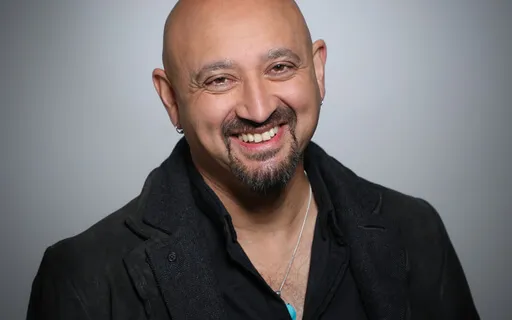
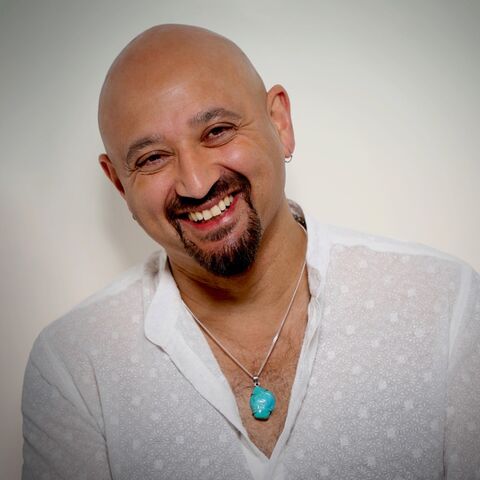
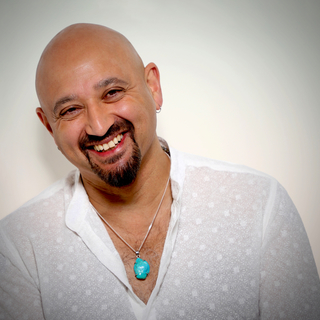
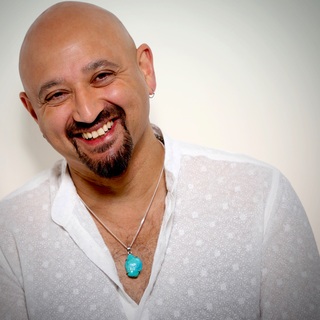
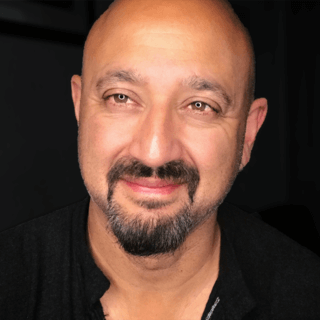
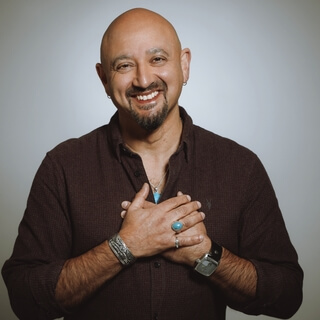
I'm John Sadiq.
It's really lovely to be here with you and lovely to kind of almost be at Watkins.
Watkins is one of those beautiful things.
And I promise that in the springtime that we'll get down and have a real event.
Oh,
Thank you for those of you saying hello in the chat box.
That actually really helps to know that there's somebody actually out there because they could be telling me anything,
Couldn't they really?
So yeah,
Watkins is one of those kind of highlights of the world really.
It's one of my favourite bookshops.
And then here I am now as part of the Watkins family,
Which is quite an astonishing thing.
So I want to introduce you to something that we've been working on for the last couple of years,
Which is this book,
Signpost of the Spiritual Journey,
Which is not quite out yet.
It's out on the 23rd of this month,
But in the shop,
I think it's available.
The signed copies that are in the shop are available from today,
I think.
So we're kind of almost there,
But we're 19 days away.
So not far to go.
I just wanted to kind of share with you a few thoughts on how this book came to existence,
Why it came into existence.
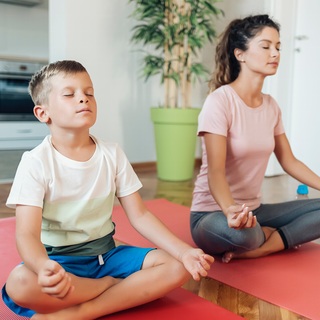
Then I'd love to guide us in like about 15 minutes of meditation or to sit with you.
That'd be really lovely.
And then there's a chance for sort of questions and answers.
The main thing about signposts,
As I'm calling it these days,
Is that I've noticed that a lot of books tend to kind of show us things and say,
We should do this.
And you should love yourself,
For example,
Is a thing that you hear quite a lot in sort of spiritual realms,
As it were.
If only you would love yourself,
You hear it in therapeutic realms as well.
But I don't think I've ever come across a book that showed me how,
And there's other examples.
So I would really,
I really wanted to make a book that was the how,
Rather than just,
Would it be nice if we loved ourselves.
How to realise your consciousness,
How to feel awareness,
What the levels of awareness are that indicate your kind of journey on the path.
And what I really wanted to make here was a friend who walks along beside you as you live your own life journey.
So I'm not saying,
You know,
It's the only book you should read or anything like that.
I make no claims about it really.
It's just an act of love,
Really.
My own life has been transformed greatly by some of the stuff that's in this book that I'm sharing.
But also I noticed that we can tend to drop into a lot of identity around our spiritual practices.
You go on YouTube now,
Or you go on kind of,
You know,
Any teaching platform,
And a lot of it is kind of,
Held as kind of identities.
It's almost as if we take certain ideas,
Like we read a book like this.
I think I talk about this in the intro,
Actually.
You know,
We read a book like this or by other teachers.
And then because we've read it,
We believe we know it.
And then we kind of adopt an attitude of having achieved that thing without really doing the kind of inner work,
But we kind of keep it going as an external sort of identity.
And we're at a time now where life is too short for this.
We're not gonna get anywhere like that.
We're not gonna get anywhere like that anyway.
But what good does it do?
What good does it do?
And so what Signpost is,
Is basically an invitation to sort of be really quite honest with oneself.
In fact,
There are four tools at the beginning of the book that we invite you with to kind of help you on your journey.
The first being responsibility,
I.
E.
Taking responsibility for your own life and this being your journey.
And honesty,
Being honest about where you really are.
And I think we can take honesty to mean something quite negative,
That we beat ourselves up,
Oh,
I'm no good or something like that.
But honestly,
Meeting.
I mean,
Before what I call my shift or my change of consciousness,
Which happened sort of in 2012 to 2014,
There was a very dramatic shift in consciousness followed by a near-death experience.
And I'll talk about that in a moment,
Which kind of was the invitation to write this in many ways.
I was profoundly not dishonest with myself,
But I wasn't quite honest with myself,
If you see what I mean.
I kind of,
I kept pushing forward just into the things that I thought that I knew,
Hoping that somehow they would bring me satisfaction.
And now I look around and I see so many other people doing exactly that thing,
Trying to assemble a life out of the conditioning that they've learned out of what we might call object consciousness or false consciousness,
As we call it in signposts.
And so I,
In my own life,
Arrived at a point where I had to be honest that I didn't really know how to live and I didn't really know how to love.
And I think until we arrive at a point of actually saying,
I don't know about things,
There's no way of actually taking anything new in.
So the first tool is a kind of an honest acknowledgement of where one is at at any particular time,
Not doing oneself down,
But not inflating oneself either,
You see.
The second tool is meditation or prayer and prayer.
I wouldn't say meditation is for everybody,
But meditation is primarily a tool for kind of learning who you really are.
That's what it really serves.
It's not about sorting out your stress and anxiety.
It's not about being able to focus and concentrate at work and all these things,
Although you may get those side effects,
But that kind of dropping out of conditioning and knowing yourself from a deeper place within yourself that we might call awareness or the soul.
And from there,
We can kind of gather the perspective that we need to kind of begin to see more clearly,
To take better responsibility,
To be more honest.
The third tool,
And this is the one that we have most difficulty with in the world now,
I would say,
Is being teachable.
So this book invites you to be teachable.
It doesn't say you should be teachable.
It just invites you to be teachable.
Because if you know everything already,
There's no point reading a book,
Or you will read it competitively or egoically,
And it won't be a friend to you.
It would just be an annoyance or something like that.
So in order to move forward in life,
Not by my method,
But in anything at all,
We have to be teachable and open to being taught.
And without that,
We literally have nowhere to go at all.
And then the fourth of the tools is to kind of almost like follow that inner guidance that comes from meditation,
Your honesty with yourself and your teachability.
Those three things make this fourth thing where we then gain this inner compass that if we feel into our sense of authenticity,
Then that keeps nudging us in the right direction.
We might not want to look where it wants to show us,
But it will keep nudging at us.
And if you are on the path,
Then you're going to listen,
Then you're going to hear.
But it's not somebody else's path.
And I think the main reason why signposts kind of is a thing of itself is that it's not inviting you to join somebody else's path.
In fact,
I go as far as saying,
Don't change your religion,
Don't go changing anything at all.
But actually just honestly come to the religion of your religion to begin with,
Or follow your religion of no religion or whatever it is.
Your life is actually the spiritual path.
It cannot be anybody else's.
I just want to encourage you really to be of your own life,
Because it's not the pain and the traumas and the stories,
But that feeling of life that is inside you is who you really are.
And it is the realisation or the beginning of the realisation of that,
And the sort of moving out of kind of being caught up in things into kind of awareness that is imminent and always and kind of present that begins to lead us forward.
These things match with authenticity and doing the kind of healing work that's needed,
The therapies that we need and so on,
Kind of come together to give us a life of meaning if nothing else.
My one hope for signposts is that even if you don't kind of go all the way to the end with it,
That anybody can actually increase the amount of meaning in their lives by turning up in some of these ways really.
I kind of want to talk about more of it than I can in this sort of short period of time.
But the one thing that I really kind of wanted to kind of draw forward today is this kind of a demarcation point at the beginning of the path.
So there's a sign that you've embarked that's very,
Very clear.
And I think most of the time we don't listen to this sign.
So this is,
I guess,
Signpost number one,
I hope it is.
I hope it is.
My editor,
Fiona,
Is on here and she'll be going,
No,
It's number three or something like that because you write the book and then kind of you're onto something else.
So I think it's number one.
Yes,
It is,
It's number one.
You will notice that there are questions that you have.
Primarily there are three questions or two,
And then sometimes a third,
And then there are a bunch of others.
And I feel that without these questions,
There's no beginning.
You know,
The Buddha used to say that to even know that there's a path in the first place is the greatest kind of treasure that there is because you can easily be here and have no idea that there's a journey to live,
A journey to make,
A place that is really here.
It's not a place that's away somewhere.
It's an actual being here-ness,
This thing that we call awakening or enlightenment or whatever.
It's a sense of actually standing on the earth right now,
Not lost in things,
Or that's an edge of it anyway.
And these questions you know already.
And so I think without them,
There's nowhere to go.
And so if you ever find yourself asking,
Who am I?
Which is,
You know,
Romana Maharshi's teaching,
Who am I,
Am I my money,
Am I this,
Am I that,
Am I my relationships and so on?
And we're not looking for negatives or positives within that,
But we kind of realize that we are more than just what we think we are.
So I think that is absolutely paramount.
Then what am I here for?
So actually questioning the meaning of our lives.
What are we here for?
Are we here just to live lost in things?
Or are we here to actually know who we are?
And then thirdly,
Is there an end of suffering?
Is there an end of pain?
Is there another way or a better way to live?
And I think until somebody has actually realized those three questions in themselves without any prompting from anybody else,
Without any kind of wanting to be a show for somebody else,
Some Instagram posts,
Some YouTube videos,
Some claim at being something or other,
There's nothing there.
And in my mind,
The book is for the people who have at least arrived at that place.
You know,
That's who I hope.
Everybody's welcome,
Of course,
But you know,
My great hope is that it finds those who have taken that step,
Who realize that these questions exist in the first place,
Because then we've got something to work with.
There are a bunch of other questions because I've been a writer a very long time and I realized the kind of the incredible power of questions.
I would say that there are seven other questions.
Who,
What,
Why,
Where,
When,
How,
And I think signpost is the how.
And then there's one question,
There's one other question.
So maybe this is the fourth great question.
And I learned that these two words change everything in this moment.
You can change anything in this moment with these two words.
And I may as well tell you that the question is,
What if?
So if you ask yourself,
What if,
What if things are not what they appear to be?
What if there is more to things than this?
What if this and this,
And you get a third thing,
You introduce what if into any situation and you have another thing or you have more.
In fact,
It's the basic tenant of writing a book or a screenplay or,
You know,
Anything with characters in.
What if you take one person and you place them with another person and you put them in a situation,
Then you have a story,
You just let them go,
Sort of thing.
So what if is kind of maybe our fourth great question in this,
And so I would invite you to have them.
They're yours,
They've always been your questions.
So they begin everything.
Everything,
They open up the road for us,
You know?
So whenever we're stuck,
We can actually say,
What if?
You know,
What if this is true?
What if there is such a thing as enlightenment?
Because I feel like we've moved down a path of not believing this thing can even exist anymore and belief even needs to go in some ways,
But of just making do now,
You know?
That was the past,
That was the past.
I read a terrible thing by somebody the other day that said,
You know,
The fulfillment of your personality is self-realization,
And I was kind of,
This was in some kind of big yoga magazine or something,
And I'm just thinking,
Oh my word,
Because there's so much more to us than our personality.
And so these simple things,
These simple things are the signposts.
So I've really tried with all my love and all my heart here to create something for us,
Not so that you attach to me as some kind of teacher.
I see a lot of this in the world where we attach to somebody and they're our teacher or this or that.
I understand that sometimes people need that relationship,
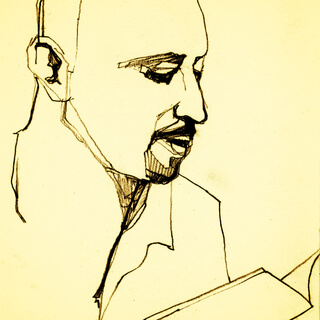
But rather my teacher,
Swami Satchidananda,
Who you can see here,
What I learned from him in my own sort of teaching,
As it were,
Was always give people back to themselves.
And so signposts is that it's a giving of yourself back to yourself.
It's so that you can give yourself back to yourself.
And it's so that if you interact with this little being who seems to have been asked,
Oh,
I didn't talk about the dying thing,
But in 2014,
I was very,
Very ill and actually passed away.
I was in the intensive care unit in a hospital in India.
Wasn't India that killed me.
I had this infection already.
And when I was dead,
I came back without resuscitation as well,
Which is really quite a thing.
It was the whole thing,
You know,
If you read Anita Morjani,
All of that,
The light,
The love,
The invitation to return,
The whole caboodle,
And a voice,
A beautiful voice that is like the dearest friend that you've ever wanted to spend time with talking to you.
So just basically said to me,
Leave your work now and go and talk to people.
And so sometimes I feel,
Well,
I'm not the most elegant speaker in the world and I don't have loads of tricks up my sleeve or anything like that.
But if somebody wants to sit down and talk authentically,
Or if I can talk to you through the pages of a blue book as honestly and as lovingly and as openly as possible about what we are,
What gets in our way,
And how we can move past those things,
Not so that we achieve anything,
So we're anything in anybody else's eyes,
But so that we're actually alive in our own lives fully,
Then that's what this is.
Or it's an attempt at least,
And it's a totally honest attempt.
There's no kind of,
You know,
If we were to speak to Fiona or the team here or something,
There's no kind of shenanigans going on here.
It's just an absolutely honest offering in a way.
And so that came directly out of dying and being invited to talk to people.
And so I was already a writer.
I'd published a number of books.
And so a natural way for me to speak to people,
More natural than this,
As you can see,
Is to offer words through text,
Through books and so on.
So I hope that this meets something for you on your journey.
And I hope that we can sit together one of these days and just be in being together,
Because we often meet in this world on the level of agreements and dualities.
You know,
We all,
I think of this politically,
And I think that this way,
And I believe in this,
And I like that football team.
And if you don't think and feel the same as me,
Then we don't exist.
And it's a terrible way to run a world,
Quite honestly.
And yet,
If we come to ourselves and just sit with each other,
Then there's love,
Isn't there?
Then there's love.
There's not an attaching love or an in love,
But there's just love.
And so that's what I feel we are capable of.
And so I would love to sit with you in that way.
And in fact,
Let's sit now.
It's a perfect time to kind of lead into a bit of a meditation with you.
So let's sit for about sort of 10,
12 minutes or so.
I just want to invite you to sit with me.
And if you've not sat with me before,
My invitation,
My number one invitation to you is don't make a meditation face.
Give up all ideas of meditation.
So I want to invite you just to adopt a comfortable posture,
Seated or lying down,
However you are right now.
And we're going to do a little practice that I call simply being.
I trained before Satya Dhananda,
I trained in Zen for a long time.
And so this is kind of based on the Soto Zen just sitting practice.
So just allowing a nice uprightness in your body.
Just feeling yourself sitting.
And don't try to meditate.
Don't try and change anything.
Can you allow yourself just to be here with all that you are right now?
Perhaps if you're lost in your thoughts or lost in a feeling,
There's something in you that recognizes that.
So that part of you that's recognizing,
We might call that your awareness.
So you might allow yourself to begin settling into that place that sees.
Now there's a beautiful breath that begins this practice.
And so what I would like to invite you to do,
As you naturally in your natural rhythm of breath,
Breathe out,
You allow the breath to breathe out down the front of your body,
Almost as if it's tracking right against your skin.
And then in the gap,
It goes under.
And then as you breathe in,
It comes up your back.
So out down the front,
Natural breath,
No addition to the breath,
In up the back.
Out down the front,
In up the back.
In up the back.
And as you feel this centering begin within yourself,
Just continue this another nine times or so.
Just allowing your body to soften,
Your legs to relax,
For uprightness to be in your back,
But not force,
For your face to soften,
For your hands to rest on your knees or in your lap,
For your belly to soften.
Out down the front,
In up the back.
In up the back.
So it's like an orbit of the breath.
This is a precursor to a deeper practice called the microcosmic orbit,
But it was adopted into Zen when Chan and Taoism met,
Or when Buddhism and Taoism met and became Chan rather.
Out down the front,
In up the back.
And so letting go of any effort now of following the breath,
But you may feel the orbit continuing to turn.
And just noticing for yourself the centering quality of just meeting yourself in this way without any effort.
There's perhaps a little bit more stillness,
A sense more of yourself or of dignity,
Or a deepening awareness of your own awareness,
So that you're seeing the movement of your mind,
Seeing the movement of the emotions,
Rather than just being face to face with them,
Lost in them,
Not detached,
But more spacious.
Perhaps you become aware of the feeling of liveliness in your body,
The aliveness of the body.
So you feel very physically present rather than spaced out.
Feel the space of the room around you.
You're aware of any sounds that you can hear,
And rather than attaching or rejecting them,
Commenting on them,
Perhaps you can just simply allow them to be.
So now there's an invitation within this practice.
This comes from the Zen master,
Dougen,
Who wrote down the notes for this practice many,
Many centuries ago.
The invitation is to let go of everything.
But I want to just slowly invite you to just slowly invite you to meet this in a particular way.
When we hear words like let go,
Or let go of everything,
Because of the reactive times that we're in,
We think that that's a rejection,
A pushing away,
Or an egoic shoving.
And that's not what Dougen is asking us.
Just notice what you're holding onto within yourself.
Holding onto name,
Onto forms,
Onto relationships,
Onto work,
Feelings of pressure.
Now you can't just tear those things off,
But what you can do is you can open your hands and let them sit.
So you can grip or you can be open.
So the invitation here is to be open.
Open your hands so there's no feeling of getting it wrong.
But there's simply an opening up to allow it to be,
Just like you can allow the sounds to be without jumping into them.
You can allow your marriage to be,
Your being a parent to be,
Your work to be,
The money in your bank to be,
The thing with the friend to be,
Person that you've fallen in love with to be,
Person that you've fallen in hate with to be,
The government to be.
Because you are not those things.
You are a life that comes before those things.
Not necessarily more important,
But before.
I would also invite you to notice that there are some things that you cannot ungrip from.
There's something perhaps that's very stuck that you're holding onto like crazy.
A name,
A form.
And this is nothing to feel shame or guilt about the object is not to be free of things.
Because even if you can see it and know that you're caught,
If you can know that you're caught,
Then you have awareness.
And any place where we're caught is a place that needs some healing,
Some love.
It's actually showing you your path at the moment.
Anything that's stuck is your path.
And so,
I want you to notice that you are not alone.
And so,
We can have gratitude for the things that we're hung up on,
Things that we're stuck on.
Thank you for showing me.
We can ask of our deeper hearts,
Or we can admit that we don't know how to do anything about this,
Or we can ask,
What if this was different?
How can I bring some healing here?
Whereas when we're only lost in the gripping and the pushing and the trying to overcome ourselves,
There's no space to learn,
To heal,
To grow.
So,
Let go of everything is a very different thing than we think it means.
It doesn't mean forever,
It just means for the length of your practice.
20 minutes a day,
20 minutes a couple of times a day.
You let go of everything,
Or ungrip from everything,
Or see how the land lies without any hope,
But with heart and bringing love to anything that hurts.
And so,
Now we drop that and we just enjoy sitting.
And without any effort at the mind or the emotion,
You might notice that you have a sense of something of yourself that is more constant.
Something that has always felt like you when you're a child,
When you're half the age you are now,
You've always felt like you.
Not the externals,
But the internal.
That feeling of life expansiveness.
That's your guide,
That's you.
That's what we call the I am or the self.
And you notice it by its sense of directness.
And so resting into that,
You don't need to maintain this.
You're not creating it.
In Zen they call it the unborn,
The unborn,
The undying,
The uncreated.
Perhaps you feel a sense of sovereign nature or dignity,
Strength,
There's nothing weak here.
The body gets old,
Gets ill,
Gets weak,
But this,
This doesn't.
And because you've not gone away anyway,
You've not gone away anywhere.
There's not a meditation of going away to some imaginary place or feeling,
But perhaps you're even more present.
Then there's no ending of this meditation.
We simply move into the next moment with whatever's on the program.
So you don't need to stop in a way,
You just move to the next thing.
And so with that,
We'll draw this meditation to a close.
Thank you.