The neural networks in our nervous systems are bathed in a chemical milieu that can fluctuate influencing our cognitive abilities.
Alcohol,
For example,
Can impair the rational brain,
Leaving its more primitive counterparts to dominate behavior,
Sometimes resulting in combativeness or tears.
Similarly,
The hormonal surge accompanying childbirth can induce an overwhelming sensation of love steering the course of one's life.
It's a marvel that a maze of neurons steeped in this fluidic cocktail can generate conscious thought.
The reptilian,
Mammalian,
And rational components of our brain must coexist,
Each with its own disposition and objectives,
Often regulating rationality to a subservient role.
Stoics devise techniques to bolster the rational mind's governance over its counterparts,
Yet when cognitive faculties are diminished,
Perhaps by the very alcohol that leaves our phones unscathed,
The application of Stoicism falters too.
You might have heard me talk about this,
But Stoicism can be an ally for grappling anxiety.
I've created many talks and courses on this topic.
As the Stoic philosopher Epictetus' Dichotomy of Control illustrates,
It is a remedy without a prescription,
Cost-free,
And without adverse effects.
However,
In instances of severe anxiety or depression,
The individual may be too besieged to harness Stoic methods effectively.
In such cases,
Intervention may require medical or therapeutic aid,
Such as cognitive behavioral therapy,
Which owes its lineage to Stoic principles.
In the ancient times,
People often had groups that they could go and attend with actual in-person teachers.
Trying to learn any skill,
Whether it's martial arts or Stoicism,
Can be difficult if you're doing it all on your own without any consistent guidance.
You can read articles,
Listen to podcasts,
And try it out,
And that is something that is significantly better than not doing any of that at all.
But sometimes you can encounter crisis moments in life,
Problems that seem too difficult to deal with on your own.
This is why I'm a big fan of getting involved in different communities,
Whether that's my Stoic Hamburg community or someone else's community.
There are lots of them around.
There are different Stoic conferences,
Different avenues to get coaching and mentorship.
But that is one of the limits,
I think,
Of modern Stoicism,
Is that it's sometimes not enough to just read a book.
We need the social element to upgrade,
Just like a martial arts dojo.
I want to also touch on three other potential limitations of Stoicism,
And I want to emphasize that I believe this is modern Stoicism.
The first thing I don't think modern Stoics emphasize enough is the idea of trauma healing.
The topic of trauma is getting a lot more recognition now with works like The Body Keeps the Score by Bessel van der Kolk.
For a long time,
It was a difficult psychological science to investigate,
But we're now seeing that trauma is a legit real thing and it lives in the body.
When trauma gets activated,
It essentially hijacks the rational mind,
Which then makes the practice of Stoicism difficult.
If you experienced adverse childhood experiences,
Maybe you haven't processed them fully.
Maybe you didn't have the tools when you were younger to process them fully.
And so those traumas now live on in your body,
In your face,
In your posture,
In your automatic thoughts and assumptions about the world and about people.
And just sort of dismissing your past and thinking,
Well,
I can't control my past,
I just need to focus on the present and the future.
You're actually missing some of the gold.
There's a lot that can be learned from your biography,
From your past,
By exploring where you came from.
Now,
I know the Stoic idea is that we shouldn't ruminate on the past,
You know,
Just long for something that we've lost or regret something that has happened.
And I totally agree with that,
But we should still investigate our past.
And we can do this through expressive writing.
There's been a lot of work by Dr.
James Pennebaker on using expressive writing for trauma healing.
There's yoga,
There's different types of trauma specific therapies that one can engage in.
Physical practices like yoga and martial arts can also be huge.
And I do think that in the ancient times,
They had their own ways of dealing with trauma.
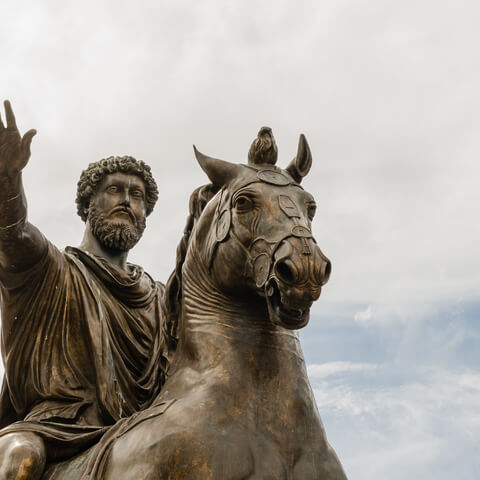
Marcus Aurelius doing the meditations and the journaling and the writing.
Seneca doing that kind of deep writing,
The philosophical journaling.
You are doing expressive writing,
You're more likely to be able to deal with traumas because you naturally connect things in the present to things that happened in your past.
And by making those connections,
You process the memories and put them in their right place.
The next potential limitation of modern Stoicism is the lack of emphasis on mindfulness.
There are little hints of this in the meditations by Marcus Aurelius.
And I think that mindfulness would have been something that would have been easier to practice in ancient times when there were no cell phones.
There was no streaming services.
The world had far less distractions.
People could sit down and read a book,
Could memorize quotes.
People had this sense that life could end genuinely next month,
Next year.
They didn't feel like they were going to live forever.
And so mindfulness probably came a little bit easier to them.
Appreciation of the now.
In modern days,
We're very distracted.
We're not very good at being bored anymore.
We're often not fighting for our survival.
We don't appreciate the sweet things because we didn't often earn them.
And we feel protected by modern medicine.
We can get infections and bounce back.
Whereas in the ancient times,
If you had a bad infection,
That could be the end of you.
So I think some sort of focus on developing concentration,
Developing the ability to not be attached to one's thoughts,
But to be intentional and use them properly.
That is something that is missing from modern Stoicism.
And I have found the combination of a standard mindfulness practice with Stoic philosophy to be very potent.
And here's what I would say.
This is an interesting kind of thought experiment.
If you consider yourself to be a practicing Stoic,
You're training to be able to handle poverty and setbacks,
To be able to cope with exile and death.
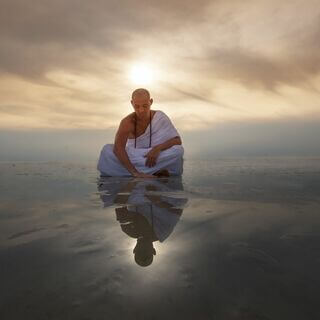
Can you sit with your eyes closed for 30 minutes in silence?
Just pay attention to your breath.
If you struggle with that,
If that is something that you feel massive resistance to doing,
I would throw into serious question your practice of Stoicism.
I think it's a really good litmus test.
Can you sit quietly with your breath for 30 minutes or 60 minutes?
That is in itself a practice of Stoicism.
And then the third limitation is the lack of focus on ecstatic experiences.
Sometimes Stoics can be very academic and get really wrapped up in reason.
And it's interesting because Epictetus talked a lot about the dichotomy of control,
But I see a lot in modern Stoicism,
People wanting a lot of control,
Almost clinging to control.
And one of the best ways that we can cling to control is by identifying the thought and attaching to thought.
If I can make my mind neat and structured,
Then I'll always be in control.
There's no sort of letting go.
And so I would recommend practices where you can actually let go.
Surfing,
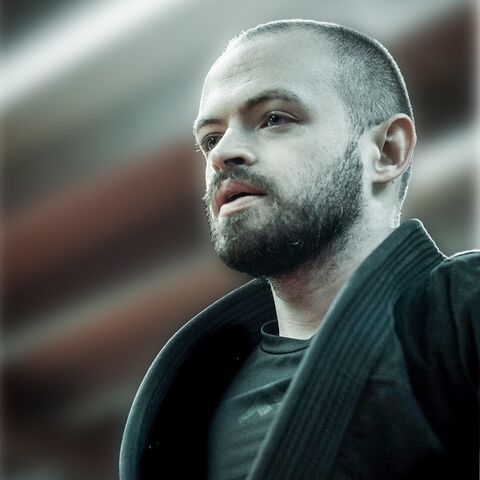
Jiu-Jitsu,
Drawing,
Practices where you can make mistakes and be messy and be creative.
Jules Evans wrote a book called The Art of Losing Control after writing Philosophy for Life.
Philosophy for Life emphasizes the value of Stoicism.
The Art of Losing Control highlights an important limitation.
Sometimes it's good to embrace ecstasy,
To be deliberate in letting go of reason temporarily,
To connecting to all parts of our brain,
The reptilian,
The mammalian,
And the human.
And now you're seeing practices like breathwork and dance,
Different types of retreats coming up that are helping people connect more with their bodies.
And again,
I want to say that this is modern Stoicism because in the ancient times they had different types of festivals and different practices that we don't have now that might've connected people more with their bodies.
We know that Socrates liked to dance.
That was his favorite way to exercise.
And that,
To me,
Is an act of letting go.
So here are some suggestions to take your Stoic practice to the next level.
The first suggestion is try some extended mindfulness meditations in silence and see what happens.
Practice some dancing or surfing or drawing,
Something that requires you to not think and to be in your body and trust your body.
And investigate your past and see what lessons you can learn from it.
What habits have you picked up that you need to let go of?
Did you experience trauma or bullying or abuse of any kind?
How are you still carrying that today?
Write about it for 15 minutes.
Practice the art of expressive writing.
Thank you for listening to the Stoic Handbook Podcast.
Hope you enjoyed this episode and I will see you again next time.