Hello,
How are you?
In Korea,
There are few things like disposing of lies andAMS.
And 200 years or 15 years of confrontation or making you think and the second week of May,
Korea is covered like a fresh green carpet with newly budding plants and flowers.
The weather is very warm and the weather is very hot.
Last night with a slight spring drizzle which makes this morning's greenery much brighter,
Much fresher and makes for a very good environment for farming.
At noon,
Wei duringburied theDIg posted more and more photos for the first time in the these photos still appear in Blacks singing whilst ch Pub Confid Worried They wrote us all as well We went to Moon Gyeong Training Center yesterday and engaged with the senior leaders of the JTS society as an organization and discussed our way forward.
Before we get started with the meditation itself today,
Let me respond to some of the questions from the non-Korean speakers we got from last week.
First question.
Sunim,
You mentioned last week,
You said,
Because you are beginners,
We only meditate for 30 minutes.
My question is,
How long can I meditate per session,
The better I become at it,
And how many times per day is effective?
I think it's about 30 minutes to meditate per session.
So first,
Usually the cycle is we meditate for 15 minutes and about 10 minutes afterwards.
If 15 minutes is a little too long,
We meditate about 40 minutes.
If I meditate for 15 minutes,
I can meditate for 30 minutes.
If I meditate for 30 minutes,
I can meditate for 30 minutes.
If we're doing frequently or one after the other sequencing,
We could do it for 40 to 50 minutes,
Then allow your legs to relax and then re-engage for 40 to 50 minutes.
If I meditate for 30 to 50 minutes,
I can meditate for 30 to 50 minutes.
And if you're working regularly,
I think the best cycle might be you meditate for 40 minutes and then do a walking meditation,
Allow your legs to relax for about 10 minutes,
Then follow with another 40-10 minute cycle.
When you're engaged in a very dedicated and focused meditation day session,
What we do is we do 40 minutes sitting meditation,
10 minutes walking meditation,
10-40-10 in those cycles for about 10 to 12 times a day.
So the second question is,
I'm just a beginner in meditation.
Sometimes when I finish meditation session,
I feel a little bit relaxed.
When someone is experiencing meditation,
It's a qualitatively different experience.
For example,
Can you become so deep in the meditation that you completely forget all stimuli around you?
Do you get some kind of profound insight to your existence or is it more like a spectrum of experience,
Like a little bit more relaxed than a beginner but nothing very different?
The objective of meditation is not to become comfortable.
Relaxation and comfort is the basis foundation to starting a meditation.
It consists of three things.
First,
You must be able to have a singular focus on a single object or a single thing while your body and mind is relaxed.
You should avoid any purpose or any intent to do well.
Just as you watch the tides and waves come in and go out in the ocean,
You must be relaxed and watch and just observe without intent.
Second,
You must be awake to what you're observing.
Clearly awake,
For example,
If the ocean is coming in,
Know that it's coming in.
As it goes out,
Know that it's going out.
If you're awake,
You must be awake to what you're observing.
Third,
There will come a time when you lose focus because you're distracted by straight thoughts or other external stimuli.
At that point,
Do not engage in regrets but just refocus and regain that wakefulness and mindfulness.
So all you have to engage in is to refocus once you lose it.
If you get distracted,
Refocus.
Just repeat that refocusing.
And do not try to make a judgment of whether you're doing this well,
This is not so well,
You did this poorly.
Do not engage in any sort of those types of judgment.
Even the judgment based on this meditation is working for me or it's not working for me.
Do not even engage in those types of evaluations.
Just in a relaxed state,
Focus on the edge of your nose and be mindful of the breath going in and out.
If you lose it,
Then regain that focus.
You've got to be steady and consistent in that.
Then as you become consistent,
You gain the capacity to realize the emotions that arise in your everyday encounters.
And you develop the capacity to be awake to the different emotional and feelings that arise in your everyday interactions.
In some ways,
You are able to maintain a very sensitive self-diagnostic capacity so that you are immediately aware of what happens to yourself.
And you also are able to free yourself from everyday judgments of whether you're doing this,
You're doing poorly,
Or whether this is good or bad.
So ultimately,
You're able to free yourself from the negative emotions of whether there's hatred or anger or other negative emotions.
In a state in which those negative emotions have been extinguished,
That's a state we call nirvana.
And you can't just say,
I'm not good at this,
I'm not good at this,
I'm not good at this,
And you're not good at this.
So even the thought of what happens,
What's the objective,
What do I achieve through meditation,
What are the goals I can achieve through meditation,
Even those statements or thoughts of intent should be let go.
And this is the most difficult part for me in teaching meditation,
Is that people will need to let go of any intent or any judgment or evaluation of their performance.
And when doing meditation,
That's very difficult to do.
It was easy when there was pain in the leg,
For example,
The attention goes there,
It seemed that tonight it was easier to go back to the breath.
But when a thought becomes like a chatter,
It was harder to be aware of it quickly and to get out of it.
Why is this?
Is this the habit called the monkey mind?
So when you close your eyes and you're relaxed,
The first visitor is sleepiness.
If you can overcome sleep,
Ignore sleep,
Then the second visitor are those distracting thoughts from the past,
All these memories.
Or you're also visited by distractions of the future,
All the different plans you have for the future.
These are natural phenomenons.
Because our mental acuity runs on these types of things.
So do not even try to get rid of it intentionally,
All these natural phenomenons,
All natural distractions that happen to you.
What you're practicing in meditation is you are trying to maintain that focus on your breath in spite of these distractions which are natural.
You are crossing some vocifer to a noisy place into an objective,
Into a goal.
As you walk through a noisy market and you have all these merchants yelling at you to buy their wares,
They even grab at you to try to pull them into their stores.
And you might be led by them into their store to look at their merchants.
Or you may go on your wares and not be distracted by the merchants.
But if you engage in these type of interactions,
Whether yay or nay,
It's very difficult to go through their noisy market.
So when they're trying to grab at you and get your attention to buy their stuff,
That's what they do.
These are tradespeople,
They're merchants.
But it's up to you to just walk through them,
Not be distracted,
Whatever they say,
Whether they grab you or not.
You just go on your way.
And do not be distracted nor resist.
So basically in other words,
You are letting them do what they naturally do while at the same time you do what you want to do.
If you are not able to do what you want to do,
You are not able to do what you want to do.
You are not able to do what you want to do.
Basically your perspective in engaged meditation should be whatever external distractions or internal distractions that may happen,
Let them happen naturally while you maintain your own focus on your way.
Fourth question.
Do you think doing yoga before meditation will help me with meditation and concentration?
When I'm in this monkey mind trying to meditate a little movement of my neck where it's painful in my back,
Sometimes it allows me to go back to concentration on my breath and the tip of my nose.
Would that be helpful?
I think that's a good thing.
As I said,
Any kind of evaluation or any kind of thought about whether this helps or that helps,
Even that thought you have to be able to let go.
You know with your body and mind relaxed,
Just focus your mind on the breath at the end of the edge of your nose.
And know the ins and outs of your breath.
Whatever thought comes,
Whatever noise you hear from your outside,
What sensation arises in your body,
Do not imbue those with any significance.
Just merely be focused on your breath.
If you lose it,
Regain that focus.
And aside from that focus,
Do not imbue anything else with any significance and this will occur naturally.
One more.
So my wife tells me that I need to sit straight during meditation.
But as time goes by,
My body relaxes and it's not straight anymore.
Do I need to concentrate on the way I sit during meditation?
Or can I just focus on my breath?
The most important thing is to be aware of your breath.
But when your body is not in the right state,
That phenomenon usually occurs when you lose focus on your breath.
While you are focusing on your breath,
And if you realize that your body's position is not where it should be,
You can strain yourself out,
Correct your posture while maintaining that focus on your breath.
So it's not a binary,
It's not a choice between straightening your posture or maintaining focus on your breath.
You should correct your posture while maintaining focus on your breath.
So let's conclude with Q&A with that.
Strain out your posture position.
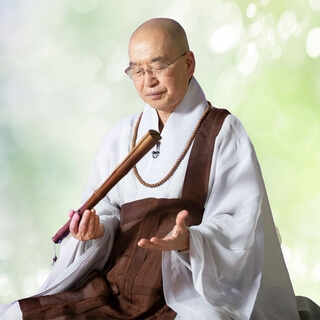
Or the lotus position.
Strain your back.
And strain your head as well.
Both hands in front of you.
And close your eyes,
Relaxed,
Comfortable.
Focus your mind on the edge of your nose.
And be awake to the movement of the breath in and out.
If breath is long,
Realize that it is long.
As your breath goes out,
Realize that breath is going out.
And if your breath is quick,
Just realize that it is quick.
And if your breath becomes rough,
Just be mindful that it is becoming rough.
And if your breath is calm and peaceful,
Just realize that it is calm and peaceful.
Do not try to manage your breath.
Just notice the condition and the state of your breath.
Whatever bad memories come to you from the past.
Whatever great plans might come to you from the future.
Do not imbue them with any significance.
Just let them be.
Just be mindful of the breath.
If you lose it,
Just realize that you lost it.
And once again,
Refocus on your breath coming in and out.
If you lose it 10 times,
Regain it on the 11th time.
Or if you lose it 100 times,
Regain it on the 101st time.
Just be consistent in your breath.
Do not give up out of frustration because you lost it.
But do not get excited just because you are able to maintain that focus.
Do not try to perform well.
Just in a state of relaxation and calm,
Just be consistent in your focus.
Let us begin.