Think meditation is hard?
Do me a favor.
Take a slow,
Deep breath in.
And now breathe out.
Congratulations.
You just meditated.
Hi,
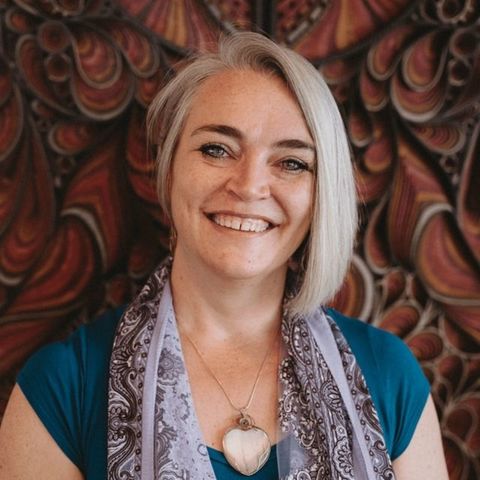
I'm Crystal Joukowsky,
And this is Breathe In,
Breathe Out,
A weekly mindfulness and meditation podcast for anyone ready to own their own shit and find a little peace while doing it.
Hello and welcome back to Breathe In,
Breathe Out.
I'm Crystal Joukowsky,
And as always,
I am absolutely thrilled that you chose into this moment today,
That you are here with me,
Just taking a time out and breathing in what life has to offer you in this moment.
Today,
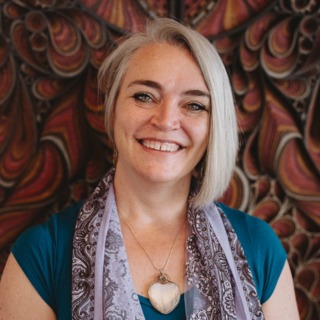
I get to speak with Rachel Perman.
She is a certified life and leadership coach,
A speaker,
A best selling author,
A podcast co-host,
And co-founder of Rhema Team.
She shares her story of overcoming trauma and living with mental health challenges and chronic pain to inspire others that brokenness does not disqualify you from living and leading well.
It actually prepares you.
So hello and welcome.
How are you today,
Rachel?
I'm great.
Thanks for having me.
I'm doing well.
I was telling you that we're in day four of a blizzard here in the Midwest,
And so I'm ready.
I'm ready to get my own shovel and get myself out of here because our roads haven't gotten plowed yet,
And I'm going to become a desperate woman,
I think,
Here shortly because I'm just like,
Got to get out of this house.
But other than that,
I'm doing great.
Right?
Oh,
The contrast in our world.
I'm enjoying 60 degree weather,
So I'm like,
I just want to send that heat up to you and have it melt everything so that you can get out and enjoy a little bit more than what you're able to right now.
Right?
Yeah.
Oh my gosh.
So Rachel,
Tell me a little bit about yourself and your past and what brought you to being a leadership coach and just you.
Okay.
So if you ask my friends,
They always tell you that I am funny and wise,
But I also tell it like it is,
And I am Midwest born and raised,
And so I do make my home in North Dakota with my husband and three great kids.
We do have two fur babies who are really enjoying the snow.
We are blended families,
So sometimes our house is really full and then sometimes it's just me and my husband and the dogs.
I am obsessed with plants,
So I'm really excited for the snow to leave because I was getting ready to plant.
I have an obsession with the British Royal family and cute coffee mugs.
I like to rock the boat.
And so yes,
I am an Amazon bestselling author,
Public speaker,
Podcast host.
I have a lot of different titles that I use,
And the Entrepreneur bug actually hit me when I was 19,
And that is when I.
.
.
Technically I am a beauty school dropout,
And I did that at 19,
And what I decided to do instead was move to the big city of Minneapolis,
And I went to the Aveda Institute,
And that I actually finished,
So I am still a licensed mathematician going on 20 years.
But that's when the Entrepreneur bug hit me because working in the beauty industry,
I didn't realize how much of that entrepreneurial spirit you were going to need to have.
And I created a sugar scrub company when I was 20 years old and still have it.
I still have some clients that are like,
Please don't ever stop making it,
But you can't find it anywhere unless you know me.
So that's how the whole thing started.
And then in,
Let me think,
I graduated in 2012 from college.
I decided I didn't want to stay in the beauty industry forever,
So I went back to school,
And that's when I got into more of the traditional side of counseling.
And while I was getting my counseling degree,
The school I was going to combined with one of the first coaching certification programs,
And so while I was getting my degree,
I was also able to take classes at the same time to get my coaching certification,
Which I thought was great.
So that's kind of where the career shifted,
But honestly,
I think while I was in the beauty industry and working in spas,
There's something about getting somebody in a dark room on a table and nice and warm and relaxed,
And they start talking to you,
And they start sharing their story.
And I think I really started practicing my counseling skills all the way back then.
So when I graduated,
I did think I was going to go more of the traditional route and get my master's degree.
At the time,
I was a board certified biblical counselor around 2013,
And I was helping a local church do pretty much lay counseling,
But mostly it was kind of more of a liaison between the staff and the pastor.
Pastors don't get a ton of counseling training,
So I was able to kind of provide that.
And it was there that my best friend and I decided that we wanted to break out and do our own thing.
She was a health coach at the time,
And I was really enjoying the coaching side as I was starting to transition into that even back then.
So in 2014,
My best friend and I co-founded our first company together.
It was called Big Blue Couch Coaching,
And then in 2019,
We rebranded to Rhema Team so that we could position ourselves a little bit better into the leadership coaching space instead of the life and faith only coaching space.
So that's kind of how I got here.
That's how I got multiple titles.
We started the podcast show that we have actually started as a local radio show,
So that's how that one started.
And now that's how I got most of my titles.
So that brings me to today.
So a woman of many trades.
But it's all those life experiences that bring us to here,
And we keep learning and growing.
And I think that all of those things that we've learned in the past,
Some of them we keep in our bucket,
And we're like,
Absolutely,
I'm going to use that tool.
And some of them were like,
I don't need that one,
And I don't need that one,
And I don't,
Oh,
Here's a new one,
And it's shiny,
And it's exciting.
And we just keep growing because we love,
I'm like you,
I love learning.
I love growing.
I'm a sponge,
And I take it all in.
And then people just magically say,
Hey,
Can you help me out with this?
And yeah,
Sure,
I got you.
How about let's work on this?
Let's work on that.
And I'm trained in massage therapy as well and Thai massage,
And it is.
There is this thing where people start to relax,
And they're on your table or they're on your mat,
And they're just like,
Oh.
That spot that you just released also released a whole bunch of emotion that they had been holding in about whatever this is over there,
And they just have to talk about it to continue and complete that release.
And you do become of sorts this sounding board and unintentionally a counselor.
And you don't try to counsel them in that moment.
And yet it's like.
But it definitely happens.
And I think in industries like that,
Whether it's a hairstylist or it's somebody that's working in the spa industry,
You become a trusted source for people.
And it was just like I said,
It was just kind of a training ground for what I did here.
At first,
It used to be like a funny joke that I was a beauty school dropout because I stopped cosmetology.
That's what I did first.
And I realized that I did not like that.
I have a depth perception problem with my eyes,
And you can imagine how well that goes with cutting hair.
And I didn't really know that until I got there.
And everything that looked straight was not.
So it would not have worked out well as a hairstylist.
And so yeah,
At first,
It used to feel like such a huge failure to be like,
Oh,
You had this one career,
And then you completely pivoted.
But I think that's definitely one of the things in my past or my career path that has helped me to this day.
There's other things that haven't.
But that I think was really a training ground for me to learn how to communicate with people,
To how to build that trust,
How to make people comfortable.
And all of that,
I mean,
People get really nervous when they come in the first time to a spa or to a coach.
And that's just kind of helping,
It helped me a lot,
I think,
With my people skills,
Definitely with selling,
All of that.
So I'm proud of it now.
Yeah,
It's creating,
You learned how to create that safe space for people to just come in and be able to do whatever work they needed to do.
So congratulations and good job.
And I'm really,
Yeah,
Hats off to you.
So you've been through a lot of transitions in life from just every different change and every different new learning experience.
So do you have tips on like how to transition?
Have you got a little,
You just know that this is a really fabulous way for people to recognize transition and what they're going through?
Right.
Well,
The first thing I always tell people when we talk about transition,
And people can use a lot of different words for transitions in their life.
And it can be a good transition,
Like,
You know,
Starting a new job,
Maybe moving to a new city,
You know,
A baby is born,
You're getting married,
Or it can be a rough transition,
Like a divorce,
Or you know,
You lost a job or the last few years,
There's just a lot of loss that has nothing to do with death necessarily,
But just change in general.
And one of the things that I have most definitely learned and is the first thing that I talk about when people ask me this is that we really do have to remember that we have choices.
First of all,
When this starts happening,
And the most important choices to go through the process,
Like,
We can go through it kicking and screaming,
We can go through it.
With eyes that are willing to see like the beauty in change and in transition,
But I think that first choice really determines how this season of your life is going to play out.
And I know there's definitely times where,
You know,
Change happens or transitions happen that are negative or trauma inducing or anything like that,
Where like,
You didn't ask for this,
You don't want to go through it.
And like,
Deciding to go through it,
It's the last thing you want to do.
But it really is a powerful choice.
It puts the power back in the driver's seat where you should be.
And even just that one choice of knowing,
Hey,
I get to choose how I'm going to see this how I'm going to go,
Like what my behavior is going to be what my thoughts are going to be like what my attitude is going to be like,
That gets a lot of power to especially when there's so much unknown when we're going through transition.
That's the first thing I would say is being willing to go through the transition as graciously as you can.
And that does not mean you don't get to like kick and scream a little while you would certainly get to be upset and you know when it's one of those transitions is hard.
There's going to be grief with that.
And it's a transition that is easy.
There's grief with that.
So the choice,
I think is the most important thing,
Knowing you have it and then being willing to make it so that you can actually learn what you need to as you go through that transition.
Nice.
I absolutely love that.
I love the idea that setting it's almost like setting an intention for that transition.
It's saying,
Okay,
I'm here this is going to happen.
Do I want to be drug kicking and screaming and fighting the whole way?
Or do I want to say,
Okay,
How is this going to benefit me?
How can I work through it?
How can I be a little bit more gracious as I do it?
And you're right,
Absolutely.
Experience that kicking and screaming experience that upset and frustration because if you don't guys,
It's just going to grow and be even more frustrating.
It's so true.
Yeah.
Yep.
Well,
I love that.
So did you do that in the beginning when you were going through all these transitions or did you have to learn that?
So I grew up with parents that moved a lot.
I don't even remember what the final number was,
But at one point I counted,
I think I was 25 or 26 right before my first daughter was born.
And I had moved 30 times in my lifetime.
So I think in some ways I was kind of born into this message of learning how and given this message whether I wanted it or not on how to transition during change.
It is actually very bizarre for me to not be moving and changing.
And that's actually something I've had to work on with a therapist because it's normal was hard for me,
Like learning how to stay in one spot,
Learning how to not move just because I was like,
I don't like this house anymore.
It was crazy how many mindsets that that actually brought into my life that were negative and unhealthy.
So I think in some ways I was definitely kind of groomed,
You could maybe say,
Into being able to change a lot.
It does help that certain things you don't get attached to and you kind of are like,
Oh,
You kind of expect change to come when it's happened a lot in your life compared to somebody that's like maybe an adult by the time they have a big transition in their life.
But like I said,
In other ways,
I think because it was kind of forced upon me and I was never really knew life without change.
It created a lot of negativity in my own brain as well.
And I think I did a lot of kicking and screaming,
Especially when I became an adult and it felt like I had new choices or things were just,
I was told this is what we were doing or where we were going or the change that was happening.
And I think when I,
I think the first time that I ever actually took that power back and decided that,
You know what,
This is what's going to happen.
I'm going to walk through it this time with some grace and figure out what I need to do is actually when I filed for divorce in 2017.
Up until that point,
Every change in my life,
Every transition in my life had kind of been dictated by him and the alcoholism that he dealt with.
So I think for me,
When I look back,
That's kind of where that started to switch from change as being,
Change as being forced upon me to change can be a beautiful thing if I am willing to walk through it,
If I am willing to look at it differently,
If I'm willing to do the hard along with the good.
And that's,
I think really where it really started to switch in my brain.
I had to walk it out though,
For sure.
You had very similar stories actually,
Because I moved a lot when I was a kid as well.
So I learned very early about the impermanence of absolutely everything,
Which meant that you just kind of were forced to go with the flow.
You were forced to accept the next thing.
And it wasn't until like I was married and I had two kids and then that gypsy aspect of life,
I've got to move.
I got to move.
I hate this place.
I got to move.
Like it was three years into being in one spot and all of a sudden I was,
I can't do this anymore.
I have to move.
And I recognized it at that point.
And I was like,
Wait a minute.
That's from my childhood from moving so often back then.
And I don't have to bring that into my life now.
Crazy transitions.
And yet it also taught me that you don't cling to anything at all.
Like you said,
You don't get really attached.
And so I often just didn't expect anything exciting to happen or follow through because there was just never,
Never any guarantee that it was going to happen.
You just get this.
Yes.
And I love you said gypsy lifestyle.
Cause I've never thought about it that way,
But it totally,
It totally was.
And like the idea of putting roots down and like all of that was so foreign to me.
And my,
My second husband,
Like my husband right now he lived in like two houses his entire lifetime.
Like moving in together was like his third move.
And I was like,
Oh my word.
And it's just such an opposite way of living from like the gypsy lifestyle that you and I grew up in.
And like,
I know exactly like I can almost,
I can go back to where I grew up.
I'm like,
Uh,
I grew up in,
I don't even know which house to tell you.
I grew up in,
Um,
What alone I kind of have a town I've narrowed it down to.
I grew up in the Midwest.
That's the easiest way.
That's the easiest way to explain it is I grew up in the Midwest.
We were all over.
Um,
But Midwest has been home.
So yeah,
I get that.
It's,
It's a lot when it's kind of just,
You know,
Forced upon you first because you don't have choices as a kid.
And then noticing when that mindset starts coming in and you're like,
Nope,
I'm just bored.
Like I don't have to move.
I don't actually have to pick up and move every two years or every year or anything like that.
This is okay.
You can stay in one house and build a home and,
Um,
Create expectation.
That was weird.
Even planting grass,
All of it was just such a big thing for me.
Um,
When we,
Um,
When,
When I filed for divorce,
I moved out of the house that my husband and I,
My first husband and I had built with our kids and moved into an apartment.
And I thought I was never coming back.
And about one year into moving into the apartment,
This house would not sell.
It would not sell for anything.
Like we had so many people going through it.
We had neighbors houses selling this house would not sell.
And I was like,
What is going on?
And I am a person of faith.
And I know that like,
It was like God was talking to me audibly and he was like,
I want you to offer this amount of money to your ex-husband to buy him out of the house.
It was like still no amount.
Um,
And I was like,
This is and I want you to move back.
And I'm like,
No,
No,
No,
No,
I'm not moving back.
That's the house where a lot of bad things happened.
I can't live there.
Um,
And I slept on it and I heard,
You know,
It again.
And I'm like,
Okay,
So I offered the deal and I said,
Here's what I can give you.
What do you think?
And he was like,
Sure,
I'll take it.
And so,
Um,
Bought the house back very much kicking and screaming.
This was one of those transitions where I was like,
I don't want to live in this house.
And it's been four years now.
So total I've lived in this house longer than I've lived anywhere in my life because this three years before the divorce that we built the house five years before the house.
So we built the house.
So I've never lived anywhere this long.
And knowing when those trauma responses come up of like,
Yeah,
I want to move or right now it comes down to rearranging furniture.
That's how I've channeled it.
Um,
And I've started planting things outside,
Like getting outside and putting things in the yard feels permanent to me,
Even though I know it's not.
But like perennials,
They feel permanent.
And that's part of my healing process is putting actual legit roots down in the ground and like,
It's okay.
You can stay here and grow where you're planted here.
Um,
So yeah,
It's definitely a learning process.
I love the absolute literal literal symbolism that you have there of,
I am intentionally putting roots down.
I am intentionally saying,
No,
No,
No,
No,
Here's a flower.
Here's a plant that is going to come back every single year.
And I am going to be here to see it.
It's that conscious awareness,
It's that intention saying,
No,
No,
No,
I see it.
I'm going to work with it and I'm going to move forward.
I call Colorado home because I have lived in Colorado for 22 years now,
But I've lived in three different homes,
Four different homes since moving to Colorado.
So I'm here at this one and I keep saying,
I am going to die here.
I am like,
This is it.
I'm not moving again.
I'm absolutely done.
And so I'm like you,
I've been planting and I've been building and I've been creating in this space and making it feel even more like home.
You know,
Like this is it.
I'm done.
And this is like,
This is my happy place.
I'm going to create something where I'm excited to be here for much longer and thriving.
Right?
Yep.
I was shocked.
And it happened slowly.
I don't think it happens overnight with these kinds of transitions where all of a sudden though the home did kind of go from house that I was going to raise the kids in because that's what they needed to home that I loved.
And I can't pinpoint when that happened,
But it definitely did.
And it could definitely created a different atmosphere in the home.
It created,
There were even,
You know,
There are friends and family that,
You know,
Knew me before that have come into the house and like,
It's just so different.
It just feels so different.
And there's nothing really different.
Like the paint is different.
There's some new furniture,
But like,
You know,
There was no major,
You know,
We didn't tear down any walls or anything like that.
It really is the same house.
And I'm proud of that transition.
I think of one of the hardest ones I've ever gone through,
But I think that's one that I'm most proud of too is the ones where it is kind of that kicking and screaming.
And there was a lot of grief coming back here and I had to deal with it.
You know,
Sometimes there's that saying of you can't heal in the same place that you were hurt.
And I could not wrap my brain around that idea that I could process and heal and my kids could heal in this same place where a lot of hurt happened.
And I think it's just been kind of a miracle to watch it actually play out because I was convinced that this was not,
This was what was good for the kids,
But I was not sure that this was going to be what was good and best for me.
And it really has turned into my safe space instead of the place I always wanted to leave.
Yeah.
I really commend you for that because I think,
And I would hope I could be absolutely wrong,
But my impression would be that healing in that space that caused so much turmoil and upset means that you're even stronger and more grounded and more rooted because you faced it head on.
You faced it in that spot,
Like getting out of it sometimes can be a little bit running away.
Not always,
Absolutely not always.
Sometimes it can be like running away and saying,
I'm not going to do that.
And other times choosing to stand in that and choosing to heal and face it makes you,
I mean,
It's just inspirational and it's,
I would guess that it makes you stronger in that healing and more solid in your growth.
So I commend you for choosing to follow.
I read Eat,
Pray,
Love about that time.
It was like so old already by then,
But Elizabeth Gilbert's Eat,
Pray,
Love.
And I joked that I was doing Eat,
Pray,
Love Midwest edition where you don't get to go to Italy and Bali and,
You know,
Find yourself for a year.
I was in a dumpy apartment trying to make ends meet,
Putting groceries on credit cards and then moving back to the place that I never wanted to be at again.
And I'm like,
Yeah,
This is Eat,
Pray,
Love Midwest edition.
Exactly.
But the mosquitoes still exist here and they ate you alive.
Right.
Here you go.
Always be that glamorous.
And I think the year away in the apartment was actually really a good transition for both me and the kids at the time just to get some healing outside of the space.
But yeah,
It's,
It's definitely been probably the one that I was kicking and screaming the most.
I think when it came to the actual divorce,
I was ready.
I had been ready.
It was time.
It was past,
Way past time for us to call an end to that situation and for him to go get help and all of these things.
So that was easier.
Moving back into the house,
That was difficult.
That was much more difficult than actually deciding to file for the divorce.
Yeah.
Wow.
I just,
Hats off to you.
Hats off to you.
I don't recommend it for everybody.
It's just,
That's what happened with me.
Yeah.
So you have this,
You've got stress management,
You've been like just dealing with life.
You've been through all of these ridiculous transitions.
Ridiculous is the wrong word.
I totally apologize.
It's like,
I mean ridiculous in like the bigness of them and the.
.
.
Like the amount.
It's ridiculous.
Oh my gosh.
Oh my gosh.
And some by choice and some not by choice.
And let's face it,
Most of them were by choice.
Most of all of our transitions are by choice in one way or another.
Even a no choice is a choice.
You have developed,
Along with your partner,
We talked about the podcast that you started as a radio show,
But the two of you,
Was it the two of you that started this Art of the Pause?
Yes.
So the,
It was actually,
It was something that my best friend Mandy was born with cystic fibrosis.
And so when we started the company,
My health journey to why I have chronic pain and all that hadn't even started then.
So Art of the Pause really came out of her learning how to make sure that she had the energy that she needed to actually live the life that she wanted.
And it was just a way that she developed.
And then we started sharing with our clients and over the last decade have just honed it down into this really stress management tool that we've brought into schools.
We've brought into companies.
We use it of course one-on-one with our own clients.
And what we really noticed is that it was a way for people that had invisible illnesses or chronic diseases or things that you don't look like you're sick on the outside and you're still well enough to actually do things and have work and all of that kind of thing.
How do you do that?
Like how do you make sure that when there's seasons of sickness or seasons where health needs to be the priority,
How do you not let all the other things fall and what happens if they do?
So it really started as her leaning into this process of growing and building her dreams while managing this illness.
And then as I started to have some more health challenges show up and of course during a lot of this transition,
Especially in the last 10 years,
It's become a lifestyle more than anything.
The Art of the Pause is a way to really manage stress because there's no way we can get rid of it.
So there's stressors literally every single day,
Big stressors and little ones.
But just pretending like it's not there or just stuffing it was one of the things that we definitely saw clients do quite a bit.
And they were starting to get burnout.
They were starting to have health challenges.
They were starting to have all kinds of things.
And this was way before the pandemic even started.
And since all of that,
It's become one of our capstone trainings that we do.
And yeah,
It's a lifestyle for Mandy and I now.
And it's definitely one that I love to share with clients and speaking on stages and anything else where I can share it.
So do you want to share what exactly that is with us?
So Art of the Pause is actually,
The pause is an acronym.
And like I said,
It really is a stress management tool and it's a lifetime tool.
So it's not a one time thing.
There's deep breathing and meditation and all of that kind of great stuff for when you're feeling very stressed in the moment.
So the P stands for pay attention to your emotions.
One of the things that I have really noticed over the years,
Not only with myself,
But with my clients is that women have a really hard time knowing what emotions they're feeling.
And we could bunny trail to a whole different topic of why that is based on society,
Based on what we've been told from our families of origin,
Based on this idea that we always have to be nice and sweet and calm and all of these adjectives that don't always describe us all the time.
And so we don't know what to do with feeling angry.
We don't know what to do always with feeling frustrated or we don't even always know what stress feels like in our own bodies.
It's because it's different for everyone.
So that P and it's in order on purpose.
So it's an acronym,
But it is an order because learning how to pay attention to your own emotions,
Knowing what kind of emotions are going to trigger like a spiral into who knows what.
Even sometimes paying attention to whether or not you've eaten.
Like,
Are you upset because you have literally not eaten for eight hours.
And that piece alone,
That empowering piece of teaching people how to pay attention to their emotions first has been super life-giving for me because it's something I totally have to work on.
I think with you've gone through trauma,
You don't know what your emotions are.
Like,
You know,
You're feeling something,
But you're not sure what it is.
Like it's hard to even put a name to it.
So that's,
That's the first step.
Pay attention to your emotions is how you're going to know that your body is feeling stressed before it's too late to deal with it.
And you do then have the health problems or all the things that we see from all the studies and how stress affects our hearts and affects our brain.
It affects literally everything.
So learning how to,
How to see it and feel it and what it sounds like in,
In our own bodies,
Whether it's sweaty palms or you get shaky or,
Um,
You know,
All kinds of things,
The heart palpitations,
Like what does it feel like,
Um,
Before your body goes into that,
That overdrive of stress.
I'm like here on bated breath because pay attention is absolutely something that I talk to people about all the time.
I'm like,
Look,
The first,
The way that you are able to manage anything that you have going on is that you are paying attention,
That you recognize that you're checking in.
And I talk about the four bodies,
Spiritual,
Mental,
Physical,
And emotional.
And if you check in with all of those and say,
Hey,
Where am I at really?
And what do I need?
How do I fix that?
Um,
Paying attention,
It all starts with you because nobody else knows what you're going through,
Especially when we are trained to hide our emotions.
So I'm like,
Uh huh,
Absolutely.
We get so good at it.
And you know,
One of the things that we definitely try to make stress feel like is that you're not alone.
So we,
Um,
We use a lot of things from,
There's actually an American Institute of stress.
We're like so stressed that there's an American Institute that just studies stress and the top four things that people will feel like the physical symptoms are fatigue,
Um,
Headache,
Upset stomach and muscle tension.
So those are going to be the four things that are most common,
Um,
For people to feel.
Um,
Other things can be,
You know,
Teeth,
Brandings and pens.
They can be,
There can be a change in appetite.
Um,
And then psychologically it's that irritability,
Like 50% of the people that they've studied over however long that they've had this Institute irritability and anger is the number one psychological symptom of stress and,
And too much stress in your body.
So we,
We got to deal with it.
I know.
I think sometimes when I'm too stressed,
I start to get foggy and I can't remember stuff and I'm like,
Okay,
I need to take a break so that I can refocus because there's a problem here.
Um,
Which leads beautifully into A.
So,
Um,
A is allowed time to rest.
I was like,
What is A again?
I forgot,
Um,
Allowed time,
Allowed time to rest.
And one of the things that Mandy and I have taught our clients is the importance of a rest day.
Now most people think like rest day is going to be like,
I'm going to sleep all day.
I don't have time to nap all day.
And what we've learned over the last decade is sleep or rest can look like sleep,
But it can also look like,
Um,
Having fun.
It can look like built,
You know,
Filling up your tank any way that you can,
That is good for you.
So some people don't sleep,
But some people could use a nap once in a while,
Or,
You know,
Um,
We challenge our clients to take a 24 hour rest day every single week.
It sounds impossible and most of them don't like to do it.
Um,
There's been seasons where I can do that.
And then there's been seasons where like two to three hours.
So it's more about the importance of blocking out time to rest where you're not working on your business.
You're not working on the home.
Um,
You are simply just being,
You're either,
You know,
Enjoying an activity and not like being outside in the garden or,
Um,
Planting flowers that can sometimes count as,
As rest if it's,
You know,
Filling for you,
If you love to do it.
So it's definitely something that is unique for every person,
But sleep is so important.
And if you are seeing those signs of stress,
Um,
Sleep is one of the best ways because it's the time when the body is going to relax and repair itself and,
And do some of the work it needs to do that it can only do when you're sleeping.
Um,
So I'm a huge fan of naps.
Um,
That is how,
That is literally how I have survived.
Um,
When I started having chronic pain,
When I started having more of the symptoms show up for,
Um,
Some of the mental health stuff when I got diagnosed with PTSD,
Um,
And depression,
Like sleep has been,
Um,
It is now one of my,
My favorite coping skills and I don't sleep the day away.
Um,
Cause that is not healthy when,
When you have depression,
That's a sign that probably should maybe talk to the doctor,
But taking a nap has been really important and it is one of the things that we teach.
So A is allow time to rest.
I have a t-shirt that says a nap team captain.
Oh I love it.
I absolutely love naps.
I think they're beyond fantastic.
And with my work colleagues,
I will literally,
They'll be like,
Can you have a meeting in five minutes?
And I'm like,
No,
I need 15 because I need a nap and then I can,
And then I can go do that.
Um,
So I absolutely love naps.
And the ironic thing is that,
Um,
The length of my nap lets me know how much I've been pushing.
Oh,
That's good.
Yeah.
Normally my naps are 10 to 15 minutes and then I wake up and I am just like,
Go,
Go great.
Totally rejuvenated and able to function.
If my nap is 20,
30,
40 minutes long,
I know that I've been pushing too hard and I need to do a little bit of extra self care so that I can reboot because keeping that up is just gonna,
I'm just going to tank and it's not going to serve anybody at all.
That's such a great point.
I love that.
And I love,
You know,
Allow time to rest.
I,
I tell all of my people,
Whether it be my podcast listeners or my,
The people who are following me elsewhere,
Um,
Like Instagram and whatnot.
I tell them self care is what brings you joy.
It doesn't mean you have to rest.
It doesn't mean you have to sleep.
It's what brings you joy.
What brings you absolutely 100% present in this moment.
And a lot of people don't even know what that is to begin with.
They're like,
I don't do anything.
And I'm like,
That's bullshit.
No,
No,
No,
No.
I want you to go home and I want you to make a list of all the things that you really enjoy.
It might be sanding wood.
It might be chopping vegetables.
It might be just walking barefoot in the grass,
Whatever it is that works for you.
Forget everybody else's judgment.
If it works for you and makes you happy,
Let's start putting an intention behind that.
And then it's going to be rest.
Then it's going to be healing and it's going to be rejuvenating and you're going to feel absolutely fantastic.
So first off,
Recognize that there's an issue.
Second off,
Give yourself a break.
Right?
Exactly.
All right.
So the use in PAWS is to utilize stolen moments.
So what we realized over the years is that sometimes there are going to be seasons where you can't do a full day of rest or you can't do a full day of finding joy and having fun.
But utilizing a stolen moment.
So a stolen moment is going to be anything from riding,
Driving in your car,
Commuting to standing and waiting for the doctor,
To anything where you're just kind of waiting.
There's just kind of this PAWS in your day where you might be doing something with your hands,
But your brain is not actively doing anything or working.
And one of the things that we tell people is when these moments come up,
Utilize them for those moments of joy,
For those moments that make you happy or relieve stress.
So that can be anything from listening to a podcast while you are driving or some people really do enjoy music,
But other people,
They just kind of tune out to it.
They're not even listening to it.
So it's a way to kind of activate your brain.
So you're learning.
So you are utilizing that moment and not letting it just go away.
So I am a big fan of podcasts and I think the only way that I ever get all of them in the week is because I do listen to them when I'm driving.
I'm also a big fan of audio books,
Especially when my kids are in the car.
It's a great way to stop the fighting sometimes in the vehicle,
But also like they're just this little sponge in the back of the vehicle listening to great books and they are listening to podcasts.
They're just absorbing everything in and around me.
And so I do really take this one seriously and make sure that I have music that calms me.
I have apps on my phone that if I'm feeling anxious,
I can put my earbuds in and listen to brainwave type music and all of that kind of stuff.
And it's definitely things that I've noticed over the last 10 years that my kids now do much more naturally.
They understand the importance of rest and if mom is napping or anything like that,
They don't come in.
They have grown up with this idea of even though we don't nap anymore,
It's important to rest.
It's important to pause.
It's important to feed your mind with truth and feed your mind with joy and feed your mind with happiness in those moments where you could just sit and slump for a while or you could actually help yourself to feel better.
And a lot of that stuff does relieve your stress.
Just sitting in the car,
Sometimes listening to music,
Like I said,
For me,
I just tune out.
So for me,
It does just become another stolen moment.
But yeah,
That's what you mean is to utilize those moments in your life that could be stolen from you.
It can even be cooking.
It could be anything where your hands are busy,
But your brain is willing and ready to absorb information.
I absolutely love that.
And I love that you listen to books and stuff in the car that the kids can listen to too.
And I was just talking about this concept with another friend and I was like,
We could teach kids compassion and understanding if we start much younger and say,
Mom needs a break or dad needs a break.
And so we're literally teaching them that self-care is really important.
Migrants are absolutely valid and it's okay to speak up and say,
This is where I'm at,
Which completely changes the dialogue from what we used to have to a new,
More aware,
Compassionate way of being.
I absolutely love that.
In fact,
I used to suffer from migraines a lot.
I mean,
I would have five migraines in nine days.
I would be laid flat and totally taken out of the game.
And one day I was late for my kids' school to pick them up and they were in kindergarten and first grade.
And when I got there,
I was like so apologetic and I was like,
I'm so sorry guys.
And my son looked at me and he goes,
It's okay.
I figured you just had another migraine and you were napping.
Don't worry about it,
Mom.
You can take care of yourself.
And I was like,
That compassion right there,
That,
You know,
I'm doing okay as a mom because my son understands that compassion.
So absolutely beautiful.
And I love where you're going with that and how you're pulling that out.
So.
Yes,
I'm trying to.
I feel like,
You know,
Every generation has a chance to do it differently.
And so I started having nerve pain and all kinds of crazy symptoms about three years ago.
And still to this day,
There's not an official diagnosis.
What I have is peripheral neuropathy,
But usually that's a secondary.
Like it's something to do with diabetes or something to do with cancer treatments or honestly,
It can just happen as you get older,
But I'm not old enough to have nerve pain like that.
And the way that my kids are so compassionate about the days where the pain is above what my coping skills can handle,
Above what the medication I need to be on for pain relief can handle,
How much they understand that now and how much like it doesn't happen nearly as often as we've gotten a better hold on some of the pain management.
But watching them kind of just understand this because they had seen it modeled.
It was really a cool moment for me as a mom.
I did have some mom guilt for sure.
When I was like,
I can't get to the games.
I can't get to what I needed to.
There's a good year where I couldn't walk very well.
And we had to have conversations about,
Do we need to put a lift on our stairs?
I mean,
It got a little scary for a while there.
And I definitely had to deal with the guilt of some of that,
But those kids have turned out to be so compassionate and understanding of their own emotions and rest and taking these moments when mom is available and feeling good and not wasting those.
So those have kind of become utilizing stolen moments for me is definitely become when my kids are home because now that I share them,
All of a sudden my time with them is in half.
And that really makes you think differently about the time that you have with them and what you are doing during that time.
So yeah,
Utilize stolen moments is definitely been one that has evolved over the years for me,
But I think it's one of my favorites.
Once you get past that,
Kind of pay attention to your emotions and allow your time to rest and then you can start being like,
Oh,
Okay,
What is it that I actually like to do,
Want to do,
How can I feel in those moments of joy?
Yeah.
One of my favorite,
I love to connect with family and friends and I want to do that on the phone,
But I often don't have time when I'm at home because when I'm at home,
Everybody else is checking in.
So if I'm in the car and I know I'm going to be in the car for 20 or 30 minutes,
I'll call up somebody,
Hey,
I'm in the car.
I just want to check in with you.
What's going on?
How can we chat?
How can we connect?
And that is a great way to utilize a stolen moment.
I love it.
Because then I feel great because I finally got to connect with them and we were able to really support each other in whatever was going on.
And that is my stolen moment that I absolutely love to take advantage of on occasion.
So yeah,
Stolen moments.
Love it.
Okay.
That's awesome.
I mean,
We always have these great ones that come from the audiences where I'm like,
Oh,
That's such a great idea.
So we share that when we get new ones with another audience again.
So I'm going to put that one in there.
It's a great idea.
So the S for pause is to say no.
And usually what we're coming down to is the person who's over committed in their schedule,
The person who is the people pleaser,
The person who just really has a hard time putting those boundaries around.
Even sometimes when our entrepreneurs come in and they don't even have work hours set up,
They don't even have like,
You know,
If they're working from home or they have a designated office space.
So sometimes it's not always saying no to a commitment that you made that you might need to,
But it might be saying no,
Just like,
This is my boundary.
And this is,
You know,
This is where my boundary ends and this is where yours begins and learning how to do that.
It's definitely a part of this learning how to pause and release some stress because we take on a way more stress than we need to be take on other people's stress when we don't know how to say no in the appropriate spaces and in the appropriate way.
And sometimes it can be literally as simple as we give them a script of how to get out of something that somebody has asked them to do,
Especially things I think we struggle with the most are like,
It's a good thing.
Like it's something we really want to do,
But there is not time in our schedule for it.
There's,
You know,
It's going to be much more of a commitment than we want it to be,
But it's like that struggle between good and great.
That's where I see most women struggle.
Like it's a lot easier to say no to something you really don't want to do,
Especially if you've done some of the personal growth and you're not as much of a people because there is,
You might have been in the past,
It's easier for you to be like,
No,
You know,
That's just not going to work for me.
But it's really learning that skill of how to say no to the goods that you have times for the great and figuring out priorities can be a part of that too.
Yeah,
I think people forget,
Or maybe it's just not out there saying no is actually saying yes to you.
Right?
Yeah.
It is definitely saying yes,
Something else,
Something that is probably better.
And that's hard to do when you,
Especially,
You know,
I think the younger we are,
The harder this is.
I think it definitely gets easier as we age because we have some experience of being like,
Oh,
I totally know what it's like to say no to the good so I can have the great,
Like this is,
You know,
When you have some experience you can look back on it makes it easier every time you have to say that no.
Sometimes when we when we were presenting this,
I'm like,
Do I have anything and it's been a really long time since there's been something like I have to say no to that.
I've gotten good at it over the years.
And I think it's just practice.
That's really a lot of this stuff just comes down to practicing it every day,
Every moment that you have an opportunity to just check in.
What am I feeling right now?
Like what is my body feeling?
What am I thinking right now?
We're so like our lack of self awareness can really cause a lot of problems when it comes to stress and releasing stress and transitions all of that stuff.
I think in the in your going through transitions.
This is one of the most important tools that that I use is checking in with myself making sure that I have rest utilizing those moments when I am by myself to do the healing that I need to do and you know,
Saying no to the things that are not serving me right now.
And then the E in pause is really the thing that I think is the clincher.
And that's embrace the truth that you're worth it.
And it's the truth that you are worth taking care of yourself that you are worth taking up space in this world that you are worth.
You know,
Just the simple act of taking care of your health,
Taking care of your mind and your soul.
And that's,
That's definitely a thing that I think many,
Many women struggle with is this idea that they're worth the time that it takes.
I mean,
A 24 hour rest day can can feel like the worst feeling for some women because they just simply can't wrap their brains around the idea yet that they're worth 24 hours of joy.
They are worth 24 hours of rest 24 hours where they're not working or consuming or you know,
Anything like that.
And so it takes a while.
Definitely like I said,
This is a lifestyle is not an overnight,
An overnight fix.
And you know,
Embracing that truth that you're worth it.
And I remember it was probably maybe a month or two after I had filed for divorce,
I went into just my,
My regular doctor.
It was for you know,
Yearly exam or whatever.
And it had been a while since I had been in like,
Last baby the last time I had been in.
And you know,
I wasn't doing great.
It was only a few months after the divorce,
I was losing a lot of weight as you know,
Under of course,
An enormous amount of stress and all that.
And I remember as she was talking to me,
Her voice kind of lowered an auction.
I was like,
Oh,
Because I had just taken like the depression and anxiety test.
I'm sure that didn't come out great.
And she goes,
I want you to promise me from this point forward that you're going to take care of you first.
And nobody had ever really said that to me in a moment where I was really learning that skill,
Like,
You know,
Really seeing it come to play in real life and not,
You know,
Not making decisions based on what somebody else was going to do or how somebody else was going to react.
And that's just kind of floated in the back of my head ever since then.
And then when I started going through a lot of the medical stuff,
And when when you have a medical condition come up that nobody knows what it is,
You are all over the place to all kinds of different doctors,
You're poked and prodded and everything comes back that you're,
You're not all the blood tests is you're healthy and everything is fantastic.
And you're like,
Clearly it's not I can't even walk up my own stairs.
But I did have a doctor that that I just loved.
And at one point,
He just looked at me and he said,
You know,
You don't have to live like this.
Life can be better than this.
All you got to do is be willing to ask for help.
And help at that point was getting on the depression med that I needed to get on like I had been fighting that tooth and nail to not have to be on it.
And it's just those moments that you can lean back on and just kind of be like,
You know what,
I am worth taking care of my health,
I am worth taking care of when it comes to my mental and my emotional stability.
And that's what this whole art of the positive about because the beautiful thing about it is you don't have to embrace the truth,
The truth that you're worth it first,
Before you can get started,
It kind of naturally builds along with it.
So it's not like you have to just jump into this thing of you know,
All of these counseling sessions or journal sessions to embrace the truth that you're worth it,
You honestly get started with P-A-U-S and all of a sudden over you know,
Not all of a sudden over time,
You start to see the worth,
You start to see the value and what it is that you're doing.
And it's not so hard anymore to see that you're worth taking care of that your health and your life is matters and it's worth taking care of.
Okay,
I love that.
I absolutely love like,
I tell people little steps,
Just take a little step,
A tiny step,
What tiny step can you take right now towards where you want to be and then take another tiny step and then take another tiny step.
And whether that's on your one year,
Five year,
10 year goals,
Whatever that is just a tiny step and that's what PAUSE is doing.
PAUSE is like,
Take a tiny step and just pay attention right now,
Just pay attention.
Maybe keep a journal,
Maybe write down what you're going through and keep track of your emotions during the day.
Whatever it is,
Just start paying attention and then allow yourself like,
Okay,
I recognize that this is my problem.
Now I'm going to say,
It's okay,
I'm going to rest in and whether it's physical rest,
Mental rest,
Emotional rest,
Whatever area you decide I'm going to rest in this and you can work up to a 24 hour period.
You don't have to do.
They're great when you can have them,
But we also know the reality of life and it's not always that easy to do,
But it's fantastic when you can.
You might start with five minutes.
You might be like,
This is my five minutes and then a week later it's 10 minutes.
You can build up to that and then utilizing the stolen moments is so fantastic and so easy.
It's just another one of those little steps.
I love how the whole thing just builds on each other and then saying no,
Which is saying yes,
And just recognizing whether or not you really want to do that.
I have a friend who is so like,
Hi,
Everything's great.
I'm like,
Yes,
Everything's great.
Then she's like,
Will you help me with this?
Because she's all excited,
I think,
Yes,
I'll do it.
And then later,
Oh shit,
I don't necessarily want to do that.
I do that.
And so I've learned with her.
And then I'm like,
No,
I don't want to do this.
In that energy with her,
You're like,
Yes,
It sounds like so much fun because you're riding the wave with your friend.
And then later you're like,
What the hell did I just agree to?
That is so far outside my comfort zone.
So I've with her,
I've learned how to say,
Let me check into it and I'll call you back or let me check into it and I'll get back with you.
And it's worked because she's like,
Okay,
Great.
You just let me know if you're into it.
And then after the wave has gone,
I can sit with it and say,
How do I really feel about this without that added someone else's emotions just taking me along.
So saying,
Saying no can be literally taking a pause,
P-A-U-S-E.
Yep.
Not responding right away.
Exactly.
And then just the whole embrace the you.
I love that that's the last thing because everything else just naturally builds up to it and brings you into this.
Oh,
Wait a minute.
I am worth it.
And I've been giving myself that.
So this is fantastic.
And I am absolutely valid in this space and you've been giving it to yourself all along.
That is so beautiful and impressive.
I mean,
Honestly,
If we wait till we all feel like we're worth it,
We're not going to,
It's going to take,
How long is it already taken?
I mean,
Most of the time,
By the time our clients come to us,
Like it's been decades that they haven't been taking care of themselves and how much longer do we need to wait for that.
And the beautiful thing is you don't like,
You can do this at the same time that you're learning how to embrace the truth that you're worth it.
Maybe it is going to take counseling.
Maybe it is going to take therapy.
Maybe it's going to take some major steps,
But you can do art of the positive at the same time.
And it's just beautifully matched,
Fits into any lifestyle.
And I know a common question I always get with this one is how do I do this when my kids are little?
And I love that you brought up that you're like,
You could just do this 20 minutes at a time,
Like legit.
So my littlest is like six months old when we started this company and she's going to be 10 this summer.
And so I lived this out with them when they were little and their dad was gone half the year with his job.
So I was a part-time single parent and I had to figure out how to survive with three kids,
You know,
And,
And I was in school still at the time and trying to build,
You know,
The first parts of this business that we have now.
And that's what I would do.
So as they started to transition out of nap time when one of the other ones was sleeping,
I would set timers for like 10 minutes,
I think is how I started.
And you had to stay in your room for 10 minutes.
You did not have to sleep.
I didn't even really care what you did.
It just had to be quiet.
You couldn't be on screen.
And Mama is going to be in her room and you guys are going to be in your room and we would start at 10 minutes.
And over time,
We got up to about an hour,
Usually when the kids were little,
Even when they weren't napping that they could stay in their room,
They would play they would read their books.
And then as they got older,
Now I can nap and you know,
They're fine,
Which is so weird to be in that level of parenting,
But it works.
It works as long as you're willing to stay consistent with it because the kids will eventually they're so busy all the time and they do need these moments to rest and as parents being able to utilize this not only for yourself,
But also for your family is such a beautiful gift to be able to do but yes,
The timer because then they know it's going to end like it's not this never ending thing.
They're like,
Oh,
No,
I'm stuck in my room forever.
And Mom's never coming out and I gotta go find her.
Then they know like,
It's 10 minutes a gift start with five.
It's better than nothing.
It's just working on these itty bitty baby steps,
Like you said,
And eventually you get to the point that this just becomes a part of it and you notice when you don't do it.
That's how you know something's working with art of the just when you're like,
When is the last time I had a rest day?
When is the last time I like checked in with myself?
When is the last time I remembered to eat every few hours?
And then you can easily go back into this lifestyle again,
Anytime you need it without the guilt or shame,
And just start,
You know,
Paying attention again and doing these these steps and releasing some of the stress.
This is an acronym that everybody needs to have like on their kitchen fridge or on their bathroom counter or a little reminder in your phone that says pause,
Here we go take a break.
It's absolutely fantastic and I love it and I am so glad that you've been with us so that you could share this with us because hugely important and unbelievably beneficial and I love that it's such simple bite size pieces that people can apply in really easy ways to their lives.
A little bit by little bit doesn't have to be 24 hours,
It can be five minutes.
So thank you so much.
Is there anything else that you really want to share with our listeners?
I feel like I've shared a lot.
So I know,
Right?
Just the encouragement that just start with one,
Start with P,
Paying attention to your emotions is a great place to start.
One of the things that we often recommend is setting a timer on your phone every few hours just to check in,
Especially if you are going through a time right now where stress is really high,
Or you're going through a storm,
You're going through a transition in your life.
I literally had a timer on my phone that went off every three hours that just said remember to eat.
So it can be as simple as just checking in with yourself,
Set a timer on your phone to check in in the morning,
In the afternoon,
In the evening.
How am I feeling right now?
Start practicing,
Even if you're going through anything,
This is a great time to start practicing and just how am I feeling right now?
What emotion would I call,
You know,
What I'm feeling right now?
And that's a perfect way to start and it takes two minutes to do you can write it down in a journal if you want,
But you don't even have to do that.
You could just think about it and start practicing the different emotions and naming them and what you're feeling like.
Yeah,
Absolutely.
I love it.
Ah,
Thank you.
You're welcome.
A couple little questions before you go.
Green or orange?
Ooh,
Green.
City or country?
City.
Large groups or personal time?
Usually personal time.
Pine trees or salty ocean air?
Ooh,
Salty ocean air.
Which season and why?
Fall.
It always sounds so weird,
But I have this,
I kind of always had this fascination with the process of death and dying.
And fall is always that time that reminds me that even though things can look like they're dead and they're dying and winter is coming,
There's always going to be spring around the corner.
So it sounds like spring should be my favorite,
But that fall reminds me that even though we're going through transitions,
Good days are coming.
Yeah.
Oh,
I love that.
And my last question,
You may have already answered it,
But I still want to ask this question is what is your favorite kind of self-care?
Maybe it's unique and different,
But what is your favorite kind of self-care and why?
Okay.
So my favorite kind of self-care right now is I call it redneck hot tubbing.
So in the middle of the pandemic is when I started having all of this pain and it was not in the budget to buy a hot tub or anything like that.
And we started doing research on a portable hot tub and it was like a 10th of the price of a regular hot tub.
And my answer was like,
Listen,
If it works for one year we'll use it.
And it's in our garage and we have Christmas lights up around it.
And I just,
It's my favorite thing to do is redneck hot tubbing.
And so that is my oddball,
But best way that I do self-care right now,
Mostly just,
It's just so fun and it's in our garage and we have friends over sometimes,
But it definitely is my way.
I am in there probably five nights out of seven before I go to bed.
It's good for me to fall asleep.
Oh,
I love it.
Do you have like one of those blow up Palm trees that goes in?
We don't,
But we have talked about actually like building walls around it in the garage because we kind of have this,
This kooky design in our garage.
Because I have a hard time as sensory processing things and so does my kids.
And we always have wind in North Dakota and I don't like being out in the hot tub when it's windy.
Well,
It was like three days out of the year that it's not windy.
So we might actually just leave the hot tub in the garage and build walls around it.
And then I probably will.
I was like,
I could have like Tiki things that we could build all this stuff and it's not like I'm going to take your plan until then.
It'll just sit in the middle of the,
In the back of the garage with the Christmas lights.
But yeah,
That's,
That is fantastic.
Thank you so much for being here with us,
Rachel.
I just have one other question.
How can people find you?
Well,
The easiest way to find me is probably on Instagram.
That's probably where I spend most of my time when it comes to social media.
So my handle is Rachel Perman,
R-A-Y-C-H-E-L-P-E-R-M-A-N.
And our company website is raymatian.
Com,
R-A-Y-M-A-T-E-A-N.
Com.
And that's where you can find out how to work with me,
Any of the products coming up or courses coming up and events,
All of that stuff will be there.
But hit me up on Instagram.
That's where you're going to be able to really find me the easiest.
And I do,
It's me and my DMs,
If you want to talk to me or see the information that I have on there,
That's the easiest way to find me.
Oh,
Fabulous.
Okay,
Guys,
Put it into practice,
Pause and enjoy life.
And until next time,
We'll see you here on Breathe In,
Breathe Out.
I hope this moment of self-care and healing brought you some hope and peace.
I'm Crystal Dikowski on Instagram,
Facebook and YouTube.
And I hope you check us out and follow along for more content coming soon.
I look forward to being with you again here on Breathe In,
Breathe Out.
Until next time,
Take care.