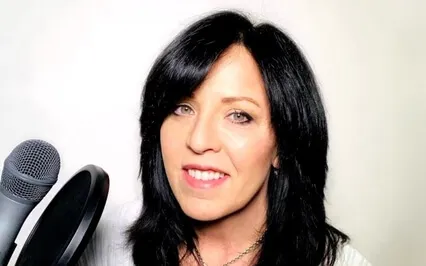
So today,
We're going to be talking about the tragic realities of being raised by a narcissistic parent.
So here on this channel,
I want to help people raise awareness around narcissism as well as codependency,
As well as what it is like to be raised by a parent who has issues and doesn't realize they have issues.
A hallmark of narcissism is a lack of self-awareness.
So if you were raised by a narcissistic parent or even a codependent parent,
You were raised by people who lack self-awareness,
You were raised by people who may have had control issues,
You were raised by people who are wounded and didn't know it.
You were raised by people who most likely felt like they were not good enough but weren't aware that they weren't good enough or weren't aware that they didn't feel good enough.
The healthier we are,
The more we are aware that we feel not good enough and the more we talk about the fact that we don't feel good enough and the more we learn to mitigate these feelings of not feeling good enough and the more we learn to make ourselves feel good enough by acknowledging some of the ways in which we have been programmed to believe that we are not good enough.
I think this is a great opportunity to recognize that all human beings are born asleep.
All children are brainwashed.
All children are in what's called a theta brainwave state up until about the age of seven years old.
This is really important information because the theta brainwave state is a hypnotic brainwave state.
So your parents were hypnotist.
They were brainwashing you to think a certain way,
To feel a certain way.
No matter who you are,
Whether we're talking about you or your parents or your grandparents,
We've all been shaped by these external experiences by our primary caretakers.
No,
Not every mother in the world is a natural addict and if you are someone who was raised by a mom who had narcissistic traits,
Your childhood was absolutely painful.
There have been devastating consequences as the result of being raised by a narcissistic mom.
The hallmark of a narcissistic mother is the idea that she needs to have power and control over you.
The idea that no matter what you gave her,
No matter what you did,
It was never good enough.
The idea that when you brought home an A,
It wasn't good enough because your brother brought home an A plus or you should have brought home an A plus or you bring home an A plus and she reminds you of the time back three years ago when you brought home a C.
When you were dealing with a narcissistic mother,
There is a sense that you need to be beneath them and you are deprived unconditional love.
You are deprived a healthy attachment.
You are deprived a sense of safety.
You do not feel safe in your own skin.
You grew up feeling like this authority in your life needs to control you,
Needs to dominate you and is taking advantage of their power over you.
When you have an authority figure in your life that takes advantage or exploits the power over you,
What ends up happening is you end up having trust issues.
You can't trust relationships.
You can't trust love.
The people that you naturally love are people who hurt you,
Are people who exploit you.
One of the tragic realities if you had a narcissistic parent is that it's very difficult for you to trust other people.
It's also very difficult for you to trust yourself because you have been continually treated as if you were not enough and you were consistently gaslit perhaps or you were blamed for things that weren't your fault.
You were accused of things that you weren't guilty of.
Narcissistic parents can be very persecuting.
They persecute you over the slightest things.
Growing up,
I used to feel and I've said it many times,
I felt like a specimen in a Petri dish.
There was nothing that I could have done to get my mother off my back and I was a good kid.
It was like she had to make me feel ashamed and guilty and bad and that's the way her parenting made me feel.
No matter what I did,
I was accused of having a different intent.
You guys may remember I tell a story about how I was about nine or 10 years old and I bought my mom a pair of sneakers and she looked at the sneakers and she said,
Oh,
You think you can buy my love,
Lisa?
I could still weep for that little girl that I was back then trying to figure out a way to make this impossible woman happy.
Narcissistic parents will make you distrust yourself,
Make you distrust other people.
You just can't feel safe in a relationship.
Another consequence of being raised by a narcissistic parent is that as an adult,
You might be somebody who suffers from burnout.
You might be someone who is so perfectionistic,
You can't let your hair down.
You can't let go.
You can't have fun.
You can't be your own person.
You're so afraid that you're going to drop the ball.
Why would you be afraid to drop the ball?
Because the minute you colored outside the lines,
You were criticized by a narcissistic parent who enjoyed embarrassing you.
Maybe you were the scapegoat of the family.
Maybe you were the one that was pushed outside the circle.
Maybe you were the one that mom enjoyed harassing.
Maybe you were the one that mom punished because you didn't look the way she wanted you to look.
A narcissistic parent will see their children as extensions.
You do not have your own autonomy.
You don't have a right to your own identity.
You have been put on God's green earth to make the narcissistic parent feel better about themselves.
If you have a mouth,
If you question authority,
If you say,
Hey,
That's hypocritical of you,
Then to a narcissistic parent,
You're a threat.
Remember,
You will then become their antagonist.
As their antagonist,
They have to punish you.
They can because they have power over you.
They're in complete control of your life.
A healthy parent recognizes that they have authority over their children.
They have a responsibility to their children,
But they're not interested in berating their children and taking this power that they naturally have over their children and exploiting it to the point where their child feel uncomfortable in their own skin.
When we develop perfectionism,
We are saying to the world,
I know that I'm not good enough and maybe if I do X,
Y,
And Z perfectly,
Then maybe I will feel good enough.
Those of us who were raised by narcissistic parents,
We feel stained.
We walk around feeling like we're broken,
Where we walk around feeling like we have to figure out a way to people please.
We have to figure out a way to be good enough for others and we often burn ourselves out.
I know that I am guilty of this,
Pushing ourselves to be good enough.
If we're not aware of it,
Then this subconscious conditioning will run our life.
Remember because we're all born unconscious,
Children are in a hypnotic brainwave state up until the age of seven.
That means that whatever I was programmed to believe about myself,
And I can guarantee you that I believe that I was broken long before I was seven years old,
I don't ever remember having a conversation with my mother.
She was dismissive,
She was withholding,
And she was aloof.
When she did speak to me or she did look my way,
It was her nose up in the air and she'd glare at me and she'd give me the side eye.
It was never looking me in my eye unless she was staring me down and she was trying to make me feel bad,
Like she was trying to make me feel like I had done something wrong.
Another thing that narcissistic parents leave you with is the stain of shame.
Think about it.
If you can't gain your mother or your father's approval and if you are constantly taught that you're not good enough,
If you get the message that if you're thin enough,
If you're beautiful enough,
If you're perfect enough,
If you're quiet enough,
If you're respectful enough,
If you're obedient enough,
If you're compliant enough,
If you clean the house enough,
If you put them first enough,
Then you're good enough.
You don't get to be your own person,
So your sense of self is conditional.
Your sense of worthiness hinges on how well you can figure out what other people need,
Which I believe gives birth to codependency.
I talk about codependency because it was the shame that I felt as a little girl that gave birth to this not enough stuff that caused me to believe that I needed other people to need me.
I did not have a healthy sense of self.
I was robbed of a sense of self.
The self that I thought I was was stained.
The self I thought I was,
I thought was bad.
Why?
Because mom would tell me,
You're a bad little girl.
And so I grew up feeling bad.
I used to struggle inside my head.
If I had a loving thought inside my head,
I would hear the inner critic tell me,
You can't have that thought because you're bad.
I recognize it now as childhood programming,
That the inner critic has basically been downloaded by the narrative of the family,
Especially those who are our primary caretakers.
So the narrative that I heard from my mother was,
Lisa's bad.
She's no good.
So that became the voice of my inner critic.
So when I had an impulse to do something good,
Right behind that was,
You can't do that.
You're a bad little girl.
So this is the harshness of my inner critic.
And I have fought the past 20,
25 years to silence this inner critic,
To override the childhood programming,
To essentially retrain my brain.
There is no way that I could live the life that I'm living if I was not able to successfully rewire my brain.
So I am at a subconscious level now.
I believe that I am enough.
And when I do see old patterns and behaviors crop up,
They don't consume me.
I'm able to catch them from a higher state of awareness and recognize that this is a ghost of the past.
It was never my voice.
It was the voice of my mother.
My mother was immature.
I've moved to a place where I'm able to forgive her,
But that does not mean that I was not stained with shame.
So on this channel,
What I talk about is also codependency because codependency,
In my opinion,
Is the manifestation of being raised by a narcissistic parent.
You could also develop codependency if your parents were codependent.
If they were so self-absorbed,
If they were so immature,
If they were so into one another that no one else existed and their drama spilled out into the living room and the children grew up feeling invisible,
Yes,
You can develop codependency.
Why?
Because you were not attuned to.
No one was there asking you how you felt.
No one was paying attention to your needs.
How does a child develop a healthy sense of self outside of a caretaker saying,
Your needs are important and I'm going to fulfill them?
If you have no external parent or primary caretaker tending to your needs,
You as a little person aren't able to connect to your needs.
So when you grow up,
You literally are detached from your needs.
Then what do you do?
As a way to survive,
Survival means I need to attach to other people.
Our survival brains know we need one another.
What do I do?
I find ways to be needed.
I have to find a way to be needed because I can't just show up as myself because the self that I am is not good enough.
It's not good enough.
I know it's not good enough because I was never good enough for my narcissistic mother.
So these are the ghosts of the past.
These are how our brains are wired.
These are subconscious thoughts that actually over time through repetition,
Observation and consistency,
We get downloaded with these ideas and beliefs.
Over time,
We have neurological pathways that match these beliefs.
They're sort of like runaway trains.
So the belief is being carried in a caboose or a car of the train and the train tracks,
Those are just the neural pathways.
Our thoughts are these little trains on these train tracks and they're just going.
They're running on loop.
What we have to learn to do is to stop the train,
To be more objective about the train,
To be more objective about how we're behaving,
To be objective about our own codependency,
To be objective about our own false beliefs and be more realistic when it comes to our expectations of our self and others.
I also talk about narcissism because so many of us who are struggling inside toxic relationships who don't feel good enough are struggling inside of toxic relationships because our parents made us feel not good enough.
And parents who make you feel not good enough are self-absorbed parents.
So if you've had a parent like this,
Do not be surprised if you have trust issues,
Do not be surprised if you find yourself in a toxic relationship,
Do not be surprised if you're inside a toxic relationship and people are looking at you like,
What are you doing?
You have no data for what it is to be respected and that's not your fault.
You have no data for what it's like to feel safe.
You have no data for what it's like to feel like this person that you love is holding your heart in the palm of their hands.
You don't know what that feels like.
You literally,
Dear one,
Have no neural wiring,
No programming,
No neural circuits for how to be loved because your love that you experienced was narcissistic.
It was one way.
It was punishing.
You had to anticipate the needs of your parent and if you didn't,
There was a price to pay.
So of course,
Here you are finding yourself in one toxic relationship after another,
Unaware that you're unaware.
And one of the craziest things about having a narcissistic parent is if you try to have an objective,
Fair conversation with them,
They're going to blindside you because they can't be self-aware.
It's never going to be their fault.
It's always going to be your fault.
They will turn it on you and if you're not very careful,
If you're not knowledgeable about what to reasonably expect by a narcissistic parent,
They could re-traumatize you.
They can make you feel worse.
They'll get on the phone with Aunt Mary,
Talk poorly about you.
I've had people send us text messages that their mother and father and aunts and uncles and sister and brother,
All these flying monkeys are going after one person in texts.
And I know this to be true because people sometimes post these texts to my business Facebook page,
Which I don't recommend.
I don't recommend that,
But I've seen it and it's so hard.
One person on my Facebook page said that his stepfather fed his natural children pork chops while he was fed something completely different,
Trying to make this person feel less than this little tiny person.
So narcissistic parents behave this way.
They play favorites with their children.
They triangulate their children.
So if you are that person,
You are going to struggle inside toxic relationships because you don't have the data for what it means to be in a loving relationship.
If we all attract what we know,
It makes sense if we find ourselves in these toxic relationships and that is not our fault.
On top of it,
You might find yourself as someone who is highly perfectionistic.
Now why would you be perfectionistic?
Because you're trying to be good enough.
Your parents have taught you that if you work hard enough,
Then maybe they'll love you.
Then maybe they'll validate you.
Then maybe they'll tell you that you're worthy.
And so when we're perfectionistic,
We are constantly chasing the sense that I am enough.
It's almost like we were chasing as children and in our careers and in our adult relationships,
We're still chasing.
We don't know how to sue that inner child and tell her,
Listen,
You don't have to chase love anymore because you are enough.
We don't even know that that's a thing.
So we just keep chasing and we end up feeling very burnt out and we end up feeling like we're just lost inside of this mess that we've created.
And one of the consequences of being perfectionistic is that we never get to be our true self.
We're always feeling like we're running from shame and we never get to feel like I am just going to be a human being versus a human doing.
And then if we're not careful,
We start to judge other people by our ruler.
So why isn't Susie Q doing as much work as I'm doing?
And then we don't often realize that we have taught people that we are the doer.
We have taught people that we will take care of everything.
We have taught people that we are the broom and we are the mop.
We are the paper towels.
We'll do everything because we're chasing this feeling of being good enough.
These are some of the tragic realities of being raised by a narcissistic parent.
What's the value in having these types of sessions?
The value of these types of sessions is recognizing yourself so that you stop right where you are.
You stop trying to please people who are impossible to please.
Once you recognize what you're dealing with,
Then you can mitigate your expectations of the people in your life.
Rather than call mom being happy about something amazing that's happened to you,
Like you got engaged or you got a raise or you got a new career or you've done something amazing,
You bought a new car.
Narcissistic mothers have to pooh pooh all of your successes.
They don't like you having this sense of goodness about yourself.
They don't want you to feel like you're entitled to the good that life has to offer.
They are this way because sometimes they're jealous of you or they have a need to dominate you.
Remember the hallmark is definitely power in a relationship that a narcissistic parent exploits power in the relationship.
Your mother's going to exploit dominance and power over you,
Even if you call her up and tell her that you've done something amazing like bought a house.
Once you recognize what you're dealing with,
You can be a little bit more realistic in your expectations.
You now know that a narcissistic mother is going to put down all of your successes.
So now don't call her.
Or if you do call her,
Expect her to pooh pooh it.
Expect her to diminish it.
Expect her to be dismissive.
As human beings,
We get upset because we don't expect narcissistic mothers to be narcissistic.
We expect narcissistic mothers to be wonderful mothers and they can't be.
They're just not built or wired that way.
They don't take responsibility.
They don't have empathy.
They're exploitative.
They're entitled.
They're grandiose.
They're punishing.
So they lack empathy for you.
So when you call them and you understand what you're dealing with,
You can almost expect the pattern to show up.
Now that you expect the pattern to show up,
You're not disappointed.
We get disappointed when we aren't aware of what we're dealing with.
So we keep trying.
We keep trying.
We keep trying to be good enough.
If one of our parents gets sick,
We're there.
We're holding their hands.
We don't expect our siblings to kick in.
We do this automatically trying to be good enough.
And yet the praise,
The accolades,
The validation,
The acceptance,
The love,
The warmth,
It never shows up until we realize that we are dealing with someone who is highly narcissistic,
Has narcissistic traits,
And we're never going to get the results that we want.
That is so powerful and so empowering because it puts you in control.
It puts you in the driver's seat.
So if I don't want this thing from you that you want me to want,
You don't have control over me.
If I am your narcissistic mother and I need to dominate you and you stop giving me the ammunition to dominate you,
In other words,
You stop calling me to tell me that something wonderful happened to you,
Then I don't have the resources or I don't have the ammunition to take that something wonderful away from you.
So we've got to stop giving narcissistic parents the ammunition to use against us.
The benefit of listening to this type of a session and even doing your own research is you're knowing what you're dealing with.
When you're running around in the dark,
You don't understand what's happening and you just stay on that one train.
You just keep looping through that train.
You don't understand that your brain is more unconscious than it is conscious.
You don't understand metacognition,
Which is the ability to observe the observer within.
You have the ability to observe the way that you think,
The way that you feel,
The way that you behave.
You have the ability to observe your patterns and you have the ability to change them.
One of my taglines is,
You cannot fix a hole in the wall that you cannot see.
Once I understood that I was codependent,
All of the pieces of the puzzle started to fall into place.
That's how I understood the childhood pattern between my grandparents being alcoholics and how that affected my mother and father,
How it affected me and how they raised me,
How I manifested codependency,
How I mothered my children as the grandchild of an alcoholic,
How I ended up in narcissistic relationships,
How I ended up with an eating disorder,
How I ended up perfectionistic.
It really allowed me to better understand myself.
When I'm being too sensitive,
When I'm being hypersensitive,
When I am being reactive,
My self-awareness allows me to pull that back.
It allows me to dig deep.
I'm someone who's able to look at my boo-boos.
I'm able to look at my wounds.
I allow them to come up.
I know that shame is there.
I don't run from them.
I don't need a false mask.
I'm able to talk about what hurts me.
I'm able to be vulnerable.
I've learned to be able to put myself out there knowing that the people that I love and I share the most with can hurt me by abandoning me.
I think that's powerful because even if someone abandons me,
I now know that I will never abandon myself.
My sense of self is no longer reliant on my relationships.
I'm okay all by myself,
Whether or not people accept me or they reject me.
I know that I am enough.
And dear one,
So are you.
We are all made of stardust.
And once that really grabs hold and we practice this over and over and over and over until it becomes part of our new neural wiring,
Until we retrain the brain,
It's a little bumpy.
It's a little bit of a bumpy ride.
But the good news is the brain is programmable.
The mind is malleable.
You can change this.
I hope this has been helpful.
Namaste everybody.
Until next time.
Bye for now.