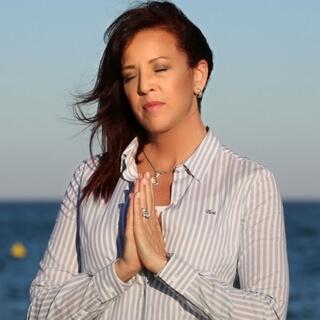
Welcome to the Breakdown to Breakthrough Podcast.
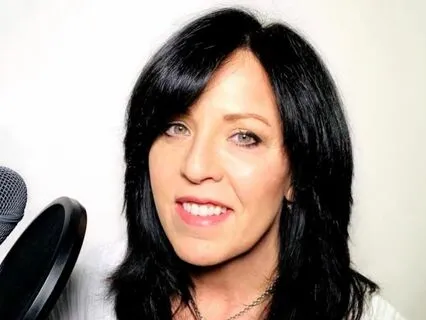
My name is Lisa A.
Romano.
I am a life coach,
Best-selling author,
YouTube vlogger,
Meditation teacher,
And expert in the field of codependency and narcissistic abuse.
I am a believer in the power of an organized mind.
My aim is to help people learn what it means to live above the veil of consciousness rather than living a reactive life.
May your heart feel blessed,
Your mind feel expanded,
And your spirit find hope as you spend time with me here at the Breakdown to Breakthrough Podcast.
So today we're going to be talking about how you can heal your inner child.
So we're talking about the inner child and the reality is we all have one.
So what is the inner child?
Even though it sounds like an ambiguous concept,
Speaking from my own experience,
The concept of the inner child was absolutely radical for me because I was someone who was unaware that she was unaware.
I was married up until about the age of 36.
I had three children.
I was the grandchild of alcoholics,
Which meant that my parents were adult children of alcoholics who had done zero recovery work.
They were incredibly wounded from their childhoods.
They suffered amazing trauma,
Incredible trauma,
And never really thought about how their traumatic childhoods affected them.
And so they have me,
My brother,
And my sister.
They are also unaware that they're unaware and they parent us the best that they could and the only way they knew how,
By imagining that their childhoods were a lot better than they actually were.
When you are raised in dysfunctional homes,
The people that are raising you don't admit it.
When you are in abusive situations,
When your parents are emotionally neglecting you,
They don't admit it.
In fact,
What they do is they minimize their behavior.
They minimize your feelings.
They act and pretend like it's no big deal.
And in reality,
It might not be a big deal to an abusive parent because it's what they know.
That puts the children of a home that is like this,
That is toxic and dysfunctional,
At a tremendous disadvantage because if you grew up in a home like this,
You are not acknowledging that you are being abused.
The inner child is that part of us that experienced these emotional wounds,
That experienced these psychological abusive situations,
And has recorded it.
It has not been forgotten.
On the level of the inner child,
Or if we're thinking about the inner child,
The inner child cannot forget.
The more conscious you can forget,
Meaning the person that you are,
That you think you are walking around in the 3D world,
Unaware that you're unaware,
You can forget.
You can forget the way it used to feel when you were little and being screamed at.
You can forget what it was like to experience something in your home.
You can forget,
But your body won't forget.
And the idea or the concept of the inner child,
The inner you that was experiencing everything,
Even before utero,
Has not forgotten.
If we can think about those experiences and associate them with an inner child,
It can become easier for us,
Or at least more tangible for us,
To understand what it takes to heal the inner child.
When I was beginning my recovery journey and recognizing that I was severely codependent,
When I was recognizing that I was in a toxic relationship,
And my therapist pointed out to me that I was the grandchild of three alcoholics,
And my parents were unrecovered adult children of alcoholics with ACOA issues,
It really got me thinking about how my childhood had been affected by the way that I was parented.
The concept of the inner child stuck with me because I began to see myself as this two-year-old,
As this three-year-old,
As this four-year-old,
And something amazing happened.
I began to develop empathy for the little girl that I used to be.
I began to develop compassion.
And that's where I came up with this idea that the way that I am is not me.
It's the result of childhood programming.
And so we can be adults in the 3D world and yet very much feel like children.
We can be riddled with anxieties and insecurities and vulnerabilities.
We can behave as codependents,
Seeking approval,
Feeling not good enough,
Feeling guilty for things that are not our fault.
And if we trace it back,
Lots of times,
Those of us who understand the concept of the inner child recognize that this is exactly and precisely how we felt when we were children.
So how can you heal your inner child?
I think where we have to start is recognizing that the inner child has wounds.
And so we start to heal the inner child by acknowledging the truth,
By accepting our truth,
By looking at our childhoods more objectively.
Even though our siblings,
Our parents,
Our aunts,
Friends,
And family might say that what we remember is false,
Or they might say that what we feel is wrong,
We have to detach from what other people think.
And we have to start at least with where we are in the moment by accepting how we feel and accepting our version of the past.
Some of the benefits of healing the inner child include a sense of integration,
A sense of wholeness,
A sense of self-compassion.
When I began to really acknowledge my inner child,
It was amazing.
Suddenly who I was made sense.
My codependency upon other people made sense.
The eating disorder I had during my teenage years and young adulthood made sense.
My anxiety made sense.
Feeling insecure,
Feeling vulnerable,
Feeling afraid to speak my feelings,
Acquiescing to people,
Scanning the room and wondering what people think and how they feel.
My hyper-vigilance began to make sense.
And from that space,
I developed a sense that my inner child had a right to feel the way she felt based on what she went through as a child.
And it was like I began to understand that there was a space for me to love myself,
Almost like seeing myself or my higher self separate from the inner child opened up a doorway in which I was able to flow love to my inner child from a higher state of awareness.
I began to develop a sense of protection that I never had before for my inner child.
I also realized that as I began to do this healing and recovery work,
I wasn't suppressing my emotions.
I wasn't denying how I felt.
I was acknowledging how I felt.
And the more I acknowledged how I felt,
The more I was able to show up as my authentic self.
As I showed up my authentic self,
I was able to recognize when I needed to set a boundary.
When you are unrecovered and you have a wounded inner child,
Oftentimes you're running from pain.
You don't know how to accept the pain and embrace the pain and process the pain.
So you repress the pain.
You pretend that you're not in pain.
You don't know how to acknowledge what you're feeling.
And so if you don't know how to acknowledge what you're feeling,
It's impossible to tell someone else how you feel.
And if you can't accept how you feel or acknowledge how you feel,
Then you can't set a boundary.
So one of the most amazing benefits from healing your inner child is learning how to honor what you feel and learning and understanding what a boundary is and being able to set a boundary so that you can protect yourself and your inner child.
Most of us who have a wounded inner child never felt safe.
We never felt protected because boundaries were never enforced in our home or the rules just kept changing.
Mom and dad kept moving the goalposts.
So here are my tips for how you can heal your inner child.
Number one,
I believe that the most important step that you can take is begin a meditation practice.
Step two is to begin journaling.
Once your conscious and logical and rational mind begins to understand how you berate yourself,
There is a natural tendency to associate pain with negative self-talk once you can observe it.
The next tip is to witness your inner child and to try to get in the habit of asking yourself how you feel.
The next tip is to acknowledge your inner child.
What does that mean?
When you begin to observe your inner child and you're witnessing an experience or some emotions,
You want to go right into acknowledging how this inner child feels.
So it sounds like,
Of course you feel this way.
Your feelings are valid.
It could be no other way.
However you feel is the way that you feel.
The next tip is to validate your inner child.
And that is,
I see you,
I hear you,
I love you,
And you are enough.
Validation is the missing piece of it for so many of us.
So many of us were never validated.
We were invalidated.
Our emotions were invalidated.
The next step is empathy.
To have empathy for your inner child is basically feeling for yourself what you know your inner child went through.
It's you validating you.
It's you developing empathy for you.
And the feeling of empathy is simply,
Yes,
I know I was there.
I know that everything that you feel is valid.
And I have empathy for your experience.
Full on inner child,
I love you,
I see you,
I hear you,
I validate you.
It helps to remind you that there's an inner child within you that was wounded.
It was not their fault they were wounded.
And that you're on the path to healing the inner child.