So,
As I said a little bit earlier,
Tonight's talk is about happiness and the joy of appreciation and gratitude.
So there's a lot of words in the English language for happiness and I thought I'd read out some because I think the very reading of them helps us sort of experience them in some respects.
So let's see this list.
Happiness words.
A glow,
A live,
Joy,
Delight,
Aesthetic,
Elation,
Buoyant,
Cheerfulness,
Contentment,
Gladness,
Guilty,
Elation,
Exhilaration,
Happiness,
Lighthearted,
Merriment,
Jolliness,
Jubilation,
Thrilled,
Rapture,
Satisfaction,
Uplifted,
Wonderful and zeal.
So in this very life,
But it is taken,
It's primarily sourced from the Abhidhamma,
Which is a.
.
.
Don't worry about it.
The Abhidhamma is just one of those,
It's Buddhist psychology basically.
It gets quite analytical and has a lot of lists.
But here are some strategies to cultivate joy.
Thinking about the positive aspects of being free,
Being liberated,
Being,
You know,
Bana.
Remembering personal actions that have been in accordance with ethical values.
Living a good life.
Recalling one's own acts of generosity and being generous.
Reflecting on the nature of peacefulness.
Avoiding company of the aggressive,
Angry,
And insensitive people.
I remember every time I say that,
For those of you who have been listening to this talk before,
I say,
There's a caveat there because sometimes us.
We work in the human profession,
That's our job to have company with aggressive and angry and insensitive people sometimes.
Having friendships with people who are warm,
Loving,
And refined.
Reflecting on hearing or reading about how Dukkha is reduced and abandoned.
And inclining the mind or committing oneself to the development of joy.
So there's some other ways as well.
And I don't know why I haven't listed it here,
But another way is,
Obviously,
As we've discussed on Tuesday night,
We talked about the cultivation of the jhanas.
And then we did some exercises related to that.
And of course,
It begins with pirti,
Which is often translated as joy.
But pirti is more effervescent,
Bubbly,
And so on.
We also talked about sukka,
Which is happiness.
And remember that light feeling in your heart.
And coming back to pirti,
It's this effervescent,
Joyous,
Rapturous experience that we feel in our body.
Happiness is a little bit more subtle.
Sukka is a little bit more subtle.
It's one of well-being,
Ease,
And lightness of heart.
Kind of smiley experience.
And we talked about contentment as well,
Which is that deep satisfaction.
It still has that quality of happiness with it.
So the strategy for cultivating those,
Those particular experiences of or manifestations of joy,
Happiness,
And contentment are through concentration,
Are through the development of samadhi,
The unified mind,
Unified attention,
Unification,
And sort of settling and so on.
And it's also the result of putting unwholesome factors,
When I say unwholesome factors,
The things that cause us distress,
Patterns,
Tendencies,
Unhelpful mental tendencies and behavioural tendencies and so on.
Moreover,
The hindrances,
Putting them aside,
Putting them so they're no longer,
That we got some respite from them,
We got some space from them.
And what results is the capacity to allow our attention to become focused.
And as a result,
Joy,
Happiness,
And contentment arise.
Speaking on that,
I told you about how I was doing a retreat last year.
And I was Skyping Lee Brasington from the retreat.
It was a bit tricky,
However,
You know,
I was at on this mountain outside of Armidale and my Wi-Fi was terrible.
So I had to climb up mountains and hang off rocks and with my computer,
Trying to get some,
I actually ended up using my phone,
But I had interviews with him,
It was really,
Really good.
So one day after I was doing a lot of practice and I think I was making significant progress,
I felt quite satisfied with the progress.
And I used to walk a lot in that ground.
It was just such a beautiful place to walk.
I'd meditate in the early hours of the morning and get up and go out and do some exercise,
Climbing up this mountain,
Walking around.
And just that was really joyous.
It was so wonderfully uplifting.
And there was a couple of days where I just kind of,
I was cheerful,
I was so cheerful,
I was kind of bubbly,
You know,
Happy.
Everything was wonderful.
And I thought,
Wow,
I'm just so happy.
You know,
It was really wonderful just to be there.
And I was talking to Lee about this and he said,
Well,
Of course,
That's the natural state of the mind.
It's natural to be happy when it's not kind of tainted,
When it's not polluted with unwholesome thoughts and unwholesome patterns,
Then it's the natural state is to be happy.
So I thought that was a really lovely realization.
Because I think many enlightened people,
That's their natural state.
Many enlightened people,
Also you see,
I mean,
I've seen some pretty stern looking people in Thailand,
The monastics,
But with that is also a deep equanimity.
Okay,
We're still on the topic of joy and happiness.
So what we're really talking about tonight is something called Mudita.
And this retreat is about cultivating serenity,
Insight,
And the four heart qualities.
The high qualities,
As I've said many times,
Are loving kindness,
Compassion,
Equanimity,
And appreciative joy.
Sometimes it's called altruistic joy.
Sometimes it's called empathetic joy.
Sometimes it's called sympathetic joy.
When I've read about it in traditional texts,
It usually relates to empathizing with the joy of another.
Sympathetic joy usually relates to having joy at another's successes.
But if you really think about it,
Especially in reference to the talk that we had last night about not self,
Remember that talk?
And interdependence.
And you think,
Well,
Where's the me and where's you?
You out there and me in here.
That's kind of not the way we understand it in not self speak.
It's more that there is just experience.
So when we have appreciative joy,
It's not confined to whatever beings there are out there,
It includes us.
I'm only saying that.
I think that's pretty realistic because I realized that mudita,
It relates to joy.
And the way we can describe it is the joy at the appreciation,
Celebration or the valuing of one's virtues,
One's good qualities,
One's good fortune,
One's successes,
One's gain.
So this appreciative joy not only relates to all yous out there,
But it also relates to me here,
If that makes sense.
So I like to think of it like that.
So mudita is this experience of joy or appreciation.
I also think that the term gratitude,
The way we understand gratitude is also mudita,
In my opinion.
Some people say that in the traditional Buddhist text,
They won't describe it like that,
But my experience of it is that it is the same as gratitude,
It's the same qualities.
There's not as much bubbliness with the joy we have with gratitude,
But it's definitely an uplifting,
A lifted state and it's a state of the heart.
So you know how I've been talking about near and far enemies with all the four high qualities.
I mentioned the near enemy and far enemies of mudita the other night when I was talking about love and kindness.
I'll repeat them now.
The near enemies are those qualities that look like a particular quality,
But in fact a force for similarly,
A force representation of those qualities.
A far enemy is the direct opposite of the quality.
So a far enemy of mudita is jealousy,
Envy.
That's particularly about other people.
And when we're having the far enemy with our own successes and joys,
When we relate to ourselves,
It's like a cynicism.
It's a non-recognition of our own good qualities and successes and virtues and so on.
So cynicism is another far enemy of appreciative joy.
The near enemies of appreciative joy are really interesting.
And you all kind of had a little chuckle when I said nauseating positivism.
But another way you could describe it is reckless celebration,
Or a simple denial of the realities of difficulty.
So the near enemies are this,
I think sometimes we've talked about it as a polyanerism,
But I say that without any experience of reading that book.
I've just heard about it.
And the near enemy is when someone's quite happy when it's not the right timing or it's not appropriate to be so positive.
Hayley Mills is probably not more to do with that.
I think she was a polyaner.
Ah yes,
See that's a name from the past isn't it?
Okay so,
And I've also talked about how these four high qualities balance each other.
You remember that?
And I haven't got a diagram for this in the notes,
But if you can imagine it.
It's like one,
When we're experiencing the far enemies of a particular quality,
We cultivate that quality to overcome it.
So when we're experiencing cynicism or jealousy or envy,
Then we can cultivate appreciative joy as a way of overcoming that.
If however we're experiencing the near enemy of mudita,
The abode that protects it is loving kindness.
It's a bit hard to get your head around,
But it's sort of like,
It's balanced by loving kindness.
It's not like we need to be compassionate towards it,
Because it's actually quite uplifting,
But it's uplifting in a kind of distorted way.
This is the near enemy of appreciative joy.
If we can cultivate some more friendliness to it,
Then it might tone down,
If that makes sense.
So what I've noticed is that appreciative joy is healthy in lots of different ways.
It's good for depression.
When I see people who are depressed,
One of the features of depression is flat.
In fact,
If you look at the diagnostic criteria,
Lack of joy,
No joy,
Flat,
No energy,
No enthusiasm,
No motivation.
And you think of some of the things we do,
There's a scale that I,
It's not a scale,
It's an exercise I give people who are depressed,
Because often if you talk to people when they're really depressed,
They're not able to concentrate enough for you to,
You know,
You're saying snap out of it,
Come on,
Get better,
Be happy.
That's not going to work.
They can't actually concentrate as well enough to actually take that in.
So something we do,
And many of you,
Some of you will be familiar with this,
Is activation,
Like getting people activated,
Behaviourally activated,
Getting them to be tasked.
There's one exercise called the present event schedule,
Where what they do,
You give them,
You know,
It's Monday through to,
Monday through to,
Every day of the week.
And you're down one side and down the other side,
Down the x axis,
The y axis is days of the week.
The y axis?
Yeah,
Is that right?
Yeah,
Y axis,
I think.
I can't remember my axes now.
The y axis has times in the day.
And you make little sections,
You plan ahead events you're going to do,
And you put in events that are joyous,
They bring you some sort of enjoyment.
And also events that give you some sort of satisfaction.
Then you,
When you get up in the morning,
Rather than feeling motivated and feeling like,
What's the use of getting out of bed,
I've got nothing to get out for,
You just get out of bed and do it.
And even though you're not motivated to do anything,
Because what's the use of it,
You put it in your diary,
So you do it.
And at the end of the day,
You write it,
How much pleasure it gave you,
How much satisfaction it gave you.
Simple activity,
It actually begins to cultivate some joy,
Because people are doing enjoyable activities.
So what we're doing here,
We're actually beginning to cultivate a sense of appreciation and joy in opposition to depression.
Is this interesting?
The other way I think it's good for is,
It's good for lack of self-esteem.
Well,
Actually,
Self-esteem,
I think,
Is a funny concept.
How did Carl Rogers define it?
I think Carl Rogers was the person who coined that term,
Self-esteem.
And I think he talked about it as low self-esteem was when there was a discrepancy between an ideal self and an actual self.
Does that make sense?
We have an ideal that we should have lots of hair,
Be strong and handsome,
Always energetic,
Successful at everything we do.
And the reality of it is that we're not.
So we have low self-esteem,
So we can repair that by actually becoming the way we are and changing our view about ourselves so that we are actually like that.
So I think in America in the 70s,
Everyone was into self-esteem.
All the teachers were getting people to promote self-esteem and it almost became part of the things in schools.
I heard that one point in time they would hold mirrors outside the bus as people would kiddie getting off and saying,
Who's the most important person in the world?
Something like this.
I'm not sure exactly.
And then never correcting anybody saying,
Oh,
Fantastic,
You're really doing good.
Never giving people negative feedback.
And what's that the result of?
The results in a kind of a generation of narcissists.
So there's been,
Krista Neff's done a lot of research on self-esteem.
It's really quite good,
The research she's done.
Krista Neff,
One of the proponents of Mindful Self-Compassion with Chris Germer.
So does it also lead to poor resilience?
Yeah,
Absolutely.
Which is something that might be a wide range of workplaces,
But resilience.
People are failing and it's really slow to get up.
It's all those.
So coming back to what Krista Neff discovered with her research,
It was,
I mean,
It's not all this,
But the basic gist of it was that if things are going well,
Everything actualises like you idealise it to be.
If you're successful,
Then your self-esteem is pretty good.
If however you fail at it,
You know,
Things aren't going like that,
Then your mood and your wellbeing sort of just demolishes.
And she did a comparison between self-compassion and self-esteem.
And self-compassion wins out because even when you lose and even when you fail,
You can still have compassion,
In fact,
Even more so.
So failures become something,
When you fail,
You actually succeed at being compassionate,
If that makes sense.
So when I'm talking about self-esteem,
Often it's coming back to that comparison to someone else.
You have to be better than everyone else.
And this is what Krista Neff points out.
You know,
Everyone's encouraged to think of themselves as special and better than everyone else.
And we've done research on this actually.
People have judged their,
I think,
Driving skills.
And people tend to judge things about themselves as better than the average.
But the reality is,
Not everyone can be better than the average.
Statistically it's impossible to be better than everyone.
Most people are in the bell curve somewhere.
So it's kind of an interesting thing.
So with Mudita,
You begin to appreciate yourself as you are.
You begin to see the things that you can appreciate yourself.
I think there's some sayings,
I'm not perfect at everything,
But I'm really good at some things or something.
Oh,
Hold on,
How does it go?
I'm not good at everything,
But I'm perfect at some things.
You know,
It's that capacity to begin to start to see your wonderful qualities rather than being so cynical about it and being blind to it,
Not seeing it at all.
There's Rick Hansen.
I'll mention Rick Hansen,
The master of joy,
I think.
Rick and I were talking about some approaches,
Like the contemporary approach to compassion,
Which is really,
I mean,
The people behind those approaches,
Like Chris Germer and Paul Gilbert and various others,
They're really striding ahead in terms of what they're understanding about compassion and the way it's so helpful and the way it's so needed in our society now and for our mental health and so on.
And Rick and I were talking about this a little bit and I expressed the opinion that I think the contemporary approach to these qualities,
There's a lot being done about compassion and it's kind of lagging with equanimity,
But it's striding ahead,
There's things being done and it's also lagging with joy.
And Rick was,
Yeah,
Right on.
He said,
Yes,
There's a lack of,
He felt that the joy needs to balance it.
And so what Rick teaches is,
Oh,
He teaches lots of really good stuff.
One thing he teaches is about countering negative bias.
And I would have mentioned negative bias one night,
I think.
Negative bias is this evolutionary tendency to see the worst possibilities in our lives and see danger because I think the example I made was it's safer to mistake,
It's safer to mistake a coiled vine as a snake than it is to mistake a snake as a coiled vine.
So we have this tendency to see worst possible case scenarios and bring that forward.
We just focus on our mistakes.
We focus on what's wrong in life rather than being attentive to what's good in life.
So some of the things you'll hear from Rick are focus on the good or notice the good and breathe it in and so on and so forth.
And I did a course with Rick a couple of years ago,
Positive Neuroplasticity,
And please excuse me for those who've heard this story before.
I've said it a couple of times,
So I'll say it again.
I think it's a good story.
And I was doing this course and Rick's teaching about how to be attentive to the good,
The uplifting because we tend to let it by pass.
We tend to let it go without noticing it and we got to our fourth or fifth day.
It was a three-day course and then there was another course for professionals.
So I was doing six days.
And around that time,
The night before,
I'd had dinner with Rick and we're just hanging out and then I saw him working really hard and I said,
Rick,
I used to be a shatsu therapist,
Would you like a massage?
You're working really hard.
I could see you go well with a massage.
He said,
Yeah,
Yeah,
Sure,
Come along.
So we went back later in the afternoon,
We went back to his place and I'm catching the elevator up with him and my partner was there as well and into his hotel room.
And he says to me,
Malcolm,
You're a very kind person.
You're a very kind person.
And I said,
Oh yeah,
Yeah.
I fobbed it off.
I kind of disregarded it.
And he said,
Hey,
Look at what you're doing.
Look at what you're doing.
And I realised,
You know,
This is what he's teaching.
We have a tendency to not think highly of ourselves,
Especially Australians,
I think.
You know,
We don't like,
We don't want to be above the crowd.
We don't want to be rejected.
We're afraid that if we shine,
That people may reject us.
And I think for myself,
It was like,
You know,
I was just disregarding it.
And so,
You know,
The advice was,
Malcolm,
You're a kind person.
Breathe it in.
You're a kind person.
Yeah,
I'm a kind person.
And every time I've been doing interviews with people,
I think every one of you has said thank you.
Thank you.
Every one of you has expressed gratitude.
And I go,
Breathe it in.
It's really lovely.
Actually that's an example of appreciative joy.
Like I,
Yeah,
I can appreciate myself and I can appreciate you.
Coming back to how these are really positive quality appreciating joy,
Cultivating joy.
Let me think.
Yep.
And you may have noticed also that this retreat's been quite light for you.
Have you noticed that?
No,
It's not that.
Sorry,
I'll take,
I'll reiterate that.
I'll reiterate that.
Can I cite someone?
I won't completely say what you're saying,
But I'll refer to our discussion.
There's been some comments amongst you that people feel that it's been a good retreat because it wasn't bootcamp style.
Like there wasn't,
There was enough containment for people to do what they needed to do and not kind of these rigid rules that you have to sit for an hour and you have to get up at 4am and all the rest of it.
Some people may say that's pretty slack,
But my feeling and through my experience,
I've found the most progress I've made in my practice and in life is when I have a bit of joy in my life.
When I have a bit of joy,
When I have a bit of lightness,
You know,
Super serious now just is a bit kind of twisted.
I've seen super serious now and you've probably all got your own super serious,
Say your own name.
And when we can cultivate a little bit of joy,
It actually,
I think it progresses our practice significantly.
Just like the other night,
We were talking about loving kindness and compassion and one of our Sangha members talked about loving kindness and compassion being enabling us to be vulnerable and safe in vulnerability.
So in that way,
That safety and vulnerability is what compassion and loving kindness bring to the practice and appreciative joy or mudita brings a kind of lightness of heart,
Bring some humor,
Bring some buoyancy so that it balances the practice in my view.
And I was only kind of realized that when I was talking to someone this afternoon,
One of you here.
So thanks for that.
So how do we cultivate it?
Well you know how there's people,
Various individuals we can pay attention to in order to stimulate this quality,
Like with loving kindness,
The person who brings a smile to heart.
I think I said this this morning,
I'll say it again.
With compassion,
It's someone who is suffering.
With equanimity,
It is a neutral person,
Someone who has,
We're not significantly attracted to or adverse to.
With the person that we pay attention to with the cultivation of mudita is a cheerful person,
Is a jolly person,
Is a virtuous person,
Because virtuous people,
By the nature of their activities will be joyous.
It is an individual that smiles perhaps,
Maybe they don't even smile,
But there's something admirable about them.
That's a good way to cultivate appreciative joy.
And on this talk,
When I've given talks about appreciative joy in the past,
I often referred to His Holiness the Dalai Lama,
My teacher John,
One of my teachers,
John Hale,
And also Aranyani.
Aranyani is a Swiss born Theravadan nun who disrobed,
And I think she did disrobe now,
But I've done some retreats with her when she was a nun.
And I can tell you all those stories,
But maybe I'll briefly go over all those stories with the Dalai Lama,
For example,
His Holiness.
And excuse me if you've heard this story again before,
Because I've said it nearly every time I've talked about this.
I was at a Happiness is on its Causes conference,
And His Holiness was about to speak,
About three or four thousand people in the audience,
And He walks in.
And everyone stands up,
And I start to smile,
And I look around and everyone's smiling.
And it's not that His Holiness is out there pinpointing everyone in the audience,
Like sending loving kindness to them.
People are just resonating with His joy.
They're appreciating His virtues,
They're appreciating His wisdom,
They're empathizing with Him.
So this is one way to cultivate appreciative joy.
It's kind of cool,
Actually,
Because joy,
As we talked about the other day,
If we're in Piety,
For example,
Takes a bit of effort to get concentrated,
Concentrated,
And then you start to experience the joy from being secluded from the hindrances,
And then happiness from seclusion from the hindrances again,
But the power of concentration.
It takes a bit of work.
If you're empathizing with someone who's already done that work,
You don't have to do much work at all.
You just tune in and that's it.
Whoa.
And another experience I had is with Aranyani,
And Aranyani was doing a retreat,
And it was an insight-based retreat,
But every day she'd come down and she'd talk about one of the abodes.
It was really good,
Very traditional,
And she was such a gentle and soft person.
And I had one thought when I was on that retreat,
I had this thought about how I was being generous to a supervisee,
Like I was being kind to this person.
And that thought of that kindness,
I had a wave of joy arise.
I thought,
Oh,
That's interesting.
There's this joy.
I can see joy arising from reflections on acts of generosity.
So I'm generous.
I'll be giving to someone and have joy.
Even the thought of it gives me joy.
And then I just looked at Aranyani.
I looked at her walking around the retreat centre and I kind of tuned into her.
You know how you can tune into people?
You kind of lean in and kind of feel into them.
You know what I mean by that?
Like you pick up on someone's vibes.
And I picked up on her vibes.
I thought,
Wow,
She's so joyous.
She's so refined and pure in her practice that she has a great cause of joy.
And joy arise.
So that's another example of appreciative joy.
And another example,
I'll refer to John Hale.
And I was on a retreat once.
This retreat was a terrible retreat for me.
I went on a retreat with Sayadaw Upandita,
Who is this really very strict Mahasi Sayadaw teacher.
He passed away a couple of years ago.
Really revered and an amazing teacher.
And on this retreat,
It was down in Barrow actually.
On this retreat,
We had Joseph Goldstein,
Sharon Schalsberg,
And a few other.
And Stephen Smith,
Another teacher of mine,
John Hale.
Everyone was there,
Everyone who was anybody was there.
And I just started to have a relationship,
I started to kindle my relationship with my current partner and I was a bit smitten with her.
Oh look,
I'll tell you the full story here.
And I had ridden my bicycle,
Before the retreat,
I had ridden my bicycle from Bundunun to Canberra.
Which is about,
And it was in the middle of the heat,
Like the heat waves,
It was like December or something like that.
It's about 170 k's I think.
And so I rode my bicycle down there and I was sitting on the set and I wore a hole in my bum.
I got a,
What do they call that,
From just rubbing so much,
It was,
It became a blister yet.
A blister and it was,
I couldn't sit.
So anyway,
I did connect with my partner and came back and I was just sitting on the retreat and I couldn't sit because I had this,
Every time I'd sit I'd have pain.
So and my partner,
I'm still with her now,
I was smitten with her and she'd come up and listen to talks every now and then so I was kind of listening for the sound of her car on this retreat.
So I was totally distracted and everyone else is really sitting and you know,
Getting in,
Oh God,
Why are they sitting so well and I can't hardly sit still for 10 minutes and you know,
Kind of comparing all these people.
So you could say there's a little bit of jealousy there,
People are really quiet and still and mindful and Malcolm's just all over the place.
And then John Hale would come,
John Hale had his own room like the other long term practitioners and he would come into the hall every now and then and you know,
Sometimes he'd come into the hall and he'd just sit,
You know,
Sitting and I'd be kind of wriggling around for 45 minutes to an hour.
Then I'd get up and walk,
Listen to cars,
Is that Mary?
Coming back to the hall,
Sitting and so on.
You just sort of hour on,
Hour off.
It was like not half an hour,
But an hour,
Hour walking,
Hour sitting,
Hour walking,
Hour sitting,
So on.
So I'm sitting there for an hour,
I go out,
Walk,
Come back,
Sit for another hour and John's just sitting there,
Three hours,
Just sitting there,
Not moved.
And then he just stands up and he walks mindfully out of the room and I look at him and I have so much admiration and so much gratitude that someone like that's in the world.
You know,
So that's,
My jealousy gets completely demolished,
You know.
It just gets a really good perspective.
To,
One realises that people are the results of their actions.
If you're comparing yourself to another person,
It's just not worth it.
You say that's equanimity coming in to see that they are the results of their own actions and so on.
And appreciative joy can come in and actually have a celebration in their achievements.
Okay so.
Do you think it also has such an impact because it offers hope?
Beg your pardon?
Do you think it also has such an impact because it offers hope?
Absolutely.
It's joy and happiness and hopefulness.
It's the opposite of flatness and depression and misery and it's the,
It protects compassion from turning into its near enemy.
You know,
The near enemy of compassion could include this kind of sense of despair at the suffering in the world.
Whereas appreciative joy can protect that despair.
It can remind us that there's some good things,
You know,
There's some wonderful things.
You know there's so many things to be grateful about.
If we take the time to just open up our attention to it.
Like I just went for a walk this afternoon and Narelle passed me.
It was awesome.
I saw the cows down near the pond and they didn't run away this time.
They just kind of hung out and then kind of followed me.
And the wind,
The wind,
The grass was just so.
I had my phone with me because I was going to ring my partner.
She wasn't around.
It's Saturday,
She might be home.
I took films of it.
It was just awesome.
Like the way the grass was going.
Look at the sky,
You think,
Wow,
This is so amazing.
It's so wonderful.
There's so many things that we can be joyous about.
We can just look at the sunset of all your faces.
Look at that.
So gratitude being appreciative joy can bring joy to our heart.
It's more than just joy actually.
It's more than a cognizing of thankfulness.
It's a heartfelt swelling.
I don't know how else to describe it.
This uplifting feeling of beautiful connection with things.
Gratitude.
So we're not going too badly for time.
I should be able to finish it soon.
So the other thing that we can be grateful for is our difficulties.
In some of the interviews that I've had with you guys,
We've talked about being grateful for some difficult experience.
And it's true.
We can actually be grateful for the difficult things that have happened to us.
And in many respects,
We're kind of coming full circle in this retreat.
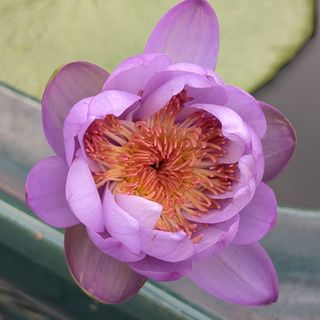
The first talk we made that I gave was about mud and lotuses.
Remember that talk?
The Four Noble Truths?
And I was encouraging you to hang in there and see if you can relish the mud.
Because from the mud will grow beautiful lotuses.
From the difficult stuff that you might experience,
Lotuses might grow.
Now we're at the last talk of our retreat.
And it's interesting because we're talking about joy and joy and gratitude and appreciative joy and appreciation,
Sorry,
Are part of that ingredient of the Four Truths.
They're part of the ingredient of the Eightfold Path.
They can help us overcome and transform the mud to a lotus.
And in Mindful Self-Compassion they have something called Silver Lining exercises.
It's about looking at experiences in your life that you've been through that are long gone.
And when you look back at them,
They had a lot of redeeming features.
In fact they caused a lot of wisdom and a lot of growth.
So I think you know what I'm talking about,
Don't you?
I could relate all sorts of stories.
I mean there's times when I was in Thailand and I think I related that one time.
And there was my son last year on that retreat he lost a child,
Unborn,
Five month old pregnancy,
Him and his partner.
And then there was this,
I can name lots of experiences that I've been through that have been transformative like another thing I mentioned is difficult experiences.
I mentioned that this morning,
Was it this morning or yesterday?
The one about when I was an adolescent.
Was it last night?
Oh that's right,
Yeah it was last night.
And I had difficult experiences when I was an adolescent.
It was kind of fun doing all sorts of things but there was some aggressive and drunken men that were abusive.
And those difficult experiences I can be grateful for because they put me on the path of Buddhism.
I didn't want to follow down that path the way they did it.
I was so in search of something that was wiser than that.
So I can be grateful for those difficult experiences.
I can even be grateful for those men.
And so that's the kind of,
And I'm sure you have many experiences that you can say the same for.
I can tell you about mine but it's meaningless to you unless you can relate it to your own experiences and I'm sure you've probably had experiences even here on this retreat.
Because we can have it every moment of the day,
There's something difficult happening and we can rejoice and relish in the difficulty.
In fact,
I was talking about Tonglen the other day.
Tonglen is that Buddhist meditation practice,
It's a Tibetan Buddhist meditation practice.
It actually originated in Indonesia to be honest and it was brought up to Tibet and it's about bringing in difficult experiences like breathing it in and transforming it to enlightenment and loving kindness and so on.
It does,
Yeah it does.
But that Tonglen is an example of the Mud to the Lotus experience.
It is an example of transforming Dukkha to awakening.
So we can experience it moment to moment.
We can experience this transformation every moment.
When people come in and say,
Oh get over it,
Put on a happy face,
Don't wallow in the blues.
When I asked him how did it make him feel,
He says crappy.
It's kind of like there's no,
What he really needs is space,
Compassion to let you go through what you need to go through.
And sometimes there's no silver lining,
Not every bad situation is going to have a silver lining.
But you're right and that's the silver lining exercise that they have in mindful self-compassion.
They say make sure that you're well over it,
You're not in the middle of it.
But the challenge then is to be able to see,
Reflect on experiences in the past and go through it and see the redeeming features of that past difficulty and what you learnt and so on.
And then begin to see how it can,
When you're in the middle of something,
See the possibility in the middle of that.
When you're in the middle of sinking in the mud,
See the possibility of lotuses in that.
That's the challenge.
And I think the more we practice,
The more that's possible.
To the extent that when we do Tonglen when something difficult happens,
People relish on it.
They go fantastic,
Something difficult is happening.
So it's a growth potential.
So anyway,
Don't worry.
That's a good song actually.
Okay,
So I'm just going to turn this off.