So welcome to today's talk.
It is a talk about impermanence,
The shock of impermanence.
And I want to give a warning.
We'll be talking about death and destruction,
Loss and grief and trauma.
And if you feel particularly sensitive to those topics,
Then I suggest you switch off your speakers now.
Because I'm very well aware of how reminders of these realities of life can be re-traumatizing for some people.
So if you feel it's re-traumatizing for you,
Please switch off and you can meditate or something like that.
So as I mentioned,
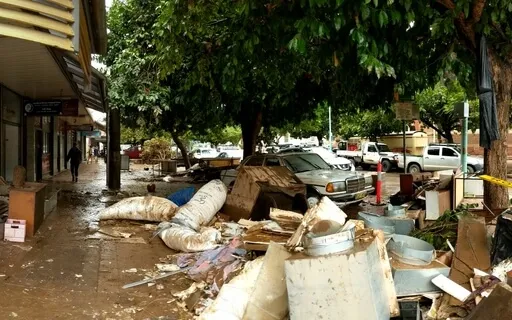
This talk is about the shock of impermanence and it will mostly relate to the recent disaster in Lismore and parts of the east coast of Australia,
Actually Brisbane,
South East,
Queensland,
Northern Rivers,
Along the coastline,
Byron Bay,
Well actually Byron Bay was spared,
But the areas around Byron Bay were pretty devastated.
Some terrible things happening around there.
Even in Sydney,
We had floodings.
So it's about impermanence,
But before I talk about impermanence,
I just like to talk a little bit about Dukkha,
Which I mentioned earlier,
And also Dukkha and the Four Noble Truths,
Because that's the basis of it.
The Four Noble Truths,
As most of you will know,
If not all of you,
Are two cause effect relationships,
Suffering or unsatisfactoriness and its causes and freedom from unsatisfactoriness or freedom from Dukkha and the causes for this.
So that's a summary of the Four Noble Truths.
It's the basis of what the Buddha spoke about in Buddha Dharma.
It is what we realise and wake up to and it is what is liberating.
So the first Noble Truth is Dukkha,
Or often talked about as suffering,
But it's best understood as unsatisfactoriness.
And it is the first Noble Truth that motivates us to practice.
If we don't see it,
We may not have much motivation to practice.
It's like we may not have much motivation to take medicine if we feel we're not ill.
But if once we realise we're ill,
And we can see that,
We then take the medicine for it.
So practice is the medicine for Dukkha.
So when we begin to look at Dukkha,
And understand it,
It gives rise to the second truth,
Which is the origins of Dukkha.
And these origins of Dukkha are of course,
Tendencies towards greed,
Or attachment,
Clinging,
Grasping,
Craving after pleasant experiences,
Ignorance,
Which is another way of understanding this ignorance is delusion or not seeing things as they are,
Being kind of in a cloud of delusion about life,
Seeing misperceiving,
Misunderstanding,
Misapprehending events in life and in ourselves as something other than what they are.
So that's what is called ignorance.
And the other root cause of Dukkha is aversion or hatred.
It's often called greed,
Ignorance and hatred,
The three root causes of suffering.
Hatred refers to aversion,
Rejection,
Condemnation,
Pushing away,
Unwillingness to look at and even sometimes just aggressive,
Aggression towards unpleasant feelings,
Things that are unpleasant,
There's this pushing away.
So once we begin to realise the second truth,
We release it,
We release the causes of our suffering.
And then what happens is we realise the third truth,
Which is freedom.
Freedom results from letting go.
When we're no longer feeding into our suffering with greed,
Ignorance and hatred,
We let go and we experience freedom.
This is the result of not feeding into our suffering,
Having it having no fuel,
We experience freedom from suffering.
And then so the task of the third truth,
It's like these four truths have tasks involved with them.
The first task of Dukkha is to understand it.
The second task of the second truth is to release the causes of Dukkha.
The third task of the third truth is to manifest it,
To realise it,
To truly acknowledge it and realise it.
And the task of the fourth truth,
Which is what I mentioned earlier in the instructions earlier this morning,
The fourth truth is the Eightfold Path.
It's the path of freedom.
It's the path of wisdom,
Ethics and cultivation or meditation or familiarisation.
So this meditation path,
Well actually the task of realising the fourth truth is to live it,
To practice it,
To practice the Eightfold Path.
And what happens with this practice is,
Which involves ethics,
Meditation and cultivation,
Is it becomes like a wheel,
Like the eight factors of the path,
Right view,
Right intention,
Right speech,
Right action,
Right livelihood,
Right effort,
Right mindfulness and right concentration,
Form like spokes on a wheel that moves towards freedom and it gains momentum the further,
The more it moves towards freedom,
The more it rolls,
It kind of gathers momentum.
So the meditation aspect of this involves serenity and insight,
Which I spoke about earlier this morning.
And with insight meditation,
What happens is that we tend to look towards,
Look at and understand and enquire into the way things are,
The way things interact,
What causes what and the way things arise and change.
We also look at what's called three characteristics of existence.
We begin to directly see these things,
We understand these things.
These three characteristics of existence are impermanence or anicca in Pali,
Dukkha,
And in this respect,
This is the second characteristic of existence.
This second characteristic is called dukkha.
And in this respect,
It's an understanding that conditioned experiences,
Because they change,
They're not able to bring enduring happiness.
I don't know if that makes sense or not,
Because conditioned things change,
They're unable to provide satisfaction,
Because they change.
I mean,
I think you may understand that,
But I'll,
You know,
I'll elucidate this a little bit further as we move on through the talk.
And the third characteristic of existence,
Or sometimes it's called a mark of existence,
Is anatta or not-self or other ways of describing it is as emptiness.
Emptiness in the sense that things are empty of something,
Not emptiness in the sense that we use it as a term related to when we're depressed or something like that,
There's a feeling of emptiness,
It's not that sort of emptiness.
It is empty of thingness.
What this means is that this third characteristic of existence means that there's no one thing in existence,
Things arise interdependently.
Things arise,
Things don't rise out of nothing.
There's no one solid,
Lasting,
Independent experience in conditioned phenomena,
Because it's always changing.
It's,
And it's,
It arises because of causes and conditions.
So when we realise emptiness,
It's a realisation of that things are rising because of causes and conditions according to nature.
And it's quite liberating actually.
But look,
I'll go into how the realisation of these three characteristics is liberating in a few moments.
So coming back to impermanence.
Impermanence,
Everyone knows that things change.
We ask anybody and they say,
Oh yeah,
Things change.
But it's more like we have an understanding of things changing at a conceptual level.
We often don't really directly perceive impermanence,
Because it is really shocking.
It's easy to understand conceptually.
And we know it's all,
Everything changes.
But we tend to view the world as solid and lasting.
I mean,
I think it's a neurological tendency,
Actually,
I've heard that spoken of.
It's like we can't conceive of things that are just moment to moment arising and passing.
So there's a tendency for us,
Neurologically,
For example,
To kind of gather everything together and make something out of it that is a sign of that thing.
So we all know that we will die,
For example.
You ask anybody,
You say you can die.
Oh,
Yeah,
I'll die.
You know,
That's one of the inevitable things of life,
Death and taxes,
They say.
They kind of make a bit of a joke of it.
But in fact,
When we really contemplate our own disappearance or impermanence,
Our own mortality,
It's really hard for us to fathom.
We tend not to believe it.
It's like that book by Yalom,
There's a book called,
About death anxiety,
It's called Staring into the Sun or something like that.
And it's like the naked eye looking at the sun,
We just kind of can't do it.
There's a reflexive aspect of ourselves that wants to kind of move away from it because it's just so hard to fathom.
And when we are faced with it,
And we carry on as if we're lasting,
You know,
With this,
You know,
I've got a plan to do something in a couple of weeks,
I'm planning on running a retreat,
Sorry,
Not running a retreat,
Doing a retreat,
Right,
Being in a retreat,
Run by somebody else for 10 days,
And then I've got plans to go on my own solitary retreat.
I have this kind of projection of my life going forward.
But we sort of,
We know that in reality,
That's really uncertain.
We know that when we're faced with death,
When we're faced with the realities of ageing,
Sickness and death,
With realities of impermanence,
We are sometimes shocked.
And we get into a kind of a disbelief with it.
It's really hard for us to fathom this.
So it's the same with the world we create,
When we create the world with our mind.
Some of you have sat on talks when I've talked about this,
I,
You know,
I'm sitting here in my room and in my hut,
My meditation hut at the back of my house in Lismore.
And I've got a view of some trees and the neighbour just walked past,
Blah,
Blah,
Blah,
Blah,
Blah,
Blah,
Blah,
Blah,
Blah.
I'm creating my world with my thoughts and with my perceptions.
And I create my home,
My town.
You know,
This is my home,
You know,
My actual home is kind of behind me and I'm in the town of Lismore,
I'm on Girard's Hill,
And so on and so forth.
And I have these pictures of my partner who's downstairs and my world,
My children,
My grandchildren,
My friends,
My clients.
And when all these solid perceptions of the world that I create suddenly change or our accepted perception of the world changes,
It's really hard.
It's really hard.
We kind of,
When it's challenged,
We can't quite accept it.
We are shocked.
And sometimes we are traumatised.
And I,
You know,
As you know,
I'm a clinical psychologist and I often work with people's trauma.
A lot of the time,
People are traumatised because something happens that they just can't take into their worldview.
It just doesn't,
It's inconsistent with their worldview.
Often it gets kind of frozen in their brain or in their mind and it's kind of put aside.
And it'll often come up in dreams and so on as ways for us to process it.
But it's just at the time of the trauma,
It's too much for us to process.
It's just so opposite our beliefs about the world that we put it aside and it just stays there and it triggers all sorts of reactions with us until we actually turn towards it and have,
Well,
I want to talk about turning towards it.
We need to have emotional resources to turn towards it.
We need to have the backing of serenity.
We need to have the backing of a feeling that we're actually safe right now.
And we need to have a whole range of psychological resources before we're able to turn towards something that was traumatic so that we can see it clearly for what it is.
And it is,
And then when we can see it clearly for what it is,
When we begin to process it and look at it backed by lots of compassion and self-compassion in this case,
And we'll say compassion from others and the world around us,
Then we're able to see it for what it actually is and we can process it and kind of accept it and it no longer triggers horrible reactions with us.
So look,
I was coming back to saying that when people,
You know,
When things change,
Like I've had many relatives and my brother and my sister have died,
My mother and father have died,
I've seen,
Have lots of friends died.
At first,
It's a kind of a strange experience,
You know,
It's kind of odd because you've created this place for these people in your lives and then there's suddenly no more.
And it takes a while for us to process this.
And again,
I've processed,
I've helped people process the grief of loss of people in their lives as a psychologist.
And I really like a particular framework that talks about the stages of grief.
And there's many,
Many,
The stages of grief resolution,
I suppose it could be called.
And there's many models of stages of grief models.
But the one I particularly like is called four tasks like stages.
And these tasks like stages are like this.
The first task is to come to the reality of the loss.
Say if we lose someone,
We're feeling at a loss,
We can't quite,
It doesn't quite seem so real,
It doesn't seem real,
It's sort of like that that person was there,
And then they're not there.
You know,
Where are they?
They're no longer alive,
They're no longer in our lives.
So the first step we need to take,
The first task is to accept the reality of the loss.
And this is hard.
Then the second step,
According to this model,
Which I think is really great model.
The second step is to put aside denial and experience the pain of the loss.
Sometimes you might go to funerals,
And you see people kind of joking and laughing.
It's like they're in denial of that loss.
And when you see people genuinely crying,
You think,
Well,
They're genuinely experiencing the pain of their loss.
So this is the second task,
To actually turn towards that pain and experience it.
The third task is to come to terms with the loss,
To somehow kind of begin to accept it,
To accept the reality of it,
To accept the pain of it,
To accept the fact that this being,
For example,
Is no longer in our lives,
Or at least they're no longer in our lives as someone,
But they're in our hearts.
They're in our hearts and they'll be there forever,
For as long as we're alive anyway.
And that,
In fact,
Is a way of honouring their lives.
So it's kind of coming to some acceptance of this whole process.
And then the fourth task is to invest our energies,
Withdraw our energies away from ruminating or going through that grieving process and reinvesting our energies back into life and getting on with it.
Not that we're forgetting the person,
But we're not holding them in our mind 24 hours,
24-7.
It's that we get on with life and they're there in the background,
But not all the time.
So I really like that way of working with grief.
And I think it's useful to remember,
Especially when we're considering impermanence and the shock that impermanence can bring to us.
So I've talked about Dukkha.
I've talked about impermanence,
Which is a key feature of existence.
And I've talked a little bit about Dukkha.
And Dukkha naturally leads on from impermanence.
So when we realise something is changing and it's shaking around our worldview and it's not in accordance with our beliefs,
We are shocked.
This is the Dukkha.
The shock is the Dukkha.
Being traumatised is Dukkha.
Not getting what one wants is Dukkha.
Being parted from what one is dear to oneself is Dukkha.
And getting what we don't want is Dukkha.
And I'm sure you all know what I mean.
Is that right?
Yeah.
This is the way things are.
I mean Dukkha there's a broad spectrum on how we experience Dukkha and this is some ways we experienced Dukkha.
And the more we struggle and deny the reality of loss,
The more we suffer for example.
And there's a little saying,
Resistance breeds persistence.
That's true for Dukkha.
The more we resist the reality of Dukkha,
The more it becomes difficult for us.
And I'm not saying that we should plough on into exploring Dukkha first off.
And I mentioned this earlier.
It's very important that we have the emotional resources to back us,
To give us a sense of safety,
To give us a sense of support when we explore Dukkha.
Hence,
Remember earlier I talked about there's different pathways to insight.
One pathway is serenity first and then insight.
And this is because sometimes what we see with our insight is so much,
It's difficult for us to bear.
So we need to have the serenity to provide us with that capacity to cope with the difficulties that we may see.
But it does mean that when we are ready,
When we have the emotional resources and have the feelings that our backs are covered,
That we can slowly and gradually turn towards the pain of whatever we're experiencing,
Whatever we've been traumatised with,
Slowly and gradually.
And when we can turn towards it,
When we can turn towards it with inquiry and mindfulness,
We begin to understand it,
Which is that first task.
The first task that I mentioned,
Not in the first task of grieving,
I'm sorry,
I'm using the word task a lot here,
But the first task of the first noble truth,
Like to understand Dukkha.
And when we understand it,
We can stop feeding into it.
When there is a,
There's something about dependent arising here,
And many of you have heard me say this before,
But dependent arising goes something like,
When this is,
That is,
When this is not,
That is not.
When you stop feeding into Dukkha with the causes of Dukkha,
Then Dukkha ceases.
So this is a psychological process.
It's a way of understanding how to be free from Dukkha.
So with understanding,
When we look into it,
What we're avoiding or what's so painful,
Too painful for us to look at,
When we actually turn towards it,
What happens is we begin to understand it and we understand what feeds into it and what alleviates it and what uproots the causes.
And then we uproot the causes.
We uproot the craving,
Grasping,
Upbringing,
We uproot the greed,
Ignorance and hatred.
Okay.
So I've mentioned that other characteristic of existence,
Not self or interdependence.
There's a lot of ways,
A lot of different ways of understanding emptiness.
And I really love this.
And you know,
The way I mentioned earlier was that it is,
That one way of understanding it is that it's,
There's no separate single thing in condition experience.
Everything arises depending upon causes and conditions.
And it's really useful to understand this because we see that eventually we see that there's not a big me behind everything.
Mind you,
Intentions have an impact,
But what we see is that things are unfolding naturally because of causes and conditions.
Even in ourselves,
We will often see that a tree will grow and it's growing because of causes and conditions like the sunshine and water and you know,
Being in,
Having a nutriment in the soil and so on.
But we think that somehow we're controlling what's happening in me.
And there is no control,
But there is the power to change and direct what's happening in ourselves.
The way we change and direct what's happening in our lives.
And this is just a slither of all the things that happened to us that can impact on what happens in our lives.
But that slither is our intentions.
If we can intend towards,
Have good intentions,
Like intentions of goodwill,
Intentions of compassion,
Intentions of kindness,
Intentions of letting go,
Intentions of harmlessness,
Then it's more likely that good outcomes will follow.
And you've heard,
Probably many of you have heard me talk about cause-effect relationships and karma and so on.
So realising these three characteristics is liberating.
And I won't go into the details of how it's liberating at a psychological level because it is.
You know,
At a very mundane basic level,
It's liberating psychologically to realise these three characteristics of existence.
Like for example,
When we realise that the terrible thoughts we're having about ourselves are actually impermanent,
We don't need to take them personally,
Then it is liberating.
When we can step back from our negative self-talk or even painful emotions that are arising and we don't identify with them,
This is liberating.
But at the,
At the,
At the kind of,
At the noble level,
At the awakening level,
Realising these three characteristics are very,
Supremely liberating.
So the way it works is that when we can see things are changing,
When we can see and perceive and have the courage to see the shock of impermanence,
It begins to lead to dispassion.
Dispassion here means we're no longer passionate about craving after something or craving after pleasant things,
As well as being aggressive and craving after pushing something away.
So we loosen and we loosen that cause of craving,
Which is one of the,
Which is behind the root causes of suffering.
We loosen and we develop dispassion,
Which is this softening and gentling,
Gentling and letting go of what's feeding into our suffering.
Because we see things are changing and we see that they're not able to satisfy,
We kind of let them go.
We have some dispassion.
So that's how impermanence works.
With the realisation of the Dukkha nature of things,
It is like the first step.
It is the realisation of the first truth,
Which is the first step to freedom.
And I won't go into great details other than to say,
And you've heard,
Often heard me use this analogy.
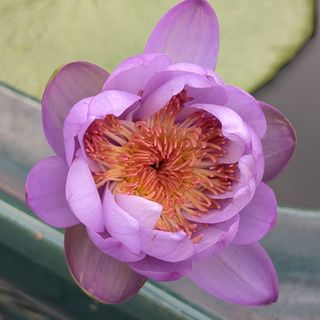
It's like the smelly compost and mud at the bottom of a pond from which a beautiful lotus grows.
It's the fuel that gives rise to wisdom.
When we suffer,
I've noticed that when people have really suffered and they want to work it through,
They develop a lot of wisdom.
People who don't have much suffering,
They see no need to practice,
They see no,
They see no,
They have very little motivation to inquire into things.
And they don't,
They therefore don't actually grow much wisdom,
In my view.
I think suffering is a cause of wisdom.
And I mean,
You can,
You can consider that yourself.
But I think it is,
It is like the mud at the bottom of the pond.
And Kidnutt Han talks about,
Well,
He used to talk about,
With due respect,
He passed away earlier this year.
The no mud,
No lotus is a saying that he talks about.
In other words,
When we can value the suffering that we're having,
When we can value that,
Because it gives us something to understand,
It gives us a motivation to look into it and work it through,
Then we can see that it actually gives rise to freedom.
No mud,
No lotus.
And realizing Anatta or realizing not self is also liberating because we tend to kind of get caught up in concepts of I,
Mine and myself.
Beliefs,
Views and kind of cravings.
Like we,
The world tends to revolve around me.
I,
You know,
The big me,
You know,
Everything is self referential.
And I think many of you have often had thoughts I imagine,
You know,
Often you'll have daydreaming thoughts or ruminations or worries and all the rest of it.
How much of this is like a movie where you are the main protagonist?
Yeah,
You all agree?
You know,
You're always the star of your own mind movies.
And what happens with the realization of Anatta or not self,
You realize that it's,
It's a kind of an illusion,
This idea of self,
This idea of me in the middle of everything and controlling everything.
It's just this.
It's an illusion.
What actually happens is you can't become present.
You see things that are naturally unfolding,
Dependent on causes and conditions.
Some of these causes are your intentions.
But those intentions arise because of course,
Then conditions,
And life unfolds quite naturally because of causes and conditions.
The me is taken out of the road.
You know,
The ego is no longer getting in the road and stopping the unfolding of life.
So this is the benefit.
These are the benefits of realizing Anatta.
We realize that we are just part of nature and not necessarily controlling it.
And that that egocentric perspective on life falls away.
And we are coming from a perspective of interdependence.
Now,
There are many ways of understanding and directly experiencing these three characteristics.
And I'm going to focus on impermanence.
Because if we can see one of these characteristics,
We can see all of them.
And interestingly,
If we can see impermanence,
Or dukkha or anatta in one thing,
It can generalize to all things,
If that makes sense.
It's like an insight into the impermanence of,
And I've used this analogy sometimes,
A falling leaf.
You know,
That's impermanent,
That can be generalized to the impermanence of a thought about ourselves.
So,
If you can see one of these characteristics in one thing,
It can generalize to everything.
And there's many practices involved in understanding impermanence.
Impermanence is usually the prime one,
Because it's kind of easiest to see for some people,
For most people.
But you know,
Some people have different predispositions and they can perceive the dukkha nature of things a lot more easier than other people,
Or they might perceive the not-self nature of things easier than they're perceiving the impermanence of things.
So,
Impermanence is usually a key feature.
What we do with insight meditation is to see the impermanence of things,
To directly perceive,
And not think about the impermanence,
But directly perceive impermanence.
And there's one meditation in Buddhist practices that is directly related to seeing the impermanence of the self and the body in particular,
And it's called Marana Sati,
Mindfulness of Death.
And I practiced this many times.
When I was a young monk in Thailand,
I used to practice it.
And I hope you don't feel repulsed or think I'm a bit morbid about this,
But one way I used to practice it as a monk was when I was in Bangkok,
Which was a busy place,
Bangkok.
I had to go there sometimes for visas and doing other things.
But whenever I was in Bangkok,
I used to go to the morgue regularly,
And I used to watch autopsies.
And I also used to just sit in the morgue and view bodies at various stages of decay and different bodies,
Corpses that had died for different reasons.
Sometimes they'd been in the river and bloated.
Sometimes they'd been in a car accident or motorcycle accident.
Sometimes they'd scraped up the remains of a body that had died somewhere in the forest and the bones had been scattered around.
And sometimes people had burned to death.
So I hope this doesn't sound too morbid or too traumatic for you,
But it was profound to contemplate corpses.
The profound thing about it is to remind yourself that just like that body,
This body,
The one that I call mine,
The one that I call I,
Myself,
This body is of that same nature.
One day,
Somehow or other,
It may not be like a car accident like that body,
Or it may not be like those scattered bones of that body,
Or it may not be bloated as if being in the river for five or six days or something like that.
But this is of the same nature.
This body,
This what I call myself,
Is of the same nature.
It will die.
I will die.
It's really hard to kind of get around.
There's a rub somewhere.
And if you can get to that rub,
If you can get to that point of yes,
This is true,
I will die one day.
It's really powerful.
Now I was a young monk at that time.
I was probably the monk between the ages of 21 and 24.
So,
Young man.
And I used to walk to the morgue and catch a ferry across the river and then I'd come back off the ferry and get off and walk back to the monastery that I was staying at.
And I'd walk through the marketplace.
And it was really surreal.
It was surreal.
When I walked through the marketplace,
It would seem so strange because I was seeing dead bodies and then I was seeing live bodies.
And these live bodies were just carrying on in life as if they weren't going to die.
I was pretty judgemental,
I suppose.
I couldn't read their minds.
But it was kind of strange to me because I was thinking,
Wow,
I'm so motivated to practice.
How can I not practice with all this stuff that's happening?
You know,
With death,
Death and impermanence is certain.
How can I not practice?
I was very motivated.
I had a sense of urgency.
And there is a sense of urgency in Palis called Samvigga.
And I found this definition of Samvigga last night.
And this is by Tannasarabhika.
It is the oppressive sense of shock,
Dismay and alienation that comes from realising the futility and meaningness of life as it is normally lived.
And a chastened sense of our own complacency and foolishness in having let ourselves live so blindly and an anxious sense of urgency in trying to find a way out of this meaningless cycle.
I hope I said that clearly.
But it's this sense of urgency to do something.
To not get caught up in these cycles of suffering.
So I have this same sense of urgency when I think about climate change.
And it's absolutely bizarre and incredulous to understand how some people are still minimising climate change and the crisis of climate change.
But anyway,
So coming back to now what's happening,
What's happened locally in the last month.
And last week I travelled to Brisbane.
Last week,
Last Saturday,
This time last week I was in Brisbane.
I was visiting my younger son and his partner and our third grandchild.
And this is after experiencing three weeks of being in a disaster zone.
In this zone all we saw was piles of garbage and people's lives laid bare on the streets in the mud.
The smell of decay like a tip.
And listening to the radio often,
You know,
I was stuck to the radio.
I didn't have power for eight days.
I had,
I was listening to what was happening in Ukraine.
And that was so heartbreaking and so brutal.
I had none of the,
We had none of the conveniences,
You know,
No more do we have Woolworths that I can just pop down to and get some soy milk or no more a post office,
No more Bunnings to get tools.
No more takeaway meals,
Nothing.
It's,
It just reminded,
It just highlighted how we get attached to conveniences.
I went,
Eventually got up to go to Woolworths up in Ganallabah,
Which is the only place now that of supermarkets serving the high entire of Lismore.
And it's very strange to go into a supermarket where there's absolutely nothing on the shelves to eat.
Nothing.
Oh,
Sorry,
Absolutely.
I did get a can of Adomame beans and there was a jar of mangoes,
But nothing else,
Nothing whatsoever on the,
On the vegetable rack.
No meat,
No fish,
No dairy products,
Nothing.
It's and I went downtown.
I went downtown to my office and actually when I went downtown,
I just burst into tears because the immensity of the loss,
It's just the magnitude of it's just horrendous.
There's nothing there.
It's just like smelly mud.
There was just garbage.
When I went down,
People were cleaning up and I offered to clean up and I ended up going back up to the evacuation center because my,
My office was spared miraculously,
But everyone else was,
It's devastated.
And now there's,
Well actually the garbage is starting to clean up there,
This is three weeks later.
And it's just this shock of impermanence.
I walked down the road and this walk around a beautiful park,
It's a baseball field and I used to take my dog for a walk.
I walked down there and there's containers down the road,
You know,
Shipping containers,
Tree fridges and trees and complete destruction.
Again,
Bursting into tears because the sheer destruction and loss,
The magnitude of the loss.
So last week I went to Brisbane and I went to Western markets and there I was walking through the markets,
Seeing everybody and the market,
I go to those markets whenever I go up to Brisbane,
If it's on a Saturday and it's quite a pleasant experience,
But this time it wasn't pleasant.
This time it was kind of neither pleasant or unpleasant and I wasn't numb.
I just sort of saw the experiences.
It was like the experience I had when I used to walk through the markets after going and visiting the morgues.
It was like,
How can we not do something?
I hadn't had any leisure for weeks,
Just a moment of doing nothing because there was always something to do.
So that was that feeling of urgency arise.
And the feeling of urgency I have is to act effectively to mitigate climate change because this is a climate change disaster that we're experiencing in Lismore.
It's also to protest about the senseless and brutal destruction and suffering of war that we're seeing in Ukraine.
And it's also to wake up to the reality of things,
To gain wisdom so that in whatever way I feed into suffering,
I cease that.
Whatever way I feed into the suffering,
My own suffering and also the suffering of others,
I do not do that anymore.
That's my urgency.
So I better not talk on too long.
I've got a lot I can say.
But when I live on Girard's Hill,
Like someone else here,
I know that she's not here right now,
But our hill was like an island.
We couldn't get off it for a couple of days.
And on the first day of the flood,
I think it was on the Monday,
I wandered down to my neighbours and only 50 metres down the road and their garage had filled up.
The water was coming up to just underneath their foreboards.
Some trucks and cars were being submerged.
And I also walked down the road to one of our friends' places who lives down on Dawson Street and the water was coming up and we met our friend and she was wringing wet.
She was drenched.
It was still raining at this time.
And she had just got off a boat and she'd,
What had happened is that she was in her house and the waters began to rise.
So she put a dog and a cat on a floating mattress and the waters began to rise,
Rising,
Rising,
Rising.
And she climbed out her window and hung onto the gutters and she hung onto the gutters for about,
I don't know,
50 minutes or so on.
I'm not sure.
And the waters kept rising up closer and closer to the gutters.
And eventually someone picked her up and brought her in.
So she was just one of thousands of people who were evacuated.
Thousands of people had to face imminent death.
Some people tragically died.
They were washed,
They were trapped in their attics as if the water filled in and just drowned them because they couldn't climb up.
Some old people couldn't climb into their attics.
They couldn't escape the water.
Some people,
One person got sucked down a drain.
Other people have been washed away with the current.
And it's filthy.
The water's filthy.
So something that I noticed was the urge to help.
You know,
I went down and I saw my friend and they were gathering around a house.
Crowds of people were gathering around.
People were coming in on dinghies and canoes and whatever else was floating.
And well,
I was helping them out of the boats,
Often with nothing but their pet,
Like their cat.
Don't forget the bag they said.
The bag's got my cat in it.
So we went down.
There was probably about 30 people around this house,
All ringing wet.
And I just,
You know,
I just came home.
I thought,
What do we need here?
And I came home and I got all the clothes I could gather and towels.
And I came home and took food down and my partner made a big pot of soup and we all carried it down.
But the point I'm making is that there was the urge to help.
To sit and do nothing would have been worse.
It would have been intolerable.
So the urge to help is compassion,
I think.
I think that's,
There's a,
It's a natural response to experience compassion.
And the amount of courage and bravery displayed by the community in the rescue efforts were truly admirable.
They're more than admirable.
The level of generosity,
Kindness,
Compassion,
And care for our fellow human beings displayed was more than heartening and admirable.
It was just completely remarkable.
It was just so amazing.
So I,
I mean,
I did,
I did a lot of things during the floods,
Including running a retreat.
I couldn't run it at home because we had no power,
But I went up to Kinaloa.
Some of you here were on that retreat.
And I also went to the evacuation centre and talked to some people or talk with some people,
I should say,
Listen to people.
There was one story that I was listening to.
It was this man who had lost everything except his phone and his dog.
And he was in the evacuation centre with pets.
And after a while of talking,
He just kind of broke down and he was weeping.
And I said,
Oh,
I said,
Oh,
Look,
I imagine this is because of the loss.
You've lost everything.
And you've lost your home and everything.
And he said,
No,
No,
I'm not weeping because of that.
I'm just weeping.
I'm weeping in gratitude for the kindness and care that people have given me for the compassion and the generosity they've given me.
This is what is helping me.
This is what I'm weeping about.
So I know that according to polyvagal theory,
There's a number of ways of us coping.
We cope with danger.
And the basic way is to shut down.
The most basic and primitive,
Primitively evolved way of coping is to shut down,
To turn off,
To freeze,
To cut it out.
And that's very helpful sometimes.
The next way of coping is by accessing the fight or flight response.
So we fight against danger or we fight from it.
And this is essential for life.
Sometimes it can get twisted and become dysfunctional,
But it's an essential way of coping with difficulty and danger.
The third way with the polyvagal system is to access the social engagement system,
Which is being sensitive to beings' responses to us and connecting with other beings.
We humans need other beings,
From the day we're born until we grow old.
We need to feel connected.
We need to be connected.
And this is the way we get through it.
This gives us a sense that our backs are covered when we're confronting dangers and difficulty.
So compassion,
Kindness,
Gratitude,
All these qualities,
We find these in the Four Divine Abodes of Buddhist meditation practices.
And in my view,
These Four Divine Abodes are supreme and ultimate ways of relating to oneself and others.
And they're also examples of this way of coping.
If we can feel connected,
If we can feel a sense of connection within ourselves,
And if we're solitary,
It's just within ourselves.
If we can access compassion somehow,
If we can access kindness,
If we can access benevolence,
If we can access appreciation,
If we can access peace somehow,
Then we can cope with anything.
This is my view.
So how do we do this?
So in my view,
How do we get over this?
It's just so,
It's devastating.
Well,
I think we overcome it with insight and compassion.
This is the way we work through it.
And I think,
You know,
The spirit of what we're seeing in our community right now is this spirit of compassion,
This spirit of generosity and giving and care.
And coming back to insight and compassion,
What we need to do is actually turn towards the dukkha that we're experiencing.
When we're ready,
When we're able,
You know,
I wouldn't expect the people that have just come off those boats,
You know,
While they're carrying their dogs across bridges,
You've probably seen those images.
I wouldn't expect them to,
You know,
Explore their dukkha at that very moment.
What they need to do then and there is to get off the bridge or get out of the water.
But when we're ready,
When we're able,
And when we have that sense of someone,
Even if it's ourselves covering our back,
If we can turn towards the dukkha and explore it,
We can see it for what it is.
We turn towards it with an inquiring open heart.
We turn towards it with curiosity.
If this is possible,
Then we have insight.
And insight is the kind of right view of the Eightfold Path.
But the other part of the wisdom component of the Eightfold Path is right intentions.
And this is where compassion comes in.
We need to respond with compassion.
I think that anybody,
I noticed that everyone wanted to do something.
My neighbour,
My neighbour who's quite ill and elderly,
She wanted to contribute in some way,
But she couldn't go down the road,
She couldn't do anything.
So she came into our flat and come into,
She came into our house,
And my partner would just bring up stuff that people could wash.
We had washing going and people,
When they started to sort out their rubbish from things that could be saved,
Like valuable little trinkets and so on,
My neighbour was just washing them.
She set up this washing station up under our house.
So I think that if something's happening,
We need to access what is natural within us to relieve the suffering.
So once we perceive suffering,
If we can act with compassion,
Then that helps us,
Helps us process the difficulty.
And those who have not directly suffered from the experience by expressing their compassion,
By doing compassionate acts,
Is a way for them to overcome the suffering of that witnessing,
That vicarious traumatising and so on.
And also in doing that,
The people who have directly suffered from the experience also have that sense of someone caring for them.
They have that sense of some sort of safety in all this.
So I just want to finish it on one last thing.
Having listened to the horrific stories that are coming out of Ukraine,
I'm reminded of a story that I heard about refugees in the Pol Pot genocide of Cambodia in the 1970s.
I was actually living in Thailand at this time when Pol Pot was in Cambodia doing those,
Well,
Genocide.
And at that time there was a refugee camp set up in southern Thailand and yeah,
Southern Thailand.
And there was one monk or a couple of monks that went to one of the refugee camps thinking that he could just give some people some solace,
Like just talk a bit of Dharma and just a few people,
Even if it was just a few people would be fine.
So he just went there to help.
And what had ended up happening is that he began chanting,
Or these monks began chanting and the whole of the refugee camp,
Which could have been thousands of people joined him.
And they chanted something,
There's a chant in Pali,
I'm not sure how it goes in Pali,
But it's something like this,
Hate is not healed with hate.
Love alone heals hate.
And the translation of love would be benevolence and compassion,
Not romantic love.
But hate is not healed with hate.
Love alone heals hate.
So love and benevolence heals hate.
So fortunately the situation in Lismore and surrounding areas,
And I don't want to miss those surrounding areas,
There's been some really terrible things happen in the hinterlands of Byron Bay and up north and down south as well.
It's a little bit different than what's happening in Ukraine.
What's happening in the Ukraine is somebody's trying to kill you.
Somebody's trying to destroy you.
And what's happening in,
Somebody's trying to destroy property or end your life.
And what's happening in Lismore is that everyone,
There's a community spirit of compassion and generosity that is powerfully evident.
And in my view,
This is the way us as a community and the whole world will get through disasters.
It is overcoming difficulty with the community spirit of compassion.
So thank you very much and let's have a few moments in quiet to,
I apologise if I went a bit too long.
I'm just going to turn off the recording now.