Hi there,
I'm Kianna De Meer from Mysore Yoga Paris.
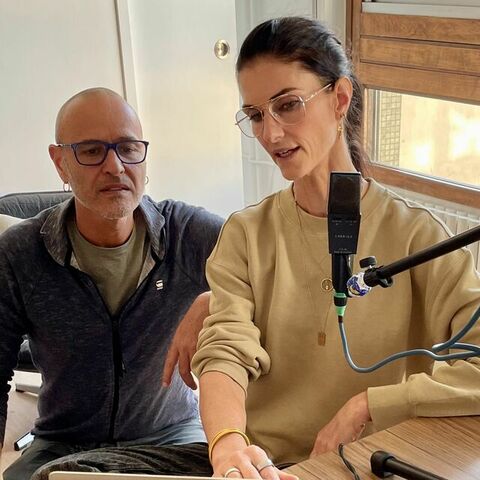
These droplets designed to support you in your practice are a collaboration between myself and sound artist Yotam Agam.
They're best experienced listening with headphones.
This is a recording from my last pranayama session before the confinement held in Glasgow.
It's a practice particularly designed to support our immune and respiratory system as well as calm our mind by tapping into the parasympathetic nervous system.
I teach in the lineage of kaivalyadam and when practiced according to the instructions staying fully within your capacity without any strain these practices are suitable for everyone.
Having said that it is essential to learn pranayama directly from a qualified teacher within the kaivalyadam lineage in order to cultivate your practice.
Enjoy listening.
I want to give you a practice today to continue if you find yourself practicing alone for a while now.
This is a practice that is specifically designed to strengthen the immune system.
One of the most important parts of a yoga practice is the ability to bring us into the parasympathetic nervous system.
I'm going to simplify,
I know this is a simplification,
I'm very well aware of this,
But I just want you to have an idea.
The sympathetic nervous system governs more the sense of fear,
Fight and flight.
Whereas the parasympathetic nervous system,
Simplified,
Is about,
How should I say,
It's rest and digest,
But it's also about nourishing,
Tend and befriend.
This is a good word,
Tend and befriend.
This is the parasympathetic nervous system.
Again,
I know this is simplified,
But what is really important to understand is that when we are in the sympathetic nervous system overdrive,
Which we have a tendency to be in all day long,
Like when we are in front of our computers,
When we are in stress,
Working,
This is our habitual mode,
When we are in this mode,
The body does not prioritize healing.
It shuts off the capacity to heal when we are in sympathetic nervous system overdrive,
When we are in stress.
That's not the priority,
It's fight and flight and freeze.
It is only when we tap into the parasympathetic nervous system,
Tend and befriend,
That the body prioritizes healing.
I'm not saying that you are in one mode or the other.
Of course,
Both are always working together.
But it's a good thing to know that in stress that's not the priority of the body,
And how important it is that our yoga practice has a quality of tend and befriend.
Okay,
So when we are,
And how important it is to take time each day,
A couple of times,
To turn our nervous system into parasympathetic mode.
Whether that is through your asana practice,
Through pranayama,
Through a moment of sitting,
Or just taking 10 breaths.
One of the systems in the body which is really connected directly to the brain and the nervous system is our gaze,
Our eyes.
And most of the time we are in what we call focused vision,
Which is what happens when we read or write or watch our phone or social media.
This is focused vision,
This is connected to the sympathetic nervous system.
So in yoga,
When we are working with our trishti,
We are trying to cultivate a softer gaze.
This is what's called the peripheral vision.
Now there is a beautiful practice which we think as might have been invented by Swami Kavalyananda himself,
My teacher's teacher,
Which is really about the gaze and learning to soften the gaze primarily,
But also allowing the gaze to stay in the present moment.
Because another thing connected again to the nervous system is that our gaze has a tendency to flicker and to move before our head,
For example.
So if I'm moving,
My eyes will always move before I move the head itself,
Do you see what I mean?
So this practice called Brahma Mutra,
We're trying to remain with the gaze in the line of sight.
So we're not flickering with the eyes before we move the head.
In Brahma Mutra,
We move the head in four directions.
There are several variations,
The one we're going to do today.
We're moving the head in four directions.
First,
Very slowly to the left,
Back to center,
Very slowly to the right,
Back to center,
Then the chin moves up,
Back to center and down,
Back to center.
Now this is a slow continuous movement.
One round should take you about one minute.
It means that it's slow,
But it's not standing still.
And again,
Our tendency is to move in seconds,
Like our eyes are flickering,
Our movements are also a bit erratic often.
Here we want the movement to mimic the idea of pouring in the idea of pouring oil.
So it's continuous and slow,
But we are moving,
Right?
In this version of Brahma Mutra,
We keep our eyes downcast,
But in the line of sight.
So we would start keeping our eyes closed and then just opening them a tiny bit,
And then we start moving our head to the left.
As we come all the way to the left,
The eyes continue over the shoulder.
And then all the way to the right,
The eyes continue over the shoulder,
Coming back to center,
Then bringing the chin up,
Eyes move towards Nasagra Drishti,
The nose.
Then when we come down with the chin,
Eyes move towards Brahma Daya Drishti.
But in reality,
If we just keep the gaze where it is,
As the chin moves up,
The eyes will naturally feel like Nasagra Drishti.
Do you see what I mean?
And as the chin moves down,
We will naturally find ourselves in Brahma Daya Drishti.
It's all about maintaining the gaze and creating a sense of stability and softness through our eyes.
So we will practice three rounds of Brahma Mutra,
One minute per round.
The breath,
There's nothing specific going on with the breath.
Find a comfortable,
Steady seat where you feel that the breath moves easily and that you can relax your abdomen.
And always before we begin,
We want to take a moment to collect ourselves.
So we close our eyes,
Collect our body and our mind,
And then when you're ready,
Take three rounds of Brahma Mutra.
You're welcome to begin whenever you're ready.
The eyes downcast.
So so so so so so so so So the next practice I want to give you is a purification technique.
It's known to be a preparation for pranayama.
I think many of you are familiar with it.
It's called Nadi Shodhana,
Or Anilom Vilom.
It's the alternate nostril breathing.
So in Hatha Pradipika,
They say that if Nadi's are full of impurities,
Prana,
The life force,
Cannot travel along the middle path.
How then can one attain the state of unmani?
So in Hatha Pradipika,
There are many synonyms for what we in yoga often hear of as samadhi.
Right?
Unmani is a particularly beautiful one.
I find it means integration or oneness.
So how can one then reach a state of unmani?
It is only when Nadi's are purified that the yogi can regulate prana.
So this practice is done as a preparation for pranayama.
The alternate nostril breathing.
However,
For those of you who are adept pranayama practitioners,
You can replace this practice for your Kapalabhatis.
Kapalabhatis would be more recommended,
But since today we don't really have the time to go through the technique in detail,
I prefer to give you this because it has the same effect,
But it's mind-bearing.
It's also appropriate for those of you who are pregnant.
So it's better for that reason.
So in pranayama,
The exhalation is always double the length of the inhalation.
Again,
Connecting us towards the parasympathetic nervous system by lengthening the exhalation.
Right?
So in Ashtanga Vinyasa yoga practice,
We talk about sama prithi,
Equal in an exhalation,
But pranayama exhalation always double the length.
This we can say is breath retention in process.
We are training our breath center and our nervous system to stay with CO2 for a little bit longer.
And CO2 has that calming effect on the nervous system.
So we take with the right hand,
So if you can do this with me,
We take Vishnu Mudra.
So we fold away the index finger and the long finger like this.
So these two fingers never go up to touch the forehead.
They are folded down.
Then we want to slide along the nose bone until we can feel both nose bone and cartilage.
And there it's almost like a little bridge there where the thumb fits perfectly.
Can you feel that?
Okay,
Good.
So then we would inhale through the left and then close both and then exhale through the right for double the length.
And then inhale through the right again,
Close both and then exhale through the left for double the length.
Okay,
This is one round of Nadi Shodhana or Anulom Vilom.
So what I'm going to do is that we're first going to just sit with our hands on our knees and I'm going to guide you towards a double exhalation.
And then I will tell you when to start your Nadi Shodhana,
Anulom Vilom.
So close your eyes for a moment and anchor yourself down into your seat and coming into your breath.
And very gently and mindfully invite your breath to lengthen and widen.
The way we can invite the breath to lengthen is not through pushing it around or forcing the breath but first of all with our posture.
So creating a posture that truly invites your breath where the ribcage is free to move not just to the front but also to the sides and the back of your body.
Finding your center of gravity,
A place where the spine can become self-supporting and the muscular body begin to relax.
As our muscular body begins to relax,
Metabolism goes down,
Our heartbeat slows down and the breath will automatically begin to lengthen.
The other way to give more space to the breath is by closing our eyes and fully listen to the breath.
Listening is connected to the element of space so by listening we give space to the breath.
We take the breath through expansion of the ribs and then we allow the out breath to lengthen through slowly,
Slowly relaxing the ribs again.
On your next breath count the seconds of your exclamation.
Making a mental note of that number and then try to make the inhale half that length.
This means that the inhale might appear more rich and full while the exhale is more long and fine.
When you're ready begin Nadi Shodhana or Anulom Vilom.
Inhaling through left,
Exhaling right,
Double the length.
Inhaling right and then exhaling left,
Double the length is one round.
I will tell you when you can finish.
Nadi Shodhana Nadi Shodhana Nadi Shodhana Nadi Shodhana Nadi Shodhana Nadi Shodhana Nadi Shodhana Nadi Shodhana Nadi Shodhana Nadi Shodhana Nadi Shodhana Nadi Shodhana Nadi Shodhana Nadi Shodhana Nadi Shodhana Nadi Shodhana Nadi Shodhana Nadi Shodhana Nadi Shodhana Nadi Shodhana Nadi Shodhana Nadi Shodhana Nadi Shodhana Nadi Shodhana Nadi Shodhana Nadi Shodhana Nadi Shodhana Nadi Shodhana Nadi Shodhana Nadi Shodhana Nadi Shodhana Nadi Shodhana Nadi Shodhana Please take two more rounds and then remain seated with eyes closed.
Thank you.
Please take two more rounds and then remain seated with eyes closed.
Please take two more rounds and then remain seated with eyes closed.
Please take two more rounds and then remain seated with eyes closed.
Please take two more rounds and then remain seated with eyes closed.
Please take two more rounds and then remain seated with eyes closed.
So the practice of Nadi Shodhana or Anelon Vellon that we just did,
It's known to be a practice completely in its own right as it is.
So this is also an option always to just do this practice.
However,
In this time I'm looking for the specific strengthening of the immune system.
So I would recommend if Kapalabhati is appropriate to you and you have a good technique,
Please use your Kapalabhati.
If not,
And if you're pregnant and if you are on your period,
Anelon Vellon or Nadi Shodhana is really known to have the same effect as the Kriyas.
It's just milder.
And this is a practice you can really do as much as you feel is appropriate for you.
How many rounds you feel that you have time with.
I would say maybe at least eight,
Between eight and twelve rounds of Anelon Vellon or Nadi Shodhana.
But that depends on time.
It's better to do something than nothing.
The next practice will be Ujjayi Pranayama.
So this is where the Ujjayi breath comes from that we work with in the Ashtanga Yoga system.
So the Ujjayi breath of course is significant by having the little sound at the back of the throat.
And since you all practice Ashtanga,
I know you're all familiar with it.
Again,
Ujjayi Pranayama traditionally is one of the eight traditional pranayamas in the Hatha Pradipika.
So exhalation is double the length of the inhalation.
The technique is inhaling through both nostrils and exhaling only through the left.
Then again,
Inhaling both,
Exhaling left.
Using Vishnu Mudra.
So again,
Right hand using Vishnu Mudra.
So we will just close the right nostril with the thumb and exhale through the left.
We will not switch nostrils.
We will inhale through both and exhale through left.
Okay?
Is that clear?
With the Ujjayi sound.
So let's come to a steady comfortable seat and close our eyes.
And again,
Attune to your breath.
Allowing your posture to invite space for the breath.
So take a moment to find that alignment that will allow your spine to be straight but not rigid.
Where your chest can move freely to the sides and also to the back of the roof.
And coming into your breath ratio where you can comfortably keep the exhalation double the length of the inhalation without any strain,
Without any air thirstiness at the end of the exhale.
Find that ratio which is suitable for you at this moment.
When you are ready you can begin Ujjayi Pranayama.
Inhaling both and exhaling left double the length.
I will tell you when to stop so you can just begin your breathing.
Okay?
Inhaling both nostrils and exhaling through left with Ujjayi sound is one round.
Okay?
Okay?
Okay?
Okay?
Okay?
Okay?
Okay?
Please take two more rounds and then remain seated with eyes closed.
Okay?
Take this moment to savor the residue of your own Ujjayi breath,
Of your own practice.
Savor this moment in time.
When you are ready and in your own time we conclude with eleven alms.
Aum.
Aum.
Aum.
Aum.
Aum.
Aum.
Aum.
Aum.
Aum.
Aum.
Aum.
Aum.
Aum.
Aum.
Aum.
Aum.
Aum.
Aum.
Wanting to grasp the ungraspable,
You exhaust yourself in vain.
As soon as you relax this grasping,
There is space.
Open,
Inviting and comfortable.
So make use of it.
Everything is already yours.
Search no more.
Thank you.
Aum.
Aum.
Aum.