Welcome to Untangle.
I'm Patricia Karpis.
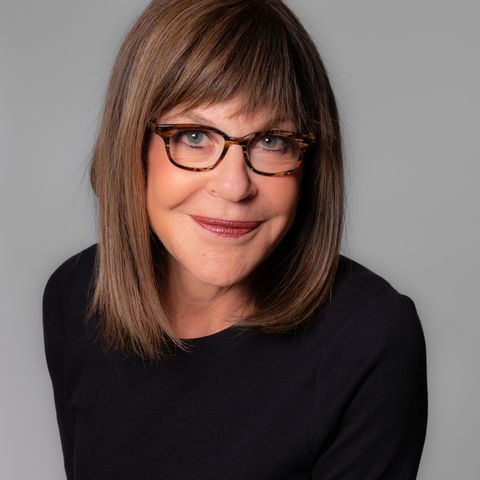
This week's guest is Leah Weiss.
Leah is a PhD,
MSW,
A researcher,
Lecturer,
Consultant.
We recorded this interview during COVID last year and it's rich with gems of wisdom.
Leah is best known for her teaching at Stanford's Graduate School of Business and her groundbreaking work with Stanford's Compassion Cultivation Program conceived by the Dalai Lama.
She's also an expert in workplace anxiety,
Burnout,
Resilience and a multitude of ways to support our mental health.
Much needed at the present moment and always.
Leah shares practical tools for finding our purpose and aligning our goals and values so that we can live our best life.
Now,
Here's Leah.
Leah,
It's so great to have you on Untangle today.
Thanks for being with us.
Thank you for inviting me.
I've been looking forward to it.
So you've written a book called How We Work and of late,
I've been thinking so much about how work is changing for all of us and it includes how we work at home or out in the world.
And I'm so curious what your thoughts are on how COVID has changed the way we work and what you think some of those changes are in the short term versus the long term.
Are you seeing any kind of a vision of change in the future?
Yeah,
It's such a great question.
And immediately some of the challenges jumped to mind,
But I also like the idea that we might explore some of the opportunities for innovation as we go.
I think in terms of what people are navigating,
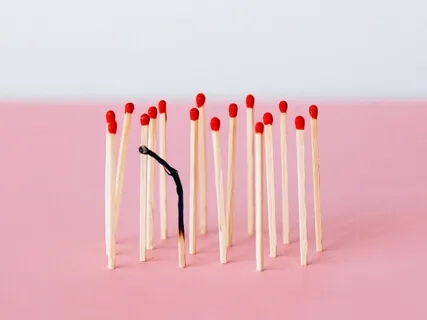
We were already in a context before COVID where burnout was on the rise,
Two and three employees experiencing it.
The majority of sick days are directly linked to chronic stress.
And we are in an environment where many people experience rudeness in the workplace from microaggressions to outright bullying,
And that influences their ability to show up and work and collaborate.
And now with COVID is overlay the general concern for restructuring and layoffs and furloughs.
So few people are afraid of losing their jobs.
And then they're also afraid of what it's going to look like if they keep their job with less people there to do the work that needs doing,
Less resources because of all the escalating costs that COVID is causing.
And then we're navigating all these changes in our family lives and people who need support,
Whether it's children or elders,
And just navigating uncertainty has a massive psychological toll on us.
So we see that in the rates of insomnia,
Anxiety going up.
And if you talk to experts,
What you often hear are concerns that the next pandemic is going to be a mental health pandemic.
So I do think that the question of what are we doing to build resilience right now is massively important.
Dr.
Melissa Nosik Well,
It does seem like we already do have a pandemic related to mental health with the rates of depression and anxiety,
And even insomnia.
When you talk about burnout being on the rise,
You started by saying it's really difficult because of all of these factors that were already in place before COVID.
And then on top of COVID,
With managing all of these other logistics of our lives,
It's even worse.
What can we do?
What does it look like in the future to start relieving these levels of mental health issues and chronic burnout?
Dr.
DeRionne Pollard Yeah,
It's such an important question.
And I think realizing that burnout is something that we can recognize,
So upscaling ourselves and our teams in the same way that in organizations we have first responders,
If someone,
You have to have a certain number of employees who are ready to use the defibrillator or give CPR.
We also need to train ourselves to recognize signs of burnout in others because often the early stages actually mask is workaholism and working more and harder before they start tipping into neglecting personal care and needs and then the displaced anger and frustration.
And then you go further and further down the pike until you reach full on collapse.
But there's actually 12 stages.
And the more we can catch things upstream,
The easier it is to make changes,
To bring in strategies from positive psychology.
The piece that I really focus on,
In addition to looking at what can we do as individuals,
Is thinking in terms of teams,
The units we work in,
Because the social element is so important in either creating our stress or our resilience.
And so there's a couple of strategies if you look at the research around what you can do in your teams as an individual,
As a team leader,
Contributor to build more resilience and focusing on upskilling yourself and practicing and getting better at those is really helpful.
Risa Goluboff When you talk about social elements,
Like what is happening now?
I know at my company,
We're all working from home still.
Are you finding that people that are working from home are still being able to employ social elements?
Or are you finding that being blurred by so much zoom and phone contact?
Dr.
De'Nicea Hilton Yeah,
I think it's really important for us to realize,
So of the basic pillars of resilience,
Community is a critical one that we need to have the sense of community that we need to be able to collaborate,
Care about one another,
Have psychological safety,
We need to know what's happening in one another's lives,
So that we can also do things like tactically support each other.
And when we work remotely,
We are more transactional in our conversations.
You don't have those organic opportunities to chat with someone when you're refilling your coffee cup,
Or walk by their desk and ask them how they're doing.
So we need to proactively create touch points,
Whether it's with our team,
We've developed a checklist for remote working that I'm happy to share out and one of the elements on it is building in time each week,
That you're spending time together as human beings and checking in about what's happening in people's lives.
It doesn't have to be a huge quantity of time if you do it consistently.
But we do have to be attentive because if we're only transactional,
Then the relationships start to suffer.
And it's so hard to infer tone in email.
In Zoom,
We lose so much from people's expressions and body language.
And we work really hard to try to pick up that information,
But it's still really imperfect.
So yeah,
Being proactive to ask someone how they are connected with them.
Send them a note by Slack,
If you know that they're struggling with something,
Check in or see how you can support their work.
This makes so much sense.
I hadn't really thought about that before because all of these informal touch points when you're in an office are what really would connect us and what build our community in the workplace.
And I like that you're saying,
Try and create more personal touch points,
Even if you're remotely working because you're right,
Everybody's moving so fast that that may very easily get lost and you have to try harder to make that happen.
Yeah,
Well put.
You say you don't love this idea of balancing work and family.
What does an integrated life look like?
And especially now,
Because even as we talk about these touch points,
You're at home,
Often you've got kids and a partner or you've got other things going on in your world.
And you may not have that same time to create that touch point with a work colleague.
How do you create this integrated life that is inclusive of what is most important?
I have an example of something that someone I was collaborating with did really well this week that I'll share to illustrate.
So I had a meeting with a group.
We were preparing to do a presentation.
I partner with NASA as part of their human performance accelerator lab and I was working with Dr.
Katie Coleman,
Who's an astronaut.
And I had the first hour of the meeting free.
And then I told them I had a hard out and I didn't say why I had the hard out.
The hard out was because my husband had to take a phone call.
So my three kids were going to be on my clock.
And the time came and the conversation was still really generative.
And so I just said,
Maybe I can mute myself and try to track on it somewhat,
But there'll be noise in my background.
And the way that Katie responded was just so warm.
Said hello to my five-year-old who is poking around behind us.
And actually at the end of the meeting said,
Do your kids want to come and chat for five minutes?
I can show them some of my pictures from my time and space and answer a couple of questions.
That's the kind of thing that I could have felt very differently about staying on that meeting for the last half hour if there had been any microaggression or just non-support.
And so I think doing this stuff,
I was running a training virtually last week and what happened was one of the women's virtual hands was raised.
I asked her what her comment or question was and her baby on her lap,
She had her video off,
It hit the thing.
And so she turned to me like,
Oh,
Can we see your baby if it's a good moment?
And she just turned it on and we all got to see her baby and coo and then go back to what we were doing.
Yeah.
It's so funny.
That's the opportunity that we can have more insight in humanity and especially as leaders or stepping into our leadership model that we value and appreciate that as opposed to seeing it as like an imposition.
Oh,
That's so sweet.
Thinking about these meetings that we have with sometimes 20,
25 people every Tuesday morning with our company,
You'll see somebody on Zoom and their child will come into the room and whisper something in their ear and then leave or you'll see somebody in the background.
I feel like it makes everyone so much more human and real and they do seem to be just going,
Most of them aren't ignoring the child.
They'll say something and then they'll come back onto the call and you're watching this and it's that's real life and it feels a little bit lovely.
I think that's the opportunity.
I have been a long believer that it doesn't help us to have a separate professional identity.
And the work I do with women MBA students at the business school at Stanford,
In addition to the teaching,
I've also for a few years facilitated these informal gatherings just as a way to be with these women who are emerging leaders in the world.
And one of the things when I would have a chance to steer the agenda would just be to really encourage people to name for themselves what their goal was with authenticity and having one identity for themselves.
And also to just really own what their aspirations for their life are,
Because I think part of the work-life churn conflict kind of thing comes in when we get pulled into mental models of what good looks like that actually don't resonate with us.
So we think I want to have it all quote unquote,
But what does all even mean for me is going to be very different than you,
Patricia,
And very different from every person listening.
And so if we do the work of really understanding what our ideal life looks like and what the role of our professional identities are within that and what else we want to experience and contribute to the world beyond our professional identities,
Then with that we can align ourselves in a way that if we get it,
We succeed.
Because the fear is if you get the success that isn't what you actually wanted,
Even if you succeed,
You fail.
So let's not do that.
Let's move with purpose.
SONIA DARA.
.
.
When I think about what you were just saying a little earlier about burnout being on the rise and now talking about these different personalities that we cultivate over our lifetime to try and serve our families or serve our workplace,
Do you think some of the burnout is also tied to having these,
Let's call them split identities?
Like we're one person in this scenario,
And we're another person here,
And we're just not feeling in alignment or it's not a smooth transition from one to the other?
JENNIFER WISDOM.
.
.
Absolutely.
Well,
Emotional exhaustion is one of the critical elements of one of the components of burnout.
And I think it is exhausting when we're trying to keep up multiple identities and be switching back and forth between them.
And also some of that is like if we have an idea of a professional persona that we're working or masking ourselves to be,
That takes a lot of energy.
And also we're suppressing a lot of who we are.
And this is a lot of where I spend time in my book and in my teaching around the benefits that mindfulness practice has for emotion regulation.
And we can authentically and healthfully manage our emotions.
Whereas the strategy of suppression and trying to look like a professional and stuff everything down makes us not only burned out,
But all kinds of negative health consequences over time.
So if you're going to take away one thing from this episode,
I almost hope for listeners that you clearly care about mindfulness practice and in bringing this into the domain of navigating difficult emotions is a huge thing you're doing,
Not just for your mental health,
But your physical health.
Yeah,
Well,
Let's talk about that.
You'd spend a lot of time in the book on mindfulness and heartfulness,
Compassion.
What does practicing mindfulness in the real world look like?
So I think a lot of people and probably not so much our listeners,
Because they've heard so many different views on this.
But I mean,
I do think some people feel like,
Well,
I just meditate.
And I sit on my cushion,
I meditate,
And then I go off into my world.
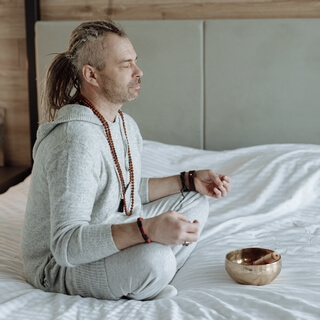
But practicing mindfulness in the real world looks very different from sitting on a cushion and meditating.
Absolutely.
And the definition that I like to bring forward of mindfulness is exactly speaking this point,
The very simple definition,
Mindfulness as the intentional use of attention.
And yes,
Meditation is a great way to train the intentional use of attention.
But there are many others that are not meditation and the goal isn't meditation itself,
Or even self soothing or relaxing.
It's our ability to have what we call meta awareness,
Our ability to be aware of our physical,
Emotional,
Cognitive experience real time,
So that we are able to be proactive rather than reactive as we engage with challenges,
Other people in our work and relationships.
So yeah,
I love this.
I think it is ultimately about mindfulness can't be simplified to be just meditation.
It never was in the thousands of years.
And it also,
The research early on skewed towards studying meditation,
But there's increasingly people studying off cushion versions of practice and understanding that those can have from the mindset point of view from physical movement or what Mark Brackett at Yale calls the meta moments,
The micro meditations,
All of those really help us and shouldn't be overlooked.
So maybe there's a world where frequency and using prompts throughout our day to bring mindfulness into all of our stuff.
So yeah,
This is clearly a place where I'm passionate and have tried to focus my work and training because I learned all this stuff in the context of a hundred day,
Six month meditation retreats.
But now I'm a mom of three people who supports my family.
And most of my students aren't planning on going out to do a hundred day,
Six month meditation retreat.
So the question becomes integration and application.
So if you had to suggest a few tools or practices for training good habits,
Including having difficult conversations or finding alignment in yourself,
What are some of the good habits when you're out in the world that you would suggest,
I like what you just said about even creating prompts throughout the day,
Because I think that can be super helpful.
First of all,
I see self-awareness as one of the key strategies for resilience.
And if we can apply our mindfulness and our self-awareness,
Not just towards stress reduction or self-soothing,
Not that those are bad things,
But there's so much more we can pay attention to,
Like knowing our tuning,
Knowing our patterns,
Knowing our triggers,
Knowing our purpose and what makes us passionate,
Knowing how to apply our mindfulness and interpersonal communications and bringing it into our work life.
So some of the tools I think can be really powerful are quite simple,
Mindful listening,
Doing very intentional sessions of mono tasking,
Like set your alarm for 25 minutes and do one thing with focus.
There is no such thing as multitasking.
There is task switching back and forth between different things.
And it comes at a cost on both of those things or all three or however many you're doing.
So retraining ourselves to apply mindfulness,
Not just on the cushion,
But to,
I'm going to sit and look at this document for 20 minutes.
I'm going to work on this spreadsheet for 20 minutes,
Write this email,
Like really thinking in terms of training our focus,
Which is very counter-cultural in many workplaces.
It warrants exploration.
What do you say to people that will say,
I want to focus on one thing,
And I hear you that it's helpful to start with just 25 minutes of doing just one thing,
But it's still,
There's resistance in them to doing that.
They just don't want to do it,
Like need to be moving around or doing a few things at once,
Which is the habit.
Do you tell them to just do it and by practicing it several times,
It will become easier or is there some secret little sauce there?
I get interested in what is the emotion or the sensation you don't want to feel when you focus on something.
Often when someone struggles with that,
Maybe there's an anxiety,
Right?
Or maybe there's always anxiety and we manage our anxiety by task switching.
And so there is a courage part of mindfulness.
And that can be,
Like I said,
Not just in meditation,
But even mindfulness and mono-tasking or facing the task that we were procrastinating or having that difficult conversation that we view that as part of our building the muscle of nonjudgmental awareness,
Which is like the key piece of mindfulness and it builds our courage and it builds our self-efficacy.
So I'll give an example.
One of the women who took my class at Stanford Business School was in her late twenties and I gave them an assignment this week in addition to your reading and the meditation I'm having you do,
I want you to design a prompt for yourself that you use every day.
So she designed a prompt of on her phone,
She said her password to breathe and she struggled with anxiety.
And every time there's a break in between classes or in a social situation,
She felt uncomfortable.
Her habit was pull out the phone and check social media,
Email,
Lots of us do that.
By setting the prompt,
Breathe,
She caught that what was happening was she was experiencing anxiety,
Took a few breaths and spent half a minute with the sensations of her anxiety,
Which weren't actually that awful.
It's just the habit of avoiding it that is the inertia.
So I think for many of us,
If we can be clear on what is the discomfort that we're trying to avoid and trying in small increments to build some courage,
Even if it's a five minute effort or getting company,
That can be a place like sometimes when I have work that I'm avoiding,
I'll set up a cowork session around it just to have my co-founder and I sharing space and I'm saying,
I'm going to work on this thing right now.
And we're not even working on it together,
But it helps somehow to have that community in it.
So I think there's practical sides there.
Know what you're dodging is a key one.
I like that.
I like that you're saying know what you're dodging and be aware of the resistance and look at your habit of what you're avoiding.
I think those are really great things to think about.
And the idea of the prompt,
I feel like that's something I'm really going to take away from this.
You talked about purpose a bit,
Both as it relates to work and your purpose in life.
How do you define a culture of purpose for both a company and for an individual or even a family,
If that's something that is easy to define?
Yeah,
I love Barb Fredrickson's definition of purpose,
Which is a far reaching and steady goal,
Something personally meaningful and self transcending.
And each of those parts,
Like it's far reaching,
It's beyond the items on my to do list,
But I need to have some relationship between the things I'm doing and the purpose.
It has to be personally meaningful,
Which is important from the perspective of an organization or a family or a friend group.
We can't just cut and paste someone else's purpose,
Even if it's beautiful and inspiring.
If it doesn't,
It's not evocative for us.
It won't have the boost of resilience that purpose can have.
And it has to be bigger than us.
And so I do a lot of talking and training around the difference between hedonia and eudaimonia.
So like a sensation,
Pleasant affect seeking sense of looking for happiness,
Which is hedonia or eudaimonia is meaning driven.
And there's so much cool research.
I write about a lot of this in my book about what happens to us.
Like we are healthier in so many ways,
Physiologically with inflammation and our antivirals and at the genomic level,
Our risk of mortality,
Alzheimer's disease,
Our chronic cholesterol,
Blood sugar,
Sleep,
All these things are healthier in a person who has a strong meaning driven sense of purpose.
I think this is a place that there's not typically a great moment.
And most of us don't have a place on our calendar each week that's like reflect on purpose.
We need to put those touch points in.
And the work I do in organizations is around bringing in processes so people can surface the places where they're in alignment and experiencing alignment with their organization's mission.
And then even in the most mission driven organization,
There's going to be things about the processes or interpersonal dynamics that do not reflect the purpose.
And if you want to have a good culture,
You got to acknowledge those and work on those.
And then for individuals,
If you want to have a meaningful life.
So there's tools.
And I think thinking of this as something that's not something you have,
It's something you do.
It's something you get and you draw the connection with all of your activities and train yourself in is the way to think about it.
And I put a lot of these exercises in my book and website.
And I'm also happy to talk about how do you make your personal mission statement?
What do you do when it's at odds with your organizations?
And how do you think about what to do when there's a lack of alignment with where you're spending your time and what really matters to you?
Yeah,
And then with so much burnout and so much chronic stress,
And so much just going from task to task and getting through the day,
How can people find that purpose or that bigger mission in life?
It feels really heavy to do that if you're in that state where you're trying to just get through the day.
So you need to chunk it down.
And I think this is some of the places like I have a methodology I've developed about a time to purpose challenge.
And basically you do calendar audits for a few weeks in a row.
You set intentions for the week,
You review how the week went.
You find the places where you're not walking the walk on your purpose.
You do some work to remind yourself,
Like often there is a connection between the mundane tasks that we don't enjoy.
If we were to think about it,
We can connect them back to something that matters to us.
Or maybe it's the people we're doing it with that matter to us.
Or maybe it's just our own value for increasing our ability to mono task that we could apply there so it gets some purpose.
Somehow we need to apply in the model I've developed,
Purpose is the foundation and then comes mindfulness because the two actually have to go hand in hand.
If you just have a purpose philosophically and you're not walking the walk on it,
Not that helpful.
You need to weave your purpose into everything you do.
You do that through job crafting,
Through understanding what parts of your role that are core and peripheral that light you up.
You do it through understanding your own energy management.
You do it through making sure your relationship with the people you report to or who report to you that you're bringing elements of clarity and purpose into understanding how roles evolve over time.
This is a place I try to do a lot of work with leadership because it's much easier for an organization to apply this if the leadership are on board and have the skills.
But you can still manage up and do it by advocating to get involved in projects that you're excited about to offer to shadow or help out someone who's got a skill set you want to build.
There's ways you can bring this in even if you're not the lead in the organization.
This is one of the many reasons why I really enjoyed your book and these ideas for I think you call it like moving the needle when we're really stuck.
It's really important to get that momentum when we're stuck.
Is this where you talk about I wrote this concept down and I'm not sure if it's tied to this but the concept of Dampa Sum.
Oh Dampa Sum.
Yes.
So yeah.
Yeah.
Sorry.
Go ahead.
Got excited.
Nobody asks about this.
Patricia.
I love that.
I thought I was really curious about that one.
Okay.
Yes,
That's exactly right.
This is where I bring it in.
So the idea of Dampa Sum is basically what I say in the beginning of the book.
It's so interesting to see that the thousands of years old process map for learning mindfulness and compassion and basically like training yourself in tools like this in the context of Tibetan Buddhism.
It's framed as set an intention,
Do the work in a practice session either on or off the cushion and then dedicate the merit,
Reflect on how it went and then iterate.
And when I got back out to Stanford to work at the Compassion Center and design thinking was like the new hype of the moment,
I was like,
Oh my gosh,
There's so much overlay there with the thousands of years old process.
And the reason I think this is so important and I think you were pointing to this in your question is we can make the topic like mindfulness or purpose into a big heady overwhelming thing.
Or we can think of it as like practices,
Tools that we're iterating,
We're experimenting,
We're also failing and learning,
Developing humility as well as wisdom.
But if we think of our learning process as I'm going to set an intention to bring more clarity and purpose into this week because I've got a lot of slog work to do and I'm going to try to remind myself of these three core elements of purpose as much as possible and then try that experiment day by day,
Meeting by meeting and then reflect on oops,
Maybe I totally forgot or maybe that was really helpful,
What can I learn and then try again and again.
That if you look at behavior change research,
These small steps intersperse with reflection is how we actually make the big changes.
I love bite sizing it in that way.
And for someone who's busy and overwhelmed,
It's a really good way for you to think of what's the one thing I know I could do even on a busy day.
Maybe that's have a mindful cup of coffee in the morning or pause as I'm making the coffee if it's not even drinking the whole cup.
Maybe it's taking two minutes in the beginning of my workout and resting my attention and the physical sensations of my body or resting my attention on my purpose and then I can go watch my show or zone out or do my thing and slowly build your muscle over time to bring resting your attention and mindfulness or purpose into more and more of your day.
Yeah,
I mean this really syncs up so well with what you were saying about chunking things and what you were saying about having prompts for yourself and when people are stuck just doing these little things to get you out of your habit can be so helpful.
Where I was mentally going is like the interesting piece of having biofeedback or having a streak or gamifying your practice or approach is one way of doing that.
And like interestingly,
Another overlay,
There's forms of Buddhism that have been in a way gamifying for thousands of years by having you count numbers of practices,
Like basically building what we would call streaks and I think the other part that we can do to support ourselves is have community,
Like have a buddy in the process.
So it just really helps us with accountability and support and making sense of the things that we're trying to do that don't work in our life.
Sometimes it's really hard to see it for ourselves,
But someone who knows and cares about us can shine light on something we just didn't get or a coach of some sort or therapist,
But having someone else in it with us,
So helpful.
So helpful.
That's such a great idea.
You have a chapter in the book called Full Catastrophe Working.
I was hoping you could talk a little bit about that.
Yeah,
And it's kind of a play on Jon Kabat-Zinn,
The full catastrophe living and really bringing this squarely into the workplace.
And the first years of my doing workplace work were driven out of my engagement with MBA students and really bright,
Really want to live lives in integrity with their values and with being mindful.
And then the reality of life being so busy and so overwhelming.
And now we're in a moment where it's hard to even know how to describe the level of additional layer like we started talking about.
And so embracing the catastrophe as the crucible for our learning,
The laboratory for our learning,
I think is just such a fundamental mindset shift.
So instead of waiting for the week when I have things under control,
But applying practice in experiments in a very imperfect,
Messy situation.
And becoming a mom was a really important place for me to start to learn that because my training was in retreats.
I had lots of conducive conditions.
But then in the messiness of real life,
I feel like that's where you get really humble.
You set different kinds of goals,
But you also realize that you can apply practice in so many places you didn't anticipate.
And I think for me,
The other full catastrophe situation is when we're facing things that are scary and out of our control,
Like the COVID crisis.
For me,
When I was pregnant with my first kid,
My father was at the end of his life and he had cancer.
I spent a lot of time with him.
I had never been so grateful for my practices of mindfulness and compassion all the time in retreat to just be able to sit with him and have my presence not be a burden,
Which many people were because often people feel uncomfortable when someone's sick.
But also to just be with my own sadness in a way that I didn't have to avoid.
And I look back at that time and I feel like I said to myself then,
If my training does nothing for me other than let me be in this process,
And I often feel this way with parenting,
Let me be with my freaking out five-year-old,
It was well worth it.
Or be with this co-worker who's going off on me and clearly is triggered by something else.
And if I cannot react,
That's everything.
But what do you do with that energy,
Like that energy of feeling sad about your father and frustrated with your five-year-old in that moment when she's getting a little hooky?
And I love that you talk about applying your practice in ways that you didn't anticipate,
But what I'm always wondering is in that moment when it's all happening and you're not reacting to it,
What is happening in your body?
So for me,
One of my go-to practices is called Tonglen in Tibetan.
Active compassion would be a way to translate it.
And we teach it in our compassion cultivation training.
It's out of Stanford.
And it's a way of using a visualization to really ultimately just help you be with your own feelings,
But see the struggle,
The pain the other person is experiencing,
Like breathing that in,
Visualize the darkness or heaviness,
Moving into a transmuting,
Let's say to the alchemy term into something that's dark and heavy,
That's light and visualizing,
Extending that out.
If you're not a visualizer,
Really the point is to just give yourself some tools like the breath or grounding yourself in your body and just being with the emotion in a nonjudgmental way.
I mean,
Really apply your mindfulness without trying to change how you're feeling and just to experience it with curiosity,
Even if it feels awful and painful,
Because if you bring the curiosity to it,
It changes.
And it's actually the aversion and trying to avoid it that is much worse than even grief or even a toddler's meltdown.
Yeah,
There's so much wisdom there.
I also have this question that's partially related to everyday life and partially related to what's going on right now with regard to our feelings about race and implicit bias.
And you talk about this concept called de-centering.
I think it's in your neuroscience of mindfulness section where you talk about participating in the world without being locked into our own perspective.
And I feel like that's one of the most important practices.
I mean,
So much of what you're talking about today is just really critical to being a human being and living fully.
But not being locked into our perspective and not feeling like we're right is so difficult for people because it's all we've ever really relied on is our ideas and feeling like we might be right.
So how do you think that we can learn to de-center and to be open to other perspectives to really be more human?
I love that you're highlighting this as a critical skill.
And I think part of the way we get this is in our mindfulness practice,
When we return our attention again and again to whatever the anchor is,
If it's our breath or sound or a body scan,
There's all kinds of thoughts and emotions happening in the background.
And after we've been practicing for a while,
There's a different relationship with the thoughts.
In the beginning,
We are the thoughts,
We have to follow the thoughts,
We chase the thoughts.
But then we hit a place where the thoughts can happen without not even just following them,
But without identifying them that they're true,
Even the negative ones,
Like self-criticism is so common and the places our minds wander,
There's a negativity bias.
So it's towards fear and anxiety or ruminating.
And as we train ourselves in our meditation,
To not just disrupt that script,
But to also realize that those thoughts aren't true,
They're just habits that we're used to thinking.
And then we can apply that outside of meditation.
So when we're having a discussion with a group or another person,
And we believe one thing and they believe another,
We hold that differently if we have a training behind us to ask ourselves if every thought we think must be right,
If we ask questions like,
Is there another angle here I'm not seeing,
If we can bring more curiosity that having our idea disagreed with doesn't mean that we personally are being denigrated.
That might sound obvious,
But often we experience it that way.
There's someone disagrees with my idea.
It's like our nervous systems kick in as though we're personally being attacked.
And the people who are great leaders,
Natural leaders,
There's a way that they don't participate in that.
And they build trust from the people around them.
And I think that's a learnable skill.
It's not just something you either have that charisma or you have that skill or you don't.
We can practice it in the way to do it.
It's like I said,
Starting in our practice,
Getting better at disbelieving,
Or questioning,
Or identifying with our story.
JILL RILEY Yeah,
I really like the way that you put that.
I think that's so important today.
And always,
It's super important.
If I said to you,
What are three ways to stay present and bring purpose to each moment of your day?
What would your top three be?
AMELIA JENNINGS I think I'm a big believer in these prompts.
So putting places in your day that are building rituals,
Even in the key transitions,
That would be one that I would do.
And they don't have to all be like a big meditation or profound philosophical thing.
Like one of mine is my kids are little and they like seasonal decorations.
And if I put something on my door,
And it's changing,
It grabs my attention.
And then I use that to cue me to like disengage from work and reengage with them.
JILL RILEY Oh,
That's sweet.
AMELIA JENNINGS That's one category.
I think really important to know our coping and motivation profiles.
And so one of the things I've worked on is developing a quiz that helps us understand our resilience typology,
Like where are we at risk,
Where are our strengths,
And use that knowledge to build more awareness that if we're like a reinvestor type,
That when we get stressed,
We're going to go to workaholism as a just character trait.
If we know that,
We can set systems in place to mitigate that.
If we know we cope by self criticizing,
Then we can work on that.
So that would be another to get that kind of knowledge.
And the quiz I've developed is something you can take,
It takes two minutes,
And then better yet,
Take it with your family or your team.
And so we've done this with like thousands of organizations having people take it in their working unit.
So then you can have a conversation and say,
How can I help you given your strengths and your weakness?
So that's another idea tactically.
JILL RILEY Is that on your website?
AMELIA JENNINGS Yes,
On the Skylight website.
JILL RILEY Okay,
Great.
I think a third staying present is paying attention to building in joy.
I think we can almost feel guilty to do that right now when there's so much suffering in the world.
But whatever we can do to bring inspiration or beauty or laughter into our lives,
Looking at that as part of our mental,
Spiritual,
However you want to define it,
And making sure we have some of that each day and being creative and putting that in there with our working unit,
With our families,
With our friends.
I'd love to see us index on a little bit of joy and beauty and appreciation.
JILL RILEY Yeah,
Those are perfect.
Leah,
Thank you so much.
This is awesome.
I feel like I've personally learned so much from you today.
And I had already read your book,
So I'm still learning from you.
I am so happy that you were able to come on our show today.
LEAH PROPHETEK,
MD,
PhD Patricia,
Your thoughtfulness in the way that you come at asking these questions is really extraordinary.
And I'm just grateful to have the opportunity to chat with you and connect with your listeners.
And I'm so glad that you're providing this for people right now.
It's so important.
JILL RILEY Thank you.