Welcome to Untangle.
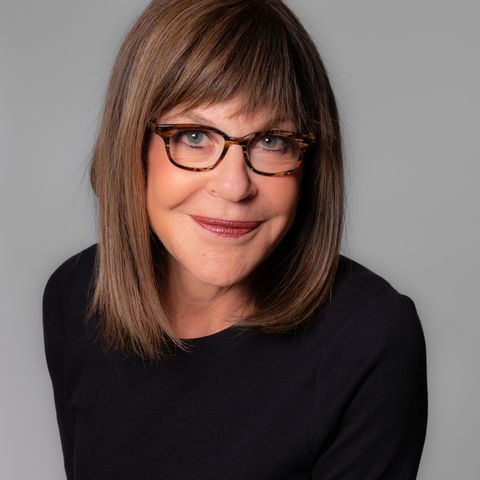
I'm Patricia Karpis.
Today's guest is Sebenay Selassie.
Sebenay is a renowned meditation teacher,
Speaker,
And she explores the themes of belonging and identity through meditation and spirituality.
She believes that we're all inherently interconnected.
And in this interview,
We talk about this along with how meditation has been a catalyst in her life to expand her awareness,
Reduce suffering,
Stay in the present moment,
And to generally see her world more clearly.
Now here's Sebenay.
Sebenay,
It is such a pleasure to have you on Untangle today.
Thank you so much for being with us.
Thank you,
Patricia,
For having me.
I want to start by asking you a little bit about your childhood.
So why don't you tell us what were you like as a 10-year-old girl?
How would you describe yourself?
Oh,
Wow,
10 years old.
So I was born in Ethiopia.
My mom was Ethiopian,
My dad's Eritrean,
And we came to this country when I was three.
And we moved into a very white upper middle class neighborhood in Washington,
Northwest,
Upper Northwest DC.
And at 10 years old,
I would say I was pretty confused.
The life I lived at home,
Which was not very assimilated,
So we ate Ethiopian food.
My parents spoke to us in Harak.
We were part of,
At that point,
Small community of Ethiopians.
Now DC,
In the DC area,
Is a large,
Huge largest community of Ethiopians in this country.
But at that time,
There were only a few families and we were all pretty tight.
And then my world of the neighborhood and school was very white,
Very upper middle class,
And it was confusing to move between those two worlds.
So I was a latchkey kid,
Both my parents worked.
So at 10 years old,
I was coming home and spending time with my intellectually disabled sister who I felt pretty responsible for,
Even though she's four years older than me.
And I was learning how to navigate these two worlds,
The world of home and Ethiopian culture,
And then the world of school and American media.
I watched a lot of TV and I think I learned a lot about the culture around me from TV and popular culture,
Which is probably not the best place to start to understand your life and world.
So I was shy,
Introverted.
I was smart,
But did not do well in school at all at that age.
And honestly,
If there could have been a diagnosis at the time,
I was probably really depressed or at least melancholic.
I think it had to do a lot with not understanding how these two different realities fit together.
AMY LENOI Yeah,
It's so interesting because at 10 years old,
To feel that split between your experience at home and your experience at school can be so overwhelming.
And do you feel like you tried to numb your feelings and just do what you needed to do every day,
Help your sister go to school?
What was your experience going through that time in your life?
DR.
JENNIFER LAWRENCE-MCCALL I was a very athletic kid at that age.
I probably found a lot of release and any joy through sports,
Through climbing trees,
Through riding my bike and riding skateboards,
So really through my body.
And I lost that in my early adolescence,
Which is interesting.
That was probably where I could find a sense of belonging or connection.
But in terms of school and relationships,
I was a tomboy,
So I didn't fit in with my girly girlfriends.
I remember going to sleepovers and friends wanting to play Barbie or dolls,
And I just had no interest in that whatsoever.
And I was in a neighborhood full of boys.
So I think I took a lot of refuge in physical play and activity.
And when I didn't have that,
I remember being numbed by television.
I watched a lot of TV as a kid.
SONIA DARA I want to get to this later,
These themes of your upcoming book and these themes of belonging and identity.
And it's so interesting that your world was so focused on this kind of split identity as you were growing up.
And I think I've read that you started learning to meditate when you were a teenager.
Is that right?
What was your first experience there?
DR.
JENNIFER LAWRENCE-MCCALL Yeah,
My brother,
Who's eight years older than me,
Was probably as confused in terms of his sense of identity.
And he became what's colloquially known as Hare Krishna when I was 15 or 16.
So my first introduction to Eastern religions and spirituality and philosophy was through him.
And he was reading the I Ching and the Bhagavad Gita.
And he also had some Buddhist books at the time.
So I started reading those things,
Also started going to the O Street Temple in downtown D.
C.
Where a lot of punk rock kids hang out too.
So it was kind of a cool scene at that point and started going to kirtan,
Chanting,
Going to lectures,
And started to meditate very,
Very intermittently.
I didn't know what I was doing.
So by the time I got to my first year at university,
I started taking religion classes and ended up majoring in religious studies with a focus on Hinduism and Buddhism.
My entry way into Buddhist philosophy and thought was through that.
CM – Was your family Christian or Muslim or did you really not have a religion or spirituality as you were growing up?
BT – Both my parents were Christian growing up and my mom more so.
I think my dad's religion was more like Marxism by that point.
But we were all baptized,
But we weren't given any further education in Christianity.
We didn't go to church,
Except occasionally for very special occasions,
Weddings or a couple of Christmases,
Not even every year.
When we first came to D.
C.
,
There were no Ethiopian churches to begin with,
But slowly there started to be more community.
But yeah,
We never really grew up with any kind of sense of spirituality or religion,
Which is maybe what sent my brother searching and also sent me seeking other meaning.
CM – So you're studying in college,
Religious studies.
When did you decide that meditation would be your lifelong passion?
BT – I didn't really start studying in earnest where I could say that I had a devoted practice.
So I meditated off and on throughout my teens and my early 20s,
But it was really in my mid-20s that I turned to meditation seriously.
And it was mostly like many people through suffering that I turned to practice.
For me,
It was particularly around heartache and heartbreak.
And I started practicing with a Zen teacher here in New York City in the Ordinary Mind tradition,
Charlotte Jekyll Beck's lineage.
That was really my first teacher,
My first real commitment.
And from there,
I started practicing more,
Started looking at other traditions at times,
Doing retreats until about 15 years ago,
I landed in the Insight community in an earnest way and started really training more deeply.
So I've been meditating for about 25 years with teachers in different traditions and started training more as a teacher about 15 years ago.
CM – Would it be too difficult to answer the question of how meditation has changed your life?
BT – It's really deep.
It's almost that there isn't a part of my life that hasn't touched because it's been so transformative.
And it's not just the act of meditation itself,
Of course,
That's the catalyst,
But it's how meditation has opened my awareness to be able to examine every aspect of my life in a different way and to really be with every aspect of my life in a different way,
In a way that's more conscious,
More loving,
That's more allowing,
That's more wise,
More compassionate.
So it's really touched everything for me.
CM – So many people think about if they haven't started meditating,
They think about what would it be like to start a meditation practice.
And there's a difference between starting a daily practice and some of the things that you're talking about,
Which are these deeper transformative aspects of mindfulness and a meditation practice and the inside tradition,
Even Buddhism,
That have this transformative power.
How do you explain that?
Like when you're teaching,
Let's say,
A beginning class and you're teaching people how to meditate,
How do you describe what is the hope or what one might be able to expect with integrating a meditation practice into their lives over time?
CM – One of the reasons why I like Buddhist teachings or wisdom teachings around meditation is that they allow us to see that meditation is more than just settling or concentrating the mind.
So sometimes,
And there are many maps to this and all of them are valid and give you a different perspective into it.
But sometimes I like to make the distinction between three aspects of meditation that we might be able to parse out.
So one is that gathering,
Sometimes called concentration or settling of the mind.
And there are many tools and techniques that can help us do that.
And a lot of times that's what people think of when they think of meditation,
Is calming myself down,
Getting the mind to settle.
Sometimes people think it's about getting rid of thoughts,
Although it's not that,
And good luck with that because that's going to happen.
So there's sort of concentration or gathering.
And then there's mindfulness,
Which is such a widely used term now and does mean many things.
Mindfulness has many aspects to it,
But it's very basic.
It's the capacity to know what we're doing in any moment,
To bring awareness to our thoughts,
To our speech,
To our actions.
So we train in mindfulness during meditation,
But we can bring mindfulness to any part of our lives.
So those are two things that people might confuse as the same.
So you can have a concentration practice that's focused on a mantra,
Or some people look at the flame of a candle or concentrate on a particular image.
That's not necessarily mindfulness because you're having to pay attention to a particular thing rather than bringing awareness to whatever is happening.
So concentration and mindfulness are a little different.
And then there's insight,
Which is seeing the truth or finding wisdom in these practices.
And that sometimes gets left out of the equation of the modern ideas of meditation,
Which sometimes only focus on the concentration part or the mindfulness part.
But the insight,
Which arises on its own,
We don't have to make insight happen,
But it is a really important part to see these deeper truths about our experience.
Sometimes we talk about impermanence being a truth of practice,
Or we can see the insight into our interconnection,
The fact that we're not separate selves.
We can see the insight into how we cling to things and create our own suffering or how we push away pain or difficult experiences and how that also creates suffering.
So for me,
Helping people see those three different things as a part of our meditation practice can really bring that depth that I was speaking about.
That really is how our meditation can start to touch every part of our lives.
Yeah,
I love the way you described that because I do think that people struggle with these definitions.
I've often heard people say meditation is like the word sport.
There are so many different ways to meditate and mindfulness of course has the traditional definitions.
But I think putting it in that context of your concentration practice or a calming practice,
Gathering,
Settling of the mind,
And then mindfulness,
And then insight,
Which is the deeper wisdom or deeper truths is a great way to look at it.
And then how do we connect what we learn through these practices to what is going on in the world right now,
For example,
Where many of us are really struggling with all of these very difficult and challenging issues.
How do these practices help us with connecting with people that have different ideas or just in general,
How would you say people would benefit from these practices right now?
Ultimately,
The practice is these ancient wisdom teachings that come from different cultures.
But if we're talking about these meditative practices of mindfulness from Asian cultures,
Help us to see things more clearly.
We're seeing our own experience more clearly.
We're also seeing the external world more clearly,
Not obstructed by our patterns or our clinging to things being a certain way.
So one of those deeper insights or truths that can be revealed through our practice is this teaching on karma,
Which sometimes kind of gets lazily simplified to do something bad and something bad will happen to you,
Or you do something good and something good will happen to you.
But it's really much,
Much more complex than that.
At its most basic level of truth,
These teachings are about causes and conditions and how there are so many causes and conditions that lead to any particular moment.
We're talking about human history and the history of our world,
Which if we just even look at science is so complex.
Our reality started from basically nothing,
And we evolved into just all of this complexity.
And even recent scientific discoveries around our own personal complexity that we're not only holding the multitude of influences and experiences of our own personal lives.
So I've been influenced by immigration and my family dynamics and my cultural history and my experiences from birth until now,
But we're also,
Each of us,
Influenced by epigenetic or intergenerational information so that we're all holding intergenerational trauma as well as intergenerational resilience.
And then add on top of that the complexity of our social realities,
We've come to this moment in time because of all of these causes and conditions.
So when people are trying to see clearly this moment,
I like to remind ourselves of this complexity.
That can feel almost unbearable.
CMK,
It feels so overwhelming as you describe that.
That's what people get overwhelmed by because they're trying to simplify and understand things just on a personal one-on-one or momentary level,
Forgetting that there are so many causes and conditions for this moment to happen.
Another aspect of this teachings,
Another insight from these teachings are those around not being in contention with reality.
Our suffering comes because we want things to be different than they are.
And all of these causes and conditions led to this moment in time.
We can't change that.
And if we want to be in contention with the past,
We're really going to create suffering.
So this practice teaches us to start in this present moment right here.
In this present moment right here,
Things are the way they are.
We can't change the past to be kind of in contention with the past.
And that doesn't mean to not be heartbroken,
To not have compassion for the pain that's being experienced now or the pain that was experienced in the past,
But to stay in or to have rage about that,
To be angry about the injustice that is in this moment,
But to be stuck in that place,
Almost upset.
That's what I mean by in contention,
To be kind of wound in that upset or that disturbance rather than responding to this present moment from clarity of seeing,
Okay,
There are all these causes and conditions.
I can't control those causes and conditions,
But I can now act in this moment to change what I see as unjust or needing change,
Needing a response.
It is so complicated because things are so repetitive.
When you see the same things happening over and over again,
It's very hard to say,
This belongs.
This is my reality.
I accept this and then work towards change and not have change happen.
And I guess the question is around how do we have faith that there is a path forward when we're in this kind of deep conflict?
CMK,
It's helpful to understand history and to have inspiration from movements and from people who have affected positive change in the past because they give us roadmaps to how change happens.
It's interesting that a lot of the leaders that people often point to like Gandhi or Martin Luther King Jr.
Or Nelson Mandela or others are really,
First of all,
People of color.
Second of all,
Really deeply grounded in their spirituality or in indigenous wisdom,
In the case of Nelson Mandela and his grounding in his community wisdom.
So taking our lead from that to see that depth of soulfulness.
I heard this statement from Movement Generation,
A social justice organization based in California recently and their leaders were saying,
If it's not soulful,
It's not strategic.
Yeah,
It's beautiful.
That soulful quality is that deep wisdom in understanding how change happens.
It doesn't happen,
As Nelson Mandela said,
Holding onto the anger ourselves,
But using that anger as a fuel for how we move forward together positively.
Just to name,
Because I didn't make it clear before,
Being in contention with reality includes being in contention with the reality of a person,
Thinking that someone else should be different than they are,
Given their particular history.
We're talking generational history as well as their present history is to be in contention with reality.
That doesn't mean we don't try and change their mind or oppose them even,
But to somehow think they should be different is really to be out of sync with the depth of these teachings.
That's really great to think about.
There are just so many layers here and I thank you so much for outlining some of this.
In your upcoming book,
You talk about this idea of belonging and accepting our belonging as potentially a key to facing the challenges that are currently impacting our world.
You talk about unconscious bias and denying our interconnection or the potential denying of our interconnection.
Will you talk a little bit about that,
What you mean when you say accepting our belonging is the key potentially to facing the challenges today that we have?
All these ancient wisdom traditions,
All of our wisest leaders and modern science speak of the truth of our interconnection.
That's one of the paradoxes of belonging,
That we are not separate.
Reality is not separate.
More and more,
Science is pointing to the truth that the separations that we see are actually illusions in a sense,
On a molecular level.
We're not separate.
Many ancient traditions say this.
Buddhism teaches this,
But also the tradition from the Bantu people in South Africa,
Of Ubuntu is speaking to this.
Not only that people are not separate,
But all of reality and all of nature is not separate.
Belonging is our truth.
There's no denying that.
The paradox is that we're not the same.
Contending with this paradox is really the work of our spiritual practice and really the work of our survival.
Because those people that we other from whatever quote-unquote side we're on,
That is going against this truth of belonging.
Our liberation as humanity,
But also in service of this planet,
Which is still in crisis even though we're drawn by these other current crises that are affecting humans at the moment.
The planetary crisis we're in really depends on us resolving this paradox and really living through it.
Our health and well-being,
As well as our survival,
Really depends on us understanding what it means that we're not separate,
But we're not the same and how do we learn to live together within that paradox.
Yeah,
That's just that idea that we're not separate,
But we're not the same.
I kind of imagine a group of people with extreme views coming into a room and what does that look like trying to discuss all of the issues that we're facing today,
All these very contentious and complicated issues.
Is there a state of mind that it takes?
Is it willingness to be present with people that deeply disagree with you and relinquish your ego?
What does it take for us to be separate and not the same?
I'm not sure if I'm qualified to answer this.
I say that only because I'm often not in a room with people who are deeply divided.
There are people who do that work,
Who really try and bring together people who are on opposing political sides,
If we want to put it that way.
From what I've witnessed,
Which is little of that work through various mediums,
Through things I've listened to or watched or read,
It is grounded in deep listening,
The capacity to listen to another's experience.
The kind of conversations and communities I hold aren't deeply divided in that way,
But it doesn't mean that there's agreement.
I do a lot of multiracial work where we bring people together to have conversations around difference and power and dynamics like that,
And those aren't easy either.
They can be quite messy.
One of the things that has been important to me and to colleagues that I work with in those kinds of spaces is to make sure that not only are you having conversations across those differences,
But also within those groups.
For example,
In multiracial groups,
We have affinity groups within a space.
Although we may come together for a week-long retreat to explore these issues,
We make sure that there's space for white people to be together and then people of color or white folks and then to have an Asian group and a Black group and a South Asian group or whatever affinities that people are drawn to.
Sometimes we'll have people who identify as straight together,
And then we'll have various queer affinity groups so that there's an opportunity for people not only to listen to each other across difference,
But to hold each other within similarity.
Coming back together is often really supported by that because there's the opportunity to try out what is coming up and what is needing to be explored.
We live very segregated lives,
Especially in this country.
It's been shown that people actually have very few cross-racial or cross-different identity friend groups.
Even if people work together or have other ways of having a more multicultural reality,
Their personal lives are actually quite segregated.
Within that,
People aren't necessarily talking deeply about these issues in their families or even in their communities.
Having that space to explore deeply some of these issues and to be able to break off,
Come back together,
Break off,
Come back together to untangle them,
I've found has been really powerful.
Yeah,
That does sound like a powerful experience because you have that practice of deep listening without really intense triggers.
Then to be together in the bigger group,
You have had that first experience of listening and dealing with differences.
I'm doing this work within contemplative communities.
We have ways of practicing.
We have guidelines for how to be together that are really grounded in these wisdom teachings,
In ethical teachings,
As well as in clear seeing so that power dynamics are pointed out,
History is acknowledged,
There's context given that allows people to start to see more clearly what it means to be together across difference.
Yeah,
You're starting so far ahead dealing with people who are coming from contemplative backgrounds and communities.
I want to switch to something personal if you're okay with that.
I mean,
This is all personal.
You've had breast cancer three times.
How old were you when you were first diagnosed with breast cancer?
I was first diagnosed at the age of 34 with stage 3 breast cancer and then again 39 or 40 with stage 4 and then again at 45 with stage 4 cancer again.
Currently,
I'm cancer-free.
I'm almost 50.
I'm so happy to hear that.
But what was it like and how did your meditation practice and your wisdom practices when you were first diagnosed,
How did you deal with your diagnosis and then the treatment?
And I'm curious as well what it was like again being diagnosed again a second time and then a third time,
Like what's happening inside of you throughout this whole experience?
Well,
At 34,
It was quite a shock and I'm so thankful that I already had a practice and had been practicing for years at that point and I had something to turn to to ground myself.
I knew how to be still.
I knew how to bring myself back to center.
I turned deeply to my practice and to practicing in community at that time and did a lot of retreats.
So I feel so fortunate to have already had that in my life and at the same time,
It felt really tumultuous.
I was really confused,
Very,
Very upset.
I was in shock for quite a while.
But yes,
My practice,
Particularly the capacity to be in my body and to really bring some measure of relationship of ease to what was happening even if it wasn't easy,
Especially the pain and the physical reality of treatment of surgeries,
Of chemo,
Of radiation,
To be able to bring some measure of ease to that is really,
Really helpful because you can really spiral,
I think,
When you're caught in those cycles of pain or any kind of chronic conditions related to treatment.
And each time is a shock.
So the second diagnosis was also a shock and the third as well.
And for me,
I really went into deeper levels of allowing care and support.
Like many people,
I think I'm someone who thinks that they can do everything on their own independent,
Self-sufficient woman.
And it was when my body was really giving out after my first diagnosis during treatment,
Really was in a lot of physical pain and at points quite seriously ill and hospitalized for periods of time and it wasn't even I had to turn to friends.
I just had to let go so that people could catch me and really depended on people to take care of me.
And I'm talking about really physically take care of me.
I was unable to do basic things for myself.
But even during the second round and the third,
Still in that mode of like,
Well,
I can deal with this.
I was always very open about my diagnoses and what was going on and shared with a large group of friends and very lucky to feel loved and supported.
But having no choice but to open up to support wasn't necessarily what I wanted to happen,
But what needed to happen.
So there were some lessons that were particular for me around letting in that care and support that were really valuable as part of my growth.
You have done a few talks on being intimate with any experience and allowing life to be what it is in any moment.
And do you think it's,
Well,
Of course it's harder when we have these experiences that we go through,
Especially this really difficult health scares and challenges.
Is that something that you think is possible to be like when you're diagnosed with something like breast cancer,
Is it possible to be intimate with that experience or is there some other practice that you do when your body and heart are in deep trauma like that?
I think that it varies,
Right?
So there is some titration that's needed.
Sometimes we can't go directly into our pain,
Be it physical or emotional,
That it can be overwhelming.
It's not healthy for us.
It puts us out of balance to kind of always be with it.
So when I was talking about being with the pain before,
It's also understanding how much I can tolerate and when I need to pan out.
And there are so many kinds of practices that can support us.
And for me,
I have devotional practices that I do and allowing myself to be held in those as well and being held in community.
So part of turning to community was allowing people to do practice for me.
My third time with cancer,
One of the things that friends of mine did were to raise funds so that I could take a significant amount of time off to just take care of myself and then organize a meditation,
A metta,
A loving kindness meditation on my birthday so that at noon on my birthday that year,
I don't know how many hundreds of people were meditating,
Sending me metta.
And so allowing ourselves to be held like that is so powerful.
And so our practice can be not only extending kindness to ourselves,
Finding various practices to be more intimate with our experience,
But also allowing space,
But also allowing ourselves to be held by others in their practice.
Yeah,
That's so beautiful.
And it seems like it's really a part of self-care too,
Allowing others in and surrendering some of the maybe willfulness that we have when we feel like we can do everything for ourselves.
Yeah,
Definitely.
I have like a million other questions I could ask.
Thank you so much for sharing your heart and your wisdom today.
I'm grateful that you were able to be here with us.
Thank you,
Patricia.
It's really lovely conversation.
We will see you next week.