Thanks for joining us here on Pretty Spiritual where we're attempting the unthinkable about how to navigate this messy,
Beautiful,
Imperfect life with spiritual tools,
What principles and our own personal stories.
So we're not experts,
We're not religious,
We're definitely silly.
We're honest,
Real and willing to share.
So join us as we connect,
Bond and grow together.
Hi sweet spiritual friends.
We're so glad to find ourselves here.
Welcome to Pretty Spiritual.
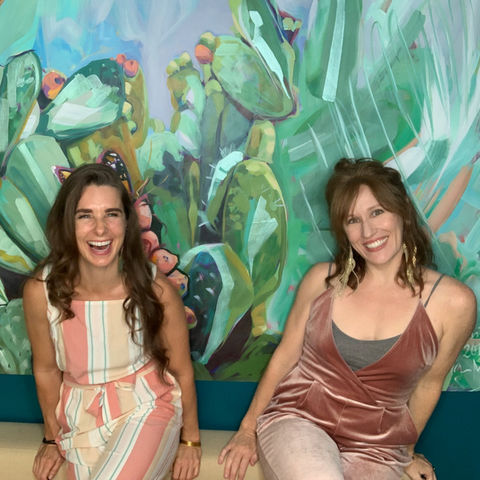
I'm Lindsay Poney and to my left I have Ella.
Hi,
I'm Ella.
And to my right as always,
The beloved Annie.
Hello.
We are so glad you're joining us today as we attempt to examine the topic of experience and more deeply our relationship to experience.
What does this even mean?
I was attracted to a quote in a meditation that said,
Suffering or happiness is created through one's relationship to experience,
Not by experience itself.
This was a profound thought for me.
How long have I been intent to blame the experience and leave it at that?
How am I relating to this experience and how is the relating shaping the experience?
Through witnessing and being kind to our experience,
Is it possible to generate a more compassionate,
Loving relationship to whatever the experience may be?
I sure hope so.
That's what I'm banking on.
Let's find out.
Let's.
Often when talking of relating,
It is tied to being in relationship with another person.
What I am attempting to get a better understanding of is if I am in relationship with this moment,
How is the relationship?
How am I relating to this moment to this particular experience?
Each of us will attempt to unpack an experience and our relationship to that experience in noting these two very different but same scenarios.
We will call on our spiritual tools to help us witness,
Strive for kindness,
And perhaps gain more clarity and choices along the way.
That was such a great intro.
Oh,
Well,
I can honestly say that I had a heck of an experience.
I know.
Just for our listeners at home,
I can honestly say that it's really interesting to look at an experience objectively and to be able to see,
Have the mind look at the mind essentially is very interesting.
Ella.
Yes,
Pony?
Hi,
Sweet Ella.
Hey,
Friend.
I'm quite excited for you to share about what it's like for you relating to present time experience.
It's such a good topic.
I actually feel like this topic is the foundation for pretty much all the other things we've ever talked about on this podcast.
Thanks for bringing us back to our roots,
Gentle Pony.
Yeah,
I've had a really interesting journey with relating to my own experience.
When I was younger,
Like in my 20s,
I placed a lot of value on intellectual,
Analytical,
Conceptual thinking.
I thought that if I was going to appear smart to other people,
That that's how my system had to work and process reality.
I kind of tried squishing myself into the box of conceptual and analytical thinking,
Which I can get there,
But it's not really the way that my system processes and makes sense of experiential reality.
I was trying to impress other people and look good and stay smart,
And what that ended up being like for me was deeply unsatisfying.
I just felt like I wasn't enough.
I felt like I didn't have anything to contribute.
I felt like my opinion was irrelevant if I didn't know the right answer.
I would just kind of try to figure out and know more and understand more than other people so that I could be safe.
That spiritual practice has taught me is that more than anything else,
That the most meaningful and important thing I can ever do as a human being is to inhabit my full experience just as it is without trying to force it to be different or wish that it was some other way.
What I've learned about myself is that,
And maybe this was very obvious to other people,
But for me it was really not apparent,
Is that I am a highly emotional person and that I process reality through my own experience.
My brain can work in a conceptual or analytical way,
But that's not its natural way of interacting with reality.
In fact,
If I'm going to understand something in that way,
I have to filter it through experiences that I've already had.
So I was doing this kind of violent thing to my own experience by trying to make it into something that it just naturally wasn't because I thought that's how it was supposed to be.
This is a pretty particular example of what that can look like,
But I think we've all had some experience with that.
Our experience isn't what we want it to be.
It's not the right one.
It doesn't look the way we think it should,
And so we try to make it into something that's right or better or enough.
In the process,
We're turning our backs on the only experience we'll ever have,
Which is our own direct experience of what's happening right now.
So for me,
On the most basic level,
What spiritual practice means is studying my own experience and becoming as intimate with it as possible.
What enables me to bring the most intimacy and curiosity and kindness to the experience I'm having right now?
What has been so important for me is the faith or trust that I've talked about before on this podcast,
That my own experience is valid.
Even more than that,
It's the only experience I will ever get full access to.
So if I'm spending a lot of time being so curious about what's happening for you,
Especially if you as a person that I'm infatuated with or have a crush on,
I'm so curious what's it like for you.
But the problem is that I'll never actually know.
That the only thing that does is,
If I'm trying to figure out what it's like for you,
Is that I've abandoned my own experience.
And that makes me sad.
I don't like abandoning myself and it feels,
It doesn't feel good.
And so it's taken a lot of training and mindfulness and meditation to shift my attitudes toward being the most curious and available for my own experience.
But for me,
That's the basis of all spiritual practice that I've come into contact with.
And I'll say more about it when we get to the toolsies.
Thanks,
Ella.
You're welcome.
Awesome.
I loved the part about thinking whenever I have a crush on someone or I'm interested in someone,
I mean,
It's all consuming.
Show me the inside of your brain.
And I was just thinking about how,
What a radical idea to act as though you have a spiritual crush on your own soul.
Oh my God.
So perfect.
Actually,
When I first met Annie,
It was because I said out loud this thing that I was a little embarrassed about,
About how God was my boyfriend.
I was like,
Oh my God,
Who am I?
Annie,
Do you want to share about your experience?
You're relating to the experience?
Yes.
Show us your brain and you're done.
Thanks for this topic,
Lindsay.
When we first started talking about it,
I was confused.
And then I sat and thought about it and it became apparent how relevant it is to everything that I'm working on,
But I just hadn't thought about it.
So I love this.
This podcast is what helps me relate to my experiences and this specifically this topic,
But overall doing this podcast helps me filter and think how am I going to communicate about this?
What tools am I really using?
What was my experience with this emotion or this kind of life situation like?
And then being able to process through it and think about how I'm going to communicate about that topic on this podcast helps me really relate to experiences sometimes in ways that I haven't before.
And it also helps me see how things,
Even things that I struggled with or currently struggle with,
That my attempts and fumblings and stumblings can maybe can be useful to other people.
And so my experiences get to become a gift,
Which is really nice because sometimes if I am suffering about something,
It feels really all encompassing.
But if there's that shift of like,
Oh,
Somebody might benefit from seeing how I've gotten through this,
Then it becomes a positive.
The podcast episode on forgiveness was recorded while I was deep in a process that I still couldn't understand.
And I'm still,
I have a lot more perspective on,
But it still feels a little bit confusing,
But I was using so many tools to attempt to be with it and walk through it.
And so my relationship to any given experience is constantly changing as I get new perspective and understanding.
So for me,
I can have a relationship to a this moment experience.
Like for example,
I'm sitting here in the room with these two ladies that I love,
Or then I'll have a relationship to the experience that will change over time.
As I grow,
There's distance from that experience.
What I'm learning is that no matter what,
I always have to face the present moment of an experience,
Even if it's 20 years later.
So challenges don't disappear because I ignore them and painful experiences don't go away because I can't handle them.
When we recorded our episodes about depression and forgiveness,
I was learning a lot about PTSD and trauma this last year has taught me that to heal from a harmful experience,
I have to actually experience and process it,
Even if that means going back and reliving the past,
Which up until that point of,
You know,
As I've been working on it this last year,
I wasn't able to like my body really had kept those sheltered and protected inside because my nervous system and my heart and all of these parts of me weren't collectively safe enough to walk through it.
But now it's okay.
And so the body was like,
All right,
It's time.
We're going to get experience in girl,
Are you ready?
So that I'll talk more about it when we get to the tools.
But it's really fascinating and it can be scary,
But it's also really cool.
Like we get the opportunity to sit with things and be and then they ease.
That's all.
So amazing.
I was just thinking about what the body naturally processes if I get out of the way,
Or if I'm able to let it have all of its processes.
But I know for me for many years,
I was just like,
One of my mottos was,
That didn't happen.
Oh yeah.
I would just say that.
That didn't happen.
Yeah.
Mine was,
You'll get over it.
I said it to other people and myself.
You'll get over it.
It was terrible.
Just shove it in the closet.
Yeah.
It goes in the sparkle box.
It'll be fine.
It'll be safe in there.
Sparkle box.
In relating to what kind of relationship do I have with myself and my thoughts,
I would ask myself that question.
What kind of relationship do I have with myself and my thoughts?
This is a self-assessment question that helps me to identify what type of relationship I am having with present time experience.
If I can be honest and brave enough to refuse to look away,
Then I can see where I have more choice and how I relate to each and every experience that comes along.
If I am angry and self-loathing internally,
Oftentimes this will color my behaviors and my tone of voice.
This then produces a feedback loop that creates more anger,
More self-loathing,
More habitual behaviors that keep me locked into a prison of my own making.
If I can simplify and watch the mind meet its thoughts,
Its thinking,
And analyze the environment these thoughts are creating,
I'm able to have more choice in my relationship to self and possibly even more choice in my relationship to most things.
Self-witnessing,
Meeting my thoughts,
Honesty about where I am at and where I want to be is hard work.
If I continue to be complacent,
Blame outwardly,
And refuse to look honestly at my thinking mind and what it generates,
I fall back into delusion,
Stories,
And false narratives that keep me unconscious and ruin my chances of assessing what is truly here and the power to respond rather than react.
What is my relationship to my own thoughts?
Do I think about what I think?
I haven't been able to separate my thinking mind from my emotional body.
My inability to see how I am relating to experience is directly tied to the logic mind and the emotional body being too intertwined.
My thoughts create emotional responses in my body.
I then react from this emotional body,
Leaving the logic behind.
I get confused about which is which.
It has been said that we have around 12,
000,
Depending on who you are,
To 60,
000 thoughts per day and that 98% are the exact same thoughts the next day.
Oh my God.
For real,
I mean,
I relate to that.
I'm like,
Oh my God,
Which that kind of information is really helpful to me because then I'm like,
Okay,
There's patterns here.
I can look at this.
I can get more understanding.
I can see this.
So don't just run away now.
That is amazing.
It's just more information.
Another insight is what we often ponder becomes the inclination of the mind.
So if we're having all these thoughts and then all these same thoughts the next day,
And 98% of the same thoughts the next day,
That's why what we ponder becomes the inclination of the mind,
Which are these habitual thoughts and mental formations that we're talking about,
Which is the logic,
Turns into the logic body that then corresponds to the emotional body that I've been talking about.
I really just having an understanding about these two and how they're connected two days ago.
I found out that when you are thinking about an experience as opposed to actually living through the experience,
The physiological response your body has is exactly the same.
So if you're having a fight with someone in your head,
Your body is doing what it would do if you were actually having that fight in reality,
Which blows my mind that we can produce these physiological events by constructing a reality inside our heads.
I can really feel it.
And when I remember things like that and I notice myself being off doing whatever it is,
Maybe I'm having a really intense re-argument with what I could have said to someone who like really love those.
Of course,
I have the best comeback now.
Do it better every time.
If I check in and feel my body,
How like tensed up I am and how my face is scowling and it's so helpful,
Sometimes I just say,
Relax the face.
And when I relax my face and then in yoga sometimes or in meditation when they say,
And maybe just a soft smile.
I hate that so much.
I kind of,
But it's because of your nervous system and the physiology that it brings.
It's so powerful,
But it makes sense why we're angry at being cheerful and what we need.
It's one of my favorite things to be angry about.
So within this information about my thoughts,
I have the power to become the awareness that chooses how I respond to the thoughts.
This is explaining that thoughts are neural habits that I often mistake as direct commands.
So a lot of power and choice in here with all that we've been talking about and how we relate to experience.
That is so cool.
And Tony encouraged me to do a meditation practice for a couple of weeks,
But just doing the loving kindness towards myself.
I've been noticing there's a deficit.
So I'm cleaning the garage today with my wife and this story from like back in my drinking days popped into my head.
And so I play through the story and then I play through this whole kind of like,
Oh,
And you're this and then you're this Annie.
And then I had from,
I've already been doing this for,
I don't know,
Four or five days and I was like,
Oh,
What a great time to bring in the meta mantras.
And so I shifted out of that old story that happened like,
Oh my gosh,
So long ago.
And I said,
May you be happy and healthy.
May you be safe from harm.
And just kind of went through that and like,
Wow,
What a different neural pathway to explore than this like shame,
Danger story.
I was just cleaning the garage 20 years later.
The environments that we can cultivate inside of us are really powerful.
Just as when you're sharing that story,
It's like,
I can feel exactly what it feels like when it's like,
Oh,
I was this person.
I am this person.
I'm a bad person.
And then on the flip side of like,
May I be happy,
May be at peace,
How tangibly different those feel.
I really am so grateful for the meta that was suggested to me to do.
And I just highly recommend it,
Even though I don't need meta for a long time.
I was angry about that suggestion too.
It's good because next up we're talking about anger.
So we'll see what happens.
Plenty of time to get into it.
Finally we're just going into tools here because that's what we need when we can see ourselves.
You know,
There's spiritual tools here that are laid at our feet.
And if we're willing to reach down and pick them up,
Then we can get some relief.
And I sure love that sweet relief.
Annie,
Do you have a tool to share with us?
Yes,
I would love to share my tool.
My tool is specific to having a relationship with old trauma and working on healing from PTSD.
And I know I've mentioned this before in our episodes,
But we just share from our personal experiences.
So this may be stuff that hasn't happened to you or you don't relate to,
But there may be bits and pieces that are helpful to you or maybe helpful to someone that you know.
And we always want to hear about your experience.
So share with us too.
Speaking to our episode on acceptance,
I was incapable of acknowledging much less accepting my experience around this trauma.
So I had just had no tools to deal with it.
My relationship to the experience was to tuck it deep down,
Diminish its importance and undermine its validity and impact.
So my spiritual tool that I've been kind of real time working with this year for relating to this experience,
And that has been this first stage tool in healing is admitting that the trauma even happened.
So I knew that it happened.
I wasn't in any denial about that.
But I was like,
It's just a fact and it's done.
That's it.
You'll get over it.
Yeah,
I just admitting not just the event,
But admitting that it was traumatic.
I had to be willing to admit that to myself,
Which I hadn't been capable of doing until that point.
A ways that I could do that was speak about it to safe people.
It was really helpful to be working with a professional therapist who could mirror back to me that this was a really some dangerous things that had occurred and very unsafe situations and that they were traumatic events.
And I didn't believe her for a while.
I mean,
I knew I was like,
Yeah,
Yeah,
She wants me to say yes.
I couldn't accept it.
And so just kind of talking about it with safe people was the first step in just putting it out into the world.
So for me to relate to my own experience,
I first had to own it.
It was very halting at first.
And now I can say things like,
Yes,
This happened to me.
Yes,
I was impacted.
Yes,
It's 20 years later from that isolated event,
And 15 years later from that relationship and 11 years later from that major accident.
And yes,
I was unable to control the fact that they were all traumatic for me.
And yes,
I was unable to control through conscious thought what happened to my body and nervous system as a result.
And yes,
It's seeped out in so many messy ways.
And still,
I could not have a relationship to that experience.
So as I've learned more about PTSD and the inability to have a healthy relationship to a past traumatic event,
I understand so much more and I just have so much compassion for it.
So if you're in this stage at all,
For me,
It was incredibly helpful to read literature about what happens to the body and the nervous system and in the brain,
Things get rewired.
It's so fascinating.
One reason I kind of ran into challenges is because no one had taught me about what might happen and like how a lot of the things that were seeping out the sides like an eating disorder and wild anxiety,
That those actually might be symptoms,
But also it was because I wasn't talking to anybody about it.
You know,
I really didn't understand how any of this could be related.
So my spiritual tool is right now,
This is real time,
This is my spiritual tool.
It's me even using the phrase PTSD on this podcast that is then going to be on the internet and anyone might hear me saying and making a claim to.
Part of this experience is like,
I don't think that I have the right to claim trauma that somehow other people have had worse experiences.
And that if I'm impacted,
It's because it's a failing on my part to not be functional or strong.
And basically I need to get over it.
But that's part of trauma,
Right?
And this kind of like messed up operating system that I was working on that didn't just let me have a relationship to these experiences and be like,
Wow,
Baby,
That was so hard.
Oh my God.
So scary,
Really dangerous.
We're glad you're alive.
Let's get you professional help.
And instead that,
So this me talking about it and saying this stuff is part of my healing process.
My spiritual tool has been not preemptively apologizing when I start to share about this and saying,
I know it's crazy.
Surely it seems overdramatic.
Of course,
I'm not a war survivor.
I'm so sorry to burden you with this.
Of course it's presumptuous to say I was diagnosed with PTSD.
Oh,
Can you forgive me for being a burden and making this claim or talking about it more than once?
You're probably getting old.
So this is my tool is talking about it,
Owning the truth of my experience with safe people,
Practicing saying I am an assault survivor.
I am a survivor of an abusive relationship.
Practicing saying I'm a survivor from PTSD and just practicing making room in my heart and body for the truth of my experience and all that.
Having professional help to give me the right structures to work through it because this is dark territory that I wouldn't recommend that I had would have walked through on my own and having a safe person who was also a trained professional be able to provide me the structure to walk through it was really crucial.
So if you're in any state of this process and any of this is resonating with you and you don't have professional help,
I really suggest that.
And we'll put some resources online of hotlines to reach out to and numbers to call and the right websites to go to.
Thank you.
And bravo.
Annie,
Thank you so much for being so generous and sharing your insides and so courageous.
It's really amazing what you're doing.
And I loved this one woman who used to say,
I'm only saying this story out loud.
I say these stories out loud so that they can take out the power that they hold over me inside my head.
And I've found that really to be true.
The more that I can be brave and courageous and be able to talk about what happened,
It really,
It takes the power out of the story and then I get it back for myself.
Been my experience and thank you so much.
Thanks,
Pony.
You showed us the inside of your brain and it was beautiful just like the rest of you.
Ella,
Do you want to go on about a tool?
Oh yes,
Of course I do.
I actually,
When I was listening to both of you talk,
I was thinking about the opening verses of the Dhammapada,
Which is one of the oldest Buddhist texts.
And I've pulled up a translation by Gil Fronsdal,
Who's one of our fans.
And it goes like this.
All experience is preceded by mind,
Led by mind,
Made by mind.
Speak or act with a corrupted mind and suffering follows as the wagon wheel follows the hoof of the ox.
All experience is preceded by mind,
Led by mind,
Made by mind.
Speak or act with a peaceful mind and happiness follows like a never departing shadow.
The other way that I've heard that translated is the thought manifests the word,
The word manifests the deed,
The deed develops into habit and habit hardens into character.
So watch the thought and its ways with care and let them spring forth from love,
Born out of compassion for all beings.
And to me,
This is,
I mean,
It says more about the way we regard our experience than basically anything else,
Because we can train ourselves to be at war with our experience,
Or we can train ourselves to be loving and compassionate with our experience.
And my tool is a shift in attitude.
So my practice is to shift my attitude from being at war with my experience to regarding it with love and compassion and curiosity.
Like I said before,
It helps me to remind myself that the only experience I'll ever get to know in a truly intimate way is my own.
And trying to live someone else's experience leads me toward suffering.
And also it's futile because I don't have access to that the same way of access to my own experience.
Another way that I can think about this shift in attitude is that I pretend that I'm someone who loves me very much,
Like a best friend or a spiritual teacher or a loving,
Badass,
Merciful grandma lady.
And I think,
What would it be like if I were that person taking care of my experience?
How would I be doing it differently right now?
And I've definitely employed that attitude shift when I've been having a really hard time with my body.
And I'm just like,
I hate all of this.
I don't want to be here for it.
I don't want to take care of myself.
I kind of shortcut my way past that by just pretending I'm taking care of someone I love.
And it works.
It works for me.
I really also,
Like Annie was talking about,
I really rely on the tool of service to help me be with my own experience,
Especially in situations where it doesn't feel natural or accessible to rely on self-esteem like I can in other times.
I'm doing physical therapy because I love myself and I take care of myself and I trust when I can't access that mindset,
I think about other people.
And I use service especially when I feel like I don't want to keep going or keep trying and even not even just in terms of effort,
But also in terms of living life and being here at all.
And over the years,
I've gotten to see and feel how my own experience is the thing of supreme value and importance when it comes to being helpful to someone else who's suffering.
And the more I study my own experience,
The more deeply I can relate to what other people are experiencing.
And when I'm experiencing extreme physical pain or emotional anguish,
Sometimes that's the only thing that carries me through is I remind myself that someone else down the line is going to need to know how I got through this.
So can I stay present with my experience so I can share that with them when the time comes for me to talk about this with another person.
And I really love that I can trust it because it also means that I don't need to beat myself up or shame myself about where I've been,
Like Annie was saying,
And how I got to where I'm at right now.
It was all necessary and some parts of it will be necessary to share with others.
This last attitude shift might sound kind of intense,
But I actually regard being with my own experience as a duty.
And I am duty bound to myself and to others to live this life and get to know it deeply using the body and mind that are available to me.
Even though as human beings,
We experience a lot of the same kind of stuff,
No one else has the same exact body mind experience that I do.
Therefore I ought to study it and regard it as the precious and rare gift that it is because it's mine and I'm the only one who gets to experience it.
So can I inhabit it fully because it's what I owe the universe and the rest of the world to be able to deeply witness it and study what it's like and then share it with someone else.
Just super lighthearted and not at all heavy or weird over here as usual.
Yay.
Oh,
It really felt like spiritual food when you're sharing all that.
I'm like,
Oh,
I want that.
It's really kind of feeding me and what I need to continue on to this path.
That's so sweet.
The tool that I have found most helpful is to watch my thoughts and label them.
And I label them pleasant,
Unpleasant,
Or neutral.
That is a simple beginning that I can do or you can do in meditation or anytime throughout the day.
I mean,
What a large number of thoughts we have daily.
Seems like there's really very little time that we can't be labeling our thoughts.
As you label,
Note the emotional response to the thought.
Note what it feels like to think something.
Does it feel pleasant,
Unpleasant,
Or neutral?
What it looks like in practice for me,
This is when I'm like unconscious and not labeling it.
I'm so tired.
That then generates the next thought of,
Oh God,
I'm going to be tired all day.
Just give up now.
This then cranks up the emotions,
Fear and dread.
Then that produces the next thought of,
I have to get gallons of coffee to be able to live.
This leads to more negative thoughts,
Which could lead into drinking coffee all day or just completely checking out.
When I have conscious effort with this tool,
I might go something like this.
The thought will come up,
I'm so tired.
Oh,
I see the thought,
I label it unpleasant.
Then the other thought may come up,
I'm going to be tired all day.
Notice another thought is generated,
Label that,
Oh God,
Unpleasant.
I have to get,
See the next thought.
I have to get gallons of coffee to be able to live.
Notice how that seems pleasant,
But also unpleasant.
It might work this way.
And then the reasons why it's pleasant or unpleasant because I won't sleep all night.
I might feel sick all day.
Noticing awareness come in because of labeling.
So then I start to notice that there's awareness here just because I'm labeling my thoughts.
I'm meeting my mind and I'm seeing my thoughts.
I'm seeing how this is producing the pleasant or unpleasant.
The awareness points me to where there is choice.
Perhaps I could wait and see how long this tiredness lasts.
Recognizing the thought there as neural habit and not command to douse myself in coffee all day.
Here the power of choice comes into play because of awareness.
The labeling technique helps with that.
Labeling my thoughts gets me closer to awareness.
That's what that tool is doing in my experience.
This tool has helped me in many ways to get to know and understand my thinking mind and how that relates to my emotional body,
Which in turn creates my direct relationship to experience all of the things that we've been talking about.
I observe my relationship to my own thoughts.
I take the time to think about what I think.
I notice my relationship between my thoughts and my emotions and how they're intertwined.
Well,
So cool.
That is cool.
I like that tool a lot and it was very helpful for you to frame it in the context of tired and coffee because I do.
I wake up a lot.
I'm like,
Gosh,
I'm tired.
And then I just trip down the path.
And then there's the experience of the morning is believing I'm tired,
Believing I'm going to be tired forever.
And then it puts me in direction and action and just,
It's really amazing to see how I like how they talk about it as the wheel that's following the ox.
Just so many good images for me here today.
And thank you so much for talking about experience.
I know I wanted to do that and then it was so hard.
I had a very hard experience with this experience,
I can say.
And I'm so glad that I have the power of us and what we do and being able to text you all and tell you I'm changing everything and throwing it out the window and how sweet and loving you are to me that really helps me bring that sweet loving back to myself.
You're a gentlest little pony.
Thank you so much.
We certainly unpacked a lot today and we'd love to hear how you related to this episode.
Please get in contact with us and share all the pleasant,
Unpleasant or neutral experiences and thoughts you have.
We really always want to connect with you and hear what you have to share and you can find us all over the internet.
We've taken over.
We out there.
Everything's pretty spiritual podcast.
We're at Gmail,
We're on Instagram,
We have a website.
You have got to come check out our fabulous new website that also has a new resources tab.
It's called Tools.
Oh my God.
The Tools tab.
It just really relates.
Wow.
You could go there and actually see the Tools.
Yep.
We're on Facebook,
We're newly on Spotify,
We're on all the listening platforms and if you love us,
Pretty please rate and review us or better yet,
Tell a friend.
So exciting.
What could be the topic for next week?
Next week,
Ladies and gentlemen,
We're talking about anger.
There'll be a lot of guttural noises and maybe some other noises as well.
I will try to keep my tone to a listening level but no promises.
Can't wait to see you then.
Bye.
Thank you.