Welcome.
Allow yourself to take this minute to settle and arrive.
We will begin shortly.
Welcome.
I'm delighted that you've joined us for our weekly awakening Torah Musar mindfulness session,
Our talk and guided meditation.
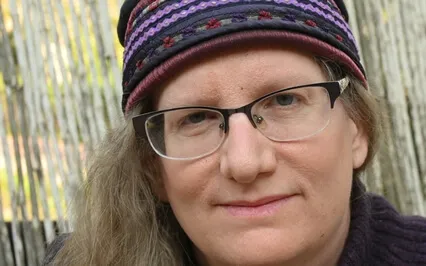
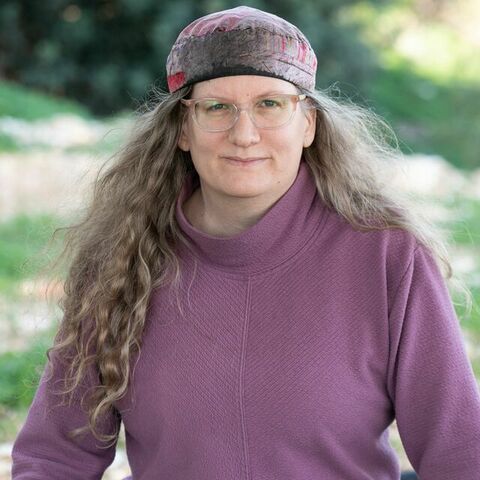
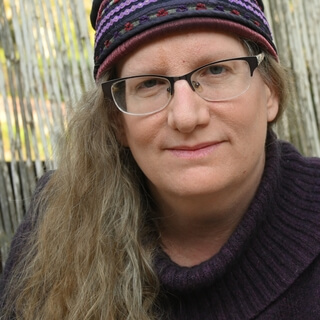
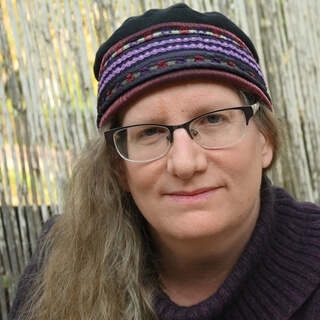
I am Rabbi Hasia Uri El-Shteynbauer,
Founder and director of the Hon HaKadu Sha Institute for Holiness,
Kehilat Musar.
Delighted to be here with you on Sundays at 3 p.
M.
Eastern Standard Time every Sunday.
Our practice,
If you're new to it,
Is that we look at the weekly Torah portion known as a parasha in the Jewish tradition.
The Shabbat before.
So yesterday we look at the text,
We read it,
We study it.
Tradition is in the Jewish tradition that we spend the week beforehand reading what our rabbinic exegesis,
Our commentators,
Our ancestors have to say about that weekly portion.
And we study it with friends and family,
A chavuta or with a teacher.
So hopefully you've had a chance to engage in this pass about sparsa,
Which is known as a haremot after the death of.
And it's obviously after the death of Nadav and Avihu.
May their memories be for blessing the sons of the high priest,
The Kohen HaGedol,
Known as Aharon in our tradition.
So before we jump into our talk and before the guided meditation,
We always begin with our kavanot,
Our intentions for today's session.
Why do we begin with our intentions?
Because we're more likely to fulfill them if we say them,
If we have them,
If we articulate them.
As part of our tradition in order to,
God willing,
Merit bringing this forward.
So we have three kavanot here,
Three intentions,
But our practice is to focus on the first one and the last for today.
Because we see this practice together as doing acts of caring for the self.
It's a radical act of self-care to dedicate this half hour to an hour together to learn and practice most our mindfulness.
So we say this is something I am doing to strengthen my own soul in order to be a benefit to others in the future.
And finally,
The third and last one down here,
If you are watching live on any of our live streaming or on the zoom link,
You can see in the shared screen,
It says before doing acts to strengthen your relationship with the divine.
Because this is also what we're doing here.
It's like this triangular relationship,
Taking refuge in God and then community.
And then the most our mindfulness and the practice and the Dharma,
We are strengthening ourselves.
And this is something I'm doing to strengthen my relationship with the creator.
So I can be a better conduit of God's good to others when they need me.
So may it be so that we merit to fulfill these kavanot during today's session together.
So,
Let's jump into our shared talks together,
I want to honor that today's session is being sponsored by an anonymous donor in honor of Earth Day,
Which just passed on my Gregorian birthday on Friday,
April 22.
And I think that's very important.
And we'll tie that into today's teaching about what is it today that we can do with this teaching and what we learned from the Torah,
In particular and caring for each other and the planet,
Realizing that we are in a climate crisis.
I call it an emergency,
Not so much a crisis.
So let's jump in.
I'm going to jump in with a disclaimer,
Which I've done several times if you follow through from the beginning of Bereshit,
Which is the book of.
.
.
Wow,
It's totally lost out of my head,
But it is in English.
What do we call Bereshit in English?
Excuse me.
I can't believe it's just lost my head.
You'll forgive me.
So then there's the Bereshit,
Where we begin with,
Like in the beginning.
And of course,
We have Shemot,
Which is the book of Exodus.
And I mean,
We generally call Bereshit a book of creation,
But I'm missing out on the actual.
.
.
Oh,
Bereshit,
No,
I apologize.
It's just gone.
There goes my sechol,
My moach,
My head,
As we say.
So if you've been following me,
Sometimes I start with a disclaimer.
And so this today's disclaimer is really to honor where I am in order to also show how we do this as a practice.
So I want to recognize and allow that Vayikra as a book,
Leviticus,
And in particular Achrei Moat that we're in right now,
Is particularly challenging for me this year.
And more so than other years,
Which changes and happens.
But I want to just acknowledge that we are dealing with such an ancient rite,
Right as in R-I-T-E.
If we look even from a shared source here from the Jewish Publication Society,
It's a wonderful text on Vayikra,
Leviticus by Dr.
Levine.
It goes on to say that these rites that are in here,
Where we have the Yom Kippur ritual and such,
These rare practices are called rites of riddance.
And before I get into them more,
I just want to say they're woven into the most complex rituals that have reached us from any ancient society.
So we're dealing with something that our ancestors engaged in.
What's very important to their daily lives,
At least enough for the priests to engage in creating this book to include in our tradition.
And it can be very challenging for us today because we are so far removed from this ancient rite.
We don't engage in it,
We don't do it,
We don't quite understand it.
We don't have rituals today that seem that we have the same need or are commanded or do the same acts of riddance.
And affecting kapara,
Atonement and taharu,
To this purity.
Even the concepts of purity and impurity,
Tahur and tame,
Very foreign to most modern citizens of the world today as we share.
So I want to start with just a quick summary before we delve into this deeper.
So we concluded two weeks ago before Pesach,
Before Passover,
Which we didn't read a Torah portion classically each week.
Last week we covered what we cover normally for Passover.
And so two weeks ago we were in Metzora,
Which again dealing with impurity in the sense of the bodily discharges and what we do in that case,
At least in the Torah.
So at the very end of it,
In chapter 15,
Pasuch 31,
It says there,
Vehi zartam et ben ei Yisrael,
Mitu matam velo yamotu betu matam,
Betam et am et mishkani asher betocham.
Okay,
So you should put the Israelites on guard.
This has been commanded to the Kohanim.
You should put the Israelites on guard against their impurity.
Lest they die through their impurity by defiling my takron apple,
My mishkan,
My sanctuary.
This is God speaking,
Which is among them.
So I want to start,
I bring that as a Pasuch to let you know that this is what we're heading into.
We are heading into a culture and a whole book which will face and deal with causes to avoid,
Essentially,
Looking to separate from.
So this has been a huge shift and this is where the difficult rises for me and this is where I want to acknowledge if you feel the same way to honor it.
And no need to push it away,
No need to,
But also no need to have judgmentalness.
Okay,
We approach this with beginner's mind with curiosity,
Because I have judgment against my judging.
Vayikra,
Leviticus,
And in particular Achreimot.
I come from such a love of the tradition and Judaism and Torah that to have this aversion towards the text and also the rites and the tradition.
It comes with it sometimes with a sense of guilt and shame that I shouldn't be feeling this way,
Or,
You know,
Like 2000 years of our beloved rabbis and ancestors,
It's not spoken so highly to have such a critical view of it.
So I want to honor that I'm trying to practice non-judgmentalness and we can do this together.
We can carry that we might have the aversion or attachment to different way of being and to honor what we're seeing.
So I just want to say we've seen this huge shift.
So this is where it's coming from for me.
We started off in Bereshit with and also in Shemot and Exodus with our ancestors having these individual relationships right,
These intense relationships with God,
God would appear,
Be in relationship and then God would not necessarily physically be their God's presence.
And there were these sometimes very beautiful touching interactions,
Sometimes obviously challenges with them also,
But it was a very individual relationship with particular patriarchs or communication also with matriarchs.
There was a sense if somebody had a relationship with God,
They worded it as such that they had a fear of God.
And that meant an eternal moral compass that taught them right from wrong.
And then we see this shift.
So this is pre-slavery,
Correct,
For B'nai Israel,
The children of Israel.
We see this shift to after slavery,
After God takes us out of Egypt to a shift of that if we are to draw close to God,
If we want to as a community,
As a people,
Because we're now a people,
We're not individual patriarchs or matriarchs,
That there's an appropriate way to do so.
And that comes with Moshe going up and getting the Ten Utterances and beginning to develop kind of an ethos and a structure,
A rule of law.
And we see that coming out that there was that impulse to be close to Moshe and God that came out in the golden calf,
But it was inappropriate.
It wasn't wise action,
Wise behavior,
Caused harm and suffering.
And even the reaction to it,
Obviously.
So all of a sudden now we have this shift and this is where the difficulty is for me.
Bam,
Vayikra khan,
Leviticus,
So clearly a holiness code for the koanin,
For the priest.
It affects the rest of our ancestors too,
But it's so clear that it's been a shift where it's all about avoidance,
About separating from certain behaviors or what happens to the body or what happens to the house or what happens to clothing in order to maintain God's presence in the community.
This is huge.
Before in Bereshit and in Shemot and Exodus,
We don't witness this.
We don't witness God not talking to the patriarchs and matriarchs if they're having any bodily fluids or if there's no sense of purity or impurity.
There's no even rules about how to slaughter and what to do with blood in the slaughtering.
There's no prescription of how to bring a sacrifice and where in order to affect what.
You know,
All before when a sacrifice is given,
It was like given out of gratitude to God.
And now we have multiple forms of giving a korban,
A sacrifice.
And so I suddenly now we have for those who stand in God's presence and here mostly the closest obviously are the koanin,
The priests,
They're in need of expiation in order to avoid divine consequence,
Divine wrath,
Divine punishment,
However you want to see it.
So this is where we start.
We see the koanin in Bereshit and in Shemot after the death of a nadavah n'vihu.
And we even heard when after their death when Moshe says to Aharon that God will be sanctified by those closest to them.
And so that's what we see here.
It's something foreign and new that we didn't witness before and that we are grappling with now as modern Jews,
As modern people who care to learn from this tradition and practice of Musa mindfulness.
That's our background and that's where the difficulty is for me because I just feel a loss of the previous relationship with God,
And with our ancestors that intimacy,
The getting to know certain ancestors individuals.
It's no longer there in our beloved master text.
It's shifted to this communal authority,
And there's God,
And there's the communal norms.
And there's probably there's no real sense of individual here.
I mean obviously individuals are responsible for bringing offering and taking responsibility and communicating with the priests,
What's happening to them,
But it's it's solely with the understanding and responsibility that they are that they can understand that their impurity is going to affect the whole community unless they address it.
Okay,
So we're going to hold on to that thought.
Okay,
So I just briefly want to say to you that it,
You know,
Up until this point in the Torah,
Nothing has been said about when and how often the Mishkan,
The sanctuary has to be purified,
If at all.
No sense of that.
And,
And nor there have been instructions regarding the conduct required of Ben Israel,
The Israelite community on this occasion.
Okay,
So this is what we're getting in this parasha we're getting the Kohing Adol,
The high priest is getting that instruction.
And so this is where I can kind of go in a little bit of what it looks like.
Right,
So the high priest here learn steps to affect kapara atonement for his family and community.
And as we know,
Is the Yom Kippur service,
And it involves a substitution sacrifice,
Meaning instead of myself being sacrificed for sinning,
There's an animal and seed in my place.
And that this is done with two goats one that is going to be a sin offering,
Chatat,
And one that is going to go off to Azazel,
Which we have four different interpretations of what Azazel means let's just assume it means that animal was gone off to the desert,
And the forest off carrying the sins that were confessed by the Kohing Adol on with its hands on the head of the goat and headed out.
Okay,
So these are called substitution sacrifices,
And in place of us.
Okay,
And a bull was offered awful also by the high priest,
And again,
To affect atonement and purification for family and community.
There's obviously other things in this partial also which we deal with what's called the holiness code of essentially who the patriarch,
Who he can marry who he can involve himself with.
And this obviously applies to everyone later in the law but it's directed toward the male head of household,
Which female members he can marry or not marry or be involved with have relations with and onward.
So,
We're not going to address that we're going to focus more on this sense that copper atonement is being done for us by the Cohen God all obviously also by God,
And that it later hair it purifies,
And it requires a sin offering.
It requires sprinkling of blood and different locations of the mesh gun,
And it requires a verbal confession.
So,
Again,
Foreign to us,
We don't have this obviously don't have a temple but even how what was done in the temple and the bait and dash is different than what happened in the desert in the mesh crime.
So,
As I said before,
These are rare practices called rights of riddance,
Which affect the removal and destruction of impurity and transfer to the scapegoat in this air to processes purification from the sacrificial blood and purification by riddance of the animal that was sent out.
Okay,
Obviously,
Complex rituals,
Reaching us from our ancient society and ancestors of right,
The sense that they had to keep the mesh gun,
The sanctuary pure,
And that any impurity.
It causes God to withdraw God's presence from the community.
So and obviously the greatest threat to purity.
This is the basis to God which are the coin emo the one serving in the mesh gun.
This is why this whole book addresses them I had mentioned earlier and previous partial and sections tour portions.
He can go out into the public with the Israel so that he doesn't distance himself from the people doesn't become arrogant.
You know,
So many of the rituals,
Including that he has to go out and assess the sahara,
Whatever we define that as the kind of rash or whatever.
Because on the body and also the house or on clothing.
He has to go out and be involved with the people he can't just be this priest up isolated away in the,
In the mesh gun and sanctuary,
And not have that relationship and I think so much of this.
The goals are to temper that and to help him maintain proper balance humility of what how much space he takes up and how he treats others.
So,
I think this is also part of it here that,
You know,
He is we said that it's most likely that if who's going to be the most likely to defile the sanctuary it's those who are constantly working in being it.
And then their concentric circles of family.
So here's the cohinga door the coin mean,
And then you have,
You know,
Wife and children and an uncle who knows all family,
And all those people have to remain a certain level of purity to.
And then there means we're going to talk about bodily fluids who's the bodily fluids that we're concerned about first it's the,
The family relationship of the coin mean because you have to keep them here because they're the closest to God and the sanctuary.
It we have to keep this in mind,
Right and and we have to really also understand this ancient view of this yom ki poor service is obviously foreign to us,
And may come with reactions.
And that's what we want to honor in this practice and not push it away and not feel shame for it,
Or judgment,
As if we shouldn't be having our reactions to this.
So,
How do we apply this,
How does these.
How does our remote and what we learned there and even other things and by grand Leviticus but I'm more importantly in our remote in our tour portion this past week.
How do we apply this in our own lives.
How do we make me.
So I just want to point out before we move into our meditation practice that our ancestors lived.
They didn't even really understand and have a concept of the individual that we do today.
It was all about community and it was all about God and keeping God's presence in the community at least it shifted to that invite.
And so,
I don't think we have as much concern of that and better sheets and shamat and exodus.
There wasn't this hyper vigilance and concern that we weren't going to have God in our lives and around.
And so now that we have we have this over here.
The pendulum has gone to where we are today 2022,
Or it's the individual and especially in Western societies that is king is head.
There might be some communal concern if any and I'm not sure where the concern for the presence of God is.
There's definitely not a hyper vigilance that our behavior is going to affect God to leave God's presence and I'm not sure how much we are really involved in feeling that we can affect atonement and purification before even in need of purification.
So we've gone to the other extreme.
And I don't think either extreme is so healthy.
That's my obviously biased opinion.
I would like to have us consider as a practice and especially daily practice,
Moving towards a center where we are neither God center nor communal center and our individual center but something new and unique that we haven't really engaged in yet that I think maybe even Judaism is slowly moving towards and I love this combination of,
You know,
I bring the Dharma and Judaism together and most are mindfulness.
Something new is emerging and I am witnessing it and also an interpreter of it and encountering it but it still hasn't unfolded I don't know yet it's part of the mystery of all of this.
So,
That middle that balance,
What would it look like and practice is I think something that we could ask ourselves as a daily practice.
Each day,
Where we ask ourselves at each encounter.
What is the wise and compassionate choice towards others how we treat others,
How we treat ourselves to bringing God's good to others.
Think about if we're going to talk about affecting atonement of copper and purity,
What that could affect especially on a global scale if we actually paused before we acted and asked ourselves.
What is the wise and compassionate choice.
And this is where we learn from the Dharma from the noble eightfold path where there's this sense of right upright wise,
When I say right here I mean our I GHT right actions right speech right livelihood right mindfulness right effort right concentration right view understanding and right intention.
And if we want to honor our ancestors,
Which I'm trying to give the benefit of the doubt here in vykra and Leviticus,
You know,
Beloved Aharon,
Which we felt closer to earlier in the Torah.
He is someone now as the high priest was so much responsibility on his shoulders,
Carrying the names of the tribes on them.
Think about what he does and especially in this young people ritual he's doing right action,
According to the ancestors understanding right right action he's doing right speech to the confessional the way he does it laying hands on the animal.
He's doing right livelihood he's acting on the behalf of the community.
And he's doing right mindfulness he's being very precise and thinking and and,
You know,
Being aware of the self and then and the motion of the moment right he's doing right effort and then what he's doing.
He's doing right concentration.
He's doing right view and understanding right then realizing that actions have consequences he knows this deeply personally,
He's lost two of his sons.
He understands the consequences painfully of not having right view and understanding of not having right action.
And then he has right intention he's very clear about following the path that God has commanded and that he believes is what he has to do.
And if we could just apply that as a daily practice.
To be in alignment with right action speech livelihood mindfulness effort concentration view and understanding intention to learn from our own to learn from the priests what they're trying to teach us through this text as distant as it might be as foreign or even challenging.
Okay,
So that's what I want us to bring to this.
So we're going to move into our guided meditation now I'm going to lead us through a guided meditation on mindfulness of thoughts.
And what is the Keshir what's the relationship here you might be wondering there,
It'll come out in the practice we have to trust we have to.
Just delve in and trust that we will gain much from the mystery of the practice,
And what we don't know having that humility.
We'll close it with a beautiful teaching by a colleague of mine who also engages in mindfulness and the Jewish tradition,
Rabbi,
A levy,
Who will lead us in small teaching at the end through her words,
Tying this practice to the owner,
Where we count each day in between the second day of base talk of pass over to shovel out the upcoming festival of weeks,
49 days of counting our ancestors used to bring count the barley offering which is the owner,
And we count today based on that as a practice,
It's a very mindful practice that we apply and look at our me dots are character traits of how we can strengthen ourselves to be ready to receive Torah during shovel the festival of shovel.
So bring yourself to whatever upright position means to you,
It doesn't mean that you have to be seated.
Obviously,
There are those among us in chronic pain,
Or such discomfort or maybe even don't even have the ability to sit.
Find your own upright self.
It can be lying down,
It could be standing up,
Walking meditation.
If you're seated like I am plant your feet in the ground to be carried by Mother Earth and allow yourself to shut your eyes if you feel safe and ready if not just lower your gaze keep your eyes on one object and not move them around and begin with three deep cleansing breath.
Posture should be one of a weakness and alertness one where it's dignified created in the likeness and image of God,
Not West Point stiff,
As our teacher john kibbutz and likes to say,
If you find that you travel off and thoughts,
As we begin this meditation and during it,
Simply begin again is the practice.
That's my teacher Joseph posting likes to say simply begin again is the practice,
Bringing yourself back to the present moment.
I now invite you in your general mindfulness meditation as we move in to allow the following of sensations of breath the sensations of body that there be a stream of thoughts in the background.
It's going to be there,
And just to allow it.
No need to judge them.
No need to push the thoughts away.
Simply let them be.
Let them rise and fall like waves of the ocean around the breath.
Periodically whether it's three breaths,
Or six breaths or even 10 breaths,
A strong thought will arise and carry the attention away.
That is the nature of the mind.
Again we approach with the beginners mine with curiosity with non judgmental awareness.
As soon as you notice that strong thought carry you off.
Name it gently.
According to its predominant quality.
You could use simple notes like planning and planning.
Remembering judging,
Worrying.
Imagining fearful thought.
Happy thought.
Interesting thought.
Pleasant thought unpleasant thought neutral.
And so forth.
Simply naming and acknowledging the thought is supportive of the witnessing quality of mindful loving awareness.
Once you have noted a thought gently for some time.
You will notice that it dissolves like a cloud under sunlight.
That's our ephemeral.
They are empty.
No substance except what we invest in them.
After the thought has diminished.
Simply return again to mindfulness of breath and body for a time until another strong experience and whether a thought motion or sound pulls your attention away from your anchor,
Which is usually the breath.
It doesn't need to be the breath if you are someone where breathing is difficulty.
There is difficulty,
Either because of asthma or COVID or anything,
Just honor that your anchor need not be the breath.
Stepping out of the stories the thought tells you can see the common patterns of thought,
Without being so caught in them.
And more importantly,
You begin to rest in the field of mindful loving awareness,
Rather than being repeatedly carried away by thought.
Now you can alternate mindfulness of breathing with mindfulness of other strong experiences when they arise,
Which they will.
That is the practice.
You become a steady loving witness of all that arises and passes.
That we too can bear what is shared and vycra and Leviticus and after a month after the deaths of Nevada,
Nevada v who we could witness and we become a peaceful one sitting still a mist of the rising falling of waves of experience.
The more we grow in our daily practice of moose or mindfulness and our mindfulness meditation practice.
We grow.
And then we create more of a space between the match and the fuse we grow,
Allowing more freedom with responsibility we grow and cause less harm less suffering.
This engaging of the eightfold path that we witness our own the high priest engage in.
It is one with our mindfulness practice to cause less harm and suffering in the world when we are acting up right with wise and right action and speech and so forth.
There is more joy and happiness there's more balance.
Notice how it feels the very moment you shift from being absorbed or lost in thought to simply name it without being swept into it.
Notice which type of thought really has an effect on your body.
What thoughts trigger you most.
What is their bodily effect.
This is where you might move into nurturing yourself,
Maybe even holding your hand on your heart.
Honoring.
Recognizing and allowing investigating the felt sense in the body.
For me and engaging in a remote by more in a sense of loss of my closeness or relationship to Hashem to God,
That I felt during the sheet.
The beginning and creation the stories associated with him with God relationships with our patriarch and matriarchs in Shemot and Exodus.
And that thought that thought is that attachment.
Feel strongest in my body and my stomach.
How some thoughts automatically bring strong emotions,
And how some strong emotions automatically bring up certain thoughts.
Find our way in this holiness code knowing that there's something more than just avoiding something more to our relationship than just separating from.
And we can honor that that's what's being introduced to us right now but to hold all of it.
Allow yourself in the next minute to experience the space between thoughts.
Thank you.
Now with consciousness with awareness and tension.
Bring up a thought that was unpleasant for you or pleasant during our learning during our talk on our remote.
Notice how powerfully these thoughts and their connected emotions affect the whole state of your body and mind.
As we move into the second week of the Omer practice where we traditionally focus on the media of Guevara of strength.
We step out of being taken out of our slavery of our inner Egypt,
During the festival of Passover of Pesach,
Where we stepped out into expanse of chesed loving kindness to come now into our remote to come into the second week of the Omer with calls for restraint.
For avoidance for separating from.
I could feel like a disjuncture and feel harsh.
Guevara strength insists on setting wise boundaries and making distinctions on acknowledging limits.
Rabbi,
Yeah,
A lady teaches Guevara declares all life is mystery.
Just like the ancient rights that we witness in our Torah portion and urges us to bow to all we never know to approach this text with the humility to say,
I don't know.
The beginner's mine.
Out of balance,
Guevara becomes out of balance,
It becomes harsh judgment.
Disparagement,
Fear and aspires a grasping for control.
A perspective that only sees separation and that's how our remote and its laws of a acre and the young people ritual and the holiness code can begin to feel.
But in balance as we move it as we balance it.
Guevara is a gate to discernment,
Which is the eighth full path has also taught us the bearer of discipline.
It makes way for sacred practice and helps us stand in the face of the mystery of it all with humility and strength.
Guevara urges prayer and action,
Which is what we must do now to face this climate crisis and celebration and honor of Earth Day.
This is Hashem this is God's planet we are to take care of it.
For our children,
For our grandchildren,
Our great grandchildren.
It makes way for sacred practice and helps us stand in the face of mystery encourages us to take the stance of the spiritual warrior who will abide in the face of uncertainty with dedication,
Determination,
And love.
When you hear the bells you will come out of the meditation and I will move to closing.
We learn from our tradition that the Kohenim used to pass by bowls in the Mishkan in the sanctuary and even the Beit Midash and they would rub their hands,
Fingers along the bowl as part of preparation for Kapara.
There's something quite beautiful there as a meditative practice to have that wise effort,
That wise effort,
That wise behavior,
That mindfulness and concentration.
Thank you for your practice.
Thank you for sitting with me.
Yes.
So may we merit this practice together with our mindfulness of fulfilling our kavanot,
Our intentions.
May we merit to help set boundaries and stay mindful of the Almighty of the one.
May we also set boundaries and stay mindful of the other of others and our service of them.
May this practice together strengthen our practices and our work together and help us stand into this life with humility,
Strength,
Courage and love.
Keni Hirazan,
May it be.
May it be.
May Hashem help us.
May we merit less harm and suffering,
More joy and peace,
Fulfilling the needs of the world.
So please,
Please do dedicate your practice this week of balancing strength of Gvora for the benefit of the planet,
For the benefit of our children and grandchildren and great grandchildren.
May we learn to really engage in that eightfold path each day,
Saying is my is my daily behavior is what I'm about to do.
Is it a wise and compassionate choice?
So I'm Rabbi Hasi Oriel Steinbauer,
Founder and director of the Institute for Holiness,
Keilat Musar.
Thank you for joining me.
Thank you for your practice.
Please donate to us at the Institute to enable this practice and work.
You are welcome to join the website at keilatmusar.
Com where you will find a link to donations to giving.
We are live on Facebook,
Twitter,
LinkedIn and of course,
Our YouTube channel.
And you may find the zoom link each week to join us on Sundays at three p.
M.
For awakening.
The heat or root Torah Musa mindfulness.
Thank you.