Welcome to awakening.
We will begin in one minute.
Allow yourselves to take a minute to center,
Settle,
And arrive.
So what does it mean to center?
To settle is essentially to allow your embodied self,
The body,
To arrive.
To sit in a comfortable upright position,
One in which you are dignified and here in order to be present,
To practice,
Mussar,
Mindfulness together,
Taking refuge in community.
The concept,
The practice of centering and settle and then arriving.
The arriving is here in the spirit,
In the thoughts.
It's the internal practice of allowing whatever is pulling us into the past or the planning for the future or getting caught up in sensations in the body,
Both pleasurable and not pleasant and unpleasant or neutral or perhaps it's thoughts in the mind or strong emotions.
We come to mindfulness of what is going on for us right here and right now and we take this minute to center and to settle and arrive.
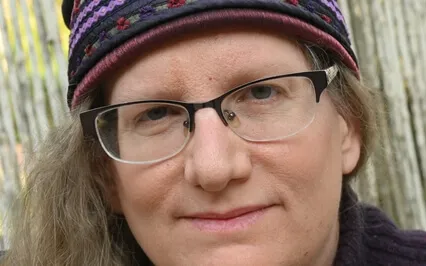
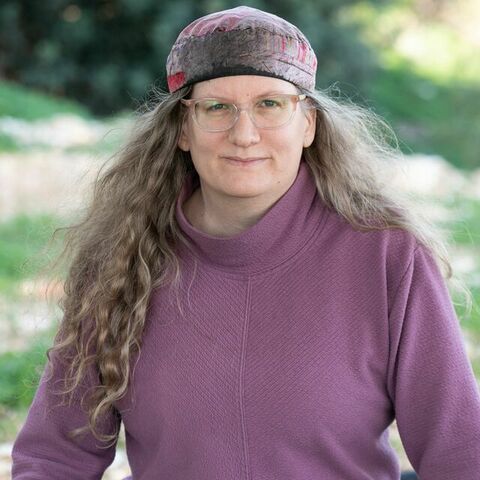
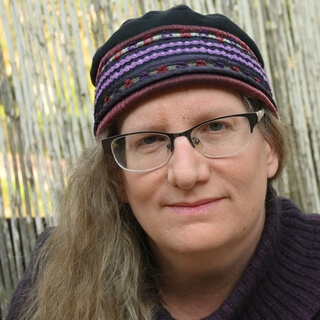
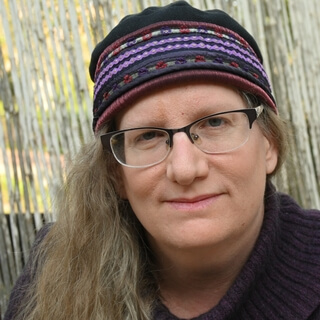
I am Rabbi Chassia Uri El-Shteynbauer,
The founder and director of Hamochan Le'Kadusha Kehilat Musar,
The Musar Institute,
The Institute for Holiness Kehilat Musar,
The only center in the world that takes our two beloved ancient traditions of the Dharma from Theravada Vipassana Buddhism and Musar in the Jewish tradition and creates the synergy that benefits both,
Bringing God's good to the world.
I'm delighted that you are here,
That you're joining us on live streaming on YouTube channel,
On LinkedIn,
On Facebook,
On Twitter or here live on Zoom.
We always begin our regular Sunday practice.
This is a series we are now in our 35th sitting Mazal Tov,
Congratulations,
Where we spend each Sunday at 3 p.
M.
Eastern Standard Time where we spend this 45 minutes,
50 minutes together looking at the weekly tour portion from what it is here in Haaretz in Israel.
It's always a week different right now outside of Israel and we encounter the text from the lens of Musar mindfulness of how we can learn from this and from our ancestors and how to practice.
We begin our practice each week always with our kavanot,
Our intention for the practice.
So here before you if you are watching through video visual,
We have three kavanot,
Three intentions before us.
We always recite the first and the last.
If you are joining through audio you will hear me recite these.
Before doing acts of caring for the self which this practice here in community with God,
With myself as the teacher here learning from the wisdom is an act of self-care.
We say this is something I am doing to strengthen my own soul in order to others in the future.
Then down below we say before doing acts to strengthen your relationship with the divine you say this is something I'm doing to strengthen my relationship with the creator so that I can be a better conduit of God's good to others when they need me.
We always begin our practice with those kavanot may we merit bringing these intentions to the world so badly needed.
Delighted that you are here to join us.
We are here in Israel.
We just passed on Shabbat the parasha the weekly Torah portion from the Hebrew Bible starting the book of Bamimbar of numbers in English.
It's when we our ancestors have start moving in the desert moving and camping obviously off and on.
That means we have gone through the Genesis which is Bereshit and Exodus which is Shemot and then Leviticus Vayikra.
We have now entered the fourth of five books of Moses in the Torah in the Hebrew Bible.
It's a great moment for all of us.
Outside of Israel you will be reading this Torah portion on the Shabbat coming up.
So this is good moment for you to delve in as part of your learning to be ready to either study it or learn or listen to it be read out you're even reading it yourself.
Okay I always give a brief background and then we focus on one thing that we can do is ratisham God willing.
Let me just say for those of you new joining us as I said we meet on Sundays today is May 29th 2022.
We are in the 28th day of ER.
We've actually moved into the 29th here in Israel of 5782 and we just entered the 44th day of the Omer of counting the Omer.
For you outside in the west you're still in the 43rd.
So we have entered the generation right the generation of the Exodus the organization of our ancestors wilderness camp.
Okay so the Israelites who escaped slavery in Egypt who were saved and brought out okay and then witnessed and experienced revelation what they received from the divine at Harsinai at Mount Sinai then erected the tabernacle the Mishkan their holy centered place where they will gather almost as like a community center and all the instructions that were involved in this operation that we witnessed both in Exodus and Leviticus now are preparing themselves militarily so much spiritually too but it's militarily okay this is a for their march through the wilderness we've now we've now moved from the individuals of Genesis of Bereshit and Exodus to a people and how those people are going to live how they're going to live out God's laws and be in community in an attempt to maintain purity to maintain that presence and as they move through this desert towards the land they are going to encounter both internal challenges difficulties and external so they prepare themselves as a military campaign this is their response our ancestors response so they organized a war camp it's centered around the Mishkan around the tabernacle and in order to do this as most ancient societies even what societies do today when they decide to organize as a military they take a census and here they take a census of all able-bodied men all men in general age 20 and older and the camp is organized for max maximum security with the Levites undergoing a separate census and moving from here so you have to just even pause for a moment and our 35th sitting together and think about how far this people have come our ancestors and enslaved people who by all means could barely get along could not function basically dealing with collective intergenerational trauma brought out with God's mercy and hands led by Moshe and Aharon and Miriam and other ancestors with much difficulty figuring out who they are and how they're going to live together and how they're going to structure themselves and here they are organizing so perfectly so hyper organized as a as a military structure as a people that will protect themselves know who their tribal clan is and lineage which we kind of didn't hear hardly that much about at all in Egypt and even after we heard of the Levites really just through Moshe and his brother you know being told he's a descendant of a Levi and but you know and of course we know of the 12 brothers and that they had descendants but you never heard of people really kind of holding on to their clans and their and their tribes and here they had are so organized and efficient they know their exact numbers they are set up they're ready to go and this is a huge shift this is this is a moment if you're going to look at in the balance of how people the ups and downs of our people and this people this is a moment where they're highly efficient okay so the march of the israelis through the wilderness from Har Sinai to the promised land today what we call modern states the nation state of Israel they'll take them through hostile environments and not just unpleasant ones are challenging they'll be both natural and human and so this is what you witness in Bamibar it's there's really not much more there I mean there's a lot here obviously we have names of our ancestors there's quite a beautiful thing the names if you pay attention to them what what name of God or names are included which are El and Shaddai and not Yah which speaks of the people's relationship with the divine there's a lot here but this is the general where we are with this so I wanted to say we've shift from the holiness code from the priesthood to this military organization this census and the most important thing and even what gets discussed among our rabbis is this the census this counting why do we count who gets counted what does it mean and we've been counted several times in the Torah so if we look the first count is when they actually leave Egypt it's almost like the counting of a making of the people you're making a people you're becoming a people you count you know who you are then the when they left it when the the sin the sin of the golden calf happens part of the people their impulse to connect with God to make sure that their leader Moshe was going to be replaced that someone was going to be there to lead them that that impulse although misdirected not what God commanded or wanted not even what Moshe wanted it they get counted after the golden calf now if I if I just want to remind you the language of Moshe says who's with God has the Levites come over on his side who is with God and those who chose to be who's with God as an identity and who they are come and are counted and the those who aren't are murdered are murdered by their own family members it's almost like Levite against other Levites we'll we'll learn in this chapter in this parasha that it's actually somewhat part of Moshe's clan who were part of it and so there's a new counting so you think that number would be different we are told that three thousand of our family members were murdered so that should be three thousand less correct three thousand souls are gone now but the number doesn't change then the counting happens again when the Mishkan the tabernacle is established it's almost like a you know we're counting we're now really a people we're functioning around our large community community center we're going to take accounting who's here who's in who's going to follow these purity laws and sacrifices and everything who's going to help God Hashem remain in the camp among the people that's who gets counted and finally we have this counting and Bamibar the other three happen in Shemot and Exodus we have this census of the military okay a a adult man age 20 and older counting to more than 600,
000 so of course Rashi and the Khorshor argue you know the number remains the same is this the same if this is this the same census every single time just being described differently so it's the Khorshor who knows notices the number doesn't change okay but we know as witnesses assuming this is a different census every time which I think it probably is in the sense of people like to count themselves they like to be seen they need it's not even like there's a need there's a need to be counted there's a need to be seen there's a need to be recognized and we know as witnesses now to our ancestors and reading this text that there's 3,
000 less of our ancestors after the golden calf there's one man who is murdered for collecting wood on the Sabbath and then there's another man who is murdered for taking Hashem's name in vain so 3002 people are missing of our ancestors and that that number is not reflected in the number that gets repeated each time so you know why aren't they being accounted for like why why isn't the number change so I want to posit that perhaps the number of all our ancestors who were saved and brought out of Egypt were once at one point in their life and even further into the desert in relationship with Hashem with God trusted God took that courageous step how fearful it must have been to leave all that you know even if it's slavery go out into the middle of the desert in the middle of nowhere following this God following your people and and all these people at one point were deeply in relationship with God and so I want to say perhaps in this number reflects that all souls were counted regardless if they were murdered later regardless if they sinned later regardless if they're not around now okay so all souls were counted all mattered and still matter as if they're with us and they are we read this every single year every year we think of our 3002 ancestors who are not with us anymore at this point in the Torah they too were created in the likeness and image of God and we hold that we count them they're included in the number so as we move to we're in now in the seventh week of counting the Omer for those of you who don't know what this is it's a commandment from the Torah to count the weeks between Passover and Shavuot the festival of weeks I think believe called Pentecost in English and it were its harvest festival gets turned into through with our rabbis into a receiving of the Torah festival we are counting our Omer our barley eat finding out we who we as ancestors and farmers are going to be able to offer to the temple to God along with the first fruits and beautiful korim and everything that comes with it so in this seventh week that means we're almost at the end in this seventh week we are in the shekhinah malchut which it means essentially we are really in God's presence and you want to recall that our ancestors in the desert even among the murders and the deaths and the internal fighting still the Divine Presence was there and in relationship and we want to hold that we want to hold that when we enter our practice the well I'll leave the guided mindfulness meditation we're going to enter into a meditation around equanimity and peace menuchat ha-nefesh kind of a resting and a calmness of the soul that it produces Shalom peace inside and Shalom outwardly okay so much needed right now so let me just briefly say we have a mission statement as Jews and I would even venture to say this can be a mission statement for all of humanity it comes what our ancestors have done they took if you recall last week and the hookah tie in our partial last week where we learned about how rabbi Akiva takes from that parsha and the whole book of vayikra leviticus this cloud godot this whole teaching of the Torah he feels is um that you shall love your neighbor your friend as yourself Rav Hillel from the famous Hillel and Shemai and Hovruta houses comes and says his interpretation of Ravi Akiva's statement that what is hateful to you when it's done to you do not do to others so essentially in our mussar mindfulness practice it's the synergy of both traditions that we're not causing harm and suffering we're living through and practicing this eighth fold noble path this path of towards holiness and mussar and what our beloved ancestors do with both Ravi Akiva and Hillel's statement for instance rabbi Shimon Shkop in his introduction to Sharay Yoshar beautiful text beautiful mussar teachings teaches us our mission statement he says that as we are all created in the image and likeness of Hashem that shee yay adir hafatz no that our greatest desire should be lehetiv yim zulat einu to cause good to others to benefit others leh l'yachiv el arabin to individuals in the masses behoveh uvatid and now be the mot haborei vichol an imitation of the creator so that is our mission statement we're taking attempting to love ourselves attempting to love our neighbor and friend as ourself remembering the holy spark within each and every one holy soul that we're all created in the image and structure and the likeness of the divine and we too want to be counted we want to be seen and there's been so much suffering lately so many deaths from covid the pandemic the past two years so many deaths from mass murder and terrorism violence i'm thinking of the children in the united states and we we have this this impulse just like our ancestors to be seen and to be counted faces of the children on the media on social media and on the newspapers to be counted to be seen even the face of the child the 18 year old boy who murdered them he has family he has that which he came from he was created in the image of likeness of hashem just like the children horrible horrible behavior much harm and suffering murder in a way there's no full forgiveness for that act he's destroyed worlds and lives it's between him and the creator ultimately but let us remember that he is to be counted also that pain that harm and suffering within there's no love of the self and loving the neighbor and friend as oneself obviously causing harm and death destruction of worlds for what must have been happening inside and i think of his family i think of those who for 17 years loved and cared for him at 18 still a boy a child murdering children it is up to us in our musar mindfulness practice to create that desire every morning that we cause good to others that we bring benefit to others bring god's good to others so we think of these children we think of everyone that's been lost in these past two years and in general and we basically how can we bring how can we cause their memories to be for a blessing how can we prevent more harm and suffering energy this is where our practice needs to go each of us doing a small little act a small little task we're not we're not allowed to cease from repairing the world repairing this but we're not obviously the whole on each of our shoulders like the kohanga doll who carried all of our ancestors tribes on his and his shoulders it's not up to us to do alone we must reunite we must unite as a community like our ancestors and bami bar centered their military campaign their tribes in a formation around that which is most sacred and today we must do that in our communities in texas wherever we may be creating community centered around our beloved children that which is most sacred to us in the middle to protect to make sure god's presence remains that is our task please come to an upright position whatever me that means to you if you have chronic pain or issue and cannot sit in a meditation please stand with a chair next to you to re to help you remain secure if you need to lie down please do so with your eyes open to remain awake and alert for those of you who want to sit on a zafu and a sitting meditation cushion please do so for the rest of us in a chair bring yourself to a dignified upright position you are created in the image and likeness of god we sit we sit as if we are souls that we love ourselves ourselves and love others reducing the harm and suffering to others feel safe and ready to do so taking three deep cleansing breaths realizing that the shifa the inhalation is a gift a gift from the divine we cannot survive without it and the shifa the exhalation of letting go all tension all that which is not allowing us to be here to practice that's not life affirming allow yourself to begin to settle and arrive and be fully here is a wonderful minda is a wonderful trait is spacious and balance of heart although it grows naturally from our musar mindfulness practice and our daily meditation practice it can also be cultivated in a systematic way that we use for chesed loving kindness and rahamim compassion we can feel this possibility of balance in our hearts in the midst of life when we recognize that life is not in our control we are part of something much larger than us and even though we may cultivate boundless compassion for others and of course we strive to alleviate suffering in the world there will still be situations that we are unable to affect to control the well-known serenity prayer for those who are in recovery says i have the serenity to accept the things i cannot change the courage to change the things i can and the wisdom to know the difference wisdom recognizes that all beings are air to their own karma that all of us receive each act and receive fruits of our actions that all actions have an effect all actions have consequences we can deeply love others and offer them assistance but in the end they must learn for themselves they must be the source of their own liberation equanimity that menochata nefesh combines an understanding mind together with a compassionate heart allow your feet to be firmly rooted in the ground so that you feel held by mother earth allowing your hands to rest either on your lap on your heart wherever it is comfortable for you to be present here and now to cultivate equanimity in this moment we sit in a comfortable posture with eyes closed or gazing in front of you we bring a soft attention to the breath until the mind and body are calm we begin to reflect on the benefit of the mind that has balance and equanimity one that is not reacting we can all sense what a gift it can be to bring a peaceful heart to the world around us to be able to face such difficulties as if we are balancing on the waves and not being taken or thrown under let yourself feel an inner sense of balance and ease and then begin repeating such phrases quietly to yourself as may i be balanced may i be at ease for those of you new to meditation from time to time you will hear me fall silent to allow you to practice being present knowing that your thoughts will wander the practice of mindfulness meditation is to simply begin again bring your attention to your breath as your anchor to the sounds around you acknowledge that all created things arise and pass away our joys our sorrows pleasant events people buildings animals nations even whole civilizations allow yourself to rest in the midst of them allow yourself to rest in the midst of our ancestors who are surrounding us and their military campaigns surrounding the mishkan trying to create a society that protects that is counted that is seen add the following phrases now may i learn to see the arising and passing of all nature with equanimity and balance may i be open and balanced and peaceful acknowledging that all beings are heirs to their own actions and that their lives arise and pass away according to conditions and deeds created by them and the structures of the society they live in where we can love and care for others we cannot fix them nor can we love for them to find equanimity with others add the following phrase now your happiness and suffering depend on your own thoughts and actions and not my wishes for you in the next steps you can wish peace and equanimity for specific people you know and then to those beyond individuals and groups wishing them the following may you learn to see the arising and passing of all things with equanimity and balance may you have true menuchat ha-nafesh equanimity may you be balanced and peaceful may you live with a peaceful heart now we'll expand our field of equanimity to the whole world knowing that we are creating and stirring within us the desire to cause goodness to bring good god's good and benefit to others may i bring compassion and equanimity to the events of the world both pleasant and unpleasant horrific and beautiful their happiness and suffering depends on their own thoughts and actions and not on my wishes for them may i find balance equanimity and peace admits it all may i learn to see the arising and passing of all things with equanimity and balance some of you may want to put your hands on your stomach now so much of the pain the difficulties we carry sit in our belly even our throat may i be open balanced and peaceful may i live with a peaceful heart we will sit this next five minutes in silence if you are finding it very difficult right now open your eyes and be sure to look around you to know that you are grounded that you are here in the present moment that you are not your trauma that you are not there you are right here in the present moment we move into silence i will ring the bells when we are to come out and join each other in our sacred circle so bugs.
.
.
.
.
.
.
.
.
.
.
.
.
.