Welcome to the mindfulness meditation podcast.
I'm your host,
Dawn Eshelman.
Every Wednesday at the Rubin Museum of Art in Chelsea,
We present a meditation session led by a prominent meditation teacher from the New York area.
This podcast is a recording of our weekly practice.
If you would like to join us in person,
Please visit our website at rubinmuseum.
Org slash meditation.
We are proud to be partnering with Sharon Salzberg and teachers from the New York Insight Meditation Center.
The series is supported in part by the Hemera Foundation.
In the description for each episode,
You will find information about the theme for that week's session,
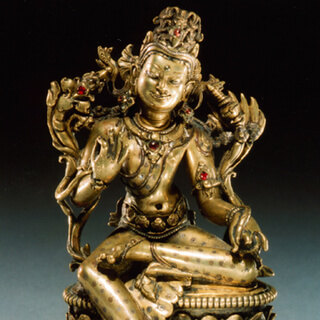
Including an image of a related artwork chosen from the Rubin Museum's permanent collection.
And now,
Please enjoy your practice.
Hello.
Good afternoon,
Everybody.
Welcome to the Rubin Museum of Art and to our weekly mindfulness meditation practice.
Great to have you all here.
How are you today?
Good.
I hope that you're enjoying this holiday season and happy Hanukkah,
Merry Christmas,
Happy solstice,
Happy Kwanzaa,
Any of those,
Any and all that you subscribe to.
I hope that you're just enjoying the season of coming together and of generosity.
And that is our theme this month.
We're talking about generosity.
And I know that sometimes the season can actually feel like more of a season of running around and getting and doing and fitting everything in.
But I hope that at least in this moment today,
There might be an opportunity to just really tap down into the option of being and giving to oneself and to others.
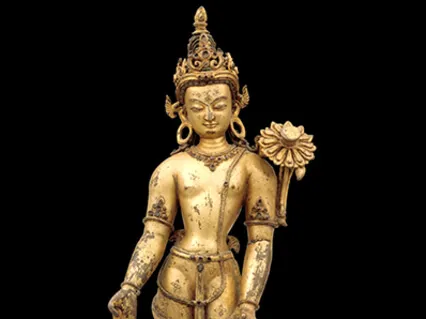
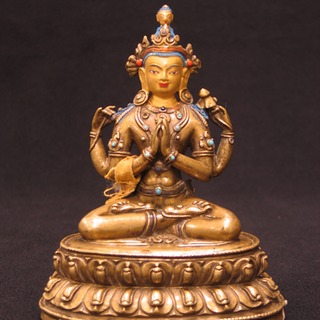
So we are looking at a beautiful sculpture today.
This is Avalokiteshvara,
Who is the bodhisattva of compassion,
A kind of ultimate form of generosity.
And this sculpture is from Nepal in the 13th or 14th centuries.
And let's take a look at it.
It's a very kind of simple,
Elegant figure here.
And we see Avalokiteshvara presented to us.
He actually is known to be seen in 108 different forms.
And this form,
He is appearing to us as a kind of beautiful prince.
So there's some royalty that we can deduce from what he's wearing here in terms of his jewels and his garments and his crown,
Right?
And his hands give special meaning to our sessions today.
So his right hand,
His right,
Is reaching out in this gesture of offering or generosity,
Giving.
And then his left hand would be holding the stem of the lotus blossom that you can see here.
So the stem is now broken and gone,
But his hand is still kind of holding it,
Holding that stem.
And the lotus blossom here peeking out over his left shoulder is very visible.
And of course that is the symbol of turning muck into purity and beauty through a kind of process of transformation,
A symbol for enlightenment and also kind of a symbol,
An aspirational symbol for this process of meditation.
So Rebecca Lee is back with us today.
So great to have you back,
Rebecca.
And she'll talk with us a little bit more about this idea of generosity and what it has to do with our practice.
Rebecca Lee is a Dharma heir in the lineage of Chan Master Sheng Yan.
She started practicing in 95 and began her teacher's training with Master Sheng Yan in 99 to become a Dharma and meditation instructor.
She also trained with Simon Child to lead intensive retreats and then received her full Dharma transmission in 2016.
She currently teaches meditation and Dharma classes and is the founder and guiding teacher of Chan Dharma Community.
And she's also a sociology professor at the College of New Jersey where she also serves as faculty director of the Allen Dulles Center for the Study of Social Justice.
And I should point out that she's joining us during finals time.
So thank you so much,
Rebecca,
For carving out a moment for us in your very busy schedule,
I'm sure.
You can find her talks and writings online at rebeccalee.
Org.
Please welcome her back,
Rebecca Lee.
Hello,
Everyone.
Thank you for this very welcome break from my grading.
It's lovely to be here practicing with everyone again.
And thank you,
Don,
For the wonderful introduction and also description of today's artwork.
And generosity,
What a great theme for this time of the year,
This time,
This holiday season.
And like Don said,
It's so easy for us to get all frazzled,
Very stressed out with all the things that we need to do,
Places that we have to be going to.
Generosity usually brings to mind the notion of giving.
And very often we think about,
Oh,
Like gift,
Especially this time of the year,
Shopping,
And I don't have enough money to buy all the gifts I need to buy,
Whatever the thought that might be vexing us.
But actually generosity does not always need money,
As many of us know.
And I'd like to share with you today,
Talking a little bit about sharing something,
Giving something that is free.
Every single one of us can afford a gift,
Lots of it.
And every one of us,
Regardless of our station in life,
Our ability,
Whatever education,
Every single one of us can give a lot of it,
Which is kindness.
We can all give kindness.
And this is something that we can practice with,
Especially during this holiday season when we will have an opportunity to see people we haven't seen for a while or spend a lot of time with them,
Maybe extend a family or get together.
A lot of us get together with friends during this time of the year and practice being kind to everyone.
And of course that's not limited to people we already know.
It can be people that we encounter randomly on train,
On the street.
Folks living here in New York City,
So lucky,
Get so many opportunity to practice being kind to everyone.
And when you hear this,
You might think,
Wow,
Okay,
That seems a little bit tough.
I can be kind to people I like,
All right.
I can be kind to people that I think deserve it.
So actually just these thoughts coming up give us some insight into our mind,
Don't you think?
So,
Huh,
This notion of unconditional love is actually quite challenging.
But when we shoot for that,
It allow us to gain some insight into our mind in terms of all the conditions that we set in our mind.
So and so need to be pretty much perfect to deserve my kindness,
Maybe,
Or they need to be,
I don't know,
Successful in my eyes or meet all my expectations,
Or at least 99% of them,
Whatever it is that we have set up in our mind.
And so what does it mean to be kind?
What does it mean to be kind?
You know,
Practice this kindness,
This loving kindness,
Like I said,
It's free,
Really something that we can cultivate,
And the more we cultivate,
The more we can give,
Which is full attention.
Whoever we encounter during the day,
Someone maybe that we work with,
Someone we encounter during our daily life,
Waiting table or on the street,
Give them full attention.
We may not actually be talking with them.
But wherever when we're in their presence,
In person,
We are fully there.
We're fully there.
And that in itself is a gift.
And you can see that people in our daily life who will really be willing to look us in the eyes for just that one moment.
Wow,
They acknowledge my existence here with here,
Sharing this moment together,
The connection that we can feel.
That is a gift we all can give.
And we can notice when we do that,
That we are bringing joy to this person when they think,
The moment they feel this connection,
And we ourselves feel it at the same time.
So it's not really something I am giving to someone.
It's like,
Actually,
We're generating a co-creating it together.
And they allow us to touch this interconnectedness that we share with everyone.
And so that's something we can cultivate during our daily life.
And of course,
Some people share with me the sort of challenge that they face in spending time with maybe family members,
A lot of time over the holiday break.
And maybe we might be thinking,
Dreading a little bit,
Listening to people complain about difficulties in their lives.
Maybe all family had difficulties.
Maybe someone being chronically ill.
Maybe someone who are struggling with school work,
Having trouble at work.
And maybe just people who are incredibly stressed out,
Struggling with a lot of anxiety or depression.
And we might find ourselves wanting to run away from that.
And that is an opportunity for us to bring up the courage to be kind,
To extend our kindness.
It does not mean that we need to be able to solve the problem.
But it's almost like,
Hmm,
To be there,
To share our full presence with them.
And listen.
Listen very often.
We think about our own experience when we are struggling,
When we have something that we are unhappy about.
We just need someone to talk to.
And after we are hurt,
We feel,
Oh,
OK,
We feel better.
And that is something that we can do for others as well.
And we can notice how maybe we get annoyed.
Why do they have to like,
There you go again.
This is going to come on,
Stop complaining.
And when we notice that,
Hmm,
It actually provides us with an opportunity to be aware of our sort of habit of being a little selfish or like easily being annoyed or aversion to listening to other people's complaints.
And so there is an opportunity for us to practice opening our heart to them.
And we might feel very opposite of how we usually deal with things.
But that's an opportunity for us to do that.
And actually,
When we encounter those resistance,
The frustration of having to listen to people complaining about how stressed out they are,
We can remind ourselves to be thankful.
Oh,
Thank you for complaining about this so that I can see my habit of getting easily annoyed.
Otherwise,
When will I get to see that I'm so easily agitated that my mind is so agitated?
So thank you.
Thank you for the opportunity for me to notice these habits so that I have an opportunity to practice releasing this habit,
Recognizing it a little earlier every time.
And so that's one method we can make use of.
And in fact,
It's so lovely we have this artwork today,
The Bodhisattva Avalokitesvara,
The Bodhisattva of Compassion.
And one way to engage in the practice is to treat everyone as the bodhisattva,
Which is exactly what I just talked about.
Whatever it is that they're doing,
We're not saying that we condone everyone's action.
It's like they make us upset.
They make us annoyed or get agitated.
Their actions allow us to notice our habits of agitation.
Thank you.
You are my bodhisattva.
And if we practice this way,
Then it will help us alleviate our anxiety of encountering maybe difficult people in our life,
Especially extended family members we only see this time of the year.
It's like,
Hmm,
Thank you,
Uncle So-and-so,
For saying this thing.
That kind of annoyed me,
But thank you for giving me this opportunity to practice.
And this practice of being kind also offers us an opportunity to practice listening deeply.
That is really part of cultivating this full presence when we are with others.
If we pay attention,
We'll notice that they're talking,
And we are not hearing what they're saying at all.
We are hearing mostly our reaction.
What is wrong with you?
Why can't you just do this and that and this and that?
Right?
And then whatever they said,
We are just ready to tell them our piece of the mind.
So deep listening is about like we notice,
We recognize our yakka yakka yakka when someone's talking.
There's noise that makes it impossible for us to be fully present and listen to them deeply.
So maybe,
For example,
Sometimes my mother will complain to me about doing all the things that makes her so tired.
And my first thought is like,
You know,
You don't really need to do that.
We actually have someone who help her.
Right?
So,
But that's not what she needs to hear.
She actually just needs to have someone hear her,
Oh,
There are all these things that I'm doing.
And so,
Good.
So we can listen to offer ourselves in being kind by just listening deeply,
Which allow us to hear,
Why is this person telling me this?
We often completely miss what is not spoken.
Maybe the word is not what someone wishes to convey.
Anxiety underlying the words.
Maybe asking for help or care or support.
Acknowledgement of their value.
Women encounter family members complaining about how hard they are like,
Tired to the bone,
Preparing for the holiday dinner.
And you may say,
Why don't you just order takeout?
Then we have missed,
We have completely missed the point.
So the practicing,
Listening deeply to someone allow us to fully connect with another person.
And actually,
It might sound like work,
But actually we allow ourselves to try it.
It allows us to feel more deeply connected with another person by opening our heart,
By being fully present,
Which is a very different mode of being.
Our usual mode of being is this sort of feeling separate and they're out there and they sing things and we feel like they are talking at me,
They're complaining at me,
And they're taking up my time.
It's a different mode of thinking,
A different mode of being that's like,
Oh,
They're opening their heart sharing,
They struggle with me.
I struggle too.
Oh,
We allow us to connect at that common human level and we can empathize.
Thank you for offering the opportunity for me to get in touch with my human humanity,
My shared struggle with all of you so we can practice remembering to thank everyone for giving us the opportunity to practice kindness.
And we noticed that when we try to practice kind,
To being kind with everyone,
We notice resistance,
Resistance to being kind with everyone in the form of perhaps sort of harshness.
I was talking about it earlier.
It's like being kind with everyone.
It's like,
Well,
This person,
No,
No,
Like no soup for you.
It's like,
There's harshness that we might have developed or learned from our conditioning,
From our culture around us that we just carry around.
We don't even notice it.
So practicing being kind to everyone affords us an opportunity to cultivate this awareness of our habits of being harsh in different ways and allow us to notice how that harshness,
How that very entrenched habit of harshness arises in our mind.
It may come up in this very rational,
Very reasonable thought,
Well,
It's because you did this and that and so that's why,
No,
No soup for you.
And then we have all these,
Know this,
Know that,
Know this,
Know that.
And all these no's,
No kindness for you,
Are really bars of the prison that we build for ourselves.
And we wonder why we feel isolated and disconnected from others.
We have created all these rules,
All these conditions that keep us from opening our heart.
So practicing to be kind to everyone is really radically,
Is a radical action to just like throw away all these bars,
Just push down all these pieces of bricks off this wall that we have built around us.
Doesn't matter.
Doesn't matter who are you,
What you're doing,
Just kindness,
This gentle,
Open-hearted kindness.
And if we set our mind to this,
We will learn how to be kind in each situation.
So when we say being kind,
It does not mean that,
Okay,
What do you want?
I just give everything you want.
No,
That's not what it means.
Being kind is being fully present,
Deeply listening so that we can see what is needed,
What's most appropriate.
Someone who have the habit of causing harm to others,
To hurting other people.
The kind thing is to not allow that person to do harm to us.
So that's why the Bodhisattva Avalokitesvara is 108 different ways.
Actually in a lot of Chinese situation,
We talk about like myriads of ways.
It refers to how it depends on each person we encounter in each situation.
There are different ways to be kind.
And each one of us have the capacity of recognizing it.
We don't need to go to some secret book that tells us all the answers.
No.
If we are fully here and allow ourselves to open our hearts,
We know how to be kind to this person.
That is appropriate.
Every single one of us can do this.
And so that's how the practice of meditation can support us in doing so.
In our meditation practice,
It is a great way for us to cultivate this ability to be kind to everyone.
It starts with our ability to be kind with ourselves regardless of what's going on.
So that again,
We will see that we have this tendency to get very harsh with ourselves.
Very judgmental.
Some of you might recognize sometimes when your meditation is not going very well,
Whatever,
It's your definition of not going well.
A lot of thoughts,
I fall asleep or my mind is very scattered,
Whatever it is that you judge your meditation to be no good.
What do we do?
We can notice if we give rise to this very harsh attitude,
Very way to want to punish ourselves.
Like giving,
Having this thoughts like what's wrong with you?
Why can't you be this?
Why can't you be more calm?
Why can't you just stop the thought?
Why?
These things,
The scolding voice.
That's the harshness.
That's the harshness that I'm talking about.
That we cultivate in our meditation,
That's when we are aware of it.
And we do that during our daily life because we are often not aware of it.
And then of course,
Then we do that to others.
That makes it so difficult for us to be kind to everyone.
So in our meditation,
As we settle down the mind,
That's what we can do is to practice noticing these harsh thoughts,
The habits of harsh judgment of ourselves.
We notice that,
Ah,
Thank you.
It gives you an opportunity to practice releasing this.
It's okay.
It's okay.
Whatever it is,
Scattered mind,
There's no need to kill the thought.
It's like,
Oh,
The fact that you notice scattered mind,
Hmm,
That's very good.
You notice that.
So whatever is going on,
You're watching a movie,
On and on and on,
You notice that,
Oh wow,
You notice that.
Very good.
Cultivate whatever it is we are doing in our meditation that we respond with this very gentle understanding,
Kindness.
And that's how we can cultivate this kindness to ourselves with this open-hearted attention,
Regardless of what's going on.
Then we can begin to unlearn this notion of conditional,
Everything,
Only if you meet all my expectations,
Then I can be kind to you.
So conditioned,
Unconditioned kindness to ourselves and unconditioned kindness to everyone else.
So let's practice that together with this.
We make ourselves comfortable in our seat.
We might find taking off our glasses will help our facial muscles relax,
Anything that is putting pressure on our body.
We go over the whole body,
Relaxation together to settle down,
Relax our body,
Relax our mind.
Feel the relaxation of the top of the head like melting butter.
And feel the relaxation spread to our forehead.
Check to see we hold tension between our eyebrows from the habits of worrying.
You allow the tension to melt away.
And feel the relaxation spread to the eyeballs and eye muscles.
And feel the relaxation spread to the facial muscles.
Feel the relaxation spread to the entire head.
Feel the relaxation spread down to the neck muscles,
Allowing the tension we habitually holding these muscles to melt away,
Like melting butter.
Feel the relaxation spread to our shoulders,
Down the arms,
All the way to the fingertips.
Feel the relaxation spread to the chest area.
Check to see if we hold tension in this area,
Perhaps from habits of anxiety,
Worries,
Fear.
We can allow this anxiety to take a rest and allow the tension to melt away.
Feel the relaxation spread down the abdomen,
Allowing the tension we hold by habit in our lower abdomen to melt away.
And feel the relaxation spread to the upper back,
Between the shoulder blades,
Allowing the tension we hold here to melt away,
Like melting butter.
Feel the relaxation spread down the back,
To the lower back,
All the way down to the buttocks,
Where we can feel we're sitting on a chair.
Feel the relaxation continue to spread down the legs,
All the way down to the toes.
And feel the relaxation of the entire body sitting right here,
Right now.
Allow ourselves to relax into the present moment,
Being fully here,
Sitting,
Feeling right here,
In this room,
With our friends.
Exercising the subtle movements of the body as the body breathes on its own.
And cultivate this clear awareness of what's going on.
The body and mind.
And what's around us.
This felt sense of being here.
Notice the commentary going on,
Telling ourselves how I'm not meditating well enough.
Live not just with theANAO Harlem input now.
This is helpful when you're MalayNAAAAAAAA Ay Diane Stevens with Sports.
Allow ourselves to smile gently to ourselves,
Acknowledging what we're doing right now.
Breathing out best.
Breathing out best.
Breathing out best.
Breathing out best.
Breathing out best.
Breathing out best.
Breathing out best.
Thank you everyone for your practice.
That concludes this week's practice.
If you'd like to attend in person,
Please check out our website,
Rubinmuseum.
Org slash meditation to learn more.
Sessions are free to Rubin Museum members,
Just one of the many benefits of membership.
Thank you for listening.
Have a mindful day.