Welcome to the Mindfulness Meditation Podcast presented by the Rubin Museum of Art.
We are a museum in Chelsea,
New York City that connects visitors to the art and ideas of the Himalayas and serves as a space for reflection and personal transformation.
I'm your host,
Dawn Eshelman.
Every Monday we present a meditation session inspired by a different artwork from the Rubin Museum's collection and led by a prominent meditation teacher from the New York area.
This podcast is a recording of our weekly practice,
Currently held virtually.
In the description for each episode,
You will find information about the theme for that week's session,
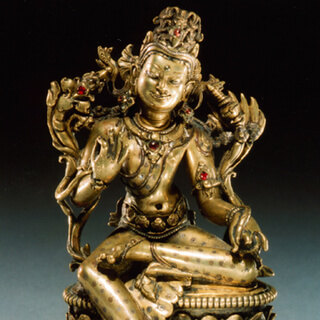
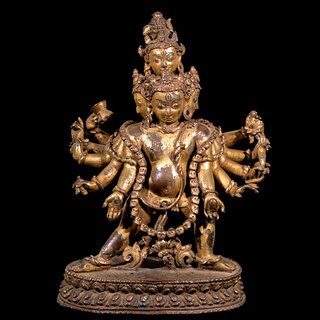
Including an image of the related artwork.
Our Mindfulness Meditation Podcast is presented in partnership with Sharon Salzberg and teachers from the New York Insight Meditation Center,
The Interdependence Project,
And Parabola Magazine.
And now,
Please enjoy your practice.
Hi,
Everyone.
Welcome.
Welcome to Mindfulness Meditation Online,
Here with the Rubin Museum of Art,
And I'm Dawn Eshelman.
It's great to be here with you,
And I hope you're keeping well,
And if you're in this New York City area,
That you enjoyed the beautiful weekend.
And for those of you who are new to us,
We are a museum of Himalayan art and ideas in New York City.
So glad to have you all here in our weekly program where we combine art and meditation online.
So we select a work of art in collaboration with our teachers and look at that work of art from our collection.
We'll hear a brief talk from our teacher today,
The wonderful Sharon Salzberg,
And then we'll have a short sit,
15 to 20 minutes,
Led by Sharon.
Let's take a look.
This is a really,
Really interesting one here.
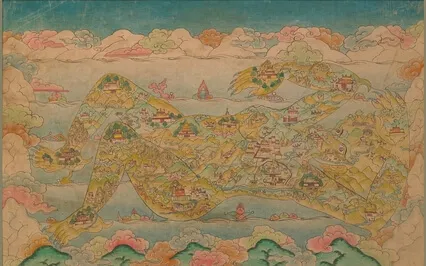
And this is the Demoness of Tibet.
This is from early 20th century.
Pigments on cloth.
It's about 16 by 23 inches.
And this map illustrates a popular Tibetan mytho-historical narrative.
Tibet is represented by a collection of Buddhist monuments that were constructed in a strategic,
Different locations to tame this demoness who interfered with the establishment in Buddhism.
So Demoness is set in this kind of heavenly landscape with her figure,
Supine,
Stretched between these cosmic mountain ranges.
Lhasa and its central temple are at the heart,
Literally.
And this temple founding narrative,
The story,
This myth promotes these kind of political and social ideas that were constructed to support Lhasa as this capital major Buddhist institution.
So it's an interesting kind of illustration of this attempt to bring these things together under this name of Buddhism and the myth that goes along with it.
And that brings us to our theme today,
Harmony,
Which is this idea that comes to us through the exhibition Healing Practices.
So we're really thinking about it in relationship to that exhibition with this idea that,
You know,
What is the purpose,
The purpose of health,
The purpose beyond and through the healing process?
Part of it and one of the elements of it is harmony,
Is to create what we know we hear in Tibetan medicine is a very important principle,
Which is balance,
Right?
Harmony.
And so unifying,
Bringing things together in collaboration.
And so with that,
I am so delighted,
As always,
To bring on our wonderful teacher today,
Sharon Salzberg.
She is the co-founder of the Insight Meditation Society in Berry,
Massachusetts,
And is,
Of course,
A lauded and incredible teacher and author.
Sharon has some wonderful books,
Including Real Change,
Mindfulness to Heal Ourselves and the World,
Real Love.
They're all great.
And Real Happiness.
And you can find them all wherever you buy your books,
But also at the Rubin Shop.
And Sharon is such an important person to us here at the Rubin,
Having really been on our stage so many times in so many different contexts,
Helping us connect with and understand many of the concepts present in our collection.
So thank you,
Sharon.
It's great to have you here.
Thanks for being here.
Thank you so much.
It's delightful to be with you all again.
I always love reading in the beginning where everyone's tuning in from.
Many of you from New York City,
Of course.
And I was quite taken,
Actually,
With the use of the word harmony because it's not a word that we necessarily use very often.
In the Buddhist teachings,
I'm most familiar with it in the sense of balance.
Balance seems a little bit more of a rugged word or,
You know,
Harmony just seems so soft or gentle.
I think that's interesting.
And I think the association Don just made with healing is very interesting.
I've mostly seen it in particular as harmony in the teachings in regard to ethics.
Like if you've acted recklessly,
If you kind of blundered and said something that set people against one another,
Or you hurt somebody with your words,
With your actions.
They say you've broken the harmony.
And this is significant because what we're counting on is an honoring,
A respect of maybe everyone's role in the room or the truth of interconnection.
And when that gets broken,
We are left with the kind of individual motivations run amok sometimes,
Where people don't necessarily have the mission,
Say,
Of the company really close at heart,
Or their need to make an impact,
To be the one,
To have the voice that's going to make the difference,
Supersedes listening or the ability to learn or see what the emergent wisdom is from the group.
In order to see what emerges from a group in terms of everyone's potential contribution,
We need some harmony.
Now,
One of the reasons people don't like the word,
Of course,
Is that it can feel,
It shouldn't really,
But it can feel a little bit coerced,
Like you can't raise a troublesome issue because that will disrupt the harmony and that we have to be kind of pleasing at all times and soft and sweet.
And it doesn't really mean that at all.
I think there is a rhythm to life and there's a way of holding to one's principles and one's values,
And at the same time,
Realizing the potential for,
Say,
The wisdom of the group to emerge.
As long as we have some flexibility,
We can realize the power of balance,
Which,
As I've said here before,
I used to think of as not that attractive a word.
I used to think of it kind of akin to mediocrity,
Like who wants to be balanced?
It's so bland.
But actually,
It's out of a sense of balance,
A state of balance,
That many things will emerge.
It's like if we bring our whole system into balance,
Sort of the meditative point of view,
The insight we want will emerge,
The connection,
The love we want will emerge,
Rather than grabbing after something as a kind of discrete commodity.
The work is to bring our system into balance.
Interestingly enough,
I also think of harmony a lot in terms of creativity.
I know that if I were to look at a building in terms of its architecture,
What I would want the most for myself is to see the building almost like it grew there.
I don't really want to see some fancy,
Weird artifact stuck on top and think,
Well,
That was a major architectural conceit.
What were they thinking?
Somebody once described their own – this was a theatrical production.
And what they said was,
Everything in our play seemed inevitable and none of it was.
And I thought that is actually my goal as a writer,
That what I would like people to feel is that this writing exists,
Not that I was sitting here in Barry,
Massachusetts,
And I just couldn't make it happen.
And so I went out on a limb and I did this really weird artificial thing that stands out because it's not in harmony and is clearly an expression of my ego.
And so to really prize that sense of harmony and to understand with our words,
With our actions,
With what we create,
With how we create,
We can be continually more aligned with it rather than breaking away,
Thinking that that's the really appropriate and daring thing to do.
It's much more daring to see how can there be genuine harmony,
Not like papering over conflict,
But genuine listening,
Really joining together,
Really putting ourselves out there in some creative way.
It doesn't have to be literally conventionally creative.
It can be anything in a way that allows for that sense of what can we all contribute in some way to emerge.
So let's sit together.
You can sit comfortably,
Just be at ease.
You also do,
Speaking of balance,
Want some energy in your body.
So that might mean sitting up straight,
But not like so much energy.
You're really stiff and uptight.
You also want to be relaxed.
You can close your eyes or not,
However you feel most comfortable.
You can start by listening to sound.
It could be the sound of my voice.
It could be the sounds of New York City or wherever you are.
And unless you are responsible for responding to the sound,
See if it can just wash through you.
And of course we like certain sounds and we don't like others.
But we don't have to chase after them to hold on or push away.
Just let it come,
Let it go.
And bring your attention to the feeling of your body sitting,
Whatever sensations you discover.
See if you can feel the earth supporting you,
Because it is.
And feel space touching you.
Usually we think of touching space,
We think of like lifting up a finger and poking it in the air.
But space is already touching us,
It's always touching us.
Bring your attention to your hands and see if you can move from the more conceptual level,
Like our fingers,
To the world of direct sensation.
Picking up,
Pulsing,
Throbbing,
Pressure,
Whatever it might be.
You don't have to name these things,
But feel them.
And on that same level of feeling sensations,
Bring your attention to the feeling of your breath.
Just the normal natural breath,
Wherever you feel it most distinctly.
That might be the nostrils or the chest or the abdomen.
Find that place,
Bring your attention there,
And just rest.
See if you can feel one breath,
Without concern for what's already gone by,
Without leaning forward for even the very next breath.
Just this one.
If you like,
You can use a quiet mental notation of in,
Out,
Or rising,
Falling,
To help support the awareness of the breath.
But very quiet,
So your attentions really go to feeling the breath,
One breath at a time.
And if sounds or images or sensations or emotions should arise,
But they're not very strong,
If you can stay connected to the feeling of the breath,
Just let them flow on by.
You're breathing.
It's just one breath.
They are strong,
And they kind of pick you up and whirl you away.
You get lost in thought,
Spun out in a fantasy,
Or you fall asleep.
Truly,
Don't worry about it.
You can realize that you've been gone,
You've been distracted.
You can let go gently and just return your attention to the feeling of the breath.
Remember,
You don't have to feel like you failed or be discouraged.
Our attention is trained to wander,
Kind of conditioned to be distracted,
To be scattered.
And every time we let go of a distraction and gather our attention,
Bring it back fully,
Wholeheartedly,
To some object like the feeling of the breath that we've chosen,
We are training our attention to be different,
And our hearts to be different,
In that we're not berating ourselves and getting down on ourselves.
And when you feel ready,
You can open your eyes or lift your gaze,
And we'll end the meditation.
So thank you.
That concludes this week's practice.
If you'd like to support The Rubin and this meditation series,
We invite you to become a member.
If you're looking for more inspiring content,
Please check out our new podcast,
Awaken,
Hosted by Laurie Anderson.
The 10-part series features personal stories that explore the dynamic path to enlightenment and what it means to wake up.
Now available wherever you listen to podcasts.
Thank you for listening,
And thank you for practicing with us.