Hello.
Good morning,
Good afternoon,
Good evening,
Wherever you are.
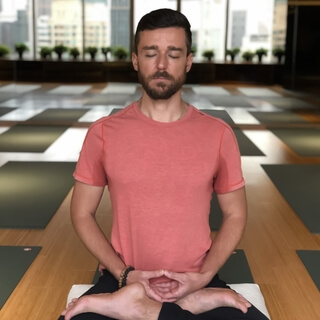
I'm Ryan in Hong Kong and welcome to the Mindfulness Daily Practice.
So this is a recording designed to use with Insight Timer circles.
So this is a group meditation or designed to be a group meditation.
So take a look around,
See who else is here in this group meditation and feel free to say hello,
To welcome each other,
To greet each other.
Maybe to say where you're from.
Send good vibes to each other.
Whatever is going to be supportive as we begin this practice together.
So acknowledging that this is not a practice that you're doing completely alone,
Although of course the practice itself is for you,
But acknowledging that there are other people with you here right now.
And so greetings everyone.
This practice and the talk that precedes the practice is about mental health.
So some things that we can do to aid in mental health.
So the idea here is to find the,
Let's call it low hanging fruit for mental health.
And this is really an introduction.
I'm going to go into these topics in the live practice later this week.
So this is for the week of July 4th,
Although you may be listening to it at some other time,
But just want to let you know it is an introduction.
So we'll go through each of these five pieces in detail later through the week.
So before I get into what the five pieces that I think are really helpful and are the low hanging fruit,
I just kind of wanted to give a little introduction as to why I think these are important.
I think a lot of us are mental health kind of,
You know,
If we can rate ourselves on a scale of one to 100,
We're somewhere,
Many of us around 50,
But we might be on the lower end.
So let's say we're at a 40 or a 45 or even a 48 percent,
You know,
And so that each day,
Maybe because of our mental state,
We feel a little bit more drained and a little bit less able to cope with the small things that are happening in our daily lives.
So the idea here is that if we can find just a few things to start to add,
Like a point here.
So,
You know,
Maybe two points,
Bring your 48 up to a 50 and then another two points somewhere else.
Bring the 50 to a 52 and then suddenly instead of each day draining you a little bit,
Each day is building you up a little bit.
And so this really is the intention of this series.
So to find just a little thing that you can add that might be small,
But it might be just enough to push you into that positive territory of mental health.
And,
You know,
As I'm speaking this,
I think of the work of Martin Seligman,
Who is just talking about how psychology these days is really about fixing problems.
And once all the problems are fixed,
Once we have the individual at baseline,
We don't really think about how to make someone's life more positive.
And so this is really helping that,
I think.
So,
You know,
There are things that we can do to eliminate some of the problems.
But once the problems are gone,
How can we just generally have a better quality of life?
And so these five things are things that I've implemented in my own life and they have helped me.
Because,
You know,
I think when we're in the midst of mental difficulties,
We're struggling with whatever our life circumstances are,
Every single little piece helps.
So just trying to take care of your basic needs so that when something difficult arises,
We've got the ammunition,
The wherewithal,
The inner resources to deal with whatever it is that's coming.
So these are the five things that I think are really helpful.
So number one is what we eat.
And I think that's the name of the first piece of this topic.
You are what you eat.
So what you eat is going to make a difference in your attitude and how you're feeling day to day life.
Number two,
And you know,
I don't think any of these are going to come across as rocket science,
You know,
But it's something that maybe many of us hear about,
But we don't really think about in practice how it's going to help.
So as the series goes on this week,
I'll talk in detail about how each one of these can help to add like a,
You know,
The to this scale of happiness.
A couple points here,
A couple points there.
So what you eat can affect your mood.
Certainly anything that we put into our bodies.
So this is number one.
Number two,
Exercise.
We end up having a lot of stress in our lives.
We don't have the natural means to express,
To let go of that stress that we did when we were cave people.
So,
You know,
If a tiger shows up,
We run away or or we wild boar shows up,
We fight it.
And so we don't have the way to have the physical release of a lot of these strong emotions.
And so exercise is really helpful in this.
So thinking of exercise,
Maybe a lot of us go,
Oh,
I want to exercise before so that I can lose weight.
I would say more importantly than that is exercise because it's going to help your mental health.
Number three,
The title of day three is Meditate,
Meditate,
Meditate,
Because,
Of course,
Meditation is a way that builds up your inner resources and it can add a few points.
Dan Harris has a book and a podcast called 10% Happier.
And really,
This is kind of what we're trying to do is just find a way to get a few extra points in meditation.
It's not a cure all.
It's not a magic pill.
But certainly by having a little bit more ability to focus on what's happening in these moments,
Maybe sometimes meditation lets you let go of some of the stressful things you'll notice in your mind wandering.
Your mind will wander to things that are important to you,
Things that you may have been pondering on,
Things that may have been bothering you a lot.
Your mind might go back there.
And as your mind naturally goes back and you bring it back to the breath,
Somehow some relief can come.
So encouraging daily meditation.
This is,
You know,
Not that the steps are more and one's more important than the other.
But this is the topic I'll cover on the third day.
The fourth day is sleep.
So this may seem obvious.
And I know that some of us,
Some of you who join regularly have sleep problems.
So,
You know,
Not knowing that sleep is a process of letting go.
So the more that we try to fall asleep,
The more we get upset about falling asleep,
The harder it's going to be.
So this isn't about curing sleep problems,
At least not for this series.
It's more about making sure you've got the time allocated,
The time budgeted for sleeping.
So,
You know,
I think it's gosh,
His name is,
I think,
Michael Walker.
But,
You know,
If you know if you know the name,
I'm just forgetting it as I'm saying this.
You can write it in the chat to help everyone.
But there's a book called Why We Sleep.
And so one of the one of the hypotheses that he he posts and talks about in the book is less than seven hours of sleep,
That none of us function well with less than seven hours of sleep.
And of course,
If you're budgeting less than seven hours of sleep per night,
You aren't going to be getting that sleep.
And I can tell you from my own experience,
I am much less able.
I have much less inner resources available to me and on a day that I've slept less than seven hours.
And,
You know,
Frankly,
If if I have my choice about it,
I'll be sleeping for eight hours because I know it just makes me makes it easier for me to deal with all the challenges I have in my life.
So just budgeting that time to sleep and we'll talk about that more on the day that we cover it.
Last but not least is one maybe for me personally,
I haven't done much research on it,
But hydration.
This is something especially as we deal with cravings.
This at least I've noticed in my own life,
If I'm craving sweets,
Maybe I'm,
You know,
Craving to drink something sweet or maybe eat to drink alcohol.
Sometimes really what's happening is I just need to drink water.
So knowing that hydration,
Keeping yourself hydrated is important and a lot of a lot of what we do and we just don't even think about it most the time.
We forget to drink enough water each day.
So I know this advice maybe sounds like what your mother might tell you to do all all of these five pieces.
But I really think that this is the low hanging fruit,
That we just tend to not prioritize these things.
We take them for granted and we end up overlooking them.
And maybe not meditation.
Meditation is one of those that we maybe struggle more to do or.
But anyway,
Certainly eating well,
Exercising,
Sleeping and hydrating.
Everybody knows these,
But it's just the reason I wanted to go through these this week is to try and explain the concrete benefits and to show that this will help add those couple points,
Maybe enough to to turn your seesaw to the other side.
So instead of being getting more and more negative each day at your inner resources,
Being depleted a little bit more each day,
You'll be building yourself up each day and putting more.
Let's call it,
You know,
Money in the mental health bank so that when it comes time,
When things get tougher,
Instead of going into debt,
You can start to make a withdrawal from what you've already been saving up.
So thanks for listening.
With that,
We will get into our meditation of the day,
Which is going to be a self compassion meditation,
Because I think really this is foundational as well.
As we go through this,
As we think about I'm not eating right,
I'm not sleeping enough,
I'm not exercising enough.
A lot of times there's some harshness associated with that.
And just to let you know,
This inner harshness isn't very useful in helping us develop these good habits.
So instead of beating yourself up being easier on yourself,
Knowing that whatever change you want to make,
It's going to take time.
So not being so concerned about getting it done immediately,
Just setting some easy goals for you to begin,
Step by step by step,
Making whatever changes are going to help you and help your mental health.
So let's begin our practice.
Please come into a comfortable posture.
And observing yourself observing your state of mind,
How are you feeling today?
What posture is going to be most supportive for your practice today?
If you're feeling sleepy,
Maybe sitting up straight.
Maybe keeping the eyes open today,
Focusing on a single point and just letting your open eyes guide you into wakefulness.
Maybe you're feeling extra tense today and lying down is what you need.
So just choosing whatever posture is going to be best for you.
And beginning to settle into that posture.
And finding something that's going to be grounding for you.
A single object perhaps.
Can be your body as a whole though.
So tuning in to something that's happening in this present moment.
So maybe tuning into your body the sensations in your body,
Noticing where there's tension,
Noticing areas of ease,
Noticing areas of warmth or coolness.
Observing where the clothing is in contact with the body.
Observing the sensations in the hands.
And if you like,
If it feels comfortable for you,
Observing what it feels like to breathe.
And so allowing this object in the present moment to hold your mind here in the present.
Just following the breath if that's where you are.
Feeling entirety the sensation of air coming into the body as the body expands.
The release of air as the body lets go.
Exhales.
So following each breath.
Or continuing to hold attention in the hands,
Feet.
And then as you feel ready.
Bringing yourself into your mind your sense of self whatever that may mean to you.
Seeing if you can open your heart to yourself to welcome yourself to love yourself exactly as you are in this moment.
So as we went through this talk you may have thought about things that you should be doing things that should be different.
So seeing if you can let go of all of these shoulds.
And just resting in the way things are in this moment.
Being comfortable with who you are.
Because in the next few minutes we're not changing who you are.
We're not changing what you do.
We're just sitting.
Our bodies are passive.
Our minds and hearts gently opening towards ourselves.
Offering unconditional love to ourselves.
So what does it feel like to be loved unconditionally.
Does this feeling come naturally to you.
Or is it challenging.
So noticing what happens when you turn this attention this attitude of unconditional love toward yourself.
And even if it's challenging seeing if you can lean into this feeling.
It may be unfamiliar or new.
Loving not only yourself but also your body all that is you.
Exactly the way it is.
Whatever chronic pains mental difficulties emotional challenges that you may face on a day to day basis.
Recognizing that much of this is part of you.
So is it possible.
To love yourself to embrace everything that there is about you.
Exactly as it is.
So what does your heart feel like as you try to do this.
And as we go through this practice sometimes our minds may wander to negative things about ourselves things that we don't like.
So just treating those like any other distraction and our mindfulness practice just observing those letting go of them.
And returning to unconditional love to yourself.
It may be useful to offer some phrases to repeat some phrases in your mind to help support creating sustaining this feeling of unconditional love to yourself.
So if you like repeating these phrases in your mind after me or imagining these phrases being said to you.
May I be happy.
May I be healthy and whole.
May I be safe.
May I be peaceful.
So repeating again,
If you like.
May I be happy.
May I be healthy.
May I be safe.
May I be at peace.
And so holding this self compassion in whatever form if you're repeating the phrases maybe continuing to repeat them in your mind,
Or just holding this feeling of unconditional love towards yourself.
Doing your best to sustain it until you hear the sound of the bells.
You're doing your best to sustain it until you hear the sound of the bells.
You're doing your best to sustain it until you hear the sound of the bells.
You're doing your best to sustain it until you hear the sound of the bells.
You're doing your best to sustain it until you hear the sound of the bells.
So feeling free now to move the body in any way you like.
Maybe starting by wiggling the fingers and toes,
Stretching out in any way that's comfortable for you.
So thank you.
Thank you for making this time for yourself today.
And I would encourage you also to take a moment to thank everybody else who's joined in this practice with you today.
So although we were all in solitude in a way meditating we were also together.
So I hope this meditation supports you and has supported you in your practice.
If you happen to be listening to this on the week of 4th July 2021,
Then the rest of the week will be about covering those five topics in detail in our live practice.
I really look forward to going into more detail of each of those.
So I hope you'll tune into those if you happen to be listening to it on that week.
And if not,
Then I hope you have a great day.
And if so,
I also hope you have a great day.
So remembering that in Insight Timer circles,
Once the meditation portion is over,
You can go back to the circle and chat for a while if there's anything you want to share.
You can share it in that safe space and as soon as that chat window closes,
It's gone forever.
So taking advantage of that time if there's something you'd like to discuss with the people that you were meditating with today.
So with that,
I'll leave you to it.
Have a great day or great evening.
I hope to see you again soon.
All the best.
Bye bye.