Hello,
Welcome to Serenity Wellness Podcast.
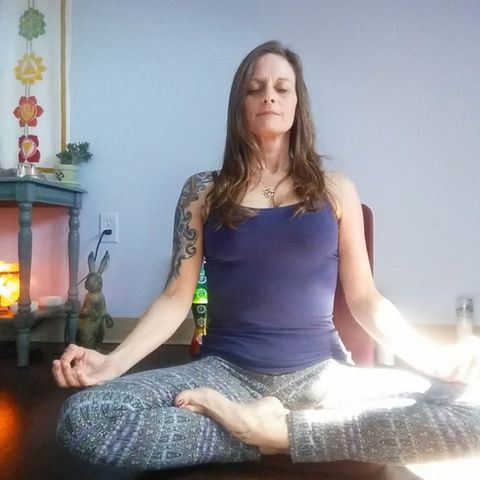
My name is Nicole White and I'll be your host.
This podcast is dedicated to helping you tap into your full potential of how you can heal and balance your mental,
Emotional,
And physical well-being.
Together,
Let's explore inner self,
Connect with our strength,
And manifest your true nature.
One full of love,
Purpose,
And passion.
Welcome to episode 51,
Collecting Gratitude.
It was a beautiful weekend in State College and I spent all day yesterday collecting gratitude in nature,
Hiking and exploring and being one with the forest.
It was quite lovely.
Gratitude is about thankful appreciation.
As most of us are aware,
Life can be stressful,
Feel overwhelming,
Have periods of sadness,
Worry,
Or frustration.
And this at times can lead us to wanting to resist or disengage,
Disconnect,
Which can also lead us to missing out on opportunities to collect gratitude that's all around us.
By collecting gratitude,
We fill up our inner tank.
It's like we create a fueling system in there and resources so that when life continues to happen and take us through obstacles or challenges,
We have more of a readiness to be able to work through it and get through it without feeling depleted or resistant.
It increases our resiliency and improves our ability to connect to more of an optimistic mindset where we can see more of the potential for a positive outcome.
So by collecting gratitude,
It's making us more ready,
More able to get through life.
It allows us to focus on what we have versus what we lack.
What's in front of us versus in the illusion of the mind.
It's like it naturally glides us into mindfulness because we're more present,
Engaged,
And participating in life instead of wrapped up in the storytelling and the judgment and the perception that the mind wants to engage us in.
Wherever you're at in your gratitude practice,
There's always an opportunity to cultivate more.
There's so much research that's looking at the association between gratitude and our mental,
Emotional,
And physical health.
And I will share a few of them here.
I could go on and on about them.
Go on and on about them.
And if you're guided to do so,
Then you can look up some more.
But there was a study that was done at Indiana University,
And it looked at if gratitude writing,
In addition to psychotherapy,
Would improve mental health.
They had 300 students and put them into three groups.
The first group would write a gratitude letter each week,
And they didn't have to send the letter.
I think only like 23% actually sent the letter or gave the letter to the person.
The second group had to write out or write about something that was displeasing or stressful for them.
And then the third group didn't have to do any writing.
They just received the psychotherapy.
And what they found was that the four and 12-week check-in of mental health,
Group one that wrote the gratitude letter,
Had improved mental health and well-being scores.
And again,
They didn't even have to send the letter.
There is another study.
It was a 10-week study that was done by Dr.
Robert Emmons at the University of California and Dr.
Michael Makala at the University of Miami.
I'm not sure if I'm pronouncing his name right.
And what they,
Again,
Were looking at was gratitude and outcome of mental health and well-being.
They also had three groups.
The first group would write a few sentences.
I don't think it was a long journal entry or anything like that.
It was,
You know,
A few sentences about gratitude.
The second group wrote about something that was irritating or displeasing.
And then the third group was just told to write without any direction of emotion or experience.
And what they found was that at the end of the 10 weeks,
Group one,
Those who wrote a little about gratitude,
Had increased optimism and also increase in exercise and decrease in physician visits.
There's a lot also going on in terms of gratitude and adolescence.
So this,
What I'm going to share here,
Is about a couple different research studies and the outcome of what they saw.
And in these different studies that I read about,
It was that adolescents would have a gratitude journal,
But it wasn't something they wrote in every day.
I think the average was two to three times a week in these studies.
And what they found was that with adolescents and keeping a gratitude journal,
It decreased their materialism,
Increased volunteering and donating,
And it increased their feeling of inter-connectedness with their peers.
Even with our physical body,
There was with a gratitude journal,
A study that looked at the effects for individuals who had stage B heart failure.
And the outcome was a decrease in the inflammation in their body,
In addition to some improvements in optimism and well-being,
But the physical body also responding through the gratitude journaling.
Lots of research in terms of work and academics.
Industrial psychology is a whole area of psychology that looks at this,
And I didn't even think to look at some of the research before I did this podcast,
But that's a whole nother area specifically looking at workplace.
And you might even know from your own experiences how if we're working in an environment where we feel appreciated,
Supported,
The sharing of gratitude,
We have often decreased in stress,
Increase in work performance,
Improve happiness and satisfaction,
As well as an improvement and connection with more of a team experience.
It's more of like a buy-in to the collective energy of what's happening at work by expressing and experiencing gratitude while we're in the workplace.
Our educational system,
We see it all over the place in terms of our emotional system.
We see it all over the place in terms of student performance as well as mental health.
And if they are in an educational environment that expresses gratitude,
Appreciation,
Understanding of individuality and learning styles in students,
Support of their emotions.
I know I'm branching off into some other things there,
But our academic environment is so important to our students' mental health and well-being.
And by showing gratitude as one of those many components,
It improves academic performance,
Social ability,
And interconnectedness.
Relationship dynamics are another huge area where gratitude shows results of improvement.
When we're expressing appreciation and gratitude and collecting gratitude in all the ways I'm going to talk about here in a moment,
But also expressing it in our relationship dynamics,
It improves our connectedness,
Our experience of empathy,
Compassion,
And improves communication.
It creates an environment of readiness to do this,
To be more vulnerable in the connection.
So these are some of the areas of research.
And again,
There's so many more studies out there.
If you're interested in the science and research happening,
Certainly you can look that up and it's all over the place.
And industrial psychology is a good place to look if you're looking at workplace specific research.
This practice of gratitude and collecting gratitude,
It changes our inner language and connection,
Our vibration,
Moving us more into positive associations versus negative,
That sense of optimism.
Again,
The ability to,
When we're in a more optimistic flow,
We have more of an ability to perceive and see the potential for positive outcome.
It changes our inner dialogue,
Getting us out of those thought loops,
The stories and illusion of the mind and allowing us to be more mindfully present with all around us.
I don't remember what episode it was that I talked about this,
But again,
There's that research that Dr.
Amoto showed us in terms of word and thought vibration and what it does to the changing of water molecules.
He has several books that he put out,
He has passed,
But he put out several books showing us the change in the images of water molecules.
And then also he had that experiment that he did with the white rice,
Where three different jars,
He put white rice in each one with water to cover the rice.
And then for 30 days,
The first jar would say a kind word to,
Second jar a mean word to,
And third jar he ignored.
First jar was white rice at the end,
Second jar moldy,
Third jar was so moldy,
Growing up out,
Again,
Ignoring.
And then also I mentioned wherever that was that I talked about this,
How some schools are now doing this with plants to allow children to see more in a way of connection the effects of bullying.
They have one plant,
30 days,
Nice word.
Second plant,
They have the children say a mean word to or bully it.
After 30 days,
The bully plant is dead.
So all these ways that we can see how the way we think and what we connect with in our mind can have a pretty drastic income or outcome,
Outcome on a lot of different things in our whole system.
So by moving more into the collection of gratitude,
We're allowing our mind and our vibrations to flow that direction.
It elevates the abundance mindset and connection because there's never-ending resources of gratitude around us.
It can become more a way of living and being,
And by doing this practice,
Just as with mindfulness,
It will change brain activity,
Those neural pathways and perception shifts,
Creating more highways that we want to travel on in the brain instead of maybe those other ones that we keep repeating that we know are unhealthy or not helping us.
There are a lot of different ways that we can practice the collection of gratitude.
There's the gratitude journal that I had mentioned,
And again,
It doesn't have to be every day.
It can be the average that was shown in a lot of the research I looked at was two to three days a week.
It can be the average that we can practice in a lot of the research I looked at was two to three days a week,
And could be just a few sentences even.
It doesn't have to be long entries,
Just a connection.
You may even consider in a gratitude journal,
Including difficult situations,
Finding a connection to gratitude even in those moments because they are the full of us being human.
You may also consider the gratitude letter,
Remembering that you don't have to actually send it,
And you can even consider writing one of those letters to yourself,
Remembering and reminding and connecting to why you love you,
All the things within you to connect and be grateful for.
As a little side note,
This writing a letter to yourself is a practice that sometimes I encourage people to try in ways when they're working on self-forgiveness.
So you can write a letter towards yourself for something that you're trying to forgive within you,
Or you can also do that same technique and write the letter to someone that you're trying to forgive,
And maybe that someone has even passed on,
And you never have to send the letter either direction.
It's a way to allow the body and the mind and the emotions to be processed and start moving towards healing.
So I'll pause that part because forgiveness is a whole different category.
Another way to collect gratitude is by the start and end of your day doing some mental notation.
So before you actually even get up out of your bed,
Doing a little mind notation of three things you're grateful for and doing the same at the end of your day when you're getting ready to fall asleep.
Doing that mind notation of gratitude.
Collecting gratitude about your humanness,
Your breath,
Your body,
Loving and appreciating all aspects of self.
Sometimes people can struggle in terms of gratitude towards their body.
Getting into the I should be this,
I should look like that,
Why can't I,
Even resistance to how we change as we age.
It's part of aging.
I just went to the eye doctor and yeah,
My vision's changing.
It's like I'm getting older.
It's how life goes.
And I could get angry at my eyes,
But that would be kind of silly.
I have gratitude that I'm still able to gratitude that I'm still able to see in the way that I can.
So appreciating our fullness,
Our body and the idea of we are human.
So things change and shift there and we can still have gratitude and appreciation for all we are,
Including our minds,
The ability to learn,
Process,
Break cycles and patterns and heal.
It's so empowering when we start slowing down and becoming aware.
And in that awareness,
The gratitude towards the mind and our emotions and our ability to work through and break cycles and create new patterns of healthiness,
Including that gratitude towards our emotions,
All of them,
They all help us in some way.
So having gratitude towards all of our emotions,
Our ability to feel them,
Express them,
Work through them,
Our words and the ability to communicate,
Connect and share that connection through storytelling and sharing gratitude with someone else.
Our body also,
You can practice that half smile.
I think it was make your body smile episode and the practice of the half smile,
That gentle curvature of the outside of your lips signifies the body to remember gratitude.
It's like our cells begin to smile.
You can even do a short five minute meditation,
Just sitting silently and experiencing the half smile and how your body will smile back at you.
The experience and sharing of generosity is another way to collect gratitude.
Shared acts of kindness,
Your smile,
A thank you or kind word,
Opening the door for someone,
Noticing opportunities to share generosity.
It flows back.
It's like the infinity symbol flowing back to us,
That giving and receiving the opportunity to experience and noticing when we have those opportunities.
Sometimes if you know someone's going through a difficult situation or maybe feeling stuck,
Generously sharing with them a memory or an experience that you had with them that was pleasant or brought laughter or was heartfelt.
That's a form of generosity that allows that experience on the other end for them to collect gratitude.
And again,
That energy and vibration then flows back to you as well.
It's an ongoing exchange,
That collection of gratitude with nature,
As I mentioned at the beginning that I did yesterday,
But it's one of my favorite things.
Collecting all the things in nature that we have to be grateful for.
As well as our environment and connecting,
Experiencing,
But also taking care of.
Giving generosity to our environment through taking care of and respecting it.
Picking up trash if you see it.
Trying your best to live sustainably and decrease commercialism.
Doing your part of what you can do in the exchange of generosity and gratitude for nature and our environment.
Collecting gratitude with your furry loved ones.
So many opportunities they show us in gratitude of what we do for them and also the way that we do it.
What we do for them and also that unconditional connection they have with us.
So your furry family members as well as the humans in your life too.
I want to share just a couple quick stories here about animals and what they're showing us in nature of this exchange of gratitude and generosity and what we can maybe learn from some of them.
In Australia with all the fires that happened,
The wombats taking action.
Building shelter and water tunnels so other animals regardless of species were able to find safety.
I saw a story the other day about an elephant and a lioness.
We were walking through Africa and the ground was much too hot for the small cub.
So the elephant and the lioness were walking across the land with the little cub all wrapped up in the elephant trunk because it was helping the mom carry the cub across the hot land.
And one last example,
Bonnie the cow in New York.
Bonnie was four months old and the owner of the farm passed and so the cows got sold to a slaughterhouse.
As the cows were getting funneled in to the trailer for transport,
Bonnie was aware something wasn't going right and took off into the woods.
And there she was for quite a period of time.
I think it was a few months even I can't remember the time period,
Maybe several weeks.
But Bonnie was out in the woods and everyone was trying to find her.
Some people trying to save her,
Others trying to hunt her.
And they put up some trail cams and what they found was that Bonnie was living with the deer.
Sleeping with them,
Grazing with them.
If a sense of danger came about,
She would prance away with the deer.
She was like one other family.
The deer didn't care that Bonnie was a cow.
They welcomed and protected her.
Just so you know where Bonnie's at these days.
Becky,
Who owned the land of the forest area that Bonnie was hanging out with the deer,
Connected with a farm sanctuary in New York.
And Becky slowly took her time taking out food and allowing Bonnie to know that she was a safe person.
And eventually Bonnie began to build trust and they were able to get Bonnie and now she's living a beautiful life at the farm sanctuary in New York.
So these examples that animals show us and maybe what we can start taking from these examples as humans.
How we're all connected and that great reminder of oneness regardless of ethnicity and culture.
We can also collect our own information about our own culture.
We can also collect gratitude in our own successes and things we're feeling proud about.
It might be an accomplishment at work or home project.
It can also be something that we have gratitude towards that we've worked through emotionally,
Mentally,
Spiritually.
And allowing ourselves to recognize that being grateful for that does not mean that we're egotistical or arrogant.
Certainly we can cross that threshold and go maybe a little bit heavier that direction and could certainly tap into egotistical or arrogance.
But this level of being grateful for our accomplishments and our successes and things that we have worked through does not mean that we are being egotistical.
We can be proud and it's okay to also share that with others.
I remember it was kind of wonky with time.
I don't know.
I think it was like three,
Four years ago.
I'm not really sure,
But I had accomplished something in my life that I was pretty proud of.
I have gone through a lot of difficulties in my life and I have been proud of this situation and I shared something just kind of bland about it on goofy social media.
And like within minutes,
I don't know,
This family member contacted me to let me know all that I was doing wrong and how I shouldn't be posting something positive like that that I'm proud of because other people might not be having a good day that day and don't have anything that they're connecting with that they're proud of.
Okay,
Yes,
That's true.
But by no means me being proud of something that took a lot for me to get to,
I am not minimizing anyone else's experience or trying to elevate my own.
And it doesn't mean that with us sharing something that we're proud of that we are not connected to empathy and compassion because there are certainly many days I'm also not proud of experiences.
You know,
It's not like we're always there.
So it's okay to connect,
Express and share things we're proud about and I'm not sure that we're going to be able to do that.
But I think that we need to be able to express and share things we're proud about.
And it doesn't mean that we need to have shame or guilt about that somehow.
We can also have gratitude towards different experiences that we have had without a connection to the expectation of how they had to in order to still be grateful.
You can think in terms of,
You know,
Maybe things related to competition,
Like a sport,
Or maybe someone put in a piece of art for an art show and didn't get selected or writing piece,
Or trying to write a book or something,
All these things that we attempt to move towards.
And even if the outcome isn't that we won,
Or that we got selected,
We can still have gratitude for the experience.
And us being able to create the piece of art,
Or create the writing,
Whatever it is,
You know,
The sport that we're playing,
It doesn't have to be about winning to still have gratitude towards the experience.
This often comes out in relationships for people.
Relationship healing can be difficult,
And for many of us,
We can ebb and flow through relationships.
And in the healing process,
We can also move towards gratitude,
Towards all experiences,
Without it having to have ended a certain way or to have been for a forever thing.
Each connection brings us something within ourselves and experiences of living.
So we can have gratitude for all our relationships and connections.
And I understand that sometimes relationships that we heal from,
Maybe we end up recognizing they're toxic,
Unhealthy,
Or even had dangerous and hurtful patterns in them.
And as we move through healing,
Even those we may be able to see elements of gratitude of,
Maybe we now recognize red flags,
Or we have more resiliency or empathy and compassion to understanding how people can get looped into those types of relationships.
So even through difficulty and darkness and suffering,
As we heal,
We can see the full picture and connect with this as well.
And I know that might sound really extreme for people,
And I do try to keep that in mind,
Because I know this is a podcast and you're not in therapy with me,
So it's hard for me to talk through the deeper elements in a personal way with you to help you understand how that's possible.
I'll try to throw some podcast things on my list over there to try to highlight some of that a little deeper in the future.
But the collection of gratitude through our experiences with ourselves,
Through our experiences with nature,
Our environment,
All the different things that we can do to help you understand how we can be a part of this environment,
All the different ways around us that we can collect and connect to gratitude,
And the association of what research is also showing us of what this does for our physical,
Emotional,
And mental health.
It's all around us,
The opportunity,
If we just pause and be present,
See and experience.
Thank you.
I have so much gratitude for all of you for continuing on this journey with me.
I have recognized that Wednesdays are probably the worst day for me to be trying to put out a podcast.
It's one of my most busy days at Serenity.
So I am going to be shifting this into,
I think it's going to be Mondays.
I'm going to give this a try for a bit.
I think this might flow right.
So thank you for your patience.
I have gratitude for you as I try to figure out how to make this more consistent for everyone.
As always,
Have a beautiful day,
And I look forward to talking with you again soon.
Check us out online if you want to know what's going on at Serenity and you are welcome to follow me on Instagram if you want to know more about me.
Have a good one.