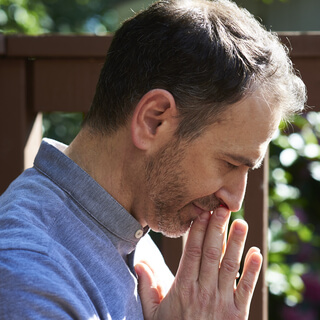
So good morning and welcome everyone.
Welcome to today's guided meditation.
Thank you for joining me,
Whether you're here on live stream with me,
Or if you're listening this later in the meditation library.
Again,
Thank you for being here.
And today I wanted to,
As always,
Cover some mindfulness meditation.
We do this many times,
Many different ways,
And sometimes changing the instructions or the anchor and the focus can help.
Today I wanted to cover the four foundations of mindfulness,
As the Buddha initially taught,
Saying that these were basically the antidote to suffering.
Now,
In past meditations,
We've focused on just one of these areas,
But today we're going to take an overview of all of them.
So,
To start,
We are going to find an established posture.
Come to a comfortable posture,
Whatever works for you today.
You can do this in the traditional seated position.
If you're in a chair like I am,
You might want to prop yourself up.
It's best to keep the spine and the back elongated.
And this is also because the main focus of our foundations of mindfulness are on the breath.
It's considered the king of meditation in certain traditions.
And in order to breathe optimally and functionally,
It helps to have the spine elongated.
Now,
You could do this lying down.
In that case,
Just ensure that your spine is elongated and your head isn't propped up on too many pillows if you're listening to this in a lying down position.
So,
Let's take another moment to really shake out any tension.
Find a posture that's upright but not uptight.
One that you can hold and maintain,
But not rigidly.
So that's why I say you can prop yourself up with pillows.
You might want to cover yourself with a wrap or a blanket.
And then I invite you,
Before closing your eyes,
To look around your space.
I constantly invite us to orient to where we are right now.
Simply notice your environment,
Notice the things around you,
And maybe even make a mental note.
Window,
Trees,
Camera.
And you might want to recite your name silently to yourself,
To help you ground in this moment,
The date,
The time.
And then,
As you feel your body orienting to this environment,
Notice the sounds around you.
If you're in a home with other people,
Know what those sounds might be.
If there's pets or animals.
If you haven't silenced your devices,
That could be part of the practice too.
Know that they're there.
And you can allow all those sounds now to fall into the periphery.
We're just establishing the conditions here for practice.
Now,
Once we are in this upright but not uptight posture,
You can allow your eyes to close if that works best for you,
Or keep your gaze down a bit,
The eyes half open.
Next,
Remind yourself of your intention for being here today.
It's important for us to set the stage to know that our intention is aligned with where we're going to direct our attention and what we're about to practice.
And it could be to get a respite from the wandering,
Racing mind.
To take some time out of the day to cultivate compassion to ourselves.
It could be for the benefit of all beings everywhere.
Just connecting with that intention one more time,
Breathing it in and breathing it out.
And as you can notice,
We've already done a number of practices right now just to establish our mindfulness.
And now we'll formally begin with the sound of the bell.
We're going to begin with the first foundation,
Which is mindfulness of the body.
And to do so,
I invite you to check in with your body.
Just scan it very quickly and notice if there's anything you need to do to allow yourself to be a little bit more comfortable.
So we can adjust,
Shift right now.
And then when we feel the urge to shift and adjust and move later,
That will become an object of meditation.
So today for the mindfulness of the body,
We are now going to focus on breathing.
Breathing is part of the body.
In traditional Indo-Tibetan meditations and practices,
It is common to anchor your attention on the nostrils,
The anapanaspa,
As they say.
And that's the place where we cultivate the feeling of the breath.
And you can try that.
But if you find you experience the breath so clearly elsewhere in the body,
Please anchor there.
We're going to direct our attention to the spot where we are allowing this sensation of the breath to be main stage,
To be at the center.
So as we breathe in,
Root your attention on the breath,
The sensations,
The bodily experience of this breath.
Know that the mind will wander,
That other thoughts or sensations and feelings,
Other bodily sensations will compete for attention.
And this is when we can practice compassion towards ourself.
Attend to the in and know,
Know that you are breathing in.
Attend to the sensations of breathing out,
Knowing you are breathing out.
Our attention,
Or some people might say the mind,
But our attention is observing,
Welcoming,
Embracing the sensation of in,
The sensation of out.
Whether at the anapanasat spot,
The nostrils,
The belly,
This mindfulness may be devoid of language.
You may not have words for the experience.
And that is okay.
We're being with sensation,
Sensation in,
Sensation out.
We're anchoring at one place of feeling the body first.
That's our first practice here.
Every moment,
Every second,
Every millisecond,
Bring the awareness back to the breath.
How do you know you're breathing in?
Can you feel the very beginning of that in-breath?
The top of the in-breath?
The beginning of the out-breath?
The end of it?
The mind wanders even in the middle of one in-breath.
And we practice compassion and kindness.
So now,
Rather than just anchoring at the nostrils,
Belly,
Breath,
The chest,
Let's focus on the entire body as we breathe in.
Foundation one of mindfulness,
Foundation of the body,
Mindfulness of the body.
As we breathe in,
Feel,
Experience,
Sense the whole body.
As you breathe out,
Be with the sensations that arise in the entire body,
From the toes to the fingertips to the crown of the head.
Every moment is an opportunity to come home to this body right now.
No doubt the mind might wander.
Are you practicing kindness,
Compassion?
And that gets us to our second foundation of mindfulness,
Mindfulness of feelings,
Feeling tone.
Now the breath can still be an anchor,
But we have it more in the periphery now.
Now we practice cultivating a feeling of what some people translate as joy or happiness.
To do this,
Contemplate a person,
A place,
A loved one,
A thing that we love without question.
It could be a cat,
Giving a clue into mind,
Someone or some place or something,
A place in nature that is uncomplicated,
That when you think of them or this place,
You smile.
There's that sense of an anticipation of joy.
Now,
Still using the breath,
As you breathe in,
Feel,
Sense this joy.
As you breathe out,
Feel,
Sense the joy.
Perhaps a useful question may be,
How do I know?
How do I know I'm sensing,
Feeling joy?
This is not to negate it or debate it.
Inquiring,
What are the sensations in the body that I experience?
Lightness,
Tingling,
Upliftment,
Expansion.
As I breathe in,
I experience joy.
As I breathe out,
I experience joy.
Now,
The mind might wander.
That's okay,
We're practicing compassion.
You might find the mind wanders.
You start to create a narrative or story about that object of our joy.
Come back,
Come back to envisioning them,
Opening the heart,
Feeling the joy.
Now,
For many of us,
Maintaining that experience of joy can be challenging,
Difficult.
Other feelings might arise,
Trepidation,
Worry,
Sadness,
Anxiety.
When these other feelings arise,
We practice mindfulness as well.
Remember,
Mindfulness is not about pushing anything away or suppressing it.
Nor is mindfulness judging it,
Pathologizing it,
Making it wrong or bad.
When another strong feeling arises,
Fear,
Anxiety,
Worry,
As we breathe in and experience it,
Say hello.
Hello,
Fear.
Hello,
Sadness.
Imagine them,
These feelings,
Like an infant or small kitten or puppy.
We don't tell the child,
As much as we may want to at times,
We don't tell the kitten,
Get over it,
Stop crying,
You're okay.
We embrace it.
We pick it up.
We feel it with them.
Yeah,
Worry is present.
Grief is present.
Sadness is present.
It's okay.
This is,
This is.
So breathing in,
As we breathe in,
Feel the feeling that is present.
And you might notice,
Just in naming fear,
Worry,
Sadness,
It changes.
And if you can,
Not because you shouldn't feel the others,
But to practice cultivating it,
Come back to joy,
To feel the feelings,
Sense the feelings that are present in this moment.
And now we're going to turn our attention to the mind.
We're going to practice the third foundation,
Mindfulness of mind.
So now the mind is going to be looking at itself.
The breath is in the periphery.
The feelings are in the periphery.
They're still present.
But now attention,
Or anchor,
Is the mind itself.
What state is in the mind,
Is the mind in today?
Is it foggy?
Is it clear?
Is it dancing about?
As you breathe in,
Observe the quality of the mind.
As you breathe out,
Focus on the quality of the mind.
Just note what is,
Again,
As with feelings.
You don't have to change the thoughts.
And we don't have to criticize ourselves for however the thoughts are today.
As I breathe in,
I note the quality of my mind.
As I breathe out,
I focus,
I attend to the quality of my mind.
Now as you practice this,
You might notice as you attend to the quality of the mind,
It may become sharper,
Clearer,
More focused.
And perhaps today it may not.
But now we can practice clearing the mind as I breathe in.
We imagine clearing the mind of any extraneous thoughts.
As we breathe out,
We clear the mind of any extraneous thoughts.
Now,
If something pulls the mind away,
A thought specifically,
Or a very clear feeling,
Anxiety,
Rumination,
Very intense physical sensation,
We welcome it.
So the mind wanders.
It rests on a sensation.
We're mindful of it.
We practice compassion.
We do not berate ourselves for whatever arises or pulls our attention away.
And then we come back.
We can stay there or we come back.
As I breathe in,
I clear my mind.
As I breathe out,
I clear my mind.
So we're practicing concentration,
Directing our attention,
Resting it on an anchor gently.
We're practicing non-judgment,
Non-attachment.
We're practicing equanimity and compassion.
So mindfulness of the mind,
Attention to the state the mind is in,
And then practicing clearing the mind in the breath.
As I breathe in,
I clear the mind.
As I breathe out,
I clear my mind.
I release my mental formations or liberate the mind.
Now,
Finally,
We get to the fourth foundation of mindfulness,
Mindfulness of mental objects,
Mental objects.
I'd like you to call the mind an object.
See what comes up just spontaneously.
It could be your computer.
It could be the chair on which you're sitting.
It could be a flower,
A tree.
It could be the speakers through which you're listening.
It doesn't have to be electronic or man-made.
It could be natural,
A stone,
A rock,
Water.
Bring to mind this object.
As you contemplate this object,
Notice what happens in the body.
Does it soften with this mental image?
Does it brace and tighten?
Does it result in a long sigh or a holding of the breath?
What feelings spontaneously arise when contemplating the object?
Now,
Here we're just holding it in our mind.
And this gets into another important principle in meditation,
Impermanence and interdependentness.
That object,
Whether flower or computer,
Has many parts.
Do we think of the object as its pieces,
Its components?
Or do we think of it as one thing?
So many causes and conditions had to arise in order for this to be here,
In this state,
In your mental state.
And even how we feel about that object can change.
The flower will wither.
The leaves will fall off.
It will die.
Depending on the type,
The bulbs might still be alive but dormant and grow again.
But it requires so many conditions.
The proper amount of light,
The proper temperature,
The amount of water,
Free from critters that might eat it.
The computer has had many people,
Many people working on all the different components to put it together.
Even from the people who designed it or came up with the idea to the person from whom you bought it.
So many conditions.
And how we feel about the computer.
Can't live without it.
Oh,
It's time for an upgrade.
Even that is impermanent.
It changes.
Those things we cling to are bound to change.
So with mindfulness of mental objects,
We contemplate the object and recognize as we contemplate the object,
Our bodies change,
Our feelings change,
The meaning we give something changes.
So how can we ever say we're static?
Take a moment and contemplate.
If all is impermanent,
How can I free myself from suffering of attachment and aversion and anger through contemplating objects,
Contemplating the mind,
Mindfulness of mind,
Mindfulness of feeling,
And mindfulness of breath?
How can this become the skills we use to find more peace?
In these final minutes of our practice here today,
I'd like you to come back to one of these four foundations.
Body,
Breath.
Body,
Feeling,
Mind.
We're mental objects.
And in silence,
Take a few moments to rest there.
Practice that.
Whatever feels of more use,
More ease for you right now with compassion and kindness.
As you slowly begin to shift your awareness to the environment around you,
Let's take a moment to have some gratitude for our body,
For being here,
For transporting us around all day.
Even when it doesn't work the way we want,
A lot of it is still functioning behind the scenes.
Let's thank our heart for continuing to beat,
Our lungs to continue to breathe,
Our mind for its ability,
Even for a millisecond,
To rest its attention on these four foundations.
As always,
I dedicate this practice to all beings everywhere.
May all beings be safe.
May all beings be healthy.
May all beings be at peace and happy.
And may all beings go gently,
Knowing their goodness.
Thank you so much for joining me today.