As you tune into my voice for today's talk,
I invite you to hear the voice deep inside of you,
A guide that has walked through the darkest tunnels and emerged alive and present in this moment,
A guide with monumental resilience to survive,
Live,
And be alive.
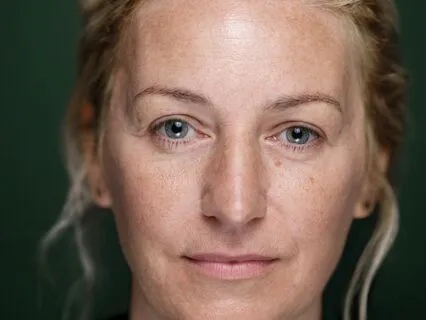
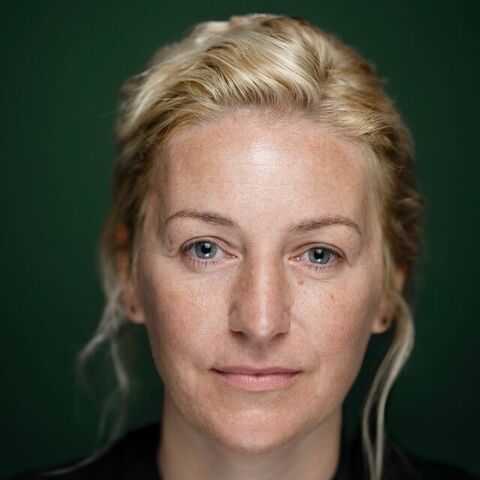
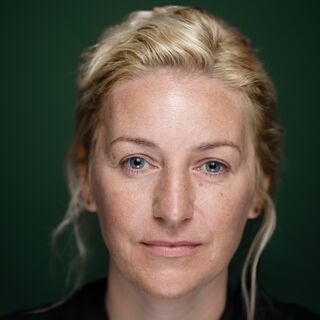
I am Anna Mael,
A somatic experiencing therapist specializing in PTSD and trauma recovery.
I have lived through and survived three wars.
I hope that my lived and professional experience can serve as a valuable companion in your journey to discover,
Honor,
And welcome your voice,
Your guide to the main stage of your valuable human existence.
Let's begin.
We want to love ourself,
We want to be kind to ourself,
We want to be gentle to ourself,
And yet it's not fully happening.
So let's discover what might be the reason for trauma bodies,
For people with lived trauma,
With PTSD.
Before we start to be gentle with ourselves,
Before we start to love ourself again,
We need to learn to be with ourselves and to be ourselves.
And by learning,
I mean we need to make sure our system needs to make sure that we are safe enough that we can be ourself and that it's safe enough that we can be with ourselves.
So when you're living in a place of survival,
We do survive by paying attention to what is outside,
Outside of our bodies,
Outside of ourselves,
Not by what is inside.
In survival,
You abandon yourself.
You have to abandon yourself.
So there is a clear disconnection between your survival brain and the rest of your body,
And your soul,
Your heart,
Your sense of self.
Being internally connected and having internal locus of control would mean you might again be harmed,
Abused,
Or you might get killed.
So that is a luxury for trauma body.
It's a luxury to be with yourself.
It's a luxury to sit with yourself.
You cannot afford that.
And of course,
That kind of system learned not to be gentle with yourself.
It just couldn't.
It couldn't,
It didn't have enough time to feel safe enough and to move external locus of control to internal locus of control.
So how do we heal?
How do we start with this?
By slowing down,
By slowing down and making sure you are at a safe place.
So ideally,
We want to be removed from possibility of threat,
Right?
Your survival brain needs to know two things,
Location of the threat and the time.
If there is no threat beside you,
Your chances just to be higher.
If you live with someone or if you're in the midst of displacement,
If you're in the midst of the war,
If you're with someone who is abusive to you,
You can remove yourself for a couple of minutes or you will know in the midst of the war,
We know,
We usually know when is the next attack.
So when we have this glimmer of peace,
And by peace I mean nothing is going to kill me in the next 10 minutes,
That's your safety.
You're locking yourself in that safety of five minutes.
If you're living with someone who is very abusive,
Secluding yourself into the wash,
Into your bedroom,
Taking a walk,
So you're locking yourself in that safety,
So that's your safety,
Meaning the threat is not above me,
Behind me,
Right from me,
Left from me,
In front of me,
Okay?
Second thing for the survival brain,
What's working is a time.
Survival brain needs certainty.
Survival brain cannot go and say,
Huh,
Let's do this retreat and let's just meditate.
No.
Survival brain needs,
Am I going to be in this state by moving,
Even by moving my eyes from outside to inside for 2 minutes,
10 minutes,
15,
And you're not starting with 15 minutes.
No.
You look around,
Number one,
You look around,
So your survival brain,
Your neuroception,
Can scan possibility of a threat.
So let that happen,
Right?
Now it's a safe place,
I'm at the safe place.
Time?
I will allow my eyes and my awareness to move inside of me,
Bit by bit,
Bit by bit.
Start with 2 minutes,
Start with 20 seconds.
We have many people who are just good at 17 seconds,
That's a lot,
That's a lot,
That's a lot,
17 seconds is a lot.
And enough,
And enough for your nervous system to start to be by yourself and with yourself.
This is how we defend our biology back,
Okay?
And then you tell yourself,
Right here,
Right now,
I am safe.
In this moment,
Right here,
Right now,
I am safe.
Even if you're in the midst of the war.
We had many moments,
In between,
Where we had this ease,
Ease by not being in a hypervigilant state,
Right?
There is a break between bombing.
This is how our nervous system restored,
Replenished.
And then what do we do next?
You pick up one body part,
And this is how you befriend your body part.
You allowed life story of that body part to be witnessed.
You honor that body part,
And you respect that body part.
That body part,
Including your soul,
Including your heart,
Survived for a very long time.
And it has many stories to tell you.
And you be yourself,
And you stay with yourself by knowing every single story of your body parts.
And this is not abandonment.
But for your survival brain to take a leap,
To move from external locus of control to internal locus of control,
It requires a trust.
And that's something trauma survivors don't have.
They don't trust.
They don't trust.
So be easy with yourself.
And this is how you get to love yourself,
By respecting what you went through,
By respecting every single story you had to live in your body,
In your mind,
In your survival brain.
And still being here in this moment,
And wanting to feel better,
Wanting to feel alive,
Because you deserve this.
So let's begin.
Your eyes.
So just take a moment to pause and place awareness on your eyes.
Your eyes worked so hard,
Scanning your surroundings,
Every second of your life.
Looking around,
Identifying any threats that might indicate harm was headed your way.
Do you think about your eyes?
Those lonely eyes,
Looking for love outside,
Looking for reassurance of some kind,
Trying to keep you safe,
Day and night.
Tired eyes,
Do you let them rest?
Do they still spend your days scanning for threats,
Making sure you are safe?
Are they shy?
When there is a moment to connect,
When warmth and compliments are sent their way,
Do they quickly look away?
Can they be fed by the kindness in others' eyes?
Or do they hide their longing gaze away?
Tired eyes,
Can they fully trust others?
Or do they contract with unease,
Always alert and anticipating mistreatment?
Tired eyes,
Can they fully express joy and embrace excitement?
Or do they quickly turn to the ground,
Staying stuck?
Do you see your eyes?
Can you let them rest?
Can they see the beam of genuine care coming from inside of yourself?
Can you meet them with love and pride?
Can you see them in the mirror so they can stop looking around?
Your tired eyes,
Can they find peace inside of your heart?
Can they look into your being,
Filled with protective love?
Tired eyes,
Your sacred eyes,
Your precious eyes.