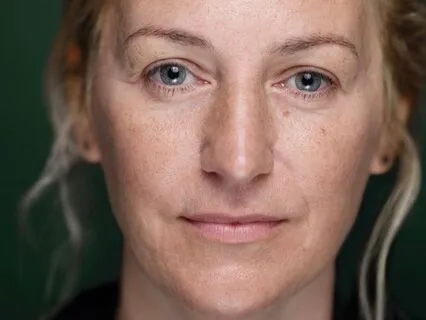
Welcome to Exile in Rising.
I am Anna Mael,
Somatic Experiencing Therapist for PTSD and Trauma Recovery.
Today's piece is called Pleasure is Shame.
I am reading from the book The Trauma We Don't Talk About,
Page 36.
For many people,
Pleasure was never safe.
It was punished,
It was humiliated or taken away.
When we feel guilty for wanting joy,
It isn't because something is wrong with us.
It is because our bodies were taught that feeling good,
Feeling joyful,
Means danger,
Means disloyalty.
In this episode,
We will explore how trauma robs from you your relationship with pleasure,
With joy,
And how safety,
Community,
And self-permission can begin to bring it back where it belongs,
Inside of your body.
So let's begin.
Pleasure is shame.
Feeling ashamed and guilty because of pleasure is a trauma response.
Abusers humiliate their victims for experiencing even the slightest pleasure.
Using their power over their victim,
They instill shame for wanting to feel good,
To feel human.
The moment shame shows up,
Guilt follows.
As thick as molasses,
The guilt and shame drips over the body.
And body is left humiliated,
Believing it can never wash it away.
In turn,
You stop seeking things that make you feel good and joyful,
Or perhaps you fall in a toxic pattern of pursuing pleasure,
Only to punish and shame yourself after,
Just like your abuser did.
Survival guilt is another reason people will not allow to experience pleasure.
Oppression creates a layered trauma,
Which prevents you from feeling happy.
It is not that you don't feel the desire for pleasure.
It is because you feel you are betraying your family,
Or you're betraying your people,
If you experience pleasure.
As experiencing pleasure will make you disloyal to your family,
To your blood,
To your community,
To your ancestors.
So the moment need for pleasure arises,
Inhibition kicks in and prevents it from expanding,
So shame and guilt cannot be ever again experienced in the body.
Your body will learn to invite pleasure back in and transition into a place of joy and happiness and content once you place yourself in a healthy,
Safe environment.
Pleasure seeks social safety.
If survival guilt is preventing you from feeling pleasure,
You will need to learn loyalty to deprivation is not making you loyal to your people,
But disloyal to your life.
So I just take a moment here,
Let this land and we will go into deep analysis of this piece.
And I will repeat last two sentences,
Let that in,
Let that in.
If survival guilt is preventing you from feeling pleasure,
You will need to learn loyalty to deprivation is not making you loyal to your people,
To your family,
But disloyal to your own life.
So as I go in a deep analysis,
You can pause,
Take a piece of paper and write things down and see what's lending for you,
What's lending for your body,
For your soul,
For your heart,
What the memories are showing up,
What the new insights are showing up.
Okay,
Let's begin.
So core teaching here is pleasure and shame are trauma linked.
And I want to reframe pleasure,
Not as indulgence or luxury,
But as an innate human state,
One that trauma disrupts and innate human state.
And as innate state,
We are born to feel joyful,
Not all the time,
But to feel the joy,
To feel the pleasure,
To feel playfulness.
It's a part of our prefrontal cortex,
Right?
If you're looking at animals,
Dogs,
Cats,
They know by default,
All animals,
How to go in this playful state where they do feel pleasure.
But only humans punished state of the pleasure.
So it's trauma linked.
And many people associate pleasure with danger,
Humiliation,
Or betrayal,
Because it was used against you or forbidden by those in power.
And by those in power,
It can be your parents growing up,
It can be mother or father who didn't allow to feel any joy in a family who are joyless,
Playless.
If you're coming from the church,
We absolutely know how the church punished any qualities of pleasures.
So abuse and that neglect severs the link between aliveness and safety.
So if you have been punished for joy,
For sensuality or satisfaction,
The nervous system learns pleasure equals threat.
And what should be restorative becomes dysregulating.
Third,
Guilt replaces joy.
Once shame takes root,
Guilt follows.
And not just as an emotion,
But as a physiological residue.
So you can internalize the abuser judgment.
And by abuser,
This can be very subtle.
This can be a mother who is on one hand very caring or father who is protective.
But when it comes to the joy,
When it comes to this playfulness,
That caring mother or protective father can turn into a completely different persona,
Which is perceived as someone who is very power over.
So you can absolutely internalize someone's judgment,
Carrying it like molasses over the body,
Believing you can never be clean,
Good or worthy again.
So let's move to somatic and psychological lens.
First,
Pleasure as a body-based function.
Pleasure is not abstract.
It's neurochemical,
Right?
We have dopamines,
We have oxytocin,
We have endorphins.
And it's happening inside of your body.
That's your right to feel.
It's happening.
It's happening in your body,
Right?
And when trauma teaches the body that pleasure is unsafe,
It's not clean,
It's not good,
These pathways constrict and body literally stops producing or even tolerating sensation of joy,
Of content.
It stops something what's in your biology,
What's given.
It's just there.
It's given.
Gets to be constricted and dried out.
As you know,
I'm somatic experiencing therapist.
So I work from bottom up therapy.
I work with soma,
I work with body.
And it's so important so we can really get familiar how our body is responding through senses.
And I used molasses as a metaphor.
So as thick as molasses,
The guilt and shame drips over the body.
I use this description so we can get familiar and we can translate our emotional imprint into somatic texture.
And that texture communicates how shame feels heavy,
Sticky,
And it's inescapable.
As you know,
Molasses sticks and it's not easy to wash that out.
These are the soma qualities of feeling the shame.
And shame is very sticky and belongs on our skin.
So where we feel shame first,
It's on our skin.
Many people who feel embarrassed,
First impulse would be they would shake their body or just move their body very quickly to get rid of that from the skin.
One tip you can absolutely do when you feel in a moment,
In a moment,
Embarrassed,
Or if you feel that quality of shame starts over your body,
Very quick movement,
Very quick movement of your skin.
Third,
Cycle of pleasure and punishment.
So many people oscillate between denial and overindulgence.
So first,
Seek pleasure,
Feel guilt,
Self-punishment,
Suppressing desire,
And then seek again.
And this cycle,
This repetition mirrors trauma pattern.
Okay,
So seek pleasure.
So there is a relief,
Shame,
Punishment,
Freeze.
So let me repeat this.
Many people after seeking pleasure,
They feel guilty and they want to self-punish and they want to suppress desire.
It's a very painful state.
It's very painful to feel that way and to go through this.
Fourth,
Nervous system dysregulation.
So your body cannot hold high arousal states.
And high arousal states are also the states of pleasure,
Joy,
Excitement,
Sensuality.
For many people,
Sexuality,
Right?
For many women who are not able to achieve orgasm,
And men who absolutely cannot feel any sexuality in themselves.
So body doesn't have these capacities for high arousal states without tipping into anxiety or collapse.
So in a healing process,
This capacity for pleasure must be rebuilt slowly,
In titrate doses of safety.
Because if we open this pathways of experiencing pleasure,
It can be too much too sudden.
Okay,
And what will follow is anxiety,
Right?
Or shutdown.
So in somatic therapy,
Somatic experiencing therapy,
The main thing is to be so titrate,
So safe and so gentle,
And trusting the wisdom of your body,
Intergenerational and cultural trauma.
Everyone who is minority,
Who has been exiled,
Who has experienced war,
Genocide,
Deplacement,
Poverty,
Survival guilt,
And inherited deprivation is real.
And this is the trauma we don't talk about.
So I want to link personal trauma to collective trauma.
Again,
Oppressed,
Displaced,
War-torn communities may feel pleasure as betrayal.
And it goes,
If I'm happy,
While my people suffer,
I am disloyal.
And this is a survival guilt disguised as morality.
And personally,
I know this place deeply.
Surviving three wars,
Surviving genocide,
Being displaced,
Plus witnessing all my people,
I'm a Serbian from Croatia.
And not only that,
Witnessing my grandparents,
Who were sent to extortion camp,
And who was the only who survived.
So there is a deep,
Deep ingrained loyalty to deprivation.
So let me repeat this.
If you're coming from the place of minorities,
Oppressed,
Less off,
Exiled,
Not good enough,
From church communities,
Rigid church communities,
There is a state of being you know.
And that's a loyalty to deprivation.
And I wanted to name how we,
Generations of us,
Of our lineage,
Your lineage,
Is conditioned by suffering.
There we glorify endurance or joy.
There we almost put on pedestal suffering over playfulness.
And one thing we know is how to endure and how to be resilient and how to push through and move through.
And that was always praised.
And what was always punished and looked down is to feel content,
To feel pleasure,
To feel happy without suppressing innate joy.
And that is this loyalty to life itself.
Let me repeat this.
This is this loyalty to your own life.
You can absolutely honor your family,
Honor your ancestors,
But you don't need to honor survival guilt in them,
Inside of you.
And I heard this many times,
So many times.
Get serious.
Do you see what's happening on the news?
How dare you to dream when our people are getting killed?
It's very caging for the soul.
It's very caging.
It's almost like you don't need oppressor because we oppress ourself by default.
Third one.
So when you're looking at intergenerational cultural trauma,
Oppression is a pleasure.
It's killing system.
So colonialism,
Patriarchy,
And authoritarian control all regulate pleasure,
Especially for women.
Oh,
Boy.
Wow.
I can make 10 episodes just on that one.
Marginalized,
Oppressed bodies,
Oppressed will,
Oppressed authenticity,
Oppressed expression.
Because pleasure is autonomy.
And you know,
If you're coming from power over cultures,
Colonialistic cultures,
History of the war and displacement,
Patriarchy,
Authoritarian family system,
You know that pleasure,
If it's your expression of your own autonomy,
Autonomy was never allowed under those systems.
It was punished.
It was punished to the exiled or to the death.
And restoring pleasure is an act of resistance.
And as you know,
I am activist.
I'm activist.
One thing I will do in my life is to leave the legacy of activism in any form I can.
This is one form.
So restoring your pleasure is your act of resistance.
It is your own partisan.
Your own partisan.
Resisting your own revolutionary of your own life and what happened to you.
And again,
That doesn't mean you will be disloyal to your family.
It's the line.
It's the boundary you will need.
You will need to set up.
And your father,
Your mother,
Your family members,
They can live in their suppressed joy.
But that's their trauma healing and their journey.
It's not yours.
And you can still be connected with them on a different levels.
Okay,
So restoring your pleasure is an act of resistance against all those oppressed systems you lived under.
And now it's a time to move up and not to live in this place of thunder or power over.
When it comes to somatic healing principles,
Okay,
Pleasure seeks safety,
Period.
So the nervous system can only open up to pleasure when it feels secure.
Pleasure and safety are interdependent states.
If you're looking at animals,
Lions,
Cubs,
Right?
They are playful only when it's safe.
Kids,
Right?
You were the most playful,
The most expressive,
Loud,
And bold when you were safe.
With people around,
Or with your best friend,
Or with your dog,
Or on your own,
Right?
So it's a social safety.
Second,
Safe environments rewire desire.
So absolutely,
You can retrieve desire.
Healing requires physically and relational safe context.
Places where joy is not punished.
Sensuality isn't shamed.
Sexuality is not shamed.
And the body only then can relax.
And absolutely,
That desire,
Right?
Your hormones,
Those nice hormones,
Oxytocin,
Dopamine,
Endorphins,
Will start to build their own neural pathway again,
Right?
You will build that new big highway in your body again.
Micro practices of joy.
So how do we start?
So this is one tool,
Okay?
How we build this highway?
Start small.
Start small with your soma.
That's why somatic therapy is so important.
We can talk,
Talk,
Talk,
Right?
But talk therapy will not work on resolving your deep trauma states.
It can be so simple as feeling the sun on your skin.
Savoring food.
Listening music.
Looking at the plants.
Hugging your dog.
Movement of dance.
Glass of cold lemonade.
Start small.
Start small.
And the body relearns that pleasure doesn't predict punishment.
And then just notice,
Ah,
Shame didn't follow.
With all those small things of micro joy,
You just gave to yourself.
And that's a practice you will do every day.
Every day.
Pick five things every day until that practice becomes a skill.
You'll just do it on your own,
Right?
Thank goodness our brain is so adaptive.
And that skill becomes a state.
And state becomes a trait.
It's the way of living,
Okay?
Fourth would be reframe loyalty.
Feeling good does not betray your lineage.
Let me repeat this.
Feeling good does not betray your lineage.
It honors it.
Proving that your people suffering didn't erase their descendants' right to thrive and to feel happy and to feel joyful.
You and your descendants have a right.
It's innate,
Embodied state to feel this way.
And one thing you can do for your descendants to rewrite the story is to start in making a space and time to get back.
Your right to feel joyful,
Content,
Playful,
Creative.
Let's cover political dimensions here.
Pleasure as resistance,
As I said,
For trauma survivors and oppressed peoples,
Reclaiming pleasure is a political act.
It is.
It says,
I choose life despite what tried to erase me.
I choose life despite what tried to erase me.
And feel that,
Feel that.
That's resistance.
That's your life force.
Don't dismiss that.
Don't dismiss that.
Healing is political act.
Second,
A look at the shame is control mechanism.
Whether from abusers,
Parents who didn't know better,
Or institutions,
Systems.
Shame is governance tool.
Oh,
It's such a powerful tool.
It keeps bodies obedient.
It keeps you very obedient and very small.
Because imagine if you're a minority,
Dare you to be bold and happy on the streets.
Right?
The eyes will be on you.
Now you have a power.
You have something to say,
Something to oppress.
You own your own life.
There is a big autonomy.
When people are seen,
Joyful.
It's a deep integrity to be witnessed.
So how is that working for a government who wants to control you?
Right?
For patriarchal systems,
Churches.
One thing they used is to shame people.
And I'm talking about churches who did more damage than good for people,
Not for the good churches.
There is a lot of spiritual abuse happening.
You know that.
So reclaiming pleasure dismantles this internalized oppression.
So that's one way of your activism.
I have an episode,
How to become activist.
You can listen.
And this is right this,
Okay?
That's your act.
Reclaiming back your pleasure.
Because your body will not be obedient.
Again.
Third,
Healing as re-embodiment of joy.
So when I said your body will learn to invite pleasure back in.
It will relearn,
Re-embodied.
So we need to move from cognitive processing to an embodied reclamation.
And body needs to be alive.
It just knows how to do it.
There is cellular memory.
There is a DNA memory.
It's innate memory to feel those states.
And start simple,
As I said.
Start simple.
Don't overthink.
There is no overthinking.
It's only embodiment.
Embodiment.
Let your body leads.
So main teachings here.
If pleasure feels unsafe,
That is a symptom,
Not a flaw.
The body is protecting you based on old information.
On something what happened.
Something you lived.
Second,
Pleasure requires social safety.
It does require social safety.
And you need safe relationships and environments where you won't be condemned.
Where you won't ever receive that silent judging look as you did such a bad thing.
Guilt equals loyalty.
You honor your ancestors by living fully.
Not by continuing their deprivation or deprivation of your parents or your partner.
This can also come living by a partner who learned all of that in his family or her family.
Okay.
You don't need to be loyal to your husband or to your wife.
Survival guilt.
Absolutely not.
That's their journey.
That's their therapy.
Pleasure is sacred.
It is the nervous system way of saying,
I am safe enough to live.
I am safe enough to live.
Not only to survive,
To endure,
But to live.
To live.
Fifth,
Relearning joy takes time.
Same as trauma.
It's layered.
The body must rebuild trust in good sensations.
But this is a good playground you want to explore.
You want to spend time in exploring that playground in your body.
Okay.
So,
Shame around pleasure is not morality.
It's not you're doing something right.
Because our people are suffering.
Or this is what is told.
We need to suffer.
That's trauma.
Reclaiming joy is not betrayal of your past,
But devotion to your life and to your descendants.
Your body is not broken.
It's protecting you in the only way it knows how.
And pleasure will return.
You have innate right for joy,
For content,
For playfulness.
If this episode spoke to you,
Share it with someone who needs to be reminded that joy is not betrayal.
It's life.
Until next time,
Be gentle with yourself.
This is Excellent Rising.
I am Anna Mael,
Founder of Somatic Trauma Recovery Center here in Toronto,
Canada.
Until next time,
Much care,
Much care.