Congratulations on deciding to learn how to reduce your stress level and enhance both your health and your life.
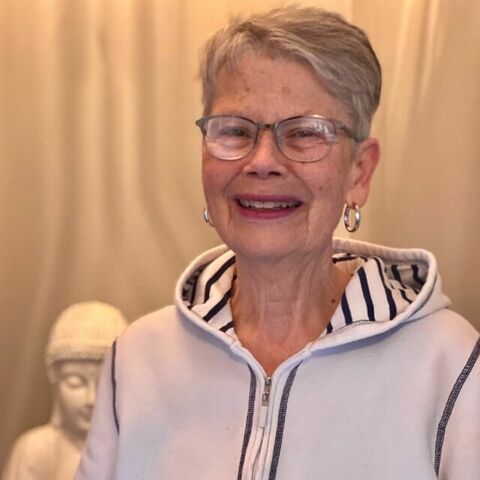
I'm Pat Hutchinson,
And I've been teaching relaxation and visualization since the mid-1990s.
The music in the background is composed,
Arranged,
And produced by a talented Canadian musician,
David Bradstreet.
His CD,
Therasleep,
Is used with his permission and with my appreciation.
I will begin with a little theory about what stress is,
How it affects the body,
And what we can do to counter its negative effects.
I will also provide a brief overview of each of the relaxation techniques.
The method for learning these techniques is to listen to each individual track or technique for seven consecutive days,
At least once a day,
Before going on to the next technique.
This allows the body to develop muscle memory.
Each technique builds on the previous one,
And each session is approximately 20 minutes in length.
During your practice,
You may experience distracting thoughts.
If you do,
Be gentle with yourself.
Once you realize that your focus has changed,
Gently bring your attention back to the exercise.
After a few sessions,
You'll find you automatically follow the instructions.
If you'd prefer to start practicing the individual techniques right away and come back to this first track later on,
Now would be a good time to advance to the next track,
Which is the first technique,
Progressive relaxation.
Enjoy.
Once you've worked through the entire program,
You will have the foundation to quickly,
Easily,
And enjoyably control the negative effects of stress in your life.
You will be able to choose the technique that you wish to use regularly,
Since different people prefer different techniques.
Now a little about stress and how it affects us.
Some stress-related disorders include hypertension and coronary heart disease,
Stomach disorders,
Migraine and tension headaches,
High blood pressure,
Rapid and irregular heartbeats,
Insomnia,
Back pain,
Muscle aches,
Skin diseases and asthmatic conditions,
And many psychiatric disorders.
Medicine Today has brought improved health technology and living conditions.
It has also brought an increasing demand for medical services,
Thereby escalating health care costs.
One way to contain skyrocketing costs and prevent stress-related diseases is to find new health-promoting behaviors and to educate people.
For industry and business,
The costs of stress are well known.
When people learn stress management skills,
There are recognized potential corporate and personal savings,
Which include reduced staff turnover,
Alcoholism,
Absenteeism,
Lateness,
Premature death or disability,
And other symptoms of burnout.
Along with the negative effects of stress,
There are positives.
Stress and tension are necessary and are used in creative ways to make use of energy that would otherwise be lost through disease and distress.
Like most things,
Our responses to stress can be traced to the prehistoric caveman.
The autonomic nervous system prepared him for fight or flight.
A partial list of automatic responses to stress includes slowing of digestion so that more blood can be directed to the muscles in the brain.
We experience this as butterflies in our stomach.
Our breathing becomes faster,
Which supplies more oxygen to the muscles.
The heart speeds up and blood pressure soars,
Forcing blood to the parts of the body that may require it.
We experience this as a pounding heart.
Perspiration increases to cool the body.
This allows the body to use more energy.
Muscles become tense in preparation for action.
We experience this as a stiff neck or back.
Chemicals are released to make the blood clot more easily.
And sugars and fats pour into the bloodstream,
Which provides fuel for quick energy.
Due to the environmental stressors of the caveman,
These responses were appropriate and necessary for survival.
We,
On the other hand,
Have the same automatic stress responses,
But are seldom faced with the need to fight or flee.
When we are threatened,
We tense up and we struggle to contain our nervous reaction.
The threat for us is not usually one of immediate physical harm.
We have smaller,
More frequent stressors and briefer stress responses.
We have so many of these stressors that we hardly notice them and almost take them for granted.
The rate of change in our lives is accelerating.
The unexpected is now a part of our daily lives.
These unexpected situations are not ones we can overcome physically.
Our stress response is triggered more often,
Yet we usually don't have an outlet for the extra chemical energy produced by our bodies.
The fight or flight response is not useful for us,
For the most part,
Because we have few physical battles and almost nowhere to turn.
We can't run from our anxieties or physically fight our fears,
And this causes emotional stress.
Physical and emotional stressors trigger certain hormones to be released into our bloodstream.
When the levels are high over a prolonged period of time,
Physical changes occur in our bodies.
Even if,
Through exercise,
We could use all these chemicals,
Emotional stress can interfere with productivity,
Learning,
And interpersonal relationships.
As our stress responses increase,
We become less and less able to handle minor stress.
The autonomic nervous system has two divisions,
The sympathetic and the parasympathetic.
Sympathetic means before feelings are aroused.
We experience both an increased heart rate and faster breathing before the fear is felt.
These responses are automatic.
Para implies a modification.
The parasympathetic system modifies the automatic sympathetic system.
The heart rate decreases,
Breathing slows down,
Perspiration slows down,
And stomach and gastrointestinal activity slow down.
Scientific evidence is now suggesting that our parasympathetic nervous system can be activated through the practice of relaxation.
We can learn to replace the fight or flight response with what has been called the stay and play response.
Stress affects the way we think and the way we feel.
We become irritable,
And this has a chain reaction which affects our relationships.
Long-term stress affects our personalities.
We become tense and explosive and act compulsively or impulsively,
And we can develop exaggerated fears.
Stress intensifies our difficulties.
All stress is not harmful.
It can be a source of motivation and spur us on to creative work.
It can enrich our pleasurable activities.
Therefore,
The aim is to manage our stress,
Not to remove it.
Those who manage their stress well see life as challenging and enjoyable.
They seem comfortable in just about any situation.
They're calm and collected.
They project a sense of quiet confidence and seem to have overcome a lot of the fears that we associate with modern life.
These people have developed ways of relaxing themselves so that the negative effects of stress are significantly reduced.
Problems really become challenges.
Learning,
Cultivating,
And developing non-pharmaceutical methods of managing stress is not only cost-effective and non-addictive,
But it is also extremely pleasurable.
It gives you control of your life.
The skills take a little time to learn and require practice to perfect your own unique method.
The beauty of learning relaxation techniques is that they are enjoyable,
Inexpensive,
Accessible,
And beneficial.
The goal of learning these techniques is to enable you to adapt them to real-life stressful situations.
With practice,
You will feel a difference in your overall view of life.
After becoming proficient with them,
You will be able to put them to work anywhere and whenever you need them.
You will acquire the habit of relaxation and trade the stress and strain of daily living for a relaxed and enjoyable way of seeing and doing things.
You will learn to change your responses to stressful situations,
And only you can do that for yourself.
Learning relaxation techniques is one component of a complete stress management course.
However,
It is the fastest,
Easiest component,
And will produce immediate results even as you practice them.
A complete stress management course would also include such topics as An assessment of what your personal,
Individual stressors are Methods to overcome them Techniques for controlling your stressful behaviors,
Thoughts,
And attitudes Assertiveness training Learning the difference between being assertive,
Being aggressive,
And being passive Time management Exercise,
Nutrition,
And weight control What I will concentrate on are the relaxation and visualization techniques.
Usually,
Highly stressed individuals know they are highly stressed.
They are convinced that they don't have the time to go through the whole process of stress management.
Highly stressed people can't concentrate on,
Nor are they particularly interested,
In assessing their entire life to change what needs to be changed.
They simply want the negative feelings to go away.
Relaxation doesn't take too much time and doesn't require a lot of thinking,
Which of course is part of the reason we feel so stressed.
Too much thinking.
After learning the techniques and finding the ones that you particularly enjoy,
You'll find that your focus changes.
You'll find a whole world opening up that you were previously unaware of.
Your stress level will reduce drastically.
Your life will become more enjoyable and you'll soon find that you're back in the driver's seat.
The techniques covered in this series include Progressive relaxation,
Which is the first technique,
And presents the basis of all the techniques.
It is imperative that this technique be mastered prior to continuing on.
It is also the only session that has an active physical component,
That is,
The tightening and loosening of the major muscles.
The second is scanning for tension and breathing for relaxation,
And it builds in progressive relaxation.
This is a mental exercise for muscle relaxation.
The third technique is for reaching deeper levels of relaxation.
The fourth is countdown to relaxation.
The fifth is about using autogenic or self-regulated phrases and images.
And the sixth technique is imagery training.
Visualization is the fun part of relaxing.
Visualization can be used for pure enjoyment or for problem solving or creating whatever it is you think you need.
The seventh and eighth sessions work with visualization.
When using visualization for problem solving,
I suggest that you adopt a phrase used by Shakti Gawain to the end of your visualization.
And this phrase is,
In this way,
If what you are trying to create is not to yours and others' overall benefit,
Your inner wisdom will not let it manifest in your life.
Have you ever heard the phrase,
Be careful what you pray for,
You may get it?
What exactly are relaxation and visualization?
Relaxation is a process of bringing together Relaxation is a process of bringing your body,
Mind and emotions into a balanced,
Relaxed state so that your own inner healing devices can be utilized to their fullest.
An electroencephalogram,
Which is a device that employs wires placed on the scalp and forehead to measure electrical activity in the brain,
Registers the different brainwave types.
When we are awake,
Our brainwaves are functioning at a level known as beta.
When we are asleep,
We are in theta.
When we are in a relaxed state,
Alpha brainwaves are registered.
Alpha waves are usually associated with feelings of well-being and relaxation.
They are real and can be seen on an electroencephalogram.
Visualization is the practice of bringing together your left brain and your right brain so that you are working with your whole brain.
When you are in a relaxed,
Receptive state,
You are able to use the alpha waves to accept,
Improve or make changes to your life.
It is while you are in this state that your own inner wisdom or subconscious can communicate with you.
I know this may sound strange if you've never been exposed to this type of experience,
But once you experience it,
You'll know it's real and the strangeness will disappear.
The left brain controls your logical verbal processes.
It is rational,
Intellectual,
Analytical,
Sequential and masculine.
Your right brain handles your intuitive spatial processes.
It is emotional,
Artistic,
Creative,
Musical and feminine.
The only requirements for learning relaxation and visualization are a quiet environment,
A passive attitude,
A comfortable position,
Preferably lying down,
Loose,
Comfortable clothing and perhaps a light cover over your body should you find you feel chilly.
If you have a back problem,
A small pillow should be placed under your knees.
You can practice the techniques in a sitting position,
But it seems to be more beneficial,
Especially when first learning,
To be lying down.
If your intent is to practice,
Not sleep,
And you are practicing at the end of the day when you're tired,
You may want to sit.
If you're practicing in order to get to sleep,
Definitely lie down.
Each session or technique takes approximately 20 minutes.
What follows is a brief overview of each of the different techniques.
The first technique is progressive relaxation,
The foundation of all the techniques.
This is a technique to develop muscle relaxation.
It offers a proven,
Systematic way to control muscle tension.
To relax muscles progressively,
You begin by tensing and relaxing the major muscle groups of the body.
Tensing and relaxing muscles helps to increase awareness of your body's muscular response to stress.
With a heightened awareness of the location and feeling of muscle tension,
The absence of tension becomes clearer.
After tensing,
A muscle will automatically relax more deeply when released.
Through the practice of progressive relaxation,
You will slowly become aware of and practice relaxing muscles that are not required to be tense while performing a specific task.
At the same time,
You will become more proficient in tensing your muscles only to the level required to perform that task,
Thereby reducing physical stress.
Tensing and releasing muscles can be done anywhere,
Anytime.
Through practice,
Relaxing tense muscles can become automatic to you.
The first few days are the hardest because it's not second nature to you yet.
Stay focused and committed,
And in a short time you will see how simple it is.
As you become more practiced at relaxation,
The time it takes for you to become deeply relaxed will grow shorter.
Progressive relaxation is the foundation of all the other techniques.
It teaches you about your body,
Where you hold your tension,
How to release that tension,
And how to focus.
The second technique is scanning and deep muscle relaxation.
This technique is more passive than progressive relaxation.
I will mention different parts of your body,
And as I do,
You'll mentally scan them by thinking about the particular muscle area,
And as you breathe out,
You'll feel the tension slip out.
We will move progressively through the body.
The third technique is counting down,
Which is a deepening technique.
It is a short technique,
And so I team it up with imagery.
This technique will help you produce deeper levels of relaxation very quickly.
You want to become relaxed at will.
This technique will help you learn to do that.
Handling stress successfully means that you have the ability to size up a stressful situation,
Relax quickly,
And then calmly do whatever is needed.
If you count down from 10 to 0 and allow yourself to become comfortably relaxed in that time,
You will have the self-control to deal effectively with any situation.
The brief time it takes to count down from 10 to 0 can be used to break spiraling anxiety and release growing tension.
Using your imagination while counting down is extremely effective.
We will use the imagery of walking slowly downstairs.
Another technique is to simply focus on your breathing as you count down from 10 to 0.
Eventually you will be able to count yourself down to a relaxed state in the time it takes to count from 3 to 1 rather than 10 to 0.
The fourth technique involves using autogenic phrases and images.
Autogenic means self-regulated.
The autogenic relaxation technique builds on the passive-receptive attitude you will learn in deep muscle relaxation training.
It utilizes the power of the trained mind to influence the body in a healthy way.
It's thought to help balance the body's internal self-regulating systems such as the heart rate,
Blood circulation,
And breathing.
Autogenic training helps to control the effects of stress by training the autonomic nervous system to be more relaxed when you're not faced with a real need to fight or run.
Autogenic relaxation is accomplished by passively paying attention to verbal cues for relaxation.
A state of internal calm can be created by reprogramming the subconscious mind.
It involves no direct muscle relaxation exercises.
Instead,
Particular verbal cues are instilled in the subconscious that condition the body to respond differently to the stimuli that produce tension.
Autogenic training emphasizes smooth and rhythmic breathing,
A regular and a calm heartbeat,
And a pleasant warmth with relaxing heaviness throughout the body.
A passive-receptive attitude is even more important here than with deep muscle relaxation.
A passive-receptive attitude can be illustrated by an example.
Think about an occasion when your eye is filled with tears,
Perhaps the death of a loved one or peeling an onion.
If you were to close your eyes and really concentrate on the occasion,
Tears would come to your eyes.
However,
If you tried to force yourself to bring tears to your eyes,
It is likely you wouldn't succeed.
Autogenic training involves conditioning positive and relaxing responses.
The key is to focus on a relaxing phrase or image that will help elicit the automatic response you desire.
In this technique,
You don't work at it actively.
You tell yourself,
My breathing is smooth and rhythmic.
Not,
I want my breathing to be smooth and rhythmic.
Biofeedback machines visually demonstrate that it is possible to decrease your heart rate,
Slow your blood flow,
Or calm your breathing.
It is becoming more and more common for doctors to advise their patients prior to surgery to use this technique.
For obvious reasons,
It would be extremely beneficial to have your blood flowing slower during surgery.
When practicing autogenic relaxation,
A person can usually calm their breathing and heart rate quickly,
But it takes longer to experience a heavy and warm relaxation in the arms,
Hands,
Legs and feet.
Practice will bring about the total experience.
If you have trouble stopping other thoughts from entering in,
You'll find it easier if you combine images with the phrases.
Example,
My breathing is smooth and rhythmic,
And picture a river flowing smoothly along,
Rhythmically slapping the shoreline.
If you still have trouble,
Don't become upset or annoyed.
That defeats the purpose.
Simply let your thoughts flow through and bring your awareness back to the phrases and images.
The fifth technique teaches you how to incorporate imagery into your visualizations.
The use of imagery or visualization is not new.
Athletes use it on a regular basis,
And people from all walks of life use it to enhance their lives and to reach the goals they've set for themselves.
Imagery training relaxes your mind just as the relaxation techniques are designed to relax your body.
Just as it is practically impossible to be physically tense and relaxed at the same time,
So too it is next to impossible to be thinking relaxing,
Peaceful and calming thoughts at the same time that your mind is racing about whatever problem there is in your life right now.
Using imagery teaches you how to produce relaxing images and thoughts.
You can learn how to block out intruding and upsetting ideas.
Have you ever been so tired you can hardly wait to get to bed?
Then you get there,
All set to fall soundly asleep,
And your mind revs up.
This is mental anxiety.
Reducing mental anxiety means knowing what you need to think,
Practicing those thoughts,
And then using them when you need to relax.
This is mental anxiety.
Reducing mental anxiety means knowing what you need to think,
Practicing those thoughts,
And then using them when you need to relax.
Once you have learned how to create pleasant mental images,
You will be able to learn to visualize goals you wish to meet.
Using imagery is like daydreaming.
First you get an image in your mind of some really pleasant scene that you've seen many times.
Then you try to re-experience it as vividly as possible,
Incorporating sight,
Sound,
And smell,
All of your senses.
Listening to music,
Especially calming environmental sounds,
Such as gently rolling ocean waves,
Helps to create a state of calm.
It would probably be more correct to say that mental imagery is sensory imagery.
When you practice,
Try to add all the senses in your images.
Really get into it and see,
Smell,
Taste,
Touch,
And hear what you are creating in your mind.
Be patient and gentle with yourself.
It takes practice.
Again,
If unwanted thoughts intrude,
Be aware of them,
Let them flow by,
And bring your concentration back to your visualization.
The sixth technique is about imagining real-life situations so you can learn how to work through them comfortably.
In this technique,
You will imagine specific situations in your life that cause you to trigger the stress response,
The palpitating heart,
The increased rate of breathing,
Etc.
Once you are aware of your own reactions,
With practice you will be able to use relaxation and imagery,
Which is visualization,
To cope with the situation.
You'll find that once you've mastered the situation in your head,
It is a small step to master it in your life.
The seventh and eighth techniques are about using the other techniques you've learned to create a safe,
Peaceful outdoor environment for you to go to in your mind when you practice relaxation.
You will also create your inner guide.
This will be a being who will provide you with guidance whenever you require it and whenever you ask for it.
When you practice each of the techniques individually for seven days in a row,
You create muscle memory,
Which allows you to quickly relax when you need to do so.
You will find mastering your stress level allows you to use all the extra energy for so many other worthwhile projects or goals you may wish to achieve in your life.
There's a whole new world opening up to you.
Congratulations on choosing well-being and calm in your life.