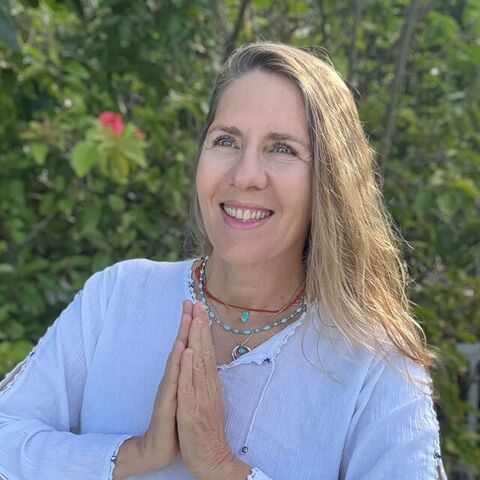
Here we go,
My friends.
Welcome to everyone.
Let's dive into our topic.
We're going to talk today about the Fifth Agreement.
So we've already done the four agreements and they're recorded on the page.
You can reference them back if you'd like.
And today we're going to dive into the Fifth Agreement and the Dharma.
So some of you who might have been with me before know that whatever topic I give and I entertain and dive into,
It's always a Dharma talk.
The Dharma simply means the teachings,
The way,
As it relates to the Buddha.
So the Buddha was a man that lived 2,
600 years ago,
Almost,
And he offered 45 years of teachings after he became enlightened.
And what was he looking to answer?
What was he looking to solve when he was looking deeply into his life before he became enlightened?
He had one question that he was working with and this is the question he was asking.
Why do we suffer and is there an end to suffering?
So I guess that's two questions.
Why do we suffer and is there an end to suffering?
And this is what he did with his life.
He dedicated his life to figuring this out.
And how lucky are we that that was his journey because here we are almost 2,
600 years later and we have the benefit of the wisdom of these ancient teachings that are just as alive and just as relevant in our modern-day life today.
So that's what the Dharma is.
Whenever I say Dharma,
It simply means the teachings of the Buddha.
And so the Fifth Agreement,
That is a little book that was written by Don Miguel Ruiz,
Who is the same author of the Four Agreements.
His Fifth Agreement,
In a nutshell,
What he said was,
Be skeptical but learn to listen.
So we're gonna dive into that in a moment.
But I just want to remind you of the Four Agreements that we discussed in the last few weeks.
We had separate love streams on each of the Four Agreements.
And if some of you don't know the Four Agreements,
Here they are.
And I also really encourage you to get the book.
It's a small little book.
It's a quick read and it's something that you go back to over and over because though it's small,
It's just packed with so much wisdom that it's really a transformational tool.
So here we go.
The First Agreement is,
Be impeccable with your word.
The Second Agreement is,
Don't take things personally.
The Third Agreement is,
Do not assume.
Don't make assumptions.
And the Fourth Agreement is,
Always do your best.
Your best as it relates to that precise moment.
So if you want to dive deeper into those Four Agreements,
Go back on my page later and take a listen to the recordings.
And today we're going into the Fifth Agreement.
So Don Miguel Ruiz finished his book,
The Four Agreements,
And then said,
Wait a minute.
I need to kind of put this all together.
I need to put a Fifth Agreement on the,
Out there.
And so for those of you that are just starting to read the book,
That's so wonderful.
And don't worry,
I'm just giving you a sneak peek.
And it's not in order,
So it's okay for you to listen today,
Even if you haven't read the book yet.
This is going to add to your experience.
I hope that's my intention anyway.
So let's get into it.
I'm going to be weaving in the Dharma,
The Buddha's teachings and lessons,
In with what the book,
The Fifth Agreement,
Is offering.
So in a nutshell,
The Fifth Agreement is telling us to be skeptical when we're listening to somebody talking,
And also to learn to listen deeply.
So in essence,
It's teaching us to question what we're hearing,
Question what we believe in our own minds,
And then to listen deeply to the truth,
Not just to our thoughts,
Because we're going to see how our thoughts are not always telling us the truth,
But to listen from a deeper space,
Which we'll explore.
And it's also teaching us to live from awareness rather than to live from the conditioned mind.
So the conditioned mind is the mind of beliefs,
The mind of thoughts,
The mind that for decades has been absorbing all the ideas and thoughts of the culture,
Society,
The people who raised us,
Perhaps religion,
Perhaps different political parties or groups that one is a part of.
That's the conditioned mind.
And with this Fifth Agreement,
We're going to see how living from this conditioned belief system is a small,
Closed way to live,
Rather than when we learn to listen deeply and live from a space of awareness,
We tap into a wisdom,
We tap into an intuition that's not accessible to us when we're just firing away from our thoughts,
From our belief systems.
So the Fifth Agreement is really bringing us into freedom,
Into a way of questioning our beliefs,
And living more deeply in presence with what's happening right now,
Rather than pulling a belief from the past.
So I'll ask you a question because I love the interaction.
How many of us live in this constant commentary in our minds?
How many of you are living with commentary about yourself,
How you're supposed to be,
How you're supposed to look,
How you're supposed to show up,
Right?
How the world is supposed to look and how the world is supposed to show up,
And how the world is supposed to make me happy,
And life is supposed to be fair,
And everybody's supposed to be equal?
How many of you live with the constant commentary that your kids are supposed to be a certain way?
They're supposed to follow this timeline that I decided.
Why did I decide on this timeline for my kids?
Because I have my own conditioned beliefs about how my children should live their life.
So I always say,
Stop shooting all over yourself and other people,
Because the should is a very dangerous word,
Very dangerous.
Most of us live with a constant commentary,
A narrator voice,
Or a judgy voice,
Or an inner critic.
We'll do a live stream on the inner critic,
That's an important one.
So when we first start exploring this fifth agreement about being skeptical but learning to listen,
It might feel a little bit paradoxical.
Like,
Wait a minute,
But if you're telling me to be skeptical,
It sounds like you want me to have doubt or mistrust,
Or kind of pull away from whatever the other person is saying.
But that's not what it's saying.
What he's telling us,
In terms of being skeptical,
Is he's telling us to listen deeply,
Not only to the other person,
But also to our own selves.
To listen deeply with an openness and a receptivity to what is actually here,
What is actually showing up for me.
So let's take an example,
Let's say a friend of yours said something to you,
Is talking to you about,
You know,
How you're wasting time in your job,
Because you know you don't like your job and you should be changing jobs,
And she's talking about this,
Or he's talking about this,
And immediately you want to rebuttal.
Immediately you want to come at them and say,
No,
No,
You got this all wrong,
You're mistaken,
That's not the case.
Okay?
If you were adding a sprinkle of skepticism,
And if you were adding a sprinkle of deep listening,
Then it would look a little bit differently.
Then when you hear your friend saying these things to you,
What you would do is you would pause,
Take a deep breath,
And bring in a don't know mind.
Maybe I don't know what she's intending with what she's saying.
Maybe I can open receptivity to check out,
Maybe there's something here for me to learn or to question in what she's telling me,
Rather than coming back with a defensive reactivity.
So really,
What we're doing is we're asking ourselves to question what the other person is saying,
Right?
Don't take their word for it,
Question it,
But do it from a space of gentle compassion,
A mind that is flexible and receptive,
Not a mind that is ego-driven and just knows all the answers and needs to defend and needs to tell you how it is,
Basically.
And that's the essence of this fifth agreement.
Question everything and listen deeply,
Not only to the other person,
But to yourself.
And the way this ties in so beautifully with the Dharma is that the Buddha himself said,
I wasn't there,
But this is what's written,
That he asked us never to believe what he says,
Never to believe a word he says,
But to check it out for ourselves,
To really investigate for ourselves,
What is true?
What is true here?
How often do we do that?
How often do we really listen deeply from a space of compassion,
From a space of loving-kindness,
From a space of open receptivity,
Rather than listening in order to defend,
Listening in order to gather up our story and our evidence on how we're going to give the rebuttal to this person,
Right?
I catch myself sometimes,
I have five kids,
And they are between 18 and 27,
So they're not kids anymore,
Young adults.
And there are times when I catch myself,
They're speaking,
And I catch myself making a story of,
I'm about to tell them how they're completely wrong about what they're telling me.
Now,
How do you think that conversation is going to go when you are just arming yourself with a rebuttal,
Rather than slowing down,
Getting out of your own way,
Deeply listening to what they have to share,
And then coming back to them with your comment from that space of deep listening?
It becomes a different way to engage with life.
So,
What is the issue with not doing this?
What is the issue when we don't deeply listen?
The issue is that it creates suffering.
It creates suffering and upset for ourselves and for others,
Because if I'm coming back at you and talking to you in a defensive manner,
You probably will feel like,
I didn't even hear you.
So,
The suffering that happens is because we are not in touch with this present moment,
With the truth of this moment,
With how do I feel about what my,
Let's say,
My child said to me,
Which might have been upsetting.
How do I feel about that?
So,
Rather than feeling into what's here for me,
The truth of what's here,
I might just shoot off my mouth,
Come up with whatever the story is of the moment,
Go with the thoughts of the moment,
Rather than take that pause to really meet how it feels.
Now,
I'm not telling you this is easy,
My friends.
It's a simple concept,
Right?
It's not complicated.
To listen deeply,
To question everything,
And to show up from a space of open receptivity and compassion,
Right?
That's not complicated.
But think about how challenging that can be,
Showing up like that in our lives,
Especially in relationships that have a little bit of friction or in conversations that are uncomfortable.
And so,
What we need to do,
My friends,
Is the P word,
Practice,
Practice,
Practice.
The only way to have these teachings become embodied,
Transform us,
Is with practice,
Is to have a real,
Committed,
Daily practice of working with these teachings,
And working with them in the easy times,
When things aren't rough.
Not when you're having your most challenging conversation with your most challenging person in your life.
That's not the time that you're likely to pull out these teachings unless you've really been practicing with them,
And they become embodied,
Right?
Because the conditioned mind,
That reflexive,
Knee-jerk reaction of,
No,
You don't understand,
Or defending yourself,
Or telling them they're wrong,
It comes up so quickly that there's no time to catch it unless we've been practicing,
Embodying these teachings like the four agreements.
So,
Like the first agreement is,
Be impeccable with your word.
In other words,
Say what you mean and mean what you say.
Well,
If I'm not practicing that on a regular basis,
Every day,
As often as possible,
Many times a day,
That is not going to be available to me.
To be impeccable with my word is not going to be available to me in the middle of a heated emotional conversation.
That's going to be out the window.
The good news is,
In every moment,
With every breath,
We have another chance.
So the good news is that after that heated conversation where I was not impeccable with my word,
I get to go back and revisit it and sit with that.
And think about,
Hmm,
Was I impeccable?
How was I not?
How could I do it differently?
Do I need to apologize?
So through self-inquiry and inner contemplative practice,
Perhaps a journaling practice,
That's a nice way to do self-inquiry,
Or walking meditation,
Whatever resonates for you,
We get to reassess and look at our thoughts and look at our behaviors and continue to attune our lives so that our words,
Our thoughts,
Our actions are all aligned.
What would that feel like?
To live in alignment where thoughts,
Words,
And actions were all aligned,
Bringing your authentic,
Aligned self into this life.
And I have a question for you,
Because questions make this relevant.
If I'm just talking,
Then it becomes a passive blah,
Blah,
Blah kind of talk.
But when I ask questions,
If you bring those questions like a boomerang into yourself and you ask yourself this question and you truly answer it for yourself,
Or you can write it down in your journal and dive into it later,
So the question is,
What would your life look like if you could show up truly aligned where your thoughts,
Words,
And actions were aligned in every space in your life?
Not just the spaces where you're picking,
Choosing,
Oh,
Well,
I can be like that with my best friend when we're on a retreat in the mountains,
You know,
Very specific cocoon.
But what if you could be that,
That authentic self,
That fullness of you in every space in your life?
How would that feel?
How would that feel for you?
So let's go back into the fifth agreement a little bit and see that when we are asked to slow down and be skeptical about what the person is saying,
Or perhaps our own thoughts,
What's going on with our own thoughts about what the person is saying,
We're shifting from making up stories and narratives into seeing reality clearly.
And a lot of my soul surgery patients ask me,
Well,
How do I know what reality is?
Because the thoughts in my head feel really real.
But you know what?
If we all believed all the thoughts in our head,
And we acted from that space,
Presumably,
We'd all be just enlightened,
Right?
Because we think our thoughts are good.
We think our thoughts are correct.
Is that the case?
Are we all enlightened?
Are we all free of all suffering?
Absolutely not.
Of course not.
So how do we know what's reality?
What's real?
How do we know what's real?
The way we know what's real,
My friends,
Is by using our five senses,
Our body,
As a tuning fork.
That's what it is.
Our bodies are like a tuning form.
We are constantly vibrating.
We are vibrating information.
We are vibrating truth.
We are vibrating intuitive wisdom that we cannot access through thoughts.
So how do we do that?
We use sound,
Sight,
Smell,
Taste,
And touch to bring us into presence,
To land in our bodies.
And this is how we see what is really here.
And this takes practice,
My friends.
It takes practice to live in reality.
I have a good girlfriend who always tells me,
Just leave me in my la-la land.
I just want to live in la-la land.
And I said,
Okay,
Not a problem.
It's a choice.
It's a choice.
You can live from la-la land,
Mind,
Or you can live in reality.
I personally want to live in reality.
I don't want to live in the stories in my mind because how do we go to la-la land?
Let me give you the yellow brick road path to la-la land.
Keep believing your thoughts.
Keep making up stories.
Keep making up narratives.
Keep making assumptions.
Keep taking things personally.
Keep listening to that inner critic.
Keep listening to that judge,
That perfectionist.
It's going to take you on a bullet train to la-la land.
So now you have the map.
And if you're like me,
And you're just tired of living in that space with all those voices in your head,
And you're ready to live here in the here and now,
And truly live your life so that you're tingling with aliveness in every moment,
Then I'm inviting you to follow a different path.
And that's really what the Dharma is.
The Buddha told us there's another way.
There is another way.
We don't have to believe the stories our mind tells us.
We don't have to follow the deeply conditioned ego mind.
We don't have to,
My friends.
We can cultivate a mind garden of love,
Compassion,
Generosity,
Joy,
Curiosity,
Equanimity.
So ask yourself,
Which seeds do I want to plant in my mind garden?
And it's heart-mind.
Mind and heart are always together.
So even if I say mind garden,
It's really the heart-mind or mind-heart garden.
Ask yourself,
Which seeds do I want to cultivate in my heart-mind garden?
Do I want to nurture and cultivate and grow seeds of suffering,
Anger,
Jealousy,
Resentment,
Not-enoughness,
Feeling unworthy,
Feeling less than?
Or do I want to water seeds of compassion,
Of love,
Of patience,
Of tolerance?
What seeds do you want to plant,
My friends?
Put it in the chat.
What seeds do you want to plant?
Because we have choice here.
And this is what I love about this path,
Is that at every given moment,
It reminds us we have choice.
When we point outwards and we say,
No,
But I really don't have a choice because of the government,
Because of the politics,
Because of the culture,
Because of the weather,
Because of climate change,
Because of whatever,
When we live from that space,
Blaming outside of ourselves,
We are directly self-victimizing.
We are creating ourselves to be a victim of whatever it is that we're blaming.
If I blame the government,
I'm a victim of the government.
If I blame climate change,
I'm a victim of the climate.
If I blame my partner or my children or my colleagues,
I'm a victim of that,
Their doing.
And it's very disempowering to live as a victim.
And we have such a privilege in this life to have met each other here in this on this gorgeous platform,
Insight Timer,
Where we can meet in truth and speak what's on our heart mind and learn that we have choice.
And if we're not choosing,
We are still choosing by default.
So there's no getting out of it.
So if we're not choosing to put seeds of gratitude,
Seeds of compassion and kindness,
If we're not choosing to put seeds of gratitude,
Kindness and compassion,
By default,
We are nurturing the other seeds that are present.
Maybe seeds of frustration,
Irritation,
Resentment,
Jealousy,
Suffering.
I meet so many people that I work with in my one-on-ones that are truly identified with their suffering.
Suffering can become an identity,
Can become a true identity to the point of almost being an addiction,
Where we cultivate and nurture these thoughts of suffering,
Thoughts that create suffering in our lives,
Over and over and over again,
That it becomes this identity.
I'm the one who suffers.
And then we build the story even further.
I deserve to suffer.
I don't deserve to be happy.
Those are all stories in narratives that we create,
My friends.
Do you see how we're getting farther and farther and farther from reality?
And so if we want to come back out of La La Land and come back to present moment time,
We need to have a practice to be able to do that.
Because without a practice,
We will be taking the bullet train to La La Land every other second.
It's that deeply ingrained for us.
So I ask you,
What is your practice?
What do you do to cultivate seeds of gratitude,
Of compassion?
What do you do to catch the moment when you're just starting to notice the seeds of anger show up,
Or the seeds of feeding my story of I'm not enough,
And they don't love me,
And they don't like me,
And I'm not worthy,
And nobody will accept me?
What do you do?
What is your practice?
Without a consistent practice,
My friends,
These teachings do not lead to the true transformation that's available to us here.
It's not possible.
The mind is too cluttered.
It's kind of like weeding the garden.
If we want to plant these beautiful seeds in our mind garden,
We need to prepare the soil,
Right?
The soil has to be nourished.
We need to make sure we have the right conditions.
The sun,
The water,
Fertile soil,
Nourishing ground.
We need to pluck the weeds,
Put whatever fertilizer and nourishment to support the growth.
That's what the practice is.
That's exactly what the practice is.
That's why sometimes I laugh,
Because when I type the words soul surgeon,
Sometimes my autocorrect changes it to soil surgeon,
S-O-I-L,
And I laugh because I am not just a soul surgeon,
But I'm also a soil surgeon,
Because we need to cultivate fertile ground,
Fertile soil.
If we plant,
Attempt to plant seeds of compassion in a bucket of anger,
It's not going to stick.
It's not going to grow.
So this is why it's important to know what your practice is,
And I'm going to offer your practice.
Those of you that have been with me before might have heard it,
And those that are new,
I invite you to dive into it and see how how it feels for you.
So here's the practice,
And the practice is the ABCs of soul surgery,
And I came up up with it a while back,
Because I was a surgeon,
A real surgeon,
With a real scalpel for 25 years.
I worked as a plastic and reconstructive surgeon and microsurgeon,
And in trauma surgery,
We have the ABCs of trauma,
Airway,
Breathing,
Circulation,
So that way when someone comes in on the verge of death to the emergency room,
The very first thing we think of is ABCs,
Because that's how you save a life,
Keeping the airway,
Keeping them breathing and oxygenated,
And then keeping the blood flowing,
The circulation.
So one day,
A few years back,
It occurred to me,
Wait a minute,
I need ABCs of soul surgery,
Or soil surgery.
I need ABCs that are going to help us nurture fertile soil,
So that we can transform.
So I came up with the ABCs of soul surgery,
Awareness,
Breath,
And compassionate contemplation.
So this is how we work them.
Thanks,
Chris,
You're familiar with them.
Awareness,
The first intervention is always,
Always,
But only always,
Awareness.
Without awareness,
We can't proceed to any other steps.
Awareness means we begin to wake up in our life.
We begin to question the narrative,
We begin to question the thoughts,
We become aware.
Awareness is the opposite of autopilot.
Awareness is the opposite of the conditioned mind,
The one that just goes on nonstop.
You know your thoughts,
The ones that are just on autopilot,
That just keep popping up every time.
That's the opposite of awareness.
So the first step in the ABCs of soul surgery is awareness.
So let's say you're having a difficult conversation with someone,
And all of a sudden there's some anger,
The conversation is getting heated,
And the voices are rising,
And you're kind of talking at each other.
The moment you become aware that anger is arising,
That's when you are aware,
And that's when possibilities arise.
There is no possibility for change or transformation without awareness.
So this is a practice,
You can see.
You may not catch it the first 10 times that anger arises,
But on that 11th time,
You might realize,
Oh wait a minute,
That tightness in my chest,
And my voice is rising,
And my face is getting flushed,
That's anger,
It's coming up,
It's right here,
And you'll catch it.
So in that first step of awareness,
We name what's here.
We just label it.
Anger is here.
Notice,
I'm not saying,
I am angry.
I'm saying,
Anger is here.
Because we don't want to identify with the anger,
Or define ourselves by the anger,
Or whatever emotion,
I'm just using anger for this exercise,
But you can fill in the blank.
Anger is here.
Sadness is here.
Grief is here.
Resentment is here.
Rather than saying,
I am angry,
Or I am resentful.
When we do that,
We give ourselves a little bit of space between the emotion of anger,
And the thoughts about anger,
And awareness.
We let awareness squeeze in there,
By saying,
Anger is here.
What is it that is noticing the anger?
That's awareness.
Your awareness is noticing the anger.
So now there's a little bit of space between you,
Awareness,
Which is your higher self,
And the anger.
So that's the A.
We just name it to tame it,
As they say.
Name what's here.
Anger is here.
Now we go to the B of the ABCs of Soul Surgery,
And the B is breath.
The breath is a magical tool,
And nobody teaches us this when we're young.
Imagine if every five-year-old,
In order to graduate kindergarten,
Would learn these ABCs.
Just imagine.
But you can teach them to the young people in your life,
Too.
That's the beauty of having these love streams on this platform.
We can share with each other,
And then let it benefit everyone that we meet.
So the breath is the anchor that brings us into presence,
Out of the thinking mind,
Out of the mind that is creating all these stories about the anger,
And how the other person is so wrong,
And how they always do this to me,
And all the stories that are coming to you.
When you bring your light of attention,
Your light of awareness to your breath,
You come into presence.
And you come back into the body,
Which brings you into presence,
Because our bodies are always just in present moment time.
So do it with me in this moment,
My friends.
Take a deep,
Conscious breath.
Deep inhale,
And then a slow,
Elongated exhale.
And then micro-pause at the end of the exhale,
Before you notice that the body picks up another inhale.
Because in essence,
My friends,
We're not breathing.
Our bodies are breathing us.
And that's deep,
If you think about it.
But let's have the experience right now,
Instead of thinking about it.
So deep inhale,
And a long,
Elongated,
Micro-pause at the end of the exhale,
Before noticing another breath comes,
And we're back to another inhale.
When we practice the B of the ABCs,
The breath,
We can bring ourselves into a regulated nervous system very quickly.
Because imagine,
If you're angry,
Spewing out upset at your partner,
Your child,
This person in the parking lot,
Your nervous system is not regulated.
Your nervous system is all over the place.
You're in fight or flight.
Your cortisol is up.
Your adrenaline is up.
You are ready for it.
And that's not a space of clarity.
It's not a space of clear thinking.
It's a space of reactivity.
Reactivity from fear,
Because we feel threatened in that moment.
That's what the cortisol and adrenaline does to our body.
It just keeps that fear there so that we can react.
But the breath,
That deep,
Conscious breath,
Takes us back into the body,
Back into alignment,
Back into presence,
And reminds us,
Oh,
Okay,
There's no tiger chasing me here in danger.
There's just a disagreement.
Me and this other person.
So that's the B.
The C of the ABCs of soul surgery.
I couldn't keep it to one C.
I started with a C of contemplation.
But then there are so many good C words.
Oh,
My goodness.
Then there's the C word of compassion,
Which is so important.
Then there's the C word,
Curiosity.
So the condensed version of the ABCs is awareness,
Breath,
And contemplation.
But the expanded version is awareness,
Breath,
And compassionate,
Curious contemplation.
So let's break down the three Cs.
Compassion.
When we become aware of the moment,
Anger is here.
When we take our breath to regulate our nervous system,
Land in our bodies,
And know that we are safe,
It is in itself an act of compassion.
We're being kind to ourselves.
Rather than staying in this high-adrenaline mode,
We're coming back to ourselves and can offer a word of compassion.
Hey,
Sweetheart,
It's okay.
It's okay.
You got angry.
You got angry.
Yeah,
You went off the deep end a little bit.
You flew off the handle.
It's okay.
It's okay.
We all do that sometimes.
Those are words of compassion.
And by the way,
I have a whole love stream on compassion,
So you can find that on my page as a recording if that interests you.
The beautiful thing about compassion is that compassion breeds compassion.
So when we have compassion for our own selves,
It actually elevates compassion for others as well.
Oh,
Just like I flew off the handle,
This other person flew off the handle too.
And that's okay.
I get it because it happens to me too.
So do you see how compassion is contagious in a way?
It offers us to open our hearts to others through a compassionate space.
So the first C is compassion.
The second C is curiosity,
Which really goes with contemplation.
It's just a reminder to have a curious contemplation.
And contemplation can be a short little question,
A little self-inquiry question that brings us out of our momentary emotion that's out of whack and into presence.
And one simple and beautiful question is,
What is true right now?
What do I know is true?
Not what's a story in my head,
Not what is an assumption that I'm creating for myself,
Not what is a belief that I live with that I believe it's this way where I show up as righteous.
But what is true in this moment?
What is really true?
And then we just begin to name those things that are true in the moment.
It's another way of coming back into reality,
Coming back into presence.
So you might say,
Well,
My mind is so nuts when I have a deep emotion like anger or sadness or grief that I don't know what's true.
Everything feels true in my thoughts.
And that's when I invite you back into the body as a tuning fork,
Using the five senses.
What do I hear?
What do I see?
What do I smell?
What do I taste?
And what do I feel as touch?
So you might say to me,
Well,
Dr.
Tammy,
That's really nice,
Very nice ABCs,
But you want me to do this whole shtick like 20 minutes every time I have an angry thought or an angry emotion coming up or a sad emotion?
Well,
Here's the answer to that.
First of all,
Practice,
Practice,
Practice.
The more we practice,
The quicker it comes because now we're conditioning ourselves into the practice of the ABCs rather than into the practice of feeding the anger seeds or the suffering seeds or the story seeds about I'm not enough and I'm not worthy.
So the practice,
When we practice in good moments,
We can begin to bring this practice into the more challenging moments when we get into overwhelm and anxiety.
So now you understand why I keep saying practice,
Practice,
Practice.
And when we practice this often,
The ABCs become very quick.
I just gave it as an extended version.
This was the long extended version to explain it because we need to break it down to understand what we're doing.
But in the moment when we actually do it,
It goes pretty quickly.
The first thing is awareness.
Just really notice what's going on.
Name it to tame it.
Just label it.
Grief is here.
Do you see how almost automatically I said grief is here?
That's the A awareness.
And I took my breath,
Which is the B.
So the more you practice,
They become kind of like a dancing duo.
You know,
When you watch dancers,
You know,
Like tango dancers,
And they're like moving like one because they've practiced so much the movement with each other.
It's the same with the ABCs.
The mind becomes aware,
Labels what's here,
And almost immediately that breath comes.
Why does it come so easily and quickly to me?
Not because I'm a genius.
Not because I'm any better than anybody else.
Simply because I've made a commitment to practice this.
Because I want to transform my suffering.
I want to transform the heart mind seeds of anger and resentment and suffering and upset.
I don't want to live with those seeds.
I don't want to bring those seeds to others.
So I need some practice to support me in those moments of overwhelm and anxiety.
And so for me,
The moment I named the emotion,
That's how quickly the breath comes.
Frustration is here.
And on the exhale,
You relax your eyelids,
You relax your jaw,
You relax your neck and shoulders.
You open your chest.
Do it with me.
Big inhale and exhale.
Micro pause at the bottom of the exhale to notice the silence.
To notice the quiet.
Between the in and out breath.
And then to notice how the body just brings in that next inhale.
We are not breathing,
My friends.
Our bodies are breathing us.
So we get to ask ourselves,
My friends,
Where do I want to live?
What kind of mind garden do I want to plant?
Which seeds do I want to cultivate?
If only seeds of not-enoughness or seeds of presence,
Seeds of authenticity,
Seeds of living in alignment where my thoughts,
Words and actions are all aligned in all the spaces of my life where I show up.
It's up to you,
My friend.
It's up to you,
Each one of you.
We all have choice.
We're not going to do it perfectly.
And that's okay.
We set the intention.
We give that intention our attention.
And we create a commitment.
A commitment in our lives to the direction in which we want to take our lives.
One step at a time.
Like that beautiful quote that I love from Lao Tzu who says the journey of a thousand miles begins with one step.
You can also say with one breath.
One breath at a time.
So thank you,
Friends,
For your comments,
Your reflections,
Your explorations,
Taking us deeper into these teachings.
And like I said,
The topic is an entryway.
It's a doorway.
And then we explore.
We go all sorts of directions.
Ultimately,
Ultimately,
Coming back to the Fifth Agreement and the Buddha Dharma,
Ultimately,
The Fifth Agreement is asking us to question everything,
Just like the Buddha said.
Don't believe it just because it's a written sacred text or because some authority figure is telling you it's true,
Or because everybody else is believing it,
Or because it sounds so spiritual it must be true.
He said don't,
Don't believe it.
Blind faith.
Give it your attention and investigate and ask yourself,
Does this belief that I have,
Does it reduce suffering in my life or does it increase suffering in my life?
Does this belief,
These thoughts that I'm having,
These behaviors,
These emotions,
Are they leading me to expansion and freedom or are they creating a contraction?
That's the ultimate question.
If you forget everything that I've said in this hour and a half live stream,
Love stream,
Just remember this,
This one question that you can refer to every time.
Is this creating more suffering or less suffering?
Is this taking me to expansion or contraction?
And how do you know?
You sit quietly and you engage with the ABCs.
You become aware of what's here,
Belief systems,
Thoughts,
Condition,
Thinking.
You take your deep breath,
More than one if you need,
To regulate your nervous system,
And then you dive into the sea.
Compassionate,
Curious contemplation.
What is true?
And you feel your body.
You feel,
Is there a heaviness in your chest or is there an expansion?
And that's what we're going to do now in a moment in the guided meditation.
And remember that the guided meditation will be posted separate from this recording.
It'll be posted as its own recording.
So if you just wanted to do a guided meditation on this topic of the Fifth Agreement and the Dharma,
You'll be able to find it separately.
So my friends,
I'm deeply grateful for the time we spent together.
And if you have any insights,
Anything you'd like to share,
You're welcome to share it in the chat.
You're also always welcome to send me a DM.
And if you feel inspired to offer Dana,
Dana is the Pali word for generosity.
You're welcome to give green energy,
I call it,
Green love.
It goes directly to the teacher.
And the teacher,
Myself,
Accepts it with deep appreciation.
Thank you for all the hearts.
This is a love stream after all.
So we need the hearts to make this a love stream.
I love the loves streaming.
Thank you for that.
And you're also invited to join our circle.
We have a group and you can find that also on my page.
And you can place comments there.
You can send me direct message if there's something you'd like to share personally.
I respond to everyone who communicates.
And you can also find me in my bio.
And as we close,
I'd like to read my favorite poem from Rumi,
The 13th century spiritual poet who's reaching through the centuries to shake us up with his poem called The Breeze at Dawn.
The Breeze at Dawn has secrets to tell you.
Don't go back to sleep.
You must ask for what you really want.
Don't go back to sleep.
People are going back and forth across the door sill where the two worlds touch.
The door is round and open.
Don't go back to sleep.
Let me share the merit that whatever benefit might have come to us today from our listening and being here,
May it be shared with our own selves and benefit everyone we encounter.
And may it aid in the transformation of our world.
Om Shanti,
Shanti,
Shanti.
Peace in your heart.
Peace in your mind.
Peace in your world.
In your life.
Peace for us all.
Thank you,
My beautiful friends,
For being here,
For engaging,
For bringing your energy,
Your questions,
Your life,
Your breath,
Into our time together.
I appreciate you,
And I will see you here next week,
Live in one week.
And in the meanwhile,
You can also find recordings and meditations on my page,
And I'm working on a few courses that will be posted soon.
And thank you for all the hearts.
They make the screen alive in our love stream.
Thank you,
Friends.
See you next time.
And don't forget,
Don't go back to sleep.
Bye for now.