Hello,
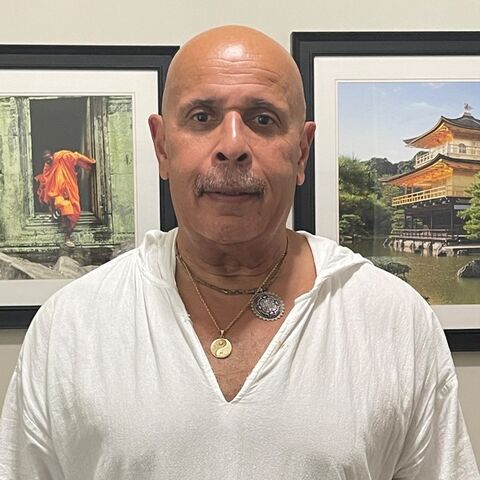
This is Alonzo,
Also known as the Life Lama,
And I'd like to welcome you to this guided meditation,
And I'd like to thank you for being here.
Today,
We're going to do something very brave and very rare in our culture.
We're going to honor our pain.
In the West,
A young analyst named Robert A.
Johnson wrote a beautiful little book on what he called honoring the shadow,
The parts of ourselves that we push away,
Deny,
And refuse to look at.
He explains that whatever we exile into the dark doesn't disappear.
It becomes more distorted,
More powerful,
And more likely to erupt in ways that we don't understand.
In a similar spirit,
Carl Jung wrote,
There is no light without shadow.
He understood that wholeness doesn't come from chasing a light,
But from turning toward the parts of ourselves that hurt,
That feel broken,
Ashamed,
Or afraid.
In this meditation,
We'll practice what Johnson and Jung both point toward in their own ways.
And that is,
Instead of pushing pain away,
We will welcome it into awareness,
Gently,
Safely,
And kindly.
But let's first arrive by taking a few deep breaths together.
Breathe in deeply to the count of four,
Hold for a second,
And then breathe out to a count of six.
Let's do that again.
Breathe in to a count of four,
Hold,
Breathe out to a count of six.
One more time.
Breathe in,
Count of four,
Hold,
Breathe out,
Count of six.
Find a position that feels stable and supported.
You can sit,
Lie down,
Or even recline,
As long as your body feels safe enough to soften.
Let your eyes gently close,
Or keep them half open with a soft gaze.
Begin by noticing the simple rhythm of your breath.
No need to change it,
Just notice,
I am breathing in,
I am breathing out,
I am breathing out,
I am aware that I am breathing in,
I'm aware that I am breathing out.
Feel the weight of your body being held by the chair,
The bed,
Or the cushion.
You don't have to hold yourself up alone right now.
Let the ground support you.
Now we're going to scan through our body.
Bring awareness to your forehead.
Notice any tension.
If you like,
You can imagine the muscles in your forehead melting like ice under a warm sun.
Bring attention to your jaw.
Unclench it just a little.
Allow your tongue to rest comfortably.
Your neck and shoulders.
Many of us wear our pain here.
Let the shoulders fall a little heavier.
Imagine that any armor you're wearing can loosen,
Even if it's just a notch.
Check your chest and heart area.
Notice if it feels open,
Tight,
Guarded,
Or tender.
We're not trying to fix anything.
We're only trying to see what's already there.
Bring your attention to your belly.
Let the belly be soft.
Allow it to rise and fall naturally with the breath.
Now,
For a few breaths,
Just stay with the body as it is.
Breathing,
Shifting,
Feeling.
Nothing to force,
Nothing to perform.
Breathing out.
I'm aware that I'm breathing out.
Set with that for a few seconds.
Now,
Gently bring to mind a place where you feel pain.
It could be a physical discomfort in the body.
A heaviness in the chest.
A knot of anxiety in the stomach.
A grief,
Loneliness,
Or heartbreak that lives in an emotional ache.
Let your body feel safe.
You might silently whisper it inwardly.
I see you.
Not trying to fix it.
Not trying to get rid of it.
Just acknowledging.
Pain,
You are here and I'm willing to notice you.
This is what it means to honor our pain.
Not turning it into a drama.
Not collapsing into it.
Simply recognizing there's something here that hurts and it deserves to be seen.
If it becomes too intense at any time,
You can widen your awareness back to the feeling of your breath or the contact points of your body with the ground.
You're always allowed to step back.
For now,
Imagine you're sitting with your pain the way you might sit with a friend who's crying.
You don't have to fix it.
You just have to stay.
Breathe out.
Breathing in,
I'm aware that I'm breathing in.
Breathing out,
I'm aware that I'm breathing out.
Just let it be.
Sit with that for a few moments.
From a psychological point of view and from a Buddhist point of view,
Pain is not the enemy.
Our resistance to pain is what turns pain into suffering.
When we refuse to acknowledge pain,
When we push it into what Jung called the shadow,
It doesn't go away.
It leaks out as irritability,
Numbness,
Self-sabotage,
Addiction.
A constant sense that something is wrong,
But we don't know what.
Robert Johnson wrote that owning the shadow,
Bringing what is hidden into awareness is an act of responsibility and maturity.
In the same way,
Honoring our pain is an act of inner adulthood.
When we stop waiting for someone else to hold it for us and we begin learning how to hold it ourselves.
From a Buddhist perspective,
When we grasp that pleasure and run from pain,
We create a constant cycle of craving and aversion.
This restlessness keeps the mind agitated and the heart closed.
When we honor pain,
Something very different happens.
Pain becomes information instead of punishment.
It shows us where we're still clinging and when we're still afraid,
Where we're still feeling separate and unworthy.
It becomes a teacher pointing toward the places that need compassion.
Honoring pain doesn't mean liking it.
It doesn't mean wanting it.
It simply means we are willing to meet reality as it is instead of fighting it.
Each time we do this,
The pain loosens its grip.
The shadow becomes less frightening.
We discover that we're bigger than what we feel.
Take a few moments to breathe.
Now it's time to work more directly with the pain you're aware of.
Bring your attention back to that place of discomfort,
Physical or emotional.
Imagine that this pain is like a small child or a small animal that has been left outside in the cold.
It's shivering,
It's frightened,
Maybe angry,
Maybe confused.
Ask yourself inwardly,
What if this pain is not here to attack me but to get my attention?
For a moment,
Imagine yourself opening the door to this shivering part.
You don't have to invite it into every room of the house,
Just one small safe space in your heart.
You might say inwardly,
You're allowed to be here.
You don't have to shout anymore.
I'm listening.
As you breathe in,
Imagine drawing this pain a little closer into the warmth of your awareness.
As you breathe out,
Imagine sending it a gentle wave of kindness.
Breathe in awareness,
Breathe out kindness.
Breathe in awareness,
Breathe out kindness.
Be aware that you're breathing in awareness.
Be aware that you're breathing out kindness.
If it feels right,
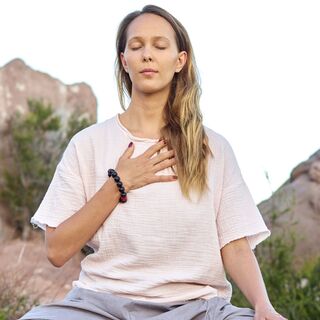
Place a hand over the part of your body where you feel this pain the most,
Maybe your chest,
Your stomach or another area.
Let the warmth of your hand be a physical sign of your willingness to honor the pain.
No fixing,
No forcing,
Just staying.
Breathe with that for a moment.
If words arise,
You can simply say to the pain,
I'm sorry I ignored you for so long.
Thank you for trying to protect me.
I'm listening now.
Notice how the pain responds,
Even if the response is simply,
Not yet.
That's okay.
The important part is that you're here.
Breathe for a few moments.
Now I want you to gently widen your awareness.
Look for the place of the pain,
The sounds around you.
Instead of being a person trapped inside the pain,
See if you can feel yourself as the space in which the pain is appearing.
The pain is here,
But you are the awareness that notices it.
Just as clouds move through the sky,
Pain moves through awareness.
It may stay a while,
It may return,
But it is never the whole sky.
For the next few breaths,
Simply rest as the sky like awareness,
Not trying to fix the clouds,
Not trying to push them away.
Just let them be.
Before we end,
I'd like to offer you a simple exercise you can use whenever pain arises,
Physical or emotional.
I want you to use the acronym AWE.
I want you to be in awe of this pain.
A is to acknowledge.
When pain arises,
Instead of immediately distracting,
Numbing or juzzing,
Pause and say,
Something in me is hurting.
Name it.
This is sadness.
This is fear.
This is tightness in my chest.
You're not saying I am the pain.
You're saying I notice the pain.
The W in awe.
Welcome the pain.
Tell the pain you're allowed to be here.
You might place a hand on your heart or the area of your body that hurts.
Breathe into that space as if you're creating a little more room.
Welcoming doesn't mean you like it.
It means you're willing to stop fighting with reality in this particular moment.
And finally,
The E.
Explore.
Ask the pain very gently as if speaking to a frightened child.
What are you trying to tell me?
What do you need right now?
Is there something I've been avoiding?
You don't have to get clear answers right away.
The core of this step is curiosity and kindness,
Rather than fear and rejection.
You can even journal it afterwards.
Today,
My pain said,
What I learned from my pain today was,
All practice,
Acknowledge,
Welcome,
Explore,
Turns pain from a prison guard into a guide.
It's how we honor our shadow,
Our wounds,
And our humanity.
Take a few moments to breathe.
Now,
Bring your attention back to your breath.
Notice the gentle rise and fall.
Take a slow,
Deep breath in and a slow,
Complete breath out.
Remember,
You are not your pain.
You are the awareness that can hold it.
You are the kindness that can meet it.
You are the space big enough for both light and shadow.
When you're ready,
Begin to wiggle your fingers and toes.
Gently open your eyes or soften your gaze.
Carry this intention with you.
When pain appears,
I will try to honor it,
Not hate it.
I will listen,
Not run.
I will meet it with as much kindness as I can.
And thank you so much for taking the time to meditate with me.