The most beautiful blessing of being able to offer these teachings,
So just to be together in a group and to feel that sense of connection,
It's certainly bringing me through these difficult times of prolonged isolation there at this point.
So,
And this is the thing isn't it,
You know,
Sometimes we encounter things in life that we really don't have much control over,
You know,
Nobody could have predicted the pandemic,
Nobody can ever really predict what happens in the political arenas in life,
So many things that we're going through as a global community at the moment and of course,
You know,
With social media and constant kind of news input,
Everything feels as though it's happening just around the corner and sometimes we can really forget to to look at where our real refuge lies and to really find that refuge,
To even cultivate and develop that refuge within ourselves which you can actually learn to lean into where joy,
Gratitude,
Happiness,
Even celebration of life and the beauty in life can be found.
And so these are the times that the Brahma Viharas can really be of great support and today we're talking about mudita which is often translated as sympathetic or vicarious or altruistic joy,
So it's a kind of joy that is actually increased by rousing thoughts of beautiful qualities within ourselves,
Thoughts of things we have to be grateful for,
But also learning to tune up to the happiness in the world and to the success and to the joy that others experience.
It can be material success or gain,
It can be qualities that we see in others that are really admirable,
You know,
It really can range from anything.
There's this beautiful social media group called the Kindness Pandemic which was set up at the beginning of the Covid crisis and I go on there from time to time just to read really beautiful inspiring stories of people's generosity and goodness and you can see from reading the stories just how that encourages others to also partake in just being that bit more generous and going the extra mile to bring a bit of joy to somebody else's life.
You know recently I read about one young teenager who's very shy and quiet and he was growing his hair,
Really really long hair and his mom just thought okay you know this is what teenagers do,
They grow really long hair,
But the whole intention of doing that was so that he could then donate it to cancer research to somebody who'd lost their hair you know through undergoing chemo and he just did that very quietly in his own way because he found it was something he could do to serve.
And then we can also read of really extraordinary things that people do.
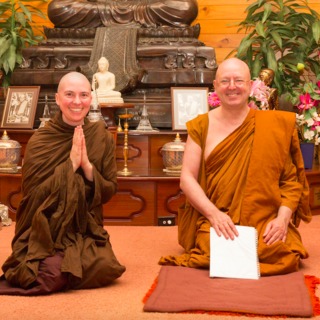
Ajahn Brahm reminded me of the book that was the time that there was a truth and reconciliation process started by Nelson Mandela and I think Desmond Tutu in South Africa and the idea of this was so that people could come forward,
People who'd you know perpetrated crimes,
Mostly racism,
Against others in South Africa and the idea was that they wouldn't be punished if they would come forward and confess and tell the truth about what happened.
And so this one white police officer came forward in front of the wife of her husband who he'd tortured to death basically and he confessed exactly what had happened you know this woman had lost her husband she had no what had happened and wanted some closure and he told it in all its detail you know crying and sobbing and she managed to jump past the security guards and approach this person running at him and everybody sort of took a breath sort of what's going to happen next and what she did was to throw her arms around him and to say I forgive you thank you so much for letting us know what had happened I forgive you.
This is extraordinary and these are the kind of things we can look at to inspire ourselves to uplift our heart.
So gradually it helps us this quality of moody to have sympathetic joy to not to avoid the suffering in life not to whitewash it but to learn to tune in to the beauty in humanity to the beauty in our own hearts and also the kindness and goodness in the world.
So it can be people's material success also and this is where it can be really helpful in overcoming qualities like well not a quality really but envy or resentment jealousy that can arise to block that ability that we have to actually delight when other people are happy.
Yeah some of the time when other people are happy it can actually make us feel worse if we look at it in the wrong way you know if we look at it in a comparative way we say oh it's so unfair this person's having this and that success they hardly seem to work for it whereas I work so hard and things seem so hard for me but I think this is often just because we haven't learned to really appreciate what we have in our life yeah we haven't really learned to look at just the miracle of waking up and being able to take a breath I mean it sounds so small but that shows that we're alive we're really truly alive and we can become present to that just in the short moment of one simple in-breath and out-breath you know just we can do that now together.
Just really allow yourself to breathe and just to arrive you know we have clean air to breathe nobody is suffocating us nobody is oppressing us right now a lot of the oppression comes from our own inner attitudes and limitations that we impose upon ourselves you know we can go downstairs and turn the tap on we can drink the water it's clean we're not going to affect ourselves with bacteria or parasites we can turn all the lights you know we can read we can find so many inspiring things to uplift us you know we can also think about how we can serve others in this world so these are really beautiful things I read something nice by Michelle Obama yesterday she said that she decided to enter the domain of public service for entirely selfish reasons because she would she knew how much happiness and inspiration it would give her to dedicate her life to the service of others and I thought that was just so beautiful you know because it makes us very happy when we can see others happy too and really if we reflect carefully I mean how does it serve us when others suffer when others are suffering basically their hearts are probably going to be more closed down and contracted you know perhaps they feel that they don't have enough and the sense of lack can cause competition can cause jealousy envy even you know fighting and war so it really doesn't serve as if other people are struggling if other people are unhappy and are not experiencing experiencing success and joy in their life you know so reflecting in these ways can really help us to come out of those kind of narrow attitudes which would cause us to wish harm on another or especially if that person happens to be a so-called enemy we don't really wish for their success their success doesn't make us feel very happy right but when we reflect that everybody when they're in a good state of mind has more capacity to really serve and bring that happiness share that happiness with others and so contribute the alleviation of suffering in the world then we can learn to rejoice in their success whether we think they deserve it they've earned it it's it's fair we can still rejoice but of course you know the best causes for rejoicing are when people have really developed their heart in the dharma and and developed remarkable qualities of mine so in a sense the more noble and sublime a person's happiness the more we can really genuinely rejoice for them so i wanted to talk about the mudita as one of the brahma viharas also and how it relates to the other brahma viharas and helps to balance them out in a sense and so i'm not sure how many people here are familiar with the buddha's teachings but the word brahma was traditionally used to mean a being who lives in a godlike state of mine and whether you consider that as a natural realm of existence or not it doesn't really matter but what it means is that they live dwelling with a heart of unlimited goodwill and love loving kindness and a heart that's free from enmity it's free from miserliness in this case or jealousy stinginess yeah that would contract and close down the heart and so these are very sublime states of mind where the heart the mind is expansive and it's soft and of course you can see that from a soft heart an expanded heart there's a certain resilience there there's a resilience to the vicissitudes of life you know to criticism to people wanting to hurt you because your heart is just so big and expensive it's almost like something will hit it and it will just sort of bounce off you know your light your resource your resilient and i was listening to a ted talk the other day by a woman called lucy hone and she said that there are three qualities of resilience in people and one is to understand that suffering does happen and it doesn't mean that anything's gone wrong with your life if you experience suffering you know so one example i had of that was to um when my dad was diagnosed with leukaemia i think in 2011 now and it was some time ago and of course it's the last thing you want to hear that somebody you love and that you're close to is um you know diagnosed with cancer but i remember the thought came to my mind at that moment well other people's dads get cancer so why not mine you know and apparently this is one of the um the qualities or the responses that cause us more resilience because we understand that you know suffering is universal we're not exempt from that we can almost expect that right and yet at the same time we know how to direct our attention yeah towards um first of all the places that we can affect change but also learning to tune in to the happiness that is available and it is is very much a part of life and then the other thing that lucy was saying was an aspect of resilience was being able to reflect and ask the question of yourself is what i'm doing helping or harming me and apparently this has been studied scientifically and this was the most um potent question and the one most likely to bring about greater well-being for oneself and others just to be able to reflect in that way is the way that i'm using my mind helping or harming me and others this would always be very important in buddhism because all of these brahma vihayas should be developed to all as to oneself so mudita is not just this place where we dwell like the brahmas in this divine abidings it's also an expansive state that includes all beings and that's what makes them really apamana apamana means um like immeasurable states so it's going beyond one's own personal happiness to extend that same well-wishing that same rejoicing in the well-being of others to all beings whether we like them or not whether you know we like what they do or not and in this way it dissolves the barriers between beings apparently it's easier for us to have empathy towards people who look like ourselves or who've been brought up in similar ways to ourselves but the brahma vihayas go beyond those boundaries and help us to empathize with all beings whether they look like us whether they are the same gender or a different gender the same sexuality or a different sexuality we see our common humanity and we understand that all beings you know desire happiness and recoil from pain excuse me so not only are these unconditional states of mind they're also impartial in the same way that the sun would shine on all beings equally so although sometimes for example metta is compared to the love of a mother for her only child that unconditional love that no matter what that child does no matter how they turn out you still wish only the best for them the difference is that we have to generate these feelings to all beings as though they were our only child so then it's beyond partiality yeah it's to all beings as i say whether they are like me or whether they are liked by me it doesn't matter they're human beings or sentient beings right this also goes to animals as well and i read a very touching story um yesterday about this lady i think she's in america in quite a cold part of the country and she had a little bird who's been with her for like years so it's always been a domesticated bird and it's her constant companion it sounds a bit strange and there was a video of this little bird really tiny little fluffy thing that would live on her shoulder and um i think this lady lives alone because she said this is her main companion right and she really loves this little bird called sally anyway this woman had been out to the dentist i think yesterday or a couple of days ago and because of that she wasn't quite thinking very clearly and normally she wouldn't take the little bird outside in kind of strong winds or stormy weather but she didn't realize the bird was sitting on her hoodie when she went outside she entered this big blast of cold wind and sleet and terrible icy temperatures and the bird got blown off into the wilderness and so she put this post up on her social media account trying to avoid the word you know what anyway her social media account and uh and and she said i'm devastated you know this little bird was my constant companion and she's gone there's no way she can survive she's been brought up indoors she loves to be indoors she never ventures out in that kind of weather and there's no way she'll find food so she was absolutely devastated and grieving for the next two days and then today i found that amazing story she reported back that there was one person in the town who'd known that her bird had gone missing and this one person also knew that the bird had like a damaged beak and because of that could only eat sort of liquidized food this bird had actually ended up finding that one person in the city where she lives turned up at the pet shop that that person owned and basically had found safety and so that person that one person who knew the bird and knew who it belonged to was able to contact this woman and she um was reunited with this little bird so i tell this story also because it made me feel so joyful obviously because of the suffering she went through and then the beautiful you know outcome but also to show that even birds little birds that seem so insignificant have such a great intelligence because apparently they were oriented by the sound of the what was it boggierees or canaries i think in that pet shop because the lady who owns the bird used to own canaries and somehow the sound of that was like a landmark for that little bird and she even posted a video to show that she wasn't making this up and the little bird was just there the door sort of outside this pet shop on the floor and then the pet shop owner the one person who knew about this bird and knew that she'd gone missing found her just like that so beautiful so reading these kind of stories and reading these kind of stories can so uplift the heart you know and also bring us in touch with that um yeah that feeling that we're so intimately connected we're fragile right all beings are so fragile and we rely on each other for connection simply to survive and we're no different with that we're no different at all so how do these brahma viharas relate to each other and i think it's important to see the connection especially between mudita and compassion another of the brahma viharas right so metta metta loving kindness is the first and most foundational of these four in a way that's like the basis from where the others can develop it's a sense of universal loving kindness and goodwill and it's the antidote to ill will hostility or aversion yeah that can arise in the mind and that includes a version or hostility towards ourself and even towards our meditation object right sometimes we can struggle with the breath and we can actually develop some kind of aversion or slight kind of suspicion maybe or a sense that this breath is something i need to dominate and control so this really helps to soften that aversion that sort of negativity and meta is different from sentimentality it's different from attachment so it's something that frees and expands the heart so in a sense what we can say about the other brahma viharas is that there are ways that love responds that same love that same loving kindness responds when it meets different situations so compassion is how loving kindness and goodwill responds when it encounters or meets suffering in this world or suffering in other beings yeah when we meet somebody who's going through great distress for example they've been parted from their little animal companion and feel that you know partly responsible from that it wouldn't be correct it wouldn't be appropriate to say well may you be happy you know because they're not happy visibly not happy and so the kind of sentiment or to first of all resonate with their suffering and to understand it and then to wish may you be free from that suffering may you find a way through your grief and and find joy again this is much more appropriate and so they say that you know compassion is the way that a mother's love would respond to her child when the child is sick and compassion is the opposite to cruelty it's the antidote to ill to harming violence yeah so it also includes that aspect of being very gentle um and yeah and and focusing on non-harm what can we do to to make ourselves people who are trustworthy who are safe to be around you know the kind of friend who can be there for you through thick and thin they don't just run away when you're struggling this is someone with compassion they can hold your pain when you're unable to hold it for yourself but compassion can sometimes feel a little bit heavy you know especially if we are of the empathetic type and we resonate too much with others distress it can move into what they call empathetic distress and moody to loving kindness that responds to others who are happy who are experiencing joy success moody to can balance that compassion because it's also recognizing that whilst there's great suffering in the world there are also many many reasons to rejoice and to um and to notice that many people are doing well like i would really say straight away everybody here well done you know give yourself a bit of a tap on the back because you you came here right even though you felt anxious even though you were feeling tired you were thinking well maybe i can't even sit up to meditate still you knew that this is where your well-being really lies in you know just offering yourself the opportunity to tune into how you're feeling and to incline your mind gently towards joy and joy doesn't have to be kind of like fireworks that are exploding like full of bliss it can be something very subtle just you know something as subtle as looking at your own virtue the fact that you probably i'm guessing haven't you know shouted and abused somebody this morning and if you have well hey you probably didn't beat them up right it could have been so much worse and just look at your beautiful purity of intention in wanting to develop in the damo and to offering that support to the group because every single person who's here is valuable as part of this group believe me as from my perspective of sharing the damo it wouldn't be possible without being able to tune into you somehow and so just seeing people's faces and the sincerity in your faces is already you know helping me to to generate joy in myself and to feel that joy of serving so everybody is absolutely welcome and as a group it's just quite an overwhelming amount of goodness here that's gathered so there's so much to rejoice in in the world and so mudita can help compassion when it starts to go into kind of melancholic brooding you know just to bring that bit of lightness and perspective to the world and to our attitudes and and outlooks on the world the buddha said that whatever we frequently reflect on and think about becomes the inclination of our mind yeah the power of one thought to create your reality cannot really be underestimated and over time when we continue to have thoughts in a specific sort of with a specific leaning so for example bringing up the things that there are to rejoice about writing a gratitude journal you know every evening before you go to bed three things that you're grateful for today perhaps things that others have done perhaps things that you've done or qualities in yourself that you admire or at least you can recognize right and wish to increase and purify and strengthen or yeah i mean i find this really helpful it just helps to start directing the mind in a different way and you'll find that you'll wake up in a different mood than if you'd have gone to bed just carrying all the stresses and strains of the day so it starts to give a more balanced perspective and at the same time we can say that neither are completely accurate right because until we're actually free from hindrances and we're able to see things truly as they are all our perceptions are going to be conditioned and they're going to be in some way bias but who cares right who cares if we have some influence over how we construct our world how we construct our emotions shape our emotions shape our relationships then surely it makes sense to shape them in ways that lead to the wholesome qualities increasing to the well-being and happiness of ourselves and others and and this in this way we become architects of our own happiness yeah we're no longer just the victims of circumstance the victims of whatever happens to us but we start to take some kind of control control is a strange word so i'd rather say it's a kind of learning to influence or learning to shape learning to fabricate in a wholesome way so i did want to um as usual i have too much to share but um there were two main ways that i wanted to talk about mudita and the first one was um in terms of understanding how it arises and how we can create the foundation for it the preparation for it in our daily life so through like i say the way we start to think the way we reflect on situations that happen in order to undermine what we call the five hindrances yeah and the five hindrances will stop us from accessing much more expansive deep states of meditation where moody could really start to be generated in a universal way so i wanted to talk about that and then later today talk about how we can develop mudita in a sense of spreading it in every direction so at the deeper stage of meditation as a cultivation of the heart so first i wanted to read a little quote out to show how um these qualities become qualities that can spread but also that in the beginning we have to be free from a certain from some of the coarser obstacles to meditation so this is from the kalamasutta and the buddha says that someone practicing here it says a noble disciple but it really means anyone who is practicing this person is devoid of longing devoid of ill will unconfused clearly comprehending ever mindful and then dwells pervading one quarter with a mind imbued with altruistic joy likewise the second third and fourth above and below across and everywhere to all as to oneself one dwells pervading the entire world with a mind imbued with altruistic joy with mudita vast exalted measureless without enmity and without ill will so here we can see that already some of the preparation work has been done right devoid of longing ill will unconfused clearly comprehending ever mindful so this is talking about a disciple in higher training so this is someone who really has reached that stage of freedom from these things but for us we can at least learn to weaken them and one way we can do that is by starting to learn about the law of cause and effect kamna so this is a very important part of the meditation that we have to learn to understand and to start to understand that our intentions basically determine the quality of our lives so when we think or act from a pure mind the buddha says in the dhammapada happiness follows like a never departing shadow yeah and on the other hand when you're in a state of being able to speak with an impure mind with a mind that's full of cruelty or desire or ill will then of course it's the opposite and and the buddha says that suffering follows us like the cart of the ox cart follows the ox it's a little bit of an old-fashioned obviously 2600 years ago image but i've been in berma actually sitting on one of those ox carts and i'm just sitting there you know the two are yoked together and if you're thinking and behavior you know and speech is coming from a place of negativity a place of harm then how can we be expect to be happy it's impossible you know planting the same causes and expecting different results they say is the work of fools right so we have to learn to plant wholesome seeds and also remember that just because we do come from a positive state of mind it doesn't mean that we're not going to be able to do happiness right away okay so this is one of the differences between buddhist understanding of ethics and happiness and the psychological understanding so in psychology they say apparently positive psychology says that if we feel if we do something good or then we feel happiness straight away and you know if we feel happiness straight away that is a good thing but in buddhism we don't say that because sometimes it can be difficult to do the right thing sometimes the effects aren't immediate and we're much less concerned with immediate feelings of well-being and sort of you know feelings of well-being which are more tied up with the sensual world than we are in long-term happiness and long-term happiness has an ethical effect on us and we don't want to do it so it's a culmination of all the good intentions and of all the you know beautiful acts of body speech and mind that we do in an ongoing way this creates happiness for us that's more stable and lasting and that can go long into the future so we never know when those results will arise it takes a little bit of faith sometimes to trust that we're on the right track but slowly you'll start to feel that a different kind of happiness is happening and it's not the kind that's based or reliant or dependent on sensual desires yeah so and then of course if we learn to shape our intentions in wholesome ways this affects our conduct in daily life our minds become more buoyant and happier and i don't know about you but i ask myself well you know when i'm happy aren't i more likely to share aren't i more likely to help others you know when you have that happiness it just bubbles over it spills over to others so you know we do start to be able to be more generous in our speech as well as our actions sometimes people think they've got to be generous in a material way but you can also be generous in the way you offer encouragement to others you offer praise you boost them up when they're feeling low and you rejoice when they're actually experiencing success instead of saying oh or thinking to yourself why did that happen to them it should have happened to me you know we can actually think that's great you know may they not be parted from their gains may they you know continue to increase in happiness and enjoy in buddhism also we have this practice of um anu modana it means rejoicing with others when they do an act of goodness so for example this year i did my first three month retreat in england and it was a solitary retreat here in oxford and uh you know i was a little bit like how is that going to feel to meditate on my own uh to have to create the atmosphere on my own you know not being held in a retreat center where there's already a good energy of meditation but to create a sort of similar setting that can hold me through basically whatever i might go through in that three months but um i took the advice of my teacher and made contentment my goal and there was so much to rejoice in you know first of all from people who are offering me food and vegetable boxes throughout that time and keeping me so well nourished one of the great privileges of being a nun is that i really do get to see people's goodness and kindness the fact that i'm still here right the fact that i'm able to eat every day is purely due to others goodness and kindness because we don't charge for these teachings you know there may be a little registration fee sometimes that goes to the organizers but nothing is charged so if that dhamma is not important to people if they're um if it doesn't mean very much to people then my livelihood will not be sustained i won't be able to continue so it's because of their generosity both at the material level but also you know their love for the dhamma that i can exist as a nun and i can live this life and we can think about developing a monastery so this is very present with me and it sustained me throughout the retreat there was so much gratitude welling up every time i receive a vegetable box or a delivery from the supermarket it was really really touching but also at the end of the retreat we organized what's called a kathina ceremony which is where an offering of a new robe is made to the monastic community and our ex-treasurer tahani organized that and um and had a robe made to my measurements in shri lanka and had it brought over here but when she offered this you know it was all over skype so it was kind of not skype zoom so it was kind of strange you know because we went there in person to do it but she offered it online and she invited everybody else in the room to join in with the merits to join in with the sharing and to you know allow their hearts to be uplifted by this beautiful act of kindness and goodness and celebrating the first three months retreat that we've had you know in a bhikkhuni residence in the uk so there's also this way to do good and then share it with others so if you feel somebody's struggling or even if they're already doing well you can also bring to mind any of the good things that you've done in this thing and share the effects of that with them yeah so i think there was a lot more i wanted to say but i also want to give you some time to meditate and we'll have longer in the afternoon to talk about other aspects of mudita and how to develop that so let's start this morning with a little practice on bringing up some of the goodness in our own hearts and just learning to lean into any joy that's present for you this morning