Welcome to your yin yoga practice.
Before we begin just take a moment to make sure that you have everything you need for your practice today.
You'll need a yoga mat and if you're in a cooler climate make sure you have a blanket to cover yourself with during the relaxation at the end.
You may also need to support your body with props in some of the postures.
If you have yoga blocks those are great but you can also use cushions or pillows or a folded blanket to support yourself.
You may also need a strap belt or tie and if you have a yoga bolster that may be useful too.
So make sure that you have some of those with you in case you need them.
Yin yoga is a passive practice where postures are held for several minutes to stretch into the connective tissues.
These tissues are delicate and can be injured if they're stretched too forcefully or too intensely.
It's good to be able to feel that something is happening but you should never be forcing a stretch or pushing yourself into a position and you never want to be feeling any physical pain as you practice.
Pain is a signal from your body that the position you're in is not safe or beneficial for you.
So if you do feel pain at any time come out of the pose.
You can come into a resting position until the next posture or you can move back into another posture from the class that you didn't experience any pain in.
If you have any injuries or health conditions make sure to consult with your doctor before starting a new practice.
Yin yoga can have many benefits for health and recovery but it's important that your body is suitably recovered that the stretches will benefit the tissues and won't potentially make the injury worse.
So do please check with your doctor first for your safety.
As this is an audio session I'll talk you in and out of the postures verbally but if at any time you're unsure of a posture and don't know if you're in the right position you can always pause the recording and do a quick internet search to bring up a picture.
I've included names for all of the postures so that you can easily do this if you need to.
We're going to start today's practice with some deep breathing.
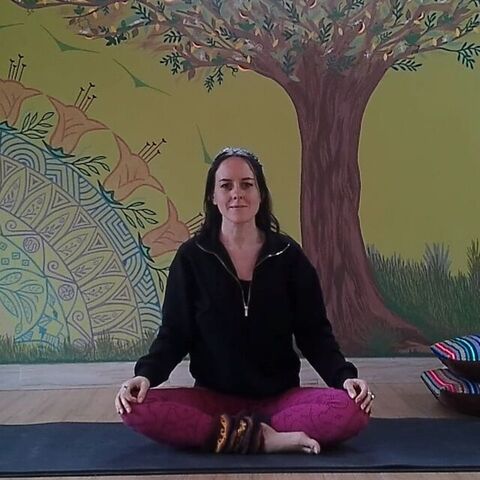
So bring yourself into a comfortable seated position.
You might like to sit with your legs crossed perhaps supporting yourself by sitting onto a block or a folded blanket or by placing blocks or cushions under the thighs or if it feels better for you you might like to come to kneeling.
If it feels best for your back you can begin today's practice by leaning against a wall or even by sitting onto a chair.
Make yourself as comfortable as you can whilst still keeping the spine straight so that your body won't be too much of a distraction as you focus on your breath.
Once you've found your comfortable sitting position close your eyes and bring your awareness to your breathing.
Follow your breath as it flows naturally for you and notice how your breath is flowing today.
Is your breath fast or slow right now?
Is it shallow or deep?
Does the breath flow more into the chest or more into the abdomen?
There's no need to analyse the breath or to try and change it.
Simply observe it as it is.
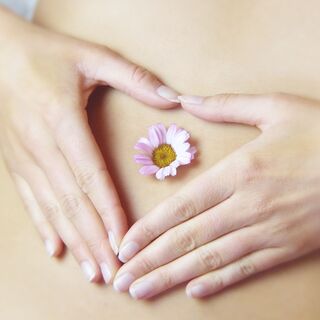
We're going to do some deep breathing so now bring your hands to the lower abdomen and as you inhale breathe as deeply as you can into the belly.
Send the breath into the belly so that you feel the whole of the abdominal area rising under your hands as you breathe in and as you breathe out feel the abdomen relaxing.
Take some more deep breaths like this feeling the abdomen rising under the hands as you breathe in and relaxing again as you breathe out.
Now we'll deepen the breathing keeping the right hand where it is.
Bring the left hand to the chest and as you breathe in first breathe into the belly.
Feel the abdomen rising under your right hand and now continue that inhalation into the chest and feel the chest rising under the left hand.
As you exhale feel the chest relaxing under the left hand and the abdomen relaxing under the right hand.
Take some more breaths like this inhaling into the belly and the chest exhaling from the chest and the belly.
Now let's deepen the breathing even further.
Breathe into the belly into the chest and all the way up to the collarbones.
Feel the collarbones lifting at the top of the inhalation and exhale from the collarbones from the chest and from the belly.
Take some more long deep breaths like this.
Inhale into the belly into the chest up to the tops of the collarbones.
Exhale from the collarbones from the chest from the belly and after your next exhalation release the hands and bring the breathing back to normal.
Take some normal breaths and observe any effects from that practice.
Notice how your body is feeling.
Notice your mind and the speed and content of your thoughts and just observe.
In our practice today we're targeting the neck and the shoulders so we'll begin with some stretches for the neck.
Stay in your comfortable sitting position.
If you need to make any adjustments to make yourself more comfortable just make those adjustments now and make sure that you're sitting comfortably with the spine straight and now keeping the back and the rest of the body still drop the chin down towards the chest.
As you drop the chin a point will come where it starts to feel more intense as if something more is suddenly happening in your body.
When that point comes stop moving and see how much you can relax into the stretch.
This point of intensity is called your edge in yin yoga and it's exactly where you want to be to be receiving the best and safest benefits from the posture.
Now that you found your edge notice if there are any areas of tension in the muscles around your neck or around your shoulders and relax those muscles and observe the sensations that come up in your body as you hold the stretch for a few more breaths.
Gently bring the head back up and now we'll take the head to the side so just let the right ear drop towards the right shoulder again stopping when you reach that edge that point where it starts to feel more intense.
Now see if there are any places where the muscles are clinging that you can relax perhaps in the neck or in the shoulder.
It's when the muscles are relaxed that we're able to stretch into the connective tissue which is what we're targeting in yin yoga.
So if you find any places where the muscles are holding on send a message to those areas to relax and let go.
Slowly bring the head back up to the center and we'll go to the other side now so let the left ear drop towards the left shoulder stopping when you feel your edge.
Relax the muscles and observe the sensations that you feel here and slowly come back up bring the head back to straight and take a few breaths here to observe.
Notice any feelings in your body any sensations any effects from those stretches.
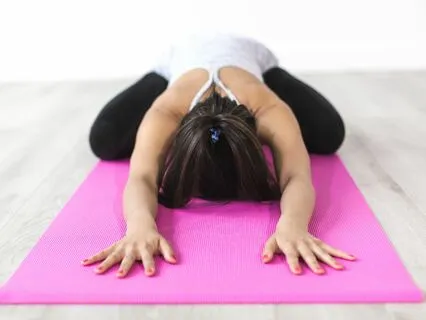
Next we're going to come into a wide child's pose so wherever you are now make your way onto your mat and come to your hands and knees.
Bring the big toes together and open the knees out to the sides.
Sit onto the heels and bring the upper body forwards between the open knees stretching the arms out so that the hands reach towards the corners of the mat and relax the forehead to the mat.
If you would like to support yourself here you could place a block or a cushion onto the heels if it's not accessible or comfortable for you to sit all the way back to the heels and you can also support your head with a block or a cushion or fold your arms in front of you and rest the forehead onto the forearms.
Once you've taken any support that you need scan over your body to see if there are any places that you can relax.
Can you relax the thighs or the hips the shoulders?
Observe the sensations that arise for you in this posture.
Although we're targeting the shoulders and the neck today we have connective tissue all over the body so you may feel the posture working somewhere else and especially in this one it's likely that you might be feeling something around the hips or the thighs.
Watch whatever sensations come.
We'll just stay here for a few more breaths.
Slowly walk the hands in to bring yourself up and make your way back to your hands and knees.
Line the knees up under the hips with the toes pointing backwards and bring the wrists under the shoulders.
Next we're going to come in to thread the needle.
So we'll begin by taking the right arm behind the left.
Thread the right arm behind the left arm keeping the palm of the hand facing upwards so that the right ear and shoulder come down towards the mat.
Keep the right arm straight.
You might find that your shoulder and ear come all the way down to the mat but if they don't just take a block or a folded blanket under the right side of the head here so that your head can relax into the position.
Keeping the right arm straight and parallel to the top of the mat now bring the left arm up to a diagonal angle so that the left hand reaches up towards the left corner of the mat and relax into the posture.
Relax any muscles that are holding on to tension and observe what you feel in this new position.
If there are any places in your body that feel a bit tighter or uncomfortable here you can use the breath to help them to release.
As you inhale send the breath into that uncomfortable area and as you exhale feel the exhalation carrying the tension away.
Feel each exhalation encouraging the release that you need from that place and slowly make your way out of the pose.
Bring the left hand under the left shoulder and push yourself back up bringing the right hand back under the right shoulder and once you're back onto your hands and knees let's just do a few cat-cow stretches here.
On your next inhalation drop the belly towards the mat and push the chest forwards and up through the armpits tilting the head to look upwards and as you exhale bring the chin in towards the chest press into the hands and round the back to arch the upper back upwards and the head inwards.
Draw the navel in towards the spine.
Inhale drop the belly lift the chest look up exhale bring the chin into the chest and round the spine do a few more of these in your own time and now we'll come in to thread the needle on the other side so this time we're taking the left arm behind the right staying aware that we usually have one side that's a bit tighter than the other so this side may feel very different for you.
Bring the left ear and shoulder to the mat or support the left side of the head if that's best for you bring the right arm up towards the right corner of the mat and relax into the posture sending the breath into any tight or uncomfortable areas.
Observe what you feel here and slowly make your way back out.
Bring the left hand under the left shoulder and push yourself back to your hands and knees.
Bring the right hand back under the right shoulder and let's do some more cat-cows here.
Inhale to drop the belly and lift the chest look up exhale the chin to the chest round the back draw the belly in towards the spine.
Next we're going to come into Sphinx pose.
So make your way down onto your belly and bring the elbows under the shoulders with the forearms parallel to the sides of the mat.
This is going to naturally lift your chest but if it feels too intense for you here and isn't somewhere you'll be able to stay for a few minutes you can reduce the intensity by moving the arms forwards which will lower the chest towards the mat or you can even stack the arms in front of you and rest the forehead onto the forearms which will still give you that back bending action.
If you're feeling some tension in the lower back here opening the legs wider can often relieve this and if your chest is lifted you can keep the head looking forwards or let the chin drop towards the chest.
Find whatever's best for you today.
See if there are any muscles that you can relax.
Relax any gripping around the neck or the shoulders.
Send the breath into any tight or uncomfortable areas to encourage their release.
We're going to stay here for another minute and slowly make your way out of the posture.
Take the hands under the shoulders to push yourself up onto your hands and knees and we're going to come back into our wide child's pose.
So bring the big toes together,
Open the knees and sit back onto the heels.
Take the hands out towards the corners of the mat and rest the forehead down supporting yourself in any way that you need to and relax.
Observe the sensations and as you observe the physical sensations observe your thoughts and feelings as well.
In yin yoga we're releasing on every level and sometimes emotions and memories that our bodies have been holding on to are released along with the physical tension.
So if a feeling thought or memory suddenly seems to come up just know that it's something that's being released just like the physical tension is being released.
There's no need to think about it or to go into any details.
Just observe it moving out in the same way that you're observing the physical tension moving out.
We'll just stay here for a few more breaths.
From here we're going to come into bowtie pose.
You're probably going to want to have some support for your forehead here.
So take a block or a cushion to the top of your mat to rest your forehead onto when the time comes and come to lying on your belly.
For bowtie we'll be crossing the arms in front of us whilst remaining on our fronts.
We'll start with the right arm in front.
So cross your arms in front of you keeping the arms straight so that the left arm goes under the right armpit and the right arm goes in front of the left arm.
Keep the palms of the hands facing upwards and now relax the head.
If your forehead comfortably falls towards the mat you can rest it on the mat but for most of us we'll want to support our forehead on a block or a cushion here.
Relax the shoulders,
Relax the upper back,
Relax the upper arms and observe what you feel.
Sending the breath into any areas of tension.
For these final postures we're going to be holding the positions for a little bit longer.
So we've got another minute here.
Slowly make your way back out,
Unwind the arms and take the arms to the sides of the body,
Turning the head to one side on your mat or on your support and take a few breaths here to observe any sensations,
Any effects from the posture and coming back into bowtie,
This time with the left arm in front.
So cross the arms again,
This time taking the right arm under the left armpit and the left arm in front of the right arm,
Keeping the arms straight and the palms facing upwards.
Relax the forehead onto your support or all the way down to the mat.
See if there are any areas where you can relax the muscles a little more.
We'll just stay here for a few more breaths and slowly unwind the arms to come out.
Bring the arms to the sides and turn the head to the opposite side to last time.
Take some breaths here to observe any effects from the posture and from here turn over to lie on your back and we'll finish with a twist.
Bring the knees in towards the chest,
Keeping the knees and the ankles together.
Take the hands to the outside of the hips and shift the hips a little towards the right to make some space for your twist.
Now bring the left hand to the outside of the right thigh and push the legs all the way down to the mat on the left.
Relax the feet and the lower legs here and bring the right arm up to a diagonal angle so the right hand is reaching up towards the top right corner of the mat.
To support yourself you can place a pillow under the legs if they don't easily come all the way to the mat and place a block or a cushion under the right shoulder if it's moving a long way up from the mat.
Either keep the head looking straight up or if it's comfortable for your neck look over your right shoulder.
Relax the right shoulder towards the right and the legs towards the left.
We'll stay here for another two minutes,
Slowly coming back out.
Bring the right hand down to the right side of the body and take the left hand to the outside of the legs and use the left hand to push the legs back to the centre.
Restraighten your hips,
Bring the head to the centre and from here take the feet to the mat at hip distance apart and let the knees drop in towards each other and take some breaths here to observe.
And we'll go to the other side,
So bring the knees into the chest again,
Keeping the knees and ankles connected.
Shift the hips over towards the left and take the right hand to the outside of the left thigh.
Push the legs down to the right side,
Bring the left arm up to a diagonal angle,
The left hand reaching towards the top left corner of the mat.
Turn the head to look over the left shoulder or keep the head looking straight up and relax into the posture.
Slowly coming out,
Bring the left arm back to the left side of the body,
Bring the right hand to the outside of the right leg and push the knees back to the centre.
Restraighten the hips and the neck and take the feet to hip distance apart,
Dropping the knees together again and take some breaths here to observe.
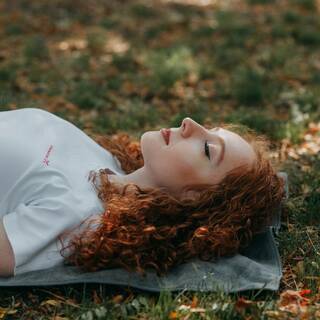
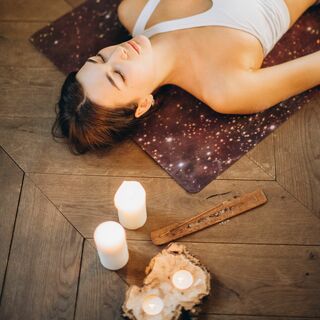
And it's time for Shavasana,
So make yourself comfortable for your relaxation.
You always have the option to stay here with the feet on the mat and the knees together,
If that feels better for your lower back.
Or you can come into Shavasana,
Bringing the legs to straight with the feet a little wider than hip distance apart and the arms a little away from the sides of the body,
With the palms facing upwards.
Do whatever you need to do to make yourself warm and comfortable.
You could place a block or a cushion under your head,
A rolled-up blanket under your knees or feet and cover yourself with a blanket to keep yourself warm as your body temperature will drop as you relax.
And as you settle into your relaxation,
Feel into your body and notice all of the small movements that happen as your body becomes more deeply relaxed.
The small movements in the muscles as they release and let go.
The breath slowing down,
The heartbeat slowing down and with every exhalation feel your body becoming more deeply relaxed.
Feel into your feet and feel any remaining tension releasing from the feet.
As the feet completely relax and let go,
Feel the ankles relaxing.
The lower legs,
The knees,
The thighs,
The hips.
Feel the legs completely relax,
Sinking into the surface beneath you,
Free from tension,
Completely letting go.
Feel any remaining tension releasing from the lower back,
From the middle of the back,
From the upper back and the shoulders.
Feel into the spine and feel every vertebrae of the spine releasing and letting go.
Feel the upper arms relaxing,
The elbows,
The lower arms,
The wrists,
The hands and the fingers,
All free from tension,
Completely letting go.
Feel the back of the head heavy against the surface beneath you,
The brain relaxing inside the skull,
The forehead softening,
The cheeks softening,
Tension releasing from the jaw,
The whole of the head and the face completely relaxed,
Free from tension.
Feel the whole of the body continuing to relax with every breath.
The whole of the body completely relaxed.
The whole of the body completely relaxed.
Slowly prepare to reawaken the body.
Begin to make some small movements with the fingers and the toes.
Begin to circle the wrists and the ankle and when you're ready bring the arms over the head and give yourself a long stretch from the hands all the way down to the feet.
Bend the knees and bring the knees to the chest and gently rock from side to side,
Easing out the lower back and when you feel ready roll over to one side and make your way back to sitting.
Sitting comfortably with the eyes closed,
Take a moment to feel into your body and observe how your body is feeling right now.
Acknowledge any effects from the practice and observe what's happening in your mind.
Notice your thoughts,
The speeds and the content of your thoughts and take a moment to acknowledge how you are feeling right now and before we finish just take a moment now to make a positive intention for yourself for the rest of your day and when you are ready slowly open your eyes.
This brings us to the end of today's practice.
Thank you for practicing with me today.