Welcome.
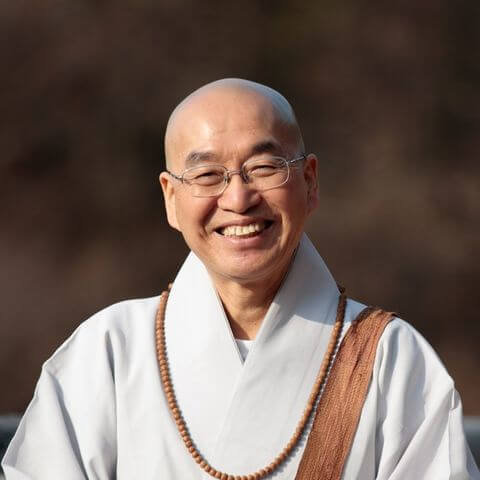
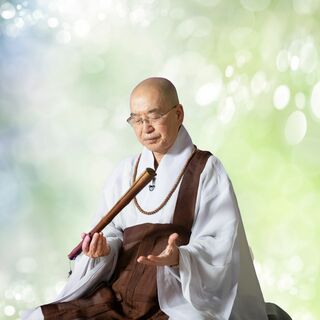
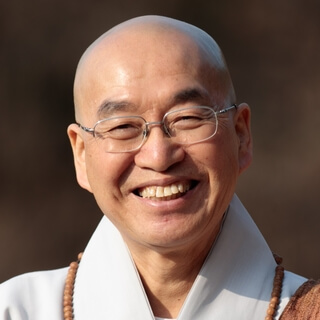
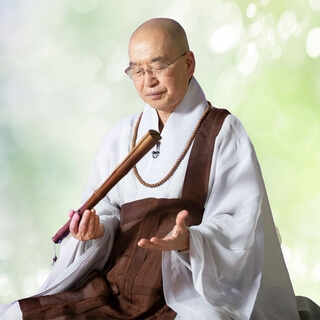
We will begin the online meditation with Venerable Pham Nunsanim shortly.
Before we proceed,
We will meditate for a brief moment to calm our minds.
We will begin the meditation with Venerable Pham Nunsanim.
We will begin the meditation with Venerable Pham Nunsanim.
Hello.
Hello.
How was your last week?
I was in Korea for the first time.
I was in Korea for the first time.
This location where I'm staying in the southern part of Korea,
The weather forecast calls for a very strong storm,
A typhoon to pass by us later on tonight and tomorrow.
I'm in Korea for the first time.
I'm in Korea for the first time.
In a typical season,
Korea usually experiences three or four typhoon events a season,
But recently we've been getting a typhoon every week.
I think we are somewhat relieved.
We can prepare for typhoons beforehand due to the forecast,
And we do everything we can to prepare to minimize any damage,
Although extensive,
That may occur from it.
How do you feel about your spiritual practice?
I think our spiritual practice is similar.
We can prepare for the first day of the day,
And we can prepare for the second day.
We can prepare for the third day of the day.
We can prepare for the third day.
If we know the nature of our karma,
If we know what kind of emotional reactions you have to certain things,
Or what you tend to do,
Then you may safely predict the arc of different consequences because of that.
If you can predict that,
Then you can do everything you can prepare to mitigate those consequences.
That leads to not only to mitigate the consequences of it,
But also gives you a less sense of wrong or surprise when those things happen.
What is the most important concept of Buddha's teaching?
The most important concept of Buddha's teaching is dependent origination.
Basically this occurs because of that,
The cause of it.
If you borrow money,
You have to pay back,
Right?
If you borrow money,
You have to pay back,
Right?
If you have forgotten the fact that you actually borrowed money in the first place,
You feel wronged because you forgot the original fact that you actually borrowed the money.
If you have forgotten the fact that you borrowed money,
You have to pay back,
Right?
So if you don't like paying back,
Then you shouldn't borrow in the first place.
If you have forgotten the fact that you borrowed money,
Then you should pay back,
Right?
But if you had no choice but to borrow in the first place,
Then your attitude should be to willingly pay back with interest.
If you have forgotten the fact that you borrowed money,
Then you should pay back,
Right?
So if you study Buddha's teaching,
What you realize is that you are the master of your own choices in life.
If you have forgotten the fact that you borrowed money,
Then you should pay back,
Right?
So if you have forgotten the fact that you borrowed money,
Then you should pay back,
Right?
And there is no reason for you to blame others and to imbue the responsibility to others.
Yes.
I think that's the reason why I have forgotten the fact that I borrowed money.
Let's take about two questions.
Today,
Venerable Bumnung spoke about incorporating mindfulness into a person's practice in farming.
In my experience with farming by hand,
I find farming or gardening to be a mostly repetitive activity.
Planting seeds one after the other,
Hoeing a row with repetitive motions,
Or carrying buckets of water in a similar fashion.
Can mindfulness work the same way with more complicated endeavors?
How can I incorporate mindfulness into my work in which I must have complicated discussions with many other people or perform difficult calculations?
Can mindfulness work the same way for me?
The question is,
How can mindfulness work the same way with many other people?
Yes,
I think that the reason why we practice mindfulness while sitting down is that this is the easiest way to practice.
I think that we can do this by practicing with our eyes closed.
And doing this practicing in a quiet place,
Practicing with your eyes closed,
What we are trying to do is create an environment which minimizes external stimulus or interference.
So being mindful of the breath,
That's the simplest way that we can practice focusing our awareness on something that's simple,
Simple activities.
But doing it in such a simple way,
In such an advantageous situation is still difficult.
And that shows how much we lack our capacity to focus and how in a kind of a world of ignorance we live in.
So we live as if we are driven by an autopilot of karma that leads us here and there without us thinking about it.
Although our days and Blessed Days can get more severe than usual when we use our own body that 1969 Touring skills,
It's not perfect for those who just face cancer end momFK sometime in a few months.
So what we find out when we start practicing this is that at first that we're not calm,
We're not at peace all the time.
And second,
We realize that we're in constant world of distractions.
And third,
We realize that we're living a life that's characterized by a cognitive dullness.
We're not awake.
So what we realize is that when something happens,
We're the ones to know best what happens.
So although we're in the best position to realize what actually happens to us,
We don't always do that.
We actually let things happen to us and then go back to it once it has passed and realize,
Oh,
This happened to us.
And so we're not really awake in the here and now to fully experience what happens to us.
When we start practicing,
We realize that we're in constant world of distractions.
So although we're in constant world of distractions,
We don't always do that.
So what we're practicing by sitting down,
We're practicing being calm within ourselves.
And by focusing on the breath with our eyes closed and really focusing on the inhaling and exhaling of our breath,
We're trying to increase the capacity to focus.
And that leads us to be able to increase our capacity to be awake,
To be mindful at all times.
We can't do that.
We can't do that.
We can't do that.
We can't do that.
We can't do that.
We can't do that.
We can't do that.
We can't do that.
And once you have developed a certain capacity,
I know it's difficult,
But once you have crossed those certain threshold of practice,
Then if you stand and if you're in motion,
You're able to maintain such mindfulness in motion.
So it might be easier for you to lose focus while you're in motion.
So at that point,
What you have to do is practice moving very slowly,
Very deliberately while maintaining your mindfulness so that you don't lose that focus.
If you're not in motion,
You can't do that.
You can't do that.
You can't do that.
You can't do that.
You can't do that.
You can't do that.
You can't do that.
So if you reach this threshold,
Then you can farm and be able to be mindful as you engage in slow repetitive activities.
And you can slowly increase that to faster and more frequent activities.
Then you can also increase that mindfulness to apply to your everyday activities.
Because you're not in motion,
You can't do that.
You can't do that.
You can't do that.
So the next stage is while you're engaged in everyday exchanges with others,
Right,
And you're engaged in very busy activities and you see here a lot of things.
In that sense,
It's not the breath that you should be mindful of.
It's that in the midst of all those activities,
You are mindful of how your mind actually reacts to those stimulus.
When you're engaged in everyday activities with others,
It's not the breath that you should be mindful of.
So ultimately,
When you're engaged in everyday activities with others,
Say there's an insult and you feel the anger rise or there's a flattery and you feel kind of excitement rising because in reaction to that,
You can catch those emerging reactions,
Emotional reactions in their butt as they rise and be able to maintain more of a stable kind of sense of calmness throughout the day.
You know,
They say inoculation is the best cure,
Right?
So instead of trying to cure something once it happened,
Once you are infected,
Try to prevent the infection in the first place.
So the best meditation is to knock yourself against stress that comes from everyday interactions.
But what usually happens is that we receive all the stress,
We experience all the stress and we let it build up,
Then engage in meditation to try to extinguish it.
If you are stressed,
You should try to relieve yourself of stress.
But if you are mindful in your everyday activities,
You have basically inoculated yourself against accumulating the stress in the first place,
Which is the best way.
If you are not mindful,
You should try to extinguish the stress in the first place,
And if you are mindful,
You should try to extinguish the stress in the first place.
So instead of using meditation as a relief for stress that we have accumulated,
If you go on a little more,
You will be able to use meditation as a way to kind of vaccinate yourself against accumulating stress in the first place.
If you are not mindful,
You should try to extinguish the stress in the first place,
And if you are mindful,
You should try to extinguish the stress in the first place.
If you are not mindful,
You should try to extinguish the stress in the first place,
And if you are mindful,
You should try to extinguish the stress in the first place.
Let's focus on the foundational piece instead of trying to crawl before we can walk and fly.
It is a great way for us to learn how toisen not only our Legal as we take this baby step by baby step,
Not really allow ourselves to be distracted as what does it look like when I get there?
What's there?
What is it good for me when I actually get there?
And be distracted by those.
Next question.
What is samadhi?
What is so good about it that monks aim to attain it?
There's nothing that's so good about it.
But the important thing is there's no bad about it either.
Because there's no suffering and there's no distraction.
There's no stress.
So it's not a place where there's something good.
It's a place where there's no bad.
Because you always pursue something good,
Inevitably the bad comes along with the good.
Because good and bad are two sides of the same coin.
So if you want to get rid of the bad permanently,
Then you have to let go of the good as well.
So when you say samadhi or nirvana,
This is not a place where you get something good.
This is a place where you're allowed to free yourself from the bad.
Let's stop there for today.
Let's try a 40-minute meditation session this week.
Strain your posture.
And calm your mind,
Relax your mind.
Do not try to do well.
Do not hurry.
Do not fear that you're not doing well.
And let your mind relax.
But as soon as you can,
Thighs become played inots.
And you can enjoy that feeling of happiness by setting your light into the sun.
Is when you miss this moment you can feel the vastness.
As you go to the beach and watch the waves come in,
And go out without having to make an effort to see the waves.
Likewise,
Just focus your awareness on the tip of your nose and be aware of your breath coming in and coming out.
If you are not exerting to take your breath,
The breath always happens despite whether you pay attention or not.
You're just paying attention to the breath at this time and realizing the breath of going in and going out.
So you don't have to make an extra effort to realize that you're breathing.
Just matter of being mindful to the breath,
Paying attention to the breath and you realize you're breathing.
If you pay attention to something else,
Then you lose focus on the breath.
It's like you go to the beach again and we tell you to watch the waves.
So you're looking at the sea but your mind is wandering somewhere else.
You're not paying attention to the waves and you're not really seeing the waves in front of you.
So the only difference with the breath is that you can't really see the breath.
So you can't hear the breath.
The only sensation you need to use is your sense of touch.
You sense the air move in and out of your nostrils.
So when we say feel the breath,
You're literally feeling the movement of the air.
The subtle movement,
The nuanced movement sensation around your nostrils as the air moves.
As you engage in breath and you are more and more relaxed,
Your body relaxes more,
Your breath is going to become a little more nuanced,
A little subtler and quieter.
And the sensation on your skin becomes lighter touch obviously and they may lead you to lose that focus on that sensation.
That's why you have to kind of be more mindful of that sensation.
So as your breath becomes lighter,
You have to focus more.
If you focus more,
Your breath becomes even lighter still,
So you even focus more.
So as that focus gets deeper and deeper,
Some say that's when you achieve Samadhi.
And at that depth of that focus,
It's not just the breath you're aware of,
You're aware of everything else that happens in your body.
And if you have developed this capacity,
Reached this threshold,
Then if you're engaged in a talk with somebody else,
If that person says something that you don't like,
You can immediately catch an emerging sensation in your body that reacts to that talk.
So what I'm saying,
You actually can sense any emerging reactions from your mind and body to external stimulus.
So if you can actually sense that emerging reaction at its incipient state before it actually transforms itself into an emotion,
You're able to control that.
So it's not a matter of suppressing your emotional reaction by controlling it.
You're freeing yourself from these reactions by looking at it,
By realising that it's getting more and more controlling it.
You are trying,
You're freeing yourself from these reactions by looking at it by real,
I see being mindful of it at this emerging stage.
And my and the body.
So what we're trying to do now,
What you should focus on,
Is to relax your mind and body.
And in a sense of relaxation and space,
Really just focus on the breath without trying to make an effort to do well,
Without any further judgment on whether you're doing this well or not.
But really relax and focus.
And if you lose their focus,
Just regain their focus without judgment.
And with a relaxed mind,
Without trying to make an effort,
And if you lose their focus without judgment,
Just regain their focus and be consistent and constant about it.
That's it.
That's it.
That's it.
That's it.
That's it.
That's it.
That's it.
That's it.
That's it.
That's it.
That's it.
That's it.
That's it.
That's it.
That's it.
That's it.
That's it.
That's it.
That's it.
That's it.
That's it.
That's it.
That's it.
That's it.
That's it.
That's it.
That's it.
That's it.
That's it.
That's it.
That's it.
That's it.
That's it.
That's it.
That's it.
That's it.
That's it.
That's it.
That's it.
That's it.
That's it.
That's it.
That's it.
That's it.
That's it.
That's it.
That's it.
That's it.
That's it.
That's it.
That's it.
That's it.
That's it.
That's it.
That's it.
That's it.
That's it.
That's it.
That's it.
That's it.
That's it.
That's it.
That's it.
That's it.
That's it.
That's it.
That's it.
That's it.
That's it.
That's it.
That's it.
That's it.
That's it.
That's it.
That's it.
That's it.
That's it.
That's it.
That's it.
That's it.
That's it.
That's it.
That's it.
That's it.
That's it.
That's it.
That's it.
That's it.
That's it.
That's it.
That's it.
That's it.
That's it.
That's it.
That's it.
That's it.
That's it.
That's it.
That's it.
That's it.
That's it.
That's it.
That's it.
That's it.
That's it.
That's it.
That's it.
That's it.
That's it.
That's it.
That's it.
That's it.
That's it.
That's it.
That's it.
That's it.
That's it.
That's it.
That's it.
That's it.
That's it.
That's it.
That's it.
That's it.
That's it.
That's it.
That's it.
That's it.
That's it.
That's it.
That's it.
That's it.
That's it.
That's it.
That's it.
That's it.
That's it.
That's it.
That's it.
That's it.
That's it.
That's it.
That's it.
That's it.
That's it.
That's it.
That's it.
That's it.
That's it.
That's it.
That's it.
That's it.
That's it.
That's it.
That's it.
That's it.
That's it.
That's it.
That's it.
That's it.
That's it.
That's it.
That's it.
That's it.
That's it.
That's it.
That's it.
That's it.
That's it.
That's it.
That's it.
That's it.
That's it.
That's it.
That's it.
That's it.
That's it.
That's it.
That's it.
That's it.
That's it.
That's it.
That's it.
That's it.
That's it.
That's it.
I keep forgetting to mention Jason for his efforts to translate to make this possible.
So I'd like to take this opportunity to thank him.
He's a great man.
My leg ached,
So I had to kind of reposition myself twice.
I think 40 minutes is too long.
My head felt heavy,
But it got lighter towards the end.
I did well.
Thank you for the translation.
Somebody posted from Las Vegas.
He said,
You know,
The time flew by,
But my thoughts went in and out.
A lot of thanking Jason on these comments today.
My breath was quick in the beginning,
Then it became really relaxed.
I was able to focus well.
My mindfulness went in and out a little bit.
I had distracting thoughts at times through meditation,
But right now my mind is at peace.
I spoke about 30 minutes in the beginning,
Then we did 40 minutes of meditation,
70 minutes total,
So there are a few comments about how that length created pain in the leg.
That's one English comment.
Can you read that?
Thank you.
I'll see you again next week.
I'm thinking of doing a five-day meditation session.
If it becomes confirmed,
Then we'll let you know next week.
Thank you.