Hello,
Welcome to this short breathing practice called Anapanasati,
Which is a fundamental Buddhist meditation practice.
Take a moment to get comfortable,
Whether that is seated or lying,
Your choice.
And the idea of the practice is to bring your full attention to the natural flow of your breath in and your breath out.
There's no controlling of the breath like some pranayama practices,
And there's no need to breathe in a specific way.
It is simply having an awareness of the breath.
So once you're settled,
Begin to attend to the natural flow of your breath.
And over time,
The idea is that you cultivate this single pointedness of the mind to help improve concentration and focus,
As well as that all important inner peace.
So once you're settled,
Perhaps begin by also observing if you're holding any tension in the body.
So soften the lower jaw,
Let the tongue rest gently on the roof of the mouth.
Soften your shoulders all the way down to your fingers.
Belly is relaxed to allow it to receive the breath.
And as you observe the breath in its natural form,
Observe the sensations of the breath around the nostrils and the upper lip.
Noticing the intensity or speed of your breath without judgment,
Attend to the breath as it enters and leaves your nostrils.
Perhaps you notice a subtle opening of the nostrils on the inhale.
Perhaps there's a tingling or you notice a difference between the nostrils.
And stay here with the attention at your nostrils.
Perhaps noticing the temperature of the breath.
The often cooler flow of the breath in.
Of the breath out.
Maybe noticing it on your upper lip.
You may observe thoughts and feelings that arise during the meditation.
Can you do so without clinging to them or resisting them?
By attending to the breath,
You may observe how the mind jumps from one thought to another.
But using the simple discipline of using the breath as an object of awareness helps to return you to the present moment.
And perhaps know or consider that the richness of this insight of noticing the mind has become distracted is a key part of your mindfulness practice.
Keep returning to the breath when you notice this has happened.
And perhaps now shift your attention to noticing the natural pause between the inhale and the exhale and the exhale and the inhale.
Perhaps one is more noticeable than the other.
Be fully present and allow the natural pauses to occur.
Maybe the breath will naturally lengthen and unfold into a calm and steady rhythm.
But remember,
You are not trying for the breath to be a certain way.
There is no control.
Simply your body breathing and your mind observing.
Stay with the natural waves of the in and the out breath.
The natural pauses between.
The gentle sensation at your nostrils.
And perhaps noting if there is a deeper sense of stillness and clarity as you breathe in.
As you attend to the breath.
Just pausing in silence now for a few breaths.
What you notice.
Now if you have longer in your day,
You are welcome to stay.
If you are ready to come out,
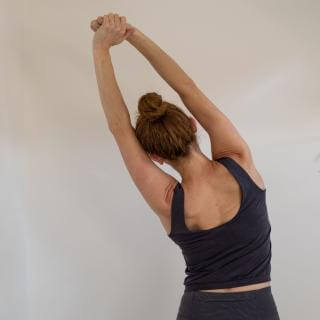
Take your time and take a slow luxurious stretch.
Stretch in a way that feels good in your body.
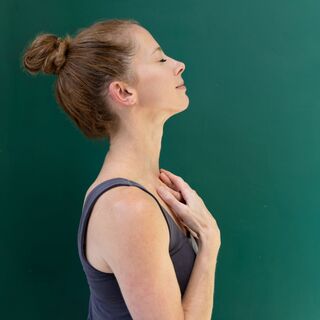
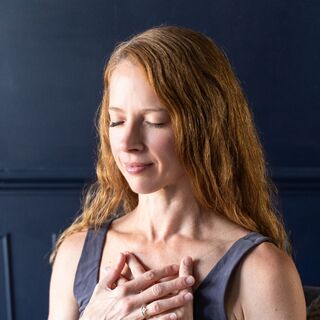
And take your hands over your heart center.
Thank yourself for taking the time to pause wherever you are at in your day.
And I hope you take some of this calmness and awareness throughout the rest of your day.
Thank you for joining me.
See you again soon.