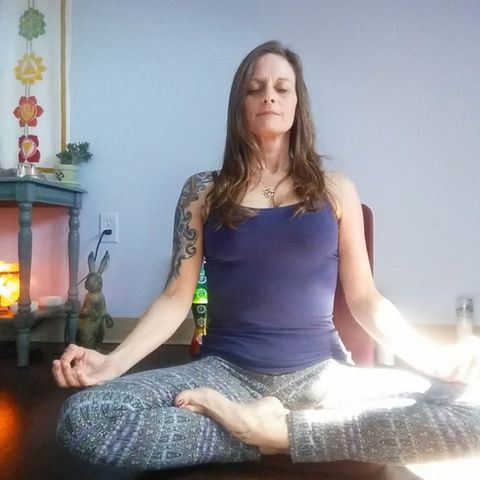
Hi there!
I just wanted to give a quick little introduction here.
I decided to put out this next course for free,
Gardening Your Soul.
A little contribution and a remembrance to my own mother who I've lost so many years ago.
She was a gardener,
She was a cultivator of many things,
And her gardening has really been something that I cultivate in my own life as a remembrance of her.
Both gardening in terms of physical gardening,
But also gardening of my soul.
So I hope you find this information helpful.
I will be posting a video each week with a meditation as well.
Take it at your own pace and find the beauty that you're able to cultivate and blossom on the other end.
Hi there!
Welcome to Gardening Your Soul.
I'm happy to have you here with me today.
I'm going to actually start off by burning some sweet grass as I begin today's video.
With this month and gardening our soul,
We are going to be kind of spending some time being mindful of who we are and where we might be getting entangled with others.
So for each one,
Maybe just introducing a bit of relaxation to begin.
So today,
If you want to begin in your own space by burning an incense,
If you happen to have beautiful sweet grass,
Maybe some sweet grass or sage,
Diffusing an essential oil,
Maybe just something to bring in the sensation of smell.
Something to lighten the air in your space.
With gardening your soul,
I'm going to be,
As I mentioned,
Helping to explore different aspects where we kind of lose sight of ourselves at times.
And in losing sight,
We can get a bit entangled with who we are compared to the energy or space that someone else is in at that time.
There's the aspect of oneness.
So we're not necessarily separate from anyone.
Everyone's experience adds with everyone else's experience.
But it doesn't mean we have to collect everything someone else is experiencing.
And it also doesn't mean we have to lose sight of our boundaries,
Which we'll be exploring in some later videos.
For today,
Though,
I want to just start to talk to you a bit about emotional entanglement.
This can happen in a lot of different ways.
And today,
I just want to explore a few of those ways with you.
In emotional entanglement,
We might get our emotions mixed up and swirled up with the emotions of someone else because we really care or because we're concerned.
So it could come from heart space,
Good intention,
But it just goes a little bit too far in terms of how we balance that and what we're collecting,
Absorbing,
Or digesting in that experience.
It could also come from a place of our own emotional discomfort.
And what I mean by that is for many of us,
We have challenges at times around certain emotions.
Some of us,
We might even skip over certain emotions altogether.
A reminder that all emotions are important.
If this is your first time in space with me,
Then maybe it's the first time you've heard it from me.
If you have been in space with me in some other form,
In another course,
Podcast,
Client,
Retreat,
Etc.
,
Then I'm sure you've heard that from me before.
But in case not,
I just want to make sure that I mentioned that there.
But with our own emotional discomfort,
We might be a bit unaware of emotions.
We might skip over emotions.
We might have a primary emotion we go to.
A lot of times people will kind of glide over or jump over their primary emotion in an experience.
They might be feeling upset.
And when they go to express it,
It might come out as resentment or even anger.
Oftentimes,
Anxiety is another one where people will kind of jump over that emotion.
And it often will also go to frustration or anger at times.
And that's due to a sense of a loss of control.
And not necessarily,
You know,
I want to control like in a negative way,
Wanting to control everything around you of kind of domination type thing.
Not like that.
It's sometimes just feeling powerless in an experience and having no control over that.
And it creates anxiety,
But can jump over to frustration due to a desire to feel safe,
Which of course is a very natural human instinct.
But when we don't have our own comfort with all emotions,
We will sidestep our emotions or jump over them,
Which doesn't really allow us to completely process an experience.
With all emotions being important,
They're there as a team to balance one another out.
There is a children's movie.
And I'm trying to think of the name of it right now,
Inside out or upside down or something.
It's about emotions.
I not really sure what it's called.
I can't remember.
I honestly haven't seen it.
But many clients have talked to me about it.
That's how I learned about it.
I was talking about emotional awareness with a client and they have a child and then they told me about it.
And then I heard about it several times since but there's a Pixar movie even about it.
I think it's Pixar could be wrong there to teaching children about the importance of using all emotions because they're a team,
They work together.
And when we understand all emotions,
And we utilize them all,
Then we can have more emotional regulation,
But also more emotional understanding back to kind of how I started about this emotional entanglement piece of things.
So we can get into some of this entanglement.
If we ourselves are not comfortable with regulating emotions,
Understanding emotions,
Or sitting with emotions with ourself,
It can be really hard to do that with someone else.
And so we can try to not even try,
We can get entangled sometimes as a desire to move them away from their heavy emotional experience,
Because we don't want to feel that experience too.
And again,
We don't have to,
We don't have to feel it all and absorb it all.
We can still sit in space with someone,
Which I'll be talking about when I give some tools later,
Emotional entanglement,
Thinking about it can come from caring,
It can come from concern,
And it can come from a bit of our own emotional discomfort with our emotions,
Which then makes it difficult to sit in an emotional experience someone else is having.
And then we might also find that we're a bit of an energy absorber,
You may have heard the language being an empath.
And many of us don't realize that we all have that ability,
I guess I could say in that language,
We all have the ability to feel the emotional experiences of others.
And many of us might have experienced it and just not even been aware.
If walking into a room after two people,
Maybe we're just arguing,
And maybe the arguments even over when you walk in,
You walk in a few moments later,
And you feel kind of tense,
Or you feel like the air is a bit staticky or prickly,
Or very heavy when you walk in.
Or if you're walking in a space where maybe there's a lot of anxiety kind of energy in the room,
You might just feel a little bit more scattered when you walk in,
Even if you weren't feeling that way.
And same if you walk into a room where there's a lot of joy,
Laughter,
Humor going on,
Lightheartedness,
Then you might also when you enter,
Even if there's no laughter happening in the moment,
The energy of the space might help you to also feel a bit of that shift of emotion and self.
Everyone has that in them.
Sometimes over time,
Though,
We shut that off,
We block it off,
Or we're just not really aware.
Some of us are very aware,
And we can really feel it,
And maybe sometimes even absorb it more than we need to.
Because again,
Even having the capacity that we have to feel and experience emotions of others,
We can sit in space with them,
Hold that space,
Even have empathy towards the emotion and experience they're having without getting our own emotions out of balance.
But those are some key reasons why sometimes we get into emotional entanglement.
There's others as well,
But just trying to kind of keep it in a little bit of a nutshell here to not make it too expansive.
One area that has to do with some of those reasons is codependency.
If you'd like to learn more about codependency,
You can check out episode 92.
And in the center is this whirlwind of emotions.
You can think of it as a tornado,
You can think of it as a whatever works for you,
But it's just this thing of it swirling around,
All mixed together.
And it's your emotions,
But the other person's emotions.
And where do you go with that?
It's exhausting,
It breaks relationships,
It creates depression,
Anxiety,
Resentment,
And we often don't land in a place that there's any real movement towards something that's helpful.
This can come from good intentions.
There's no ill will or desire to hurt anyone else or self in this,
But it can be hurtful to both self and others.
Until we slow down,
We don't see these things.
And even when we see them,
We still have to slow down a bit more to break the cycle and the pattern.
We might have been wrapped in this cycle since childhood.
Sometimes individuals who come from home structures or environments that were a bit chaotic or even traumatic or dysfunctional in some way.
Maybe caregivers who had their own substance abuse or difficult mental health challenges.
Maybe there were individuals who were toxic in how they were living life,
Maybe even also abuse.
And when we grow up in those environments,
We will be replaying what feels familiar in our body until we slow down and we start pulling out the weeds,
This gardening our soul.
We start recognizing like,
Oh,
You know what?
I don't think that belongs there.
I think those are weeds that I need to remove.
And when I do that,
It's going to create space for so much more to blossom.
Slowing down is necessary in order to make change because for change to happen,
We have to have awareness.
And after the awareness,
We have to have a willingness to make the change.
The willingness often comes from our awareness of discomfort that our repetitive habits or patterns create,
Which is going to let you see what that whirlwind of emotions in the middle really looks like and feels like.
For the tools to help you a bit with this,
We don't want to just have the awareness and then be stuck in this cycle and feel where we have nowhere to go.
Some tools to start with is the slowing down,
That power of pause,
And what it's going to bring to us in our awareness with some of the additional tools.
You can also use the pause acronym to help here.
Postpone action until serenity emerges.
So with all of these,
It requires the power of pause,
Slowing down,
Trying not to just react and have reflection.
Reflection and then response is going to bring a much better outcome for everyone versus reaction and then reflection.
Usually that direction adds a whole lot of extra that wasn't there at the beginning.
In the slowing down and the power of pause,
Trying to move into a bit of understanding of your own emotions.
The more that we can experience our emotions without fear or judgment,
With compassion and empathy,
The more we realize the importance of all emotions and how expression of the emotions and having support around them can really move us into a new direction.
When we swallow and hold emotions,
It creates a whole bunch else in the body.
Emotionally,
Mentally,
But very much physically as well.
A large part of our memories are stored in the body.
So when we're swallowing emotions or dip diving around them,
It creates a whole lot or a whole system that works together.
So slowing down and gaining comfort in your own emotional experience is going to help you have comfort in sitting with the emotions of others.
Another one is trying to move into active listening role.
This power of pause and slowing down can help with that pretty significantly.
When we slow down,
We can notice when we're just trying to respond to move into caregiver or we're responding sometimes out of maybe we're feeling a little impatient with the person even sharing,
Or maybe we just have something really exciting to even share.
Any of the ways that you can start to move into active listening using the WAIT acronym can also help with active listening.
Why am I talking can help you overall then to practice that.
And by active listening,
If you have advice or ideas,
It's okay to have them.
But what can often be helpful is if you're really trying to move into active listening,
Holding space in a non-judgmental way with no attachment or expectation.
And when we're doing that,
It allows us to be much more present with the experience that the person is feeling and going through.
And in any experience that we have,
We can try to practice that without getting ourselves,
You know,
Again,
Sidestepping emotions or going in fast speed where we kind of even can lose track of where we're at in the moment or what we're trying to do there.
Another last tool here within this power of pause is about that emotional absorption.
Just some quick key notes here.
You can think about this power of pause and emotional shifts.
And if you're aware that you're kind of emotionally shifting a bit and dealing at times,
Maybe even awareness that they're not really your emotions,
But you're kind of really feeling the heaviness with this power of pause,
You would ask yourself a little bit more of a directed question.
So it would be something like,
Are these my emotions?
Is this really what I am feeling right now?
You can also read ground to your environment and then ask similar questions.
So it would be something like,
Where am I at in this moment?
What is around me in this moment?
And how do I emotionally experience that?
So you can do that even if it's not a feeling like you're collecting emotions.
Sometimes,
For example,
When I am in a session with a client,
I will have a few moments of pause.
Sometimes it's pretty short,
Even just 30 seconds.
Sometimes it's a minute,
Sometimes a little longer,
But it's this pause and that last thing just for grounding experience and emotional awareness.
It can also be about how we can,
For example,
I'm sitting here in my home in this space.
There's nothing going on right now.
I can be thinking about something else.
Say I thought about something that would create an anxious emotion for me.
Well,
Now I'm in this space,
Which there's no anxiety present here for me.
And now I went up into illusion of mind.
And now I'm feeling anxious,
But about what?
Illusion.
And so if I bring myself now,
Where am I at?
What is around me?
And what am I emotionally experiencing with what is around me?
Then it's going to bring down anxiety.
And in that pausing I do with clients,
It brings down the anxiety because often it's kind of how I describe my spaces.
Like all is good right here in this moment.
That's not always the case.
I totally understand that.
Sometimes our present moment does not feel safe and does not feel comfortable.
And remember that national hotline if you need assistance with any of that.
And I will have that link in the description box below for the phone number there.
But a lot of times our emotions that are,
It's not,
We're not present.
We're not here in the moment.
So that technique can be useful if you're feeling like you're absorbing,
But also if you're just feeling,
You know,
Emotions are up and down and you want to practice that other part of sitting with own emotion,
Feeling comfort without fear of own emotion.
That's a great technique to bring in there too,
Because it lets us again,
Reenter the now and then work with the body to calm and regulate the system in that moment with whatever techniques work for you.
I don't want to get too off track.
And now to give you a bunch of those,
Uh,
There's lots of podcast episodes on serenity wellness to help with that.
I'll put some episodes in the description box,
But some quick ones,
You know,
Just calming the breath,
Moving from chest breath,
Moving the breath down can be helpful.
Sometimes that does not feel comfortable with people take some practice.
So you can also just work on breathing into muscle tension and relaxing.
So like if you have muscle tension in your shoulders,
Like breathing in the in and like closing your eyes and what's following that breath into the shoulders.
And then with the exhale,
You can imagine it breaking apart a bit,
That tension,
Or with the exhale,
You can let your shoulders drop further down to the ground and imagine the stress and tension melting into the earth.
Body awareness is a key element in emotion regulation.
We often sidestep our body.
We numb out or escape it.
And I will be talking more about that in some of the other videos here with this course,
But also the energy therapy aspect that is a part of this course.
With that,
I hope that gives you some tools to start and also some awareness,
Emotional entanglement.
What are your key areas that get you into that caring concern,
Emotional avoidance or discomfort or emotional absorption?
And I mentioned it,
But not in the beginning.
Sometimes it's that fix it role too,
But they're usually mixed in with one of those there.
And then the tools slowing down,
Power of pause and all it can bring to your life.
I look forward to continuing in this series with you to help you garden your soul.
See you soon,
My friends.