This is LW No Lie and you are listening to The Stuck Stops Here.
Today,
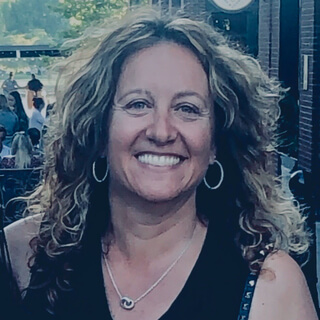
Tammy and I are talking to published author Annie Highwater,
Who is also the host of the Unhooked podcast.
It's very nice to meet you.
You can call me blame.
I am invisible and I cause a lot of pain.
Call me gravity.
Call me kryptonite.
Call me the reason that you never get it right.
Sometimes I'm a drop.
Most times I'm a tidal wave.
Always right beside you,
Making you my forever slave.
Annie is not a person in recovery from addiction.
She is someone in recovery from her obsession with someone who has struggled with addiction.
She is a recovering and meshed,
Out of control,
Codependent family member.
Annie has had her share of chaos in her life.
But she says that her passion now is reaching out to tell others you are not alone.
There is hope no matter how far gone your situation looks.
Hope is a powerful medicine.
Let's speak to Annie.
Welcome,
Annie.
It is a pleasure and a privilege to have you here.
How are you today?
Thank you so much.
It's a privilege and a pleasure to be here for me as well,
Especially since I binge listen to this podcast over and over and recommend it and share it out.
I just love it so much.
So thank you so much.
Wow,
Thank you.
That's wonderful to hear.
Yeah,
I know.
It means everything to me.
So,
Annie,
What I'd love to do is just start off by you telling us about your books,
Which are incredible.
So if you could share,
You know,
When you wrote them and what they're about and how they help people,
That would be great.
Well,
Thank you so much.
I have two books.
One's called Unhooked.
It's the mother's story of unhitching from the roller coaster of her son's addiction.
But it's really this journey of a dysfunctional family system with a couple of addictions.
A couple of addictions playing out.
My mother has been addicted to opiates since I was 12.
And I'm the youngest of six.
She had addiction prior to all of that.
And then my son became addicted.
And then my second book is kind of a journey through a year in the life of your worst adversity.
But for me,
It happened to be family addiction.
But it can be divorce,
Death.
I've been through every bit of all of that.
So I pulled together several chapters and I pulled in expert information and clinical advice and therapists.
And I incorporated it into each chapter to kind of move you through from when you first realize you're drowning in some suffering or change or loss all the way through to getting your footing back and then rising from it.
So that's those two books.
I wrote a piece in a book that the Ohio State University published.
I believe they released it in 2019.
That just shares our family story based out of Ohio.
Ohio has been hit pretty hard by the opiate epidemic.
And they wanted the perspective of somebody that comes from somewhat of a church family.
And the athletic piece of it where my son was injured in sports and hadn't been problematic prior to that.
So anyway,
Those three projects are my published work.
And then I've written over 80 published articles.
And I have a podcast as well.
So that's all based on the wonderful world of dysfunction.
Wow.
The old me is kicking in.
I'm feeling really insecure next to you.
Oh,
No,
No,
No.
You have a bigger family than you.
So that was my way of complimenting all your accomplishments.
So would you be willing to,
When you said,
Discovered drowning,
I am taking that as aha moments.
Because when you figure out you're drowning,
That could be interpreted as aha moments.
Can you share some of those moments that you realized you were drowning and what you realized at those moments?
Sure.
And I also wanted to say that I listened to a recent episode of yours with Carol Campos,
I believe her name was.
And I really did a lot to it.
Especially how she had healing situations reveal themselves in the workplace.
I think that happens to so many of us.
I mean,
It's personal even when it's professional.
And then I loved her ability to look at her own participation in toxic situations.
And for me,
That was kind of the cornerstone of my recovery.
That even though I despised so many situations within my family and how I was treated,
I could not get full healing until I came to understand my participation in it,
My responses to it.
And that I wasn't healthy just because I wasn't the one initiating certain behaviors.
So I always say that I'm not in recovery from a substance or a chemical.
I am in recovery from the obsession and total madness of living adjacent to somebody who was in addiction.
And that can pertain to alcoholism or dysfunction as well.
It makes everybody crazy.
Especially if you happen to be,
I'm the child of somebody that's been addicted,
But the mother,
And you go through that experience with a son or daughter,
It makes you absolutely climb the walls crazy.
It stirs up and triggers everything within you,
Whether you think you have failed in some way.
Or for me,
I am somebody who is solution oriented.
So it absolutely put me on the clock against my son's death.
And I ran this race for about five or six years with him.
I wanted to just backtrack a little bit.
Like I said,
I'm the youngest of six.
We were born into kind of this chaotic system.
My mother,
When she was eight months pregnant with me,
Their house burned down.
So they moved all five kids.
And my mom was pregnant with me into her parents' home.
Prior to all of that,
She and my father had had a very abusive marriage,
Very violent,
Very alcohol saturated.
He had become kind of a religious seeker and self-help journeyman after the fourth child was born.
And so he was kind of on track to heal his life.
However,
Her parents despised him because of earlier stuff.
So they all moved in one big happy home together,
And it was total chaos.
So when she delivered me,
She brought me back home to that chaos.
And I was put in a playpen where for a year,
I was pretty much just basic needs tended to.
They didn't know the original date that I walked or anything like that because it was just chaos,
And they were surviving.
They ended up moving into a house next door,
And I walked the day we moved in.
So life has kind of been a journey like that where I found myself surrounded by chaos and trying to figure out how to navigate it ever since.
One of my first aha moments,
Which was a terrible negative untrue aha moment,
Was when I was five years old.
I don't know why,
But my older siblings,
And we laugh about it now.
It's not a big deal,
But it was a huge deal when you're a kid.
You absorb these messages.
Some of my siblings would say,
Before you were born,
We had money.
We had a different house.
We had pop in the fridge all the time.
We had this and that.
Mom and dad weren't miserable,
Which they were way more miserable because they were physically fighting.
So none of that was true,
And I don't think they so much meant harm.
But they saw the younger two kids of the six born and treated a little better.
We weren't afraid of my dad.
My dad wasn't coming in drunk.
I'd never one time seen that.
I didn't even know that happened until I was in my 20s.
So anyway,
I absorbed that,
And the message that took a nail and hammered into my heart for years was that everything is my fault,
And I have to fix everything.
And it's the strangest subconscious message because no matter where I was in a school setting,
In a friend group,
In a work situation,
If somebody was rude or mad or mean or dysfunctional,
Somehow I would believe,
Even if I could outwardly in the conscious realm say it's not my fault,
I would still take it on the other side and take it on as my responsibility to fix it.
Or there must be something wrong,
Broken,
Stupid,
Damaged,
Less than within me that caused it,
So I deserve it.
So I mean,
It was a strange mind game I had.
Until I began to heal my life,
That belief system started to kind of reveal itself over patterns I'd experienced and heartaches through the years and friendships and situations like that.
And I started realizing I'm putting myself in situations where I'm walking into what I call.
.
.
I'm sorry?
I'm sorry,
It's amazing how,
No matter how awful the familiar is,
We still gravitate to it.
Because it's so subconscious,
It's like a pattern in our DNA.
So I would walk into pre-existing dysfunction,
Whether it was a workplace setting where there were turf wars and grudges or in a relationship with somebody that had had a fresh divorce and there was hurt feelings,
I would walk into kind of all of these silent vibes and assess who had the power in the room and who did I need to kind of bow down to,
Stay close to,
Avoid,
Things like that.
And it just kept me running this nasty codependent race.
And I really never had a good,
Balanced way of relating or dealing with anyone.
So I would be hot-headed sometimes and fight too hard and not be the type to take anything.
And then I'd be a doormat in some situations and take betrayal and abuse over and over and over,
Especially from girlfriends.
So I was just pretty much a mess,
But appearing functional somewhat to the outside world.
Because my childhood was so chaotic and there was a lot of times of poverty and confusion.
And I had to switch schools a lot.
And one year we switched schools and my mom had just kind of let everything go.
So I was sent to school with the bottoms of my feet,
Would have dirt picked on them.
And we took in some kittens.
This is just an embarrassing,
Stupid memory.
Oh,
My God.
We took in some kittens that were infested with fleas.
So I would go to school and have patches of fleas on me that looked like scabs.
And they would jump onto other kids.
And I would try to make them not aware of who it was coming from.
And a teacher took an interest in me and kind of protected me and walked me through all of that.
But those things were kind of stacking layers of self-doubt and shame and anger and confusion.
And I was intelligent,
So I was trying to kind of figure like,
Wow,
Even at that age,
What makes sense?
Is this family normal?
This kid doesn't seem to have that.
And your mind is just kind of trying to make sense of all of that.
So those were some of the first aha moments.
And then when I hit my teen years,
My mom became more involved in a way that she began to.
.
.
She had this hyper criticism of me.
And she criticized everything I said and did.
And I was so full of rage about it by then because it was fraudulent,
Because I'd been neglected and not taken care of.
So I was really hateful and rebellious toward her.
I didn't have the language to explain all of this.
And you really don't until years later if you ever do.
But we had a pretty tumultuous relationship.
And as a result,
My older siblings,
Who had been loyal to her and through all those years of violence with her that I wasn't yet aware of,
Clung to her side and thought that I was just losing my mind.
So she would call them and say,
You know,
I've said something to Annie.
And she exploded and screamed and cussed at me.
Well,
Of course I did,
Because you said it 130 times and nagged me and harassed me and criticized me.
It was just like this nasty cycle we were in.
And all of that,
I want to add,
Has been kind of healed and made up for.
She's acknowledged,
Surprisingly,
A lot of that and apologized and tried to explain it.
And I don't even need her to at this point,
Because I've done the work.
But that's just what I came from.
So by the time I had this son.
.
.
I had my son when I was 18,
Which is young.
I was such a mess,
But I was smart enough to know there is no way he's going to be raised like this.
I will not criticize him.
He will not deal with poverty or confusion or conflict or anything dysfunctional.
There's not going to be booze in the fridge.
I'm not going to have weirdness in the home around him or anything.
We had a lot of religious condemnation going on.
So even in the midst of all of that,
There was praying and casting demons out and things like that.
There was never really any stability.
It was just lots of coordinators of payoffs.
And I was determined I was not going to allow that for my son.
So I worked really hard.
I took that codependency to the next level with him and didn't miss a field trip or a school event,
Put him in private school,
Worked two jobs to work my way up and run my own office,
While tending to him and not realizing he's kind of absorbing the fact that I've never stopped and dealt with this trauma and dysfunction.
So even though all of these things were done for him to take care of him and protect him,
I was a mess,
And your kids absorb that anyway.
So those were some of my early on things.
One of my wake-up calls was when I was about 22.
I had this kind of epiphany that I realized sometimes my mom would just tell me I was so bad.
I was a horrible daughter.
I was so badly behaved that I was just bad from birth.
And just this programming was really nasty.
So one time I had called her,
And I said,
I read this Bible verse I was working in a church that says that everyone that is a new creation,
So that means even if I was bad at four years old,
I can become new and become good.
And she said,
Oh,
No,
No,
No,
No,
That's not for you.
And I just remember that for some reason was such a wake-up call because I thought,
But wait a minute,
The fact that I am human and I'm existing and I breathe and I'm a life that has not been taken,
The fact that I am here,
I have to have some level of value and worth.
So I'm going to take even the value of my breath,
And I'm going to build from there.
And one of the things I heal myself with is achievement.
Clearly,
When I went into the writing world,
I just never stopped working.
And I've run marathons,
And I'm not great at it,
But I heal myself by setting goals and accomplishing them,
Big goals.
I started with that I matter because I'm a life.
And then I'm just going to build on top of it.
So that was an aha moment too.
And a great aha moment was that my struggling parents and family were traumatized.
It wasn't hit.
It affected me personally.
But it almost wasn't personal,
If that makes sense.
These were sick people,
I guess,
Doing the best they came with the tools they didn't have,
Doing the best they could with the flaws they had.
And it really was their inability to be healthy was the reasoning that I was treated that way.
Well,
It makes a lot of,
And it's incredible that you figured that out in your 20s.
I mean,
Yeah,
It is.
And I'm real thankful for that.
I started seeking out therapists and therapy books and situations where I would read biographies where people seem normal to get their best practices.
And I became friends with therapists,
Went to therapy.
I was just trying to gain tools and information.
And it was an uphill story.
It was an uphill struggle.
I wouldn't say that I even felt stable until I was in my mid 30s.
And I remember even telling one of my brothers when I was about 28,
I don't know if it's even possible for me to be sane.
After everything we've come through and we come from,
And there's such a deep level of embarrassment and self-hatred,
I don't know if I can be sane.
So then I started kind of on this search.
Am I crazy?
Am I going to ever?
Is it possible for me to be sane and healthy?
I was like,
You look back on yourself and you just see how pitiful you were at certain times.
I sat down with this therapist friend of mine over lunch and I was all trembling and said,
I think I might be crazy like some of my family members are mentally ill.
And what if I am and I don't know it?
How do I stop it?
And she said,
People that are quote,
Crazy don't ask that question.
They just are.
And so that was a great compliment that somebody gifted me with.
That's well said and accurate.
I read somewhere that's a meme that floats around.
Said,
All parents think they're horrible parents,
Except the ones that are actually horrible.
Oh my gosh,
That's so true.
That's a good one.
I learned an expression.
This was an aha moment as well in recovery that just because I believe something doesn't mean it's true.
And then that works in the flip side too,
That if I don't believe something,
It doesn't mean it's not true.
So it's a matter of seeking it out and making peace with facts as they are and not running with things.
And for me to believe I was worthless and every person's behavior was somehow my fault,
To believe that not a bit of that was true,
It had to be kind of an untangling of the layers of that that had me in the trenches with that fight.
And it's so hard to explain if you haven't come out of toxic codependency and toxic stress and all of that,
How it affects and sets itself in the programming of your mind and what the process is of awakening and kind of a rebirth out of it.
But it really happens in several aha moments and layers of awakening and healing.
That's right.
Yeah.
The healing journey is not linear.
No,
It is not linear.
That is true.
So now that.
.
.
How old is your son now?
He's 29.
And how's he doing?
He's doing great.
He lives out west now.
He had gone out to LA for recovery and really just stayed and made a life for himself and never came back.
And he's in Scottsdale right now.
Last year,
We kind of had.
.
.
We went through another season of despair,
I would call it,
I guess.
There's so many names for it.
There's like Saturn's Return or whatever.
Shitstorm,
You know,
Whatever it is.
We had a bunch of it.
His dad died unexpectedly a few days before my birthday.
And his dad and I had just become great friends over the last 20 years.
We kind of were on separate healing journeys together after a divorce.
And so he was what I called my fifth brother.
We even did a podcast together.
So his dad died of a heart attack.
Two weeks later to the day,
My niece took Xanax that had fentanyl in it and went to bed and died that night.
Oh,
No.
A month after that,
I was in a car accident where a girl was texting and driving and launched my car at 80 miles an hour,
Up an embankment,
Through a chain link fence onto a bed of thorns.
And I'm fine,
You know,
Pretty,
You know,
Not terribly injured.
I hurt my knee,
But it was traumatic.
And then within five days,
My son got sick and had two seizures and had to be taken to the emergency room.
So we were kind of.
.
.
And then this virus happened.
So we were kind of like,
Okay,
Something normal.
Quarantine.
So we kind of had to find our footing again through all of that.
And to watch him go through the process of loss,
I was the same age as he is when I lost my dad.
So to watch him navigate that,
But with better tools,
As painful and grief-stricken,
But yet not completely,
You know,
Losing it or falling apart has been wonderful.
And I credit that to therapy and recovery that he took on early on.
So,
Annie,
You said that you protected your son.
You tried to protect your son from all the chaos and madness that you grew up with,
But you couldn't.
And tell us what happened to your son.
He had a broken jaw in football.
He was in a private school,
And then he went on to play sports.
And he was a really great athlete.
He really still is.
He had a broken jaw in football,
And he was prescribed really powerful,
I believe,
Percocets.
And within 30 days to six weeks,
It was like a tornado came through our house.
Completely changed everything.
All of a sudden,
We were fighting different battles,
And he was moody and losing his mind.
And in the process of that,
Which is detailed in my book,
Unhooked,
My mother,
Who had had a pill issue all of my life.
.
.
And,
You know,
When somebody is kind of the church lady,
She really is the church lady from Saturday Night Live,
And they have,
Like,
An addiction,
You don't identify it.
Especially,
You know,
Even so,
When it's addiction that a doctor prescribes.
So we always knew,
Mom's on pills,
Or Mom takes too many pills,
Or Mom acts this way or that.
Nobody had really ever prescribed or called it what it was,
Which was addiction.
So when that happened with him,
And I was trying to figure that out and navigate it,
Everything that was going on with her exploded onto the scene and became the worst part of our process.
So as I'm trying to gather the tools and get counsel,
How do I handle him?
How do I respond?
What do I do?
He's very young.
I mean,
He had just become an adult,
But,
You know,
18 is still so young,
And I'm trying to guide him,
But then I'm not able to at some point.
It was a lot of confusion.
And then my mom would keep secrets and lie and hide things and take him in and take him places and help him get prescriptions so that he wouldn't suffer with withdrawal and things like that.
So that was an added part of a battle that was already the worst nightmare ever.
So I kind of had to find good counsel in the midst of it and figure out how the hell do I navigate this?
And remember,
We were still part of this structure at the time where if she called my siblings,
Or my family's pretty large,
She would call,
Get on her phone and do her networking,
And everybody would think I was just losing my mind on her,
And then start calling me.
I would be sitting at work with a client,
Emails going off,
My phone's going off,
And from one family member after another,
Why are you being mean to mom?
But then the truth is so trustworthy that the more you try to expose it or defend yourself,
It seems like sometimes the worse it gets.
But if you just trust it,
It reveals itself.
So they started seeing,
Yeah,
Like,
This is not normal of her,
Or,
OK,
This is that,
And kind of connecting the dots.
And that was a process as well of the truth revealing itself.
But that all went on wonderfully at the same time.
I mean,
I can laugh about it now,
Because I better never go through it again.
But I wouldn't really change,
But I did,
Because I really learned language and how to calmly react and respond and defend or not defend,
Or choose what conflicts I'm going to take on or what don't have anything to do with me.
It was a great learning process,
As much as it was the worst hell we'd ever been through.
Annie,
An interesting thing that I noticed from some of the writings you had sent me is that you said your son finally began to heal when you handed him the fight,
When you sort of let it go and gave it back to him.
You put him in charge of it.
Yeah.
And so I took a different approach with my son,
Because my mother was kind of his secret keeper and enabler.
And would kind of validate if he felt sorry for himself.
And you just can't do that.
And she would baby him and stuff.
So I took on the role of enforcer.
And I would try to create misery.
And I told myself,
He has to hate his life more than I do,
Or he'll never want out of it.
So I would create consequences.
And I would show up where he was.
And I would threaten people like I was a one-person SWAT team.
And I didn't threaten with violence or anything,
Because I'm not very big.
And they don't care.
So I would show up and threaten that I was going to have the media in the front yard.
And I was going to put my tent in this person's front yard and sleep there.
And I would just harass people trying to bring an end to what he was.
.
.
What was going on.
And honestly,
I know a lot of parents do that.
They'll trace people down and try to get them in trouble.
And that does no good either.
You get to a point where everybody's just crazy.
So finally,
I had planned to go away for a few days.
My goal with him was always,
If you'll go to treatment,
I don't care where I am or what I'm doing,
I'll drop everything and get to you.
Until you agree to go to treatment,
I'm doing nothing for you,
Giving you nothing.
And I tried to box him out.
I would threaten everyone in the family.
Don't give him anything.
He's got to go to treatment.
He's sick.
So.
.
.
But he would end up with one family member after another,
Because he's just so.
.
.
He's lovable and likable.
We were all new to it.
So anyway,
I went out of town for a weekend,
And I just said,
I cannot do this with you anymore.
I cannot do it with you.
It's killing us both.
And I'm probably gonna.
.
.
I don't know who's gonna go quicker.
So.
.
.
But if you want to go to treatment,
I'm close enough that I'll get right back here to you.
So when I went out of town that weekend,
He had to figure it out.
His dad and I were on board,
Very united,
This is what we're gonna do.
And he booked a flight to LA from Ohio and checked himself into treatment.
And it was so nice for him to make the decision,
Because it wasn't to get his cell phone back,
Or to get out of trouble,
Or to appease anybody.
It was,
Okay,
I've got nothing left to do,
Except do this myself.
Wow.
Good parenting.
I don't know.
Desperate.
Desperate times.
Desperate times.
And it must have been.
.
.
I can't even imagine how hard that was.
It was pretty excruciating,
I'll tell you that.
Yeah.
I was so easily triggered.
I remember one time we were sitting in a restaurant,
And somebody had been kind of rude to me.
There was something I call the high school handshake,
And that's.
.
.
I don't know if you've experienced somebody that approaches you and you're with a friend or whatever,
And they talk to the friend and act like you're not standing there.
So that's just like.
.
.
My school handshake.
So I call that the high school handshake.
For some reason,
It happens in my hometown quite a bit.
But it happened in the midst of all of this,
And this was an aha moment,
When it did,
This girl came up and talked to the guy that I was.
.
.
The guy,
My partner,
For about 15 minutes,
And ignored that I was sitting there,
Didn't smile back or anything.
So by the time we got to the car,
I lost it.
I was bawling,
It was his fault,
Why didn't you defend me?
You should have been rude,
I hate her,
I'm gonna go fight her.
Like,
Just lost it.
And then I just was like,
I am like.
.
.
I have nothing left in me to cope with anything.
And that was kind of like,
I got work to do too.
Everybody thinks the person who's got a dependence on a chemical or alcohol or whatever is the one that needs to heal,
But we all do,
I have work to do too.
What is the work that you do now to continue to stay on your healing journey?
Was it meditation,
Yoga,
Reading,
Writing,
Anything?
It's pretty well all of it.
I don't feel like I have to do a lot of the heavy lifting now,
Because so much of it,
The groundwork was done.
I just kind of maintain,
Or when stress hits.
I started a recovery process to where I found my way into the rooms.
And I started going to support groups,
I went through a dialectical behavioral therapy process and did that for six weeks,
Or might have been six months.
This was back,
I did the majority of it in 2015.
I read every book I could that was relatable,
Like Ayana Van Zant or Brene Brown,
Or Intense Dialectical Behavioral Therapy,
John Bradshaw,
All of that.
I've read all those.
Yes,
I mean,
I applied them,
I would take notes and journal.
And I sat down in the midst of a condo,
I had rented for this specific purpose,
And analyzed my life all the way back to birth,
How I was born in chaos,
And how the pattern repeated all through my life,
And just prayed over it,
Let it go,
Meditated,
Journaled about it,
Wrote letters about it.
I just kind of walked myself through a patchwork healing process.
That also included experts and professionals and very kind,
Safe,
Supportive people.
And within about two years,
After feeling like I was being skinned alive and stripped of everything I knew,
I started to re-emerge feeling brand new,
And with confidence I had really never had before.
And it was just because I sat down and dealt with my issues.
That's incredible.
How was your relationship with your siblings?
Is anyone else on a healing journey like you?
Yeah,
They're in and out.
Well,
I talk to my sister pretty often.
They're all kind of at different levels.
I have four brothers.
Two I talk to pretty regularly,
But you kind of learn what your measure is with each person.
And one is like,
Maybe we'll talk about something on the news or sports.
Another might be comedy or whatever.
I don't go too deep into issues anymore,
And I don't really even need to.
Nothing new comes up,
And all of that's been dealt with.
So I would say it's pleasant.
I feel closer to some than others,
But to some degree it's almost like a neighbor you would be polite and friendly to in passing.
Yeah,
That's how I feel about my brother.
I mean,
Again,
My family is way smaller than yours.
And I'm in a very different point from him as probably you are from most of your siblings.
And it's polite,
It's cordial,
But it's not real,
It's not authentic.
Right,
It's not feeling what everyone's dealt with.
It's dealt with,
Yeah.
So Annie,
Once you realized you had your aha moments and you discovered your journey,
When did you realize you wanted to share it with others so that they would know that they too were not alone?
Well,
Interesting enough,
When you enter a healing and recovery process,
I think it kind of charts new territory with your life.
So I had worked in insurance for a long time,
But even when I was little,
I had always wanted to be a writer.
And I'd had a teacher one time say to me,
You have great vocabulary,
And I used to win all these spelling bees,
And she would have me write and share it with the class.
And she said,
One day you're going to get published,
I'm going to read everything you write.
She still comes to my book signing,
She's amazing.
Oh,
That's cool.
That's amazing.
So after I started entering the healing process and doing my own work of recovery,
I wrote an article that got published out in LA and it just kind of exploded from there.
So it was like this led to that,
Led to this,
Led to.
.
.
More articles led to working for an organization called allies in recovery that publishes blogs and podcasts,
Led to my book and then my second book.
So it was kind of just developed organically.
It's a great mission.
Well,
That's what I was going to.
.
.
Like I had just.
.
.
I had dreamed of being a writer and forgot that dream.
I actually tried to about 15 years ago and I was terrible.
But then I started writing like I talk and just telling the truth and that's when it kind of worked after.
I think that's sort of the way it works,
You know,
When you finally tell your own truth,
That's the real thing,
That's real.
And that's organic and that's what people want to hear.
Yeah.
That is true.
And people like to know that,
You know,
They're not crazy and they're not alone.
You know,
So I used to.
.
.
Years ago I used to think I was crazy.
Yeah.
And I'm not.
I was surrounded by people who actually were.
Right.
And that's.
.
.
Or shall we say,
Crazy is not the right word.
Damage,
Shall we say.
That might be a better word.
Toxic or unhealthy or.
.
.
Right.
So,
You know,
What kind of advice do you have for people,
You know,
At different points if people are,
You know,
In the very beginning of their healing journey and not sure what the next step is,
You know,
They know they want to fix themselves,
But they don't know how.
Do you have any advice for them?
Well,
We always say in the rooms,
We don't give advice.
We share our experience,
Strength and hope.
But I also share what I feel miserably at,
Not just what works.
But if I were to give advice,
There's a few things I would say.
I would say don't feel sorry for yourself.
Tend to yourself,
Be compassionate and kind with yourself,
But if you get stuck and feeling sorry for yourself,
You'll never make even a step forward of progress.
I would say you can recover from anything,
And that includes family betrayal,
That includes partner betrayal,
Child betrayal.
You can recover from anything.
It'll take time and life's never going to be the same,
But you can recover.
I would also say your approval doesn't come from anyone else's appraisal of you.
Everyone is messed up in some way.
Everyone has messed up family,
Trust me.
I've learned that more and more the older I've got.
I would say find a support system.
When I first was told that,
I would think,
Like,
How do I find a support system?
How do I find a friend or anybody that I can trust or that will be trustworthy toward me?
Or kind toward me?
I don't even deserve that.
Nobody.
.
.
I've never really had a system in my life,
Not as social or otherwise,
Where it was loving and safe and kind.
How do I even find that?
If you settle down and start healing the part of you that is broken and that that has broken,
It starts to kind of appear and form itself.
So find a support system,
Because we all deserve one.
Find your process of healing.
And mine is a patchwork process that includes recovery and faith and meditation and I am a long-distance runner and therapy and things like that.
Find your process.
It's no one-size-fits-all.
Customise it to what gives you peace and sanity.
And then I would definitely say don't ever,
Ever,
Ever,
Ever give up.
There are days that you will be in a fetal position,
In the showers,
Crying your eyes out.
There are days that you think it's all made up.
There are days that you wear sunglasses in the grocery store because your eyes are swollen.
There's tough,
Tough days.
And then there's days that you don't feel anything and you think,
Am I even in a process here?
No matter what the day is like,
Don't give up.
Keep journeying your way forward because it gets better.
That is great advice.
It is.
And you're living proof that it works.
Over time.
And not that I don't have a setback now and then,
Because I can still get pretty.
.
.
You know,
I still got a little hood in me to wear.
My temper.
Come back up.
Every once in a while my temper rears its ugly head.
Yeah,
And all your old ways do,
But I've heard it said your triggers that used to be like elephants become more like mosquitoes.
And you don't stay.
.
.
You might walk into a room of chaos,
But you're not there as long.
My meltdowns aren't going to last for three weeks or a year.
They're going to maybe be an hour,
If that.
Or sometimes I don't even melt down because I don't care anymore.
True.
That's very accurate and very true.
And do you have a.
.
.
You know,
We're going to put links to your website and your books,
But can you share what your website is?
Sure.
Most of my stuff I bank out of the Facebook page,
Which is Annie Highwater,
Like come hell or high water,
Recovery writer.
That's on Facebook.
I have Annie Highwater,
The blog.
I write for alliesinrecovery.
Net.
I also.
.
.
My first book on.
.
.
They're on Amazon,
Barnes & Noble and wherever books are sold.
I have a podcast called The Unhooked Podcast and one that I do for allies in recovery called Coming Up for Air.
But mostly I just send everything out through the Facebook page and you can contact me there as well.
And anyone's always welcome to email me at annieunhooked at gmail.
Com.
Wonderful.
We're going to put that in the link to.
.
.
You know,
In our podcast notes,
So all your links will be there.
Thank you.
So people can find it.
Oh,
I got one more point to make.
Absolutely.
Which I'm sure that you experienced too,
And this is a big one.
When you go through a process of healing,
Most of us have a foundation that's broken when it comes to trusting yourself.
You know,
Not second guessing yourself or not needing somebody else to validate decisions you should make or if you're right or wrong about something.
When that starts to heal and you learn to trust yourself and not allow anybody to make you second guess or doubt yourself,
When that starts to stabilize,
It changes everything.
I have experienced that.
That's right.
You know,
When I learned to trust the process and not feel this need to just control outcomes,
And it's such a simple statement,
But it changed everything for me.
So you are right.
Right.
Yeah.
Every time we do these podcasts,
I have a new revelation.
Yeah,
Me too.
It's such a great learning process.
Yeah.
So,
Anne,
I'd love to have you on again.
Yay!
In particular,
I'm thinking out loud,
But I like what you said earlier in terms of it's personal and professional.
What was that exact sentence?
Do you remember what you said?
I loved that Carol Campos,
If I'm saying her name right,
She talked about healing showing up and revealing itself in the workplace because she had relationships in the workplace that caused pain and she was stuck.
She said you can usually separate the personal and the professional,
But it was in her face all day.
And I would certainly,
I mean,
We repeat patterns.
I would see people in the workplace,
I was making my way up the corporate ladder with insurance and I would think,
Oh,
He's just like this brother.
This is like me and my sister,
This is me and my mom.
I mean,
We repeat those patterns until we heal them and we connect with where we feel familiar.
So,
Of course,
The personal bleeds over into the professional,
Especially if you come from dysfunction,
Trauma,
Toxicity and all that.
That's.
.
.
Wherever you go,
There you are.
So it goes with you no matter how high achieving you are,
No matter what setting you're in.
So one of the things I'd like to do,
If you like the idea,
And I know Carol would like to do it,
I would like the three of us to do a podcast on how,
You know,
All these,
You know,
How a child,
Toxic childhood affects you in the workplace.
Oh,
Yeah.
Because I have a million stories,
Well,
I mean,
Not a million,
I'm excited,
But where it was,
You know,
Pretty awful for me.
And it was because I kept making poor choices.
So is that something you would be willing to do?
Yeah,
I love that.
And I'm thinking,
Where was that episode,
You know,
15 years ago when I would have listened to it and been set free?
So,
Of course,
I would love to do that.
Because it does affect you in the workplace and you do see the same players show up again and again.
That's right.
That's right.
And it's amazing to me the more I look back.
It was so obvious now.
It is amazing how obvious it is now and how oblivious I was then.
Right.
Well,
You've been on my podcast Unhooked,
Which is coming out,
I think,
Next week.
And that'll go all over the place.
So everyone should hear you on mine because you have great tools on there as well.
But the work you do,
I just can't thank you enough.
That's what drew me to your podcast.
I kept seeing the name The Stuck Stops Here showing up in ACOA groups,
Which is Adult Children of Alcoholics.
It also covers anyone raised by an addict parent or a parent who was emotionally dysfunctional and immature.
So all of us are in there.
I kept seeing somebody say,
You know,
Naming you as the podcast to listen to.
So I listened when I was running one Saturday and listened the whole rest of the day.
The work you have done is incredible.
And,
Annie,
I have to know,
I'm going to be really straight with you and Lisa will back me up.
I had no idea that I was making such an impact until you told me.
Even better.
I really did not know.
So,
You know,
I'm doing it.
Lisa keeps me on board,
Saying,
Keep doing what you're doing,
Keep doing what you're doing,
Don't worry if you're.
.
.
How many people you're helping.
And.
.
.
Which I do.
But hearing you tell me that,
Telling me that was huge.
It means a lot.
Very motivational for me.
Yeah,
Good.
You're doing awesome work.
People love it.
So thank you.
And as are you.
So I'm going to reach out to you and Carol and maybe we'll coordinate something over the next,
You know,
Month or two when it's convenient to really focus on the workplace.
What do you think?
Perfect.
Awesome.
That's great.
Annie,
It has been a privilege and a pleasure for sure.
I'm going to say it twice.
Thank you so much,
Annie.
Thank you very much for joining us today.
Thank you so much.
And until next time.
You got it.
Thanks,
Annie.
All right.
Bye-bye.
Thank you.
So that was our conversation with Annie Highwater.
That was really,
Really fascinating.
Tammy,
What did you think?
Amazing.
And I would actually like to quote something she had written to me.
This is a direct quote from one of her emails to me.
OK.
My passion is reaching out to tell others you are not alone.
There's hope no matter how far gone your situation looks.
A family can recover from it all and move onward.
You can make a comeback if you fight for it,
If you believe in it and if you work for it.
In fact,
Life can even open up and become better.
Number four,
My greatest passion is to encourage and offer hope to anyone feeling defeated,
Stuck and alone.
Hope is a powerful medicine.
That is a quote from Annie Hightower.
She said don't ever give up.
And she is right.
It's living peacefully and contentedly is possible.
And she provides us with aha moments.
I'm hoping my podcasts do.
And together we can get people to break free from that toxic cross-generational trauma and not pass it on.
That's the important thing.
Love it.
That's why the stock stops here.
And with that.
.
.
Amen,
Sister.
With that,
We will see you next time.
It's very nice to meet you.
You can call me blame.
I am invisible and I cause a lot of pain.
Call me gravity.
Call me kryptonite.
Call me the reason that you never get it right.
Sometimes I'm a drought.
Most times I'm a tidal wave.
Always right beside you.
Making you my forever slave.
Been around for a long time.
Hope you pass me on.
Hope no one wakes up.
That's when I'll be gone.
Rock bottom scares me.
Darkest light can shine.
Brave ones fly away.
I'll find another.
Make them mine.
Oh,
Yeah.
Sometimes I'm a fire.
Sometimes I'm a flame.
I will never ever stop.
Don't forget my name.
Been around for a long time.
Hope you pass me on.
Hope no one ever wakes up.
That's when I'll be gone.
So nice to meet you.
You can call me blame.
Poison the youngest.
Poison the young and old.
You all look the same.
Oh,
Yeah.
You all look the same.
Yeah,
Yeah.
You can call me blame.
Oh,
Oh.
You can call me blame.