Namaste.
So here we are again and we'll be doing the,
This will be the fourth lesson that we're dealing with and I've titled it My Choices,
My Life.
Meaning that my experience of life is quite often the result of choices that I have made.
We are also,
I think,
Frequently we may find ourselves in this position or situation where I'm not really actually accepting enough of the role that my choices play in my life and the outcomes of the experience of my life.
And that topic that we spoke about was very much,
Last week rather,
Was very much tied to perhaps the second part of the serenity prayer where I was,
One is seeking the courage to make the changes that I can and what we were focused on was looking more at the things that we actually have control over in our life and then being more focused on those rather than being overly influenced and upset by things that we have no control over that just come into our life.
And if you remember the first thing that was prayed for in the serenity prayer is grant me the serenity to accept those things that I cannot change.
And so this is what we're going to be a little bit more focused on today.
And this is very much tied to the practice of mindfulness or mindfulness meditations.
If we really look at our life when things come along that are unasked for and unpleasant,
Whether they be people or situations or things that occur to us,
Our tendency is to react to them in a highly emotional state.
And when you react to things in a highly emotional state,
You're not in control of your thinking.
You're not in control really of your life.
You are in fact being very much controlled by your emotions and whatever's going on in your mind,
The way that you are,
The way something is affecting you.
I generally advise people in a lot of the places where we do mindfulness meditations and particularly in the prisons,
You should never make a decision.
You should never take a course of action.
And as much as possible,
You should not even speak when in a highly emotional state,
Whether that's positive but more frequently negative.
And the reason I strongly advise that is because more often than not,
We will say things and we will do things and we will make choices that will often not end well,
That they don't really contribute something incredibly positive or important to my life.
In fact,
What they end up doing or what ended up mostly happening is I get myself into as they say more of a pickle that things often end up becoming worse.
When we teach these mindfulness meditations,
One of the things that I often focus on is the emotion of anger,
The response of anger.
Anger is a really,
Generally it's a really unproductive and pretty useless thing.
It doesn't really get us what we want.
People get angry because they're confronted with something that they really don't like,
That's really unpleasant for them or whatever.
And so they express anger as a way of sort of trying to deal with that.
But in the expression of anger,
We don't really often change things.
We don't make things better.
And we end up saying things and doing things that we will often later regret.
And even if we don't have any regret for them,
That they absolutely don't contribute to our life,
They don't make our life better,
They don't make it more positive,
They don't really,
Really help us in any way.
In order for you to not have any emotional reaction to things,
It requires quite a lot of training.
And it requires a big shift in your foundational paradigm of life,
Of how you see yourself and how you see others and how you see things.
The way in which I ask people to try and deal with these things is that when they feel some sort of emotional response coming on to things,
Is you've got to learn to hit the pause button,
You got to take a time out,
You need to step back from things,
You need to say to the person if you're in a confrontation with someone,
Look,
I can't deal with this right now.
I'm being overwhelmed here.
The response I give you is not going to be helpful,
It's not going to make your life better or my life better.
I need to take a time out,
I need to calm down,
And then we'll come back and deal with this.
And usually what I advise people is you can go for a bit of a walk,
You can take a few deep breaths.
You can do a little meditation and in doing that,
You should wait until you have come back to a platform of actual stability,
You've really totally calmed down.
And then in that condition,
Your first thought should be,
Well,
What is the outcome that you are seeking in dealing with this?
What's the outcome that you would like to see?
What is the most ideal outcome?
And then think perhaps,
Is that outcome actually possible or is it practical?
But what is the outcome that I seek?
And then think,
So how am I going to get to that place?
How should I respond?
What should I say?
What actions can I take that's going to bring me closer to that desirable outcome?
And once I've sort of figured that one out,
Then to go back and re-engage with someone with the understanding and making a promise to yourself and asking the other person,
Look,
This gets heated again,
Let's just stop it and I need to take a time out,
But we need to deal with this,
We have to get through this so that our life can become better.
And then engaging with them,
Ask them,
Well,
What's the outcome that you're seeking?
I know that you're upset by this,
But what's the outcome?
And you begin to engage in a dialogue where you are seeking to solve a problem,
You're seeking to address something in a practical way and to say and do things that actually produce some sort of reasonably acceptable outcome,
If not really good outcome.
This is possible in all situations,
But it actually requires practice.
Most of the time we've become very overwhelmed.
We tend to be overwhelmed by our emotional responses to things.
Our mind sort of kicks into high gear.
You've got adrenaline pumped into your body,
You've got all this,
Maybe a whole load of baggage,
Of past hurt or something that you're bringing with you and dealing with this particular person or situation or similar things,
And now that all comes to the forefront and you're dealing with the other person,
Not just with that current situation,
But with all this baggage involved.
And so it's really going to be a little bit of a process to really learn how to hit that pause button of yourself first to ask,
I should not go there.
Don't go there,
Don't say this,
Don't deal with this right now.
I need to calm down and figure out what is the best way to respond to things.
When I think of that,
When I think of that in relation to the serenity prayer and the first part of it,
Grant me the serenity to change the things that I can.
There are so many things that actually we have the ability to bring change to in relation to how we take things,
How we experience things,
How we experience other people and different situations.
That's something that we need to be totally in control of.
But if we're not in that serene space,
If we're not in that calm space,
If we're overly agitated or excited or overly emotional,
Then we're not going to be able to seek to make the change that is going to be required.
We are not going to be able to accept things for what they are.
You know,
We mentioned in the last talk that we have this tendency to get so overwhelmed by things that come to us and then want to change the way that person spoke to me,
The way that person dealt with something or the way something arose.
I want to change all the externals,
But I put little or no thought into changing how I'm taking it,
How I'm viewing it and how I'm now going to respond to it and how I can seek to change the things that are still within my control.
And so this is like a really huge thing.
And it potentially could be one of the things that has more effect on your life than almost anything else in terms of being able to really process things and become more conscious about what it is that comes out of your mouth,
How your mind processes things.
The reason,
And this now we're going to look at a spiritual underpinning,
The reason that we have the capacity to do this is because from a spiritual perspective,
Since the most ancient of times,
There is this understanding in almost all cultures that the body is not me.
The body is something that I am occupying and in due course of time,
I will have to leave it.
When we look at the,
For instance,
Here in New Zealand,
Locally you refer to this spiritual component as wairua.
But even though many people may use the word as they do in English with the word soul,
For instance,
There is almost no real clarity with that,
There's sort of some feeling about what it is,
But there's no clarity.
For instance,
In English,
You know,
You may,
People often use the word soul.
And when you use the word soul,
People talk about my soul.
And of course,
The big question is,
Well,
If you have a soul,
Then who are you that is the possessor of that soul and what exactly is a soul?
And if I really think about that,
Contemplate on that for a little while,
It's kind of shocking,
Because I realized that I'm very much in this mode of talking about something that's actually really important,
Significant,
In a somewhat almost superficial and mechanical way.
I think one of the reasons that we have such success in the prisons and the women's shelters is because my feeling,
And of course,
Some people may have some objection to this,
And that's okay,
But try to understand it in the spirit that I'm speaking of it.
When we talk about psychology,
You know,
The fundamental paradigm is there is a body and there is a mind.
And the mind can have an effect on the body as the body can also have an effect on the mind.
And the attempt to deal with some of these,
The mental issues are done and what I would refer to,
And I don't mean to refer to it in a demeaning way or anything,
Is but a two-dimensional paradigm.
Whereas what I'm promoting is more of what I refer to as a three-dimensional paradigm.
You have the body,
You have the mind,
And you have the spiritual being,
The actual self who is occupying and utilizing both the body and the mind.
And from the ancient Vedic perspective,
What happens is that in most of our lives,
We lose complete sight of and any kind of reference to or awareness of this self.
And I become overwhelmed by things that are occurring physically and mentally without this actual appreciation of this deeper spiritual reality of myself,
The actual self as being an eternal spiritual being.
And if I embrace that idea,
Then it makes a lot of sense.
It's completely logical and it becomes completely practical to embrace the idea that I don't have to go with the flow with everything that happens in my mind.
Just because my mind is heading in a certain direction,
Just because my emotions are aroused in a certain way and I'm having both a psychological and a physiological response to something,
That that has to be,
That I have to completely surrender to that and go along with it.
The reality is that I do have some power.
I actually have a great deal of power to change that.
For instance,
If in the middle of this excitement or anything or great fear or apprehension about something,
If I simply go and begin to take some really deep breaths,
I mean really deep breaths,
It instantly begins to shift the way your mental state.
And it definitely almost immediately begins to shift the way that you're having the physiological response that you're having to stress or anxiety or great fearfulness or apprehension.
So in relation to what we're speaking about today,
The more that I am sort of like aware and in touch with this deeper spiritual reality,
My actual deeper spiritual being,
The more I become empowered to step back from the brink of this,
You know,
These heightened emotional states.
And the more I feel empowered to sort of like,
Well,
I'm not going to,
I shouldn't and I don't need to just follow this impulse or this instinct.
And I should be a little bit more careful about how I respond to something,
How I speak about something,
How I react,
The kind of choices that I'm going to make.
The more I am able to be in control,
The more I have taken back control of my life away from just these external and emotional type responses and things,
The better quality of life I'm going to have.
This doesn't make you cold and calculating.
No,
It makes you actually intelligent and perceptive.
It is a manifestation of wisdom,
Which makes up the third part of that serenity prayer,
The wisdom to know the difference between those things that I cannot change and those things that I should try to change.
And then even the wisdom of how to make that happen.
So this is a really,
This is actually a really,
Really far out message.
And one of the things that brings me tremendous joy is seeing how people,
Any people,
Anyone,
And actually when they start trying to apply this to their life,
The difference that it makes,
That the massive internal shift that people go through and how people become incredibly more patient,
They become far more,
Looking for the right word here,
Responsible,
I guess,
In their decision making and their choices,
How they deal with others,
How they deal with situations.
It's just something that is incredibly rewarding for me to see people go through this kind of growth.
People that sometimes,
You know,
With some of the people that I've dealt with,
They've come from incredibly sad backgrounds where perhaps from childhood they've been subjected to enormous amounts of physical violence or sexual violence or,
You know,
Control and being raised in dire situations,
Not being given any sort of moral or clear decision making guidelines or there's been no examples in their life.
As a result of everything they've been through,
You know,
They might have lived very violent or crazy sort of lives.
And then watching them go through a period of,
You know,
Practicing these meditations and learning to become more mindful and seeking.
You know,
It's not about controlling your emotions,
Meaning that you can't tell when there's going to be a certain kind of psychological and physiological response to that.
We're not talking about controlling where it's all kept under control or suppressed,
But rather as soon as something arises,
The question of how should I deal with this?
To be aware that,
Yeah,
This stuff's going on in my mind right now.
Do I actually have to follow it?
And of course the answer is no.
What are the other options available for me?
How should I possibly deal with this?
When people begin to adopt this framework of thinking and decision making,
Then their life becomes really remarkably different and very wonderful.
So this lesson is not only applicable to the facing the current crisis that people are looking at with the COVID-19 and all of the,
I mean,
We're going to be seeing the dominoes fall for a while.
This is going to have a vast effect on the world's economy and people's economic lives and everything.
And of course this raises other questions of things that we'll be addressing going forward in relation to finding deeper meaning and purpose in life than just all of the external things,
If I can put it that way.
So this lesson is not only just applicable to the current situation that we are all facing,
But it's really deeply important for our lives as a whole.
And the more that I can learn this type of living,
This more conscious decision making,
Making choices that produce really good outcomes and be more thoughtful of the longer term rather than just the immediate response to things.
The better person I will become,
The happier I will become,
More peaceful I will become,
And the greater influence I will have on those that I'm connected to,
And particularly for people that we should be guiding like our children or our partners in life,
Our friends,
Our parents,
Anybody.
We can learn how to live a better life and how to be a better influence on others and help them also come to live a better quality of life.
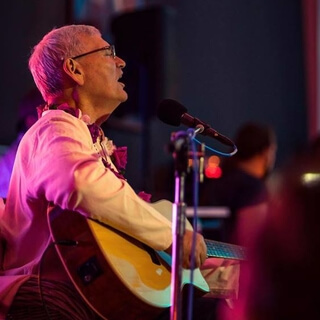
So in ending this I will just ask you to join me for a few moments.
We'll be having a,
You'll be hearing one of these spiritual sound vibrations,
This wonderful mantra,
Hari Bol Nithai Guar,
And just take it in and bathe your intellect,
Bathe your heart in this sound and think about what we've been talking about.
Consider it deeply and how you can move forward in your life.
Thank you very,
Very much.
Hari Bol.
Nithai Guar.
Hari Bol Nithai Guar.
Hari Bol.
Hari Bol.
Hari Bol.
Hari Bol.
Hari Bol.
Hari Bol.
Hari Bol.
Hari Bol.
Hari Bol.
Hari Bol.
Hari Bol.
Hari Bol.
Hari Bol.
Hari Bol.
Hari Bol.
Hari Bol.
Hari Bol.