Hello and welcome to this meditation with me,
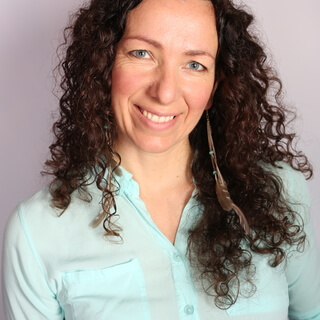
Heather Talbot.
I thought today I could do a five-part meditation with five different points of focus.
So in meditation,
In a mindfulness practice,
We have a point of focus that we return to.
And often that's the breath,
But it doesn't have to be the breath.
So in this meditation,
I'm going to provide a few different options so that you can see which points of focus may be most helpful for you.
So to begin,
Just inviting you to find a comfortable,
Relaxed,
But alert posture.
It's taking some moments to settle.
As always,
You can have your eyes open or closed.
I want you for this first point of focus to bring your awareness to sounds and the experience of hearing.
So noticing all the different sounds that make up your current soundscape,
Including my voice,
Maybe sounds coming from the room you're in,
Sounds from outside the room you're in,
Also sounds from your own body.
Just noticing all the different sounds as they arise and pass away.
Some that are low pitched,
Some that are high pitched,
Some that are quick,
Some that are more continuous,
Some that are near,
Some that are far away.
Just seeing if you can be with all the different sounds,
Almost like a kind of symphony,
Without getting into the story about the sounds.
So you're just kind of with the experience of hearing,
Without any judgment or interpretation.
You might experiment with listening for the quietest sound.
The sound that's furthest away.
Just being with that experience of hearing.
Maybe being curious about your response to the sounds.
Perhaps finding some pleasant,
Another's neutral,
Another's unpleasant.
Just being curious.
And then in a moment,
I'm going to invite you to shift your attention from sounds and the experience of hearing to your own breath.
So letting the sounds fade into the background,
Bringing your attention to your breathing.
Seeing if you can follow your breath all the way in,
Filling up the lungs and the belly,
And then all the way out as the belly contracts and shoulders drop.
And seeing if you can keep your attention on your breath.
And the experience of breathing for a few rounds.
When you notice the mind has wandered,
Just returning your attention to the breath.
And the experience of breathing.
Noticing how it's not really something you have to try for,
It's just happening.
You can just bring your attention to it.
As a possible anchor for your attention.
Then in a moment,
I want to invite you to allow that awareness,
That attention to expand out from your breath to your whole body.
So you're noticing sensations in your whole body.
Maybe areas of tightness or tension.
Areas that feel relaxed and spacious.
You might notice differences in temperature and pressure.
You might notice areas where you feel a tingling or a pulsing.
There might also be areas where what you notice is a lack of sensation or numbness.
Whatever you notice,
Seeing if you can let your experience be your experience.
Noticing the changing flow of experience in the body.
There might be particular patterns of sensation that get your attention.
But if you ever notice you get fixated on one sensation or pattern of sensations,
Just seeing if you can expand your awareness out again.
To include all the different sensations.
Again,
If your mind wanders off,
Just bringing your attention back to the body.
Maybe you can also sense your clothing and where you're making contact with the chair or whatever furniture you're sitting on.
Trying to include in your awareness the parts of your body where the sensations are more subtle.
As well as the parts of your body where the sensations might be more attention grabbing.
And then in a moment,
I'm going to invite you to shift your attention again.
This time to your thoughts.
Or the experience of thinking.
I'm going to invite you to wait with attention for the next thought.
Almost like a cat sitting at the mouse hole.
Okay.
And then inviting you now.
To just let the thoughts pass when you notice that you're having them.
Some people like to imagine thoughts like bubbles in a stream,
Just kind of moving past.
Like clouds in the sky.
Your awareness being much,
Much bigger than the thoughts that pass through it.
So that's the thoughts arise.
Which they inevitably do.
Caught up in them or carried away by them.
And then for this last point of focus.
Going to shift our attention to any emotions that might be present in the body right now.
Just expanding our awareness out.
And looking to see without any expectation.
If you notice any emotion residing somewhere in the body.
It doesn't matter if you can't quite identify the emotion.
You might you might give it a label.
For inviting you to be with the sensations of that emotion.
Noticing where in the body it lives.
If there's a movement.
Maybe there's a temperature associated with it.
Some other sensation like pressure,
Tightness or openness.
Again just being really curious about the experience.
Without trying to make something happen.
Seeing if you can hold this experience in this larger field of awareness.
If it feels right to do so.
You might offer yourself some tenderness,
Maybe a hand on the belly or the heart.
Or just taking a kind of refuge in this larger field of awareness.
And in a moment this practice will come to a close.
So maybe taking a couple of deeper breaths really filling up the belly and the lungs.
Bringing more awareness to the space around you.
The sounds around you.
You might wriggle your fingers and toes.
Slowly opening your eyes if they've been closed.
Maybe stretching.
I want to thank you for joining me in this practice today.
May you be well.