Okay.
Let's go on to the main event.
I'm so,
So happy that I've managed to get my guest on to this show.
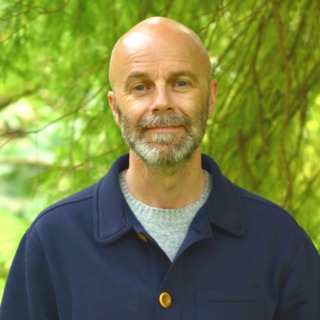
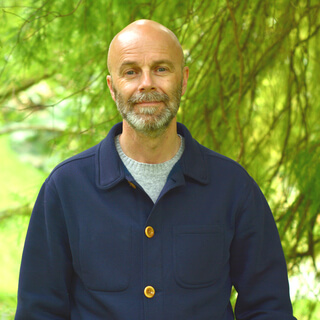
I've known Ian Tucker is my guest today.
I've known Ian for probably about eight years.
I've experienced some of his work firsthand.
And so I can absolutely say to you,
The next 45,
50 minutes are going to be a very magical experience.
Ian,
I essentially attended one of his workshops.
And I think what you're in for is a treat.
He's an award winning wellness author.
He has a fabulous book called Your Simple Path.
Last time I checked on Amazon,
It had over 170 reviews.
I've read that book a number of times.
It's a gift on my bookshelf.
And if you haven't checked out that book,
Then my encouragement is go and listen to a sample of it.
Or at the end of this podcast,
After you've listened to Ian,
Hopefully that will help you decide whether or not that's something that you'd like to go and invest some time in.
Yeah,
So award winning author,
A Reiki master teacher.
And I think where we're sort of starting to go with this,
As you're about to sort of uncover is this is probably not necessarily a podcast that you are expecting to hear in relation to the Sales Cadence podcast and the previous podcast that we've had.
But I'm absolutely here to tell you this is one you're going to need in your life and one you're going to listen to.
So let's try and dig into that if we can.
A little bit about Ian's background.
I'm going to leave Ian to explain more when I bring him on in a second,
But very similar path to me to some extent.
I spent a good number of years,
A good 20 odd years in the corporate world.
Something happened,
He'll tell you what.
And it moved him away from that corporate life and into the work that he currently does right now and what we're going to talk about on the show,
Which predominantly is the world of wellbeing and helping people understand and deal with things like burnout.
So forgive me.
Well,
Actually,
I'm not going to make any excuses because if you hear my pen scribbling,
It's because I'm making notes.
My encouragement is do the same.
Open up the notes section on your iPhone or get your journal out.
But needless to say,
I think you're in for a treat.
So,
Hey,
Listen,
Hopefully that's a good enough of a tee up.
Ian,
Welcome to the Sales Cadence podcast.
Thank you very much,
Matt.
And thank God you didn't go with what I asked you to say.
That was much better.
Thank you very much.
Brilliant.
Listen,
So important that people just get the first understanding and awareness of you.
Ian,
Give the listeners 60 seconds around what you do right now.
We'll tuck into the backstory shortly,
But just let people know what you do in the next 60 seconds.
Yeah.
I've had about 20 years now in the,
Let's call it wellbeing for now.
And we'll sort of unpack that as we chat.
But in essence,
Now I specialize in helping people who are feeling burnt out,
Overwhelmed,
A little bit lost in life at a crossroads,
Maybe want to make some changes,
But don't want to keep walking in the wrong direction.
So my last 20 years of work,
Whether it's been through writing,
Through recording,
I've now really come to this point.
And in essence,
My product at the moment,
If I can call it that,
As the nature is sales,
Is helping people who are really just feeling a little bit burnt out,
Tired,
Exhausted,
And maybe just need some clarity.
It's not that everything's wrong.
You know,
The old sort of image of the penny dropping through,
Sometimes a quarter turn of something and the penny carries on.
So that's it really.
Bring a bit of clarity,
Bring a bit of calm to people's lives and yeah,
Remind them that it's all okay.
Lovely.
Fantastic.
And I'm so looking forward to tucking into that,
Unpacking that and exploring that world that you now immerse yourself in and help people with.
What I always ask to do on the podcast is I try,
If I can,
To ask the guests to come along and perhaps deliver,
I don't know,
Two,
Three,
Maybe four pieces of knowledge or advice or some tips.
So do you have two or three things that you'd like to share on the podcast today?
Yeah,
I think,
First of all,
Matt,
I'd like to thank you.
And that might be going off script if we haven't got a script,
But.
.
.
We haven't got a script.
This is a rudderless ship,
My friend.
The second edition of Sales Glue,
Which I read the first edition,
You were kind enough to send me the second edition.
And one of the things that was really sort of enlightening and rewarding to me was the fact,
And I don't want to give too much away,
But you start the book really by accepting a mistake,
Something that didn't go exactly as you planned.
So there's an element of vulnerability that really opens this book up.
And I think that's so important for what we're going to talk about now,
Because vulnerability is the one thing that links everybody on this planet.
We're vulnerable.
Just under the surface,
We're all the same.
I've heard sort of a guru talk about,
It's like trying to keep a beach ball under the water as we're treading water ourselves.
We don't want people to see the stuff.
And it's exhausting.
There's no authenticity to it.
And you start this book by saying,
I've got something wrong.
So I think one of the reasons I was really happy to come on and talk to you today is the fact that our session is going to be about life,
About the ups and downs,
The comings and goings.
So just a few things I've picked out.
I've taught meditation and mindfulness,
And I do on an almost daily basis online.
So I just want to talk about this thing called mindfulness to start with,
Because it's doing the rounds now in the corporate world,
In all areas.
But my two penneth on what mindfulness is,
And I'll also introduce a very simple three-step in real time tool that you,
The listeners can use just to incorporate mindfulness into each day.
Wonderful.
I'd like to move on to balance.
And the fact that balance really is the key to everything in life.
It doesn't matter what aspect,
Whether it's sports,
Whether it's finance,
Whether it's performance,
Whether it's wellbeing,
Then without balance,
We're playing at it.
So I just want to reframe the word balance,
And again,
Look at how we can encourage and incorporate that into our day and week.
Fascinating.
Yeah,
That sounds very interesting.
It just sounds so interesting.
Listening to you already,
I'm already salivating.
Okay.
Well,
I'll carry on then.
So onto the main course.
There's an exercise that I've used in one-on-one and workshops for many,
Many years.
And the exercise is a very simple but profound way of really auditing your life,
The listener's life at this point.
And we're going to start off with incorporating elements of balance into it,
And then have a look at stuff that comes to test us as well,
But recognize how important it is that it's all in the mix.
I'll go on to say a bit later on that I can't be happy until I've been sad.
It's just five letters,
H-A-P-P,
Which doesn't mean anything to me.
So it's important to work out that there's a downside to this balance stuff as well,
But how do we get out of that?
How do we move on and breathe and get on with life when something comes to test us?
And then the final thing,
And it's laid through just about every talk or every session that I give,
Is the importance of gratitude and just remembering all that we have in life.
So I think between all of those,
There'll be a theme to today's chapter.
Beautiful.
So I'm not going to let you off the hook quite easily from a sales perspective,
Because I do want to just dig a little bit into your background of your earlier years in corporate life.
But just before we go there,
Ian,
The question I always ask on the podcast is,
Do you remember what you were doing?
If you take yourself right back to your very,
Very early years,
It could almost be certainly high school,
Possibly even primary school perhaps,
But do you remember what you were doing when you made your very first sale,
When someone actually gave you a reward or even cash for something that you did for them?
Do you remember what that was?
I remember the first sale I made.
I worked in lighting for many years,
Lighting design and sales.
It was a mixed role.
And I remember that I'd had three or four months without a sniff of anything.
And then a contractor in Cradley Heath in the West Midlands called me on a Friday and said,
You know that little job you did for us for six industrial high bays in the warehouse in Old Hill.
Well,
We want to place them.
And it could have been a multi-billion dollar,
I don't think my feet touched the floor for the weekend,
Matt.
And I went from thinking,
I don't think this is for me,
To bring on Monday.
So it was six industrial high bays in a factory in Old Hill in the West Midlands.
Do you remember what year,
Roughly?
When do you think that was?
What year?
Yeah.
I think that would have been around about 1980.
That would have been about the sixth of September,
1989.
It's fascinating,
Isn't it?
I don't know if that is the exact,
If it's the exact date.
It's amazing.
It's certainly the right year and it was autumn.
So who knows,
Matt,
I might have plucked that out of the ether.
Well,
You're close enough,
My friend.
But what's really interesting hearing that is,
There's so much,
They could be right.
And in fact,
To some extent,
Of course,
They are right.
The sales has changed to some extent,
But actually selling hasn't changed.
What's changed is all of the noise and circus that goes on around the outside in terms of social media and marketing,
Which is all good stuff,
By the way.
I'm not here to knock it.
AI coming on board as well.
This is all fab.
And of course,
That's the changing landscape.
And you could argue that buyers have got access to far more information.
They're doing more and more self-solving,
Coming up to the conclusion of what they think the answer is to the problem.
So it's all that kind of stuff.
To some extent,
You could argue there is some change and some subtle nuancing that's taken place.
But if I go right back to that first sale you described there,
What hasn't changed is the peaks and troughs that we go through as salespeople,
Because sometimes it's going great and sometimes it's not.
And I'm sure what you're about to help us with will certainly lend itself to understanding how we can deal with those lows,
Because it's quite easy to enjoy the high stuff.
It's the low stuff that we struggle with.
But the other thing that hasn't changed is the feeling you get when you close one,
Right?
Absolutely.
Absolutely.
And that can be somebody saying they want to publish your book.
That can be six high bays at an industrial factory in the West Midlands.
Yeah,
The feeling is the feeling.
The close is the close.
Yeah.
And so talk to me a little bit about how you made the shift then.
So there you are in the lighting industry in a sales role,
I assume a senior sales role at some point.
Something happened,
Ian,
And you no longer decided it was for you.
Talk to me a bit about that.
Yeah.
I mean,
Long story short,
Natural progressions through a career and staying in the same industry.
And I ended up at around about the age of 35 as sales and marketing director for the UK's second largest lighting company.
And I think 45 million,
I mean,
We're going back 20 years,
So 45 million pound budget and 150 staff and all of that.
So,
You know,
I'd got the model was there.
And it was my job to go over.
We were owned by a European board at the time.
And it was my job to go over to Frankfurt each December and present the strategy and the P&L for the following year.
And I went over in December and sat in a room in Frankfurt with 60 other executives,
In inverted commas,
Presented it.
We had a good year,
Pats on the back.
There was no reason at all to feel disillusioned.
And it was a two day affair.
And by the afternoon of the second day,
Matt,
I just knew it wasn't for me anymore.
None of it made sense on paper.
You know,
The numbers added up,
The bonuses and the remuneration was great.
Everything that I thought I'd worked towards.
And within a couple of weeks,
I was on a six month contract or notice period.
Within a couple of weeks,
I think it was December the 23rd,
I ended my notice in work six months and yeah,
And left the industry in essence,
Did some consultancy work.
But it left a void,
Because if something that you thought was everything you wanted disappears overnight,
You've got a life to live,
You've got bills to pay.
And so I didn't know what direction to go in.
And I just chanced across a book around something called Reiki,
Which was a complementary form of healing from the Far East.
And it was just a head turner.
It really just slowed me down.
It created some space.
And instead of filling it with another job that's similar,
I went in completely the opposite direction.
And 20 years later,
I now teach this stuff.
What's interesting about that is,
It sounded like literally over a two day business conference,
It sounded like a snap decision.
But my guess is that wasn't a snap.
It's a bit like,
When people go to get their back fixed when they go to the chiropractor,
Because,
Oh yeah,
It happened at the weekend,
I was digging a ditch and my back went.
The reality is it probably wasn't digging the ditch that caused the problem.
It was probably the three months of poor posture when you're sitting in front of Sky Sports watching West Brom and Norwich,
Which we might go on to later.
So was it literally a snap decision or had things been bubbling behind the scenes?
Had you started to feel like it was time for a change?
That's a really great question.
And the one thing that's come to me here,
I haven't been asked that question before,
But one thing that comes to me,
There was something that I think changed my life a few months before,
And it had nothing to do with the industry or the job I was doing.
I'd got three young children at the time,
All under the age of six at one point,
A bit crazy.
And we went to a charity event,
And I can't even remember what the charity was.
But do you remember 20 years ago or so,
Wristbands become en vogue.
It was a wristband for this charity and that charity in different colours.
Anyway,
The person who delivered the talk started to hand a box of wristbands round.
And I've got my youngest at the time,
Alfie,
He was about two and a half,
But he knew what was happening.
He could see the wristbands coming his way.
And we were about halfway back,
Six or seven rows.
And it become obvious to me that there wasn't going to be enough to go around.
And so they ran out.
And as a two and a half year old who wasn't going to get his wristband,
He broke down.
It was just all too much for him.
It was the end of the world type stuff.
Anyway,
The event finished,
Everybody was shuffling out,
And an old fella pushed against the crowd to get back to us.
And he went down on one knee,
Slowly took his wristband off and put it onto Alf's wrist.
And I just thought,
Wow.
And I get a bit emotional now just talking about you.
I don't know if you can hear that.
And I just thought,
I think there's more to life than what I'm doing.
And so that's a really interesting question that you asked Matt,
Because whether that seed was planted that day and it manifested or came through the soil three months later,
I don't know.
But that was a pivotal moment for me,
That few seconds with a stranger.
There's a,
You know this quote,
It might even be a Wayne Dyer quote,
I can't remember,
But maybe you'll help me.
But there's a very famous quote,
And I make reference to it in Sales Glue,
Which is when the student's ready,
The teacher will appear.
Absolutely.
And then that smacks of that really,
To some extent,
Because there's a complete stranger doing an act of kindness,
A random act of kindness,
Which in itself is just a beautiful thing.
But of course,
You witnessing that is having a secondary impact.
And it's a crude phrase,
But it's like the straw that broke the camel's back,
Isn't it?
There are a number of things going on in people's lives.
And in a second,
When we get onto your,
Those three wonderful things that we're going to talk about,
I think so much of what happens to people,
Certainly happened to me,
Very similar story in my situation.
There were a number of things going on,
Which build and build and build.
And then you just have the straw that breaks the camel's back and you make a decision.
So wonderful.
Okay.
Well,
Let's crack on.
Let's unpack those three areas of knowledge and advice and let's start to tackle it.
Because the first one that you said was to explore and understand what is mindfulness.
We hear a lot about it.
Just before we go into the detail,
Ian,
Do you ever find yourself coming across naysayers and disbelievers?
Because sometimes this mindfulness topic can get a little bit of bad press,
Can't it?
Yeah.
No,
It can.
I mean,
Like anything that becomes.
.
.
I mean,
First of all,
This is ageless.
We're going back 10s,
20,
000 years to the gurus and the sages and the wise,
Matt,
And they had just one consistent message.
Do whatever you want in life,
But recognize that now is all there is.
Yeah.
Brilliant.
Really?
I mean,
Let's pause on that for a moment.
Wherever you're listening at the moment,
This connection that you're having with me and Matt is the sum total of your life.
And no science,
No philosophy,
No common sense can disprove that this is all there is.
So if there are naysayers,
Or there are people who say it's rubbish,
It's because,
Like me,
For most of my life,
And at times now,
They don't just allow themselves to be here now.
And so it doesn't connect with them as a philosophy or something that makes sense.
But truly,
Matt,
Now really is all there is.
Yeah,
You're right.
And I think,
You know,
If just a step back before I come on to the principle of mindfulness.
In Buddhism,
For thousands of years,
They've used the term suffering,
Not just in Buddhism,
In Eastern philosophy and religion generally.
So to suffer is in essence,
The inability to live with an open heart and a calm mind.
And I have to say that in the last 57 years or so,
The majority of my suffering has been because I can't just be here with you now.
I mean,
I'm here,
I've got a mic in front of me,
I'm sitting on a chair.
Yeah.
But your listeners will connect with this,
Even during this hour together,
Which is going to be great and enjoyable.
Your mind and my mind will drift.
We'll leave here.
And just about all of my suffering comes when I leave the moment.
That's profound.
So it's not that we don't suffer in the moment,
You'll get,
I don't want to give too much away about the book,
Matt,
But you'll get,
You'll get a knock back on a sale in a moment.
You'll get a call about a medical test in a moment.
You'll let a goal in,
In a moment,
You'll miss a penalty in a moment.
Everything has a temporary nature,
Everything.
And so the suffering kicks in afterwards.
And the suffering kicks in and says,
This could happen again to me in the future,
Or the suffering kicks in and says,
That's happened to me in the past.
And now it defines me in some way.
But we've moved on to another series of moments,
Moment by moment where we can put it right.
So now is all there is truly.
And let's look at the two sides of now,
Matt,
Before we move on to mindfulness.
So first of all,
There's the past,
Gone forever.
It doesn't matter how much money you've got.
It doesn't matter the education you've had.
You can't change anything about what has already happened.
Yeah,
It's gone.
So you can look back in two ways.
You can look back with regret.
And I think that might be a natural part of the process.
We have to go through the raw stuff.
And you can stay there stuck in the past with regret.
Or you can learn from the experience.
And again,
Your book touches on this.
You can learn from the experience.
And you can know that in this moment now is the only time you can create change.
So let the past serve its purpose.
Grow from it,
Learn from it.
Bring it to this moment with a positive slant.
And let's move forward from this moment to the future.
The total uncertainty of what might happen after this podcast or during this podcast.
But let me just leave the listeners with a number.
99.
9% of anything that you,
Me,
Or anybody listening to this podcast has ever worried about has never happened.
That is one of the single biggest things I took away from your training when I went through it.
And that must be at least seven,
Maybe even eight years ago when we first met.
That statement that you just made there is a very profound statement.
Help me unpack that a little bit more.
Why do we know that to be true?
Well,
We have an experience of looking back and knowing just about everything that you and I have worried about.
It's a real number because it's a real life situation.
We do,
Don't we?
We tend to want to be.
.
.
I listened to a Mo Gowdat podcast.
I think he was diary of a CEO,
Perhaps Steve Bartler.
But he was talking about he had a loss in his life.
His son died.
And he said,
The past is like Netflix.
It's like pain and suffering on demand.
The only time that you experience it is when you go back there.
And if you want to make yourself unhappy,
You just go back there.
And it's just so obvious,
Isn't it,
When you think about it.
But it's a very difficult thing to try and almost stop yourself from going back unless you've got that teaching,
That learning,
That life experience or knowledge to know how to reflect in a more constructive way.
Well,
Perfect,
Matt.
And I think when we look at moving forward and the world.
.
.
So let's think of emotions that are associated with after this,
Typically worry,
Anxiety,
Uncertainty.
And yet we know that 99.
9% of all of this stuff we're worrying about isn't going to happen because we've had a lifetime of knowing it.
Something different happens,
Something better happens.
It doesn't happen at all.
And by the way,
This isn't some sort of happy clapper presentation.
The 0.
1% we deal with.
We deal with because even that's temporary.
And that doesn't leave a lot out.
The 99.
9% that doesn't happen,
Or the 0.
1% that you,
Me,
And everybody listening to this has dealt with.
So just to go a step sort of deeper on it,
Matt,
The British Medical Association in a paper,
This is in the public domain in 2021,
Said that they think now that about 87% of non-accidental death emanates from stress.
Wow.
87%.
So if you put that in real terms,
87 out of 100 of us are going to pop our clogs because we get stressed and worried.
And yet 99.
9% doesn't happen.
That's staggering.
That is staggering.
Especially if we go into the very little area of performance psychology we need to go into on this conversation.
We know that stress is an emotion and emotions come from how you think,
Right?
Which is why this mindfulness section that we're in right now is such an important thing to get our heads around because there is the opportunity to control that thinking and therefore control that feeling,
Right?
Yeah.
Yeah,
Exactly that.
And stop it off at source.
So I think we've sort of framed either side of this moment now,
Matt.
So the naysayers that you talked about will be stuck in the past,
Two ways out of every thought.
We can go back to cherish memories,
Or we can go back and get stuck with something that we didn't ideally want to happen.
Yeah.
Two ways out into the future,
We can add to the 99.
9% by worry or anxiety,
Or we can slow down in the moment,
Remind ourselves of this factual evidence,
And then make decisions now to take care of ourselves.
So that brings us onto mindfulness.
And essentially mindfulness,
You'll find lots of different explanations and definitions.
But mindfulness for me,
Matt,
Is simply experiencing something now without the need to explain it,
To change it,
Or to wish it was different in any way.
So just to be with something,
To experience it.
Now,
That might seem so alien,
And it does to me at times.
It does.
Because by our very nature,
We need to control things so we don't worry and we don't become anxious.
And yet you've touched on it.
Everything is out of control.
Everything.
So mindfulness is about just slowing down.
If you want to go faster,
Slow down.
If you want to sell more,
Slow down.
If you want to become healthier,
Slow down,
Pause,
Recognize this moment.
So to experience something without the need for words,
Without the need to change.
Let me give you sort of a slight reslant on that.
I said earlier that if you want to go faster,
Slow down.
So let's think about Usain Bolt.
Somebody's had a word with Mr.
Bolt at some point,
Or he's read a book or something.
Because take your sort of imagery now to a Usain Bolt race just before the start,
And they're all at the blocks getting on change.
Okay.
Every other runner has nervous energy to burn.
You can see them.
Why wouldn't they?
They're about to race against Usain Bolt.
They've chosen the 100 meters when they were a kid,
And he's around,
God knows.
And then the camera pans over to Bolt.
He's slower than everybody else.
He's moving slow,
If at all.
Usain Bolt then,
Without exception,
Turns and he makes direct connection with another human being.
You've probably seen him do it.
Yeah.
He makes eye contact,
And he recognizes that that human being and him are in this moment now.
Everything else disappears.
The other human,
And I'm sure there is an element of kindness in this,
Thinks that they've just won the lottery and Bolt's chosen them,
But they're helping Usain Bolt.
The slow fist pump,
The connection as he feels his feet on the floor in that moment,
The camera pans round to the people he's about to race,
That jittery,
Trying to get rid of energy,
Up,
Down.
It's a great example.
There's a video reel of a number of those montages of Usain Bolt just being nice to the people that are helping him with his kit.
And you may be alluding to that,
But now that you mention it,
You're absolutely right.
He is a different and was a different character on the start line or the five minutes before.
He was almost smiling and enjoying,
And it was almost like he didn't give a toss.
No.
But what you're saying is that's the way that you immerse yourself in mindfulness.
He can worry that he might not break the world record or the Olympic record.
He can worry of the hamstring tweak that he got the Tuesday before in training.
But in that moment,
He connects with another human being.
And so are we saying then,
Ian,
That actually mindfulness is an advantage if I'm able to use that as a word?
This is not about saying,
Oh,
Well,
Whatever.
This is actually using it as a tool,
Right?
Absolutely right,
Matt.
Yeah.
You see,
The world is carrying on around us now.
In this moment,
If you and I afford ourselves a moment of silence on this podcast,
There is a crazy world happening right now,
And we can't control any of it.
So if we dissipate our energy into that world,
Into something we've experienced or haven't experienced,
Then we've left this moment.
We feel helpless.
We feel out of control.
But you just allow yourself to notice.
So this might sound a little bit left field,
But pot plants are brilliant for this.
So the next time you're feeling stressed,
The next time you're feeling anxious and you're in a room with people or you're in a room alone,
Find something from nature.
Have a look at the pot plant in the middle,
In the corner of the room that gets this.
Look at the stillness around that.
It breathes the same air,
Has the same light,
Needs the same water.
But it knows that just to be in the moment is the way through.
Connect with that pot plant.
Look out the window at the clouds,
The blue sky,
The rain,
Whatever it is.
Bring yourself back to this moment with something from nature that gets it.
If I think about the audience and the majority of the people that listen to this will have a sales persuasion,
They're probably in the industry or have some direct link to selling.
Many of those people will be probably really enjoying this,
But maybe struggling because it's a bit like you can't get the six pack without going to the gym.
So this is something that you're sharing with us that people would need to clearly work on in order to get themselves to that place.
But what I think what you're saying is,
Or what I know what you're saying is,
Is it's all going on out there.
You can't control any of it.
So why bother?
What you can control is what's going on right here and right now and in that little bit of space called you.
And that's where mindfulness can help those really busy individuals who are struggling or they're a sales leader and they're not hitting the targets and C-suites all over them because they're not.
And what are you going to do about it?
And all of those things are important and you need to find a way to solve those problems.
But the reality is- I'll get on this,
Matt.
Imagine that you and I and everybody else has 100 units of energy.
Yeah.
And for optimum wellbeing and performance,
We have those 100 units.
So mindfulness replenishes.
Mindfulness contains your units of energy,
Your units of goodness,
Of performance.
If you're listening too much to the boss,
And I'm not saying don't,
But if the boss doesn't get this and is frantic and nervous,
You're just throwing units of energy at the boss.
Yeah.
If you're worried it's going to rain next Tuesday,
You're throwing units of energy at the weather next Tuesday.
So it's all about containment,
Slowing down to go forward,
Slowing down to do more,
Slowing down to be better.
Just before I move on to a very quick exercise that I'd like to share that really brings this off the page.
A musician friend of mine has a wonderful analogy and she says that it's the space between the notes that truly makes the music.
Yes,
That's true,
Isn't it?
Otherwise it's just one continuous noise.
That's it.
It is the space.
You're right.
So if you don't build mindfulness and pause and space into your day,
Into your hour,
Into your minute,
Then we're just absorbed with the noise.
Wonderful.
So find the space between the notes.
How can we do that?
Let me give you a.
.
.
Can I share a very quick three-step.
.
.
Let's do that.
.
.
.
Sort of session.
I mean,
And you'll get this down to real time.
It's like anything.
This might sound a bit clunky as I sort of read it out now.
Go for it,
Ian.
Yeah.
You know.
So think of this as breaking the chain.
Think of this as just putting the instrument down for a while or looking out of the window,
Whatever it is that just stops that relentless noise search.
So the first thing is step one.
Something happens to us,
Matt.
We experience something.
And this is infinite.
It can be anything.
And as you alluded to,
There is typically a mental and then an emotional reaction to that.
We're in.
We've bought in to what we've just experienced.
Mm-hmm.
And we can drift away with it and stay with it.
But just the first step is to become aware of your breathing.
So remember,
I'm very conscious people are just hearing this for the first time.
Something happens in a space.
You could be in a room full of people.
You could be sitting in your car before going in to try and close a sales call,
And your mind is drifting.
Become aware of your breathing and count to three slowly.
Okay.
An ancient,
Age-old technique to start the process of mindfulness.
Become aware of your breathing and count to three slowly.
Feel your feet on the floor wherever you are.
You're in this moment now.
You and I can only be in one place at one time,
And this is it.
You've already started the process.
You're focusing on your breathing.
Yeah.
You've counted to three,
Maybe slowed your breathing down.
And why is the breath so important,
Matt?
Why for thousands of years have they used the breath?
It's because we can only be with the breath that we're breathing now.
We can't go back five breaths or shoot forward half a dozen.
No,
We can't.
So the breath brings us to the moment.
It has to.
You count to three.
You connect with your breath.
You feel your feet on the floor.
You do that in seconds.
As you breathe and feel your feet,
Remind yourself of this age-old mantra.
This is temporary.
This too shall pass.
Everything does.
So the only bit I've got to get my head around is taking care of myself while it passes.
Not being sort of drifted away with it or not getting too burnt up with the noise.
And then step three is to use the space that you've created.
And you have,
Even in those few seconds,
You're practicing mindfulness perfectly here.
Step three is to choose the space and think of something that makes you feel calm or takes care of you now.
Now,
That can be just to remind yourself again that this is temporary.
It can be to choose not to react at all.
Matt,
If I'd have counted to three over the years,
I wouldn't have got involved in half the stuff I did.
I didn't need to react.
It could be just to ask for some space.
It could be to tell the other person,
You know what,
You're right.
And not sort of flog a dead horse trying to prove that you are.
So those three steps encapsulate mindfulness.
I love that.
Sorry,
Carry on.
Do explain the three.
So something happens or we're sitting and we're creating madness in our own minds just before the sales call,
Just before the pitch.
Become aware of your own breathing.
Consciously slow down and count to three and feel your feet on the car floor,
On the presentation floor,
Whatever it is.
You're here now.
As you breathe and feel your feet,
Remind yourself this is temporary.
Everything is.
And then you consciously use the space to take care of yourself,
To think about something that you're going to enjoy later,
To think about something that warms your heart,
Your son,
Your daughter,
Anything.
And then you begin the process of being in the moment again.
Mindfulness.
That's a wonderful,
Wonderful tip.
It reminded me about,
You know,
20 minutes ago when you mentioned about the kind stranger who gave your son that wristband,
You know,
Take yourself back there.
And then the immediate emotion that you experience there is one of sort of gratitude and potential love and,
You know,
Positive things,
Right?
Cherished memories,
Matt.
Yeah,
Exactly.
Look back.
Our lives are full of them if we scratch just below the surface.
And I think that that's the thing that I was thinking of there,
Where you were explaining the last point,
Where,
You know,
You choose the space that you want to go and spend now in.
That's where you have the control,
Isn't it?
You can't control what's going on outside the car.
But if I'm sitting there,
This is the bit that I can control.
And whether you're thinking about,
You know,
If we use it as a sales example,
You know,
We've done our due diligence.
We're really confident about,
You know,
The organization that we're going to go and see.
We've,
You know,
Depending on what conversation you're having,
If it's a first time conversation,
You're reasonably aware that they'll have a problem that you can solve.
So you're going into that room to help them rather than sell to them.
So if you've done everything right before you go in there,
Then what is there to be afraid of?
Because you can't lose what you haven't won,
Right?
Contain your energy,
Matt.
100 units of energy.
Do you throw it away on the car park floor with what ifs and it could?
Or do you just articulate like you just have and keep those units of energy?
Love it.
Ian,
I'm conscious of time.
I want to move on to the other two and three.
And if there's anything else we can tease out of you,
I want to do that.
So that's mindfulness.
I'm really comfortable with that.
What's next?
We talked about balance,
Didn't we?
Yeah,
I think everything in life matter.
You know,
I started off with a quote where I said,
Balance is the key to everything in life,
Everything in life.
If you think about taking care of yourself with diet,
With exercise,
You know,
Whatever you think about is better with balance.
And so let's just sort of have a look at what I mean by that,
Matt.
So most of the work I do now is with people who are feeling burnt out or overwhelmed.
And that can be somebody working 70 hours a week,
Or it can be somebody getting over an illness,
Or some middle aged woman whose youngest child has just gone to uni.
And who is she?
You know,
It can manifest in so many different ways.
It's not,
As I would sometimes assume,
It's not necessarily a physical reaction.
No,
Exactly not.
I think if,
Simply put,
I think that the absence of,
You know,
Burnout or overwhelm is the absence of balance in all or a part of your life.
Okay.
So we've become the thing that creates the burnout.
We're out of balance.
We're out of sync.
And we get this,
You and I,
Matt.
You know,
If we think about mechanical,
Let's take an example.
So a mechanical part,
It could be a heavy industrial machine.
It could be a hairdryer.
It could be a printer.
If it just keeps going,
What happens to it?
Well,
Eventually it burns out.
Exactly.
If we look out of the window at certain times of the year,
We acknowledge and understand and even respect that a tree sheds its leaves once a year.
Because it needs to rest.
It needs to pause.
It needs to find balance.
We get it physically,
Matt,
You and I.
You know,
If we can't just keep running,
We can't just keep swimming.
We can't just keep jumping.
Something has to give physically.
Yeah.
So why is it that when it comes to our mental and emotional well-being,
We should think that's any different?
Yes.
You're right,
Actually,
Because it's on full,
Constant,
Isn't it?
Yeah.
So pushing ourselves constantly without considering the toll it can take on our mind or our emotions,
Not to switch off,
Not to find balance.
So there's an element of mindfulness gently floating into this,
But this is defined a bit more now.
There's something that's actually active about this that we're going to look at.
So if the mechanical part keeps going,
It burns out.
Something has to give.
If you,
Me or our listeners,
Matt,
Just keep going,
Something has to give.
Yeah.
So how can we look at this thing called balance?
If I was to ask you,
Matt,
Do you have balance in your life?
Well,
Let me reframe it,
Which is what I tend to do for people I'm working with or on talks I give.
Let's reframe the word balance with what takes care of you.
Yeah.
Okay.
What takes care of you?
And I'm putting you on the spot here a bit,
Matt.
Do so,
Yeah.
On the basis you have a busy life,
At times it's going to be full on.
What takes care of you?
How do you step back from that?
How do you find balance in your life?
It's a really timely question as well,
Ian,
Because very,
Very briefly,
I stepped out of the self-employment world about two and a half years ago to go back into the corporate employment world.
And then literally two months ago,
Stepped out of the corporate employment world back into the world of self-employment.
And a lot of that decision to move back to self-employment was based on exactly what we've been talking about over the last 20,
25 minutes,
Which is essentially coming to this point about balance.
There wasn't enough balance in my life in the corporate role that I was in.
Loved working there.
Loved the people.
Missed a lot of them.
I had the best time ever,
One for another podcast,
But I was definitely out of kilter.
And I can remember coming home when I decided to make the move and parted ways with the organization.
I can remember coming home that day and said,
I just had a notice in.
And the first thing my son said to me was,
Thank God for that.
And what you don't realize,
Of course,
We're going slightly off script,
So you need to pull me back eventually.
But what we don't realize is we kind of get stuck in autopilot,
Don't we?
And we are behaving the way that the world is driving us.
And if we haven't got this kind of balance and control and awareness,
We just behave.
And unbeknownst to me,
And I'm absolutely certain that it was picked up in my professional role as well.
I was behaving in a certain way.
And so in answer to your question,
I'm now in that space where I have now far more control over how I spend my time.
So I'm probably in an okay place.
I do,
I went out and bought myself an expensive yoga mat,
Ian.
So I do practice a little bit of yoga.
I'm far more in tune with my wife's situation in terms of,
For goodness sake,
The last two and a half years,
She was doing all of the cooking and all the cleaning.
And so I'm dipping back into that world.
So whether those are the things that you're searching for,
I'm definitely trying to find,
Let's say I'm more consciously aware of the importance of balance now and trying to do more for me.
Yeah,
I think,
Matt,
There's no right or wrong answer.
It's what takes care of you.
Sure,
Sure.
And if part of what takes care of you is seeing that you're affording time for the people you love,
Whether that's cooking,
God forbid,
Whether it's cleaning,
Whatever,
Whether it's having a knock at golf with your son,
Whatever it is,
That isn't only nurturing and enriching their lives,
But it's taking care of you as well.
And if we compare,
So if I think of a couple of things for me,
I've been loud for most of my life,
Matt.
I cringe at times when I look back,
But I look back and in this moment,
I can create change.
So silence,
Meditation,
If you want to call it that,
But just being in silence and taking some time for me has become of paramount importance.
It re-energizes me.
It adds some of those tokens back in.
I'm not on autopilot all the time.
For whatever reason,
I moved to Devon thinking the sea would be a life changer,
And it's trees.
So there's an old oak tree at the end of a lane.
I know when it gets a bit strange.
Don't worry,
Matt,
If they write in.
There's an old oak tree at the end of the lane.
And if I sit under that oak tree,
Then I retain energy.
Things slow down.
And just to show that balance is important,
After a 20-year sabbatical,
I went back to play village cricket.
Did you really?
Yeah.
And so the connection with like-minded people,
A little bit of competition,
But just movement and fresh air.
And so can you see that silence is important to me,
But also connection is important.
So there's balance through all things.
But the question really would be to your listener,
Matt.
It doesn't matter whether you're 130% of target or whether you're 65% of target.
It doesn't matter whether you've got nine months of the year to go or you're running down the last couple of weeks.
What can you do to build balance into your life?
Because if not,
Something has to give.
Yeah.
Yeah.
And actually bringing that balance in probably improves the,
If we use the example of selling,
You're going to be a better individual.
You're going to show up in a slightly more constructive way if you've got balance in your life,
Aren't you?
Because you're just going to feel better,
Be better,
And probably achieve more.
Yeah.
I think that's without exception,
Matt.
And I think if it's,
Again,
Whether it's sport,
Whether it's any form of performance and selling is,
Then the more balanced you can be,
The better you can feel about yourself,
The more you're going to portray that to the person you're within.
I'm interested just briefly about the cricket thing.
So I played cricket recently a couple of weeks ago in a charity game.
And I'm 55.
I think we're roughly the same age.
And heart and head.
So heart says you can run to that boundary,
Which is 25 yards away,
To stop that from being a four and then quickly found out their head said that was a bad idea to do.
And certainly two days after,
I certainly realized that it was the wrong thing to do.
I don't know how you're getting on.
I'm sure you're doing all the right things.
Unfortunately,
There was an incident,
Matt,
Last Saturday,
Where I ran to the back.
I did exactly that from sort of a square leg.
But anyway,
I turned and ran to the boundary,
Slid in and stopped.
It got the ball back.
And I thought,
I'll never lose this.
Unfortunately,
Somebody had videoed it on the phone.
And to say it looked different to how it was in my mind,
I just looked at it,
Shook my head and thought,
Oh,
My God,
Time's moved on.
Yeah.
So,
Yeah,
It all moved on a bit.
But now it's lovely to be connecting with,
And village cricket in Devon as well.
What,
You know,
Why wouldn't you?
Is there any way the listener can apply some way of,
You know,
Exploring this thing about balance?
Yeah,
Well,
I spoke at the beginning about a very simple but profound exercise that I'd love to introduce you to now,
Matt,
If I may.
So if you have a piece of,
I'm not sure if you do,
If you've got a piece of paper.
Yeah,
I've got,
I'm making notes.
Yeah,
If you've got a piece of paper there,
And it'd be lovely if it was a blank page.
It is.
And draw a horizontal line across the page.
Doesn't matter if it's landscape or portrait.
So you're going from left to right.
So you're left with two halves.
Yep.
At the top of the page,
Just small,
Just write a happy face right in the middle.
Yep.
At the bottom,
A sad face.
Okay.
And then you can start to populate this page now with anything that's below the line.
You just get a sense it drains your energy,
Doesn't serve you,
It's not good for you.
Ideally,
You wouldn't be doing it.
And this can be anything.
This can be substance that we put into our bodies.
It can be where we spend our time,
Who we spend our time with.
But begin to get really clear and just face it.
There was a lovely book called The Dark Side of the Light Chasers.
And they say,
Whatever we shine a light on,
Loses its grip.
So we bring it out and we put it on a page.
And underneath the line mat,
You populate that with anything that you know would.
.
.
Let's keep the same analogy with these units of energy.
You'd just throw units of energy at it.
Got it.
And actually start to name it.
Right.
The great news is,
There's half a page left above the line.
So now we go to anything that lifts us up,
That we cherish,
That energizes us,
That keeps those units of energy.
And that can be anything again.
It can be seeing your old man smile because West Brom have managed to grab a drawer away at Leeds.
In fact,
That's a real one.
It can be,
I don't know,
The oak tree at the end of it.
It can be anything.
If it lifts you up,
It lifts you up.
There's no right or wrong.
Brilliant.
And you start to populate the page above.
Now here's what typically happens,
Matt.
It's a lot easier to fill the page below the line than it is above the line.
There's a message there.
Yeah,
There is,
Isn't there?
Balance is balance.
So just looking at this template,
Just looking at this exercise,
First of all,
Gives you a real clear indication about what the problem is.
A,
I haven't got enough stuff above the line.
And B,
I'm feeling a bit trapped with all of this stuff below the line.
So that's the first bit of this exercise.
That's a really,
Because what I'm now looking at here is I'm getting some clarity.
I actually,
There are things that were in my head that perhaps I didn't realize that are now going onto a piece of paper.
Exactly that.
And it's yours.
That piece of paper can only belong to you.
So that's how powerful this exercise is.
Don't write anything that you think anybody else would want on that page.
This is your stuff.
Below the line drags me down.
Above the line lifts me up.
Is there an imbalance?
If so,
I need to find more things above the line.
I need to remind myself that 20 years ago,
I used to have a knock at cricket.
It's back on the page.
For five or six hours a week,
I'm above the line.
So the other thing,
Matt,
Is that we might feel a bit trapped.
We look at these things below the line and we think,
It's there and it drags me down,
But I'm on a 12-month contract.
I mean,
I'm just going to say it.
I'm married to that person.
Whatever it is.
So here's a lovely little way of just getting a bit of movement around that.
Just write the numbers one and two against anything below the line.
And think of just a couple of steps that start moving you up the page from it.
So what you're saying underneath,
For example,
One of those things,
You want me to put the numbers one and two and start to write.
So one would be a way of correcting or improving.
Is that what we're saying?
Exactly that.
Let me give you an example,
Matt.
For over 30 years,
I drank alcohol every day.
The one I'm looking at right now is exactly the same thing.
Okay.
It'll be six years for me in October since I had my last drink.
I just got to a point where enough was enough.
But I knew for 30 years that that alcohol thing was below the line for me for so many different reasons.
And that's a whole new podcast.
We haven't got to go into that,
But it's there.
So number one on that list might be,
I mean,
It's a big step to say,
Stop drinking alcohol.
It's a bit obvious.
So number one might be something like,
Don't go out on a Thursday night after football.
Just make a conscious decision for a few weeks that the after football drinks end up as four or five points.
So I'm going to make a decision for myself,
Number one.
Number two might be,
Don't buy the red wine and the lager.
Yeah.
That sounds over simplistic.
Can you see how those two things and they set this wheel in motion in you.
They move you up the page towards,
Because above the line,
You might want alcohol free and healthy.
So just pick two things that start to move you up the page.
And then above the line,
Put numbers one and two against anything that you've named,
But you would like more of.
And what two things would move you closer?
I'd love to be more healthy.
Number one,
Phone the local cricket captain.
Number two,
Join the gym.
I mean,
Those are just two things that I've done in the last two months that have had a profound effect.
It's just such a simple exercise,
But one which would have massive impact.
You're almost creating now effectively,
Almost a bit like setting goals,
Aren't you?
You're creating a fix it plan,
Basically.
There's something about this visual template,
Matt.
First thing that you look at is how heavy the bottom of the page is.
No wonder I'm exhausted.
No wonder I'm shattered.
I'm lacking balance.
It's back to that being out of sync,
Isn't it?
Point you made earlier.
Exactly that.
And you're doing it in this moment.
And guess what this moment,
Mindfulness.
So you're sitting down,
You're taking time and you're just naming things as they are in this moment.
Love it.
Love it.
So we're onto number three.
Number three,
And I'm conscious of time as well,
But I can't do any presentation or talk or workshop without including gratitude,
Matt.
Now,
Do you know what?
Gratitude is the latest in vogue.
Let's slag it off.
It's very fashionable to poke gratitude.
Yeah.
I have a lot of experience in this because I've dabbled in the world of performance psychology,
As you know.
So I understand the benefits of this,
But over to you.
Well,
I just think we live in a world that tells us we need more constantly.
Social media,
Advertising,
Marketing,
Just leaving the house,
Staying in the house.
If you get more,
You'll be happy.
If you get more,
You might even be complete.
And what about that?
But you've got to keep going.
You've got to keep searching.
You've got to keep driving.
You've got to keep buying.
Well,
I'm going to invite you to call off the search.
And just,
I mean,
Breathe out at that.
Call off the search.
If you're listening to this,
Call off the search.
We live in a world that's never going to stop asking.
So you're never going to stop searching.
So the first thing I want everybody to know,
If we go back to that beach ball and holding it under the water and hiding our vulnerability,
We're all the same just under the surface.
You are complete exactly as you are,
Exactly as you are.
So gratitude to me.
Let me just,
Another very quickly,
Matt,
A dear friend of mine called Stuart Morris.
He's a beautifully humble man.
He's the director of the Birmingham Holistic Center.
And he's just got about every,
For 30 years,
He's put people's lives back together behind a closed door.
Very humble,
Very quiet,
Amazing man.
And he's got every,
He deals in complementary and alternative therapy,
Psychology.
And he's got his walls are plastered with everything from acupuncture down to something that begins with Z.
And in the last five or six years,
He said it all comes down to one thing,
Gratitude.
He's got all the certificates.
And if we can't just be grateful for what we have now,
What makes us think we'd be better with more?
No foundation for life,
No foundation for a better life because we just keep running and searching and desperate to be complete.
So what I'm already thinking about when you talk about this is the link that this has to balance.
And I mean,
There is a theme that isn't there.
Yeah,
There is.
Yeah.
And I think,
You know,
If we go just a slight step further,
Just to close this off,
There's a phrase that you may have heard me say before.
It was in the book and most talks I give.
The beautiful thing about gratitude is this.
The simplest things deliver your deepest needs.
We don't need a large bank account.
We don't need a body weight in gold.
We don't need credit cards coming out of our ears because the simplest things deliver our deepest needs.
Your son's reaction to you being at home more,
That didn't cost anything.
True.
Yeah.
But I felt the gratitude in your voice.
I felt that you cherish that moment.
The simplest things will deliver your deepest needs.
Call off the search and remind yourself of all that you have in life right now.