So the goal of meditation is living an awakening life.
So like you said to your friend,
What if the way you were functioning and feeling when you were running,
What if you could do that in a room?
And what if you could do that in an emotionally charged situation?
What if you could do that as a baseline of who you were?
That's awake consciousness.
I don't think we live in the world a lot,
Right?
I think we live in our versions of it,
And sometimes our versions of it causes suffering,
Right?
We have these stories and what have you.
And so for me,
Meditation has helped me kind of add some objectivity or to pull away from my own stories.
I'm also talking about different ways of shifting consciousness that you can do through sports,
Through walking in the woods,
Through these small glimpses many times that doesn't require traditional sitting with your eyes closed and joining a monastery.
That's not actually what I'm that interested in.
Hello,
Everyone.
I'm Larry Weeks.
Welcome to another episode of the Bounce Podcast.
There's going to be a bit of preamble here in the intro,
So feel free to skip ahead if you don't want to hear me blather.
But I wanted to set some context because we are talking about meditation on this episode.
And I had only one other interview on meditation with Jeff Warren,
So certainly I'm going to point you to that.
It's a great episode as well.
But anytime I talk about meditation with people who don't meditate,
Sometimes it seems like a loaded word to them.
It may conjure visions of floating yogis and a lotus position,
And I get that.
I have an allergy toward religiosity and religious terminology in general,
So certainly understand.
In reality,
Meditation to me is a practical psychological skill that can be developed.
At its most basic practices,
It can help people de-stress.
And whoever you are,
You're going to self-select for this podcast depending on your journey in life,
Where you are.
But I encourage you,
If you're not a meditator or even if you have an aversion to this kind of activity,
I encourage you to be open-minded and curious about the topic and give it a listen.
Meditation is not a panacea or replacement necessarily for psychotherapy or anything helpful to your well-being.
So I'm not positioning it that way.
But I consider it,
And I'm going to use computer analogy here,
I consider it a way to debug the human operating system.
And once you do that,
Other applications can be properly installed and work better,
In my opinion.
So let's set the context of this episode using the work of famous psychologist Mihaly Csikszentmihalyi.
He wrote the book Flow,
And it was his research into optimal experience,
Which he refers to as a state of consciousness called the flow state.
In the book,
He describes people who are internally driven as autotelic.
And the key element of an autotelic experience is paying attention to the activity for its own sake.
And I'm going to quote him here,
A person can make himself happy or miserable,
Regardless of what is actually happening outside,
Just by changing the contents of consciousness.
Every experience you ever had has been shaped by your mind.
The point being how we feel about life and living,
Our happiness in general,
Ultimately depends on interpreting everyday experience.
So if you're perpetually depressed or angry,
It really doesn't matter how well you do in life or how successful you are.
You won't enjoy much of it.
There is a very limited happiness return on effort investment,
Trying to exert more control over external forces.
I think time or more time should be spent on ordering your inner world.
So let's get to the podcast.
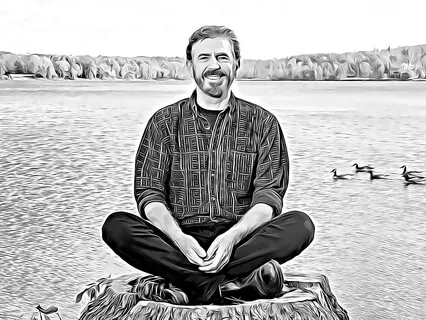
My guest is Locke Kelly.
Locke is an author,
Meditation teacher,
Psychotherapist,
And founder of the Open Hearted Awareness Institute.
He served on the New York Insight Teacher's Council.
He's collaborated with neuroscientists at Yale,
UPenn,
And NYU in the study of how awareness training can enhance compassion and well-being.
As a licensed psychotherapist,
Locke has been teaching seminars,
Supervising clinicians,
And practicing awareness psychotherapy in New York City for about 30 years.
He served as coordinator of counseling at Union Theological Seminary,
And he's worked extensively with families recovering from the trauma of 9-11.
Locke has also spent 10 years establishing homeless shelters and working in a community mental health clinic in Brooklyn,
New York.
And he's authored two books on meditation.
The first one is Shift Into Freedom,
The Science and Practice of Open Hearted Awareness.
And his most recent book and the topic of the podcast is The Way of Effortless Mindfulness,
A Revolutionary Guide to Living an Awakened Life.
And it's the touchdown here for the conversation.
It draws on neuroscience,
Psychology,
And ancient wisdom traditions as a practical guide to what he calls the next stage in the ongoing mindfulness movement,
Effortless mindfulness.
So on the show,
We talk about meditation and actually I have him define it,
At least his version of it here.
We define awareness.
We talk about the benefits of mindfulness meditation and the challenges,
Why people don't meditate,
Why it's difficult,
What people think of meditation.
And I ask him specifically,
Who does he think meditation is for?
Is it just a certain personality set or person or is it for everybody?
And then we talk about the differences between mindfulness and effortless mindfulness.
And we talk about effort.
What does it mean to be effortless in meditation?
And then we go into explaining flow states and how it can be elicited in meditation.
We talk about self one and self two,
One of my favorite books,
The Inner Game of Tennis.
We go into then his glimpse practices.
Short meditations are called glimpses.
And then he actually goes through one.
I'm going to call it the here now meditation.
So I certainly point you to that.
I think you'll find it very helpful.
And we talk about suffering and how to manage emotions using meditation.
So keep an open mind if you've never meditated before and give this a listen.
Either way,
I think you'll find it interesting.
And if you have an interest in meditation,
But you've struggled with it,
Really,
You should listen to this and maybe listen to it a couple of times.
I think it's going to be very,
Very helpful to you to start a meditation practice.
So without further ado,
Here is Locke.
Locke,
Welcome to the show,
Man.
Thanks so much.
Good to see you.
For the audience,
We're laughing because there's a lot of preamble before this.
So tell me a little bit about your bio.
Are you pretty much teaching and writing these days?
Yes,
I'm mainly doing online courses,
Certainly during the pandemic stay at home.
So I'm helping people with the kind of learning how to actually use that opportunity of crisis to really look within and not just to feel they're in isolation,
But to use it as a kind of stay at home retreat or practice opportunity.
And so I'm doing a lot of online events and starting to prepare more video,
Audio,
Animated,
Ongoing courses to help people train in this unique approach that I'm calling effortless mindfulness or non-dual mindfulness.
Yeah,
Very cool.
And I think everybody had a kind of a wake up call being kind of locked into their house and stuck with themselves.
And some people can't stand it.
So you also have a psychology background.
Yeah.
I've done a lot of degrees in psychology,
Psychotherapy from Columbia and went to worked in the Bronx and Brooklyn and psychiatric inpatient,
Outpatient and emergency rooms.
And then so I've worked with all sorts of psychological conditions as well as,
You know,
Done therapy and meditation with people who are very successful people.
And so it really is bringing together of meditation,
Psychology and neuroscience.
Now you've got me curious,
Were you able to apply some of these meditative practices to counseling and to treatment or no?
Yeah.
So I started right from the beginning being with that same curious question is like,
Okay,
Is there are these two different things or is there an overlap or is there actually an approach that starts from the best end result?
So I almost started with a kind of uniquely positive psychology framework and then went over to India,
Sri Lanka and Nepal and learned,
Spent some time with these wisdom traditions,
Brought some of that back in my training.
And then I had the opportunity in these outpatient clinics with all sorts of people from Brooklyn coming in to try out different methods.
And what I found is that even people who've had complex trauma,
Severe situations respond to the sense of finding what would be called their awake consciousness or their essential self and that's what heals.
Let's talk about meditation and then I'm going to try to stair step this.
Is meditation a prescription,
A calling or both?
I don't know from my experience,
Is it for everybody?
It's certainly benefited me or is this something that you're called to do?
Does that make sense?
Yes.
Yeah.
So I have a pretty clear opinion that I've come to,
Which is that it basically is one of the human building blocks like sleep and eating.
Meditation in its broader sense is working with your own consciousness.
So it basically is changing your state of mind or shifting your awareness from being contracted or identified or overwhelmed to a subtler,
More mindful kind of dropping from head to heart space,
Opening up to open mind and open heart so that you're aware from a subtler awareness that isn't dominated by I think,
Therefore I am,
But starts to recognize that thinking is one of the tools of this subtler,
More loving consciousness that is already installed within each of us.
So you're advocating everybody just like sleep and food and nourishment.
It is something you should do,
Everybody should do.
Yeah.
And,
But I also want to tweak that definition of mindfulness because I think that 90% of meditation out there is kind of like half a yoga is to other forms of yoga.
It's one pointed,
What's called calm abiding or one pointed attention.
Watch your breath when your mind wanders,
Come back.
And that is the,
You know,
Often the preliminary first step or one type of meditation.
That's not what meditation is.
And so I want to open,
Open that.
Yeah.
Yeah.
It can be confusing all the meditation methods.
How do you define meditation?
Because I've talked to some friends in there saying,
Well,
When I run,
I'm in flow and I'm in that meditative state.
Yes,
That's it.
So I think meditation can be a description of a way to share your consciousness.
And it can be a description of where you are when you get there.
So meditation I think is navigating your own consciousness at a level that isn't.
So let's say you could do that at a physical level,
You can do exercise,
Then you could do mental level,
You could learn information and change your consciousness.
Then you could do psychological level and work with your emotions and your attitudes.
And then this is a subtler and another level of that same system that actually includes all those other levels.
But it really is about kind of the foundation of your mind and the foundation of your identity at a subtler level that sometimes is easier to get into when you're sitting still in a quiet place with those kinds of supports.
But running is one of those supports,
Running,
Exercise,
Gardening,
Other activities.
When I have these conversations with my friends and they say that they go into a kind of a meditative flow state when they're running,
I say,
What if you could do it in an empty room?
What if you could do it on call in an empty room by yourself when you're not running?
What if you could get that same experience?
And then they become interested,
Right?
They're like,
Oh,
Well,
Oh.
So I look at meditation for me as this kind of blue pill,
A way to get out of the matrix of this world we live in because I don't think we live in the world,
Locke,
Right?
I think we live in our versions of it.
And sometimes our versions of it causes suffering,
Right?
We have these stories and what have you.
And so for me,
Meditation has helped me kind of add some objectivity or to pull away from my own stories.
I mean,
I still struggle,
But we have this evolutionary hardware or software,
I should say,
That that calls us to react and be triggered and so forth.
And meditation to me is a rebellion against that.
It's what that appears to or who that appears to.
So those triggers could still happen.
I'm on the street corner in New York City and I'm talking to a friend and a cab comes by and beeps the horn and my body is going to go into fear response and it's going to jump.
But then does that lead me to then,
Oh,
My God,
You know,
That cabbie,
I can't believe that.
And then free associate into,
And New York is this way and why are people doing?
And that reminds me of,
You know,
Then you're in this small operating system.
Whereas when you have the ability to acknowledge and be familiar with this other dimension of consciousness,
Your body will still be triggered by the fight or flight response.
And then it appears to this kind of open,
Awake,
Mindful,
Embodied witness that just soothes your body and then,
You know,
Knows kind of from a flow state,
Everything's okay.
That cab just went by and it doesn't personalize and doesn't drag up old contents of consciousness.
Or if that does come up,
It doesn't identify or debate or defend against that.
So,
Let's address some terminology.
Let me have you explain some of the terminology.
It's in the book.
It's a great book.
It's very accessible.
I want to push people to it.
But for something like me,
So years ago,
You know,
When I was a kid,
I was very religious lock and I would say narrow minded as to a worldview,
Right?
And over time that eroded and I became more open minded.
I still have some allergy toward some religious terminologies,
Right?
Or what I may interpret that.
And I remember when I first read Shift Into Freedom,
I was a little confused a bit.
I think I worked it out in my head,
But you talk about local awareness,
You talk about local awareness.
I'm assuming local awareness is me being aware of my hand or a feeling.
Well,
Yeah,
This is the thing.
What I kind of do is I sometimes call it the Colombo approach.
I literally start from the assumption that we all have this awake consciousness.
So what is that?
Well,
It's kind of like everyone who's listening has experienced for moments in flow consciousness or flow state.
So when you've been dropped out of your mind,
So this researcher,
Chixxent Mahay,
Who is from University of Chicago,
Wrote this book Flow,
And he describes these components of flow that everyone gets into.
And what it is is that you're not in your head,
You're not self-referencing a small self.
You're not orienting to thought that you have.
You're doing something that you've done 10,
000 hours of.
So you have this implicit memory of knowing how to do it.
So whether it's riding a bicycle,
Walking in the woods,
Playing sports,
And you can enter in to,
You can drop out of your head and the feelings that you get are feeling that time slows down and you're in the now,
That there's a sense of interconnection with the group of people you're with or the environment feels like there's a felt sense of unity,
Interconnection,
And there's a feeling of joy in the activity in itself.
So it's enough.
Whatever you're doing is the whole world and it brings that connection and intimacy,
Gives you a satisfaction of a job well done no matter how you're doing.
Is this local awareness or just the flow state?
Oh,
Well,
I'm kind of coming from flow state and I'm actually going to not get to local awareness until,
But what I'm saying is that that consciousness,
When you're in that consciousness,
That's awake.
Like you said to your friend,
What if the way you were functioning and feeling when you were running,
What if you could do that in a room and what if you could do that in an emotionally charged situation?
What if you could do that as a baseline of who you were?
That's awake consciousness and it's possible.
It's not a state that's only when you're running,
You know how to access.
I mean,
People know how to access that.
In fact,
If people who are listening,
Just check what do you do in your free time that you love?
You actually,
What you do for most people is to get into flow consciousness,
Which is awake consciousness.
But what if you could do that?
And when you're in that,
You're not using your attentional abilities or your sense of ego centeredness.
You're actually feeling connected from the sense of kind of embodied awareness based knowing rather than thought based knowing.
And so the local awareness is the way to focus so that you're not just spaced out when you're in this awake consciousness.
You're actually able to do something like play a sport or garden and focus on something without having to go back to create a little mini me,
A little thinker in order to use attention from the mind,
Which actually keeps the small mind and the thinking based identity in the small contracted suffering place.
You also talk quite frequently in the book about,
You allude to two selves,
Right?
You say we suffer because we are in a too small sense of self,
A feeling of a separate solid me.
You just mentioned it as a mini me.
Let me kind of introduce this term because I read a book,
I'm a tennis player and I read a book called The Inner Game of Tennis way back when Timothy Galloway wrote this book.
It's quite famous,
Right?
And he presented back then a radically different approach to teaching tennis.
He called it self one and self two.
And he said,
If we take a moment and listen to what is already going on in our minds,
We'll discover that there's a constant dialogue going on.
And there seems to be one voice doing all the commanding and criticizing and some other parts being quiet and just doing the actions,
Right?
And I found that very helpful in tennis,
Right?
To kind of let go of the first self and try to let the automatic or this self two kind of take over.
So I'm going to use that as a jumping off point.
What do you mean by the two selves?
Little self,
Big self?
So this again,
It's these are simplest,
Understandable metaphors for what has been talked about in meditation traditions,
Wisdom traditions throughout time.
Usually the they'll talk about either a small self like an ego or an eye or a thinker,
And then that you open into this flow consciousness or awake consciousness or awareness based self that isn't identified with thought.
So the first move of meditation is usually to calm your body and mind.
And the second move,
What I call the mindful move is for you to be aware that you're trying to focus on your breath and then just simply to ask yourself,
Well,
Where are you focusing on your breath from?
And then to step back,
Feel like your awareness opens up or steps back.
Oh,
Now you're aware of your breath.
And now you're aware of this point of view was that was you focusing.
But now if you look at it,
It starts to become,
Oh,
That's not a solid self.
That's a function,
An ego function that now can be observed as changing thoughts,
Feelings and sensations or inner voices from where from now you've moved to this second view.
So it's a new view.
So that begins to be the second self.
So it's more of an observing awareness based mindful witness.
And everyone has this and everyone does use this in certain ways.
Even most people who like to drive a car,
You can't be in your first self and micromanaging.
You know,
What's that person doing?
What's the,
You know,
How far am I this way?
And what's the speed?
And what's the,
You know,
Like,
You can't be looking at every detail.
You drop into this driving consciousness,
Which is managing all the details in the background.
But in the foreground,
You're,
You know exactly what you're doing.
You're familiar with IFS therapy?
Yes.
I have co-taught with Dick Schwartz.
Oh,
Wow.
So for those not familiar,
It's kind of an integrative treatment approach to psychotherapy that helps you connect to what they call higher self,
I think,
Right?
And it's interesting because they'll,
I'm not going to go into it,
But I think they represent the self as the seed of consciousness.
Is that the same thing as what you're talking about?
Yes.
And you'll see that actually in each of my books,
I have a chapter that's based on IFS.
So they're hidden in the back.
So some people don't get to them,
But I teach,
I pretty much use that system of parts-based system or small sub-personalities as a way of organizing and understanding and relating to those voices in our heads and in our bodies and young trauma-based parts or that they're patterns of thoughts,
Feelings,
And sensations that arise and try to sit in the seat of the self and then get triggered.
And so then an angry part of you will show up and then a sad part of you and a judgmental part of you.
And if you can shift to this self with a capital S,
Then you're aware of all these parts from that which is not a part,
Which is this basically the feeling of it is spacious,
Invisible,
But alert,
Embodied,
But subtle.
And it's where you can be aware from.
And when you're aware from here,
This,
Which you're aware from is not in pain,
Is not worried,
Is not angry,
And it can respond or relate to those other parts without judging them and trying to make them like,
You shouldn't be angry or you shouldn't be sad.
It's like,
Okay,
I see you.
I'm here.
And so you become this bigger self or this bigger capacity of awake consciousness or self with a capital S or open-hearted awareness or these other,
I could use like 10 words from Eastern traditions or sacred heart from Western traditions or.
It's fascinating.
You know,
When I read,
There's a book called Self Therapy about IFS,
But it's interesting when you read these case studies of these,
Of this treatment where someone has some trauma in their past,
Let's say it's a child.
And so they have this person go back and talk to that,
Their inner child or something.
Right.
And what's interesting in every case,
They seem to find this,
That there is this higher self that's unaffected that can either reparent or integrate.
It's psychotherapy,
Right?
Well,
I mean,
It's beyond psychotherapy because 99% of psychotherapies don't have this category of self.
And the other thing is to say is that the other thing about both meditation traditions and even psychotherapy is,
Oh,
Well,
You know,
You need to develop all these other skills to be able to,
You know,
Have access to this awake self.
Whereas,
And even in psychology,
Oh,
Well,
Somebody who didn't get parented early can't have access to their higher self.
They need to grow up.
But what I find is,
So having worked in these clinics with people who are severely traumatized and even,
You know,
A case,
Let's say somebody was suicidal and would ask them,
Is there a part of you that wants to hurt yourself?
And say,
Yes,
There is.
Where is that?
Well,
It's right here at my throat.
It's gripping my throat.
And is there a part of you that wants to heal or be free?
Yes,
There is a part.
Let me look.
I can't find it.
Oh,
Well,
It's more,
Yeah,
It's more in my belly.
Okay.
Well,
Who's aware of those two parts?
And the person said,
Well,
I am.
I said,
Well,
Where are you?
Well,
I'm everywhere.
And how do you feel toward those two parts?
Well,
They both make sense to me.
They're both,
Both have a,
You know,
Like,
How do you feel toward?
Well,
I kind of have compassion for both of them,
The one that wants to die and the one that wants to live.
And I'm neither of them.
I'm both of them.
I'm here.
Oh,
I see.
Wow.
Yeah.
Okay.
That's just a part of me that wants to do that.
I don't have to do that.
I could,
But I don't have to.
So like in minutes,
The most advanced spiritual practice is accessed with somebody who supposedly can't even function and it's what they need and what we all need and is available inherently.
So it's remarkable.
So let's get into some of the techniques.
So if I use small self and.
Yes.
And just,
I'll just say that some languages use small mind and nature of mind.
So again,
It's the same,
But you know,
When you look at all these wisdom traditions,
It's not,
The maps are not that different and the higher and more advanced you get,
The simpler they actually are.
They all start differently,
I think,
But I don't know.
Yes,
That's right.
They start differently.
And the other thing,
The last thing to say about that is,
And yet none of those higher levels are on like literally 99% of our Western psychology,
Western philosophy,
Western culture,
As smart as we've gotten,
We don't even have languages in English and French and German for these subtler dimensions of consciousness.
We still have the full access to them regardless of language or culture or history or training.
So we're just,
That's my goal is kind of to be a translator and develop an experiential language and more importantly,
Experiential set of experiments that people can look for themselves and find out what's true.
So as we get into the techniques here,
I first want to mention what's part of your title effortless mindfulness.
So let's talk about effort for a second because it impacts our life generally.
It's not just meditation.
Efforting can have a limited output,
Right?
It can be counterproductive sometimes,
Especially if you're efforting on the wrong thing generally in our lives.
So you,
I mean,
You have to do something,
But you purposely use this word effortless mindfulness because it does differ and correct me if I'm wrong in why you're doing this,
But it does differ from some of the what's taught as basic mindfulness meditation.
I'm,
I got started in meditation through the relaxation response,
That book,
Right?
And then I read the follow up beyond the relaxation response and it basically for 20 minutes,
I was,
I had some kind of mantra or word that I had picked out of my head.
Either I would say it or I would go over it over and over again.
It did work in the sense that it quieted the other thoughts that were going on.
It gave my mind something to do outside of worry or anxiety.
And I did get,
You know,
I did reach some kind of blissful moments doing that.
Now it took me a long time to get decent at it or doing it regularly.
And I did it for a long time.
This is back in the nineties,
But lock,
As soon as a few weeks went by where I didn't do it,
I don't remember how I lost it.
I could never get back there.
It was too hard to get back there.
I just,
I would try and try.
So where do we start?
Okay.
So let me,
Let me,
Let me respond to those couple of points there.
So just to say that,
Yeah,
One of my teachers in,
When I went to Nepal,
A Tibetan teacher just wrote,
There's two types of mindfulness,
Deliberate mindfulness and effortless mindfulness.
And most people start with deliberate and you move to effortless.
So that's where I got the term.
I thought,
Okay,
That's a good term.
And it has two meanings.
One is that using effortless mindfulness or in effortless mindfulness,
The main thing is not that you're not making an effort,
But that what you discover is a kind of awareness you're aware from that's effortlessly aware without your help.
So the feeling of flow or that ground doesn't require concentration doesn't require remembering,
But it literally is a shift into this background awareness,
Like out of the cloud of your mind,
And then include the cloud of your body and mind from this effortless self maintaining clarity that then you start to talk from and walk from.
So that's the main reason.
And then it also,
The second meaning of effortless is you is the way it's practices,
These small glimpses during the day where you literally just learn to shift your awareness from thinking and drop it down into your body,
Open it up into space,
Become aware of this more spacious open mind,
Then be aware from the open mind,
Which is equally inside.
And so it's just this one,
Two,
Three,
Four,
Five.
And then you literally have shifted from small self to,
You know,
Self with a capital F,
Higher self,
True nature,
Self essence,
You know,
Just awareness based.
It's awareness based knowing rather than thought based.
So it's not opposed to thought,
But it's where people,
When people describe themselves playing a violin in an orchestra where they don't have to think about what they're playing and they're totally one with everyone else and they notice the audience and they're just playing,
You know,
And they're like,
I'm not even sure what I'm doing,
But I'm just totally playing.
That's how they feel.
That's a great peg for this because I think people,
You know,
People listening can again get lost in thinking this is a little more esoteric,
But we've all experienced that.
You just,
Another peg,
You said musicians become one with their audience and everybody's at a high caliber has explained that.
And everyone's experienced that except you don't,
When you're experiencing,
You don't look back to see who's experiencing it.
You're just like so in it that you're like,
Well,
That was fun.
And then you go back to system one or mind one or self one,
Whatever you would call that.
You're not even aware of what happened.
You're not even aware of it,
Just a habit.
And we're just in this habitual,
You know,
So that's,
You know,
That's the description is there's a habit.
You're not paying attention to it and saying,
Yeah,
You're not,
And you're not realizing,
Oh,
It's not about the activity that's bringing it on.
It's about who I am that is essential.
So I have a,
Like one of the meditations that,
You know,
Is in my book,
It's called the memory door.
And so I ask people,
Okay,
Do you remember a time?
And it could be a peak experience you had when you were a kid or recently or some activity you do.
Now,
Close your eyes.
Totally remember that.
Go back,
Smell the smells,
Hear the sounds,
Feel the feelings.
Now let go of the memory.
Now let go of the feelings and realize that who you are when you're there is also here.
And now open your eyes and you realize,
Oh,
This is me.
No matter where I am in the room,
It's the same.
It's the essential dimension of consciousness,
Not the activity or even the emotions that are arise naturally of joy and connection and optimal functioning.
That's the other thing that arises.
Would it be correct to call the glimpses little thought experiments?
No that would probably be,
They'd be beyond thought experiments.
So I sometimes call them,
So we just lost,
We just lost five people.
No,
I'm kidding.
Beyond thought experiment.
I actually liked that though.
Beyond thought.
Yeah.
I mean,
I call them,
I call them micro meditations or yeah.
Because you're shifting from thought-based functioning to awareness-based.
So that's a glimpse and you have a glimpse of it.
It's not just a meditation,
It's actually a shift.
So you're now aware of it and you're aware from this flow consciousness.
And then you're aware of thoughts as objects,
Not as,
You know,
The thinker.
So that's one of the key,
The key.
You know,
So many people who are very successful,
Who have come to me,
Have said like,
I've got all my ducks in a row.
I mean,
I got a family,
Got my health,
I got my,
My job.
I'm successful.
I'm making money.
I made money.
I'm like,
You know,
Like,
Why am I so miserable?
I'm like really highly functioning.
I'm like,
Yeah,
That's the problem.
You've maxed out.
You've reached the,
You know,
The Peter principle of human development.
You've gone to the highest level.
You have to now wake up in term in order to grow up,
Continue to grow up,
But you have to literally go to the next level of human development of your mind,
Of your identity.
And it's right here.
It's already installed operating system.
So they can learn it,
You know,
In a short time and then practice it,
Return to it in these small glimpses during the day.
One of my favorites,
And I've given this to a bunch of people,
Is the here now glimpse.
I just want to say to solve people's curiosity,
This thing,
When I am stressed out,
That little glimpse settles me and I,
You need to explain that to me.
Is this a good starter one?
Oh yeah,
This is,
This is great.
Yeah,
This is excellent.
And I even have developed a couple more steps to it,
Which we could do a little later.
So,
But,
But it's just the shift.
So,
So to say that whatever I'm calling small self,
Larger self,
Small mind,
Larger mind system operating system,
One up,
It says two,
Everyone knows what this is.
It's just a matter of language.
You can call it whatever you like.
And it's also like balancing left brain and right brain.
It's actually balancing what's called the default mode network in your brain.
It shows that when you go into system two,
It shows up on the FMRI and all this good stuff.
So,
And you know what it feels like.
So let's just use this metaphor is that what we're doing is we're trying to operate from system one,
Which is a thought-based like ego function that becomes an ego identity.
And so that system is usually felt as being located.
I'm located in the middle of my head,
Behind my eyes,
In between my ears.
And so if you're listening to me,
You're like,
Well,
I am understanding.
Well,
Where is the I that's hearing these words?
And you can feel that thought going to thought,
Going to memory,
Going to language,
Going to,
And it loops around itself.
And it literally creates this small self-referencing I think,
Therefore I am.
And its main job,
Because it actually is a mental function connected to your body and your survival system.
It's looking for safety.
It's and it's looking for functioning.
So it wants to be safe and it wants to function and it wants to look outside and wants to look inside.
So its main thing is,
Okay,
Where's the problem.
Is there a problem inside?
Is there a problem outside?
All right,
What's the problem?
How do I fix the problem?
If,
Where's the problem?
What's the problem I've got to do.
And as soon as it pauses and rest goes,
Oh,
Is there a problem?
You know,
Is there something I need to do to be safe,
To monitor,
To scan for danger?
So it's this little problem solving,
Uh,
Self.
Meanwhile,
The premise is there is this other dimension of consciousness that's aware of everything that's going on,
But it's not caught or contracted or identified with that.
And so this is the higher self or the true self or the true nature or nature of mind or openhearted awareness.
So that whatever that is,
Is here.
And if you can just let that function relax that problem solver,
Then your awareness can feel or sense what's here,
Who's here.
Then you can be aware from this awareness based alert and safe way of knowing.
So inquiry,
Which is an invitation to look with your awareness is simply this what's here now when there's no problem to solve.
So just understanding the words with your mind and then let the problem solver relax and then let your awareness feel or sense what's this,
What's here just now when there's no problem to solve.
And then what's it like to rest as this awareness that's alert and equally aware inside and out.
And then what's it like to be aware from this awareness based open mind.
And what's the relationship to sensation,
Thought,
Emotions and the world while remaining aware from here.
And then what I would do is just get people to start talking to show that you can function from here.
You can talk from here and start getting the neuronal network on board from this awareness based view.
So it's that feeling back,
That's the introduction.
Everything quiets for me.
Every time I do that,
I see things in a room or in a location that I didn't notice.
You know,
People talk about being present or in the now or whatever that is.
And I think I feel that every time I do that inquiry.
It's just instead of the past or the future,
I am here.
It's quite amazing.
And so it's just one of the doorways.
But the key is what it shows is,
Oh my God,
That that quiet,
That peace of mind,
That clarity of being able to see what's here.
And this awareness based knowing is this close.
And it's radically different.
And it's alert.
So this shift is like an upgrade of the level of consciousness of identity of mind that I feel is like a next natural stage of human development that when you function from here,
You're in a flow state all day long.
You feel joyous peace of mind.
When I stop talking,
There's no thoughts on the screen of my mind.
They're in the background.
If I needed them,
I could remember them.
But there's no pop ups.
There's no programs running like all day long.
And if they do start to sneak up or I get triggered,
It feels like fingernails on a chalkboard.
And I say,
OK,
I better do a glimpse.
And then I glimpse the return and then go to baseline.
And then because I've done it long enough,
It is like a developmental stage for me and for hundreds of people I know who have been doing this for a while.
So that's one example of effortless mindfulness or one of the glimpses.
Is that something you think people can start with and then piggyback or launch?
Can that be kind of the launching pad into some of the other glimpses?
Yes,
Absolutely.
Yeah.
Yeah.
So that's if that works.
So the key is that,
You know,
Like in a,
You know,
I'll usually do an online two hour event or online day long and I can do,
You know,
Four or five doorways or glimpses.
And usually,
You know,
Like,
Oh,
People will say,
Oh,
That one didn't work.
Oh,
No,
Not so much.
No.
Oh,
Oh,
Whoa.
You know,
Like all of a sudden it's like,
Oh,
That one worked.
And then the next one didn't work.
And then the fifth one,
Oh,
That one works too.
Oh my God.
Yeah.
OK.
So there are different types of learners and different,
But they're all going to the simple shift.
And just to say that like your meditation that stopped working,
Relating that back to the IFS and the parts is that the ego learns how to co-opt your meditation or the doorways and it literally will shut it down because operating system one says,
I don't know what's going on here,
But I got to stay in control.
And that meditation stuff is making you a little goofy and I'm going to make sure we succeed.
You know,
It kind of will take over that part of you will start so that we have different doorways.
And we also by noticing that there are parts that are protective or don't like you to,
You know,
Afraid of peace of mind or think it's too boring,
We just say to them,
OK,
I hear you.
Now I'm going to step out to this peace of mind.
I'm going to come back and feel and let you feel what do you how do you like this?
And then the part that says it was boring,
Like,
Well,
If this is boring,
I love this.
Yeah.
So the resistant parts,
The protective parts get on board by directly addressing them rather than trying to repress them or some of the early training,
Like doing loving kindness practice intentionally and just visually and visualizing positive thinking that eventually wears out,
Because if you do positive thinking,
Negative thinking will be its polar opposite and you're going to have to keep cleaning the cloud of your mind and it's going to keep storming up like your experience.
So it's only by upgrading to this natural awake consciousness that everything is accepted.
Does someone do this in a quiet room or outside or are they sitting down to the eyes open,
Eyes closed?
Does it matter?
Does any of that matter?
Yeah,
I mean,
You start with whatever is easier.
So for for many people,
The first time sitting down,
Eyes closed or,
You know,
Whatever is easier or just casual eyes open,
Then eventually I have ways of training the eyes.
They call it returning the eyes to their natural state,
Because one of the reasons people do meditation eyes closed in a retreat center or away from everything is that when you have activity and when your eyes are connected to the grasping mind and system one.
So I have these glimpses that actually unhook the eyes from the grasping system,
One small mind and let them go to this awareness consciousness so that you can walk around with your eyes open and do work and highly function without tripping you back to that anxious thought based worrier.
Can we talk just for a second on suffering and managing emotions?
And I use the word managing loosely here,
But you say in the book that craving and rejection just as examples are kind of a normal part of our physical survival,
Which I think we all get like craving food when we're hungry.
But these kind of normal emotions can also become primary sources of suffering when they become our identity.
How are we breaking that identity through some of these techniques or through meditation generally?
I mean,
In some ways,
Most preliminary meditation techniques are only soothing the animal.
So they're just calming and de-stressing.
So they're not going to the root of suffering because they're not getting out of the small mind or the small self.
They're just calming it,
Focusing it,
Observing it,
And then returning to it.
So this system of more effortless mindfulness is trying to upgrade to this flow consciousness,
Which goes to the root of suffering.
So the root of suffering is actually operating from system one.
So in other words,
So the normal sense of when I'm hungry,
I feel empty,
I feel pain.
Then I crave food.
Then I go grab it.
Then I make it mine.
Then I adjust it.
So the small self starts to use those principles.
Oh,
If I'm feeling pain,
I better go get something and grab it,
Make it mine,
And then ingest it or own it or achieve it.
And then that will give me temporary satisfaction like food in your belly.
But it isn't the way to solve the craving because the craving is the feeling that I'm only a separate self.
The root of suffering is the feeling that I'm only a body mind.
I'm only a small ego operating this vehicle of the body mind that I could just stay in control and do the best I can and give myself some satisfaction and try to be smarter and less pain and less.
So that operating system,
The word suffering,
Dukkha in Buddhism means the feeling of being perpetually dissatisfied.
So when you're operating from system one from small self,
It's so identified with your body and your mind.
You're this ego that always feels an existential loneliness,
Existential guilt and shame,
Existential feel of not being connected or satisfied.
And when you shift into this awareness-based embodied open-hearted presence,
Which is what I'm just calling it now,
But it's as close as what's here when there's no problem to solve that craving the sense that everything's okay.
There's nothing to get.
And relatively you'll go have lunch and you'll continue to learn and grow.
But existentially there's no drive that you really feel.
So that's the root of awakening,
Gives you a feeling that all is well and you get a motivation to enjoy life,
To go play,
To be a human being without that drivenness from not being okay.
There's a passage in the book where you say that along this line there's ability to experience thoughts and see them as just a sense impressions and information.
If we could just see thought information like any other sense impression,
Like sound or taste,
Like an input that there's relief,
We get relief from rumination or being lost in thought.
How do you do that?
So let's do a little,
Let's try a little simple.
This one's very simple.
Again,
It's moving kind of from everything only takes a few minutes if you really want you to learn how to move your awareness or your shift your consciousness.
So it starts with one of the differences between deliberate mindfulness or basic mindfulness is you're aware of the contents of consciousness,
Thoughts,
Feelings,
Sensations as coming,
Going,
As changing,
As having pleasant and unpleasant feeling tone to them.
Being aware of your thoughts,
Being aware of what you're thinking.
Being aware of your thoughts,
Being aware of your senses,
Being aware of your feeling of,
Oh,
This is pleasant,
Unpleasant.
Oh,
I don't like this.
I like this.
So that constellation of consciousness that,
So just stepping back and,
You know,
Just very simply,
You know,
Most people can be aware of their body.
So just be aware of your body.
How does it feel?
So just feeling pressure and weight and gravity and now feeling your breath.
So there's kind of stillness and now there's kind of movement and now feel some space in your body and around your body.
And now be aware of tingling or sensation in your body as changing.
And then just notice that some may be pleasant and some may be unpleasant.
So there may be some sleepiness or some agitation or some pleasant feeling or some pain.
And then notice also in your mind,
Notice that you might hear my voice or even think the thought,
This is a thought.
And just be aware of thoughts coming,
Going images,
Sensations,
And some of them may be agitating or the brain may feel sleepy or they may be unpleasant,
But just notice.
So notice your body and your mind.
And now just open curiously to feel what's aware of the space around your body and within your body and what's aware from the space of those changing thoughts,
Feelings,
Sensations.
So notice you can be aware of the changing contents and now just feel the awareness,
The space,
And the awareness that's aware of the space and the changing contents.
And just feel that awareness that it has no sleepiness.
It's not in pain.
It's not changing or coming,
Going.
It's aware of what's coming and going,
But just notice that awareness.
It's also you and where you're aware from that isn't suffering,
That isn't using thought to be aware of sensation or thoughts.
It's just an alert,
Clear awareness like the sky that could identify with a thought,
But just for a moment,
Just notice awareness-based knowing that's free of worry,
Free of sleepiness,
Free of suffering.
And from there and as this ground,
Just notice that you can be aware of and even interconnected with sensation and your body and thoughts can arise without identifying with them,
Without needing to create a thinker or a manager or a doer in order to be here and aware and just see.
It seems to be a change of perspective because I've noticed in my experience that if I'm down or troubled or if I go to the beach or if I go to a different location,
Something changes,
Something shifts mentally for me,
Right?
There's some distance there,
But it seems like you've done the same thing here through a meditation technique.
I experienced that while you were talking.
I moved perspective even though I didn't go anywhere.
Yeah,
And sometimes that's why I say it isn't about like,
Who am I?
It's about location,
Location,
Location.
It's about if you go to the beach,
You feel better,
But if you shift your awareness out of the clouds of your mind into that sky that's at the beach,
But it's also here and now you're aware from the sky that you went to the beach for,
But it's also here.
Now you have this capacity,
You know,
Once you,
You know what that is,
That it's not a spaced out quality,
That it's an awake space and you know where you're going and what can get there,
What can find it.
And that's what the technique is about.
But it's as you say,
You know,
As you say,
It's fairly simple,
But a dramatic change of perspective or view.
It actually felt like when you're on a swing,
You know,
As a kid and you reach the peak of the swing,
That feeling in your stomach,
Honestly,
I felt that and I just kind of let it happen,
But I also spaced,
I kind of spaced out,
Right?
It was great.
And so about a week after that when I would meditate,
I would float off,
But space out.
Am I weird?
Is this weird?
No,
No.
That's just playing with consciousness.
There's,
You know,
There's all dimensions of consciousness that can be like an out of body experience.
And you know,
There's,
You know,
Having been in this world,
There's people who have,
It's within the normal range of human consciousness and people have all sorts of interesting,
It's not bad,
But it's not necessary.
And it's not what exactly we're focused on.
And some people,
You know,
Can do all sorts of things.
You know,
Some people can,
You know,
Hear,
You know,
Read people's minds.
Some people,
You know,
Can have these Kundalini,
You know,
Like fireworks.
Some people have this out of body where they go to the top of the room and they can look back at themselves.
Some people,
You know,
Like people who have near death experiences have that experience as a common trait.
So there's,
You know,
There's interesting,
You know,
Psi elements,
You know,
Like,
And all sorts of states.
So in,
In the more,
You know,
Kind of advanced traditions of awakening,
They call these cities or neoms,
Which basically are,
You know,
Powers or sidetracks,
You know,
So they're,
They're interesting experiences,
But the thing is,
Well,
Just,
Yeah,
Notice that,
But let it go.
Don't follow that.
That's,
That's going to take you into all sorts of,
You know,
Wild worlds.
You're going to become a ghost.
And you become,
Well,
You just,
It's just like,
It's,
You can get a little lost in those states.
They're like meditation states.
It's the weirdest thing because my eyes immediately lose focus.
I mean,
I can see,
But there's,
There's part of it that's peaceful though.
So let's say I've done all your glimpses.
I'm not sure I have,
But I think I might have,
You know,
I think I've done quite a bit.
I haven't been able to bridge the,
This feeling of being,
You know,
Awake or into awake awareness and functional in the sense of,
At least I don't think,
Right.
I don't think I have,
Is there a specific meditation that you would recommend or is there,
Is it just practice or is it,
I even did your course.
There's a course you have.
I think I went through.
Yeah.
Because you,
You make,
You make it sound like it's possible to live day to day,
Like through your whole day and be in that state.
So,
You know,
So usually I'll introduce,
It's just like,
It's almost like saying,
You know,
To someone who feels like,
You know,
If we were all like first graders,
Like somebody said that they can read a book that they can just literally like,
You know,
Like see this book,
Like they can read it.
Like no way,
There's just no way they could do that.
Like I don't believe that.
So it's like reading and writing is an inherent capacity within human beings that if you're 20 years old,
But you never learned to read,
Then you can't read,
But you could learn to read.
And it's the same thing.
This is an inherent capacity that takes if a 20 year old who lived in the woods,
You know,
Or was just not,
Was in a country where they didn't read.
And then they learned they could learn to read.
And so you can learn to access this awake consciousness because it's a capacity of human beings.
Yeah.
So it's the transitioning.
So the current course I'm teaching called Living Your Awakening.
That's on your site?
Yeah,
It's on the site.
So I usually do like an introductory course,
Then like an intermediate course,
Then like a more advanced course.
So now in the more advanced course,
We're,
You know,
Starting with some of that,
What's here now when there's no problem to solve and now come back and be aware of the problem that you thought was a problem.
Work on that.
Now,
Stand up from your chair and walk.
And as soon as you realize you're out of it,
Come back to your chair and start again.
So you just start,
You basically train like you would playing tennis,
You know,
Like,
Okay,
That's,
You're hitting your back end,
You know,
Into the net every time.
So let's start again.
Let's break it down.
So start with the racket head below the ball.
And now as you come up through the ball,
Continue up and around,
You know,
Like,
Okay,
Do that again.
So it's trainable,
Learnable,
And then we do diets.
So we do these questions where you have to,
Where you're asked to speak.
So if I asked you what's here now when there's no problem to solve,
And then you look,
And now you have to speak from there to me about what's here.
And then I ask you the next question,
You know,
And then you start to get in this relational communication and all of a sudden you're just greasing the wheels of this new habit of transitioning to functioning because language is already trained.
You have 10,
000 hours.
So here's the thing about flow consciousness,
Which is the functioning from here.
You have 10,
000 hours of walking,
Of talking,
Of working,
Typing.
So all you have to do is get into the state now,
Bring it to that activity.
And that just takes a little transition.
The other way to do it is to do the activity that you do that's easy to function from like gardening or playing music or walking,
And then look back to the awareness and then be the awareness and then notice what that quality is and then walk into a store and start talking to somebody from there.
Yeah.
And I think I've done something like that out riding my bike,
But again,
Riding a bike,
Some of it's automatic.
So it's a little easier,
Like sitting to a degree.
So it's called living your awakening.
Living your awakening.
Yeah.
And that's,
We're kind of halfway through that course,
But there'll be other,
I kind of often do these intros and then I'll call it level two or I'll call advanced retreat and advanced just means for those who have started and know the basics.
So I can kind of start there.
Do you mentor people outside of your courses or is that the way you're doing it?
It's it's live online or I'm mainly doing it because of volume of people.
And then I'm going to do a teacher training program within the next year or so.
So I'll mentor people to be effortless mindfulness teachers.
I would be,
I'd be interested in that.
I want to be mindful of the time,
But I've just got one more question as we wrap up.
This is thank you so much.
This has been fantastic.
Could you give me some clarity on non dual?
Is it overly simplistic to say that we're just all connected?
I mean,
I'm reading you,
I'm reading others and there seemed to be something profound there that I'm not getting.
Yeah.
So,
So there's two definitions of non-dual that seem to be in our culture now.
So one school is saying that we're in this dualistic mind and this dualistic self that is just a body and a mind.
And when we shift into this awareness,
This pure awareness,
It's not dualistic.
It's non-dual.
So who I am is this awareness like a movie,
Like a movie screen and everything else in life comes and goes on that.
And it's just a dream or it's just relatively not me,
But it's happening.
So that's,
That's what some people call non-dual awareness as pure awareness.
Whereas my group of people and my definition is that's only halfway there.
You've gone from dualistic mind to pure awareness,
But now there's still two things.
There's this awareness and there's whatever's happening.
So when,
As this awareness based,
Knowing this open mind,
Non thought-based awareness,
You start to feel,
And this is kind of a,
There's some practices that I have to help you feel this.
You start to be curious,
Okay,
Is everything coming and going within the sky of this awareness?
Or is it more like an ocean of awareness to which the awareness is arising as these waves and particles like a quantum field and the rising as my body.
And there's this kind of flow consciousness,
The feeling of flow and interconnection and a kind of a unity or the word emptiness in Buddhism is often translated as there's no separate thing.
Everything's interdependent.
So emptiness doesn't mean there's nothing.
It means,
Oh,
Everything's kind of interconnected.
And then you start to get that feeling of a unity or a non-dual.
So they try not to make unity or oneness into a thing,
Which is why they say it's not too.
So awareness and aliveness,
Emptiness and appearance are not too.
And that's a stage and a feeling that when you feel that as the view or the perspective,
It gives you this tremendous relief and the sense of safety.
And there's no threat.
There's no fear of other,
Everything's not in the moment,
Just right in the moment.
It's like,
Oh,
Well,
What could be the problem?
Like if there was something thrown at me,
I'd move out of the way,
But I'm not afraid of being afraid.
That just goes through the lucky glass.
The others a lot.
So it's luck Kelly.
Org.
What is your l o c h k e l o s.
Oh,
Good point.
And your courses are there,
Right?
And there's stuff on the website and there's a YouTube channel that have a lot of good little practices and fun little things.
I have an animated video based on TM,
Where I take a mantra and then take it apart a little bit and move to the non-dual version of TM.
And then I have this surround sound one that takes the awareness behind you.
And so I'm having fun playing with YouTube and SoundCloud and insight timers.
So a lot of free stuff that you can find from links from my oh,
That's right.
That's right.
You have some meditation on insight timers.
Well,
I've done those.
So and Sam Harris is the other one that I'm on.
Yes,
That's right.
The waking up app.
Right.
And those are good.
Yeah.
You've got a whole track there.
That's that's fantastic.
One more question because I,
Because I mentioned this earlier,
Whether this was a thought experiment,
You have a meditation where you'd be aware of the wall behind you or what have you.
And I've done a meditation where I've also been aware of my neighborhood and the surrounding area.
But is that just me thinking?
Right.
Well,
That counts.
Right.
Is that no,
That doesn't count.
That's actually imagination.
So I do that.
I do these,
You know,
In these courses,
These day longs,
Which would be the recommendation to come to one of these online day longs or something.
So I'll go through like these questions.
I'll take some questions like that.
Is that okay?
Let's do this.
So then I say,
Okay,
Good.
You know,
Like I did before I say,
Okay,
Let's do this practice to distinguish the difference between feeling the awareness behind your back and imagining the awareness behind your back.
And,
You know,
Okay,
Ready?
So imagine your neighborhood,
Imagine a lemon,
Imagine the awareness behind your back,
You know,
Where is it happening?
And you'll feel like,
Oh,
It's happening in the screen of my mind.
And now unhook awareness,
Let it drop down to feel,
You know,
This is,
This is a little,
Might be a little much for some people drop into your throat,
Know your throat,
And then open up as if awareness can open from the cloud of your mind and be aware of the space behind your back and just feel as if awareness can feel invisible awareness,
Knowing invisible space and aware of the awareness from the awareness.
Just unhooking from the cloud of your body and mind and resting as this field of awareness.
That's where you feel that awareness has your back.
I noticed that difference.
Yeah.
Yeah.
Oh,
That was helpful.
That was big help.
Cause I've been doing these,
I've been in my imagination.
Yeah.
Yeah.
And that's,
You know,
Form of thinking and that's where a lot of,
You know,
Practices use imagination.
So this is,
Yeah,
Just a little tweak.
This was great.
Thank you again,
Uh,
Locke for,
For coming on.
You're so welcome.
It was really nice to meet you and I look forward to hearing again.
Well,
That's a wrap.
Thank you for listening.
If you enjoyed it,
Do share it with your friends and on your social platforms.
Big thanks to Sam Williams,
My audio guy and the beautiful bumper music you're hearing is Michael Petrovich's Bella Luna.
For all my show notes or resource links,
Visit Larry weeks.
Com and we will talk again soon.