Hello,
And welcome to today's episode of how to choose happiness and freedom show.
I'm your host Lauren Foster,
Happiness teacher and author of happy and free on purpose daily practices to live and love your life.
This is a show where we teach you all about having an amazing life and living your life in joy and purpose,
Happy and free on purpose.
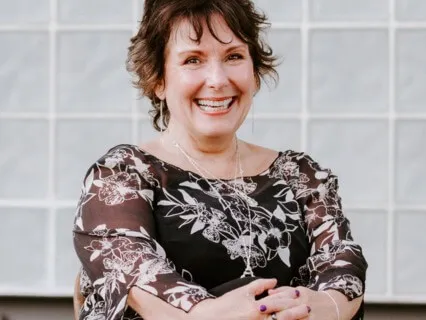
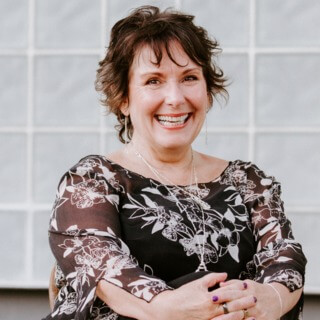
And I'm so thrilled today to have with me Heidi Lowe.
Heidi is the founder of Ohana Oasis,
Which is a nonprofit organization dedicated to empowering bereaved parents to live lives of purpose and joy.
Welcome Heidi.
Thanks so much for being here with us.
Oh,
And thank you so much for having me.
I'm excited to have this conversation with you today.
Yeah.
So,
Um,
I,
I of course researched you and learned about you and in advance,
But I would love for you to tell our listeners your story and how,
Where you started and how you came to create this amazing place that you have created there in Hawaii.
Yeah,
Thank you.
Um,
I will give you the cliff notes version.
Um,
So I am an only child of divorced parents.
So I grew up always wanting to have a really big family and create something different for myself.
So fast forward to when I was 23,
Fell in love with a man with three kids and got married,
Had an instant made family.
And then a couple of years later,
We added my only biological daughter,
Um,
Only child,
Uh,
Allison to the mix.
And she was diagnosed with a brain tumor,
Just shy of her third birthday and passed away when she was five.
From there,
We ended up getting divorced.
The whole life kind of blew up.
Um,
But I was going to school and the,
One of the things that had happened when Alison was diagnosed was I always knew I went to be a college graduate and just hadn't done it because life had gotten away.
And so I knew I needed something that was hopeful and something that was focused on the future,
Even if I was only doing one class at a time,
Taking her through chemotherapy.
So I did that.
I ended up with my degree right after she died.
Well,
Actually a couple of years after she died,
I did that went along in my career,
Had a great job,
My dream job,
Doing lobbying,
Um,
Advocating for other patients in a whole realm of the areas.
Something was still missing.
I still knew that I wanted to be doing something different and I didn't know what it was and went through a process and discovered in really a serendipitous fashion that what I wanted to be doing was living on a remote Island,
Doing something for other parents.
So went through this another like year and a half process of coming here.
And I am now home.
I live on Kauai and this is definitely home.
I've been here for eight years and will continue to be here,
Um,
And have done retreats for other parents.
And I took all of the different tools and resources and,
Um,
Experiences that I had over the eight or nine years leading up to doing retreats and put them all together for other parents because I'm very much an internal processor and an introvert.
So I was never really into the support group thing.
And that's great for a lot of people,
But that wasn't my thing.
And so I did a lot of research and delving in and introspection and took all of that,
Put that into something for parents.
And here I am,
Our first retreat was seven years ago and here we are,
We're still doing it.
And the demand is so big that now we're doing online things and really reaching out in new and exciting ways.
So that's the cliff notes,
Believe it or not.
Okay.
So tell me about what happens at the retreats.
So the retreats are,
Um,
They're seven days.
And so we really have a combination of,
Um,
And every part is really,
Really important to it.
So in the mornings,
Everybody is together for breakfast.
And then we do a healing activity and we walk parents through honoring the past,
Living in the moment and embracing the future because each of those components are so necessary to,
Like you said,
Going from grief to life of joy and purpose,
You need to be able to do all of those things.
So we take them through that in the morning and then most of the days for play,
Because a lot of times when we go through grief,
There's guilt,
There's fear of moving forward.
There's all these different things that come into it where it can be hard to release yourself to really embrace life and enjoy it again.
And so we book in time that that's what you're supposed to do.
And then we come back in the evenings and have family style dinner.
And the only thing that we do or like really require at that dinner is that you share your high and low of the day.
And that's it like everything else is just free form and just bonding and connecting.
And,
Um,
So we do that and yeah.
Does that answer your question?
Yeah,
It,
It,
Yeah,
It does.
And so the,
One of the things that I always see,
I lost my brother in,
Um,
Late 2019 and with right.
But,
You know,
As we were talking before the show,
We,
You know,
Death is a very natural part of life.
It's.
It's just kind of inevitable.
I mean,
It,
Well,
It's completely inevitable,
But we,
As a culture have made it such a taboo topic.
So one of the first questions that I want to ask you is a lot of people that I see feel like it's dishonoring the,
The,
The departed person for them to be happy that they feel guilty to by enjoying life again.
And I know that this is probably even more in the death of a child.
So we'll talk to me a little bit about that process and how you can move to a place of letting yourself be okay with feeling good again.
Yeah,
No,
You touched on a couple,
Um,
Really good points.
The first one,
We are very much,
Um,
Afraid to talk about grief,
Like the people that are grieving are afraid to talk about it.
Cause you're afraid that you're going to put off people,
The people that,
Um,
Have gone through grief and even parents that I've worked with say,
Oh my God,
I know somebody else.
And I don't even know what to say,
Even though I've been through it.
And so the ones that want to support have a hard time with it too.
It's,
Um,
And it's unfortunate.
Not all cultures are like that.
There are some cultures that very much embrace it and give it space,
But we don't.
Um,
And I actually have a,
I just sent you a link.
I do have a downloadable worksheet.
Like how can you provide space for people?
Because you really,
There's nothing you can say or do.
It's more about just showing up honestly.
Um,
But with that,
The other part that you're asking about is how do you get over like the guilt or the feeling released?
And that's why I think honoring the past is so important because you have to really sink in,
Feel the feelings,
Recognize them,
Acknowledge them,
Give yourself space for that.
And then also figure out ways that you can honor your person,
Your experience in your present moment.
So,
Um,
Like a little thing that I do every year,
Alison loved Rupor floats.
So on her birthday and on her death anniversary,
Every Rupor float,
It's that simple,
But it's something for me to know,
Okay,
I'm acknowledging her and I'm bringing her into my present.
And I also have a belief system.
And I also check in with her and whatever your belief system is for me,
I feel like I do have a connection with her.
And so I check in with her like,
Hey,
This is what I'm thinking about doing.
What do you think about it?
And so I bring her into different parts of my life.
And I know that she wouldn't want me to be just existing.
Like I'm here and I'm living for a reason.
And so,
And my journey is my journey and her journey was her journey.
And I really do believe,
Um,
And everybody has different belief systems.
So I hold space for that.
But for me,
I really feel like Alison signed up to be here for five years and to go through the life that she did for her five years.
And I'm so fortunate and so blessed that I got to be her mom for those five years.
And yes,
I totally wish she was still here.
I totally wish I could see her being a 22 year old and taking her out for a cocktail and all of those things.
But I also just,
I'm so happy that I got to have those and the lessons that I learned and the memories that we have,
And to take that to a bigger,
Even better place.
We talk a lot,
You know,
The name of this show is how to choose happiness and freedom.
And so you can make the choice to just continue missing her or enjoying your life and,
And remembering.
And like you said,
Keeping her with you.
And,
You know,
My personal belief is that there's really no such thing as death,
That the spirit of Alison is eternal and that you can,
When you're on the same vibrational level with her,
You,
You can communicate with her and feel her with you.
And,
But her,
Her vibrational level is not at a place of sadness and despair as a non-physical being.
Right.
Right.
I think that you do have to,
There is a space for when you lose someone,
There is a space for like honoring that grief and going through that,
That sadness and feeling those feelings.
It's the,
Then you get to that point of,
And now what,
Like,
How do I find space for all of it?
And how do I move forward and know that like,
Yeah,
I could still miss that she's not here,
But also honor that in a forward and positive and happy way.
Right.
And so,
And now you've led right into my next question is that,
You know,
The,
The five stages of grief,
Is that a real thing?
The,
You know,
I do think that the five stages agree for a real thing.
I mean,
Everybody has heard them and knows them.
But I also,
From my own experience through grief,
I kind of had my own thing and I've seen other parents go through it.
And it's,
It's,
I think a little bit more linear than what the Elizabeth Kuehler Ross is.
And it was like,
There was this,
Like this haze of like,
You don't even know what you're doing.
What you're doing.
And you don't even know that you don't know until you're out of it.
And then you look back and you're like,
Oh my God,
I made those decisions.
And the people outside of like,
People support,
You may not even understand that that's really where you're at until you start to like,
Become safe.
But there does come a time that like,
You have a light bulb moment or several moments and it can be conscious or unconscious.
It could be one big moment or lots of little ones where,
But you have this moment where you're like,
Okay,
I want to be somewhere different than where I'm at.
Like,
I'm done being in this place.
So now instead of having grief embody me,
How am I going to have grief sit next to me?
And what does that look like?
And once you can get to that place,
You move into,
Okay,
What now?
Where,
Where do I go with this?
And I'm a new person and I'm getting to understand who my identity is now and where do I want to go?
How do I move forward and live life fully?
So that's the,
That kind of goes to looking through grief in a different way of stages or phases,
Maybe.
So,
You know,
It occurs to me that while,
While,
You know,
We're all going to die,
The death of a 90 year old is one thing that has having lived a full life.
So you get to at least skip over the part of it's not fair.
They were too young,
But,
You know,
In your case and,
You know,
In the case of my brother,
He was,
He was only in his,
You know,
Early was in his late sixties,
I guess so,
But,
But a year prior to his death was perfectly healthy.
So the,
How do we deal with the feelings of this is not fair.
This is not just,
And get to that place of,
Like you said that she,
She made a soul contract or something like that,
That she really only meant to be here for that amount of time.
Well,
I actually it's different with like,
Because I've had my grandparents die,
You know,
And actually my grandfather died three months after Alison did to the day.
And so like,
Yeah,
There is a difference,
But there also,
It does still shift and change you because you're no longer grandchild.
You're no longer,
Like if you're,
When your parents die or like when your sibling dies,
It still shifts things.
But to your question about the,
When it's too young and questioning the,
The fairness of it,
I really talked about the would have's,
Could have's and should have's.
And there's no point in them because if it could have happened,
It would have.
If it should have happened,
It would have.
It's not what reality is.
And you are here.
And at some point you have to get to that part.
You don't have to do anything,
But to be able to embrace where you're at,
It's a lot healthier to say,
Well,
If it should have happened,
It would have happened.
And it didn't happen.
And even with somebody living,
Like I talk about this a lot,
Like you can wish for your kids.
I mean,
We all do it.
We project onto our kids,
Our own hopes and futures that we didn't live on them and chances are your living kid is not going to do what you want them to do.
So your deceased child is probably had they lived,
Wouldn't have done it either.
It's easier to fantasize over them doing it because they're not here to prove you're wrong.
Okay.
So,
But yeah,
Everybody,
Wherever you're watching or listening to this,
If you look down below,
We'll,
I'll provide the links to Heidi's website and to the free resource too,
Of,
You know,
What to say to brief people on how to have that conversation.
But I do want to talk a little bit about it too,
While we're here,
Because it is a,
You know,
Knowing the right thing to say to someone who is in the recent despair of having lost someone and,
You know,
Knowing what to say,
If you are the person who's lost one said that,
That's something I would really like to hear you talk about.
Yeah.
So honestly,
There is no right thing to say,
But the worst thing is to not say anything at all.
And so that is such a hard thing because we're so scared,
But it's just to say,
Hey,
I don't even know what to say,
But I'm here for you.
I don't know what to do,
But I'm here for you.
And I always go back to this one example that I had in my life that I don't know where I would be without them.
There was one couple that they just had me over every Sunday night,
And it was back when alias was on TV.
So I'm dating.
But we have a Sunday,
We had a Sunday night date to watch alias and have dinner.
And it was just for me.
And we did it for probably two years because it was just something like,
We didn't have to talk about Alison and they knew Alison very,
Very well.
They were dear,
Dear friends.
Like we didn't have to talk about Alison and we could talk about Alison.
They let me take the lead and just having a place to go.
And I think that setting up a time with somebody is great,
But I'm talking more just generally about the spirit in which they did it is like this whole space for me to be me,
Be in my experience was great.
If I shared something,
It was great.
If I didn't,
I could be going off the rails on something else.
They probably understood a lot of it had to do with grief,
Even though it didn't look like it.
And so just holding space for people and saying,
Gosh,
I'm broken up to one of the things not to do.
And I don't know how much this happens outside of child loss,
But with child loss,
When you tell somebody that you've lost a child,
People tend to fall apart on you.
And you end up having to console them.
And that's not a fair place to put the grieving person in.
So show emotion.
Absolutely show that you're profoundly touched,
But don't ever put the grieving person in a place where they have to be comforting you over their loss.
That's one of my big pet peeves and offer the platitudes.
When you think that,
Oh,
They're in a better place or,
Oh,
God needed an angel.
Don't say any of that stuff.
Because number one,
You don't want to hear it.
Number two,
Your belief system may be completely different.
Right.
Right.
Right.
Yeah.
It's such a,
Again,
As we were chatting before that our beliefs around death and loss really define a whole lot of things that we do,
Especially if we have a fear of our own death.
Yeah.
And then,
You know,
We bubble wrap ourselves and forget to live for fear of dying,
Which is going to happen anytime.
So it's not a simple subject in any way,
Form or fashion and neither is grief.
And so is there a,
I have an answer to this question,
But is there a certain amount of time that it takes a person to work through the grieving process and come out to a place where they can,
You know,
Be past the most of the sadness and begin to live in joy and purpose again?
I think that it totally,
Yes,
There is a certain amount of time,
But that certain amount of time is different for every person because it depends on the relationship.
It depends on the unfinished business you have with the person that you lost.
It has to deal with how much of your own self work you've done previously and how comfortable you are with doing it.
I will say that for a profound loss that was like of somebody that was in your daily life,
I think there is something to that second year because in the first year you are anticipating the birthdays,
The holidays,
The firsts of everything.
And it's in that second year where it hits that,
Oh,
Good Lord,
This is my new normal.
Like I have to figure out how to live life and not just gird myself for the first of it.
So that kind of answers your question,
But I think that a lot of it can happen before that,
But it all depends.
But I think that there is something to that second year of like,
Okay,
Here's where the rubber hits the road.
Right,
Right.
And,
You know,
I'm kind of seeing that with my sister-in-law and I've also observed that,
You know,
If grief kind of comes in waves and if you can just kind of ride those waves and feel the sadness when it comes to allow yourself to have moments of joy in between and let the moments of grief get smaller and moments of happiness get bigger and just give yourself grace.
Does that make sense?
It totally makes sense.
And I'm really glad that you brought that up because like it's so intrinsic in who I am.
I forget to mention it,
But I think a lot of people think that like you have this block of grief where you're sad and you don't smile and nothing brings you joy and then you move into this other space.
No,
It can be a total,
You can be happy and laughing a week after the funeral and still be profoundly broken up and devastated.
So yeah,
It is,
But the times of joy do grow bigger as you move forward in your process.
You know,
There's something else just popped into my head.
What would this situation be like if that Allison had grown to be a teenager,
A young adult,
And then for some reason you've lost her not to death,
But to estrangement,
To a falling out that,
You know,
You're and it's,
I've witnessed it more than I would like to that I'd like to see that,
You know,
Children go,
You know what,
I don't,
I don't want to be a part of your life anymore.
And they leave.
And that's a heartbreak that a mother,
I mean,
How,
How would you advise someone to reconcile that?
Wow.
So like,
And I think that that in some ways is more difficult because it's not,
It's not a final thing and there can be a lot more guilt and questioning and like the monkey mind going in that.
And it's not my area of expertise,
But just speaking from gut and like my own experience with things is that at some point you have to go back to those could have,
Would have,
Should have and recognize,
And this is why I feel like I have been able to do that.
I feel like I have been able to release Alison's journey is I really have firmly believed always that she is her own independent person.
She has her own independent soul.
And we were,
We chose to be together and to walk life together,
But each of our journeys are our own journeys.
And for any parent,
Like,
I'm sure like if something happened,
Of course we all do things wrong and there's no way we're ever perfect.
But at the end of the day,
Your child's journey is your child's journey,
Not your journey.
And that they,
They intersect and they interweave.
And so to be able to hold space for them to do their thing,
And then you be and show up how you're supposed to be and show up and trust that that's going to be enough for your journey.
Well said,
Well said.
That's really,
Really good advice.
Awesome.
Okay.
Well,
We are getting to our 30 minute mark.
Is there anything that else that you want to share with us before we wrap up?
Any special messages?
Oh,
Good question.
You asked such great questions,
Like in touch on most anything.
I think the only other thing that I would say is that,
Like I'm 17 years out and I live a pretty awesome life,
But that doesn't mean that like,
Once you get something figured out,
It's a one and done thing.
Like it's an ever evolving,
Ever changing.
And yeah,
Sure.
I still have things and they're different things,
But we always have things and it's what you do with them and how you move forward with them and how you figure out how to feel good and find joy and purpose and happiness and freedom wherever you're at.
Yeah.
Choosing your perspective.
I love it.
It's my very favorite message.
All right.
So your website is Heidi low.
Com.
Right?
Yep.
Awesome.
We're going to provide that link and all of her social media links and a link to the free resource as to how to talk about loss,
Whether you're the person who has lost someone or it's someone that,
You know,
And lots of other great resources,
Heidi does online courses.
And of course you could,
I would,
I would love to visit her retreat.
It looks like an amazing and beautiful and magical place.
So you're doing great work in the world.
I'm very happy to have met you.
Very happy to meet you too.
And thank you so much for this time.
Thank you.
Thanks Heidi.
All right,
Everybody.
We'll be back next week with another great guest in the meantime,
Remember happiness is a choice.
You can always choose to be happy first.