Hello,
Welcome to Serenity Wellness Podcast.
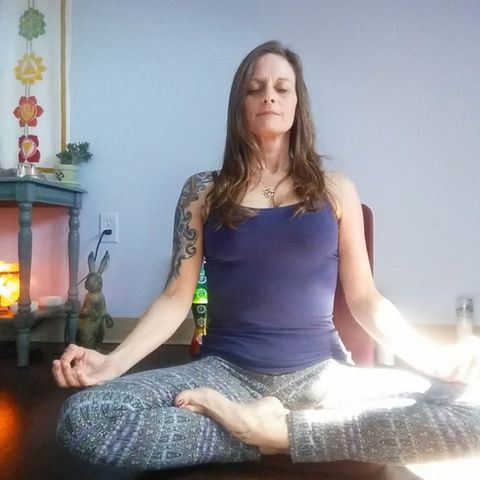
My name is Nicole White and I'll be your host.
This podcast is dedicated to helping you tap into your full potential of how you can heal and balance your mental,
Emotional,
And physical well-being.
Together,
Let's explore inner self,
Connect to our strength,
And manifest your true nature,
One full of love,
Purpose,
And passion.
Welcome to Episode 28,
Forgiveness.
Thank you,
As always,
For continuing on this journey with me,
And I apologize,
I did not put out an episode last week.
As I've mentioned,
I'm really trying to be consistent with Wednesday episodes,
And so I am going to try to post an extra episode before next Wednesday.
It'll just be a healing meditation that I'm going to try to fit into my schedule,
But I can't promise anything,
So I'm just going to say that I am going to try my best.
So with today,
We're going to talk about forgiveness.
Forgiveness towards ourselves and others can often present a lot of challenges.
As much as we would want to forgive ourselves or other people,
Sometimes we can just remain stuck,
Which further fuels our feelings of anger,
Resentment,
Anxiety,
Or depression.
So this idea of forgiveness towards ourselves or towards others,
Again,
Is something that we most often will long for and want,
Because we can even recognize some of those secondary emotions that we cling to and hold on to and how it even affects us.
But oftentimes,
We might not really know how to go about doing it or feel stuck in the process of how to move forward towards forgiving ourselves or someone else in our life.
So to begin looking at forgiveness,
We're first going to go a little bit deeper and look at some elements that support and guide us more towards that direction of true forgiveness in our lives.
One area is acceptance.
Acceptance is allowing ourselves to truly accept that the situation,
Behavior,
Or action has occurred.
We can sometimes stay in a pattern of denial or almost minimization too,
Which gets us away from a true acceptance.
So really accepting and allowing us to fully embrace the acknowledgement that whatever the situation is or behavior was that has occurred has actually occurred.
It's not saying that we accept the behavior,
And this can often create some confusion or a little bit of avoidance of acceptance for people.
When we're accepting something has happened to us,
We are not saying the behavior or the action or the choice is acceptable,
Just that we are letting go of resistance to the reality that this is a part of our story.
We're letting go of this tug of war battle in that resistance and just truly acknowledging and accepting that it has happened and the feelings and emotions that we're working through in regards to whatever it is that we're going through or healing and trying to heal from.
When we let go of this and we work towards acceptance,
When we let go of that resistance,
It opens up healing.
It starts pulling us more towards a learning and helping us remove the darkness that holding on to this begins to create in our life and which kind of stays stuck within us until we really allow ourselves to embrace that true healing and accepting as part of that.
In order to truly forgive and to heal,
We must accept.
Otherwise,
It creates a resistance cycle and like I said,
That kind of tug of war battle.
When we work towards acceptance,
It also gives us a deeper awareness of our self.
It lets us see even in darkness,
We can pull out our inner strength and realization that has come to surface for us.
We might notice that in periods of darkness or things we must forgive,
You know,
Behaviors or actions that have happened in our life,
That we may notice that it has gained us a great deal of inner strength and connection within or resilience or our ability to think on our feet or be independent in thinking and decision-making.
It may have made us be able to be more aware of red flags and things that we need to make sure that we're mindfully aware of in our own choices.
It might also help us to have a deeper awareness of our own patterns and behaviors.
Oftentimes,
We can get stuck in behavior patterns and choices until we really deeply learn the lesson that is there for us to learn.
It's like the universe will keep repeating these patterns for us until we kind of have a deeper learning and can give that message back and say,
Oh,
I get it.
I understand that teaching and that learning in my life now.
I have healed and now I can grow to a different elevation,
Vibration level,
Whatever terminology or words work for you.
And just as that reminder,
You know,
The terms and words I use are interchangeable with how they resonate for you.
This is just the language I use because of my understanding and my connection to spirituality as well as the energy stuff that I do.
So,
You know,
Tweak this in terms of what words resonate for you because it applies to all of us when we look at this healing and these patterns that we can get stuck in until we have that pause,
That deep inner reflection and awareness,
That true acceptance that can then guide us into forgiveness.
When we accept,
It allows us to let go of blame.
It allows us when we let go of blame to regulate emotions differently so we don't have this entangled high emotional response to pass things that are no longer but that we hold on to emotionally and mentally.
We might even create stories about it or continue to repeat the patterns or situations in our mind,
Which then again elevate that emotional response for us.
So allowing ourselves to work towards acceptance,
Accepting that these things,
Events,
Behaviors,
Choices,
Etc.
Have occurred in our life and it does not mean we are accepting the behavior.
This applies towards forgiveness and acceptance towards self as well as others and we're going to kind of talk more about this as we go through this.
The other thing to keep in mind is compassionate understanding.
Again,
Applying to self for self-forgiveness as well as to others who we want to work towards forgiving.
This compassionate understanding is that recognition that other individuals also who were working on forgiving or towards forgiving have also gone through their own levels of suffering,
Their own history,
Their own lack of connection towards healing or understanding,
Towards accountability,
That they may have not learned the tools or skills and emotion regulation,
Communication,
And relationships due to their own struggles or suffering growing up or lack of parental figures who were able to provide or not provide that understanding to them because of their own stuff.
So this compassionate understanding that we are all human,
That we all go through different layers of suffering,
And that sometimes we're stuck in different ways.
This does not mean that we remain entangled in the toxicity.
By us having compassionate understanding in this work towards forgiveness,
It doesn't mean,
For example,
If someone is physically or emotionally abusive and we know that they themselves had to go through deep suffering in their life and maybe they were physically and emotionally abused growing up.
And we're working on forgiveness towards these areas of acceptance and compassionate understanding so that we can truly forgive maybe that they were abusive towards us.
And when we're truly looking at this,
It is not again saying the behaviors were okay,
But it's also not saying,
Oh,
Well,
Because I understand and know that they have had to go through this suffering,
That they were abused and that's probably why they are repeating this abusive cycle,
Therefore I should stay in it.
That's not what this means.
It means that we're just aware so that we're not personalizing the behavior.
We also have to have firm and consistent boundaries with ourselves and allow us to dissolve toxic connections that are no longer serving us or that are unhealthy for us,
Even if it means people who are close to us,
Including family.
And I know,
As we've talked about in boundaries,
That can be extremely difficult.
But this idea of having compassionate awareness again does not mean because we understand and have compassion for their suffering that creates these behaviors and choices that we remain entangled and on the receiving end and a byproduct of that suffering,
Which then creates our own level of suffering.
With this compassionate awareness,
Though,
It does guide us towards forgiveness and healing.
It dissolves our tendency to personalize,
Which when we personalize other people's behaviors and choices and reactions,
It further diminishes our own self-worth.
So by doing this,
It's allowing us to move more towards the healing and forgiveness,
Allowing us to dissolve personalization,
Which will then allow us to not change their voice into our own.
So for example,
If you are forgiving someone who maybe has angry cycles and are maybe like reactive or explosive and their anger and words they use,
And if in this acceptance and compassionate understanding,
When we get to that place and recognize all that I've just talked about,
Like their suffering,
Et cetera,
But we're not on the entangled end and staying in it,
And that allows for non-hanging or non-personalization,
Well,
Then it helps us further so that when we're working on healing and forgiveness,
We're not changing their voice into our own and using those words against ourselves later as our own bully.
We've talked about this in other episodes.
I think one of them was the lens,
What's Your Lens,
The backpack episode,
As well as some others and how even like,
What Do Thoughts Have to Do With It was another one,
How we've talked about sometimes in our own judgmental mind and kind of thoughts we have towards ourselves,
How sometimes they're not even,
It's not even our words.
It's like we've heard this in our past from someone who maybe has said these things to us,
And maybe we've even forgiven this person,
But not maybe fully because we've really also taken those words,
Changed them into our own voice,
And used them later then to judge ourselves and kind of owned it and like didn't even recognize along this path that,
Oh,
That's not even really how I feel about myself.
I've just picked this up from such and such event or so and so,
And now I'm starting to try to own it and become my own bully.
So when we do this passionate understanding with the acceptance,
It really decreases and diminishes the likelihood that we're going to do that,
That we're going to change that voice into our own.
It allows their behaviors and their choices to be about them and not you.
Just as your forgiveness is about you and not them.
You don't ever even have to voice that you have forgiven someone in order to forgive.
This can be a very private and personal experience of healing.
Sometimes we can't even let the person know we've forgiven them.
Maybe there's no communication anymore,
Or maybe they've passed on and they're dead.
But it doesn't mean we're supposed to just never forgive then.
And we're supposed to hold on to all of these extra emotions that come with it when we don't embrace forgiveness and when we work against it and we hold on so tightly to the things that anchor us down in a non-productive and non-healthy way.
So when we work towards this forgiveness,
And again,
Recognizing that this forgiveness is about you,
It's not about the other person,
It's about self-healing.
And when we allow it to be about our self-healing and understanding that,
Then it's not attached to expectation.
That's when true healing can occur.
A lot of times people will think they have forgiven,
But it's attached to something.
And that's not really forgiveness.
That's still holding on.
We can't truly forgive and have an expectation or attachment,
For example,
That the person's going to get it because we've forgiven them.
They're going to change that behavior.
They're not going to repeat it.
They're going to apologize.
Well,
That's going to keep you stuck because now it's an attachment to something.
That's not true acceptance.
And that is,
Again,
Connecting it to an expectation or an expectation of what someone else needs to do in order to make you do something that's going to be helpful and healing for you.
Forgiveness is about you,
Not about the other person.
And when you do that,
Again,
It dissolves expectation of needing something else in order for forgiveness to end up happening.
I have shared little tiny bits and pieces.
I have complex PTSD,
And it just means I've had layers of trauma in my life.
And in that,
The trauma that's involved other people and things that they have done or said or experiences I've had to go through,
I have forgiven each and every one of them through the means I'm talking about.
I know even those who have created harm or pain in my life,
That they have their own suffering,
That they didn't have the learning or tools to manage their own emotion in times.
And that sometimes that related or resolved or resulted,
Excuse me,
In behaviors and choices that cause pain in my life and in people's lives that who I love.
But I have forgiven everyone who has done that.
And some of them don't know that,
And that's okay.
They don't need to know that because it's not about that.
They're on their journey,
And they'll hopefully really get to the level of healing they need for themselves.
And that's that other part of forgiveness.
When you truly forgive,
You send,
I know it might sound twisted to some of you,
But you send kindness and love and compassion to that person,
Not verbally or physically,
But just in a mental awareness of true forgiveness and hoping that the other person can also heal in whatever darkness that they're working through.
I know I had this experience where,
It's a family member and I'll just kind of leave it at that,
But I really had to work on some deep forgiveness for some things in my life.
And I had this conversation with this individual some years ago and let them know I have forgiven them for all this pain in my life that was a result of some of their choices and behaviors.
And the individual said back to me,
I get it.
They're in their own suffering and have difficulty with communication and anger and lack of accountability and acceptance and all that stuff.
And I'm just,
You know,
That's their stuff.
It's not mine.
But when I was explaining to them that I forgave them,
They said to me in a pretty defensive and angry way that they never asked for forgiveness and have never said sorry.
And they were right.
They were absolutely correct.
And still to this day,
That was maybe,
I don't know,
I'm not good with track of time,
Five or six years ago,
Have still never apologized or asked for forgiveness.
But that has not made me stop forgiving.
It wasn't like after that conversation,
I thought to myself,
Oh,
That's it.
I don't forgive them anymore.
No,
I still forgive.
It's just,
Yep,
Their words were correct.
They didn't apologize or ask for forgiveness,
But I forgave for my own healing and the darkness that lack of healing can create in terms of self.
So true forgiveness is not about expectation and needing or expecting the other person to change.
It's about ourselves and our own healing.
And when we look at all of these elements in terms of acceptance,
Compassionate awareness,
And understanding forgiveness is about self and not others,
All of these things as a reminder also include boundaries,
As we've talked about in those episodes related to boundaries and recognizing it's not always easy.
It's not always easy to create boundaries due to our own patterns,
Due to unnecessary guilt and shame that comes in and expectations that are trying to be placed on us from others or some from society.
I mentioned that it was a family member in that example,
And I as a therapist,
I've been a therapist for over 20 some years,
About 22 years,
And so often when people are working through some of this and it comes to family members and toxic nature of their lives,
Or the toxic nature of relationship and connection with family,
There's this idea of being told by others or even some internal stuff,
But I have to keep in this relationship in the same way.
I can't have boundaries that mean dissolving a relationship because,
Well,
They're my family member,
They're this,
They're my parent,
They're my sibling,
They're my aunt,
My uncle,
Etc.
Toxicity is toxicity and people's behaviors and choices are theirs to own.
And as I mentioned in the compassionate understanding and as we've talked about in boundaries,
We do not have to remain entangled as the punching bag for other people suffering.
It doesn't mean we don't have compassion and empathy for that,
But boundaries are important.
And unfortunately,
Sometimes it does mean creating boundaries that dissolve connections with people who are close to us and sometimes family.
But boundaries are about health and wellness.
So boundaries are important for that,
Just as important as this notion of forgiveness and how lack of forgiveness will also keep us stuck in the pain and the patterns.
In terms of self-forgiveness,
Keeping in mind self-forgiveness involves things we've done,
Choices or behaviors that we've made that have caused pain for others or made them lose trust in us or mistakes that we've made.
Sometimes people will hold on so tight to these things and steer so far away from self-forgiveness that they'll repeat the stories or situations in their minds,
Sometimes from years and years ago,
And they'll add extra judgmental words towards themselves and create deeper suffering.
Sometimes people will avoid self-forgiveness because they fear that if they forgive themselves,
They may repeat the same behavior that they have then forgiven.
And this fear comes in in terms of forgiveness towards others also.
People sometimes fear if I truly forgive,
Is that going to let me let go of the boundary that I'm trying to establish?
So those are natural and normal and just recognizing them so you can work through them instead of reacting to them.
Some things that are helpful to think about and reflect on in addition to what we've talked about in terms of guiding you towards your own forgiveness for self and others is thinking about a time someone has forgiven you.
What that felt like.
Was it easy for you to accept their forgiveness?
When maybe you had to forgive someone else.
Or if you don't have categories in that area that come to mind,
Maybe thinking of someone that you know who has forgiven someone and what you learned from that experience through someone else.
Thinking about what you learned in general about forgiveness growing up or from those around you.
Was forgiveness something that was always shown to you that it needed to be attached to something else like some of those expectations that we talked about?
Thinking of forgiveness and allowing yourself to recognize patterns that are there for you or things that you learn that maybe are not the most helpful in terms of really embracing forgiveness.
Sometimes people think they forgive but they have an attachment still to it.
Saying things like I'll forgive but I won't forget.
Well that's not acceptance and unconditional understanding and compassion to truly letting go.
It creates still this thread that keeps us there.
It can often get in the way,
You know,
Of that really heartfelt forgiveness.
What it creates in our life and allowing ourselves to truly embrace it so we can again increase our trust,
Our heart energy,
And our relationship and connections with ourself and those around us.
I hope this has been helpful for you to guide you to begin to think about this idea of forgiveness.
Really reflecting on what maybe lack of forgiveness does to you.
What kind of emotions might it create for you?
Does it bring in feelings of resentment,
Anger,
Anxiety,
Or depression?
Does it create a desire to retaliate?
And if it does,
Really pausing and reflecting what does retaliation really bring to you?
Does that create then more pain and suffering?
So giving reflection and allowing yourself some time to work through it and to heal.
Thanks as always for listening and I will talk to you again soon.
Bye bye.