Hello,
Welcome to Serenity Wellness Podcast.
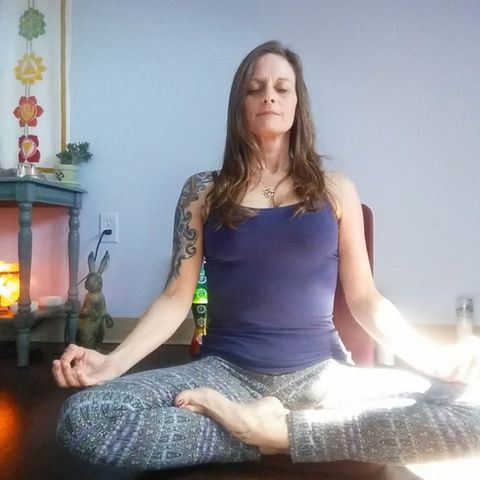
My name is Nicole White and I'll be your host for this podcast series.
This series is dedicated to helping you tap into your full potential of how you can heal and balance your mental,
Emotional,
And physical well-being.
Together,
Let's explore inner self,
Connect to our strength,
And manifest your true nature.
One full of love,
Purpose,
And passion.
Welcome back everyone for those of you who continue to join me each week and welcome to those of you who are new.
I hope you continue to find this podcast useful for you and as always thank you so much for your ongoing words of love,
Encouragement,
And support as well as sharing this podcast with others who you think might find it useful.
Thank you so much.
Welcome to another Wellness Wednesday and today is episode 7,
I am who I say I am.
We've been building upon some different tools for your wellness toolbox through the past couple weeks here and we've been looking at some breath work,
Looking at being the observer and some presence training,
Mindful awareness,
And some ways our thoughts and words can make us moldy.
Last week we started looking at some specific unhelpful words that we can often use,
Those always,
Nevers,
And evers,
Those shoulds,
Coulds,
Woulds,
And whys,
And we talked a bit about the emotions and behaviors that can start to come along with the use of those words as well as the vibrational impact it has on our full body system.
You may have found after last week's episode when we talked about these words,
Excuse me,
That you had more of an open awareness when you yourself were using those words.
You might have even had a little bit more of an awareness of the behaviors and emotions that came along for you specifically when you use that type of language or those words towards yourself or towards others.
That often happens and that's actually part of the purpose of this,
What we're doing the next couple weeks here,
And that is to open up your awareness because when we do that it allows then for that agent of change.
It's very empowering because once we recognize we can use more of that power of pause and getting more back into the observer and back into presence which then changes that dialogue and concept that we have within ourselves.
And we're going to continue to explore that further today.
So today we're going to look at two other areas within these unhelpful thinking or unhelpful thought style pockets and you're going to learn another skill for your toolbox today that can start to reprogram these automatic thought cycles that we get into.
Today we're going to look at perfectionism as well as judgment.
But before we get into those I want to just take a moment to talk to you a little bit more about what I mean when I talk about thought cycles in terms of the skill you're going to use today.
Well,
You can hear the ice hitting my window behind me potentially in the podcast here.
So if you hear that background noise,
It's because it's like pouring sleep and rain and ice right now.
So anyway,
Today we're going to look a little bit more at the procrastination and judgment cycles.
But first let's look a little bit about what I mean in terms of thought loops.
So thought loops we can get as we've been talking about into these automatic thoughts and cycles of thinking without really being too aware of how we're thinking.
And the use of those words that we said and talked about,
Again,
We can start using them towards ourselves and others and not really even be aware of the impact they're having on us or even sometimes even aware that we're even using that type of language.
And so these thought loops can kind of go and just be running automatically.
And with that automatic cycle,
Often within these thought loops,
There's a lot of judgment that happens in there.
And sometimes these thought loops become words and messages that aren't even really ours.
They're not even really things we truly believe about ourselves.
But they're things maybe that we've had to hear along our life journey so far.
Many of us have had harmful or hurtful or aggressive or abusive language thrown at us.
And those words hurt and they vibrate in our body.
And sometimes we turn those words into our own voice.
And suddenly they become our own dialogue towards ourself,
Helping keep us down,
Helping keep us stuck and helping create emotions such as depression,
Anxiety,
Fear and many others.
So these automatic thought loops,
Again,
Sometimes can even be things we don't even believe,
But they just start to cycle and to play and automatically run and we start thinking we believe them and they start sounding really true.
And they start sounding like ourselves.
So with this,
It's all about,
You know,
Again,
The more we become aware,
The more we recognize,
The more we use the power of the pause,
Which we'll talk about more in future episodes,
As far as how to use that power of pause.
But the more we examine and the more we identify and the more we become aware,
The more we then can change.
And it's just about change.
I mean,
These are just thoughts.
And again,
The words that we say and we hold on to,
We often don't even believe in.
So let's look a little deeper at these two that we're going to talk about today.
Perfectionism.
Perfectionism is that inability to see the middle.
It's that black and white thinking and can't see the gray.
It's I do it all right or I have failed.
You know,
We can think about it in terms of sometimes people really get stuck where they think they have to have straight A's.
I work with colleagues and I work with them.
I work with college students and adolescents as well.
Excuse me.
And,
You know,
To sit and hold space for some of these students and listen to the stress and the impact that some of these thoughts like perfectionism have on them is just so heavy.
The impact that they put on themselves.
But it's also so beautiful.
Once we start to examine it and pull back the layers and to see them flourish and blossom and change when they start really changing that language and believing more in themselves.
So perfectionism,
We can't see the gray.
We get in this all or nothing thinking where we have to do everything correct or we have failed.
And with it comes a lot of judgmental words,
Which is why I'm combining the two categories today.
Perfectionism also,
You know,
When we think about,
As we've talked about last week,
Looking at those emotions and behaviors that these words and these languages and thoughts create.
When we have perfectionism,
We often get depressed or we get anxious or we give up.
You know,
That it can bring all these other judgmental words.
But also when we use it towards others,
This notion in the mind of perfectionism,
It can often lead to disruption in communication.
We will have difficulty in compromising.
You know,
It's our right or excuse me,
It's our way or no way.
You know,
We are right,
You are wrong.
So if we are in this rigid form of thinking and this perfectionist mindset,
Then again,
We can have a lot of disruption in our ability to compromise with others.
Then we also have judgment and judgment can be so huge.
We can often run into,
Again,
These automatic thought loops that have these judgmental words towards ourselves that sometimes aren't even ours.
Sometimes we create them over time towards ourselves and they're not necessarily even things that we truly believe.
But we will convince ourselves and we'll work extra hard at trying to make ourselves believe these really crappy things that we say to help keep ourselves down,
Help make us depressed,
Anxious,
Feel less than.
And so when we judge,
You know,
Carl Jung was able to start helping us way back,
Start looking at this idea of shadow self.
And the shadow self has to do with this idea of judgment of others.
So when we judge others,
It's the notion that what we see in others that we are judging or that stirs an irritation in us is actually something within ourselves.
So think about that just for a moment.
When you are judging someone else,
You are judging yourself.
When you are judging yourself,
You are judging others.
So when I work with people and we talk about judgment and sometimes we spend a great deal of time talking about judgment because it's such a common daily thing that we can get trapped into and not even realize.
But this idea of judgment and how we can kind of get stuck within it and what it does to ourself within it.
When we talk about the idea of if you're judging yourself,
You're judging others,
Sometimes people can struggle with that a bit because they'll be like,
Oh,
Yeah,
I judge myself.
No,
I don't judge other people.
However,
When we're judging ourselves,
We are also judging others because often if you think about how we judge ourselves,
We're comparing ourselves to others.
So to compare means that we're judging,
Right?
Like if we're going to compare ourselves to someone else,
We have to have a judgment of that person to even use that as a way to judge ourself.
So the very nature of judging ourself is comparing ourself to others.
This idea of judgment in terms of comparison,
Another thing to keep in mind here is we can often get into this comparative state of mind where we will look and take a snapshot of what we see from someone else and think,
Oh,
They must have the perfect life.
Oh,
I would love to be this,
That or the other of that person.
And it can create,
You know,
Those that envy or jealousy.
But when we think of allowing ourselves to take just the snapshot of someone's life and suddenly think that that's what we want,
We also must consider that it is simply a snapshot.
That's all that it is.
We don't know their whole life story.
You know,
I recognize that I'm a successful independent woman and I have a successful business and sometimes people can take that snapshot and think,
Wow,
You know,
Your life must be great.
I would love to this,
That or the other of what you have.
But it's just a snapshot of my life.
I would never,
Ever want anyone to have to go through the life things that I've gone through to get to where I'm at.
And I don't say that because,
Like,
Oh,
Poor me.
You know,
I have forgiven every person who has harmed me in my life because of my own healing.
And that's what's important to me.
But,
You know,
I would never,
Never wish anyone to go through that.
So when people have this snapshot and compare of my life and think,
You know,
That they would want it somehow.
No,
You wouldn't.
So just think about that.
I mean,
Don't get me wrong.
I love my life and I'm in a beautiful place in my life.
But,
You know,
There's been a lot of darkness and hardship to get me here.
And so don't just take a snapshot and compare and think that that's what you want because you have no idea what's behind the scenes.
You know,
Don't even get me started on social media.
You know,
When people put out what they put out there,
It's like a snapshot of awesomeness.
Right.
I mean,
How many people are posting their whole story on there of what life is really like.
So be cautious of judgment.
Be cautious of where it comes from.
Is it yours?
Are these your words or are they someone else's?
Did you decide to take that?
Wow,
Listen to that sleep.
That sounds so distracting in this podcast.
Super loud here.
But,
You know,
Are these your words or are they someone else's words?
Did you decide to make it your own voice?
And now you believe it,
You know,
Recognizing that when you're judging yourself,
You're judging others.
Is that what you want to do?
Recognizing when you're judging others,
You're judging yourself.
Is that what you want to do?
Thinking about the idea of comparison.
Who are you even comparing yourself to and why?
You know,
Do you want to put people on these different hierarchies because that's what we do when we compare versus just compassionately loving,
Accepting and being.
Accepting the fullness of who we are,
Recognizing there's ups,
There's downs.
We have strengths.
We have other areas that we need to build upon and grow within.
But judgment and putting ourselves down and calling ourselves names or calling others names and putting them down in our mind to somehow make us feel like we're better or worse.
It's just a really useless cycle and it just helps to further keep us stuck,
Keep us depressed,
Keep us anxious,
Make us feel worthless.
So again,
Opening up these folders,
Pulling back and allowing,
Allowing this observation of awareness.
Are you getting into a perfectionist mindset?
Are you getting into all or nothing thinking?
Feeling less than,
Feeling like you failed if you make a mistake.
Are you judging yourself,
Putting yourself down,
Using harsh words and criticism?
I had a conversation with my friend the other day and we were talking about judgment.
And I was saying about how,
You know,
I strive to try to be my best friend.
Like,
Would you talk to a friend the way you talk to yourself?
Would you allow a friend to talk to you the way you talk to yourself?
Would you want to hang out with you?
Would you want to hang out with yourself?
Be that person.
You are who you say you are.
Be the person you want to hang out with.
Be the person you want to love.
That you want to share that love with others around you as well.
So perfectionism,
Judgment,
Being aware,
Being open so that we can begin to change.
So we can begin to have a healthy thought loop,
A healthy awareness of ourselves through an unconditional love and compassion for all we are.
And that also then goes on to everyone around us.
When we can get that grounding and that mindset of self,
It allows us to see the beauty,
Acceptance and understanding of everyone.
Because don't forget,
We are all one.
Alright,
So today let's talk about a skill now.
When we think about these thought loops and how I said,
You know,
They're automatic,
They go and sometimes we're not really even aware that we're within them.
A technique you might consider using for yourself is called,
What I've called,
I don't know,
I termed it the one to one technique.
So what this is,
Is a technique to help reprogram and rewire and restructure those automatic thought loops into more truth,
Into more compassion and unconditional love.
So how you do this,
We have been working through the past few weeks on building more awareness through observation,
Through mindfulness and breath work,
And through,
You know,
Just practicing that daily mindfulness,
How you might have noticed if you've started to practice some of these techniques,
How it is allowing some more presence in the now,
It's allowing a little more space from the monkey mind.
And those things are going to help you further in these skills,
As I had talked about when we were learning those skills,
How they'd start to build and be useful for some other things you were learning.
So the idea of how they're useful is because they're bringing in awareness,
They're bringing in the observer and allowing you to know and be aware of who you are and how you're living.
So in that awareness,
It's going to help you in this kind of technique.
With the one to one technique,
In order for this to be effective,
You can stop the technique at any time.
But you must give up all parts,
Which you'll understand in just a second.
So with the one to one technique,
What you're going to do here is you're going to tap into that awareness the best you can.
This,
You know,
It's a learning technique,
So it's going to take some practice.
So the best you can,
You're going to tap in,
Be aware.
How are you thinking?
How are you talking?
You know,
How are you being?
So with that,
In this one to one technique,
In this awareness,
When you notice and become aware that you are using a judgmental word towards yourself,
I am stupid.
I am lazy.
Whatever it is,
Your word choices.
When you notice that you're being judgmental towards yourself,
Pause and follow up with something that is kind or loving.
So I notice,
I say something harsh.
I am lazy.
I pause,
I follow up with something kind.
I am successful and allowing myself some time for self-care.
Okay?
It could be whatever you want it to be.
Recognize that you might not initially truly believe the follow-ups.
That's okay.
We're reprogramming.
We're recalibrating.
So the messages you've been running aren't true.
Those judgmental criticisms and things that keep you down and put you down,
They are not true.
But you have been saying them for so long you believe them.
Maybe you've heard them from others so you believe them.
But they are not true.
So this new one to one,
The follow-up,
It might not feel true at first.
But it's because you're battling this other message that you've convinced yourself of truth.
So there's going to be a little resistance at first.
But what happens here is that pause,
So think about the cycle,
Right?
And think like a hamster wheel.
It's going round and round.
And what happens when we push that pause is it stops for a second and then we slide in this positive.
So if each ring,
You know,
Initially on that wheel is a negative,
We pause,
We take out that ring and we put in a positive.
Over time,
If we're doing that repeatedly for ourselves the best that we can,
Then those rings all get replaced.
Now we've got a positive hamster wheel of loving kindness.
So it takes practice.
You might not notice until you're a few minutes in that you've been in an unhelpful and unkind loop of judgment or criticism towards yourself or others.
Pause.
Pause whenever you become aware and replace.
And then another negative might come back.
As soon as you're aware,
Pause and replace.
So the one to one.
I notice I am being critical or judgmental.
I pause,
I replace.
And over time,
You're going to notice that automatic thought loop and that thought cycle actually starts running positive.
Right?
Positive.
Could you imagine?
Positive automatic thought loops.
They're beautiful and they will happen and they can happen and will happen for you.
It just takes practice.
So that is the technique for today.
The one to one technique.
If you choose to practice it,
It does take time.
And again,
You can quit at any time.
But in order to quit,
You have to give up all of it.
So to give up all of it,
That means giving up the negative also.
That is it for today,
Everyone.
Thank you so much as always for joining me.
I hope that you found today's episode useful for you.
I hope that you also continue to tap into some of these tools that we've been working on with your breath,
With being the observer,
And with practicing that daily mindfulness that we continue to work on and build.
Our next episode will be on Monday for our next Mindful Monday.
Until then,
Have a beautiful week and continue to tap into that awareness of self and what you need to feed and fill your soul.
Have a great one.
Talk to you soon.
Bye.