Hi there!
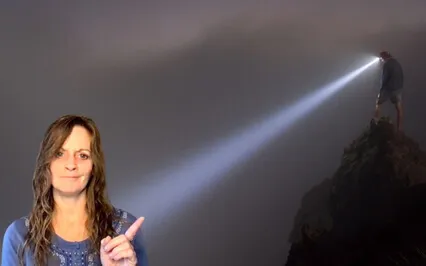
What trauma looks like?
The battlefield,
The void,
And the cave.
I'm gonna share some examples and tools with you,
Plus a few lessons from my dogs.
I also want to say thank you so much to all of you,
As I just recently learned this podcast is one of the top 20% of podcasts followed,
And just so you know,
You guys are all considered time travelers.
And that's because,
As I mentioned,
Whenever people find me,
They end up oftentimes going back to the beginning,
Since these episodes are timeless and they're just full of mental health information and tools.
But I just want to thank all of you,
Because without you,
The listeners,
I wouldn't have any percent of listeners.
As I move into describing these,
Know that you might fluctuate through them.
You might find yourself in one more than the other,
And there are going to be times that maybe you find yourself not in them at all,
And I'll be describing that when we get to the tools.
But these experiences in these different places are very common,
And the more we know,
The more we can start to ground ourselves in the present moment,
Which is going to stop then allowing the body to be hijacked from a mental memory of a past experience.
This is when the body system is experiencing trauma in some way,
And it can be very quiet.
It can be under the layers,
Like maybe you're not having a flashback memory,
But it could be the stored stuff,
The things we're avoiding,
For example,
Or it could be like a song,
A scent,
Something happens around you to create an elevation in the body around something not even in the moment.
So keep that in mind as we talk through this.
It doesn't have to be now that this is happening to still be experiencing and moving through life in these ways.
Let's start with the battlefield.
The battlefield is when someone really feels like they are in battle.
So they might get into situations where they communicate,
They behave,
They react in ways where it's like do or die type of thing.
So it's reaction before reflection.
One of the episodes way back sometime,
I had talked about that difference.
Are we reacting and then reflecting,
Or do we get to reflect and then choose how we move through in our type of reaction?
Totally two different ways that we move.
If we react and then we reflect,
Well,
Oftentimes that reaction is those daggers,
The going for the jugular.
I'm going to just take that person down instantly and wipe them out so they don't have any opportunity to get even close to me.
And that can lead to that relationship stuff.
How I said,
This can lead to relationship sabotage or demolishing because it's like,
Oh,
Wait,
You're caring about me?
Well,
I'm going to get rid of that real quick.
I'm going to treat you real poor.
I'm going to do this,
That,
Or the other,
And then you could be gone.
That then also creating trauma loop,
Right?
Because then the other person is now receiving a traumatic experience from you.
Because in battlefield,
People can become abusive,
Not just physically abusive.
They can go for the jugular with words.
They can use things that were shared in a comfortable vulnerability.
The most naked I've ever been,
I've been fully clothed.
I have felt the most naked when I am in a vulnerable communication with another that I can truly share without fear,
Without judgment.
So those individuals who are in the battlefield,
If it's someone close to them and they know personal information,
Vulnerable information,
When they're in battlefield mode,
They may elevate real quick,
React super fast,
Throw daggers,
Go for the jugular.
And now the person receiving that is now having a traumatic experience in themselves.
Sometimes they don't even realize it because maybe they have not yet gotten to a place where they have allowed themselves.
I'm trying to find the right language here,
But really kind of gently allowed ourselves through compassion and curiosity to know our emotions,
To experience our emotions,
And to understand ourselves in a way that we can see how things shift and move when we're around certain people and the treatment that we receive.
Sometimes we might not recognize if you're receiving that treatment from someone in battlefield that it is abusive,
But if you're in battlefield mode,
You are creating more than likely a traumatic experience with another.
It's just a more likely scenario when you're over there in battlefield than the other two I'm going to describe to you,
The void and the cave,
To be more abusive towards another person.
You're trying to shut them down.
You're in like high protection mode.
Think about you're almost like a porcupine where anything that comes by you,
You're going to hurry up and get your quills out and then you're going to check it out and be like,
Hey,
You all right?
So it's just an instant protection or a skunk.
You know,
A skunk is going to spray you before anything.
It's not going to like come over and get to know you first.
So when you're in battlefield,
You're more like that.
You know,
You're on the battlefield,
You see a predator,
You're in danger,
And then instant reaction response.
That's also going to tie into the next part I talk about in the next episode when I go through the four stages of trauma within the system.
Another thing that often will happen here when we're in battlefield mode is when we're in that more anxious state of the trauma.
Because as you're going to hear as I talk through this,
We're not always in anxious state if we have trauma or PTSD.
But in the battlefield,
We are more in anxious state.
So we're in hypervigilance,
We're on the lookout,
We're making sure everything is where we want it to be.
We might get in the puppet master role,
We're trying to kind of control everyone,
Including all surroundings,
The outcome or behaviors of another because it's about when we're in this mode,
We want everything to look the way we want it to look so that no other crises come up.
So if we can just control everything and control everyone to modify,
Right,
And like move through the way that will not create stress,
Will not create chaos,
Then that's what we're wanting.
And then inadvertently,
Because they're in battlefield mode,
The adrenaline is spiked,
The cortisol levels up,
The muscle tensions going everywhere,
Breathing is different,
Which remember,
Creates different blood flow in the body.
Blood flow is then going to muscle groups,
It's going more to help pump the muscles up so that it can get ready to fight.
So that fight,
Flight or freeze,
This is going to be when you're in fight mode.
You're ready to fight,
You're not freezing type of feeling in the body.
Let's now look at the void.
The void is when we are numbed out,
Tapped out of body.
People can go at different levels here.
If you think of disassociation from body,
There are a lot of different levels.
I have mentioned before an example about autopilot driving,
When you might take the same route all the time,
And you suddenly arrive and you don't even remember how you got there.
You arrive safely,
But you were really kind of tapped out during the drive thinking about whatever was going to happen when you arrived there,
What you said to somebody,
What you didn't do,
What you have to do,
Could be anything.
A song came on,
You went down memory lane,
But you weren't real present on the drive.
You were present enough to make it there,
But you were a bit disassociated,
Tapped out.
So that's an example so that you can understand disassociation doesn't always look like maybe what we think it does,
And it could go at a lot of different levels.
But the void is when we're really just kind of feeling no emotion about anything.
It's like a melancholy type of thing.
There's not real joy.
There's not real depression.
There's no anxiety.
It's just like sludgery kind of moving through life in Eeyore type of energy because Eeyore didn't stay in his little bunker.
He let himself engage with his friends.
Talking about Winnie the Pooh,
If you haven't caught me,
I think you guys get it,
But Eeyore and Winnie the Pooh,
Right?
He was sad and experiencing things,
But he didn't stay completely isolated.
He engaged with his friends when they reached out type of thing.
But the void is no type of feeling really,
No emotions.
People will talk about just feeling real numb,
Feeling kind of frozen,
Which leads to more of the freeze response system.
The fight,
Flight,
Or freeze.
We go to the higher level of an emotion when we're in any of these three areas.
They might feel like more inclined where they get into people-pleasing codependency,
So kind of still the puppet master role,
But they're doing it in a way of how can I appease this person?
How can I keep peace?
And that is at times what leads people to stay in abusive relationships,
To not hold strong boundaries,
Especially with family members when they're abusive.
They'll get into this closed system.
Don't talk about what happens,
Keep it here.
They'll settle down.
Oh,
I got to know their pattern.
Just give them this amount of hours,
This amount of days,
And then all will be okay.
It's a chronic cycle then of training self or others to accept abuse and to learn how to modify yourself and your own regulation system in a way to let the person keep abusing you.
Whole family systems can do that because it becomes a closed system.
Don't tell anybody,
Don't say anything.
You keep it here.
You talk about it.
You're just going to escalate it and never making the actual abuser accountable,
Sometimes because of fear,
Feeling like you have nowhere to go,
Lots of different reasons,
But those two things can happen a little bit more over there for different reasons.
I'm going to totally do anything I need to to appease this person,
Even accept unacceptable treatment towards myself.
When you're thinking about the void,
How you would think about what that feels like in the body,
It feels almost fuzzy or a bit like styrofoam.
It's just kind of like a blurry type feeling.
In the battlefield,
The mind's racing.
Remember how I said hypervigilant?
When we're hypervigilant,
The mind is racing.
It's moving real quick.
We might notice we're jumpy.
Someone drops a pen and we jump,
Or the wind blows and a branch hits the window and we jump.
That's hypervigilant kind of system because we're in fight mode.
We're checking everything out.
We're making sure there's no danger and we're ready to respond and ready to react at all moments,
But it's keeping all the system going on the underneath,
Which is going to make the system also hyperreactive,
Jumpy type feeling,
Anxious energy,
Super fidgety,
Unable to sit still.
In the void,
In this styrofoamy type fuzzed out feeling,
It creates a state of mental confusion.
You're not going to be maybe hypervigilant.
You're going to be just tapped out.
I can't make a decision,
Can't think clearly,
Might have a hard time deciding even how to move through the day.
How do I even get started?
What do I do?
Or sometimes it's so voided out that people feel like I can't even think about how to think.
I don't even know what to think about to think about to get myself out of this type feeling because I can't feel what I'm even feeling.
That disassociation can go real high sometimes for people where they might even feel like they see themselves watching themselves.
I'm not talking about through a meditation like transcendental meditation experience,
Like they're in the grocery store and they might get so anxious and voided out and they will see themselves moving through the grocery store,
Not even feeling like they're in their body,
Even though they're very much there and present.
It's this fragmentation.
Fragmentation happens across the board here,
But we can feel different levels of fragmentation depending on where we go.
In this void system,
You might not be highly reactive.
You might not be as I'm going to describe it when you go into the cave,
But you might also notice that you jump back and forth between them and then you reenter the void.
Only you are going to know as you process how this moves,
What it looks like for you or what it looks like for individuals you know,
Or if you're a therapist,
You know what it looks like for your clients.
Third is the cave.
When we go into the cave,
It's when we're more in the depressive cycle of what trauma experiences within the body system.
This is when people will just want to be completely isolated.
They don't want anyone to talk to them.
They don't want any light entering their room,
Even no sounds,
Can't really get up,
Get moving.
This is where it will really kind of interfere even sometimes with daily functioning where they might not even be able to get themselves moving in a way to take care of their daily needs even to get out of bed and brush their teeth or eat some food or even have some sips of water.
It can create such a shutdown that not only is there at times the disassociation coming in,
The disassociation part here is more likely to just sleep and sleep and sleep and not want to engage and not want to do anything and feel a complete and total sense of dread about everything.
And just remember if you go here,
It's temporary.
I'm going to give you some tools in just a moment to help move through any of these different areas because they're all emotion and memory from experiences and in the now,
In this moment,
As you're watching me,
Those experiences aren't happening but we could still be experiencing it just as intense in the body.
It can create patterns,
Behaviors,
Relationship cycles,
Avoidance cycles of self,
Addictions,
All kind of things if we just keep moving through without slowing down enough to figure out where we go and how we got there.
Which leads me to some of the tools for today.
One of the biggest tools with today's information is identifying what resonates most for you.
Is it the battlefield,
The void,
Or the cave?
And remembering that we jump around those at times.
More likely than not,
You might find that you land in one or two of them and maybe all three.
And so you start to identify and notice what resonated with you there.
And then when you find yours,
Where you're at,
You want to think about some key guided questions.
These are great things to keep in your journal.
What is happening there for you?
What got you there?
So what led you into that area?
Was there a situation,
An event,
A memory that came up?
Was there something in your environment that reminded you of something?
Did you suddenly just feel like you were popping into one of these areas?
And if that's the case,
Give yourself some practice of just slowing it down a little.
So slow down a one minute chunk of time and try to see what happened there.
Did a song come on?
Did I smell something?
Did I move through my day in a way that could activate some of those things?
Because remember,
I don't want to get into too much information here,
But dehydration in the body will also cause high anger elevation reaction cycles.
So just because we do the battlefield stuff,
We could treat people like that for a lot of different reasons,
Not just because we have trauma.
People can be abusive towards others for many different reasons,
And it doesn't mean they have trauma and that's the reason.
Sometimes people are abusive because they're abusive.
And remember,
Boundaries are important.
So you're noticing where you're at.
What took you there?
How did you get there?
How do you feel when you're there?
Thinking of feelings,
Notice where your mind goes.
What story are you telling yourself?
What language do you have towards yourself?
Are you in critical judgmental language,
Putting yourself down,
Putting expectations,
The shoulda,
Coulda,
Wouldas?
How are you speaking and treating yourself in the moment that you're noticing you're in the battlefield,
The void,
Or the cave?
How does the physical body feel?
How are you breathing?
Where's your muscle tension?
Are your fists clenched?
How do you fall asleep?
Are you falling asleep all clenched up,
Stressed out?
What do your dream cycles look like when you're in this state?
If you need help understanding how to remember what you dream,
Have a dream log next to your bed.
Before your feet even hit the floor,
Write down when you wake up the dream that really resonates.
You viscerally remember the dream,
The emotional experience of it,
And just write it down in a few sentences.
Not a whole story,
Just a few words,
A few sentences about the emotion and what you dreamt about.
And that's going to help you to understand some of this because these things can factor in then to how we dream,
Which can then factor in to feeding the system in different ways.
But understanding it then helps shine the flashlight on and then you have more understanding,
Which helps them move you to something different.
The second big part of this is when aren't you there?
When aren't you in one of those places,
The battlefield,
The void,
Or the cave?
What are you doing then?
You might be experiencing some joy,
Some laughter,
Some creativity,
Maybe some connection with others.
When are you there?
What's happening?
What is shifting you away from that moment to help you enjoy what you're doing right then?
Where you feel maybe a little bit sense of calm,
You feel connection to what you're doing,
You're not feeling like you have no emotions,
You actually are having some experience.
Maybe you even have still some sadness going on in the background,
But you're out of bed,
You're moving,
You're noticing percentage of change in how you felt before to how you feel now.
For example,
If we're super anxious or really angry,
Using a skill like opposite to emotion,
Listening to a song or doing something that is opposite to the emotion we're feeling to help bring it down a couple notches.
The mind might be a place someone really goes to to help them if they are more of a body experiencer.
So if they have just like high elevations of anxiety where they're hyperventilating,
They're really tapped into their body and their heart racing and they're real body focused in the experience,
The mind might be where that person would go to help reground them,
Restabilize them through cognitive awareness and reframing of the mind situation.
One that you might want to check out if you haven't already is episode 70,
Your Mental Health Matters.
There's timestamps on that one so you can go right to the tools if you want,
Although I would maybe suggest checking out the first half because it's going to explain to you also why your mental health matters and what's going on around mental health right now in society and maybe with yourself.
There are some great grounding tools around that episode to help you in terms of emotion regulation and bringing down the system because when we get down the ladder of emotion into a more stabilized place,
We're reacting,
Responding,
Digesting,
Perceiving,
Believing and setting boundaries in a way that are more conducive to our mental health and our well-being.
And remember we'd never know the story of another and what's going on behind the scenes.
So if this isn't you that I just talked through,
It might be someone you know,
But it might be someone you know who's going to help you to understand what's happening and sometimes that understanding might mean,
Hey I need to start creating different boundaries for myself because I just realized this person is abusive if that happens to be the case in that battlefield reaction.
So let me tell you a quick example about my dogs here.
They're primarily my daughter's dogs,
So I guess I'm like grandmom over here of the dogs,
But whatever you want to call it.
Molly is the first one,
Just a real quick example about her.
The primary story is about King,
But I feel bad not mentioning Molly,
Especially she's right over there,
So I don't want her to feel left out.
My daughter got Molly years ago when she was around 17,
18 years old.
She was at a party,
I live by Penn State,
So the person who had Molly wasn't able to,
For whatever reason,
Care for Molly in the way that Molly was needed and cared for.
So Molly came home with my daughter and with that she got to go.
So my daughter also owns a business,
She is a dog groomer and dog trainer and Molly got to go with her to her dog training school as the assistant you know for my daughter to learn her stuff and she now is a therapy dog,
Knows how to do all this cool stuff.
She's a little older now and isn't as active as before,
But that's Molly and how she moved through life so differently when she moved into a different environment and she was able to get the attention that she desired.
King's story.
What a story with King.
This was maybe about 10 years ago.
My daughter was on vacation in Puerto Rico and she is just a very much a dog person as I described.
She's you know,
He's a dog trainer,
Dog groomer and she started doing stuff with dogs with our first dog,
Diego,
The Doberman,
And really led her to her career in the future of what she's doing now.
But she was on vacation in Puerto Rico.
If you haven't been to Puerto Rico,
There are many stray dogs there.
Not just there,
But that is a place that there's a lot of stray dogs and she came across a dog,
King.
King was chained up to a pole and he's a real big dog,
Comes up to my waist.
He is also older now and he has like more different types of cancer.
So,
You know,
He's definitely not doing as vibrantly as he initially was in terms of the story I'm going to share with you.
So King was tied up to this pole with this big chain and he's a big dog and he has a big bark.
And so my daughter went up and asked some of the individuals who had like the food trucks and things there,
The story of the dog.
And there were some puppies also kind of close to there.
They were not King's puppies,
But just some other puppies,
Because again,
A lot of stray dogs there.
They explained to her that King,
As he is now named,
Was tied up to that pole for at least six months,
That the owner prior didn't want to get him neutered.
So you could see on King that he has real small,
Tiny cut ears.
And that's because he was used for,
As a fighting dog,
Such a heartbreaking,
Sad story.
So King,
When my daughter found him,
He was tied to this pole.
The locals had explained he'd been there for about six months and said that no one really goes by him because he's kind of frightening.
He's very large,
But people try to like push water over to him and toss him food at times.
So my daughter had a few more days left on vacation when she instantly just went over and took King off the pole with the chain.
She's like this dog whisperer.
I always tell her she's this morphed combination of me and my mom.
I'm the mental health therapist and help individuals with their mental health.
And my daughter is the dog therapist and helps dogs.
And then she is also a groomer.
And my mom was a hairstylist.
So she's just like this nice little blend here.
In the few days she had left,
She dedicated all her time to getting King off the pole.
She got a puppy from the litter.
She contacted her friend who owned,
They may still own,
I'm not really sure,
But like a retreat-ish center in Puerto Rico.
They allowed her to bring the dogs there.
And so she could bathe them.
She took them and got them an emergency vet appointment.
She created a GoFundMe so that within 24 hours she could get the money because it was $800 just to fly King back.
And then she also had this puppy to fly back and then she had to get them their emergency shots to allow them to fly from Puerto Rico to here in Pennsylvania.
So she was able through an abundance of love from her friends,
Gain the support and financial resources to do all of that.
So King comes back here to my home.
And at that time we had Diego and Molly.
And so King initially started downstairs to gradually come upstairs to introduce to the other dogs.
What this has to do with what I'm talking about here,
Like,
Geez,
Nicole,
Get to the point.
King,
When he arrived,
He was like a different color even,
Like a color of just not doing well.
He ended up,
By the way,
He also had heartworm when we got him back here and got him more testing.
So he did go through that treatment relatively quickly when he got here.
But he also was so not well because of how he was treated before being tied up to the pole.
And then all this time that he had been tied up there,
He had burn marks all over his body,
Cuts,
Scrapes,
Scars.
So we bring him here.
He's downstairs.
Myself and my daughter would take some turns just going down there and hanging out and sharing time with him one-on-one.
And about a day in,
King discovered his tail.
He had been in battlefield,
Void,
And probably cave mode for so long.
He didn't know what his tail did and represented.
So when we started showering him with all this love,
We're just all so dog people.
So,
I mean,
We just like,
We're loving all up on him.
And his tail started going and going to the point he,
For the first few days of this,
Would jump at his own tail.
He was so shocked at like,
What the heck's going on back there?
What?
Like,
Why is that thing moving?
What is this emotion going through my body?
Like,
This is happiness?
Joy?
Love?
Protection?
I love it,
Right?
Is where King was at in all senses.
But he had no clue what the heck was going on behind him,
The tail situation,
And why is that thing even moving?
And what is,
What now?
King is known for his tail and its movement.
If you breathe,
If you move,
If you anything,
It doesn't matter what you're doing,
His tail will wag.
You don't hear it right now because he's snoring away,
Sleeping over there.
Otherwise,
As I'm saying his name,
He would be wagging his tail.
As I mentioned,
He is elderly now and going through some things with cancer.
And one of the things is he can't really hear very well now.
So he can't hear me.
A couple of years ago,
We even saying his name while he's sleeping,
He would wag his tail.
So now everyone knows who knows King knows all about his tail,
Because he wags it constantly that it is so strong.
If he if it hits your leg,
It will bruise you.
And then the coolest thing when he is like,
Extra super,
Super happy.
His tat his tail goes in a circle.
It's like what we can learn from our dogs.
If you have dogs,
Another cool thing you might notice they do is when they're trying to communicate thank you to you,
Or like,
Yes,
You got it.
Like if you say like,
Oh,
Do you want?
Do you want to treat or do you want water?
And then they might like stick their tongue out twice.
That's how it's a little communication thing that the dogs are trying to do with you.
There's a little story about my dogs.
They're a little bit of rescue.
But the main purpose of it was what we learned from them.
They were so tapped out,
So disconnected from self so much in hyper vigilant mode,
Like ready to just take out anything coming near them that they needed to to now what I shared,
Especially about King's tail,
His tail is such a representation of the experience of joy.
And sometimes if someone's having like a rough day,
And then there's King over there loving up on them and wagging his tail,
It just reminds them that,
You know,
There's that joy in them,
Too.
So remember,
What are you doing when you're feeling that when you're feeling like all waggly inside in a good way of,
Of just this feels comfy.
This feels cozy.
I feel loved.
I feel supported.
I feel validated.
Even I feel creative.
I want to experience today.
What are you doing?
Who are you around?
Do more of that.
Even if you have to plan it,
Put it on your calendar,
Make it a schedule,
Find one thing to get it moving,
Because you might still be bop around in these different things.
You know,
Trauma can store deep in the body,
Even if you experience these things still,
Remember,
Emotions are impermanent,
Find the difference,
Find when you're experiencing something different,
And give yourself more moments of that have compassion towards yourself,
And maybe you haven't been able to do that for a long time.
It's never too late,
Never too late to start making those steps for yourself.
So today's tools,
Just do some exploration,
Let yourself figure out where you go,
How it feels,
And what you're doing there,
And remembering when it's something different.
Thank you for sharing space with me.
I appreciate each and every one of you and I look forward to seeing you again real soon.
Have a good one.