Hello,
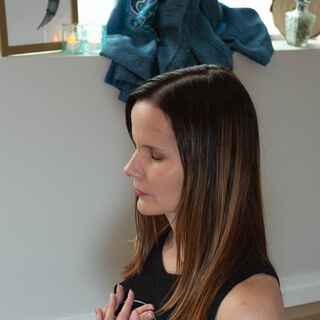
My name is Erin Musick.
I'm a registered psychologist,
Certified sex therapist and yoga teacher and I'm so glad that you're here with me today.
Today's meditation will be focusing on two of our senses,
Our sense of smell and our sense of taste.
And this is part of a sensory mindfulness series that I have here on Insight Timer.
So if you enjoy this one,
Feel free to check out some of the other ones as well.
So this meditation can be sitting up or lying down,
Whatever feels most comfortable for you in this moment.
And so I'd invite you to make your way to your resting position.
Now finding a spot where you can feel really held and supported.
Getting any props that you might need to support your body further,
So maybe a blanket or a bolster or pillow.
Making any adjustments that you notice that you need so that your body is feeling supported and comfortable.
And then when you're ready,
If it feels okay to do so,
I'd invite you to gently close down the eyes.
And once you're here,
Just starting to bring your attention to your breath.
Just allowing for a nice,
Full,
Deep inhale,
Filling the belly.
And then a nice,
Full and complete exhale as best you can.
And just allowing whatever natural rhythm of your breath is here right now to just continue.
To just continue.
There's nothing that we need to change or do here.
Just breathing,
Allowing for a nice,
Big,
Full breath in and a nice,
Full,
Big breath out.
You can breathe in and out through your nose or in your nose and out your mouth,
Whichever you'd like.
And so now we're going to turn our attention first to our sense of smell.
So our sense of smell can be very powerful.
It's a direct line through our olfactory nerve into the brain.
There's no crossover for this sense.
And so it can be very quick when we are thinking about smells.
And this can be good when we're thinking about maybe smells that are comforting,
Right,
Or that remind us of something really lovely and positive.
But it can also be difficult if there are smells that may be associated with trauma or other difficult,
More negative experiences.
So as we are connecting with our sense of smell today,
I do invite you to please be tender and kind with yourself.
Please redirect or take a break if at any point you feel like you need to.
So to start with,
I just would like to invite you to take a moment to think about your sense of smell.
So to start with,
I just would like to invite you to notice any current smells that you're noticing in the space that you're in right now.
With those nice inhales,
With it,
You're bringing in sensory information,
The sense that's around you.
So you might notice the smell of food that was prepared in your home.
You might notice a candle or incense,
Maybe the smell of the soap that you use to wash your hands or the shampoo that lingers in your hair.
Maybe you smell fresh linens on your bed.
Alright,
Whatever it is,
Just noticing and those smells might be subtle,
Faint,
Or they might be really noticeable and strong.
So we're just gathering up,
Just noticing and observing.
And as we do,
Inviting you to just check in with what happens as you notice.
Is there anything that comes up in the body?
Any emotions that become a little more obvious and present?
You might also notice just a bit of neutrality in terms of the smells that are in your space right now,
And that's okay too.
But just taking it in,
Just noticing and observing.
And so with all of our senses,
We can have our senses help us anchor in the present moment by just taking in the information that's currently here.
But we can also connect with that sense through anticipation or through memory,
Right,
Through our imagination.
And so even in the absence of an actual smell,
We can still smell it,
Right,
In our mind's eye,
Right,
In our memory.
So I'm going to name a couple of fairly recognizable scents,
And as I do,
I just want you to just see if you can access a really strong kind of sense of what that smells like.
And then also just noticing,
Again,
What comes up for you as you think and remember and experience that smell.
So to start with,
I'd like to see if you can imagine the smell of lemon.
So this might be a lemon itself,
Right,
Having just maybe cut it up,
Or you have a lemon wedge.
It might be lemon oil,
Right,
But just observing,
Right,
That,
You know,
It can be quite strong.
It's that citrus,
Maybe a bit of sour,
But sweet,
Right.
And you might like the smell of lemon,
You might not,
But just observing what's here.
And then sometimes as we're observing a smell like lemon,
We might notice our sense of taste also coming on board.
So perhaps you notice salivation in your mouth,
Right,
Perhaps you notice a response of yum,
Right,
Or like a sour,
You know,
Sort of twisting of the mouth as you think of lemon.
So just noticing the interplay of these two senses,
Even in the absence of an actual lemon right now.
Okay,
And then moving into another sense,
I wonder if you can think about the smell of like a pine tree,
Or a forest,
Right.
So it might be a pine tree,
Or a cedar tree,
Or juniper bushes,
Or whatever it is that when you think of it,
You sort of think of those kind of wood and pine needle types of smells.
And again,
This might be really strong and accessible.
This might be very positive for you.
It might be more neutral.
Right,
So just noticing what's here as you think about these kinds of smells,
Right,
This kind of experience.
Good,
And now I'd invite you to see about a smell maybe that for you brings up joy,
Or pleasure,
Or comfort,
Something that's really pleasing for you.
So it might be something like cinnamon buns or apple pie.
It might be your partner's perfume or cologne.
Right,
It might be the smell of a forest or the woods.
Right,
Whatever it is,
Let's see if you can just sort of use your other senses to connect to this sense of smell now.
Right,
Smelling the air,
Right,
Smelling the spices,
Smelling,
You know,
Whatever is here that's attached to this scent.
And then noticing any other senses that might come on board as you do.
So continuing to just observe the interplay.
So this might be a memory.
This might be anticipation.
Maybe it's both.
But just allowing yourself to really savor and drink in and enjoy this smell.
Good,
And so now we're going to bring in,
Alongside the sense of smell,
We're going to bring in taste.
And bringing in taste,
As we've already noticed,
Particularly when we think about food,
That our smell and taste work in tandem.
So again,
Always noticing that we can use our senses to anchor us in any moment,
But we can also connect to our senses when we anticipate or remember or when we use our imagination.
So to start with,
Connecting with your current taste.
What's currently happening in your mouth,
On your tongue,
On your cheeks,
On your palate,
On your teeth.
Maybe noticing the sensations that are present in your mouth.
Noticing noticing any tastes that linger on your tongue.
Perhaps you just brushed your teeth or you had a piece of gum or mint in your mouth.
Maybe you ate something not so long ago and that still remains a little bit.
Maybe you just kissed your partner and that's a taste that you can still access.
Or maybe,
Right,
Your sense of taste right now is fairly neutral and that's okay too.
But we just connect with the sensations that are here,
Connect with that sense of taste,
Allowing it to be here in this present moment.
And then we'll take it into memory.
Into memory.
So as we imagined a smell that was very pleasing,
You may or may not then access the same thing when you think about taste.
So maybe it's your favorite food.
Something really yummy and delicious that's pleasing in your mouth that lights up your taste buds.
That brings you pleasure and enjoyment.
But maybe it's a warm cup of delicious tea.
Maybe it's eating ice cream.
Maybe it's a more intimate experience,
Right,
Tasting someone,
Right,
Or something.
Right,
So we have lots of different ways that we can connect with our sense of taste.
And then just noticing again as we come into a remembering or an anticipation of something that tastes yummy,
Noticing what happens in the body.
So is there some energy or excitement here?
Is there,
You know,
A little buzz of electricity,
Right?
What emotions do you notice?
And again,
Just allowing for whatever is here to be here.
There's no right or wrong.
And so coming into just a space for a moment of gratitude,
Being in awe of these senses,
Senses,
Right,
Of our smell and our taste.
These just born into us,
Right,
And they are part of our abilities to be able to navigate through the world.
Right,
They tell us when things are good.
They tell us when things aren't so good.
They allow us to be able to enjoy things,
To seek things,
Right,
To savor things.
So we can just send some thanks and some gratitude to our body and to our senses.
And also just taking a moment to send gratitude to yourself for taking this time for yourself today to connect with these two senses,
To find a space for ease and rest and exploration for a little while before you carry on with the rest of your day.
And as we're preparing now to close this meditation practice for now,
I'd invite you to come back to a few nice breaths,
Deep inhales again,
Filling up the belly and perhaps a nice open mouth sigh,
Exhale on the way out.
Starting to come back into some movement in the body,
Wiggling fingers and toes,
Finding a stretch.
And in the case that you're lying down,
Making your way in your own time and in your own way back up to a seated position.
And we can bring those eyes back open when we're ready.
I thank you so much for joining me for this meditation today.
And I hope that perhaps this experience can allow you to anchor maybe just a bit more awareness and more mindfulness into upcoming experiences as you continue to notice and connect with tastes and smells around you.
Namaste.