Welcome to week one of the Art and Science of Human Flourishing class.
As you are aware,
Engaging in contemplative practices is a major pillar of this class,
And this meditation today serves as a foundational practice that we will continue to build on throughout the semester.
One of the biggest challenges we come across when we start to meditate or put our attention on anything for a period of time for that matter is staying present on the task at hand and not getting caught up in a variety of distractions that range from thoughts about the future,
Worrying,
Ruminating about the past,
Daydreaming,
Or lost in the running commentary that our mind creates about whatever we're experiencing.
Being able to be aware,
Focused,
Present,
And hold our concentration at will on an object forms the foundation of flourishing in all dimensions of our life experience,
Ranging from personal relationships to professional careers.
This exercise is a meditation that involves counting your own breath.
In five minutes of practice,
The aim is to reach 10 breaths without losing track or having your mind wander.
If in the middle of counting,
You suddenly realize your mind has been wandering,
Then start over at one again.
And if you reach 10,
Then start over again with the new set at one.
The objective is not to approach the exercise as a kind of competition,
But to notice that your ability to focus is dependent upon what is happening to you each day.
Aim to conduct the exercise simply with curiosity and an intention to practice strengthening your capacity for focus.
Now let's begin.
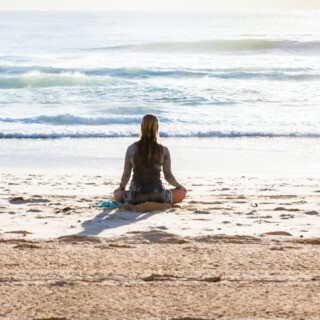
Find a stable and comfortable position for your body.
If you are seated in a chair,
Sit upright with your back straight but not stiff,
Your feet planted on the ground underneath you.
If you're seated on a cushion,
Gently cross your ankles,
Replace one foot in front of the other,
And allow your knees to rest gently as you sit towards the end of your cushion with your spine straight but not stiff.
No matter what position you are in,
Allow your shoulders to be at ease.
Relax the muscles in your face and rest your hands intentionally either on your thighs or together in the center of your lap.
If you feel comfortable,
You can close your eyes completely or keep them partially open so that light is present but you're not focused on anything in the outer world.
Start by noticing your breath just as it is in this moment.
Be curious.
How deep is your breath?
Notice the pace of your breath.
How far can you experience your breath in your body as it moves,
As you breathe in and as you breathe out?
Perhaps you even notice there's a temperature associated with your breath,
Which is the coolness of the inhale and the warmth of the exhale by your nose.
Now begin to start counting your breath.
And remember,
One full breath is a full inhale and a full exhale.
And the aim is to reach 10 breaths without losing track or your mind wandering.
And if you suddenly realize that you've had your mind wandering,
Then start over at one again.
And remember,
This is not a competition.
In fact,
At different times,
We will have different capacities.
So as we practice and whenever state our mind is in,
Refrain from judging yourself.
There's just curiosity and practice.
So now begin.
And if you get to 10,
Then start over again until you hear the sound of the bell to signify the end of the time of this exercise.
Inhale and exhale.
.
.
.
.
.
.
.
.