Welcome to today's meditation.
Today I'm going to introduce you to one of the most important things you can do to optimize your health and bring your body into equilibrium.
This meditation will help to lower stress,
Improve sleep,
Regulate heart rate and blood pressure,
Support digestion,
Release tension in the body and cultivate feelings of calm,
Safety and connection.
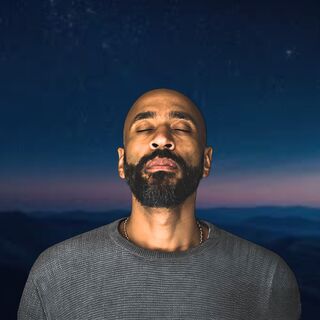
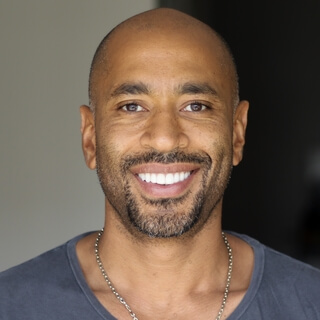
I'm Chibs Okereke and I'm here to guide you through today's meditation.
During our time together,
We're going to be engaging in a number of different practices and they're all designed to activate your body's natural relaxation response and stimulate your vagus nerve,
Helping to calm both the body and the mind.
We'll start by focusing on the breath,
Then we'll move into a gentle breathing exercise to engage the body's natural relaxation response.
We'll then introduce a simple affirmation that we can use to help cultivate a sense of safety and from there,
We'll slowly move through the body,
Releasing tension as we go.
By the end of this session,
You'll feel more grounded,
More at ease and you'll be ready to continue your day with a sense of peace and calm or you'll be ready for a deep,
Restorative sleep.
Ok,
Let's find a comfortable position.
Most people feel more relaxed by closing the eyes but feel free to leave the eyes open if that feels more relaxing.
For some of us,
Particularly those of us that have had difficulty in our lives,
The nervous system can go into high alert with closed eyes,
So feel free to crack open the eyes slightly to let some light in if thoughts,
Sensations or emotions become too uncomfortable.
If we are keeping the eyes open,
Just making sure we have a soft gaze,
A soft focus.
We're also welcome to lie down if we choose to but if we have anything to do afterwards,
You might want to set an alarm.
Then,
If the body wants to go to sleep,
You're welcome to have a little nap.
We don't want to put any pressure on ourselves today and if the body needs a rest,
Then why not allow the body to rest?
Sometimes a nap is just as good as a meditation.
Our starting point and the best and quickest way to get ourselves into equilibrium is to relax the body.
When we relax the body,
We often find that the mind relaxes soon afterwards.
During this meditation,
We'll be exploring the parasympathetic wing of our nervous system,
Otherwise known as the rest and digest nervous system.
The part of the parasympathetic nervous system that's responsible for making us feel relaxed and at ease is the vagus nerve.
This amazing vagus nerve doesn't just keep our bodily systems regulated,
It's also there to help us relax and create a sense of safety.
Okay,
Let's begin.
I invite you now to join me,
Becoming aware of the breath,
Noticing the inhale and noticing the exhale.
Without trying to change anything about the breath,
We're simply noticing how the body's naturally breathing.
We're not so much watching the breath,
We're experiencing the breath,
We're feeling the breath.
So what does it feel like to breathe?
Perhaps we can feel the cool air coming in through the nostrils as we breathe in,
As the lungs and the chest and the stomach expand.
And then we might notice a short pause as the breath changes.
And we might notice the warmer air leaving the nostrils as the body softens and relaxes and sinks deeper into the chair or into the bed if we're lying down.
Okay,
Good.
Now before we move into the gentle breathing exercise,
I want to introduce a powerful phrase.
I am safe.
The research shows that using self-soothing phrases like this can help activate the vagus nerve and encourage deeper relaxation.
By reminding the body and mind that we're safe,
We reduce anxiety and bring ourselves into a state of calm.
So let's take a moment now,
Either out loud or silently in our mind,
And say to ourselves,
I am safe.
I am safe.
I am safe.
I am safe.
Really feel the words sink in and notice any changes in how the body feels as we allow that sense of safety to settle.
I am safe.
Okay,
Good.
And for the next minute or so,
Let's soften and deepen the breath.
I invite you to lengthen your exhalation,
And we're going to be making sure that our exhalation is longer than our inhalation.
Increasing the length of the out-breath stimulates our vagus nerve and this triggers the body's relaxation response.
A good way of doing this is to do a little count inside our mind and making sure that our exhale count is twice as long as our inhale count.
So why don't we do some extended exhale breaths together.
Let's breathe in for a count of three and breathe out for a count of six.
You can follow my count for a few breaths and then you can continue doing some more at your own pace.
Let's breathe in,
Two,
Three,
Breathing out,
Two,
Three,
Four,
Five,
Six,
Breathing in,
Two,
Three,
Breathing out,
Two,
Three,
Four,
Five,
Six,
Breathing in,
Two,
Three,
Breathing out,
Two,
Three,
Four,
Five,
Six.
Now it's up to you what you count to.
You can breathe in for two and breathe out for four or in for four and out for eight,
And there's no need to be precise.
If you like,
You can drop the count completely if counting feels distracting or unnatural,
And just make sure that the out-breath is longer than the in-breath.
So let me be quiet for a few moments so we can do this by ourselves.
And already we might be beginning to notice changes as we engage the vagus nerve through this relaxing practice of lengthening the out-breath.
Maybe we can feel warmth or tingles or vibrations running up and down the spine.
And now you can allow the breath to return to normal,
Allowing our breathing to return to its natural rhythm.
Notice how the body's breathing now.
Is the breath a little slower,
A little deeper perhaps,
Just noticing.
Now we're going to shift into a second way of relaxing and move into the progressive relaxation section of the meditation,
Slowly moving our awareness through the body,
Relaxing each part as we go and releasing tension wherever we find it.
I invite you now to follow my instructions.
Let's begin by relaxing the feet.
Now remember,
My instructions are just a gentle guide.
If your intuition leads you somewhere else,
Feel absolutely free to change my words or even ignore them completely.
You might change my instructions to something like locate a space in the feet or gently softening the feet,
Whatever works best for you.
Relaxing the ankles,
Relaxing the lower legs,
The shins,
The calves,
Relaxing the knees,
Relaxing the upper legs,
The thighs,
The hamstrings,
Relaxing the entire legs,
Both legs.
Perhaps we might be noticing nice feelings of warmth or tingles or pulses moving into the area that we're relaxing.
Relaxing the hips,
Keeping the breathing relaxed as we do so,
Relaxing the lower back,
Relaxing the middle of the back,
Relaxing the upper back,
The shoulder blades,
Relaxing the spine,
Relaxing the entire back.
Perhaps we're noticing feelings of relaxation spreading through the body,
Maybe feelings of warmth or vibrations or tingles,
Moving our awareness around to the belly,
Relaxing the belly,
Perhaps we can feel the belly rising on the inhale,
Softening and relaxing on the exhale,
Relaxing the chest,
Relaxing the ribcage,
Relaxing everything inside the ribcage,
Moving our awareness to the shoulders and relaxing both shoulders,
Relaxing the arms,
The upper arms,
The elbows,
The forearms,
The wrists,
And relaxing the hands,
And moving our awareness to the neck and the throat,
Relaxing the neck and the throat,
Relaxing the back of the head,
Relaxing the jaw,
The cheeks,
Relaxing the tongue inside the mouth,
Relaxing the eyes,
The eyelids,
Relaxing the temples,
The forehead,
Relaxing the entire face,
Relaxing the top of the head,
And now I invite you to expand your awareness,
To include the whole body,
From the top of the head to the tips of the fingers and tips of the toes,
Noticing all of those feelings of relaxation that have spread across the body,
The tingles,
The warmth,
The pulses,
The vibrations.
We are resting,
Letting go,
Allowing our body to find its equilibrium,
While remaining alert,
Awake,
Present,
As our body and mind become increasingly relaxed and peaceful.
We are enjoying this experience of relaxation and letting it sink in.
Keeping our awareness in the body,
In these sensations of relaxation,
I invite you to expand your awareness once again,
To include the sensations of breathing.
The breath is a sensation just like body sensations.
We are simply noticing how the body is naturally breathing.
So without trying to change anything,
How is the body breathing right now?
Has the breath slowed?
Is the breath more relaxed?
We are noticing the body becoming increasingly peaceful and tranquil,
The breath slowing down,
Maybe the heart slowing as well.
And as this practice comes to an end,
Knowing you can come back here again,
This place of relaxation,
We are noticing what the body feels like and noticing what the mind feels like,
And hopefully the mind and body are feeling a little bit more relaxed.
And even if we are not feeling more relaxed,
It could be one of those really difficult days,
And we might notice that we have even more thoughts in the mind or even more tension in the body,
That's ok too.
By bringing awareness to how we are feeling,
We can take some extra care of ourselves.
So if you are feeling a little stressed or sad or overwhelmed,
Then if possible,
Take it easy today,
Do something relaxing,
Leave the hard work until tomorrow.
And perhaps before we end this meditation,
We can all reflect on my favourite poem.
If you are having a tough day,
This poem is especially for you.
It's called The Mountain by Laura Ding Edwards.
If the mountain seems too big today,
Then climb a hill instead.
If the morning brings you sadness,
It's ok to stay in bed.
If the day ahead weighs heavy,
And your plans feel like a curse,
There's no shame in rearranging,
Don't make yourself feel worse.
If a shower stings like needles,
And a bath feels like you'll drown,
If you haven't washed your hair for days,
Don't throw away your crown.
A day is not a lifetime,
A rest is not defeat,
Don't think of it as failure,
Just a quiet,
Kind retreat.
It's ok to take a moment from an anxious,
Fractured mind.
The world will not stop turning while you get realigned.
The mountain will still be there when you want to try again.
You'll climb it in your own time,
Just love yourself till then.
Keeping our eyes closed,
I invite you to notice what feels different in the body and mind.
Perhaps we are feeling more relaxed,
Perhaps we can feel an opening or lightness in the chest,
Or spaciousness in the mind,
Perhaps a feeling of safety in the body.
Noticing if we feel more energised from the practice or whether we are feeling more relaxed.
Some of us will find that this practice energises us,
And for those people,
It might be good to do it in the morning to start our day off with more energy.
But if we find it more relaxing,
It might help us sleep at night,
So we can try this practice at bedtime.
I invite you now to bring awareness to sounds,
Sounds inside the room,
Sounds outside the room.
If we can gently wiggle our fingers and toes.
Shortly,
The meditation will come to an end,
But you are welcome to rest in the silence for as long as you like.
And whenever you are ready,
You can gently crack open the eyes and come back to the room.
Now remember,
We can always come back to this place of rest and relaxation,
The breath is always there for us.
Whenever we notice tension arising,
We can take a few moments to slow down that exhale to stimulate our vagus nerve.
Congratulate yourself on taking some time out to look after your body and look after your nervous system.
Have a wonderful day,
Or if you are listening to this before bed,
Sweet dreams.